Game Night (2018)

2018 #111
John Francis Daley & Jonathan Goldstein | 100 mins | download (HD) | 2.39:1 | USA / English | 15 / R
Game Night

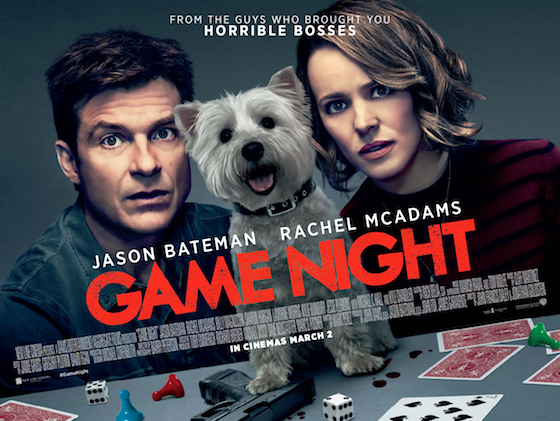
Despite what the poster suggests, the cute dog is not in fact one of the three leads.

1 out of 5

Okay, okay — let’s put the Westie-based bait-and-switch advertising aside and give the film a fair hearing, because it’s actually surprisingly brilliant.

The other poster stars, Jason Bateman and Rachel McAdams, play hyper-competitive couple Max and Annie, who love nothing more than the weekly game night they host with their best friends, from which they exclude their odd next-door neighbour, Westie-loving cop Gary (Jesse Plemons). One week, Max’s super-successful older brother Brooks (Kyle Chandler) unexpectedly shows up and gatecrashes game night, then offers to host an even better one. For that he arranges a real-life mystery game, where he gets kidnapped and the others have to track him down… except then he gets kidnapped for real, and they only have the rest of the night to rescue him.

If you’ve ever wondered “what if someone reimagined David Fincher’s The Game as a comedy?”, Game Night is probably the answer. Personally, I’ve never wondered that, but I’m up for it. That said, I was all prepared to let it wait until it popped up on Netflix or something, until the film’s home release in the US a couple of months back prompted a wave of praise from critics I follow on Twitter. Now I’m adding my small voice to those urging you to check this movie out.
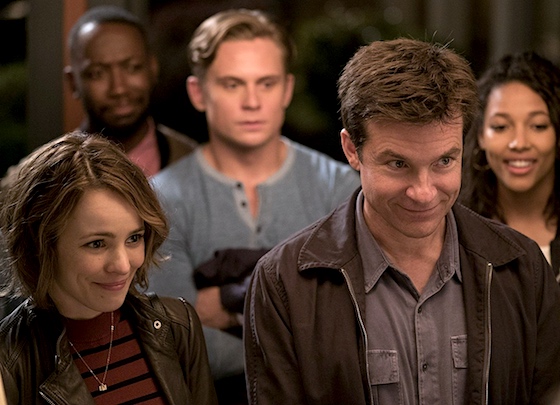
Wanna play a game?

It’s the kind of film where I don’t want to say much more than I already have, because obviously the joy lies in the jokes (and jokes are a lot less funny if you spoil them) and the plot developments. At the risk of just reeling off a list of superlatives, I’ll say that what unfolds is fast, inventive, clever (after you’ve seen the film, check out this spoilersome bit of trivia. I mean, that’s superb!), and, above all, hilariously funny. There are more laughs in its opening montage than many modern comedies manage in a whole film. Jesse Plemons transcends the “budget Matt Damon” jibes (but, c’mon, he really looks like an own-brand Matt Damon) to all but steal the film with his hysterical straight-faced supporting role. I only say “all but” because everyone else is firing on all cylinders too: it’s a cast full of likeable, well-performed characters, not least Max and Annie. McAdams, in particular, gets to give a line delivery that’s an all-timer. If there’s a criticism in this regard it’s that, with so many characters competing for screen time, I’m not sure how well their individual arcs really work, but that’s a minor distraction.

One other thing I will criticise — which is nothing to do with the quality of the film itself, but bugged me enough that here’s a whole paragraph about it — is the scarcity of extras on the Blu-ray, which total just ten minutes. Seriously? Put some effort in! All the praise from American Twitter led me to acquire the film via Alternative Means, but, being the good honest film consumer I am, I was going to rent it when it came out here as retrospective payment. But then I loved it so much I thought I’d just go ahead and buy the disc. But a full-price new release of a film I’ve already seen with a grand total of ten minutes of special features? You’re having a laugh. Were there no deleted scenes? Could they not stump up for a commentary? Surely they filmed longer interviews than that just for the EPK? But no, all we get is a 6½-minute gag reel and a 3½-minute “featurette” (I’m being kind — at that length it can’t be much more than a trailer). I’m going to buy it eventually, in a sale, because I enjoyed the film enough to add it to my collection, but you cost yourself a day-one purchase there, Warners. I don’t know how much the general film-viewing populace still care about special features, but us aficionados do, and I know I’m not alone in feeling this way about this particular title. Anyway, rant over.

Who's stealing the film now, eh?

For pure enjoyment, I came very close to giving Game Night the full five stars — when it works, it absolutely sings — but there are just a few bits, here and there, that fell a little short. Nonetheless, it’s certainly the kind of film I loved in spite of its flaws. If only the adorable dog had been in it more, maybe this’d be a five anyway…

4 out of 5

Game Night is available to own digitally in the UK from today, and on that disappointing DVD & Blu-ray from next week.

It placed 15th on my list of The 26 Best Films I Saw For the First Time in 2018.

Rocky II (1979)

2018 #131
Sylvester Stallone | 119 mins | Blu-ray | 1.85:1 | USA / English | PG / PG

Rocky II

This first sequel could fairly have been titled Rocky Part II: picking up where the first film left off (literally — the first six minutes are just a replay of Rocky’s final fight), it goes on to detail what happens next for both Rocky (Sylvester Stallone) and his world-champion opponent, Apollo Creed (Carl Weathers). For the former, his childlike naïveté and heart of gold sees him carelessly burn through his newfound wealth as he tries to give the love of his life (Talia Shire) everything he thinks she wants. For the latter, it means an ongoing niggle that he didn’t really win the fight, so he tries to goad Rocky into a rematch.

Like the first movie, a lot of Rocky II is more of a character-based drama than a sport-driven movie, this time about someone who had a taste of the big time struggling to re-adapt to normal life. It’s not that Rocky’s ego has outgrown his means — he doesn’t seem to mind going back to working menial jobs when the money runs out — but his overestimation of his success means that he does indeed find himself in that position. It’s not bad as a dramatic work — it’s got the same writer as the first movie, after all, here also stepping up to direct (and did you know he wrote a novelisation too?) — but we know where it’s all headed, and so the second half is better than the first.

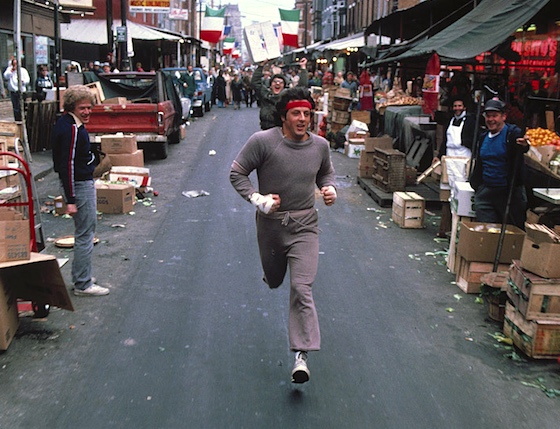
Run, Rocky, run!

Again, Stallone doesn’t lose sight of keeping events moderately grounded: Rocky struggles to focus on his training regime, and it begins to look like Creed may be right that his success in their first bout was all fluke. Of course, this is as much an underdog fairytale as the first movie was, and so events transpire to finally give Rocky his motivation, culminating in a triumphant revisit to the first film’s famous running-up-the-steps bit. The finale is, naturally, the big boxing rematch, where Stallone really shows off his directing chops: it’s a tense, drag-out duel that easily exceeds the first film’s for visceral impact.

On the whole, I wouldn’t say Rocky II is better than its predecessor — indeed, maybe it’s not quite as good — but I enjoyed it about the same; maybe even slightly more by the end. The Rocky sequels have a collectively poor rep, but I think this is a worthy follow-up.

4 out of 5

The UK network TV premiere of the latest Rocky sequel, Creed, is on ITV tonight at 9:30pm.

The Death of Stalin (2017)

2018 #85
Armando Iannucci | 107 mins | streaming (HD) | 1.85:1 | France, UK & Belgium / English | 15 / R

The Death of Stalin

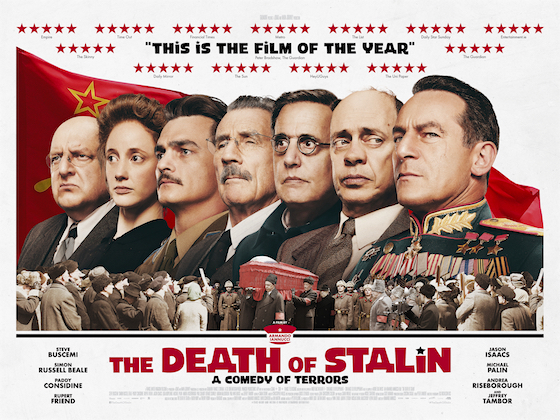
Armando Iannucci, the writer-director-creator behind political comedies like Veep, The Thick of It, and the latter’s Oscar-nominated movie spin-off, In the Loop, here turns his attention away from fictional present-day politics to real-life historical ones — as the title suggests, the death of Soviet dictator Josef Stalin and the power struggle that followed. Sounds like a laugh riot, don’t it? Dark comedies don’t get much darker than this!

It plays a bit like Horrible Histories for grown-ups, teaching you the facts of an interesting period of history, containing very serious events, while also sending up the objective ludicrousness of what went on. The flip side to that is one has to wonder about its accuracy. It’s officially adapted from some French comic books, rather than, say, an academic work, and various historians have commented on its veracity with regards to historical fact — some have said it’s littered with minor errors that can be excused as cinematic licence, others that it misses the mark entirely. For his part, Iannucci claims he actually “chose to tone down the real-life absurdity” because audience’s wouldn’t’ve found it believable.

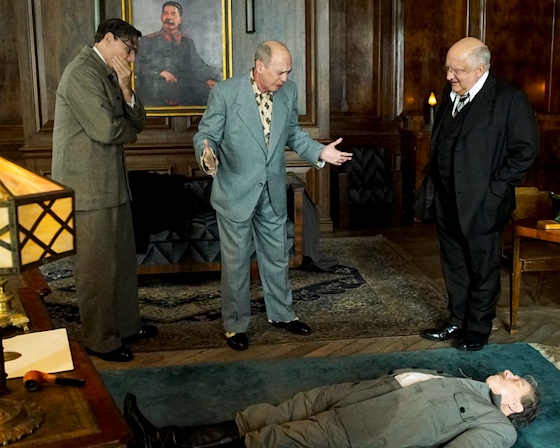
Over Stalin's dead body!

The Death of Stalin probably isn’t the best text to cite in a history essay, then, nor a valuable piece of work for anyone interested in a proper understanding of what went on. As a comedy about the ridiculousness of dark times, however, it functions in a similar way to Iannucci’s other work. Functionally it’s very like The Thick of It, in that it’s about a group of semi-confident politicians trying to scheme against each other. Of course, the results of their machinations are a bit more serious and murderous than any of the problems Malcolm Tucker ever faced.

I’m sure some viewers must find the irreverence with which the film treats such matters to be a turn-off. Personally, I think its perspective is more profound: these are silly men playing silly power games, but the end results are often unthinkable and horrific. You only have to look at the recent news headlines — in which the gibbering orange blob who is the supposed “leader of the free world” has enacted a Hitlerian policy of tearing small children away from their parents and locking them up in cages at concentration camps, only to serve his own futile political ends — to see similar situations playing out to this day.

Perhaps, in this climate, The Death of Stalin is a reminder that we need to laugh at the preposterousness of monsters in power. It’s not quite as laugh-out-loud funny as the best of The Thick of It or In the Loop for me, but that point is, unfortunately, as relevant as ever.

4 out of 5

The Death of Stalin is available on Prime Video UK as of yesterday.

Review Roundup

Hello, dear readers! I’ve been away for most of the past week, hence the shortage of posts, but I’m back now, so here’s a random ragtag roundup of reviews to kick things off again.

In today’s roundup:

  • That’s Entertainment! (1974)
  • ’71 (2014)
  • Guardians (2017)


    That’s Entertainment!
    (1974)

    2017 #80
    Jack Haley Jr. | 124 mins | TV | 1.33:1 + 1.78:1 + 2.35:1 + 2.55:1 | USA / English | U / G

    That's Entertainment!

    Greatest hits compilations always seem to be a popular product in the music biz, and that’s essentially what this is, but for movies. An array of famous faces appear on screen to help provide a scattershot history of the MGM musical, but really it’s an excuse to play some fantastic clips from old hits. This may be the kind of programming that TV has taken on and made its own in the decades since, but when the quality of the material is this high, it feels like more than just schedule filler.

    Thanks to many eras being covered it has more aspect ratio changes than a Christopher Nolan movie, though that’s actually quite effective at demarcating the old-school spectacle from the linking chatter. There’s also some “you wouldn’t get that today” commentary, like Frank Sinatra talking about a line of chubby chorus girls (who don’t even look that large!), or various bits and pieces criticising the studio’s history, like how all the films had the same plot.

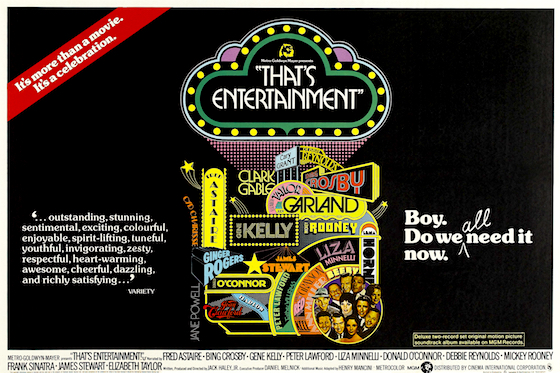
    It was originally promoted with the tagline “boy, do we need it now”, a reaction to the gritty style of filmmaking that was popular in Hollywood at the time, as well as all the real-life problems of the era (it was released the same year as Nixon resigned because of Watergate). MGM needed it too: the studio was in decline, releasing just five films in 1974. The whole thing carries a somewhat bittersweet air, as ageing stars reflect on past glories from the decrepit environs of MGM’s rundown backlot.

    Nonetheless, it creates a marvellous tribute to a golden era. And I guess it must’ve done alright, because it spawned two sequels, a spin-off, and MGM are still going (more or less) today.

    4 out of 5

    ’71
    (2014)

    2017 #95
    Yann Demange | 99 mins | streaming (HD) | 2.35:1 | UK / English | 15 / R

    ’71

    Set in Belfast in (you guessed it) 1971, ’71 is a thriller that sees an Army recruit become separated from his unit during a riot at the height of the Troubles, leaving him trying to survive the night “behind enemy lines”.

    The film’s best stuff is early on: a brewing riot as police perform a door-to-door search; a tense foot chase through the backstreets; a single-take bombing and its aftermath. The immediacy of all this is well-conveyed, suitably tense and exciting, but also plausible. Then the film decides it needs some sort of plot to bring itself to a close, and so it kicks off some IRA infighting and British Army skullduggery. The added complications don’t exactly bring it off the rails — it’s still a fine and tense thriller — but it lacks that extra oomph that the hair-raising sequences of the first half deliver.

    Still, it’s a promising big screen debut for director Yann Demange, who was reportedly among the frontrunners to helm Bond 25 before that got diverted into Danny Boyle and John Hodge’s idea. His second feature, another period movie, this time a crime drama, White Boy Rick, is out later this year.

    4 out of 5

    Guardians
    (2017)

    aka Zashchitniki

    2017 #122
    Sarik Andreasyan | 89 mins | streaming (HD) | 2.35:1 | Russia / Russian | 12

    Guardians

    You may remember this film from when its trailer went viral a couple of years ago: it’s the “Russian answer to The Avengers” that featured a machine-gun-wielding bear. Naturally, that kind of attention assured it got an international release eventually (I paid to rent it, then it later popped up on Prime Video. You never know how these things are going to go, do you?)

    It’s about a bunch of old Soviet superheroes being reactivated to stop a villain. If that sounds vague, well, I can’t remember the details. Frankly, they don’t matter — Guardians is the kind of film a 6-year-old would write after a diet of Saturday morning cartoons, with the same attention to character development and plot structure you’d expect from such an endeavour. The story is semi-nonsensical: the villain’s plan is never clear (beyond “rule the world”); it flits about between subplots; characters appear and disappear from locations… There’s a litany of “things that don’t quite make sense” — too many to remember without making obsessive notes while rewatching, which I have no intention of doing.

    But if you can ignore all that — or, even better, laugh at it — then it’s fairly watchable, in a brain-off entirely-undemanding so-bad-it’s-good kind of way. There’s some decent CGI (given its budget), some half-decent action, and it’s mercifully brief at under 90 minutes.

    2 out of 5

  • Almost Oscar-Worthy Review Roundup

    Each of these films was nominated for multiple Oscars… but failed to win a single one.

    In today’s roundup:

  • Big (1988) — nominated for Best Actor (Tom Hanks) and Best Original Screenplay.
  • Frost/Nixon (2008) — nominated for Best Picture, Best Actor (Frank Langella), Best Director, Best Adapted Screenplay, and Best Editing.
  • Lion (2016) — nominated for Best Picture, Best Supporting Actor (Dev Patel), Best Supporting Actress (Nicole Kidman), Best Adapted Screenplay, Best Cinematography, and Best Original Score.


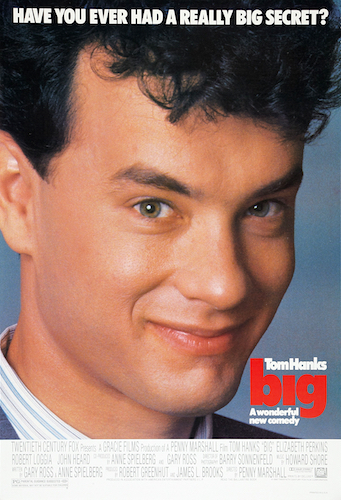
    Big
    (1988)

    2017 #91
    Penny Marshall | 100 mins | TV (HD) | 1.85:1 | USA / English | PG* / PG

    Big

    Big is one of those strange gaps in my viewing — the kind of film I feel I should’ve seen when I was a kid in the early ’90s but didn’t.

    Anyway, in case you’ve forgotten, it’s the one where a 12-year-old boy makes a wish and ends up as an adult, played by Tom Hanks. Rather than solve this problem in a day or two, he ends up moving to the city, getting a job, an apartment, a relationship, and all that grown-up stuff. Maybe it’s just me, but I didn’t expect that level of scale from a movie like this. Generally there’s some hijinks around “kid in an adult’s body” and it’s all solved in a day or two, but the length of time the kid’s predicament rolls on for allows the movie to tap into more than that. I mean, it’s still a funny movie, but it’s got a message about how it’s important to remember the childlike spirit, but also that it’s OK to be at whatever stage in life you’re at — don’t rush it.

    Plus the whole thing has a kind of sweet innocence that you rarely see in movies nowadays. We’re all too cynical, too concerned with realism (even in fantasy movies). If you made it today, it’d ether have to be sexed/toughened up for a PG-13, or kiddified (and likely animated) for a G. That said, that the 12-year-old boy in a man’s body is happy to sleep with the hot woman, apparently without it bothering his conscience one iota, is by far the most realistic thing about this movie.

    4 out of 5

    * The UK PG version is cut by two seconds to remove an F word. The cut is really obvious, too — was there not a TV version with an ADR’d non-swear? Anyway, it was classified uncut as a 12 in 2008, though that’s not the version they show on TV, clearly. ^

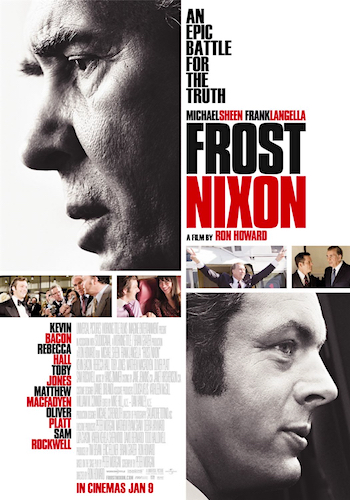
    Frost/Nixon
    (2008)

    2017 #136
    Ron Howard | 117 mins | DVD | 2.35:1 | USA, UK & France / English | 15 / R

    Frost/Nixon

    Peter Morgan’s acclaimed play about the famous interviews between David Frost and President Richard Nixon (the ones where he said “when the President does it, that means it’s not illegal”) transfers to the big screen with its two lead cast members intact (Michael Sheen as Frost and Frank Langella as Nixon) and Ron Howard at the helm.

    As a film, it almost embodies every pro and con that’s ever been aimed at Howard’s directing: it’s classy and thoughtful, in the way you’d expect from a director who’s helmed eleven Oscar-nominated movies* and won two himself; but it also, for example, employs an odd framing device of having the supporting cast be interviewed as if for a documentary, which exists solely as an on-the-nose way of integrating direct-to-audience narration from the original play — my point being, it’s a bit straightforward and workmanlike.

    Still, when you’ve got actors of the calibre of Sheen and Langella giving first-rate performances (the latter got an Oscar nomination, the former didn’t, I reckon only because Americans aren’t as familiar with David Frost as us Brits are — his embodiment of the man is spot-on), and doing so in a story that’s inherently compelling (even if somewhat embellished from reality — but hey, that’s the movies!), what more do you need?

    4 out of 5

    * Many of those only in technical categories, but hey, an Oscar nom is an Oscar nom. ^

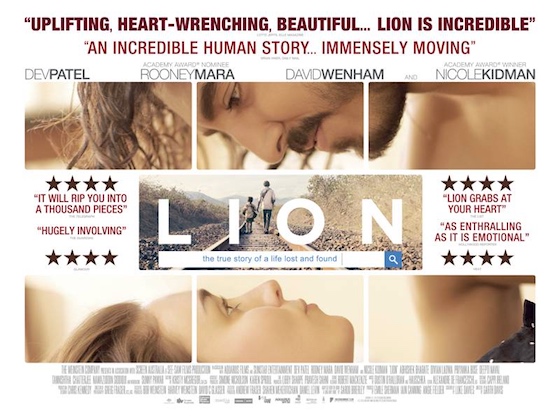
    Lion
    (2016)

    2017 #103
    Garth Davis | 119 mins | streaming (HD) | 2.35:1 | UK, Australia & USA / English, Hindi & Bengali | PG / PG-13

    Lion

    Slumdog Millionaire meets Google product placement in this film, which is remarkably based on a true story — or based on a remarkable true story, if you want to be kinder. It’s the story of Saroo Brierley, a young Indian boy (played by newcomer Sunny Pawar) who is separated from his family, ends up in an orphanage, and is adopted by Australian parents. As an adult (played by Dev Patel), he resolves to find his birthplace and family — using Google Earth.

    If it was fiction then it’d be too fantastic to believe, but because it’s true it packs a strong emotional weight, not least Saroo’s relationship with is adoptive parents, played by Nicole Kidman and David Wenham. The star of the show, however, is Dev Patel. You may remember there was controversy about him being put up for Supporting Actor awards, deemed “category fraud” by some because Saroo is the lead role. Conversely, he shares it with young Sunny Pawar, and Patel doesn’t appear until almost halfway through the film. Well, the “category fraud” people are more on the money, and it’s testament to Patel’s performance that it doesn’t feel like he’s only in half the film. Pawar is great — both plausible and sweetly likeable — but while watching I didn’t realise the movie had a near 50/50 split between young and adult Saroo. Maybe this means the first half is pacier, but its not that the second part feels slow, more that Patel has to carry greater emotional weight.

    Mother and son

    Rooney Mara is also in the film, as adult Saroo’s girlfriend. Her character is in fact based on multiple real-life girlfriends, but it makes sense to consolidate them into one character for the sake of an emotional throughline. However, her storyline ultimately goes nowhere — it ends with Saroo asking her to “wait for me”. Did she? Did he go back to her? It’s not the point of the film — that’s about him finding his family, and after that emotional climax you don’t really want an epilogue about whether he gets back with his girlfriend or not — but it still feels like it’s left hanging. I suppose it isn’t — I guess we’re meant to presume she does wait for him and they get together when he returns and live happily ever after — but it doesn’t feel resolved. It shouldn’t matter — as I say, it’s not the point — but, because of that, it does.

    So it’s not a perfect movie, but it packs enough of an emotional punch to make up for it.

    4 out of 5

  • Gangster Review Roundup

    In today’s roundup:

  • City of God (2002)
  • RocknRolla (2008)
  • Scarface (1983)


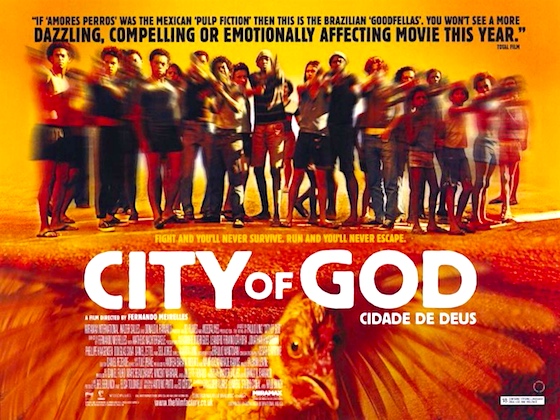
    City of God
    (2002)

    aka Cidade de Deus

    2017 #100
    Fernando Meirelles | 129 mins | DVD + download* | 1.85:1 | Brazil & France / Portuguese | 18 / R

    City of God

    What better insight into my film watching habits than this, a movie I’d been meaning to get round to for the best part of 14 years (ever since it topped Empire’s list of the best films of 2003, around the same time as I was getting into film ‘seriously’, i.e. as more than just “movies I like to watch”). Plus, it was one of my Blindspot picks back in 2015 (but didn’t get watched, obv), and it was the highest ranked film on the IMDb Top 250 that I’d not seen — all good reasons why I made it 2017’s #100.

    Adapted from a novel that was based on real events, it tells the story of how organised crime grew in Rio de Janeiro’s Cidade de Deus favela — the “City of God” of the title — from the late ’60s to the early ’80s. The main thing that struck me watching it now is how much it reminded me of the TV series Romanzo Criminale — both are basically about young people taking over and running all the crime in a city. The fact that they’re also both inspired by true stories (the series depicts a criminal gang in Rome through the ’70s and ’80s) is intriguing for different reasons. They also share certain stylistic similarities, I think, in particular the almost documentary-like visuals. The series came later, of course, so if one did inspire the other then this isn’t the copycat.

    At the risk of turning this into a review of something else, I must say that, while Romanzo Criminale is a favourite of mine (I included it in my 2017 list of Favourite TV Series of the Last 10 Years), City of God was a work I admired more than loved. Nonetheless, for anyone who likes crime epics, this is a must-see (but, uh, so is Romanzo Criminale).

    5 out of 5

    * Possibly because it’s just been sat on a shelf for over a decade (possibly just through sheer bad luck), my DVD was corrupted about halfway through and I had to, uh, source another copy. ^

    RocknRolla
    (2008)

    2017 #146
    Guy Ritchie | 110 mins | streaming (HD) | 16:9 | UK, USA & France / English & Russian | 15 / R

    RocknRolla

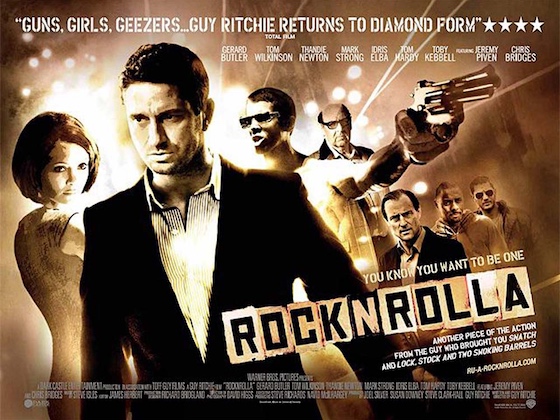
    In my review of Snatch I commented that its contemporary reviews were along the lines of “oh, Lock Stock again”, and yet now it’s pretty well regarded. My memories of RocknRolla’s contemporary reviews are “oh, another Guy Ritchie London gangster film — isn’t it time he did something new?” And yet, it now seems to be pretty well regarded. Not as much as Lock Stock and Snatch, but better than you’d think “Guy Ritchie does the same schtick for a fourth time” would merit.

    Well, it is a case of Ritchie doing his usual schtick (thank God he did eventually move on, at least applying the same broad MO to some new genres), but a cast that includes the likes of Idris Elba, Tom Hardy, Mark Strong, Tom Wilkinson, and Thandie Newton can’t help but elevate the material. Gerard Butler is ostensibly the lead, front-and-centre on the poster, but the movie follows the standard Ritchie template: an ensemble cast in a variety of story threads that bump into each other and overlap in different ways at different times. Even if the specifics aren’t the same as his other films, and the cinematography is more slick and big-budget than the grimy ’90s indie visuals of his debut and sophomore flick, the general style feels very familiar.

    Ultimately, I enjoyed it more than Snatch, but maybe I was just in the right mood — I mean, like I said, they’re all fundamentally the same kind of thing.

    4 out of 5

    Scarface
    (1983)

    2018 #14
    Brian De Palma | 170 mins | Blu-ray | 2.35:1 | USA / English & Spanish | 18 / R

    Scarface

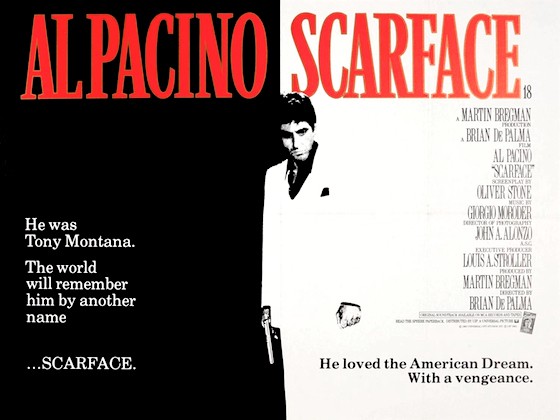
    Brian De Palma’s in-name-only remake of 1932 gangster classic Scarface follows Al Pacino’s Cuban immigrant Tony Montana as he rises up the ranks of organised crime in ’80s Miami. As it turns out, it’s not easy being at the top.

    A near-three-hour epic (what is it with gangster movies being three hours long?), interest is sustained through Pacino’s wild-eyed performance, De Palma’s slick direction, and a story that at least has enough incident to merit that length. Also, early-career Michelle Pfeiffer, who gives a good performance as Montana’s increasingly miserable gal but, frankly, could just stand there and still keep half the population interested.

    Apparently a favourite movie among rappers, I guess some people get the wrong message from Scarface. I suppose the stylishness with which it’s produced has the side effect of idolising the lifestyle Montana and co lead, but the way it gradually crumbles and destroys everything should be a pretty clear indicator of how such things actually go. Still, it all makes for a heady mix.

    5 out of 5

    Scarface was viewed as part of What Do You Mean You Haven’t Seen…? 2018.

  • Lupin the Third: The Secret of Mamo (1978)

    aka The Mystery of Mamo / Rupan Sansei / Rupan Sansei: Rupan tai Kurōn

    2018 #112
    Sôji Yoshikawa | 102 mins | DVD | 16:9 | Japan / English | 15 / PG-13

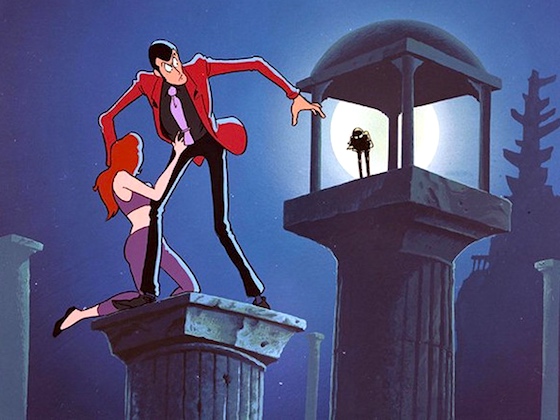
    Lupin the Third: The Secret of Mamo

    Best known to Western audiences thanks to Hayao Miyazaki’s feature debut The Castle of Cagliostro, Lupin the 3rd is more than just one film in the Studio Ghibli co-founder’s illustrious career — it’s a popular and long-running franchise in Japan, with almost innumerable iterations: starting life as a manga which has run on and off since 1967, it has so far been adapted into six TV series, seven animated films, 26 feature-length TV specials, two live-action movies, and sundry other bits and bobs. Despite all that, this is one of only three Lupin III productions that has been available in the UK since the DVD era (the others being the fourth TV series, titled The Woman Called Fujiko Mine, and Cagliostro, natch), though that increases by one today with the Blu-ray release of the latest complete TV series, Lupin the 3rd: Part IV.

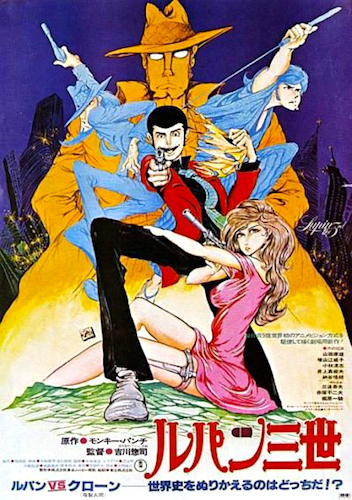
    The Secret of Mamo (more commonly known in English as The Mystery of Mamo, or in Japan as Lupin vs. the Clone) was the first big-screen outing for Lupin III. It was produced while the second TV series was being broadcast, with the intention of making a film that was more similar to the original manga, something Japanese censorship standards prevented the TV series from being. So, the tone is kids’ comedic adventure, but there’s nudity, moderately graphic violence, and a scene of sexy torture. Well, it’s not that graphic really… though it depends on your position on these things, I guess. Anyway, I’m certainly surprised the Americans let it pass as a PG-13, just because of the nudity. She may be a cartoon, but it’s not subtle.

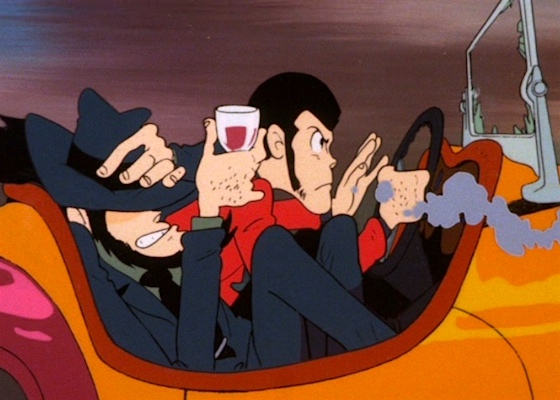
    Car chase!

    Anyhow, the plot sees master thief Lupin III, along with his regular sidekicks Jigen and Goemon, pilfering the Philosopher’s Stone (I guess Americans would need to call it the Sorcerers Stone) at the request of his on-off love interest Fujiko Mine, who actually wants it for the mysterious Mamo. His nefarious schemes draw Lupin and co into a web that sees them pursued not only by Mamo’s forces, but also the Americans, and Lupin’s regular nemesis, Interpol Inspector Zenigata.

    One of the major inspirations behind Lupin the 3rd’s creation was James Bond, and so, appropriately enough, this is a globetrotting adventure that takes in Transylvania, Egypt, France, Spain, the Caribbean, and Colombia. Similarly, it also showcases some great action scenes, particularly an extended car chase through Paris and then the mountains. Unlike Bond, there’s a definite cartoonishness to many of the antics, and the third act takes a turn into outright science-fiction that gets a bit crazy. It’s also not entirely similar to The Castle of Cagliostro, therefore, showing how much Miyazaki brought his own tone and style to that film.

    That said, I thought the lead characters’ relationships felt clearer from the start here than they did in Cagliostro, which very much felt like a sequel or spin-off where you were meant to know who everyone was (as I noted in my review). It could just be I’m a little more familiar with them all now, but perhaps the film was indeed made to be more newcomer-friendly — it was the first movie, after all; though it is spun off from a TV series… Well, it’s quite neatly done, nonetheless — this isn’t “Lupin III Begins” with them all meeting for the first time, nor is there a viewer-surrogate being introduced to them all, but it handles how and when each character arrives into the narrative in such a way that it’s kept fairly clear how they relate to one another. It’s subtly done, so, as I say, it could be serendipitous or my own improved awareness.

    The mysterious Mamo

    It’s also perhaps worthy of note that the film is available with four different English dubs. The 2013 US DVD from Discotek Media includes them all, so lucky you if you have that. Everywhere online will tell you that Manga UK’s 2008 DVD includes the dub Manga produced in 1996, which seems logical, but, being the inquisitive soul that I am, I read up on it myself, and I’m 99% certain it’s actually the 2003 Geneon dub. According to Wikipedia, the Geneon dub “took a liberal approach with translating the Japanese dialogue,” so I compared the dub to the subtitles included for the Japanese audio, and they were totally different. You can see why anime fans hate it when discs only include “dubtitles”. Maybe I should’ve watched it in its original language…

    Anyway, the film itself is a very fun adventure, with an entertaining anarchism as well as exciting action and mostly amusing humour. Ever since I watched Cagliostro I’ve been meaning to watch some more Lupin the 3rd because I always hoped I’d enjoy it, and so far I’m being proven right. At least I’ve got the two Blu-ray-released TV series to tuck into next, but I’d like to see more of the extensive back catalogue make it to the UK. I guess that probably depends on how the Part IV release sells…

    4 out of 5

    Lupin the 3rd: Part IV is released on Blu-ray in the UK today by All the Anime.

    Babe: Pig in the City (1998)

    2017 #42
    George Miller | 92 mins | streaming (HD) | 1.85:1 | Australia / English | U / G

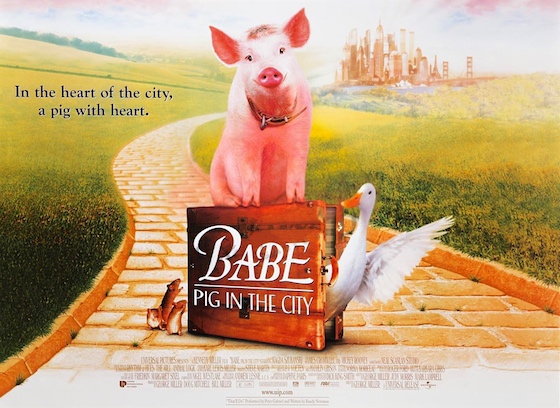
    Babe: Pig in the City

    Between making the first Mad Max trilogy and winning an Oscar with kids’ animation Happy Feet, George Miller produced beloved family flick Babe, which was such a success he took the directing reins for this follow-up. I remember it going down very poorly at the time — Rotten Tomatoes doesn’t quite support that, but a quick scan reveals many of the reviews to be retrospective. Some were wise to it from the off, however: Roger Ebert gave it full marks and his presenting partner Gene Siskel chose it as the best movie of the year! Not everyone’s got on that bandwagon (it still has a low rating on IMDb), but it’s definitely developed a cult following. Sign me up, because I too thought it was rather brilliant.

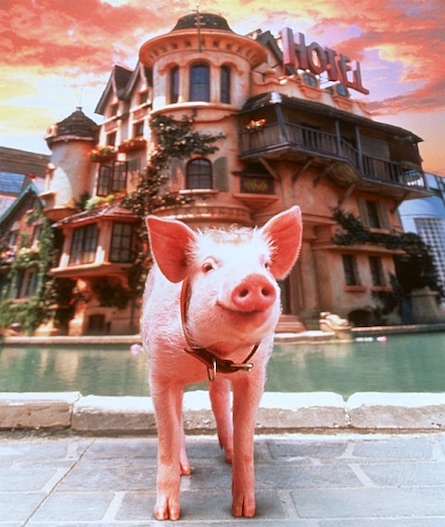
    Set immediately after the events of the first film, it sees everyone’s favourite sheep-pig travelling to the big city to raise money to save his farm. There, he ends up staying at a kind of hotel for animals, and winds up in all kinds of hijinks. There’s no point trying to describing it — the movie is barking. Also oinking, and quacking, and… yeah, you get the joke.

    In some ways it feels like a kids’ movie made for adults. Sure, it’s about cute talking animals, but a lot of the jokes are squarely aimed at knowing grown-ups, as is some of the emotional stuff, such as a scene where the Jack Russell is clearly running off to Heaven, which probably (hopefully, even) goes over younger children’s heads. As that may suggest, it’s also a very dark movie. Most of the darkness is eventually undercut, subverted, or rescued, but not always immediately — the situations are allowed to get bleak first.

    Pig in a hotel

    There’s an above-the-call-of-duty quality to the filmmaking, too. It’s lovelily designed, in a hyper-real cartoon-strip way, and beautifully shot, by Andrew “Lord of the Rings” Lesnie no less. Plus there’s a credits song written by Randy Newman and performed by, of all people, Peter Gabriel. And that’s not some kind of “they used a song by them” coincidence — its lyrics are based around the famous “that’ll do, Pig” catchphrase. Barmy.

    Pig in the City made me really made me want to rewatch the original — I enjoyed it as a kid, but as an adult would I see all sorts of extra stuff that I missed before? Or was it the success of the “cute talking pig movie” original that gave Miller & co the freedom to cut loose in the sequel? Comments I’ve read suggest the latter. Well, even if Babe doesn’t merit revisiting as an adult, this sequel certainly does. I’m not sure I’ve ever seen anything else quite like it.

    4 out of 5

    It (2017)

    aka It: Chapter One

    2018 #118
    Andy Muschietti | 135 mins | streaming (HD) | 2.39:1 | USA & Canada / English | 15 / R

    It

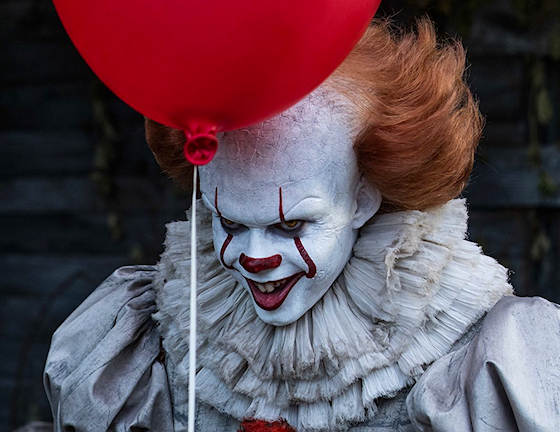
    The highest-grossing horror movie of all time, It is the story of a bunch of teenagers in small-town America coming face to face with an ancient evil… who looks like a clown. Well, it can look like other things too, but mostly it’s a clown. Why did it stick with that form? I dunno. Maybe coulrophobia is even more common than we think.

    Adapted from a novel by Stephen King (which was previously filmed as a miniseries), It actually only tackles half the book, meaning they get to crank out a sequel too (currently due next September). This actually works in the film’s favour, however: the novel takes place across two timelines, and, rather than just adapt the first half of the book, the film only adapts the earlier timeline. That means it makes for a complete experience in itself, rather than feeling like you’ve only got half the story.

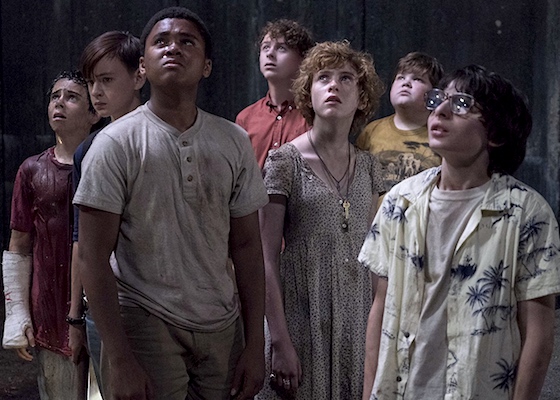
    It also focuses our view of the characters. Rather than seeing them at two very different times in their lives, it becomes a coming-of-age tale… albeit one where they come of age thanks to having to battle a supernatural horror. “It”, aka Pennywise the clown, is effectively and unpredictably scary, because he’s able to turn up at any time in any form. It seems almost like a cheat — a free-for-all excuse for the film to be scary whenever and however it fancies, without the need to follow any monster rules. At the same time, that makes the film less predictable, and therefore more effective, at the headline goal of a horror movie, i.e. scaring you. Also, if we’re parsing this as a coming-of-age tale more than a monster movie, it allows It’s various forms to further develop the characters: each identity it assumes is custom-made to terrify the individual being targeted, and the only rule is you defeat It by overcoming your fear, an act which is (in this movie at least) explicitly tied to growing up.

    I've got 99 red balloons and this is one

    Plenty of people will line up to tell you It isn’t actually all that scary, a level of assessment that is to watching horror movies what boasting who can eat the hottest curry is to dining. Obviously, everyone’s mileage will vary. I found some of it to be suitably unsettling and disturbing, and the “any time, any place” aspect keeps you alert and on edge. The downside is that, for the first chunk of the movie, the film just seems to be a series of unsettling scenes without much of a plot. It gets over that when the gang really comes together, but I can see why the movie ended up being so long: there are too many characters, and because It assaults each with their own personalised horror, we have to wait while the film gives them all individual sequences. Not that any of it is bad, but it threw the pacing off for me. Maybe it would’ve been better if they reduced the size of the gang by deleting a character or two.

    One thing that did get ditched between page and screen is one of the most infamous scenes in King’s novel: a ten-page pre-teen orgy. Though, as it occurs during a section of the plot that we don’t actually see depicted on screen, I guess you could imagine it still happened, if you want. Ironically, while the film may have removed that overt sexuality, it still very much male-gazes the gang’s only female member, Beverly: there’s a scene where all the boys ogle her as she sunbathes in her underwear, and she begins the film’s climax as a “damsel in distress” who has to be rescued by a “true love’s first kiss” kinda deal. She’s not completely useless or without agency, but there’s room for improvement.

    The Losers Club

    What’s perhaps most baffling is that, by the sound of things, the early drafts for this movie (which were rejected and rewritten after original writer-director Cary Fukunaga left the project) did a lot to modernise that stuff. For example, there’s a scene where Beverly flirts with an (adult) pharmacist as a distraction, but, in the original draft, one of the other kids just faked a medical emergency for the same result. No, that’s not the most egregiously sexual thing they could’ve put in (child orgy!), but it’s still putting her in the position of being an object of lust. I guess, much like the scariness of the horror, your mileage will vary on how distasteful this stuff is. Ultimately, it’s a fairly small part of the movie.

    Even if the film runs a little long, I mostly enjoyed It. Its scary scenes are unnerving enough that it works as a horror-show ride, while its coming-of-age aspect is bolstered by really good performances from the young cast, and clear thematic stuff about overcoming fear and the value of friendship. Which almost makes it sound like a kids’ film, but, yeah, don’t go putting this on for younguns — coulrophobia would be the least of their problems.

    4 out of 5

    It is available on Sky Cinema from today.

    Adventures of Zatoichi (1964)

    aka Zatôichi sekisho-yaburi

    2018 #108
    Kimiyoshi Yasuda | 86 mins | Blu-ray | 2.35:1 | Japan / Japanese

    Adventures of Zatoichi

    Another Zatoichi film (the ninth now), another super-generic title. Only in English, mind: best I can work out, the Japanese title translates as something like Zatoichi Breaks Through the Barrier or (considering what happens in the final act) possibly Zatoichi Guard Station Break-In. Even if you can’t translate it in a way that sounds reasonable in English, why not go for something like Zatoichi’s New Year? (That’s when the film’s set, and is referenced many times.) Okay, maybe it doesn’t sound super exciting, but at least it’s more distinctive than Adventures of Zatoichi, which could be literally any of the films.

    Anyway, titling issues aside, the fourth and final Zatoichi film put out in 1964 (which I guess made the New Year thing even more appropriate on its original release) sees Ichi arrive in a village near Mount Myogi, where he intends to be for the first light of the new year. Lots of merchants have also gathered there for the festival, but the local yakuza are demanding an unreasonably high percentage of the takings as tax. Although this subplot facilitates some comic relief in the complaining of a pair of travelling performers, Ichi has other concerns on his mind: there are a couple of good-hearted young women who each need Ichi’s help defending them from the murderous stupidity of men. One, her brother has escaped prison and returned to town; the other, her father, a village elder, has gone missing and she’s looking for him. Both have something to do with the yakuza. In a slight twist on the usual formula, Ichi’s prodigious reputation means the gangsters are afraid of him (rather than assuming they can beat him), but he’s still got his work cut out getting to the bottom of a conspiracy between the gang’s boss and the local magistrate. That’s not to mention the intriguing connection Ichi finds with the village’s old drunkard…

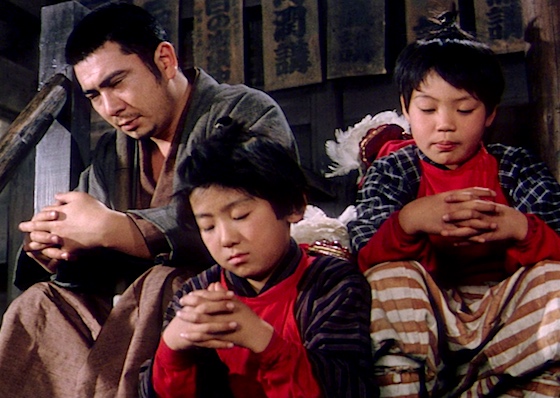
    Z boys

    Everyone else seems to rate Adventures of Zatoichi somewhat poorly. It’s ranked 20th out of 25 by Letterboxd users, the lowest of the series so far, and below some of the post-series Zatoichi films. The Digital Bits go even further, placing it in their bottom three (they haven’t ranked the films, but I checked all their ratings and they only gave three Cs). Other reviews include comments like “a workmanlike but satisfying episode” (Paghat the Ratgirl), “the quality level dips a notch after the outstanding original eight” (D. Trull), and “one of the more ordinary run-of-the-mill Zatoichi films” (Jacob Olsen). Not outright condemnation then, but definite damning with faint praise.

    Conversely, I thought it was rather brilliant. It has a nice, clear, well-connected narrative (something I haven’t always found in previous instalments). There’s a great cast of supporting characters, lots of small roles who all make their mark. It creates almost an ensemble around Ichi, which is a nice change of pace — it really feels like it’s set in a bustling village, rather than a half-empty town where Ichi only encounters three or four people. Tonally the film displays an effective mix of humour, action, drama, and emotion, making for an all-round entertainment. It may not have a unique setup to mark it out like Fight, Zatoichi, Fight, or the flashy direction of Chest of Gold and Flashing Sword, but it’s an above-average example of “standard” Zatoichi. It even boasts another top-drawer climax, with a well-shot and precisely-performed one-on-one duel in gently falling first snow, followed by Ichi taking out a small army to get at the men responsible. Again, it’s not as exceptionally striking visually as some of the recent big finales, but it’s superbly done nonetheless.

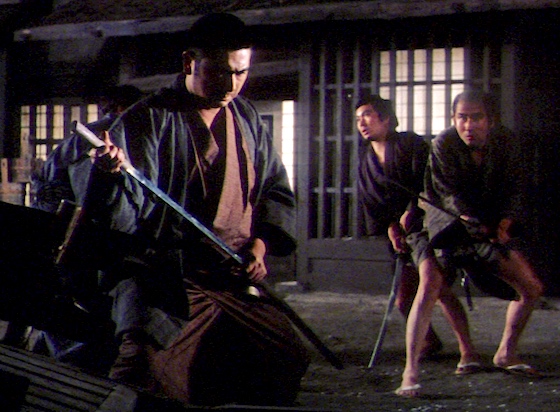
    Live by the sword, pretend to die by the sword

    Also, the film contains one of my favourite moments of the series so far, which is both amusing and encapsulates the character of our hero. In it, Ichi slashes his way through four assailants, then pauses… a moment later, three of them drop dead. Seeing this, the fourth just… lies down beside them. Despite being blind, Ichi can tell the chap’s still alive; but rather than finish him off, Ichi simply motions for him to leave. It’s both funny and shows Ichi’s compassion: he kills because he has to, when people attack, not for the sake of it, or even for a grudge. Similar to this is his badass summation of what just happened near the end: “I only came here to worship the first light of the new year. I expected a quiet journey, with no need to draw the blade in this cane. You brought this all on yourselves.”

    In fairness, the film is not without its problems. The early story about the merchants and the tax rate doesn’t really go anywhere. It establishes the magistrate and boss are bad folk, but then it disappears underneath the other storylines. Also, I didn’t get wholly invested in the conflict between Ichi and the gang’s yojimbo. These kinds of subplots always feel like a do-over of the first film to me, so maybe that’s why more time isn’t spent on it. It makes for a couple of impressive bursts of swordplay and one heart-to-heart chat, but no more than that.

    Adventures of Zatoichi may not be the very best movie this series has to offer, but in revelling in its formula, and doing so much of it so well, it’s one of the films I’ve enjoyed the most. In fact, this would probably be a really good one to introduce people to the series: it’s got most of the key elements, all done really well. It doesn’t deserve to be as overlooked as it seems to be.

    4 out of 5