
Alfonso Cuarón | 111 mins | download | 15 / R
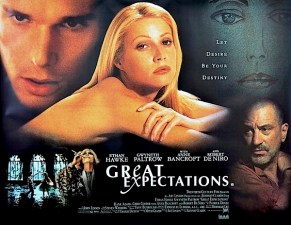 After re-enjoying the classic David Lean version of Great Expectations (which I reviewed in 2007) last week as part of my adaptations module, it’s now the turn of this American-set re-imagining. Despite a generally-held negative opinion toward this version, I found it to be more of a mixed bag.
Its main problem is that it can’t escape its roots. Not a fault in an adaptation, you might think, but in the case of one so radical as this it is a flaw: you’re left comparing and contrasting it with Dickens’ novel and Lean’s film, rather than appreciating it as a film or narrative in its own right. It comes across more as an academic exercise in turning a British Victorian novel into a modern American movie than a believable tale that works in isolation. Indeed, many of the changes appear to be designed purely to help distance it: the changed character names, the focus on the love story, and so on. Yet it directly recreates many scenes from the novel, and it obviously retains its title, despite there being no reference to that in the film itself.
Another product of this re-imagining is an unremitting sexualisation of everything. When Pip — sorry, Finn’s — hand is placed on Ms Havisham — sorry, Ms Dismoor’s — chest his first guess is that it’s her “boob” rather than her heart; when 10-year-old Estella kisses Pip — Finn, even — it now comes with added tongues; Finn — Pip — Finn! — draws now, and what he draws are nudes of Estella; and then they have sex too; and there are undoubtedly other examples that have since slipped my mind. This was pre Y Tu Mamá También, of course, where perhaps Cuaron exorcised this sexual preoccupations — they’re certainly not so evident in Children of Men or (unsurprisingly) his Harry Potter. His penchant for long takes, as seen constantly to great effect throughout Children of Men, also put in the odd pleasing appearance here.
By the end, it’s tricky to know what to make of this Great Expectations. It’s nicely faithful for a modern version, and yet that forbids it from striking out as its own work — it’s a fairly basic romantic film, bookended with some bizarre American Gothic trappings. I think it must stand as neither a success nor a failure, but as an interesting curio in the canon of Dickens adaptations.

That picture was the only one I could find in high enough quality to make a banner image. Honest.
 Documentary, based on the best-selling acclaimed book by Peter Biskind, about the decade in Hollywood between the death and effective re-birth of the studio system.
 I used to enjoy the
 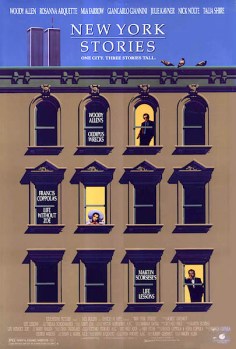 Anthology of three shorts, connected only by the New York setting (which, incidentally, may as well be anywhere in all but the last segment).
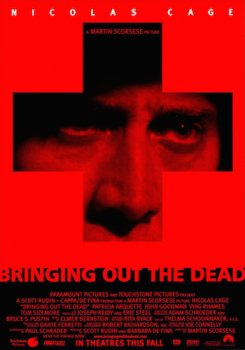 It’s hard to know what to make of this, because by the end it all seems a little pointless. The storyline, which follows Nicolas Cage’s paramedic across three nights in New York, is a mixture of short episodic medical incidents with longer threads that continue throughout. These connect and fall apart, feeling as episodic as the rest, and most of them don’t really lead anywhere.
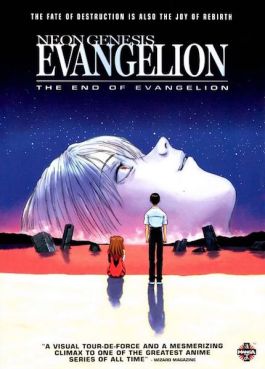 Eight weeks and sixteen films later than I’d’ve liked, I can finally complete the Evangelion story! (For my review of the first film, look
 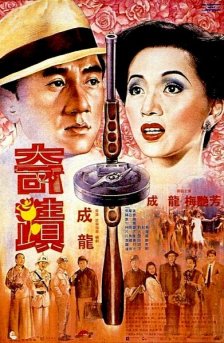 I’ve always been a bit wary of Chan’s films: he’s renowned for using comedy in his action (to help break away from the frequently-applied “new Bruce Lee” label), which isn’t really to my taste; but after we were shown an impressive clip from this in a lecture I felt I had to give it a go.
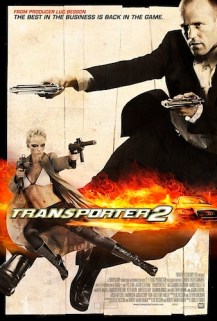 Sequel to
  For those who don’t know, this isn’t the seventh Final Fantasy film — it’s the second; though it’s not a sequel to the
  100Films.co.uk