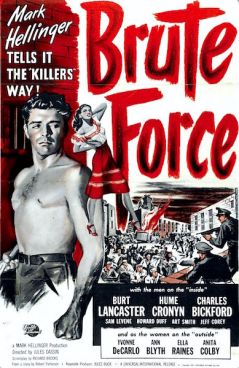
Brute Force (1947)

2009 #73
Jules Dassin | 94 mins | TV | 12

Brute ForceJules Dassin’s prison-set noir concerns a group of inmates trying to escape from the cruel regime of a vicious warden, allowed free reign by an ineffectual governor and target-driven bureaucrats (nothing changes, eh?)

Tonally, it’s varied. Early on it’s quite humourous, with a weak warden, jaunty calypso-singing inmate (who occasionally threatens to tip the whole thing over into a musical) and amusingly drunk doctor. Then there are the flashbacks to the outside world, laden with undercooked romance and awkward dialogue. In the final act it turns decidedly grim: warden Munsey lives up to his lowly reputation, goading one prisoner to suicide and beating another close to death, while the other wardens listen on from outside; one of the good guys betrays his mates, ultimately leading to wholesale slaughter as the escape plan goes awry. A balanced, varied tone is not necessarily a problem, but the flashbacks are almost uniformly unwelcome asides and, by separating the distinctly comical from the resolutely grim by placing them firmly at either end of the film, they don’t quite gel as a whole.

Still, the climactic prison break — including the build-up — is a brilliant extended sequence. Tense, epic and exciting, it concludes with a fantastic action sequence. It also delivers a powerful moral message, underlined by its direct delivery from a prison staff member rather than an inmate. It goes some way to make up for the earlier flaws, like the dialogue that’s occasionally typical of the period’s worst — “I’m just a guy who… explained his entire backstory in one slightly long and unwieldy sentence to someone who already knew it”.

What gets forgotten in all this, perhaps most depressingly, is the fate of those on the outside. We’re told early on that Collins’ love is refusing treatment for her cancer until she sees him again. This seems ready-made to provide justification for a prisoner to escape; indeed, the whole film is skewed this way, as we never discover many of the inmates’ crimes, and those we do hear are either done for good reason or not that bad. But it toes the more obvious moral line by having no one escape, and while the cancer isn’t mentioned again after the slaughter, it leaves what might otherwise seem a morally justifiable cheat (the prisoners are the good guys here — we expect and want them to triumph — but that they don’t is ‘correct’) with a bitter taste.

3 out of 5

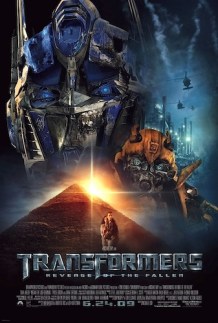
Transformers: Revenge of the Fallen (2009)

2009 #80
Michael Bay | 150 mins | Blu-ray | 12 / PG-13

Transformers: Revenge of the FallenIf Transformers was “from the director of The Rock and Bad Boys”, then Revenge of the Fallen is “from the director of Pearl Harbor and Bad Boys II”. If you don’t get what I mean by that… well, let me explain…

The most striking thing about Transformers 2, as it inconveniently isn’t called, is that it’s over-long and indulgent. Has Bay never heard of an edit suite? The writers of a delete key? Anyone of quality control? There are too many ideas, when some should’ve been dropped for clarity and speed; the film could — nay, should — have been seriously trimmed down at every stage of production. By my reckoning, as much as an hour could be lost while still retaining all the best bits of action, humour and plot. Consequently, it’s simply not as much fun as the first film, exacerbating rather than fixing all its flaws and losing most of its charm (it didn’t have the last in spades, but it had enough).

There are good bits though. The humourous scenes highlight this contrast the most: some are genuinely amusing, others simply not, and typically go on too long. All the stuff with Sam at college — why? Especially his mum accidentally eating drugs. Or the jive-talking twins, who’d be this decade’s Jar Jar Binks if only they were as memorable. There are countless other examples — if you’ve read almost any other review you won’t need me to mention the robot balls. When the writers don’t try so hard, however, there are pleasurably funny scenes.

This applies to the action too. Some of it is exciting, but Bay has no genuine concept of rest or pause — sequence after sequence is thrown at the viewer with mind-numbing intensity. There are good beats liberally scattered throughout, but so many sequences means no stand-outs are left because there’s no time to properly process any of them. As in the first film, robot-on-robot fighting is hard to decipher. These Transformers are too realistic (as it were) — they’re all made up of thousands of gunmetal-grey parts; as soon as they come into contact you can’t tell which bit belongs to who and what exactly is hitting where. Even with the extended slow-mo shots — of which there are a lot more than in the first film — by the time you’ve actually worked out what you’re looking at, Bay cuts to the next confusing ShakyCam moment.

When things do slow it’s for brazen ‘character development’ or clunky plot exposition, both coming in great big tell-don’t-show info-dumps. At one point, one character literally urges another to “explain the plot”. The character scenes are equally forced, the dialogue functioning at a level of state-the-obvious inanity. Bay treats women with a similar absence of subtlety — every scene featuring a female is shot like a moving version of FHM, all skimpy clothes and slow-mo jiggling. The only exception is Sam’s mother.

Technically, the CGI is almost flawless, only the occasional brief shot failing to achieve little less than photo-real perfection. Bay’s typical tech fetish is also in evidence, suggesting he looked at a couple of car and military mags when he picked up that inspirational FHM. Bizarrely, however, the sound mix strikes me as a flawed technical element. I found it so odd that I had to download the digital copy and listen in plain old stereo to check there wasn’t something haywire in my surround setup. By the end it’s sounding as you’d expect (largely), but throughout there are unusually spartan patches, lacking in the music or hard-hitting explosive sound effects one expects. Perhaps we should be grateful that it’s less bombastic and wall-of-noise than you normally find in such action films, but it renders the soundtrack disconcerting at times.

On its cinema release, Revenge of the Fallen unsurprisingly jumped on the recent bandwagon of having an IMAX release, although at least some parts of the film were shot for the format — just like The Dark Knight, although with nothing like the same level of attention lavished on this in press coverage. According to the BBFC, the IMAX-exclusive version ran 91 seconds longer — 151:16 as opposed to 149:45. According to my player, the Blu-ray runs 149:53. It seems that, despite Bay’s promise of releasing the slightly-extended IMAX cut, complete with Dark Knight-style shifting aspect ratios, Paramount have been less faithful than Warner. Perhaps they considered the typical Transformers 2 fan incapable of grasping such a concept. Not that it really matters — if there’s one thing this film doesn’t need it’s to be any longer.

At times it’s like an uncomfortable amalgamation of Saturday morning cartoon and more adult-orientated action-comedy. On the one hand you’ve got a top-secret organisation with a semi-plausible acronym for a name (NEST) that sees soldiers and good giant robots travelling the world fighting bad giant robots, all without the public noticing. On the other, you’ve got whole sequences about drug use, almost brutal fight scenes, and lad’s mag-level slow-mo shots of girls running, changing and having their short dresses hiked up by robotic tails. (To be fair, there’s only one robotic tail.) In other words: if you’re an average 13-year-old boy, this is the Best. Movie. Ever.

For the rest of us, Revenge of the Fallen is, at best, the kind of blockbuster that might benefit from a second viewing, though probably after some time has passed. It’s not likely to create a better impression of the character development or comedy, but perhaps the MacGuffin-packed plot (there are at least three) would be easier to comprehend, the mythology-dumps easier to stomach, and the massive fights easier to follow. At worst, it’s a hurried production that would have benefitted greatly from some judicious editing from script level upwards. This is what happens when a studio allows someone like Bay an essentially limitless budget and less than two years to turn a blockbuster around.

3 out of 5

Transformers: Revenge of the Fallen is released on DVD and Blu-ray in the UK tomorrow.

Babel (2006)

2009 #41
Alejandro González Iñárritu | 138 mins | TV (HD) | 15 / R

BabelMulti Oscar nominated and one of Ebert’s Great Movies, Babel is one of those films that comes with a lot of expectation riding on it. The fact that the only Iñárritu film I’ve previously seen is 21 Grams, which I thought was distinctly overrated, takes the shine off those expectations. Probably for the best.

The quickest way to assess Babel is to say that it is about something — or, About Something. The plots, such as they are, aren’t really the point; nor is how they connect, or what chronology they actually occurred in — this isn’t a Memento or a Rashomon, a narrative in odd pieces designed to be reconstructed by the viewer. Naturally, because it is About Something, the Something it is About isn’t made blindingly clear, though there are many contenders — loneliness, miscommunication, culture clashes, the ripple effect, children, and on. Perhaps this means it isn’t as focused as it could (or should?) be; perhaps Iñárritu revels in ambiguity, which isn’t necessarily a problem.

On a relatively surface level, then: the Japanese story barely connects to the others, which are all more directly woven together. Even if their connectedness isn’t the point, when the others are so clearly and directly related it leaves the Japanese thread feeling the odd one out, almost tacked on to the others. It’s probably a coincidence that it’s also the film’s best story, containing about as much incident and interest as the other three put together.

The central character in that particular thread is portrayed by Rinko Kikuchi, who justly earnt a Best Supporting Actress Oscar nomination for her work. The film’s only other Oscar acting nomination went to Adriana Barraza, in the same category, for her role as a Mexican nanny. Again, a deserved nod, as these are easily the two most compelling performances in Babel. (They lost to Jennifer Hudson in Dreamgirls. I’ve not seen Dreamgirls, but as the other nominees were Abigail Breslin (for Little Miss Sunshine) and Cate Blanchett (for Notes on a Scandal), I’m willing to bet she was the least deserving of all five.)

If the Japanese thread is the best then Brad Pitt and Cate Blanchett’s story is the weakest of the bunch, managing to underuse both those leads and a host of British talent too. The other two stories are equally slight, but at least muster up some genuine emotion.

Babel is the kind of film that it’s easy to overrate because, ooh, doesn’t it seem clever. Conversely, it’s easy to underrate because, ooh, doesn’t it seem pretentious. Naturally, therefore, I’m going to come down right in the middle (but note that the Japanese story on its lonesome would earn a 4).

3 out of 5

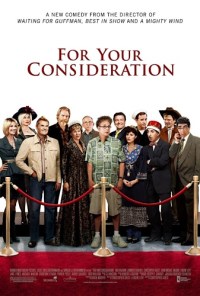
For Your Consideration (2006)

2009 #57
Christopher Guest | 79 mins | TV | 12 / PG-13

For Your ConsiderationThe makers of This is Spinal Tap and Best in Show — along with all their usual cast members — swing their satirical sights from others’ work to their own industry. Unfortunately, it’s not a patch on their previous efforts.

The biggest problem is that most of the gags feel a little familiar. It’s not that they’re unfunny, just that they don’t feel very original. Worst off are the numerous jokes about the internet, mobile phones and other technology, which feel more 1996 than 2006. It’s all lacking in subtlety, taking a broad swipe at the whole filmmaking industry rather than incisively mining its constituent parts for something insightful.

The best bits come in the second half, when the cast and crew (of the fictional film-within-a-film, that is) hit the campaign trail to promote their movie. The styles of TV shows that various people appear on — the different levels awarded to the leads, other cast members, the writers, and so on — has some decent satire, the closest For Your Consideration comes to being truly revealing.

Most disappointing is that this should have been so good. The team who basically invented the spoof documentary finally taking on their own industry? Brilliant! But it feels like they felt the same way and rushed into production without properly thinking it through. Which, in its own way, is rather ironic.

3 out of 5

Saw II (2005)

2009 #60
Darren Lynn Bousman | 89 mins | TV (HD) | 18 / R

Saw IIThe games-playing slaughterfest returns in what I’m told is many fans’ favourite entry in the series. Maybe they’ve never seen Cube

Saw II is a horror sequel, which means it can’t help but take the same basic premise as its originator: serial killer Jigsaw locks a number of people in a room with a series of games/traps, which they can escape only if they can work out the clues to defeat them; and if not, they’ll be brutally murdered and/or disfigured. Where Saw II comes into its own is that it dares to do something a bit different with this premise, usually the hallmark of a worthwhile sequel.

Instead of two victims locked in a dingy bathroom we have too many to reasonably count locked in a whole house. Instead of the killer being largely unseen he’s a constant presence, in conversation with a police detective while events in the house unfold on monitors nearby. The film’s raison d’être is the same — people get injured/killed in nastily inventive ways — but someone (co-writer/director Bousman, in fact) actually bothered to come up with a story that’s more than superficially different.

Despite the terror and gore — and there’s a healthy (a word I use very, very loosely) dose of each — Saw II is arguably even more like a thriller than its predecessor. The police are more heavily involved this time, actually catching up with Jigsaw, and as much time is devoted to Detective Matthews’ negotiation/chat as it is to the predicament of the victims. Here we get a chance to see what a great villain Tobin Bell makes — subtly so, not the typically OTT psychopath killer designed to show off an actor’s ‘skill’. He’s not quite Spacey’s John Doe, but his quiet, determined, reasoned killer is a cut above the average. That he’s afforded a moderately reasonable motive and some character development is certainly more in line with thrillers than horror movies.

Meanwhile, in the house, Bousman seems to be going for a Cube-like atmosphere: a disparate group of people wake up together and must find a way out of a strange, booby-trapped location. This starts out well enough, unravelling both questions and answers at a pleasing speed, but unfortunately is unable to sustain it convincingly. Few of the victims achieve the level of distinct characterisation that Cube managed, suggesting there are more people locked in the house than the writers could comfortably handle or the story could really support.

Indeed, even the primary selling point is abandoned surprisingly quickly — it seems the writers don’t have enough ways to kill people. At least one just drops dead from the virus-that’s-there-from-the-start, which feels unsatisfactory, while another happens to wander into a trap when it’s time to dispatch someone else. Considering the amount of planning we know Jigsaw gives to his games, we should at least see that there are enough ways to kill everyone, even if some are then subverted through escape or avoidance.

There’s some redemption to be found at the climax, which produces a final round of twists that are almost equal to the first film’s triumphant reveal. Again I won’t give it away, but I’m sure some have called the biggest twist a cheat, on a par with “and they woke up and it was all a dream”. If they have, they’re wrong: it’s entirely in keeping with both the games Jigsaw might play and the flashback-driven style of the first film, not to mention that — as the insistent concluding recap shows — there are clues seeded all the way along. If it’s not as audaciously memorable as the twist in Saw, that’s through no fault of it’s own.

Saw II doesn’t just rehash the original, which is something to be thankful for in a horror sequel. There’s something close to character development, a nice opening setup, and an enjoyably twist-stacked ending. Unfortunately it can’t quite connect that opening to that ending, in spite of its brief running time, which means it fails to equal its predecessor’s overall quality. Fair effort though.

3 out of 5

Saw III premieres on Channel 4 tomorrow. Saw VI is in cinemas from Friday.

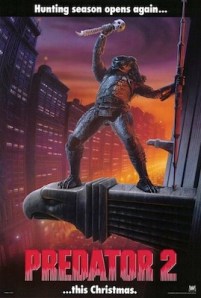
Predator 2 (1990)

2009 #17
Stephen Hopkins | 104 mins | DVD | 15 / R

Predator 2I’ve been looking forward to Predator 2 for a number of years after a friend told me that, despite its poor critical standing, it’s actually a jolly good film. (“A number of years” is the average time it takes me to act on such a recommendation; and, knowing this particular friend, “jolly” was probably not the word he used.)

Here, action director extraordinaire John McTiernan hands the reigns over to Brit Stephen Hopkins (probably best to be remembered for helming half of 24’s phenomenal first season, though you can recall the Lost in Space film and A Nightmare on Elm Street 5 instead if you like) and the action is moved from a jungle to the concrete jungle (see what they did there?) of LA, in the near-future year of 1997. Made in 1990, Predator 2 is set in the future for no good reason — sure, there’s a big gang problem, but this is fiction, you can set it now and still make up things like a huge city-affecting change in the status quo; and that way you don’t have to have silly semi-sci-fi guns either. Not to mention the fact that before too long it seems like they’d rather forget this is the ‘future’ and just get on with things. In the end, all it does is seriously date the film: in almost every facet, from screenplay to costumes to direction, it feels more like 1987 than 1997.

Sadly, this isn’t where the problems end. Out of four Aliens and two Predators, this has to be the only one that doesn’t bother in the slightest with a slow build up of tension. Sure, Alien Resurrection gives us the actual aliens much earlier than the others, but they’re not really in force for a fair old while. Predator 2, on the other hand, opens in the middle of a gunfight that lasts for the next ten minutes, and there’s a second before the half hour. This isn’t necessarily a problem in itself but there’s nothing inspired about any of it, especially the gang drug war plot that provides most of the focus.

It’s a shame this fails so miserably, because the franchise re-location is actually a commendable thing. I’ve talked a few times about the Alien sequels dramatically switching genres, but Predator 2 leaves them looking as if they couldn’t be more alike. Where Predator is a behind-enemy-lines/covert mission/jungle/war actioner, Predator 2 is an urban drugs crime police, erm, actioner… though both with a sci-fi twist, obviously. But the vastly different settings and setups mean that, even with the involvement of the same sneaky alien hunter, the films have a vastly different feel too. It’s just a shame Predator 2’s “urban jungle” concept is so poorly executed… for a while anyway, because when it finally reaches the 30-minute climax things suddenly get quite good.

It’s a bit like all the time, effort and money went on creating a good lengthy climax, then any-old hour-long urban crime movie was bolted on the front to create something feature-length. In fairness there are some good bits earlier on, but the final half-hour (or so) feel like it’s from a slightly different, slightly better movie. The dialogue improves, suddenly filled with some decent lines, and it centres on a mano-a-mano (or mano-a-alien, really) fight that’s nicely reminiscent of the first film while being totally different, sprawling through locations and using lots of high technology. There are still flaws — it nicks the government agents’ motivation from Alien wholesale (they want to capture the alien for its weapons technology, which they admire it for) — but they’re largely forgivable.

Perhaps best of all is that throughout the climax it expands what we know of the Predator, rather than just rehashing what we learnt in the previous film, as in so many weaker sequels. There’s more of its weaponry and its medical kit, what amounts to a tour of its ship, hints of its society and culture, and it’s given a nice balance of fallibility — not so indestructible that it’s stupid when the hero wins, but not so weak as to be undramatic or inconsistent. There’s one especially good moment where the Predator discovers a character is pregnant and so spares her, a nice touch both in terms of how it reveals the previously-unknown pregnancy (through the Predator’s heat vision) and in revealing the creature’s morals. It’s this sense of honour and a heightened mental capacity that marks the Predator out from other such creature movies, especially the Aliens, who are essentially animals (it would seem), albeit cunning ones.

Predator 2 is a dire film rescued by an excellent finale. As well as a decent chase and fight, it also builds on the first film’s mythology, revealing a decent amount about the Predators and hinting at more, without going too far or spelling it out too bluntly. If only such qualities could have extended into the opening hour, this could have been a sequel on par with the original.

3 out of 5

Tomorrow, AVP: Alien vs. Predator.

Red Riding: 1980 (2009)

aka Red Riding: In the Year of Our Lord 1980

2009 #51
James Marsh | 93 mins | TV (HD) | 15

This review contains major spoilers.

Red Riding: 1980The second instalment of the Red Riding Trilogy sets out its stall with a stunning opening montage, covering six years of the Yorkshire Ripper case in as many minutes through news footage and faux news footage. In one fell swoop this establishes its own storyline, fills in some of what’s happened since 1974, and sets itself apart from its predecessor: this one’s based on fact. Well, a bit.

Unfortunately, a factual grounding hasn’t helped the story one jot. Where the first idled, this meanders, flitting between the Yorkshire Ripper, the investigation into the Karachi Club shooting (which closed 1974), and the private life of lead character Peter Hunter. It’s the cover up surrounding the middle of these that’s the most interesting, but that’s also the bit with the least time devoted to it. Most is spent on Hunter’s investigation into the investigation of the Ripper case, though by the end it becomes apparent this exists to cover the ‘real’ story — which is, of course, the Karachi Club cover up. Consequently neither are covered with the appropriate depth: the Ripper investigation is never a serious thread, the team we follow uncovering nothing significant and the Ripper himself captured by chance, off-screen, by a previously-unseen regular constable; and the incidents at the Karachi Club, and their lasting impact, are just about clarified but given no serious weight before a last-minute explanation.

If that sounds complicated, it isn’t. As in 1974, it’s all too straightforward: the people you suspect did it actually did, as it turns out, and there’s no serious attempt to conceal that. In fairness, it just about manages one surprise, right at the end, and the moment after this — where Hunter’s murderer shows remorse with one brief, subtle facial expression — is by far the best bit of the film. Worse than the lack of suspense, 1980 seems to forget its own plot all too often. Hunter is employed by the Home Office, for example, and told to report directly to them and them alone. But then we never see those characters again, not even when he’s later dismissed by lower-ranked officers — why not return to the men he was, supposedly, actually employed by? Other plot points are pushed aside too soon, forgotten about or just abandoned.

Characters and locations resurface from the first film — an unsurprising continuity, but pleasingly almost all appear in a context that’s actually relevant to the plot, rather than a mere catch-up on a previously-known person. Some of them have great import now, their role in the trilogy apparently fulfilled, while others remain little more than cameos with no bearing on the story, suggesting an even bigger part still to play. This works quite well, creating a real world where characters come and go rather than one that is obsessively — and unrealistically — interconnected.

The same can be said of the cinematography. Marsh frequently finds a beautiful or unusual shot, enlivening proceedings considerably. The 35mm glossiness doesn’t evoke the feel of a grimy past quite so thoroughly as Jarrold’s hazy 16mm, but as this is now the ’80s perhaps that’s the point. Nonetheless, the setting conveyed is still a drab, dreary — and constantly damp — North.

Underscored by a plot that doesn’t really come together, and largely bears little relation to the other two films, 1980 is the weakest entry in the trilogy.

3 out of 5

Red Riding: 1974 (2009)

aka Red Riding: In the Year of Our Lord 1974

2009 #50
Julian Jarrold | 102 mins | TV (HD*) | 18

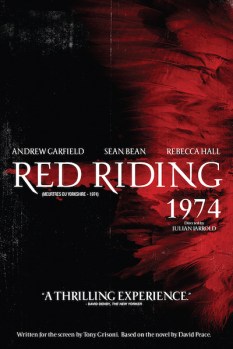
Red Riding: 1974The Red Riding Trilogy covers nine years of police corruption and child kidnap/murder in Yorkshire, amongst one or two other things, and begins here with a very film noir tale, courtesy of author David Peace and screenwriter Tony Grisoni, slathered in neo-noir stylings, courtesy of director Julian Jarrold.

Jarrold is most recently responsible for Kinky Boots, Becoming Jane and Brideshead Revisited, all of which stand in a sharp juxtaposition to the style and content of Red Riding. But turning from his lovely English-as-they-come costume dramas to something altogether nastier should come as no great surprise, for Jarrold is merely returning to his TV roots: in the mid ’90s he directed episodes of Cracker, Silent Witness and Touching Evil.

He certainly seems to know his territory, but perhaps he knows it too well — though this is also the fault of Grisoni and, perhaps, Peace — as the plot that he unfolds is not only familiar but told as if he’s all too aware we know what’s coming. The feeling one gets is of a British James Ellroy, albeit a low-rent, less complex version. (The same is true of 1980, though for me 1983 manages to escape such comparisons.) The story idles along, not exactly slow so much as in no hurry, full of near-clichéd plot points and an unrelentingly standard structure. These things aren’t necessarily a problem, but when you’ve got as big and bold a reality claim as the Red Riding Trilogy they feel out of place.

Another recent point of comparison would be David Fincher’s Zodiac — young newspaperman on the hunt for a serial killer in an inspired-by-fact ’70s setting — though this does 1974 no favours. It may be grittier than Fincher’s film, but it lacks the polish, the originality, and manages to feel slower, despite being a whole 50 minutes shorter. However much arty photography, disjointed storytelling, relatively dense accents and ‘gritty reality’ is plastered over the barebones of the tale, the familiarity of it — to both viewers and the makers, who don’t even seem to be trying — means there’s not an ounce of suspense or surprise to be had.

The cast is made up of established names, familiar faces and rising stars, many of them unfortunately stuck in familiar roles or otherwise left stranded by the unrewarding material. If they’re not quite stereotypes it’s because they’re too bland, lacking enough discernible character traits to reach such lofty heights. Occasionally this is because, with two films to come, some minor parts here have a major role later, but this can’t be said of them all. As the lead, Andrew Garfield’s journalist is as much of a stock character as the plot he finds himself in: a young reporter type, idealistic among journalists who no longer care (if they ever did), hunting to expose The Truth. Again, it could work, but is belied by the insistence — in both promotion and filmmaking style — that Red Riding is something more than Another Murder Mystery. Only Rebecca Hall, as a mother whose young daughter went missing years earlier, is granted the material to give an outstanding performance — which she does, easily justifying her recent BAFTA Rising Star nomination.

Besides Hall, the best thing about 1974 is its dull, desaturated photographing of grimy, desolate locations, where any colour that isn’t beige desperately wants to be. It suits the story and era perfectly, and the choice of 16mm seems to add a level of haziness that is equally appropriate. It’s perhaps indicative of everything this is aiming for that the most beautiful imagery is of an incinerated gypsy camp. Rendered almost black and white by the soot and desaturisation, ash floats through the air like snowflakes as Garfield stumbles through it, the whole picture a vision of Hell. It’s a kind of perverse beauty, true, but that’s also entirely in keeping with Red Riding.

1974 is a stock noir tale, dressed up with fancy filmmaking techniques and claims of realism to look like something more truthful, more real, more Important. And it makes me a little bit angry because of it. Maybe the violence is more realistically depicted than your average genre entry, maybe the police corruption is a little more plausible — then again, maybe it isn’t — but the real story here is so familiar they haven’t even bothered to hide the plot beats and twists properly, no doubt assuming a “gritty” veneer plastered over the top would do the job for them. It doesn’t. Maybe 1974’s grimy setting, brutal violence and unbeatable police corruption are all true to life, but the familiar and predictable plot leaves the realism feeling like no more than a pretence.

I was enjoying 1974 a lot more by the time the unexpectedly satisfying conclusion came around, but the sense that it had tried to pull the wool over my eyes throughout — and not in the good way a thriller should — just leaves a bitter taste.

3 out of 5

* Though I watched Red Riding: 1974 on 4HD, it’s my understanding that it was upscaled. ^

The Red Riding Trilogy

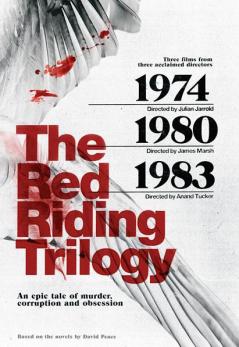
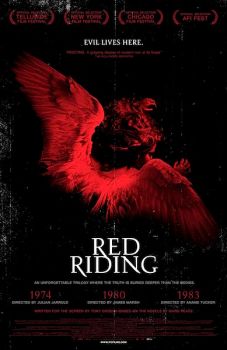
Red Riding Trilogy UKYou’d think Red Riding was a TV miniseries, wouldn’t you? After all, it was on Channel 4 on the same day for three consecutive weeks (recently repeated over three consecutive nights).

But the promotion — on iTunes, for example, or of Silva Screen’s soundtrack releases — is very keen to make reference not to “Red Riding” — as in, the title of a TV series — but “The Red Riding Trilogy” — as in, a series of films. Indeed, they are frequently referred to as “the films” (and similar variations thereof) in promotion and press, have received screenings at various film festivals and cinema releases in much of the rest of the world, including the US, and several other production and style points could also be rallied to confirm them as a film trilogy rather than miniseries.

As that’s how the makers would most like them to be regarded, then, it seems only fair to treat them as such. And so:


“The feeling one gets is of a British James Ellroy, albeit a low-rent, less complex version. The story idles along, not exactly slow so much as in no hurry, full of near-clichéd plot points and an unrelentingly standard structure. These things aren’t necessarily a problem, but when you’ve got as big and bold a reality claim as the Red Riding Trilogy they feel out of place.” More…

3 out of 5


“Where the first idled this meanders, flitting between the Yorkshire Ripper, the investigation into the Karachi Club shooting, and the private life of lead character Peter Hunter. Most time is spent on Hunter’s investigation into the investigation of the Ripper case, though by the end it becomes apparent this exists to cover the ‘real’ story — which is, of course, the Karachi Club cover up. Consequently neither are covered with the appropriate depth.” More…

3 out of 5


“Tucker’s film bests its predecessors in almost every assessable value. The story and characters have more genuine surprises and suspense than ever, while the performances are at the very least the equal of what’s gone before. Unlike the other two films, where the corrupt cops were little more than cartoon villains despite claims to the contrary, 1983 makes their brutality really felt.” More…

4 out of 5


Red Riding Trilogy USMy final thoughts about Red Riding — other than “that was disappointing” — are stuck on the reality (or not) of the police corruption it portrays. It’s difficult to know whether anyone who believes our police were never so nasty as this is naive, or whether anyone who believes they were quite this bad is paranoid. The truth no doubt lies somewhere in between.

Despite my disappointment with the majority of the Red Riding Trilogy, I intend to return to it some day: considering my enjoyment of the third instalment and the adjusted expectations that come from being disappointed first time round, the potential inherent in the trilogy means it certainly merits revisiting.

The X Files: I Want to Believe – Director’s Cut (2008)

2009 #44
Chris Carter | 104 mins | DVD | 15
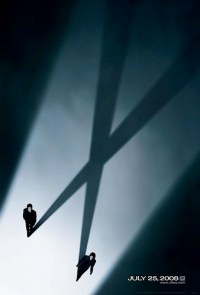
Six years after the once-phenomenal TV series meandered to an inconclusive conclusion, Mulder and Scully were back at the cinema, a decade on from their previous between-seasons big screen outing. The big threat this time was not aliens, however; nor even something more Earthly supernatural; but rather, where they would find an audience? There are now kids old enough to watch this in a BBFC-endorsed fashion who weren’t even born when the series started, and that’s not to mention the misguided attempt to pitch this as a Summer blockbuster.

And if there’s one thing I Want to Believe isn’t it’s a Summer blockbuster, which its snowbound setting arguably gives away to even the most casual observer, while its lack of action sequences and focus on spooky goings-on and character relationships — not to mention that none of these characters are requisitely young enough to head up a typical Summer Movie — should have been the clue to studio execs. And, unsurprisingly, the release strategy failed, leaving audiences either disappointed or not even turning up. As with so many perceived flops these days, it seems to me, I Want to Believe didn’t actually flop: off a $30m budget it made $68m worldwide. Though as only $21m came from the US, where the consideration of box office stats is often highly self-centred, it’s easy to see why many believe it did. Such perception, coupled with poor reviews and that problem of finding an audience, may mean there’s not a third movie, which seems a shame with 2012 on the horizon — quite nice timing for a (last-ever, I should think) instalment.

But let’s return to the issue of how this film was perceived, because I think that’s key to why it was so poorly received. The problem here is that it’s an X Files movie; not because there’s anything wrong with another film for that series, and not because it’s a bad version of The X Files, but because that title carries certain expectations — not only from fans but, with greater relevance to any widespread success, from the general public. Witness the IMDb thread entitled “Where the F were the aliens”, for example. Were this just an entirely standalone supernatural-tinged thriller — and consequently released in a sensible non-Summer slot — it probably would’ve gone down a bit better.

As it actually stands, I Want to Believe is not the kind of X Files most people were expecting — i.e. Something To Do With Aliens, and it’s no spoiler to say that there’s not a single one to be seen — forgetting that the series was never just about extraterrestrials. The idea that I Want to Believe was a bit rubbish and thoroughly disappointing is consequently as much (if not more) the fault of those viewers and reviewers who expected a different kind of film and didn’t get it. That said, it’s a shame that I Want to Believe isn’t wholly successful as the kind of film it’s trying to be either: on the surface, a standalone low-key supernatural thriller — though it fails to explore or explain its fantastical and scientific ideas as fully as one would like, particularly during its lacklustre (anti-)climax — but one that also tackles issues of moving on, obsession and belief, and how they can impact on a relationship — though with all the weight you’d expect in the belated sequel to a sci-fi TV spin-off.

Mainly, however, it’s about belief. The examples of this are too numerous to mention, but a clear one is the subplot involving Scully’s fight to treat a terminally ill boy. The thread bears little relation to the main supernatural plot, which was another point of confusion for many viewers, but if you consider the film as a commentary on and examination of the various forms and merits of belief it begins to slot in a lot better. Perhaps this is another case of a filmmaker attempting something beyond what audiences were expecting to invest in terms of intelligence, although if one accepts it’s there and a significant part of the film it probably begins to pale as a relatively light and underdone exercise. Still, it’s hard to deny that belief is the film’s central theme, which pleasantly turns the title from a generic catchphrase from the series, as it initially appeared, to a none-more-appropriate moniker.

Perhaps distracted by his thematic intents, writer-director Carter rushes some plot points, though he may also be limited by budget constraints and the need to make a distinctly R-flavoured movie hit PG-13. While the Director’s Cut adds three-and-a-half minutes of material, which Duchovny asserts is mainly gore that was cut to avoid an R certificate in cinemas (full details of which can be found here), there’s still nothing that looks as if it would’ve been out of place on conservative US network television, and obviously no effort has been made to give the main plot some breathing space.

The same goes for the guest cast, most of whom are thoroughly underused. Billy Connelly makes a good show of it, but Amanda Peet’s FBI agent has much unfulfilled potential. Yet at other points Carter lets things spool out comfortably — too comfortably, some might argue. One of these places is the relationship scenes between the two leads. The amount of attention lavished on this might lend credence to a theory that the film is as much about a pair of ostensibly retired paranormal investigators as it is this particular case, and through that again a consideration of obsession and belief.

The large amount of time spent on Mulder and Scully’s relationship fortunately doesn’t turn the film into an effort solely for the benefit of ‘shippers’. There’s definite space here for a portrait of two people in a relationship who have tried to move on from their old life but just can’t, and at times I Want to Believe does achieve such lofty aims. Little nuggets of information — such as the fact they’re even in a relationship, or that they once had a child together — drop in almost from nowhere in a way that undoubtedly sounds just like dialogue to a knowledgeable fan, but to a more casual viewer works as a slow uncovering of these two characters. Unfortunately such quality is fitful, especially as the movie goes on, and while the nine-seasons-and-one-movie of backstory initially just add depth if you know about them, it’s some time before the sudden and underwhelming climax that it feels they’re dictating events a little too much. What was shaping up to be a workably standalone depiction of two characters almost becomes just a status update on Mulder and Scully.

And here lies the rub: at times, the Second X Files Movie gets too caught up in being just that. There’s nothing wrong with that per se, but it could do with remembering it’s a Movie and not just another X File — especially if it wants to find any new (or even lapsed) viewers. When Assistant Director Skinner turns up it’s the final nail in the coffin for any shot at independence. As a fan, it’s impossible to begrudge a brief but heroic last-minute appearance from Mulder and Scully’s long-time ally, but as an objective viewer, he’s just some bloke who turns up with no introduction just in time to play a major role in the climax. It’s a misstep that, along with an accumulation of others, seriously damages the film.

But does an X Files movie need to be independent? Should nine seasons (and one movie) of backstory be ignored? Well, yes and no. There’s nothing wrong with making a “where are they now?” fan-pleasing reunion, but that would belong on TV with the bulk of the thing being commemorated. In the cinema, six years distant and billed as a standalone tale (note that it’s not even The X Files 2: I Want to Believe, never mind The X Files 204: I Want to Believe), it ought to stand on its own two feet and work entirely as a self-contained piece of drama. That it fails in this is perhaps the most disappointing aspect of all for me: it makes it infinitely harder to defend this as a supernatural thriller that deserves to be judged entirely on its own terms, rather than with some established knowledge of what The X Files ‘is’, when the makers are relying on those self-same established notions to tell their story.

Never mind finding an allusive audience, this is the film’s real battle: when Carter gets too caught up in making The Second X Files Movie, shifting what’s working well as both The X Files and A Movie into straight-up An X Files Movie territory. It’s this failure to be independent — not to the point of ignoring the series’ backstory, I should clarify, but to a point where this film can be wholly appreciated without ever seeing The X Files — that ultimately holds I Want to Believe back from becoming a great horror/thriller/drama movie in its own right. It’s frustrating because so often Carter comes tantalisingly close to fulfilling such ambitions, and if he had I’d have no qualms about defending this movie as an underrated (though, it is), misunderstood (though, it is) and independent supernatural-flavoured drama. Sadly, however, I think I just want to believe it is.

3 out of 5

The X Files: I Want to Believe premieres on Sky Movies Premiere tonight at 9:45pm, then at various times throughout the week. It’s probably the theatrical cut, but who can say?