
Iain Softley | 102 mins | TV | PG / PG
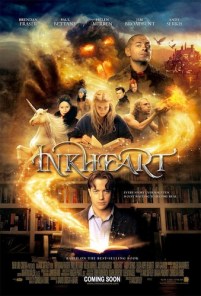 Shot in late 2006, originally scheduled for release in December 2007, ultimately pushed back twice and finally hit cinemas December 2008… what’s wrong with Inkheart?
Well, the biggest flaw is that it doesn’t bother to set out the rules, a major oversight in a fantasy movie such as this. The central conceit is that Brendan Fraser’s character is a Silvertongue: when he reads a novel aloud, what he’s reading about enters our world — and, in exchange, some one or thing is sucked into the book. But how is it decided what comes out and what goes in? What can and can’t be read? Why not just write your own story to get you out of trouble? We can figure some things out as the story trundles along, but it’s often too little too late, particularly when the film continues to throw in things that doesn’t seem to make any sense with what we’ve already witnessed.
The lack of questions or explanations also impairs the characters, suggesting they don’t have the intelligence to query events. At times it’s fine that they’re a bit lost, that they don’t know all there is to know about these abilities — many of them are just finding out about them too — but at others, they seem aware of some rule or other and just haven’t bothered to explain it to us, or accept something that clearly the author knows about but neither we nor they do. Perhaps there’s a pile of deleted scenes that fill in some of these gaps, not to mention others in the plot, but it seems doubtful — if they do exist, why were they removed?
 A side effect of not establishing the central concept’s rules is that the film doesn’t play with it enough. What, if anything, happens if you just change the words while reading? How is it determined what comes out of the book, what goes in, and can these be influenced? What happens if two Silvertongues read the same text at once? There are other things it would be interesting to see, but those require a more detailed description of some of the few rules that can be discerned so I won’t trouble you with them now.
The last act is messy. Despite the lack of concept-exploration, the plot seems to run out of steam and ideas, reducing itself to a variety of captures, escapes and chases around the castle, until everyone’s finally where they’re wanted for The Big Showdown. This too is a mess, flooding the screen with almost every character, creature and concept introduced so far. It’s such a muddle of characters and actions that it’s almost endearingly barmy.
Helen Mirren and Jim Broadbent lend some quality to proceedings — they get to have fun in supporting roles even if they’re only given the odd moment to shine — while Andy Serkis is always good value as a hissable villain. Paul Bettany is amiable as the film’s most interesting character, conflicted fire-breather Dustfinger.  While everyone else is straightforward, predictable and/or pantomime, Dustfinger is torn back and forth between helping the heroes, his inherent selfishness, his fear of returning home, and his desire to see his family again. Brendan Fraser, the ostensible lead, is as adequate as ever but outshone by almost everyone else, not least Eliza Hope Bennett. She’s a minor find as Meggie (who I rather suspect is the main character in the book, but here is trumped by ‘star’ power), displaying more believability than most young teenage leads manage in films like this.
For all these moans, Inkheart is a likeable film, and for anyone prepared to just go along with it may find it more entertaining. There are plenty of good or promising facets, not least the concept of Silvertongues, but the lack of clear rules create flaws it’s hard to ignore, ultimately leaving the viewer to long for a better screenplay. A somewhat wasted opportunity.

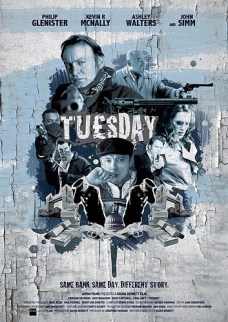 Tu£sday is a low-budget crime thriller, in which several groups of people all try to rob the same bank on the same day — hence the clever title. Unfortunately, the concept is much more interesting than the film writer/director Sacha Bennett has forced it into.
 As the film barely scrapes up to a theatrical running time, there’s a suspicion that the final re-run genuinely was left untouched to keep the length up.
 Unfortunately, it doesn’t go as all-out for the decade as
 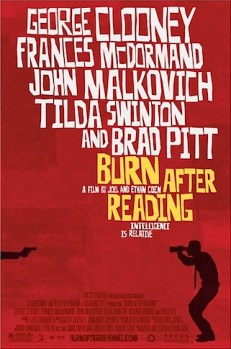 Ah, the Coen Brothers! Those indie-mainstream praise-magnets that I’ve never particularly got on with. But then, perhaps I was just too young and under-read (or, rather, under-viewed) to get
  For the characters in the film, it’s a confusing mess of a situation they find themselves embroiled in — no one has the full picture, and most don’t properly comprehend the bit they do see. For the viewer, it’s a fun bit of nothing. Things have changed by the end, certainly — most notably, several people are dead — but the events that got us there are pretty quickly forgotten.
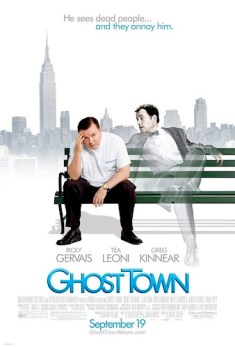 Before I come to write a review, I tend to check out the sort of scores it’s received at a few different sites. This isn’t to help form my opinion, but actually just a side effect of the fact I go to places to rate the films myself. What one usually encounters is some degree of discrepancy, be it as little as half a mark or as large as several. As you may have guessed, Ghost Town is going to prove the exception: on
 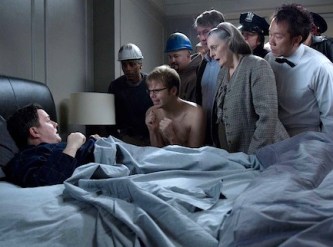 The high-concept at the film’s centre — that Ricky Gervais sees dead people and doesn’t want to — is neat enough. It largely sticks to its rules, it manages a few moments of humour, it doesn’t get too repetitive, it often plays the most obvious card (someone thinks Ricky’s talking to them when he’s actually talking to a ghost! Oh, my sides.) And Gervais, as you’re no doubt aware, plays himself. He doesn’t do characters but variations on a theme, and while this means he’ll never be a good actor per se, he can fulfil such characters very competently.
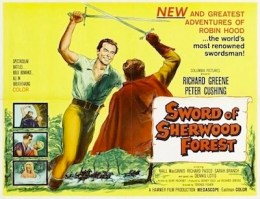 Hammer didn’t just make horror movies, y’know. I’m sure many film fans know this, but the phrase “Hammer Horror” is so ubiquitous that I expect most people think that was the company’s name and all they produced.
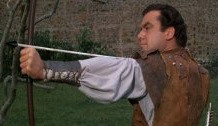 It doesn’t all tie together fully. For example, one assumes the town of Bortrey was going to be the site of Newark’s castle, as that’s the only apparent reason why he’d be annoyed at the Archbishop for stopping the Sheriff acquiring it. But then Bortrey is burnt down, and with little reaction or comment from any character. And the opening plot point — a man escaping the Sheriff with a mysterious symbol — is never fully explained. Was he a co-conspirator? Was he aiming to warn the Archbishop? If the latter, where did he get the symbol? Maybe I missed a scene that explained all this.
 The cast are adequate, even if Richard Greene’s no Errol Flynn and Peter Cushing’s no Alan Rickman (here at least). Terence Fisher’s direction is rather flat a lot of the time, though a few scenery shots, riding sequences and fights bring out a bit more dynamism.
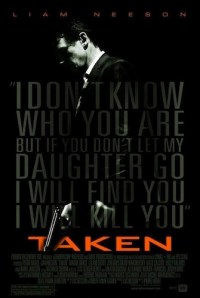 “I don’t know who you are. I don’t know what you want. If you are looking for ransom, I can tell you I don’t have money. But what I do have are a very particular set of skills; skills I have acquired over a very long career. Skills that make me a nightmare for people like you. If you let my daughter go now, that’ll be the end of it. I will not look for you, I will not pursue you. But if you don’t, I will look for you, I will find you, and I will kill you.”
 A Good Script rather than A Series Of Scenes, I’m inclined towards the latter here, because of the comparison with Man On Fire.
 but after half an hour spent setting things up, it’s like screenwriters Luc Besson and Robert Mark Kamen felt they’d done their dramatic dues and just wanted to watch people get beaten up. Or shot. Or blown up. Or hit by trucks.
 Despite all this, Taken’s an entertaining actioner. Unsurprisingly, there’s something satisfying about an apparently calm and controlled father being allowed to explode in precision violence against a bunch of scumbag white slavers. It’s wish fulfilment; proper justice finally being done. And, for extra gratification, he’s got the requisite spy skills — the bit with the radio and walkie-talkie, for example — and, even better, edge — perhaps the film’s most memorable moment (after that speech, anyway), when he shows the lengths he’ll go to when visiting a ‘friend’ for dinner.
 Apparently, the recent Michael Caine-starring
 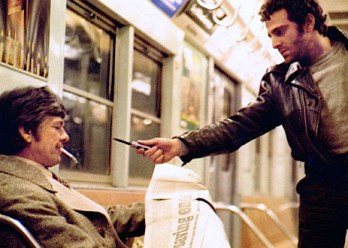 The strongest element is probably Wendell Mayes’ script, because it constructs all this. Weakest is Michael Winner’s direction — some of it’s fine, the occasional shot even good, but largely it’s pedestrian and sometimes mediocre. That said, Winner has become such an unlikeable public figure that it’s somewhat difficult to gauge how much of this is bad direction and how much bias. Still, it’s not the kind of work to make one think, “he’s an idiot, but he knows how to do his job”.
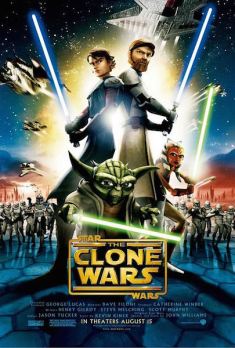 The Clone Wars can boast an awful lot of firsts within the
  Catherine Taber’s Padmé impression is probably the most convincing of the lot and, coincidentally sharing the same scenes, Corey Burton’s Truman Capote impression as Ziro the Hutt is entertainingly obvious. Count Dooku doesn’t particularly benefit from the involvement of Christopher Lee, but at least Samuel L. Jackson is vaguely recognisable lending his actual voice to Mace Windu. Most of the cast deliver the kind of performance you typically find in kids’ cartoons — i.e. not all that good, no doubt due to the pressures of producing as many episodes as possible as cheaply as possible. Dubious line readings abound, though in fairness this may be down to the awkward lines they’re forced to deliver.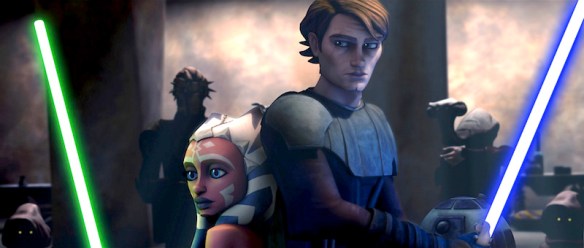
 It may sound like a piece of trivia that this was originally conceived as three episodes of
  it just doesn’t have the epic quality that imbued all the other Star Wars films. Not every film has to be an epic, even ones set within the same universe/storyline, but by wheeling out all the main characters and then showing them complete just one moderately low-key mission, The Clone Wars does feel like a single instalment of a TV series and not an appropriately-scaled cinematic experience.
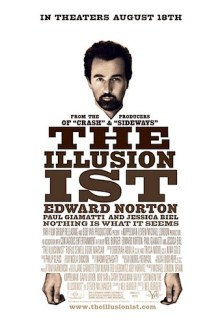 A Blu-ray release of The Illusionist has just
 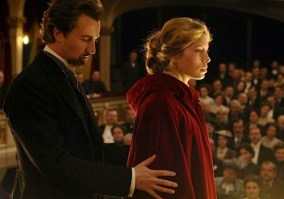 The story itself — you remember those? It’s the bit between the attention-grabbing opening and preposterous-twist finale — is mediocre with or without the finale. It’s a something-and-nothing account of a Poor Boy who loves a Rich Girl he can’t have and… oh, I can’t even be bothered to explain it.
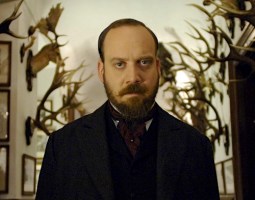 As comparisons with The Prestige are inevitable, particularly as both films were ultimately released around the same time, I’ll briefly put them head-to-head. Both concern stage magic in a similar-enough period setting, debate about whether the tricks are just that or actually supernatural powers, a love story that goes awry, which involves a fatal rivalry… But they’re actually very different films. The Prestige jumps about in time in a more complex way than The Illusionist, but this also has a point. The former’s story is more original, more engaging, its use of magic — real or not — more captivating. I fear I could go on, but it’s succinctly summed up thus: in this comparison, The Illusionist comes up short.
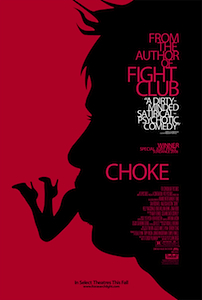 Choke is adapted from a novel by Chuck Palahniuk, the author of Fight Club, and you can tell.
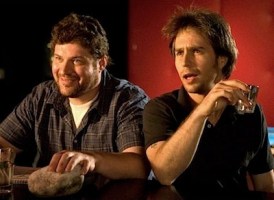 The cast are without fault. Sam Rockwell is brilliant as ever, continuing to build a body of work that suggests he’s been underrated. Perhaps there’s a similarity to some of his roles, but he has a sort of rough likability that can make one overlook that. I’ve still not seen
  100Films.co.uk