2022 | Weeks 1–3

Here we go — finally, and somewhat later than anticipated (it’s been a slow start to the year, viewing-wise) — the new review format for 2022!

…which you’ll have already seen in Archive 5, of course; and is fundamentally similar to what I was doing before in roundups and what-have-you; and which I’ve already ‘broken’, because my review of Flight of the Navigator came out so long that I posted it alone.

But still, the intention is this is now my regular review format, popping up every week or two (or three) to review everything in a more timely fashion than I have for many, many years. We’ll see how it goes — I feel like I need to relearn how to write short pieces, because longer reviews feel like they should get their own posts, and that’s happened to pieces intended for every one of these roundups so far this year.


Anyway — to kick things off for 2022, a film with a broadly appropriate title. Because, despite (deliberately misleading) hints to the contrary, I’m carrying on. Get it? Carrying on watching. And “spying” is a synonym of “watching”, right? (Look, there aren’t any Carry On films with more apposite titles, okay?)

These weeks’ films are…

  • Carry On Spying (1964)
  • Penny Serenade (1941)
  • The Navigator (1924)
  • In the Line of Fire (1993)
  • Barbie as The Princess and the Pauper (2004)
  • Free Guy (2021)


    Carry On Spying

    (1964)

    Gerald Thomas | 84 mins | digital (SD) | 16:9 | UK / English | U
    Carry On Spying

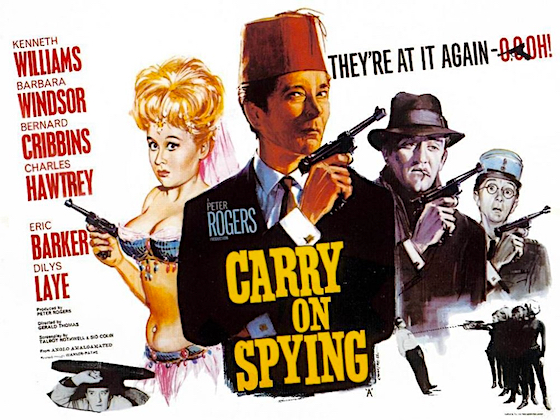
    Believe it or not, I’ve never actually seen a Carry On film before. Maybe that’s not so surprising these days. They were once such a part of British culture that they produced 30 of the things, but I think they were seen as “a bit old fashioned” even before I was born, and by 2022’s standards… oof. But, lest you get the wrong end of the stick (oo-er, etc), this isn’t me intending to finally dive into all of them. Rather, as well as its timely title, I chose to watch Carry On Spying primarily because it’s a James Bond spoof — the first, I believe, seeing as it was released in July 1964, when the Bond series only encompassed Dr. No and From Russia with Love (Goldfinger would follow a couple of months later).

    With Bond not yet even properly into its initial phenomenon phase (the first two films were hits, but it was the next two that skyrocketed its popularity), you might think Spying came too soon, and would be disadvantaged by being produced before the famous Bond formula was fully in place. Instead, it sets its spoofing sights a little wider, including an extended riff on The Third Man. I couldn’t tell you everything it’s drawing on, but its third-act villain’s lair — all sleek metal corridors and little road-train thingies and jump-suited identikit henchpeople — appears to be a take-off of You Only Live Twice, some three years before that film even came out. So I can only presume Spying’s point of reference there is something else, which I can’t quite remember; some other spy fiction that was already doing stuff the Bond franchise would still be pulling off years later. That doesn’t reflect too positively on YOLT, when you think of it, although Bond’s cultural dominance and longevity has come to ensure it’s the one that’s remembered for pioneering all this stuff.

    I don’t know how many Carry On films were genre spoofs, but the series’ reputation is more for smut and innuendo. There’s pleasantly little of that here — some, for sure, mostly based around Barbara Windsor (of course) as a trainee agent; but while it’s all fundamentally juvenile, it’s not as ceaselessly ribald as I was expecting. Satisfyingly, it remains primarily focused on its chosen genre. In that respect, I’ve definitely seen worse spoofs.

    3 out of 5

    Carry On Spying is the 1st film in my 100 Films in a Year Challenge 2022.


    Penny Serenade

    (1941)

    George Stevens | 120 mins | digital (HD) | 4:3 | USA / English | U

    Penny Serenade

    This is the third and final film to pair up stars Irene Dunne and Cary Grant as a married couple (I’ve watched all their collaborations within the past couple of years, but not posted reviews of the first two yet. I thought it was within the last year, but turns out I watched my first in May 2020. These strange days have really messed with my sense of the passage of time!) But where their first two films were screwball romcoms, this is undoubtedly a melodrama, following a couple as they meet, marry, and attempt to start a family.

    Dunne and Grant both make a fair fist of the serious stuff — Grant, in particular, gives an uncommonly sensitive performance at times — although they can’t resist slipping back into a spot of almost-slapstick given half a chance, with various individual sequences playing more like one of their comedies. Those scenes stand at odds with the film’s overall narrative and tone, which goes for full-on weepy. Indeed, if anything, I thought it was overdone, in particular an ending that throws in sudden tragedy followed so quickly by a pat happy ending that it feels almost distasteful.

    The film’s hook is that it begins with Dunne planning to leave, before she discovers a book of records that, as she plays them, take her back through their relationship. Different songs provoking specific memories is a neat narrative device on paper, but doesn’t really come across on screen. Aside from the first track, and maybe a later burst of Happy Birthday (although that could be almost any birthday, surely), the songs don’t seem to have any special relevance to the memories they supposedly call forth. It doesn’t help that, to modern ears, they all sound kinda samey. Plus, that the songs lead everything to unfurl in chronological order, with every major beat of their life story accounted for, is certainly convenient.

    If you can look past such artifice, and just want to revel in an old-fashioned bit of heart-tugging, Penny Serenade is fit to make you shed a tear. Personally, I’d rather the headline duo had given us another bout of screwball tomfoolery.

    3 out of 5

    Penny Serenade is the 3rd film in my 100 Films in a Year Challenge 2022.


    The Navigator

    (1924)

    Donald Crisp & Buster Keaton | 66 mins | Blu-ray | 1.33:1 | USA / silent | U
    The Navigator

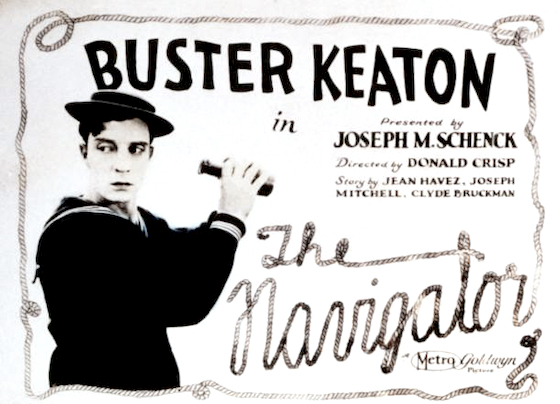
    This is my fourth Buster Keaton feature now (I’ve only previously reviewed The General, but Sherlock Jr made it into my 2019 top 3), and he’s established himself as my favourite of the major silent comedians (I rarely enjoy Chaplin’s films as much as I feel I should; and, in fairness to Harold Lloyd, I’ve only seen one of his so far, which I liked a lot). The Navigator was the biggest hit of his career, though is probably my least favourite of his I’ve seen so far — though I don’t want to damn it with false criticism, because it’s still a brisk and entertaining comedy.

    Keaton stars as a spoiled rich kid whose marriage proposal is rejected. He’d already booked the honeymoon tickets, so sets off by himself; but, due to several points of confusion, he ends up adrift at sea on a decommissioned ship, empty but for one other passenger: his would-be fiancée (Kathryn McGuire). It’s up to this pair of brats to get along and survive while they hope for rescue. (Rescue does not come quickly. Considering McGuire’s father is a successful shipping magnate who’s aware of what’s happened, you’d think he’d send a vessel after them; but then, he might have his own problems, owing to a bunch of foreign spies who… look, it’s best not to overthink the logistics and plausibility of the plot.)

    Although Keaton gets the lion’s share of the gags, as well he might, for a stretch in the middle he and McGuire form an effective double act. The two rich kids being hilariously useless at household basics, like making coffee or opening a tin of food, is well observed; a flash-forward to their automated solutions is also fun. While Keaton still gets to show off by himself — particularly in an elaborate underwater diving sequence, naturally saved for the final act — McGuire makes the most of the material she’s given.

    The only outright demerit to the film is that the finale hasn’t aged particularly well: the ship finally drifts near land, but it’s an island with a village-full of black natives, at which McGuire immediately exclaims “cannibals!” That she’s sort of proven right when they start attacking the ship is… well, maybe not even worse, but at least just as bad. Still, by 1920s standards, maybe we can take comfort in the fact that it’s only casual racism…

    More than that, the reason I say it’s my least favourite Keaton so far is simply that it doesn’t have as many comedic highs as his very best work. Nonetheless, his genius regularly shines through in moments and even whole sequences, and there are a couple of individual gags that are all-timers.

    4 out of 5

    The Navigator is the 4th film in my 100 Films in a Year Challenge 2022.


    In the Line of Fire

    (1993)

    Wolfgang Petersen | 129 mins | digital (HD) | 2.39:1 | USA / English | 15 / R

    In the Line of Fire

    Clint Eastwood is a Secret Service agent who failed to stop the JFK assassination, now taunted by John Malkovich’s mysterious wannabe-assassin and his threats to kill the current President. It’s a fundamentally strong idea for a thriller, and works especially well by having the villain constantly phoning the hero for little chats. Malkovich’s always makes for a first-rate antagonist, and his slightly loony personality clashes well with Eastwood’s stoic, dry-witted, old-fashioned tough guy. There are a couple of chase scenes and shoot-outs here and there, but, rather than any elaborate physical action, it’s the verbal sparring that represents the film’s highlights.

    On the downside, the pace is a little on the slow side (perhaps matched to the “too old for this shit” age of Eastwood’s hero — in real life, he’d be a whole decade past the mandatory retirement age) and there are one too many clichés as important plot points (don’t get too attached to the partner who’s always talking about his wife and kids). Plus, there’s a wholly unnecessary romance between 62-year-old Clint and 39-year-old Rene Russo — the film doesn’t need it, even if there wasn’t that age gap. It leads to an (almost) sex scene that’s worthy of the Naked Gun films, which is amusing but tonally misplaced.

    They used to make this kind of political thriller on the regular back in the ’90s, one of those bread-and-butter genres for grownups that have fallen by the wayside in favour of hyper-budgeted kids’-movie spectacle that men of allegedly adult age flock to nowadays. In the Line of Fire may not truly stand out among its brethren of the era, but I do wish they still made ’em like this.

    4 out of 5

    In the Line of Fire is the 6th film in my 100 Films in a Year Challenge 2022.


    Barbie as
    The Princess and the Pauper

    (2004)

    William Lau | 85 mins | digital (SD) | 16:9 | USA & Canada / English | U
    Barbie as The Princess and the Pauper

    One of the many film lists I have my eye on completing is Letterboxd 100: Animation, which lists the highest-rated animated feature films on the site (with a few caveats). There are over 40 titles left that I’ve not seen, and I could’ve chosen to watch almost any of them… but I chose the Barbie one. Well, not the Barbie one, because there are actually two Barbie titles on the list. And that’s not some temporary fluke: they’ve been on there for quite a while now. This merited investigation.

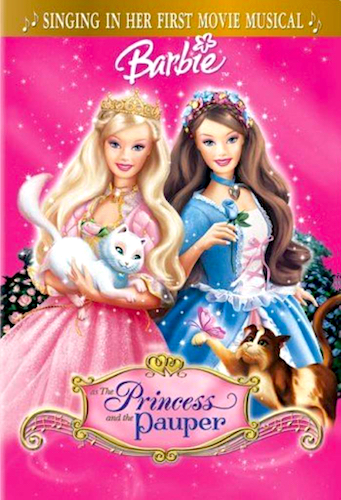
    As you’ve no doubt gathered from the title, this particular Barbie film is a reimagining of Mark Twain’s The Prince and the Pauper. A fairytale-esque story, about a princess, done as a musical? Yep, this is very much a wannabe Disney, but without the production values of that major studio: the computer animation here looks more like a PS2 cutscene. But hiding beneath the cheap animation is a halfway decent musical fairytale. Take the second musical number, How Can I Refuse, for example: it’s every inch in the mould of a “Disney villain’s song”, but is better than some genuine examples, and comes complete with a dance routine by the antagonist and his two henchman. This film has ambition, I’ll give it that.

    Other songs vary in quality. When the eponymous duo first meet, there’s an unintentionally hilarious number in which they sing about how similar they are, the indentured servant and the pampered royal. If you say so, girls. A later track is a typical “you be you” song, but sung to a pet cat who behaves like a dog. That’s a level of barminess I can get on board with.

    I would never have dreamed of watching this if it weren’t on the Letterboxd animation list. Now, I wouldn’t exactly say I’m glad I watched it, but I enjoyed it more than I thought I would — even if sometimes that was due to laughing at it rather than with it.

    3 out of 5

    Barbie as The Princess and the Pauper is the 7th film in my 100 Films Challenge 2022.


    Free Guy

    (2021)

    Shawn Levy | 115 mins | digital (HD) | 2.39:1 | USA / English | 12 / PG-13
    Free Guy

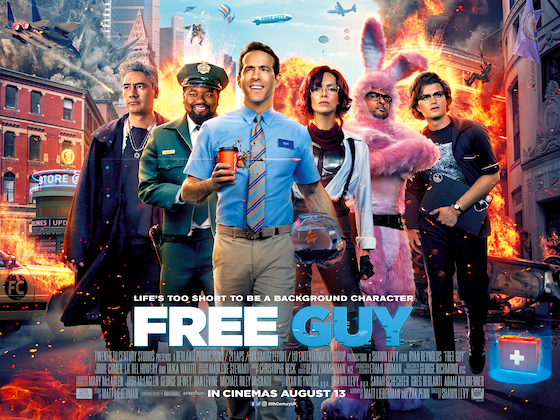
    Ryan Reynolds plays his role again as Guy, a bank worker in city riddled with crime and superheroics. But, it turns out, Guy isn’t real — he’s an NPC in a computer game, programmed to do the same thing over and over and basically be ignored by the real-world players. Until, that is, he spots the woman of his dreams (Jodie Comer) and his programming breaks as Guy becomes self-aware.

    The basic concept sounds like a fun, fresh, and timely idea, right? Video games have never been more popular, AI is ever-improving, and there’s room for both gags and action in the core idea — that’s the winning Marvel formula, right there. Unfortunately, the execution is as if someone found a way to make a new movie by collaging others. Free Guy is just The LEGO Movie + The Truman Show + Wreck-It Ralph + Ready Player One + the PG-13 version of Deadpool 2 — not put in a blender, but cut up and stuck back together side-by-side, with snippets of Groundhog Day, Fortnite, and multiple Disney-owned properties scattered in for good measure.

    That last aspect, the Disney references, has been singled out for particular derision on social media. The film was initially produced by 20th Century Fox, but ended up a Disney title after the buyout, which allows a bunch of stuff they own to pop up in the movie. I know we’re supposed to find this infinitely depressing — a sad reminder that Disney are on course to own all culture, and that’s a bad thing — and it is bad, of course… but the bit with Captain America’s shield still made me laugh. Sorry, not sorry. Yeah, you can be miserable about this stuff, because obviously the total homogenisation of all American media under The Walt Disney Company is not worth that a couple of meta gags; but the homogenisation of all American media under The Walt Disney Company is happening anyway, so we may as well enjoy the gags we get along the way.

    Whether you have that kind of attitude or not will probably dictate how much you enjoy Free Guy. Its originality is surface deep, at best, and at every second it will call to mind some other film that already did the same thing. But, allowing for that, it’s still a fairly entertaining couple of hours of action-comedy.

    3 out of 5

    Free Guy is the 8th film in my 100 Films in a Year Challenge 2022.


  • Flight of the Navigator (1986)

    Randal Kleiser | 90 mins | digital (HD) | 16:9 | USA / English | U / PG

    Flight of the Navigator

    I’ve written before (several times, I think) about how a lot of my childhood movie viewing involved catching up on the family-friendly blockbuster hits of the ’80s. But some stuff slipped through the net — or maybe didn’t slip through, but so totally failed to lodge itself in my memory that I don’t remember I ever saw it. We’ll never know which is the case. Either way, Flight of the Navigator is the latest title to fit that bill. It’s not bad, but I might’ve liked it more if I’d seen it as a kid.

    The film is split more or less into two halves. It begins in 1978, when 12-year-old David (Joey Cramer) goes into the woods near his Florida, knocks himself out, and returns home later that evening only to find it’s now 1986. Obviously, doctors can’t explain how he hasn’t aged a day in the eight years he’s been missing. Meanwhile, NASA encounter a spaceship near those woods. Could the two be connected? Maybe it’d be a more interesting film if they weren’t…

    Anyway, both end up at a NASA research facility, and with the ship calling out to David, he manages to sneak out with the help of an intern (an early screen appearance by a young Sarah Jessica Parker, surprisingly cute and likeable) and flies off in the ship (voiced by Paul Reubens, credited as “Paul Mall” to obscure his involvement, for whatever reason). Their adventures make up about the second half of the film. Not that they’re really “adventures” — it’s mostly David hanging out with the ship, doing some silly stuff while failing to navigate home. There are some nice moments here, but some cringey ones too.

    Davey phone home

    The standout aspect is the design of the ship, both inside and out, which is well-realised onscreen. Obviously these days it would be achieved with swishy CGI, but the film’s mix of models, practical sets, and early digital effects is done well for its time. Things like the highly-reflective inside of the ship are all the more impressive knowing they couldn’t just shoot whatever they wanted then digitally remove the crew. And the fact that they couldn’t just magic up anything they wanted for the exterior shots, either, makes the effects more restrained and pointed in how and when they’re deployed, which overall is to the story’s benefit.

    Sadly, the same can’t be said of Alan Silvestri’s score, which is badly dated from the opening cue onwards, never recovering. However, you could do a great “how music changes tone” demo with some parts. For example, when David escapes NASA in the ship, it’s shot with a lot of drama — thick chains breaking, lights crashing down, people running in fear — but Silvestri scores it with an E.T.-esque “isn’t this magical” type of cue. If you were to replace it with a dramatic, exciting, or even scary track, it would certainly work, but with an entirely different feel. It’s possibly deliberate that the music and visuals here sit so at odds, the contrast being exactly what they were going for; though, considering the rest of the film is formally straightforward, I can’t say I’m convinced.

    Altogether, I think Flight of the Navigator may have been entertaining for preteens in the ’80s and ’90s, but surely anyone older could only love it because of nostalgia from watching it at that age; and it’s probably a bit slow-paced for today’s youth. It looks like they’re planning a remake (it’s been in the works since 2009, but last September was announced for Disney+), and, honestly, for once maybe that’s a good idea: there’s potential in this concept that’s unrealised by this version. Whether a direct-to-streaming movie will handle it better, who knows, but it’s worth a shot.

    3 out of 5

    Flight of the Navigator is the 5th film in my 100 Films in a Year Challenge 2022. It was viewed as part of “What Do You Mean You Haven’t Seen…?” 2022.

    Archive 5, Vol.1

    Part of the impetus behind this new era of 100 Films was to solve ‘problems’ like my repeated failure to post reviews. Hopefully my plan for regular groups of capsule-sized reviews will solve that going forward. But this has been an issue for a while, and that’s led to a huge backlog of unreviewed films from 2019 to 2021 — it totals a ridiculous 449 feature films (counting shorts too, it goes over 500). Rather than abandon those to the mists of time, I present a new weekly (more or less — let’s not overcommit myself) series: Archive 5.

    Essentially, it’s the same format as new viewing: each post is a collection of short reviews; but here they’re five titles plucked at random from my archive of unreviewed films (and I’ve used a random number generator, so it’s genuinely unmethodical). If I can keep this up weekly, it will take me just under two years to clear the backlog — which means I could still be reviewing stuff from 2019 in 2023. Hahaha… haha… ha… ugh.

    With that in mind, there’s no need for further ado. This week’s Archive 5 are…

  • Never Too Young to Die (1986)
  • Bachelor Knight (1947)
  • Little Women (2019)
  • Aniara (2018)
  • Who’s Afraid of Virginia Woolf? (1966)

    (I Care a Lot was originally intended to be part of this post, but then the review turned out a little long, so I spun it off by itself. That’s the kind of thing I’ll probably keep doing, too.)


    Never Too Young to Die

    (1986)

    Gil Bettman | 97 mins | digital (HD) | 1.85:1 | USA / English | 18 / R

    Never Too Young to Die

    If you dropped A View to a Kill, Rocky Horror, WarGames, and Mad Max 2 into a blender, the end result might be Never Too Young to Die. And if that sounds like a ludicrous, unpalatable mash-up… yep, that’s Never Too Young to Die.

    This direct-to-video action-adventure stars a pre-Full House John Stamos as Lance Stargrove, a teenage gymnast whose dad is a secret agent (played by George Lazenby — aged 47 at the time, but looking at least 20 years older). When daddy is killed, Lance teams up with his partner (singer turned actress Vanity) to go after the culprit: gang leader and wannabe terrorist Velvet Von Ragnar (Gene Simmons (yes, from Kiss), chewing scenery as if he’s not been fed for months).

    If you’ve never heard of this film… well, neither had I, until a Cracked article suggesting comical substitutes for Covid-delayed blockbusters. But what really convinced me to watch it is that it has The Greatest Trailer Ever Made. If you set out to make a spoof ’80s trailer, I’m not convinced you’d be able to beat that. Unfortunately, neither can the film as a whole. It’s fun at times (the boob-biting final fight, or a scene where Stamos tries to distract himself from Vanity’s sexuality by… eating multiple apples), but it’s not quite camp or daft enough to really earn a place as a cult classic.

    I’ll say this for it, though: rewatching that trailer has made me really want to watch the film again…

    3 out of 5

    Never Too Young to Die was #70 in my 100 Films in a Year Challenge 2020.


    Bachelor Knight

    (1947)

    aka The Bachelor and the Bobby-Soxer

    Irving Reis | 91 mins | digital (SD) | 4:3 | USA / English | U

    Bachelor Knight

    If you ever need to name an obscure Oscar winner for some reason, you could do worse than Bachelor Knight — or, to give it its even-dumber-sounding original title, The Bachelor and the Bobby-Soxer. Yes, this won the Oscar for Best Original Screenplay (the other nominees aren’t the greatest field you’ve ever seen, but altogether they’re either better-remembered or were considered good enough to nominate for other gongs that evening, so quite how this took the prize, I don’t know).

    The plot also stretches credibility: after high schooler Susan (Shirley Temple) becomes infatuated with artist Richard Nugent (Cary Grant), she sneaks into his place to model for him, much to the disapproval of her older sister Margaret (Myrna Loy), who also happens to be a judge; and when Nugent ends up in her court room, she sentences him to date Susan until her infatuation inevitably wears itself out. I know things are different in the US, and also in the past, but did/do judges there really have the power to hand out any crazy made-up sentences they like?

    On the bright side, the film moves sprightly through its plot. Perhaps that’s because it takes a whole 40 minutes to get through the basic setup, even while running at a pace, means there’s less screen time left to dwell on all that follows. Not that some individual bits don’t go on a tad, like a picnic sequence; but others work very well, like a scene in a nightclub that is a nicely-written bit of escalating farce.

    It’s not the best work of anyone involved, but Bachelor Knight belies its iffy title (both of them) to be a likeable-enough 90 minutes of screwball comedy.

    3 out of 5

    Bachelor Knight was #70 in my 100 Films in a Year Challenge 2021.


    Little Women

    (2019)

    Greta Gerwig | 135 mins | cinema | 1.85:1 | USA / English | U / PG

    Little Women

    Writer-director Greta Gerwig’s adaptation of Louisa May Alcott’s beloved novel was greeted in some quarters by questions of if it was necessary: it’s the sixth big-screen version of Alcott’s book, and came just two years after a major new BBC adaptation. Well, I don’t know if it was ‘necessary’ or not, but Gerwig’s version is definitely a very good film.

    A key point that marks it out from other adaptations is that Gerwig has restructured the story: instead of playing out in a straightforward chronological fashion, it flashes back and forth in the sisters’ lives, starting with them as young women in 1868, with Jo in New York and Amy in Paris, before mixing in events from their childhood, seven years earlier, when the four sisters lived together in Massachusetts. This might seem like a rejig for the sake of differentiation, but Gerwig uses it to create interesting juxtapositions or to reframe plot points. For one example (spoilers follow, if you’re not familiar with the story), I felt it made Laurie and Amy’s relationship less creepy. Told chronologically, they first meet when he’s a young man and she’s a child, and he only moves his affection to her after Jo’s rejected him and Amy’s grown up. In Gerwig’s version, we first meet them together in Paris, and they seem more destined for each other, with a genuine spark between them as individuals, rather than a nagging sense of “if I can’t have one sister, this other will do”. It’s only later we learn the full backstory of Laurie and Jo — and, for that matter, of Jo and Amy — which, yeah, is obviously still a bit creepy, when you think about it.

    Whichever way you cut it, Gerwig seems to really get to the heart of the meaning in the story and characters, as well as giving it a lightly feminist polish (misogynists would probably consider it Terribly Feminist and Evilly Revisionist, if they watched it, which I don’t imagine they would). A star-studded cast ensure the whole thing is well acted, and it’s beautifully shot by cinematographer Yorick Le Saux. Questions about ‘necessariness’ are particularly irrelevant when the work is this good.

    5 out of 5

    Little Women was #4 in my 100 Films in a Year Challenge 2020.


    Aniara

    (2018)

    Pella Kågerman & Hugo Lilja | 106 mins | digital (HD) | 2.35:1 | Sweden & Denmark / Swedish & English | 18 / R

    Aniara

    A sci-fi movie based on, somewhat oddly, a 1950s Swedish poem, Aniara is about a spaceship transporting migrators from Earth to Mars that accidentally veers off course and heads irretrievably into deep space. Rather than the kind of action-adventure this might provoke if it were a Hollywood production, Aniara follows how the passengers and crew attempt to cope with their new lives.

    It’s a premise interesting enough that you feel it could fuel a TV series — how this mass of people, forced together by accident and terrible circumstance, comes to function (or not) as a society. Or maybe the remake of Battlestar Galactica already nailed that kinda thing. Either way, here it’s condensed into about 100 minutes; and because it has such a long-term view of what it wants to pack in, there are some surprisingly large time jumps (by the half-hour mark we’ve already reached Year 3). It takes some odd detours when it does that (society completely breaks down into weirdo cults… then a probe that might allow them to return home is discovered, at which point everything goes back to normal), but overall it has a pretty clear thesis about humanity and how we cope with things — “not well”, fundamentally.

    The final act kind of rushes a similar point, skipping ahead (several times) to how things are even worse without really tracking the descent. Maybe that’s why I liked the idea of a series version so much: to fill in all those blanks. But I don’t want to take this criticism too much to heart. If anything, the fact I wanted more detail is a compliment. It’s not the film bungling developments and me searching for justification, but rather that I’d be interested in seeing the themes and characters explored in even more detail. As it stands, Aniara is an epic-scale story told well in a somewhat condensed fashion.

    5 out of 5

    Aniara was #65 in my 100 Films in a Year Challenge 2020. It placed 21st on my list of The Best Films I Saw in 2020.


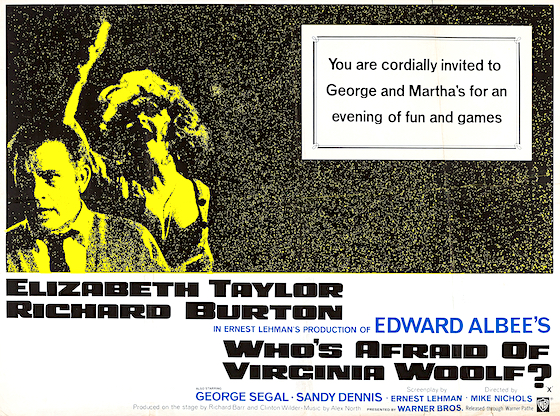
    Who’s Afraid of Virginia Woolf?

    (1966)

    Mike Nichols | 131 mins | Blu-ray | 1.85:1 | USA / English | 12

    Who's Afraid of Virginia Woolf?

    When a middle-aged college professor (Richard Burton) and his wife (Elizabeth Taylor) have his new young colleague (George Segal) and wife (Sandy Dennis) around for drinks one evening, the occasion soon degenerates into a verbal slanging match between the elder couple, the younger inescapably caught in the middle.

    And as the film takes place in almost-real-time, in just a couple of locations, it feels like we’re trapped with them. With a running time north of two hours, the film’s drunken sardonicism almost becomes an endurance test, particularly when it goes on a bit too long in the middle. But it’s carried through by some magnificent performances. Everyone talks about Taylor — just 33 at the time, she wasn’t sure she could play the part of a bitter 52-year-old, but she’s excellent — or they talk about Taylor and Burton — similarly, he wasn’t sure he could play a beaten-down failure of a man, having been used to taking dashing heroic roles — but Sandy Dennis is great too, and deserved her Oscar. Of the four actors, its George Segal who draws the short straw, not really getting the material to truly stand toe-to-toe with the other three (he still got an Oscar nom, though).

    Director Mike Nichols insisted the film be shot in black & white, which helps it to pull off Taylor’s ageing makeup, but was also intended to stop it seeming too ‘literal’ and instead give an abstract quality. That fits the material, because the characters, events, and revelations are all pretty odd; the way it plays out pretty strange. Plus, the pitch-black darkness of the night fits the film’s themes. Cinematographer Haskell Wexler does a superb (indeed, Oscar-winning) job, the photography looking more striking than you might expect, or even need, for such an actor-focused character piece.

    A whole featurette on the film’s disc release discusses how it was “too shocking for its time”, mainly because of the language used (the fact the film was made relatively unedited set a ball rolling that, just a couple of years later, saw the Production Code replaced by the modern MPAA classification system). While such concerns are no longer really relevant (once-controversial terms like “screw” and “goddamn” are hardly “fuck”, are they?), that the film is still powerful shows it was never truly about what was said, but who said it and how they said it. I don’t mean to say that it would still be offensive today, but rather that it still packs an emotive punch.

    5 out of 5

    Who’s Afraid of Virginia Woolf? was #22 in my 100 Films in a Year Challenge 2021.


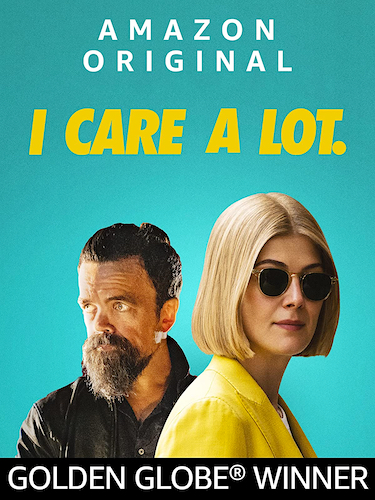
  • I Care a Lot (2020)

    J Blakeson | 119 mins | digital (UHD) | 2.39:1 | USA & UK / English | 15 / R

    I Care a Lot

    Marla (Rosamund Pike) is a professional legal guardian, someone appointed by the courts to arrange care and legal affairs for elderly people no longer capable of doing it themselves. But her real trade lies in pinpointing wealthy people with no family who she can trick the court into placing in her care, at which point she can drain their savings and assets for her own profit. Yes, she is a thoroughly unlikeable, evil bitch. But when she pulls this con on Jennifer Peterson (Dianne Wiest), it inadvertently brings Marla to the attention of Roman Lunyov (Peter Dinklage), a powerful man who is not used to being messed with.

    Already I’m edging into spoiler territory there, and there’ll be more to come, because it’s hard to discuss what’s so fundamentally wrong with I Care a Lot without digging into what occurs past some of its twists — it starts as one thing (which works), quickly becomes something else (which also works), but after about the halfway mark, it ends up diving off the deep end into a mess of implausibility. It may be stylishly made and performed, but all of that is in service of a philosophically jumbled attitude to character.

    What makes the film fall apart is where it wants our loyalties to lie. I’ve often written that I’m fine with films that star unlikeable or unsupportable characters (the idea we need someone we can like/support at the centre of a work of fiction was recently described by someone as a childish impulse, and I agree to an extent), but that doesn’t give them carte blanche. As a commenter put it on iCheckMovies, “you can make a film about horrible, unredeemable characters, but you can’t also expect an audience to root for them when you put them in peril, especially when that peril is one of their own making.” This is the ‘trick’ I Care a Lot attempts to pull. It seems to think we’ll be aligned with Marla by a certain point, but we really aren’t — she absolutely deserves what’s coming to her.

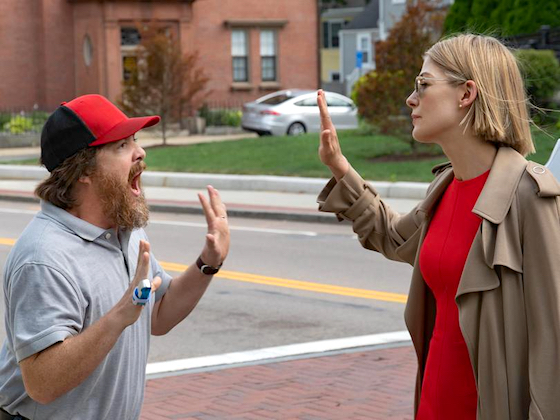
    Talk to the hand because I don't care a lot

    Similarly, when she accuses the villains of “not playing by the rules”, it feels like the film is, again, assuming that will get us on her side; like, “yeah, she’s bad, but at least she plays by the rules, whereas the crooks are just crooks”. But I did not think that, at all. If anything, it makes her even more disingenuous. Yes, technically she’s working within the system — but she’s cheating it and bending it (breaking it, even) to make it work for her. At least the criminals are unquestionably criminals — they’re not pretending to be legit. So while intellectually we know that Roman and his chums are Bad Guys (they’re drug smugglers who don’t care if their human mules die!), in this particular storyline we are much more likely to be on their side: they’ve been wronged by Marla, they deserve their recompense. Heck, they even attempt to do it legally first — that’s more than we can say about other wronged heroes, like, say, John Wick.

    Even while I Care a Lot is watchable thanks to its strong direction and highly talented cast, it’s an awkward viewing experience because it feels like we’re constantly at odds with the movie itself. That it eventually gives us what we need (via a small part for Macron Blair, which merits a metatextual “huh” in relation to the themes of his role in Blue Ruin) is scant compensation for the difficulties up to that point.

    3 out of 5

    I Care a Lot was the 101st film in my 100 Films in a Year Challenge 2021.

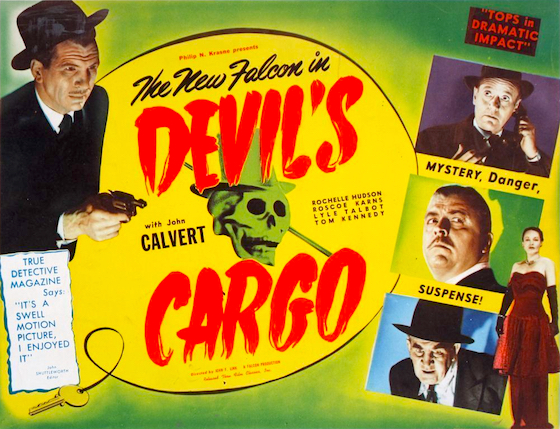
    Devil’s Cargo (1948)

    2019 #93
    John F. Link | 62 mins | digital (SD) | 4:3 | USA / English

    Devil's Cargo

    The history of the fictional detective known as ‘the Falcon’ is a bit complicated (if you want a full summary, try this Wikipedia article), but the short version is that, between 1941 and 1946, RKO produced a series of 13 films featuring the character, starring first George Sanders and then his brother, Tom Conway. You can find my reviews of the series collated across these four posts. (The series is also noteworthy for containing the first screen adaptation of a Raymond Chandler novel: the third film, The Falcon Takes Over, was based on Farewell, My Lovely, two years before it was more famously filmed as Murder, My Sweet.)

    A couple of years after RKO’s Falcon series ended, Film Classics picked up the mantle, casting magician John Calvert as a different version of the character. Their series only lasted three films, of which this first is the most readily available, because it’s public domain. (Consequently, I’ve yet to see the next two. Writing this has reminded me that I was meant to be tracking them down…)

    The plot has nothing to do with cargo, belonging to Satan or otherwise. Rather, it’s the usual murder mystery setup: a playboy has been shot to death, a crook confesses his guilt to the Falcon, certain he’ll be acquitted due to his motives being (kinda) pure, but then he’s murdered too. It all unfolds as a surprisingly decent little mystery — no great head-scratcher, but it offers enough twists and turns to keep it lively. The conclusion may stretch credibility, and our hero more chances upon the identity of the killer than actually deduces it, but it suffices for a short B-movie.

    “Magic your way outta this!”

    Calvert is decent as the Falcon. He’s no Sanders or Conway, and he has the slight stiffness of a non-professional having a crack at acting, but he’s just about charming enough to carry it off. I’ve definitely seen worse performances in similar roles. I have no idea how famous or acclaimed he was as a magician, so I don’t know if the film’s references to magic and inclusion of tricks is meant as an amusing nod to his original vocation, or it was required to placate the leading man’s ego. I can imagine the production meeting, though… “We want to integrate your magic tricks into the plot.” “How?” “Well, a criminal asks you to show him some tricks, so you do.” I’m not kidding, that’s literally what happens. On the bright side, he has a sidekick dog, Brain Trust, who is cute and occasionally useful.

    As these ’40s detective B-series go, Devil’s Cargo is far from top-tier; but I’ve also seen worse — it’s better than it really ought to be.

    3 out of 5

    The Secret Life of Pets 1&2

    Imaginatively-titled sequel The Secret Life of Pets 2 is available on Netflix in the UK from today, so what better time for me to finally get round to reviewing both that film and its predecessor? (Unfortunately, the first one isn’t currently available on any subscription streaming service.)

    The Secret Life of Pets
    (2016)

    2019 #73
    Chris Renaud | 86 mins | digital (HD+3D) | 1.85:1 | USA, France & Japan / English | U / PG

    The Secret Life of Pets

    In a Manhattan apartment, terrier Max’s quiet life as favourite pet is upended when his owner brings home stray Duke. But they must put their quarrels aside when they get lost in the city and discover that abandoned magician’s bunny Snowball is building an army of lost pets, determined to wreak their revenge. — adapted from IMDb

    Make your main character a cute little terrier-like dog and you’ve basically halfway sold me on your movie already (see: Hotel for Dogs; Benji). It works best with a real cute little dog, of course, but The Secret Life of Pets is proof the effect can carry over to animation, at least somewhat. It helps that the behaviour of the various animals in the film is all quite well observed — heightened, obviously, but there are many reasonable riffs on pet behaviour… that is until the revolutionary group led by a bunny, who’s followed by a tattooed pig and a lizard, hijack an animal control van. That’s a bit silly.

    From the trailers, I thought the animation style looked a bit flat — presumably a deliberate choice, almost like it was going for a Peanuts Movie kinda style — but watching it in 3D adds some pleasing depth and shapeliness, especially as I don’t think flatness actually was the intended effect for the whole movie.

    The Secret Life of Pets mostly reheats, remixes, and recombines stuff you’ve seen done in other movies (although as it came out around the same time as Finding Dory, it’s really a toss up as to who can claim that “animals in control of a human vehicle” climax), but it manages just enough charm to tick over as entertaining rather than irritatingly derivative.

    3 out of 5

    The Secret Life of Pets 2
    (2019)

    2020 #81
    Chris Renaud | 86 mins | digital (HD+3D) | 1.85:1 | USA, France & Japan / English | U / PG

    The Secret Life of Pets 2

    Max faces some major changes after his owner gets married and has a child. On a family trip to the countryside, Max meets farm dog Rooster and attempts to overcome his fears. Meanwhile, Gidget tries to rescue Max’s favourite toy from a cat-packed apartment; and Snowball sets off on a mission to free a white tiger from a circus. — adapted from IMDb

    As the above plot description goes some way to indicating, The Secret Life of Pets 2 feels like watching three episodes of a Secret Life of Pets TV series strung together: for most of its running time, it cuts back and forth between three completely unrelated storylines, seemingly just so that every major character from the last movie has something to do. Things do tie together in the final quarter-hour for an all-action climax, but that doesn’t stop them being entirely disconnected until that point.

    The only thing that really elevates it above TV-level is the visuals, which show off suitably expensive and slick animation, especially in 3D. At this point it almost goes without saying that computer-animated movies look fantastic in 3D, but it’s still pleasing.

    None of which is to say The Secret Life of Pets 2 is an outright bad movie. It’s a step down from the first (as things have panned out, I’ve given them both the same score, but the first one is kind of a 3+), but it has its moments — like the opening five minutes, where Max bonds with his owner’s new kid, which are sweet and cute; or the casting of Harrison Ford as a take-no-bullshit farm-dog, which is perfect. If you liked the first movie, this one passes some time amiably.

    3 out of 5

    The Secret Life of Pets 2 is available on Netflix in the UK from today.

    The 100-Week Roundup XXXI

    The 100-Week Roundup covers films I still haven’t reviewed 100 weeks after watching them. Sometimes these are short ‘proper’ reviews; sometimes they’re only quick thoughts, or even just the notes I made while viewing.

    This week’s selection includes a trio of films I watched back in May 2019

  • Widows (2018)
  • Cosmopolis (2012)
  • The Kennel Murder Case (1933)


    Widows
    (2018)

    2019 #88
    Steve McQueen | 130 mins | digital (HD) | 2.39:1 | UK & USA / English & Spanish | 15 / R

    Widows

    The story of four women with nothing in common, except a debt left behind by their dead husbands’ criminal activities. Set in contemporary Chicago, amid a time of turmoil, tensions build when Veronica (Viola Davis), Alice (Elizabeth Debicki), Linda (Michelle Rodriguez) and Belle (Cynthia Erivo) take their fate into their own hands and conspire to forge a future on their own terms.IMDb

    Best known for powerful socially/politically-conscious work like Hunger, 12 Years a Slave, and the Small Axe series, director Steve McQueen here delivers something closer to a genre movie — although, with its storyline of gangsters’ women empowering themselves, and a racially diverse cast, it still feels at least somewhat radical. As a thriller, it’s not exactly taught with tension, but it’s not too slack either — the pace is considered but not slow, allowing enough room for everything (and there’s a lot) without feeling rushed.

    4 out of 5

    Cosmopolis
    (2012)

    2019 #89
    David Cronenberg | 101 mins | digital (HD) | 16:9 | Canada & France / English | 15 / R

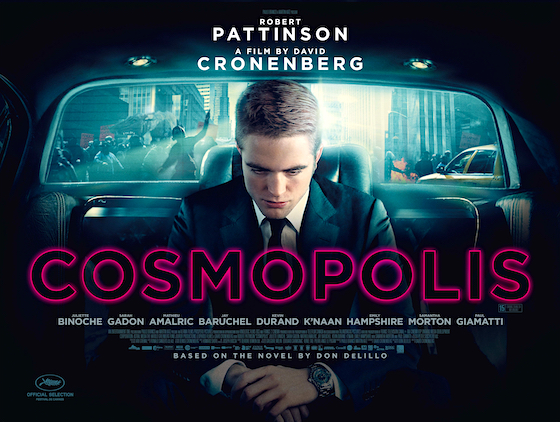
    Cosmopolis

    Riding across Manhattan in a stretch limo in order to get a haircut, a 28-year-old billionaire asset manager’s day devolves into an odyssey with a cast of characters that start to tear his world apart.IMDb

    David Cronenberg may be most famous as a horror director, but the only thing horrific about Cosmopolis is having to sit through it. It has the visual, aural, writing, and performance quality of an overambitious semi-pro early-’00s webseries, from the distractingly ugly green-screened limo windows to the “undergrad philosopher”-sounding screenplay and stiff performances. I presume this literally monotonous lack of realism must have been intentional, but doing something deliberately doesn’t inherently make it good. Cronenberg reportedly wrote the screenplay in just six days, apparently by copy-pasting the book into screenplay format and separating the dialogue from narration. That would go some way to explaining why it’s all so unnatural and impenetrable.

    1 out of 5

    Cosmopolis featured on my list of The Five Worst Films I Saw in 2019.

    The Kennel Murder Case
    (1933)

    2019 #91
    Michael Curtiz | 73 mins | digital (SD) | 4:3 | USA / English

    The Kennel Murder Case

    Before he starred in The Thin Man, one of the definitive detective movies, William Powell played private eye Philo Vance in a series of movies — three at Paramount across 1929 and 1930, later returning for this one at Warners. Here, Vance investigates a locked-room mystery: wealthy collector Archer Coe is dead and all signs point to suicide, but Vance had run into him the day before at the Kennel Club, where Coe was looking forward to his dog winning the next day’s competition.

    While the ensuing story unfolds a solid mystery, it lacks the charm and wit of the Thin Man films. Powell’s character is a facilitator of the plot rather than an entertaining main character; a blank slate who wanders around solving things. That lack of verve or individuality (which you do find in, say, the Falcon and Saint films, which this is on a par with in most other respects) is what really holds it back. Mind you, it has its moments: for example, much of Michael Curtiz’s direction is perfunctory studio-programmer stuff, but there’s the occasional striking shot (the discovery of a body though a keyhole) or sequence (the recap of how the murders went down, with a roving first-person view to hide the killer’s identity).

    3 out of 5

  • The 100-Week Roundup XXX

    Bow-chicka-wow-wow!

    Oh, er, no, sorry — it’s not that kind of XXX. It’s Roman numerals: this is the 30th 100-Week Roundup. (But if it is the other kind of XXX that you’re looking for, check out Roundup XX.)

    Still here? Lovely. So, for the uninitiated, the 100-Week Roundup covers films I still haven’t reviewed 100 weeks after watching them. Sometimes these are short ‘proper’ reviews; sometimes they’re only quick thoughts, or even just the notes I made while viewing.

    That said, as with Roundup XXIX, this week has run into some reviews that I feel would be better suited placed elsewhere; mainly, franchise entries that it would be neater to pair with their sequels. Consequently, sitting out this first roundup of May 2019 viewing are The Secret Life of Pets, Jaws 2, Ice Age: The Meltdown, and Zombieland. I’m going to have to get a wriggle on with these series roundups, though, otherwise that subsection of my backlog will get out of control…

    So, actually being reviewed here are…

  • Eyes Wide Shut (199)
  • The Eyes of Orson Welles (2018)
  • Everybody Wants Some!! (2016)


    Eyes Wide Shut
    (1999)

    2019 #72
    Stanley Kubrick | 159 mins | Blu-ray | 16:9 | UK & USA / English | 18 / R

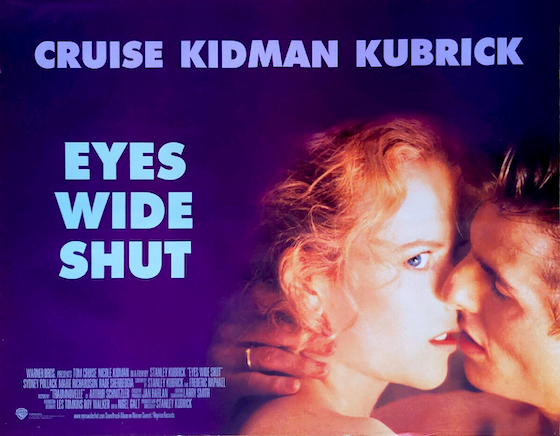
    Eyes Wide Shut

    I seem to remember Eyes Wide Shut being received poorly on its release back in 1999, but then I would’ve only been 13 at the time so perhaps I missed something. Either way, it seems to have been accepted as a great movie in the two decades since (as is the case with almost every Kubrick movie — read something into that if you like).

    Numerous lengthy, analytical pieces have been written about its brilliance. This will not be one of them — my notes only include basic, ‘witty’ observations like: one minute you’re watching a “men are from Mars, woman are from Venus” kinda relationship drama, the next Tom Cruise has taken a $74.50 cab ride from Greenwich Village to an estate in the English countryside and you’re in a Hammer horror by way of David Lynch. “A Hammer horror by way of David Lynch” is a nice description, though. That sounds like my kind of film.

    And Eyes Wide Shut almost is. It’s certainly a striking, intriguing, even intoxicating film, but I didn’t find the resolution to the mystery that satisfying — I wanted something more. Perhaps I should have invested more time reading those lengthy analyses — maybe then I would be giving it a full five stars. Definitely one to revisit.

    4 out of 5

    Eyes Wide Shut was viewed as part of What Do You Mean You Haven’t Seen…? 2019.

    The Eyes of Orson Welles
    (2018)

    2019 #74
    Mark Cousins | 100 mins | TV (HD) | 16:9 | UK / English | 12

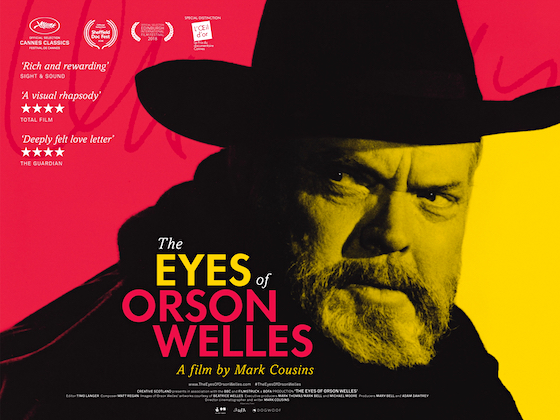
    The Eyes of Orson Welles

    Mark Cousins, the film writer and documentarian behind the magnificent Story of Film: An Odyssey, here turns his attention to the career of one revered filmmaker: Orson Welles (obv.)

    Narrated by Cousins himself, the voiceover takes the form of a letter written to Welles, which then proceeds to tell him (so it can tell us, of course) about where he went and when; about what he saw and how he interpreted it. A lot of the time it feels like it’s patronising Welles with rhetorical questions; as if Cousins is speaking to a dementia suffer who needs help to recall their own life — “Do you remember this, Orson? This is what you thought of it, isn’t it, Orson?” It makes the film quite an uneasy experience, to me; a mix of awkward and laughable.

    Cousins also regularly makes pronouncements like, “you know where this is going, I’m sure,” which makes it seem like he’s constantly second-guessing himself. Perhaps it’s intended as an acknowledgement of his subject’s — his idol’s — cleverness. But it’s also presumptive: that this analysis is so obvious — so correct — that of course Welles would know where it’s going. His imagined response might be, “of course I knew where you were going, because you clearly have figured me out; you know me at least as well as I know myself.” It leaves little or no room for Welles to respond, “I disagree with that reading,” or, “I have no idea what you’re on about.” Of course, Welles can’t actually respond… but that doesn’t stop the film: near the end, Cousins has the gall to end to imagine a response from Welles, literally putting his own ideas into the man’s mouth in an act of presumptive self-validation.

    I can’t deny that I learnt stuff about Orson Welles and his life from this film, but then I’ve never seen or read another comprehensive biography of the man, so that was somewhat inevitable. It’s why I give this film a passing grade, even though I found almost all of quite uncomfortable to watch.

    3 out of 5

    Everybody Wants Some!!
    (2016)

    2019 #79
    Richard Linklater | 112 mins | TV (HD) | 1.85:1 | USA / English | 15 / R

    Everybody Wants Some!!

    Everybody Wants Some Exclamation Mark Exclamation Mark (that’s how we should pronounce it, right?) is writer-director Richard Linklater’s “spiritual sequel” to his 1993 breakthrough movie, Dazed and Confused. That film has many fans (it’s even in the Criterion Collection), but I didn’t particularly care for it — I once referred to it as High Schoolers Are Dicks: The Movie. So while a lot of people were enthused for this followup’s existence, the comparison led me to put off watching it. A literal sequel might’ve shown some development with the characters ageing, but a “spiritual sequel”? That just sounds like code for “more of the same”.

    And yes, in a way, this is High Schoolers Are Dicks 2: College Guys Are Also Dicks. It’s funny to me when people say movies like this are nostalgic and whatnot, because usually they just make me glad not to have to bother with all that college-age shit anymore. That said, in some respects the worst parts of the film are actually when it tries to get smart — when the characters start trying to psychoanalyse the behaviour of the group. Do I really believe college-age jocks ruminate on their own need for competitiveness, or the underlying motivations for their constant teasing and joking? No, I do not.

    Still, while most of the characters are no less unlikeable than those in Dazed and Confused, I found the film itself marginally more enjoyable. These aren’t people I’d actually want to hang out with, and that’s a problem when the movie is just about hanging out with them; but, in spite of that, they are occasionally amusing, and we do occasionally get to laugh at (rather than with) them, so it’s not a total washout.

    3 out of 5

  • The Man Who Reviewed Some Films

    There are a lot of films about a man who did something — already on this blog I’ve written about men who invented Christmas, sued God, and, um, laughed. But I noticed I have many other reviews pending about such apparently-noteworthy fellas, so I’ve rounded most of them up into this one handy location.

    Some of these men knew stuff; some shot somebody; one just had a nap… but they’re all men who had a movie named after them. They are:

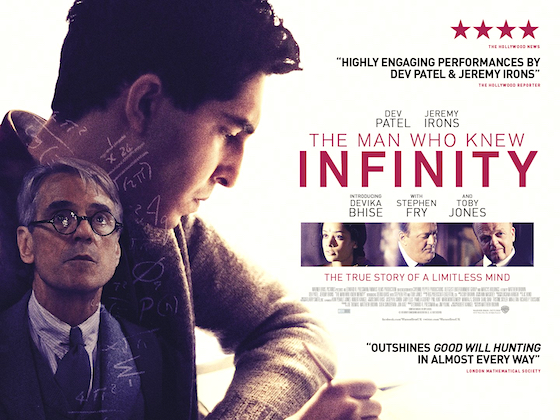
  • The Man Who Knew Infinity (2015)
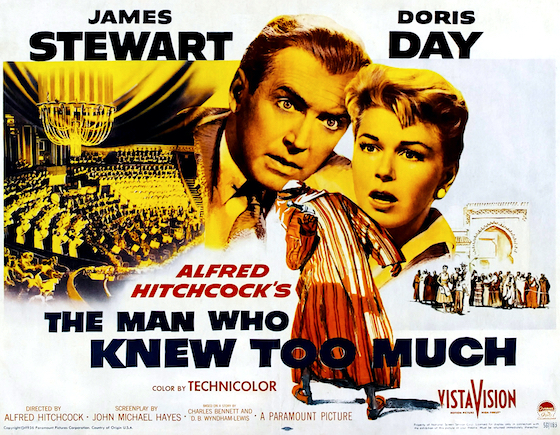
  • The Man Who Knew Too Much (1956)
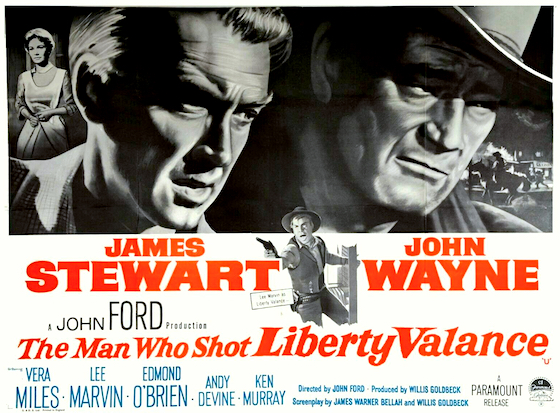
  • The Man Who Shot Liberty Valance (1962)
  • The Man Who Sleeps (1974)


    The Man Who Knew Infinity
    (2015)

    2019 #65
    Matthew Brown | 109 mins | digital (HD) | 2.39:1 | UK & USA / English | 12 / PG-13

    The Man Who Knew Infinity

    Srinivasa Ramanujan (Dev Patel) is a man of boundless intelligence that even the poverty of his home in India cannot crush. His skill for mathematics attracts the attention of noted British professor G.H. Hardy (Jeremy Irons), who invites him to develop his computations at Trinity College, Cambridge. Ramanujan finds that his largely-intuitive mathematical theories clash with stringent academic requirements, just as his cultural values are challenged by the prejudices of 1910s Britain. With Ramanujan’s health in decline, the two men join in a mutual struggle that would define him as one of India’s greatest scholars. — adapted from IMDb

    Writer-director Matthew Brown takes this interesting true story and turns it into an ironically by-the-numbers biopic. Even with reliable actors like Patel and Irons headlining, there are some surprisingly stuff performances, and the film struggles to truly convey the genius or importance of the maths involved. Instead, it’s just lots of characters saying “OMG look at this stuff he thought up” and other characters saying “nah mate, it’s wrong” (except in the vernacular of 1910s Cambridge, of course). Alongside that, it doesn’t have many places to go with the story or characters, so it comes to feel repetitive as it goes round and round over the same points. Even the start of World War I has no genuine impact on events, factoring into the film only because that’s when these events actually happened, so Brown seems to feel it must be mentioned. Indeed, a lot of the film feels beholden to fact in this way, though I’m sure it must be doing the usual biopic thing of bending the truth.

    3 out of 5

    The Man Who Knew Too Much
    (1956)

    2019 #84
    Alfred Hitchcock | 120 mins | Blu-ray | 1.85:1 | USA / English | PG / PG

    The Man Who Knew Too Much

    Dr. Ben McKenna (James Stewart), his wife Jo (Doris Day), and their eight-year-old son Hank are on vacation in Morocco when they witness the public murder of a mysterious man who, before he dies, manages to reveal to Ben details of an assassination about to take place in London. The plotters kidnap Hank to keep the McKennas silent, so Ben and Jo return to London to take matters into their own hands. — adapted from IMDb

    Famously, this is the time Hitchcock remade himself: he’d previously filmed The Man Who Knew Too Much in 1934 while he was still working in Britain. Later, he’d compare the two by calling the original “the work of a talented amateur” while the remake “was made by a professional”, although he reportedly preferred the earlier version precisely because it wasn’t so polished.

    Undoubtedly, the 1956 Man Who Knew Too Much is not top-tier Hitchcock, but that doesn’t mean it’s without joys. Jimmy Stewart and Doris Day are perfectly cast as an ‘everyman’ American couple who accidentally get embroiled in international espionage, and Hitch could make such thrills work with his eyes closed. He’s also on top form during a sequence in the Albert Hall, a stunning set piece that lasts 12 minutes without a single word of dialogue, in which Hitch has the balls to just keep going through an entire piece of music, allowing the tension to almost build itself as he cuts around the room; even when Stewart finally turns up, we still don’t need exposition — we know exactly what’s happening.

    Although a key part of the film’s conclusion, it’s not the actual finale, which is a shame because the following plan to rescue Hank is a bit daft. And, when you think about it, the villains’ plot doesn’t make a whole lot of sense either. It’s stuff like that which gets in the way of The Man Who Knew Too Much being among Hitch’s very best work, but it remains a fine suspense thriller.

    4 out of 5

    The Man Who Shot Liberty Valance
    (1962)

    2020 #66
    John Ford | 118 mins | digital (HD) | 16:9 | USA / English | U

    The Man Who Shot Liberty Valance

    When US Senator Ransom Stoddard (James Stewart) returns to the town of Shinbone to attend the funeral of his friend Tom Doniphon (John Wayne), a young reporter persuades him to tell the story of why he’s there. Flashback to a quarter-century-or-so earlier, when Ransom, a newly-qualified lawyer (still played, unconvincingly, by 53-year-old Stewart), arrived in Shinbone with a plan to bring law to the West. After Ransom receives a beating from local heavy Liberty Valance (Lee Marvin), he recuperates at the Ericsons’ restaurant, where he takes a job in their kitchen to repay their kindness. He develops an affection for their daughter, Hallie (Vera Miles), who’s also being wooed by young rancher Doniphon (still Wayne, also in his early 50s — it seems there was a good deal of movie star vanity in this casting). With local law enforcement refusing to do anything about Valance’s violent oppressive tactics, Ransom eventually takes it upon himself to face the villain down…

    Despite the violent promise of the title, Liberty Valance is very much a dramatic western rather than an action-packed one. Just shooting Valance isn’t the characters’ first recourse; indeed, the film on the whole is interested in the clash between the moral values of the old West and incoming modernity, and how the old ways can persist even as new ones come into force. That older Ransom is a senator is not incidental: a major part of the plot concerns Shinbone (or, rather, wherever it is) applying for statehood, and Ransom and Valance both standing to be a representative.

    All of which is fine, but unfortunately the dramatic focus seems to have resulted in the film being rather slow-going at times. The main plot is fine, but the telling could’ve been tighter — there’s a lot of stuff about Ransom washing dishes and teaching everyone to read and write. It establishes his place in town, sure, but it takes forever getting there. At the other end, Valance is actually shot a full 25 minutes before the end. There’s story to wrap up and twists to reveal, but it takes its sweet time doing it. None of which is distracting as the age-related issue I already referred to. I was genuinely puzzled why everyone kept talking about how young Ransom was, when Stewart patently isn’t, until I realised it was an example of good ol’ Hollywood vanity, where someone thought a star in his 50s could get away with playing a guy in his 20s.

    Despite that, however, Stewart and Wayne remain powerful screen presences, and the commentary on the changing face of the West — indeed, of the country as a whole — is indicative of a direction the genre continues to explore to this day (it’s what the whole of Deadwood is about, at its core).

    4 out of 5

    The Man Who Sleeps
    (1974)

    aka Un homme qui dort

    2020 #203
    Bernard Queysanne | 78 mins | digital (SD) | 4:3 | France & Tunisia / French

    The Man Who Sleeps

    When I watched this, it was ranked as one of the greatest films of all time by Letterboxd users. I did not feel the same — rather than Un homme qui dort, I found it more like Un homme qui t’endort. (That’s a joke I’m so pleased with, I’ve now used it four times.)

    At first it plays like a stereotype of French art house cinema: shot in black & white, it’s about a disaffected student, told with introspective voiceover narration, which philosophises at the level of a pretentious undergraduate, and nothing actually happens. But then I began to feel that, actually, it does a pretty good job of capturing how I’ve felt often in my life; especially back when I too was a pretentious undergraduate. But that feeling didn’t last much more than quarter-of-an-hour — and as the film is an hour and a quarter, that became a problem. As I slogged on through it, the interminable narration became repetitive; the musings less relatable. Just because warped minds exist doesn’t mean it’s worth our while to spend 78 minutes in their thoughts.

    The Man Who Sleeps is the kind of film that thinks it’s profound, but is actually pretentious. That may gel with the worldview of its undergrad subject, but, just as you wouldn’t want to listen to a real-life undergrad’s philosophising for over an hour, I don’t want to endure the same from a fictional one either. I guess it’s apt that a film titled “the man who sleeps” would be a good cure for insomnia.

    2 out of 5

    The Man Who Sleeps featured on my list of The Worst Films I Saw in 2020.

  • The 100-Week Roundup XXVIII

    The 100-Week Roundup covers films I still haven’t reviewed 100 weeks after watching them. Sometimes these are short ‘proper’ reviews; sometimes they’re only quick thoughts, or even just the notes I made while viewing.

    This week’s selection includes a few more films from April 2019

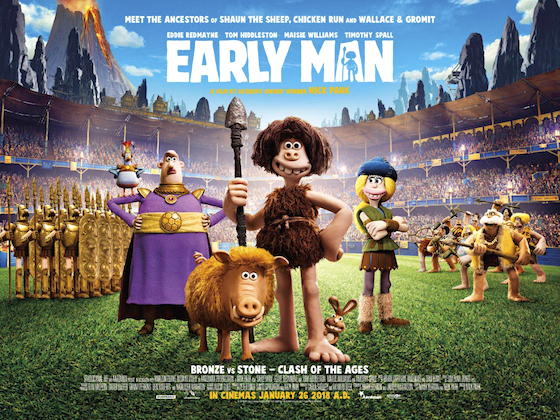
  • Early Man (2018)
  • Amour (2012)
  • Ralph Breaks the Internet (2018)


    Early Man
    (2018)

    2019 #56
    Nick Park | 89 mins | digital (HD) | 1.85:1 | UK, France & USA / English | PG / PG

    Early Man

    Only the third feature film directed by Wallace & Gromit creator Nick Park, Early Man is about a prehistoric tribe who invented football (aka soccer) and must defend their home from a more advanced civilisation by playing a winner-takes-all footie match.

    So, despite the Stone/Bronze Age setting, this is a sports movie — and with that in mind, the plot is as rote as they come. And, if you hadn’t guessed yet, the period setting is less historically accurate than Game of Thrones (at least Thrones is inspired by things that really happened). Plus, there are plenty of bizarre choices — like, if the story’s set in Britain, why is Tom Hiddleston doing a weird Generic European accent? But, for all that, this is an Aardman production, and so there’s tonnes of pleasure to be found in incidental details; the asides and background jokes and grace notes that frequently raise a full-blown laugh, or at the very least a warm smile.

    There’s also something to be said for the film being quite delightfully Brit-centric. When so many productions aim to be bland enough to appeal to a global audience, Park and co haven’t shied away from including an array of gags that are like to only be caught by Brits and/or footie fans. For example, there’s a reveal of the backstory of the tribe and their relationship to the sport that’s an obvious riff on England’s relationship to international football, and I don’t know how apparent that would be to overseas viewers; or characters with names like Goona and Asbo. Not that such things should turn off the uninitiated, however. For pun lovers alone there’s plenty of material, not to mention general quirkiness. I could try to explain what goes on with the duck, but it’s better I leave it for you to discover.

    Early Man isn’t Aardman’s strongest production, but their productions have a base-level charm that’s high enough to keep it ticking over, with the occasional inspired flourish to boot.

    3 out of 5

    Amour
    (2012)

    2019 #59
    Michael Haneke | 127 mins | digital (HD) | 1.85:1 | Austria, France & Germany / French & English | 12 / PG-13

    Amour

    German director Michaell Haneke may be much acclaimed by the arthouse crowd, but I’m not a huge fan of his previous works that I’ve seen (1997’s Funny Games and 2005’s Hidden — it seems I gave the latter four stars, which is not how I remember it). Palme d’Or, Oscar, and BAFTA winner Amour is the exception, however, even while some of its more arty asides hold it back somewhat.

    It’s the story of an ageing couple, Georges and Anne. When Anne has a stroke, Georges is left caring for her as her health continues to decline. In its depiction of this relationship — the strains placed on it and how it survives them — Amour is a truthful, affecting, and deeply moving character drama. Most of the major events (diagnoses, tests, a second stroke) happen off screen, with the film more concerned with day-to-day realities, but that’s part of where its power lies. It’s not so much about the big drama, more the reality of coping.

    But in between this powerful material, there’s random art house shenanigans, like a pigeon wandering into the apartment before Georges shoos it out, or a montage of impressionist paintings. Why do we see these things? I’ve not the foggiest. I guess Haneke had a purpose in mind, but goodness knows what it was — although, as he said in one interview, “consider the pigeon just a pigeon. You can interpret it any way you want. I wouldn’t describe it as a symbol. I have problems with symbols, because they always mean something specific. I don’t know what the pigeon means,” so maybe not. When combined with an overall slow pace, this resulted in the film becoming a bit of a slog for me, which was a real shame. The bits that are good — that are insightful and impactful and emotional — are so good, but, for me, those longueurs get in the way.

    4 out of 5

    Ralph Breaks the Internet
    (2018)

    2019 #62
    Rich Moore & Phil Johnston | 112 mins | digital (UHD) | 2.39:1 | USA / English | PG / PG

    Ralph Breaks the Internet

    The sequel to Wreck-It Ralph is indeed called Ralph Breaks the Internet, when Ralph Wrecks the Internet was right there. Although, if they wanted to be truly accurate, a better titled would’ve been Corporate Synergy: The Movie.

    The plot sees Ralph and his chum Vanellope heading out into the internet to fix the arcade game they live in. That includes an extended sequence set ‘inside’ the Oh My Disney website — originally the Disney Infinity game, but that got cancelled during production so had to be changed. I think that rather indicates the mindset and motives behind this movie: $ advertising $ . Most famously, it includes a sequence where Vanellope encounters the Disney princesses. It’s quite a funny sequence, somewhat undermined by the “no one can understand Merida (because she speaks Scottish)” gag. Imagine if they’d tried that with Tiana or Pocahontas or Moana and their accent/dialect…

    When it’s not being a big advert for its production company, Ralph Breaks the Internet seems to think it’s a clever satire of the online world. It does references and stuff, but doesn’t develop them enough to be genuine commentary — for example, Ralph finds ‘the comment section’ and it’s depressing, and then someone tells him “the first rule of the internet is never read the comments”, and… that’s it. It’s stating a widely-accepted truism as if it’s some kind of revelation or point unto itself. This extends right to the climax, which sees our heroes fighting with a giant virus born of toxic masculinity, an idea that’s somewhere between timely and fucking ridiculous (how does toxic masculinity inherently create a computer virus?)

    Other problems include a pile of plot holes and inconsistencies (such as when Vanellope does or doesn’t use her glitching ability, among others); that it’s a structural mess (the plot bounces from place to place just so it can even get started, then major motivating goals are dismissed and moved on from), which leads to it being needlessly long (surely kids’ animations are best around the 90-minute mark). Also, frankly, I don’t particularly like the characters or the style of humour they create. That’s only worsened when you shoehorn in blatant advertising, half-witted satire, and muddled messages.

    The best Disney canon movies are timeless. Heck, some of the worst ones are, too. But Ralph 2 is so about the ‘right now’ of when it was made, it’s probably already dated today, just a couple of years later, never mind how it’ll hold up in a couple of decades.

    2 out of 5