2015 #52
Seth MacFarlane | 111 mins | streaming (HD) | 2.35:1 | USA / English & Navajo | 15 / R
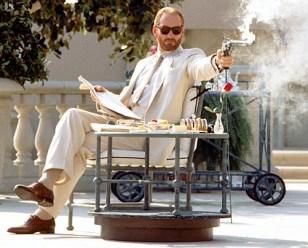
 The second feature from Family Guy creator Seth MacFarlane, after the justly popular Ted, A Million Ways to Die in the West is a disappointing mixed bag, half pretty-decent character- and situation-based comedy, half cringingly infantile toilet-humour tomfoolery.
MacFarlane stars as Wild West sheep farmer Albert, whose love of his life (Amanda Seyfried) leaves him for the owner of the town’s moustache shop (Neil Patrick Harris). Albert accidentally befriends new-in-town Anna (Charlize Theron) who, unbeknownst to him, is the girlfriend of the West’s most notorious outlaw (Liam Neeson) and is only laying low in his small town for a couple of weeks. A plot of love triangles and gunfighting ensues, littered with the aforementioned extremes of comedy.
One of the film’s problem is that said story is definitely too long in the telling — it feels like its reaching the end about halfway through, then it just keeps going… and going… The bigger problem, however, is the depths plumbed by its ‘humour’.
If you stick with it, there are some genuinely funny, clever bits. There are even some genuinely funny, not-clever-but-amusing bits. Unfortunately, there’s a shedload of puerile gags that just demean the whole thing, and it doesn’t help that some of the worst are early on, setting up poor expectations. They’re so bad I’m embarrassed to have seen them, so I’m certainly not repeating any examples — though one, involving Harris, the result of laxatives, 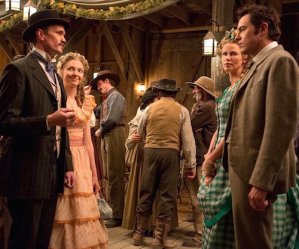 and two other men’s hats, briefly has a funny bit in the middle when he tries to acquire the second hat. The film also uses swearing as a comedic crutch too often. I’m not one of those people who’s only tolerant of swearing if they feel each and every use is absolutely justifiable, and I don’t object to it as just part of dialogue, but too often the film leans on someone saying “oh shit” (or whatever) as if that’s a serviceable punchline.
For movie and pop culture fans, there’s entertainment to be had from some fun cameos and allusions, many of them literally “blink and you’ll miss it” (watch out, for instance, for a Family Guy cast member’s name, and a catchphrase callback the writers inserted accidentally). One cameo in particular has been criticised by some for just being the guy turning up, but… honestly, that would be fine if you didn’t know about it in advance. If you spend the film waiting for him to turn up, the joke (such as it is) is already ruined — the gag is just him being there when you don’t expect it; so if you do expect it, there’s no gag. That’s the problem with a Surprise Cameo at any point after opening night. Would it be better if there was a joke beyond just the Surprise Cameo aspect? Well, yes. Does it work as just a Surprise Cameo? If you don’t know it’s there — if it is indeed a surprise — then, well, yes.
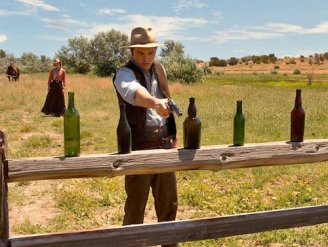 The movie’s best running gag is its titular one. At first it just seems like the concept is going to be limited to Albert sitting in a saloon and listing ways to die, which isn’t funny; but then it keeps cropping back up, sometimes unexpectedly, which really works. The whole fair thing — a running gag within a running gag — is particularly effective. If the film had traded more on this, less on farting and other bodily functions, it would’ve been much improved.
Indeed, the following comment from iCheckMovies summarises my opinion perfectly:
A peculiar mixture of high and low brow comedy which makes it ultimately a bit uncomfortable. However there’s a sweet romance story hidden in there and a fun western (with some very clever gags) if you can get past its more crude side. Feels very much like it would have been quite a fun PG or 12 rated film if they had cut out the more unpleasant side.
That last sentence, in particular, is right on the money. The film’s good bits are genuinely likeable; if not a classic (as the Radio Times weirdly reckons), then a perfectly enjoyable comedy. The frequent doses of crude and toilet ‘humour’ drag the overall likability down massively, however. I think a PG-13 cut would be forced to be a superior movie. 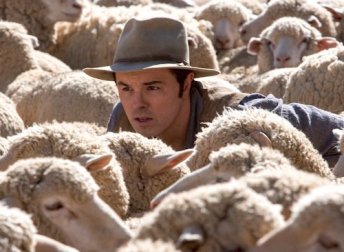 I dread to think what the 19-minutes-longer unrated version is like.*
I’d like to be able to recommend A Million Ways to Die in the West. The bits I liked, I really enjoyed. The bits I hated, however, I really despised. The best I can say is that your mileage may vary — is it worth suffering the lows to have the highs?
A Million Ways to Die in the West debuts on Sky Movies Premiere today at 4pm and 8pm.
* Though it does at least bother to explain why there’s suddenly a reference to Albert’s mother being dead late in the film — it screams “we deleted a scene!” in the theatrical version. ^

 Disney’s ’80s/’90s renaissance more-or-less came to an end with this adaptation of Edgar Rice Burrough’s jungle hero.
 That quote comes from Thomas Elsaesser in the introduction to his Criterion essay “
 The plot, such as it is, concerns an actress (Liv Ullmann) who has decided to become mute and her nurse (Bibi Andersson), who travel to a seaside summerhouse to attempt recuperation. After we’re told how they grew closer, events concern the breakdown of the relationship between the two women… or is there only one woman? We might end up inside one of their heads… but whose? Or is it both of their heads? Or…
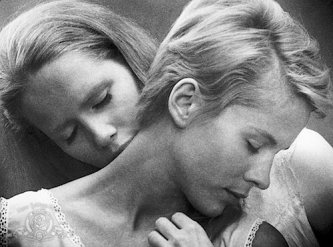 The film’s other most famous bit is a monologue Andersson delivers one night about a foursome she found herself in. As with most of the film its exact meaning is debatable, but it’s another unusual behind-the-scenes story: it was nearly cut, apparently, even though it’s in many respects the pivotal scene. It’s where the nurse opens up the most, leading to the actress’ ‘betrayal’ by repeating the story in a letter, which is what leads to the disintegration of their relationship and all the confusion/weirdness/’deep psychological filmmaking’ that follows. Later, Bergman lets a monologue (yes, another one) play in full twice. The meaning? He had intended to cut back and forth between the two actresses, but couldn’t decide which shots to discard, so just let it all run twice. At least that’s some confusion cleared up, then.
 Jack Palance is an actor wanting out of his studio contract in this stagey film noir.
 Partially driven by a seeming twist that’s obvious from the outset (which, in fairness, the film reveals only 40 minutes in), the story never quite comes alive. Palance and Corey make parts worth watching, but at other times it’s a bit of a slog, not helped by an awful score that chimes in now and then, loudly. Expansive cinematography (so much headroom — was it shot to be cropped for widescreen? Perhaps it was) combats any feeling of claustrophobia the single location and oppressive moral situation might have leant it.
 The
The  Your enjoyment of the film will hinge on your tolerance for this level of filmmaking. War Zone isn’t a Marvel-derived adaptation to sit alongside their big-budget in-house productions, but one to rival other hard-R violence-focused flicks. It may be kind of nasty in places, but no more so than other movies of its ilk; and really, if you look at it from outside the confines of sometimes-simplistic comic book morality, the Punisher is quite a nasty character.
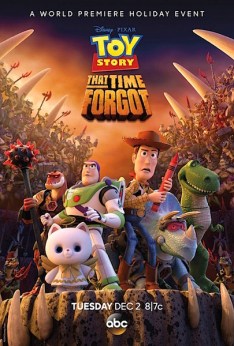 The second Toy Story TV special, and the fifth short adventure for the characters that perhaps should have had their last hurrah in
  The whole thing just feels undercooked. Apparently it took three years to make, with two of those dedicated to development. The Battlesaurs toy line was imagined in full, for example. There’s evidence of that on screen, but it’s just an impression that there’s a lot of background work we’re not getting to see. A TV special gives them limited time to explore the new world they’ve created, of course, but
 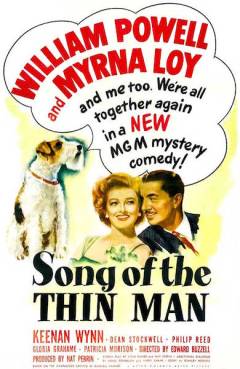 The final film in the Thin Man series sees married detective duo Nick and Nora Charles (the ever-excellent William Powell and Myrna Loy) getting embroiled in the world of jazz musicians, after a friend’s fiancé is accused of murdering a band leader.
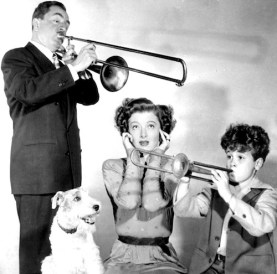 Apparently Loy made it clear before filming began that this was to be the last Thin Man film. Somewhat odd, then, that it’s one of the few to end with an allusion to Nick continuing his detective work in the future, whereas normally he’s being dragged out of retirement each time and happy to return to it by the end (which we don’t believe, of course). Either way, it was probably a wise decision on the part of Mrs Charles, as the law of diminishing returns had kicked in by this point.
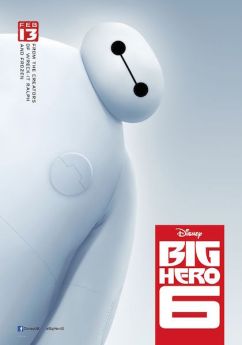 This year’s Best Animated Film Oscar winner is not this year’s best animated film. Not by a long stroke. What it is is one great character, one great emotional plot/subplot, and a lot of stuff that feels like every other big-budget action-orientated CGI animation of the past few years. Most succinctly, this is little more than (as
  The element that is an unequivocal success is Baymax. A soft robot — made of inflated vinyl so as to be genuinely huggable — he’s sweet, funny, and always entertaining. Memorable moments abound, in particular a sequence where his batteries run low, and his interpretation of a fist-bump (a recording booth improvisation by Adsit that was worked into the film). The movie truly comes alive whenever he’s on screen, but conversely loses some magic whenever he’s pushed into the background.
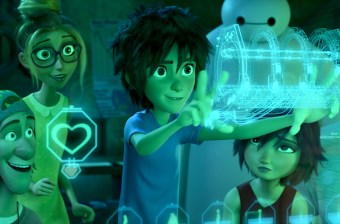 Big Hero 6 is by no means a bad film. It will certainly entertain its target age group, especially if they haven’t seen the other CG spectacles it nabs from. That aside, the entire thing is worth a look purely for Baymax and a few stand out moments — all of them involving the aforementioned vinyl robot, of course. Otherwise, it’s pretty by-the-book. The five-star-level praise it’s attracted in some quarters is completely unwarranted.
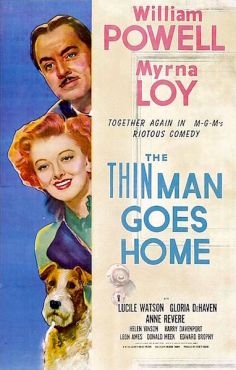 After four glamorous adventures, high-living sleuths Nick and Nora Charles (William Powell and Myrna Loy) head to small-town America to visit his parents (Harry Davenport and Lucile Watson), and naturally find themselves embroiled in a murder plot.
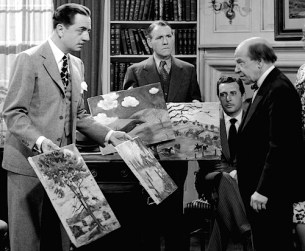 then no one would’ve been murdered. (Probably.)
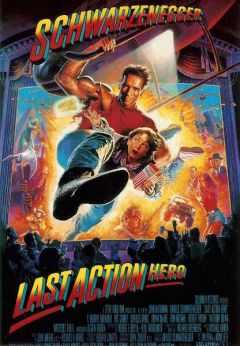 The first film to be advertised in space (
 That said, it’s probably a good thing this isn’t a whole movie of “fictional characters in the real world” — you can imagine how that would play out; all the predictable “fish out of water” hijinks. However, at just over two hours, this isn’t a short film, and cutting out some of the middle wouldn’t have hurt.
 100Films.co.uk