
John Cromwell | 83 mins | download (HD) | 1.33:1 | USA / English | PG
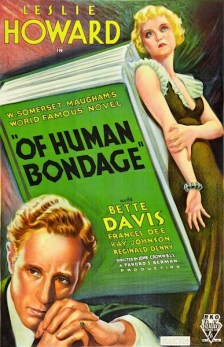 W. Somerset Maugham’s semi-autobiographical novel Of Human Bondage is, per Wikipedia, generally agreed to be his masterpiece, and regarded as one of the best English-language novels of the 20th Century. I’ve never read it, but I’m going to begin by recapping its plot (again courtesy of Wikipedia), the relevance of which will become clear after. Spoilers abound, should you be so concerned.
So, Maugham’s novel tells the life story of Philip Carey, a boy with a club foot who is orphaned and sent to live with his aunt and uncle. They quickly dispatch him to boarding school, where he struggles to to fit in due to his disability. Although groomed for an Oxford education, Philip insists on travelling to Germany, where he eventually takes an apprenticeship. Again he fails to fit in, his co-workers resenting him for being a gentleman. On a business trip to Paris, he decides to quit his job and become an art student. A fellow student falls in love with him; he doesn’t realise, and she eventually commits suicide.
(I know, you came here for a film review, not a plot summary, but bear with me.)
Realising he’ll never make it as an artist, Philip returns to England, eventually deciding to enter medicine. While struggling as a student, he meets a waitress, Mildred, who he falls in love with. She leaves him heartbroken when she announces she’s marrying another man. Philip begins seeing an author, but when Mildred returns, pregnant and unmarried, he breaks off the relationship and begins to support Mildred. Despite his kindness, she falls for one of Philip’s friends and runs off with him. Later she returns, now a single mother, and Philip takes her in again. This time she makes advances on him, which he rejects, 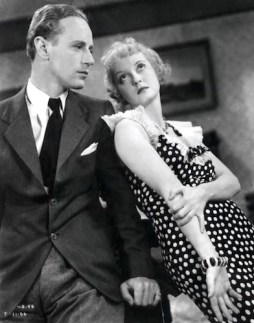 so she destroys his belongings and disappears. Eventually he meets her again, when she’s in search of his medical opinion. She has contracted syphilis from working as a prostitute, but rejects Philip’s advice to quit. Her ultimate fate remains unknown.
(Nearly done…)
Meanwhile, Philip is left penniless by poor investments, and unable to complete his education. He’s taken in by the family of a patient, who find him a job at a department store, which he hates, although his talent for art earns him a promotion. After his uncle dies, the inheritance Philip gains allows him to return to his medical tuition and finally become a doctor. He takes a temporary placement at a hospital, where a senior doctor takes a shine to him and offers a stake in his practice. Philip declines. On a summer holiday with the patient who took him in earlier, he meets one of the man’s daughters, Sally, who likes him. She winds up pregnant, so Philip abandons his plans to travel the world, deciding to marry her and accept the doctor’s partnership offer after all. It turns out the pregnancy was a false alarm, but he decides to settle down anyway.
Phew! What a life.
All of that plays out over 700 pages. How do you adapt it into an 80-minute movie? The answer, at least for RKO in the ’30s, is that you cut most of it out.
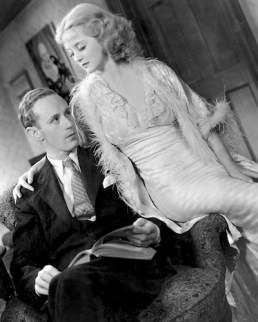 The film begins in Paris, with Philip (Leslie Howard) being told he’ll never make it as an artist. He instantly decides to become a medical student, during which time he meets Mildred (Bette Davis). From there, the rest of the film follows the plot described in the second paragraph, albeit with some notable modifications (which I’ll come to later), with parts of the third paragraph (the patient, his daughter, abandoning travel for marriage) surfacing during the third act.
As I said, I’ve never read the novel, but it strikes me this is less “an adaptation” and more “a partial adaptation”. I’m not sure how Maugham fans feel about that. Even more surprising, at least to me, is that it seems no one’s ever attempted a more faithful retelling. There were two more film adaptations, but the last of those was 52 years ago and, from a quick glance at some plot descriptions, it sounds more like they’re remakes of this film than fresh adaptations of the novel. Considering the book is so acclaimed, it’s a wonder someone like the BBC has never given it the miniseries treatment, especially considering it’s been so long since the last film.
It would probably withstand a new treatment, too, because this version is not exactly highly acclaimed. Not that it’s a bad film, but there is only one real reason to watch it: Bette Davis, giving the performance that made her a star. She overcomes a terrible cockney accent (we’re talking Dick Van Dyke-level bad) to map out the sad decline of Mildred, starting out as a rude and dismissive waitress (it’s hard to see what Philip sees in her, but he’s a bit of a drip so we’re not exactly on his side), slipping to a struggling single mother desperately throwing herself at her one-time admirer, to a final terrible state: gaunt, dead-eyed, looking like she’s almost rotting away before our eyes. Maybe it’s not as gruesome as that sounds — this is a ’30s drama, not The Walking Dead — but it’s still striking.
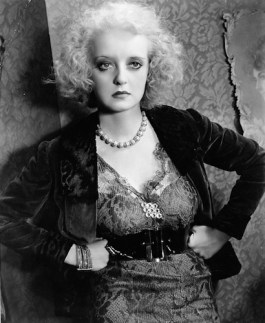 In the film it’s not syphilis that does for her, but tuberculosis, and prostitution is never mentioned, or even really alluded to. The changes were no doubt due to the infamous Production Code. (There are paintings of naked French women all over Philip’s apartment, though, but I guess that counts as Art. Sadly, there’s no meta-funny dialogue about painting anyone like one of his French girls.) Of Human Bondage is often labelled as a Pre-Code film — as coming from that narrow era between the Code being invented and anyone seriously bothering to apply it. The latter came about in 1934, when an amendment to the Code stated that any film released after July 1st 1934 had to receive a certificate of approval before it could be released. Of Human Bondage premiered on June 28th, which I guess is why it gets labelled a Pre-Code film, but it went on wide release from July 20th, so fell under the Code’s new remit after all. The print held by the Library of Congress (used for the US Blu-ray release) even has the Code certificate at the start (it’s #53, if you’re curious).
Anyway, back to Mildred: her final degraded state is one of two parts that really mark Davis’ performance out. The other is a monologue delivered after Philip finally rejects her, a screaming force of nature that tears off the screen. Part of its effectiveness lies in the contrast to Davis’ work in the film up to that point, which has been calmer and emotionally reticent, her feelings concealed from Philip because, as it turns out, she has none for him. When she bursts forth with a tumult of fury, an explosive anger based in her lost ability to manipulate this weak man, it’s both a surprise and entirely expected of her selfish character.
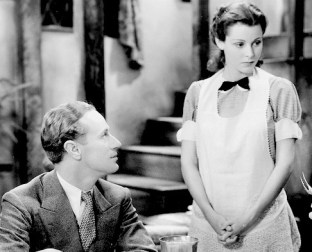 When Davis is off screen, it feels like the film is waiting for her to return. Her arc aside, it’s a take-it-or-leave-it damp squib of a drama — there’s nothing wrong with it, it’s just not all that engaging. Howard has definitely been better; his romance with Sally arrives too late to have much emotional weight, though it’s easy to believe he could fall in love with Frances Dee at first sight.
More interesting than the plot of the film is the behind-the-scenes story, which brings us back round to Davis. At the time she was a contract player at Warner Bros, and feeling her career was going nowhere. Of Human Bondage had been rejected by some major actresses due to Mildred’s distinct unlikeability, but Davis saw it as an opportunity. She begged Jack L. Warner to lend her to RKO, which he resisted because he believed it would tarnish her image. However, he ultimately relented when Warners wanted an actress from RKO (Irene Dunne for Sweet Adeline, if you’re interested), and because he believed she would fail. Obviously that didn’t happen, much to the chagrin of Warner executives, who were embarrassed by one of their actresses having such success in a rival studio’s film. When there was talk of her winning an Oscar, Jack Warner began a campaign to discourage Academy members voting for her. At that time the vote counting was handled internally by the Academy itself, so Warner was able to get his way, successfully keeping her off the nominations. However, outrage by voters led to a write-in campaign. Davis ultimately placed third, but the effects were longer lasting: write-in votes were banned, 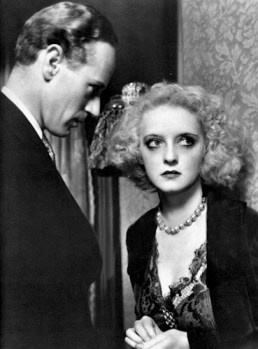 and independent firm Price Waterhouse were hired to manage the voting next year — a job they still do today.
That might make quite a good film, actually; the kind of thing that might win some Oscars…
Award-winning or not, Davis’ performance is the main reason to watch Of Human Bondage. Maybe the novel is a great work, but the film is little more than adequate, with one exception. It may take a while to get past that accent, plus the addition of some dramatic fuel to allow Davis to catch light, but when she does it’s clear how this was a star-making turn.

This review is part of the Bette Davis Blogathon. Be sure to check out the many other fantastic contributions collated by host In the Good Old Days of Classic Hollywood.
 I’ve observed before that the ’80s seem to be everywhere in film these days, and here’s another example: Turbo Kid is in every respect an homage to low-budget ’80s genre fare.
 Then there’s the score, which is of course all ’80s synths, in a similar style to the score of
  I confess, I only watched The Hangover to see what the fuss was about, and to get the tick on
  Con man Gordon Liu poses as San Te (Liu’s character from
  Most of mankind have become vampires, but the blood supply is running out and without it people mutate into monsters. Ethan Hawke’s scientist is developing a substitute, but when he encounters human resistance fighters he learns there may actually be a cure…
 A woman wakes up on a beach in the middle of the night. Stumbling away, she comes across a beach house with three strangers inside. They establish that the last thing they remember was being in a nightclub when there was some kind of accident, and then they woke up here. Fortunately, they’re not stupid and quickly twig this place is some kind of afterlife, then begin to work out how to get out — not that they’re helped by the lighthouse beam which causes immense pain, or that if they run away from the house they end up back at the house, or the vicious smoke-monster that’s flying around…
 AfterDeath is billed in part as a horror, emphasised by the skull imagery used on the poster. It’s not particularly scary though, so if you’re after that kind of thrill then it’s one to miss. As single-location mysteries go, it’s not remarkably original or exceptionally engaging, but the story and its revelations are solidly executed and the whole is decently performed, providing you don’t strain your eyes trying to see what’s happening.
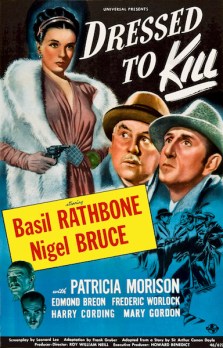 In the seven-and-a-bit years between 31st March 1939 and 7th June 1946, there were a total of 14 films released starring Basil Rathbone and Nigel Bruce as Sherlock Holmes and Dr Watson. By coincidence rather than design, I’ve spent nearly eight years viewing and reviewing them all for this blog — so yes, it’s taken me a little longer to watch them than it did to make them, which is ridiculous, but there you go.
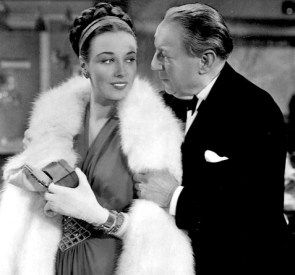 the story is explicitly referenced in the film, Watson having just had it published; then the film’s villainess turns up, played by Patricia Morison, functioning effectively as an Adler stand-in — and using some tricks she learnt from reading Watson’s story! The series hasn’t featured Adler before, so why not just name this character Irene Adler, have her devise those tricks from her own imagination, and be done with? Who knows.
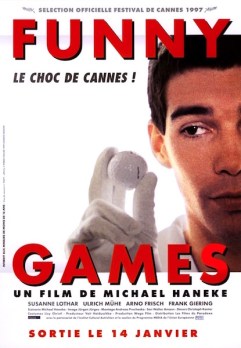 Arthouse favourite Michael Haneke criticises audience’s enjoyment of screen violence. It certainly achieves its aim of being a grim, brutal depiction of violence in real-life, creating a situation that feels inescapable not only for the characters but the audience too. Some cinematic trickery is also deployed to striking, if divisive, effect.
 Mumble and his penguin pals return for another adventure, in a series the Australian film industry are reportedly inordinately proud of.
 The word “prequel” was first coined in the ’50s, arguably entered the mainstream in the ’70s, and was firmly established as a term everyone knew and used in the ’90s by the Star Wars prequel trilogy. Works that can be defined as prequels predate their naming, however, and surely one of the earliest examples in the movies must be this silent German horror.
 Regarded as one of the first horror films, The Golem is more of a moderately-dark fantasy, or a fairytale-type myth. There are clear similarities to Frankenstein, though I don’t know if either influenced the other. However, it does feature what I presume is one of first instances of that most daft of horror tropes: running upstairs to escape the monster. It goes as well here as it ever does, i.e. not very. Said monster looks a bit comical by today’s standards. Built by the rabbi to defend the Jewish people, he immediately uses the hulking chap to chop wood and run errands — he doesn’t want a defender, he wants a servant! A terrifying beast nonetheless, it’s ultimately defeated because it picks up a little girl for a cuddle and she casually removes its magic life-giving amulet.
 100Films.co.uk