Seoul Station (2016)

aka Seoulyeok

2018 #184
Yeon Sang-ho | 92 mins | streaming (HD) | 1.85:1 | South Korea / Korean | 15
Seoul Station

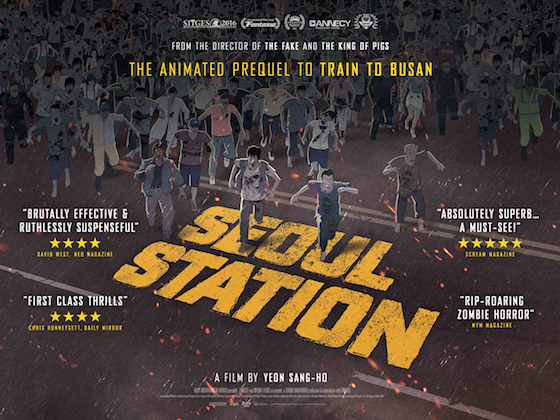
Before he made zombie masterpiece Train to Busan, director Yeon Sang-ho was an animation director with several features to his name. So perhaps it’s not surprising that, to accompany his aforementioned live-action debut, he also helmed this animated prequel.

Apparently set one day before the events of Busan (there’s no obvious indication on screen of how the films’ timelines line up), Seoul Station depicts events as the zombie outbreak expands at the titular transportation hub. Through this we follow Hye-sun (Shim Eun-kyung), a young runaway struggling to make ends meet living with her good-for-nothing boyfriend, Ki-woong (Lee Joon). Hye-sun’s father, Suk-gyu (Ryu Seung-ryong), has finally tracked her down, but arrives just after his daughter and Ki-woong have an argument and she runs off — and then the zombie thing happens. As Hye-sun struggles to escape the undead hordes, Ki-woong and Suk-gyu team up to search for her.

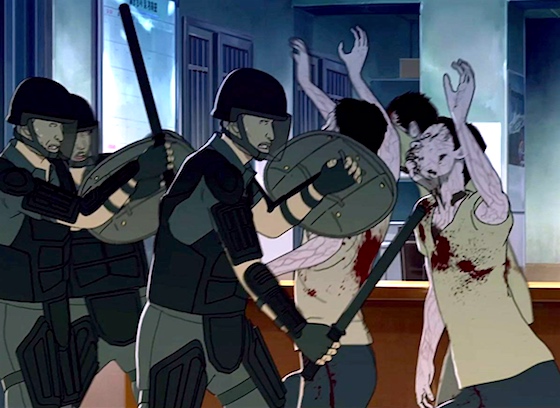
Like Train to Busan, then, Seoul Station revolves around a struggling father-daughter relationship — though this one’s of a very different sort. That’s apparent from the off, but to say too much more would be a last-act spoiler. Suffice to say, it all comes to a very dark, grim ending, with none of the redemption or hopefulness of the main film. It also continues the live-actioner’s theme of other humans being the real villains, with the actions of selfish cowards being as much a threat to survival as the flesh-eating monsters. It feels like Yeon is being critical of Korean culture, taking potshots at the treatment of the homeless, the uselessness of the police, and more. Most of that stuff plays universally, mind, but the film hardly connects with it in a meaningful way. For example, we see one homeless guy struggle to get help for his injured and dying brother, as person after person either refuses help or begrudgingly does the least they can. “They should do more,” the film implies. But if they had, what would change? In this scenario, nothing — the guy’s been infected by zombie-disease; they’d all wind up undead too and it would spread faster.
Police brutality

Half-assed social commentary aside, there are some really neat, original ideas in here, like a scene where Hye-sun must hold her nerve as she precariously tightrope-walks across the empty shell of a building, while behind her the mindless zombies throw themselves off the building onto the structure, their lack of dexterity leading most of them to plummet straight through it… but not all of them. Plus, as alluded above, there’s at least one solid twist. On the down side, it’s a bit slow — it takes 20 minutes for the zombie outbreak to start, for no particularly good reason; and though it mostly picks up after that, it occasionally loses focus again. The animation is of variable quality, too: some of it is very good, but at other times it feels kind of floaty, and there’s a very bizarre motion-blur effect applied to character movement.

Unlike Train to Busan, Seoul Station can’t quite coalesce its good ideas into anything more meaningful than a zombie thriller. Plus, the ultimate grimness of the finale feels almost mean-spirited and cruel rather than pointed. It’s not a bad zombie flick by any means, but there’s an even better movie waiting to be refined out of its best ideas, and so it’s not as transcendentally great as its live-action forebear.

3 out of 5

The UK TV premiere of Seoul Station is on Film4 tonight at 11:15pm.

Conquest Program No.9

2018 #158a-d
30 mins | DVD | 4:3 | USA / silent (English)

Conquest Program No.9 advertisement

We all know the cinema experience of today: 20 minutes of TV adverts that we’d fast-forward at home but have no say in on the big screen, followed by 10 minutes of movie trailers that we’ve already watched on YouTube, and, finally, the film we’ve paid to see. But back in the day the theatrical programme was less unedifying, with short films of various stripes preceding the headline film (hence the term “feature film”, obv.)

For her DVD release of the 1917 feature Kidnapped (more about that in my review here), Fritzi Kramer of Movies Silently was able to source the four short films that were bundled with it as part of “Conquest Program No.9”. The Conquest Programs were the idea of distributor George Kleine and created by Thomas Edison’s film company. Eleven were created in all, each one bundling together a feature film and a mix of shorts to create a complete bill of wholesome entertainment. By specifically recreating Program No.9, the Kidnapped DVD doesn’t just offer an approximation of what a night at the movies in 1917 might’ve been a bit like, but rather a genuine was-definitely-shown-in-theatres programme from the time.

Friends, Romans and Leo

The programme opens with a twelve-minute comedy short, Friends, Romans and Leo, directed by Alan Crosland, who also helmed Kidnapped, and featuring several of the feature’s leading players too. It’s a bit of Roman farcing about, concerning an “emperor” who’s so in debt he lets the moneylender marry his daughter rather than call in the mortgage on his garage. I’m sure that’s exactly how Roman politics worked. Then, an unwanted and useless servant is cast into the gladiatorial ring to face the hulking Brutal Brutus, and also Leo, a man in a lion costume… er, I mean: Leo, a lion. This bit, at least, has some amusing pratfalling. It’s not big (it’s a short film, after all), it’s not clever (characters speak in a mix of Olde Worlde English (“thou hast been good to me”) and modern slang (“that’s a twenty-karat rock, girlie!”)), and it’s not particularly amusing to today’s eyes either, although the second half is at least diverting enough. Certainly, a grown man titting about in a lion suit has its own kind of charm.

Up next is a seven-minute “fairy tale in silhouette”, Little Red Riding Hood. I’d assumed it was going to be some kind of puppet animation job, but no, it’s live-action shot in silhouette, presumably for a kind of stylistic, picture-book-ish look. This means we’re treated to another man in an animal costume — the wolf, of course — but this outfit is less good than Leo’s, something even the silhouetted visuals can’t hide. The short rattles through the traditional story with no significant variations, which feels a little quaint viewed from the vantage point of over a century later. That said, it does include this immortal line: “It must be grandmama for it is her cap, but how very strange this bad cold makes her look!” Because people can always be identified by their caps, and colds make you look like a wolf.

Little Red Riding Hood

Talking of quaint, that clearly wasn’t a concept alien to 1917 audiences, as the third short implies. Titled Quaint Provincetown, it’s a seven-minute travelogue about a quiet little seaside town and its almost throwback way of life (even for 1917!) A series of lifestyle scenes rather than a narrative documentary, it’s a fascinating window into the past, which arguably makes it the most interesting of these films for the modern viewer. That said, how much of it was captured actuality and how much was staged, who knows — for example, at one point we watch a couple of boys have a fight in the street while their friends egg them on, which you feel the filmmakers can’t’ve just happened upon. Still, kids, eh? I guess some things never change.

Finally, Microscopic Pond Life is a four-minute look at… well, what it says on the tin. This is, broadly speaking, stuff we’re nowadays familiar with from a young age thanks to science lessons and whatnot, but I imagine it must’ve been quite incredible to see these minuscule organisms in action for the first time. You’re not going to learn a lot of detailed scientific information from a 100-year-old short like this, but it remains a fascinating glimpse of the tiniest of lifeforms.

Microscopic Pond Life

Viewed today, this selection of short films is, at worst, an insight into a time long gone — one of the nearest experiences we’re likely to get to time travel. At best, the films themselves retain some inherent interest and entertainment value. As Fritzi puts it in her booklet accompanying the DVD, “the ninth Conquest program is not filled with hidden masterpieces, just good solid programmers that would have entertained the average American audience in 1917.” Very true, and fair enough.

3 out of 5

Read my review of Conquest Program No.9’s feature film, Kidnapped, here.
The DVD is now available to purchase from Amazon.com.

Zatoichi and the Doomed Man (1965)

aka Zatôichi sakate-giri

2018 #157
Kazuo Mori | 78 mins | Blu-ray | 2.35:1 | Japan / Japanese

Zatoichi and the Doomed Man

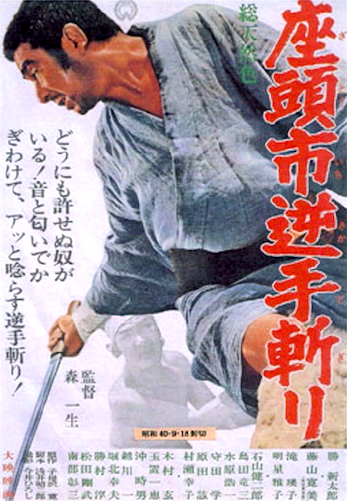
The eleventh film in the Zatoichi series is perhaps the first one that could legitimately be described as bad. It’s not outright terrible, but the plot doesn’t hold together very well, and there are only a couple of redeeming scenes.

The first of these is at the very start, when the film opens on the striking image of Ichi receiving lashes as punishment for an initially-unspecified crime. They seem almost a minor inconvenience to our hero, however, who is more concerned with questions he has for his punisher about this cellmate of the previous night. It turns out he was the eponymous “doomed man”: a fellow who’s been incarcerated on a murder charge, but claims he’s innocent, and urges Ichi to track down the gang bosses who can vouch for him. Uncharacteristically, Ichi resolves not to help, but fate has other plans…

That reliance on fate to marshal Ichi around led me to dub this Zatoichi and the Coincidental Coincidences of Coincidence. He’s constantly stumbling back onto the film’s plot even when he tries to avoid it, or bumping into the people he needs to find, or bumping into people who happen to be connected to other people he happens to know. It’s easily the most poorly-constructed story of the series so far. That’s not limited to its dependence on coincidence, either: half the stuff it sets up doesn’t even pay off or come together in a reasonable fashion. Although the initial “wrong man” setup is enticing, rather than do anything interesting or different with that, it just turns out to be the series’ usual: some bosses have betrayed the chap as part of a scheme to control the area. And to rub salt in the wound, we learn about this in a scene where one conspirator explains what they’ve already done to his co-conspirator. Oh dear.

Shenanigans

It’s a very slight story — not even enough to sustain the brief sub-80-minute running time, it would seem, as we’re ‘treated’ to an array of unrelated shenanigans. The primary one is a young man who starts following Ichi around, then later impersonates the famed blind masseur for financial gain — and, supposedly, for comic effect. He’s played by Kanbi Fujiyama, who (according to Chris D. in his notes accompanying Criterion’s release) “was a noted funnyman in mid-to-late-sixties Japan, appearing in sidekick roles in many of Toei studios’ ninkyo (chivalrous) yakuza films.” Reading other reviews, a lot of people seem to find his schtick hilarious, but I thought he was the most irritating comic relief character the series has yet foisted upon us — and he’s basically the co-lead of this instalment, so we get to see far too much of him. He eventually turns out to have a connection to the main plot too, which is emblematic of the whole movie: the connection is a complete coincidence, dumped on us via random exposition late in the game, and then not paid off in any way. It’s entirely pointless. At one point he disappears from the film entirely. Due to how it was handled, I began to wonder if we were meant to infer he’d died off screen. But then he turns up again in the epilogue, as it merely to confirm that wasn’t the case.

That stands in opposition to the film’s main plot — you know, the titular one about the “doomed man” — which is resolved offscreen while Ichi’s already going on his merry way. It’s just one aspect that feels rushed (despite the short running time and ‘comedy’ distractions), or as if scenes were deleted. This is particularly noticeable as it pertains to the female interest, Oyone (Eiko Taki). Ichi rescues her thanks to a little trick she pulls, but then she seems ungratefully indifferent to him… until she’s suddenly hanging around near the end, hoping (as the women in these films always do) that he won’t run off while her back’s turned. Which is exactly what he does, of course.

Zatoichi with the doomed man

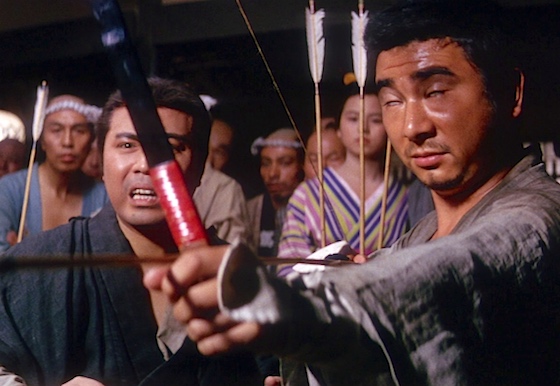
You may remember I said there were some good bits. One is the pre-titles, which I already partly discussed. They’re effective thanks to some strong photography from Hiroshi Imai and the way they flip around with our expectations to create mystery (even if the reason Ichi’s receiving those lashings is completely irrelevant to the rest of the film). The other is the finale. As usual, the movie climaxes with Ichi having to take on an army of goons single-handed, but this one adds some spice with a seaside location, strewn with fishing nets (which get brought into the action) and covered with an early morning sea mist. It’s also beautifully shot, and there’s nicely choreographed combat. It’s easily the highlight of the film.

Other reviewers are not so harsh on The Doomed Man, going so far as to call it a “fine entry” in the series, or “thoughtful [and] hilarious”. And yet, those reviews can’t seem to help spotting the flaws in spite of themselves. Walter Biggins’ review at Quiet Bubble is a series of questions about why the film is so poor, with the last query being the most baffling of all: “why, despite all this opacity all my questions, did I end up liking this movie so much?” I’ve no idea, mate. Several other reviews make comments along the lines of, “Ichi behaves uncharacteristically here, but there must be a good reason for that” — or it’s just crappy, inconsistent writing. At least Letterboxd users agree with me: it’s ranked 24th out of the main series’ 25 films (the only one lower is the 23rd film, Zatoichi at Large — which, incidentally, is by the same director).

“Here's the end of the plot — go give it to someone and get this over with!”

For me, The Doomed Man is by a clear margin the weakest Zatoichi film so far. As nowadays I very much look forward to my regular appointments with Ichi, being so underwhelmed left me feeling disappointed: it wasn’t worth the wait since the last film, nor was it really enough to tide me over until the next one. For those reasons I considered giving it a lowly two stars, but that felt a bit harsh: it certainly isn’t without merit (the climactic fight is a stunner), and it’s always nice to spend time in Ichi’s company, even if he is being inconsistently written. Nonetheless, it only earns that third star by the skin of its teeth. This is a “for completists only” instalment.

3 out of 5

Killing Gunther (2017)

2018 #83
Taran Killam | 93 mins | streaming (HD) | 1.85:1 | USA / English, German & Spanish | 15 / R

Killing Gunther

Do you ever have that feeling where you want to watch a film but you don’t want it to be anything too demanding or important? I do. I’ve watched (and subsequently reviewed) plenty of films with that underlying motivation. Killing Gunther is the latest that absolutely fits that bill. I had paid it absolutely no heed whatsoever until I happened to see a trailer that looked moderately amusing. Bolstered by a Rotten Tomatoes pullquote that described it as “a very affectionate take on the [hitman action] genre, so it’s much easier to overlook its shortcomings if that happens to be a genre that you’re a fan of,” I decided it was worth a punt.

Framed as a mockumentary, it’s the story of a hitman (Taran Killam) who sets out to kill the world’s greatest hitman, Gunther (Arnold Schwarzenegger), and assembles a team of oddball fellow hitman to do so. Unfortunately for them, Gunther is so damn good that he’s always several steps ahead.

As a comedy, I thought it was funny. Not always super original or absolutely hilarious, but ticking enough. As an action movie, some of the single-take assassination scenes are done quite well. It was clearly produced on a low budget, so the action sequences don’t really fulfil on an adrenaline-junkie level, but they work decently in context.

Gunther vs... that other guy

For Arnie fans, it’s worth noting that he doesn’t actually turn up until over an hour into the movie. Put another way, he’s not in 72% of the film. Really, it’s just an extended cameo. It would’ve been a neat surprise if his appearance was a secret, but the whole marketing campaign is based around him (which makes sense, but still).

If you hate mockumentaries, or indie comedies with more ambition than budget, or are coming just to see plenty of Arnie, then Killing Gunther is one to skip. If the concept and style appeals, however, it’s a decent 90 minutes for a lazy evening.

3 out of 5

Review Roundup: 15-Rated Comedies

You don’t have to be an adult to like today’s reviewed movies, but… you do have to be a teenager. Still being a teenager would probably help you enjoy them, too.

In today’s roundup:

  • Airplane II: The Sequel (1982)
  • Hot Tub Time Machine (2010)
  • Sausage Party (2016)


    Airplane II: The Sequel
    (1982)

    2018 #17
    Ken Finkleman | 81 mins | DVD | 16:9 | USA / English | 15* / PG

    Airplane II: The Sequel

    Comedy sequels are a funny business. Generally the first film’s been a big enough hit that people want to cash in, but can lightning strike twice? Well, the number of comedy trilogies (or more) suggests the answer is “yes”… or at least that enough people liked the first one enough that they went to see the second one and, regardless of what they actually thought of it, that persuaded people there should be a third.

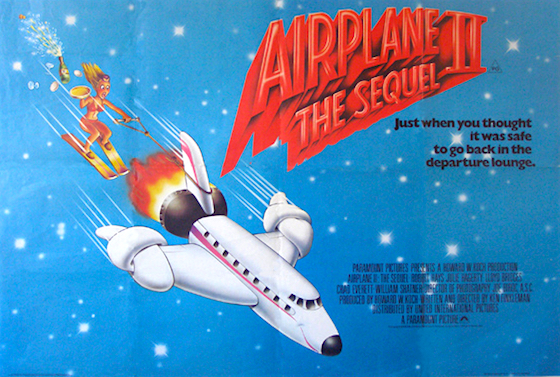
    Airplane is widely regarded as one of the best comedies of all time. There is no Airplane III. Those two facts might suggest something about Airplane II — though it’s a film which even included a gag in its title, so it’s off to a good start.

    Watched now, over 35 years after its release, Airplane II has a certain vein of humour that hasn’t aged well. Ha ha, those two men kissed like they were a couple! Ha ha, that priest was looking at Altar Boy magazine like it was Playboy! Ha ha, everyone has to slap an hysterical woman! At least one of those gags would probably get you fired from a directing job at Disney nowadays… But to focus on those is to pick on the film’s weak points. Another would be that it has a few too many rehashes of jokes from the first one. Well, what comedy sequel doesn’t? That aside, much of the rest is pretty darn funny.

    3 out of 5

    * This was rated PG on its original theatrical release, but that was cut. The uncut version has consistently been rated 15 on video. ^

    Hot Tub Time Machine
    (2010)

    2018 #51
    Steve Pink | 97 mins | streaming (HD) | 1.85:1 | USA / English | 15*

    Hot Tub Time Machine

    I don’t know why I felt the need to watch Hot Tub Time Machine. Maybe just because it found its way onto my 50 Unseen list back in 2010 (I guess people talked about it at the time. Has it lasted? I don’t think so). Maybe because it’s got “time machine” in the title and so the sci-fi implication draws me in, especially as a Doctor Who fan. I don’t know. Whatever, it’s been vaguely on my radar for the past eight years and, when I wanted something undemanding one Friday night, its time finally came.

    As the title implies, it’s about a hot tub… that’s a time machine. Four dudes get in it and find themselves in the bodies of their ’80s selves. Except for one who wasn’t born at the time, who just finds himself in the past. Yeah, the logic of it is really shaky.

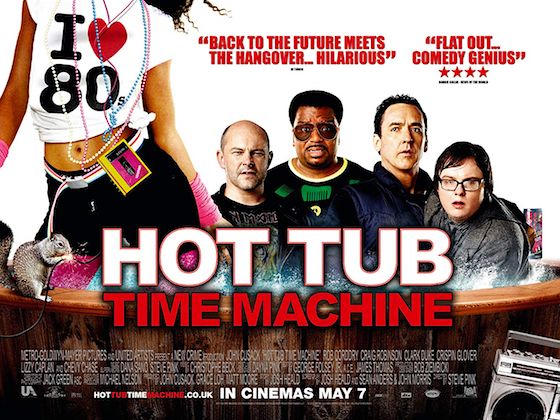
    Nonetheless, it actually has a couple of solid thematic and plot ideas buried away, to do with fate and second chances and stuff, but those are mired in execution that’s both derivative (of both Back to the Future and stuff like The Hangover — and, I swear, I hadn’t seen the quote on the above poster when I wrote that) and often unfunny (unless you really like that lowest-common-denominator gross-out stuff). There are some genuine laughs, but they’re infrequent enough that they might just’ve been accidents. Another part of the problem is that for the eventual pay-offs to work you need to be invested in the characters. The film makes half an attempt to give us reasons to care about the guys, but they didn’t connect for me. Maybe if that worked better, the later stuff would land too.

    I didn’t hate Hot Tub Time Machine — it was passably amusing for a time-filler — but it wasn’t great either. My score errs on the harsh side, because I definitely liked it less than other movies I’ve recently given 3 stars.

    2 out of 5

    * I watched the extended “unrated” version, hence no MPAA certificate. It’s less than two minutes longer (comparison here), with no material that would challenge an R rating. ^

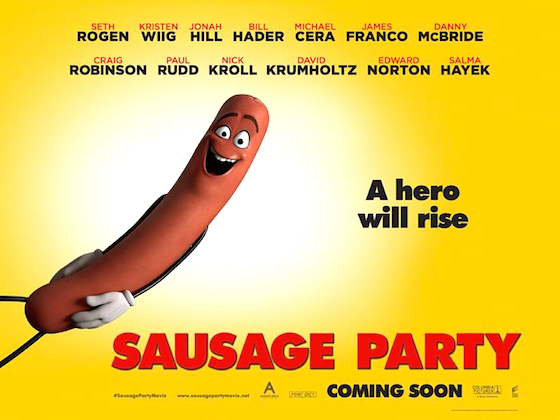
    Sausage Party
    (2016)

    2018 #37
    Greg Tiernan & Conrad Vernon | 85 mins | streaming (HD) | 1.85:1 | USA & Canada / English | 15 / R

    Sausage Party

    A movie about sentient food that parodies the inherent stupidity of religion — I mean, what’s not to like? Well, it’s from the minds of Seth Rogen, Evan Goldberg, and co (Jonah Hill as a story co-credit), so if you don’t like their kind of humour…

    Certainly, it’s incredibly rude and crude — even more so than they’d necessarily intended: they were so certain they’d get an NC-17 rating from the MPAA that the version they submitted included some extra extreme material, the hope being that would act as a distraction so that what they actually wanted in the film would pass as an R. However, the MPAA only insisted on one relatively minor change. I imagine that was to the massive, long, graphic orgy scene. There are no words for it. And yet, it only got a 15 over here — you really have to be very extreme to get an 18 these days, huh? Or maybe it’s just because it just involved food…

    For all the eye-watering content, at least the film has the good grace to also be quite witty and clever at times. I guess some of the ‘satire’ is a bit on the nose, but it works for what it is. I mean, no one comes to a film like this expecting subtle social commentary, do they? And if the analogies for religious belief are a bit on the nose, well, maybe that’s what it takes to get through to those people…

    4 out of 5

  • The LEGO Ninjago Movie (2017)

    2018 #167
    Charlie Bean, Paul Fisher & Bob Logan | 101 mins | Blu-ray (3D) | 2.40:1 | USA & Denmark / English | U / PG

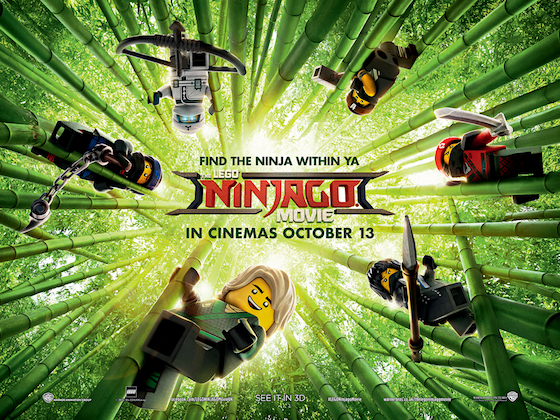
    The LEGO Ninjago Movie

    After the somewhat surprising success of The LEGO Movie, both critically (96% on Rotten Tomatoes) and commercially ($469.2 million worldwide), Warner Bros and LEGO realised they were on to a good thing and so did what any movie studio does in such circumstances: plowed ahead not only with a sequel (out next February), but also spin-offs. The first one, The LEGO Batman Movie, continued the trend (90% Tomatometer; $312 million gross); the next one — this one — …didn’t. With a rotten 55% on the Tomatometer and a worldwide box office take of just $123.1 million (less than either previous film’s domestic gross alone), what went wrong? Did they flood the market with LEGO movies too quickly? Was Ninjago just not as attractive or familiar a brand as Batman or LEGO generally? Or is it just not a very good movie? Well, I’ll come to that.

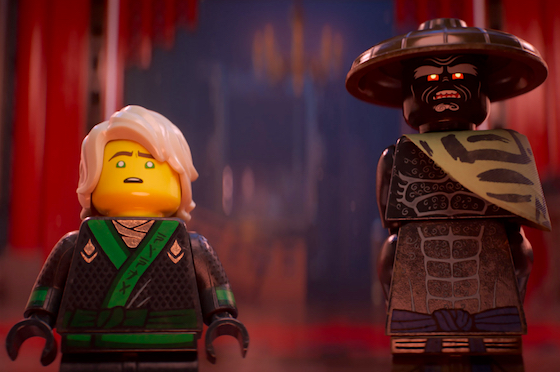
    The film sets its scene in Ninjago City, which is constantly terrorised by villain Garmadon (Justin Theroux) and his armies. Fortunately for the good folk of Ninjago, they have a team of mech-driving colour-coded super-ninjas to protect them. In real life, those ninjas are just high school kids, and not particular popular ones — especially Lloyd (Dave Franco), aka the Green Ninja, who everyone knows is Garmadon’s son. When Lloyd’s daddy issues lead him to slip up, the ninjas have to save the city — and, in the process, Lloyd and Garmadon have to sort out their differences.

    The Garmadons

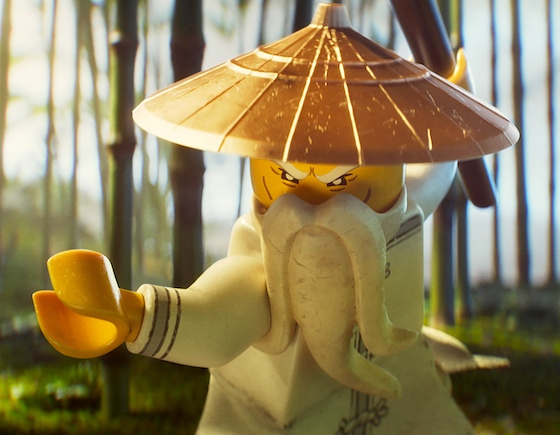
    The LEGO Ninjago Movie is quite clear that the focus of its story is the relationship between Lloyd and Garmadon, but it’s perhaps a little too focused on that. There are a bunch of other characters thrown into the mix — Lloyd’s five teammates; their master, Wu (Jackie Chan); Lloyd’s mother (Olivia Munn) — but the film doesn’t afford the screen time to do any of them justice. In fact, the film probably would’ve been a lot better if it had cut back on the number of beats in the Lloyd/Garmadon story and devoted a bit more time to giving everyone a little subplot. If it kept busy doing that it might’ve picked up the pace a bit as well, because although Ninjago is more or less the same length as the two previous LEGO movies, it feels much longer.

    Partly this is because it just doesn’t feel as inspired as the other movies — it lacks the spark of ingenuity that ignited their characters, humour, and stories. At times it feels entirely half-hearted. For example, Lloyd’s big mistake makes his teammates all hate him, but they immediately go on a journey with him anyway; Master Wu says the length of that journey will give them time to come back round to Lloyd, but the film never bothers to suggest that’s happening — as soon as they need to all get along again, they do. Clearly this was meant to have some emotional effect on Lloyd (even the handful of people who used to like him don’t anymore), but that’s never really given the emphasis to be felt either — so what was the point of them falling out with him in the first place?

    Even in LEGO, Jackie Chan kicks ass

    That said, it does muster suitable amusement in places, though not as regularly as the other two films. And if you’re a fan of Eastern genre movies — kung fu, giant monsters/mechs, samurai, etc — the whole shape and style of the film is a broad reference to that kind of cinema, which is fun for those in the know. Unfortunately, it comes up somewhat short in the action stakes — the mech sequences seem to be inspired by the Michael Bay school of throw tonnes of visual information at the screen and whizz through it at lightning speed, making some of it hard to distinguish, even with the separation benefits of 3D.

    Despite all these negatives, I didn’t actively dislike The LEGO Ninjago Movie. It’s good in places, most of it ticking along at a level of passable entertainment — but it ticks along for too long, it’s not funny enough, and it can’t bring it all together in the way the other two films did. It suffers most of all from those comparisons, because it’s simply not a patch on the other two LEGO movies.

    3 out of 5

    The LEGO Ninjago Movie is available on Sky Cinema from today.

    Despicable Me 2 (2013)

    2018 #155
    Pierre Coffin & Chris Renaud | 98 mins | download (HD+3D) | 1.85:1 | USA, France & Japan / English | U / PG

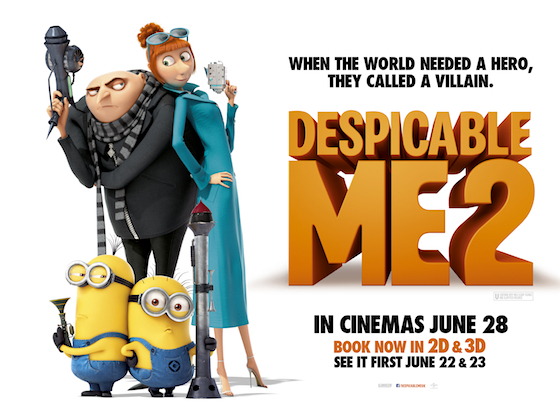
    Despicable Me 2

    In this sequel to the popular animated comedy (which I wasn’t that fond of, personally), supervillain turned adoptive dad Gru (Steve Carell) is dragged back into his old world when the Anti-Villain League recruit him in order to track down the villain who stole a dangerous serum. Meanwhile, Gru’s daughters think he needs a girlfriend, and the AVL agent assigned as his partner, Lucy Wilde (Kristen Wiig), seems the perfect fit. Also, his yellow Minions are still around, getting up to all sorts of ker-azy antics.

    That’s the concise version, anyhow. This is a film that rambles around a lot in the telling, presumably out of fear that it might ever become boring to hyperactive youngsters. Unfortunately, it almost had the opposite effect on me. The main plot just felt like a shape on which to hang the romantic and Minion subplots, but those subplots just felt like a constant distraction from the main plot. The end result is a film that’s narratively unsatisfying on all fronts.

    So. Many. Minions.

    Instead, entertainment value comes from individual scenes or moments. Personal preference will dictate just how entertaining those are, however. I didn’t feel there was much consistency, with the humour able to spin on a dime from being pretty amusing to falling flat. It doesn’t help that it feels way too long, overloaded with subplots that don’t go anywhere meaningful and the Minions’ sketch-like shenanigans. And there’s a lot of the Minions, clearly the breakout stars of the first movie (and hence why the series’ next film was entirely centred around them). While they amuse me on occasions, I mostly find them annoying, and am slightly baffled that anyone over the age of about six can find them significantly amusing.

    But it looks pretty great in 3D, at least — turns out Gru’s long pointy nose was made for the format — and it’s quite funny and imaginative in places. Still, a good trim would’ve benefitted it enormously. Unless you do really enjoy the Minions, I guess.

    3 out of 5

    The UK network TV premiere of spin-off Minions is on ITV today at 6:15pm.

    If You Meet Sartana… Pray for Your Death (1968)

    aka Se incontri Sartana prega per la tua morte / Sartana

    2018 #143
    Gianfranco Parolini
    (as Frank Kramer) | 96 mins | Blu-ray | 1.85:1 | Italy, France & West Germany / English | 15

    If You Meet Sartana… Pray for Your Death

    Arrow Video have a way of tempting me to buy films I never knew I wanted, often because I’ve never even heard of them before Arrow’s release is announced. The latest such purchase is a box set of Spaghetti Westerns starring the character Sartana, which collects all five of the ‘official’ movies (as with other popular Spaghetti Western characters, like Django, many unofficial sequels were produced), all of which have amusingly verbose titles in the same vein as this one — which, I must confess, was half of what convinced me the aforementioned purchase was necessary. The other was how the eponymous hero is described in the set’s blurb:

    a mysterious figure, he has a spectral quality, aided by his Count Dracula-like cloak which also nods towards comic strip figure Mandrake the Magician, with whom he shares a penchant for card tricks. He takes pride in his appearance unlike Eastwood’s dusty wanderer or Nero’s mud-caked drifter. And there’s a dose of James Bond too in his fondness for gadgetry and the droll sense of humour.

    This first movie only hints at that persona, because it’s busy being occupied with two other things: delivering as much action as it possibly can (there are shoot-outs galore, leading to a phenomenal body count), and an overly complicated plot, both of which are rolled out at a breakneck pace. The story has something to do with an insurance scam by a provincial bank, which involves having their gold stolen by some Mexicans, then re-stolen by some bandits. Quite why it needed to be stolen twice I couldn’t figure out.

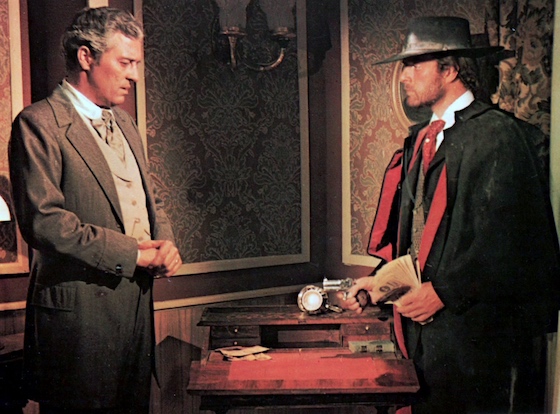
    “Give me your money!” “You're, er, already holding it...”

    The same goes for why everyone seems immensely concerned about where the original money is, rather than waiting for the insurance payout, which is surely the primary point of such a scam. Okay, you would need both sets of dough to turn a profit, but everyone just seems to want to make off with the original loot. Unless I misunderstood something, which I might have, because goodness knows what’s going on half the time — there’s plenty of to-ing and fro-ing of allegiances, which is equally as baffling. It gets particularly ludicrous in the final fifteen minutes, when everyone keeps double-crossing everyone else until only Sartana and one villain are left standing, ready for the final duel.

    Is the “story” just a big ol’ excuse for plenty of shoot-outs and horseback chases? Quite possibly. At least much of the action is rather good — well staged, with the occasional neat idea on display. The whole film looks pretty nice, too. The print used for the Blu-ray is a bit ropey, with some spots of very bad damage, but I presume it must’ve been the best available. Nonetheless, the film underneath those issues is quite well shot. There are splashes of humour (deliberate or otherwise, like the Mexican leader who insists on calling himself Excellentisimo Señor Jose Manuel Francisco Mendoza Montezuma de la Plata Perez Rodriguez, aka El Tampico), and some stylistic flourishes as well. Particular highlights including the use of a pocket-watch’s tune to scare one of the villains, and Sartana’s favoured gun, a little four-barrelled pistol that he seems to be able to draw as if by magic, which gets even cooler when it reveals a hidden trick at the climax.

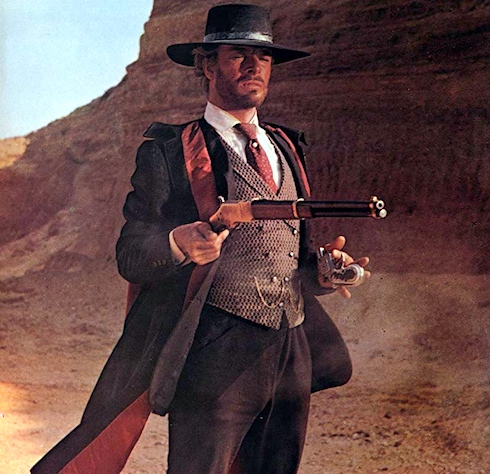
    Sartana, the classy bandit

    Sartana himself delivers on the promise of the blurb: in contrast to the rough, dusty Spaghetti Western heroes we’re used to, he cuts quite the dash, smartly dressed in a black suit replete with red-lined cape. He may be an out-for-himself money-centric gunslinger just like the rest, but he’s also a cardsharp for variety, which is revealed in a fun sequence when he joins a poker game shortly after arriving in town. Him pulling a fast one on the other players leads to a stand-off and shoot-out, because what doesn’t in this movie?

    In his chatty audio commentary, fan and expert Mike Siegel acknowledges that the plot is incoherent and, for that reason, it’s not his favourite film of the series. I found that rather heartening to hear, because by the end of this first film I was beginning to wonder if I’d let myself in for a less-than-satisfactory time with this acquisition. Not that If You Meet Sartana is a bad movie, so long as you focus in the right places: the action is suitably exciting, even as its undermined by the frustrations of a confusing storyline.

    3 out of 5

    Rocky III (1982)

    2018 #138
    Sylvester Stallone | 100 mins | Blu-ray | 1.85:1 | USA / English | PG / PG

    Rocky III

    It’s the
    eye of the tiger, it’s the thrill of the fight
    Risin’ up to the challenge of our rival
    And the last known survivor stalks his prey in the night
    And he’s watchin’ us all with the eeeeyyyyeeee…

    of the tiger.

    Sorry, got swept up in the moment there!

    Yes, this is the Rocky movie where that song, so associated with the franchise, finally makes its appearance. It’s also where the sequels are believed to start going down hill (assuming you rate Rocky II, anyway), though Stallone himself was once asked to score the films and gave this 9 out of 10. I don’t know if I’d go that far, but I liked it.

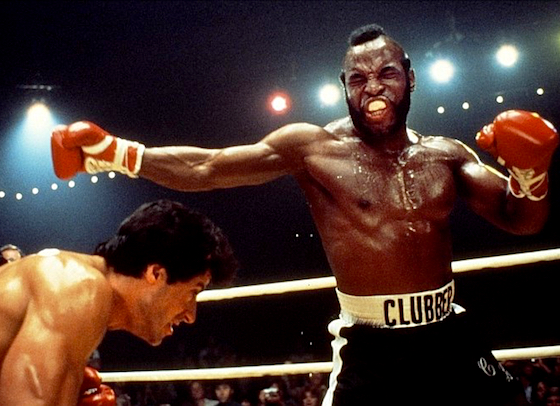
    Picking up on Rocky II’s cue, this film also begins where the last one left off — in this case, that’s with Rocky just about beating Apollo Creed in their rematch. We’re then led through the next few years of Rocky’s life via an excellent five-minute montage, which shows his continued success and massive fame, and, simultaneously, the rise of Clubber Lang (played by Mr. T) through the boxing ranks, with one goal: beating Balboa. All of that’s conveyed with just images soundtracked to Eye of the Tiger. It’s a great bit of filmmaking — conveying story economically and clearly through pure imagery — a level of artistry and accomplishment you don’t expect to encounter in the third movie in a boxing franchise.

    Rocky and Apollo training

    So, after all that success, Rocky is set to retire, until Lang goads him into one more bout. What Rocky doesn’t know is that his trainer, Mickey (Burgess Meredith), has been protecting him, only arranging soft fights he thinks Rocky can win; but Lang is a real force, one Mickey doesn’t think Rocky is up to fighting. Determined to prove his worth in the ring, Rocky goes ahead anyway, but, with distractions from his personal life weighing down, he loses badly. A rematch seems off the cards, until an offer of help comes from an unlikely source: Rocky’s erstwhile nemesis, Apollo Creed (Carl Weathers).

    Rocky III is much more action orientated than the first two films. Those were almost social dramas that happen to be about someone who boxes, while this is a sports movie through and through. Stallone once confessed he’d run out of ideas after the first two films, which is why this and Rocky IV focus so much on the fights and training. It’s odd he should say that, because there’s definitely something here about how fame has changed Rocky’s life. It’s more something that’s alluded to rather than being examined by the story — used as background and ‘dressing’ rather than being central to the narrative — but it suggests that, if Stallone had really wanted to add a different dimension to the film, there was a storyline staring him in the face.

    It feels appropriate that this was the first Rocky released in the ’80s: our down-and-out coulda-been-a-contender hero is now rich, dressing smart, living in a big house with a nice lifestyle. The whole thing feels like it’s left behind gritty realism for slick aspirational success. But it’s not a completely empty experience, generating emotional attachment from Rocky’s relationships — not only with his wife and young son, but also Mickey and, to a somewhat lesser extent, Apollo Creed. Plus the action and montages are slick and exciting, making this perhaps the most adrenally satisfying of the series to date.

    Taking a Clubbering

    It’s also quite smart to reposition Rocky as an underdog, make him need his hunger again — there’s not much satisfaction in watching the story of how the best in the world beats someone who isn’t the best! Our hero needs to be challenged, and the film definitely gives him that. That’s the same as the preceding movies, but what’s different here is that it’s a purely sporting challenge, rather than a life one. There are developments in Rocky’s personal life that have a big effect on him, sure, but they’re intrinsically tied to the sporting aspect.

    If the first two films are a mirror image of each other, this is something different. It lacks the grit or depth of those two, but still entertains, albeit in a somewhat more superficial way. Giving it a title-mirroring three stars feels a bit harsh, because I did rather enjoy it, but its straightforward focus on the action in the ring means it’s not on the same level as the first two. That said, I’d wager it’s the most effortlessly rewatchable Rocky so far.

    3 out of 5

    “Christmas in July” Review Roundup

    Being someone who lives in the northern hemisphere, and up towards the top of it too, we celebrate Christmas at, y’know, Christmas. But for people who live in places where 25th December falls in summery weather, all the trappings of the festival don’t feel so appropriate. Hence at some point someone conceived of “Christmas in July”.* I don’t know when — a long time ago, probably — but I first encountered the concept a year or two back.

    Anyway, I don’t think it’s celebrated on a specific date (it’s just a thing some people do some places), but it turns out there is a “Christmas in July” in London — a great big marketing event, self-described as “the ‘London Fashion Week’ of Christmas press launches.” Well, what could be more Christmassy than massive commercialisation? That’s occurring today and tomorrow, and seemed as good a point as any to post this selection of leftover reviews from the festive viewing I enjoyed seven months ago.

    In today’s roundup:

  • Elf (2003)
  • Scrooged (1988)
  • It’s a Wonderful Life (1946)


    Elf
    (2003)

    2017 #173
    Jon Favreau | 93 mins | streaming (HD) | 16:9 | USA / English | PG / PG

    Elf

    Regarded by some as a modern Christmas classic (though it’s 15 years old now, so I’m not sure if “modern” still applies), Elf is about a human raised as one of Santa’s elves (Will Ferrell) who travels to New York to find his real dad (James Caan), in the process spreading Christmas joy with his charmingly innocent view of the holiday.

    An early starring role for Ferrell, the film is more concerned with letting him get up to funny antics than it is with, say, building fully rounded character arcs — Caan goes through his inevitable redemption in the space of one cut. It’s less character development, more character transplant. Heck, transplants take time to perform — it’s character transmogrification. By taking such short cuts it fails to earn the changes of heart for its characters, leaving it to feel kind of empty and unsatisfying on an emotional level. Nonetheless, the focus on comedy and an innocent’s eye-view of Christmas means it makes for a fairly entertaining, pleasantly festive time-killer.

    3 out of 5

    Scrooged
    (1988)

    2017 #174
    Richard Donner | 101 mins | streaming (HD) | 16:9 | USA / English | PG / PG-13

    Scrooged

    Director Richard Donner transplants the most famous of all Christmas stories (that doesn’t star a divine baby, anyhow), Charles Dickens’ A Christmas Carol, to the corporate ’80s in this fantasy comedy. (Most Christmas movies are “fantasy comedies”, aren’t they? Even the ones that aren’t (like, say, Home Alone) kind of are. But I digress.)

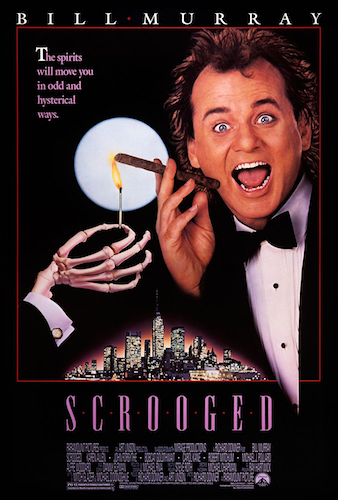
    Bill Murray stars in “his first comedy since Ghostbusters”, as the UK poster boasts (“Bill Murray is back among the ghosts. Only this time, there’s no one to call.”). He’s the Scrooge figure, Frank Cross, a miserly TV executive visited by three ghosts who expose his negative effect on the world, and in turn on himself. Obviously, therefore, the film retains the broad shape of Dickens’ original story, but it goes a little further than that, taking all the salient details and adapting them to its own variation. It’s a good modernisation: true to the original, but without being slavishly beholden to translating the story word for word.

    It does feel like it could’ve been tightened up a bit, though according to Murray they “shot a big, long sloppy movie, so there’s a great deal of material that didn’t even end up in the film,” which I guess means this is already the improved version. Nonetheless, this is a Christmas tale with just enough ’80s cynicism and gentle horror to stop it being too twee, while retaining an appropriately goodhearted festiveness.

    4 out of 5

    It’s a Wonderful Life
    (1946)

    2017 #171
    Frank Capra | 130 mins | streaming (HD) | 1.33:1 | USA / English | U / PG

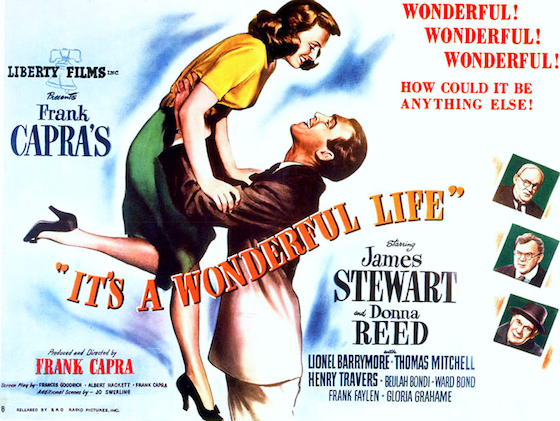
    It's a Wonderful Life

    I’m a little late to the party here: It’s a Wonderful Life is a Christmastime TV staple that most people have been enjoying for decades, many since childhood. Frankly, that’s the main reason I watched it — almost out of a sense of duty, owing to it being an iconic Christmas film, and also well rated on polls like the IMDb Top 250.

    So I set out merely to rectify my oversight, expecting to find it a bit saccharine and twee, and probably overrated. But no, it’s not that at all: it’s a beautiful, brilliantly made, genuinely moving film — I even got something in my eye during the conclusion, even if its heartwarmingness was objectively inevitable. Now, my only regret is I didn’t watch it sooner, so that I could’ve been re-experiencing it all my life.

    It’s not often you get a film with a reputation like this that manages to live up to it, but It’s a Wonderful Life is that rare exception. Indeed, it’s so good I’d even say it exceeded its reputation. Wonderful indeed.

    5 out of 5

    It’s a Wonderful Life placed 6th on my list of The 17 Best Films I Saw For the First Time in 2017, which can be read in full here.

    * If you happened to think this had something to do with the football — you know, like, “if England get through to the final it’ll be like Christmas in July for the fans” — then, um, no. Sorry. ^