aka Gong yuan 2000 AD
2012 #9
Gordon Chan | 99 mins | DVD | 1.85:1 | Hong Kong & Singapore / Cantonese, English & Mandarin | 18
 Part coincidence (in that I happened to notice it), part forced appropriateness (in that I then chose to post it now), 2000 AD was originally released in Hong Kong 12 years ago yesterday, tying in to Chinese New Year the last time it was (as it is now) the year of the Dragon.
Or something like that — I’m no expert, I just Wikipedia’d it.
New Year was a fairly appropriate time to release it, as the title may indicate, because it was designed to tie in to the fuss around the Y2K bug. So ostensibly it’s a techno-thriller about computers and, y’know, all that. Well, there are some computers in it, and I think someone mentions Y2K early on, but that’s about it. Really this is a movie about chasing bad guys, people shooting at other people, people kicking the whatnot out of other people, and all that regular action movie stuff. The thing they’re all chasing is a stolen computer program that can do all kinds of magic hacking stuff, but that’s about as far as the technology element goes.
The plot it has wound up with doesn’t make a great deal of sense. The gist of it is fine — see above for my description — but it’s loaded with reversals and characters switching sides that slide past so quickly I’m not sure they even made an effort to explain it. That towards the end, mainly — at the start, it’s just bloody slow to get going. It’s not a problem that it takes over half-an-hour to get to the first real action sequence — I can handle an action movie that takes its time to build things up; it’s that nothing much of significance happens during that half hour.  All that’s established in these parts could be done much more economically, which would result in far less viewer thumb-twiddling.
An opening almost-action-sequence-thing with some fighter jets seems to exist simply so they could put some fighter jets in the trailer (they seem to have been featured heavily in the film’s promotion, but the main cast go nowhere near them). Some subplots exist purely to pad the running time — for instance, why all that business with the Singaporean agent, his boss’ assistant and their birthdays? There’s lots of others: something about an X-ray-EMP-device-thing causing cancer; a robot dog that doesn’t do anything significant; a friend of a character who’s established as a judge, only to not re-appear…
When the action does arrive, it has all the flare and panache you’d expect from a Hong Kong production. And then some, actually: it’s directed and edited with a heft of real-world grit, but swished up with some jumpy cutting, unusual angles and interesting colour washes. There’s all that on the first gunfight anyway — maybe it took a lot of effort, because it’s largely abandoned later. There’s some awkward undercranking, unfortunately, plus occasional confusion about what’s going on — how did she get that car? which character just jumped in that car? etc.
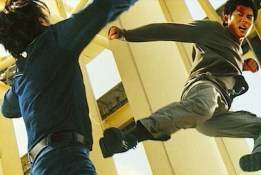 That might be being picky. The action feels slight at the time because it’s a good while coming, but in retrospect, considered on their own merits, there’s a lot of good stuff. There’s a good car chase, a couple of shoot-outs that err towards realism rather than balleticism (both have their merits, but something that feels realistically punchy is rarer), and a couple of solid punch-ups that play fairly nicely on the idea that our hero isn’t a martial arts expert. That concept isn’t mentioned in the film as much as it is in the DVD extras, but his style has a sort of scrambly feel that’s less honed than your usual kung fu bout; plus, as director Gordon Chan explains in the commentary, his apparent competency is how all kids fight in Hong Kong, because they’ve copied it from the movies!
The centrepiece fist/foot fight takes place on the 32nd storey of a building. I learnt that from the DVD special features. They really filmed it up there too. I also learnt that from the special features. It’s a shame, because you definitely get more of a feel for how dangerous and on the edge — literally — the fight was in some of the B-roll footage and interviews than you do from the movie itself: it’s covered almost entirely through low-angle shots, meaning it could just as well have been recreated on a ground-level mock-up as the actual rooftop. There are some long shots in the making-of which show them filming it, and viewing those you can’t help but wish they’d taken the time to shoot at least some of the fight from the same vantage point, because it really shows off the drop. Oh well.
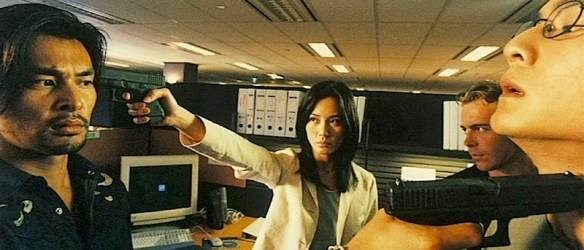
That’s not the finale. The finale takes place at a Singapore convention centre and, after all that action, feels a bit limp. Again we can turn to the special features though: there was supposed to be a huge gunfight, but a mix-up with permissions meant when they arrived on location they weren’t allowed to film it, to the extent that the couple of shots that are fired were captured as men holding guns with muzzle flashes added in later. This kind of explanation makes you think, “well, fair enough”, but watching the film in isolation it felt anticlimactic.
 Talking of the action — it’s an 18? I know the BBFC used to be harsher, and particularly so on things featuring martial arts and whatnot, but I still don’t see how this makes an 18. A bit of swearing, a bit of blood — it’s a 15 surely? I watched this just days after Ironclad, which had people’s limbs being lopped off in close-up, beheadings, bodies being cleaved in two, much more violent stuff than 2000 AD features… and that’s only a 15. I know, this doesn’t matter to most of us, but I notice these things.
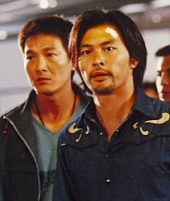
I’ve seen other reviews comment that it goes wrong when they head off to Singapore, around the third act. Personally I thought that was when it began to go right! The pace picks up, the action picks up. It’s not a movie of two halves — some of the film’s best bits are in the Hong Kong section — but I certainly wouldn’t say it gets worse. Hong Kong is, for example, where we find the best character, police officer Ng. He barely says anything, but he’s got a presence that works. Actor Francis Ng (who I noticed in Exiled and is also in Infernal Affairs II, as well as a mass of other stuff) conveys far more with looks than with the dialogue, which is probably why he’s so memorable. One scene featuring him, which comes around halfway I’d guess but I shan’t spoil, is the only non-action part of the film that really works, where you really care about something that’s happening. On the commentary, Bey Logan quotes Jean Cocteau: “never state what you can imply” — and that’s Ng’s whole character.
 As with any film heavily based in the realm of technology, certain things have dated. Two things work in its favour: one, as noted, it’s not actually got much to do with technology anyway; and two, it comes from the slightly later time when home computers were more commonplace, so it’s not as bad as those ’90s tech thrillers where computers could do pretty much anything a writer dreamed up. But there’s floppy discs, flight sims with flat graphics, and Magical Hacking Software that can Destroy Everything. An opening spiel about the future of warfare being cyber-attacks doesn’t feel like its quite come to pass (yet?), but then the film doesn’t wholly build on that. The computer software they’re chasing is as MacGuffiny a MacGuffin as they come — it may as well be a bomb or a file of information for all that would change the story.
There’s some obvious CGI, which is fine for what’s a low budget film of this era. You’d see better in a computer game today, but it gets the job done well enough when it’s needed… though mixing in fake fighter jets with footage of real ones during an already-needless opening sequence was a mistake. I only mention it because, highlighted in the commentary, there actually tonnes of computer effects throughout the film that you don’t come close to noticing: bullet holes, smashed glass, a lead character nearly getting hit by a car — all faked by computer, all barely noticeable even when you’ve been told. So there.
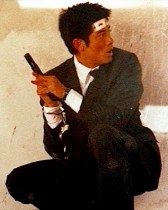 In the DVD’s special features, Chan notes that 2000 AD was an attempt to make an American-style action movie, to show there’s more to Hong Kong cinema than kung fu. Maybe that’s why it’s compromised at times — it’s an emulation of something else. It’s successful in places, but certainly not entirely. My score was awarded almost immediately after watching the film, but after looking back on it through the DVD extras I find I may have liked it a bit more. Am I being too harsh? Perhaps. But still, perhaps not.

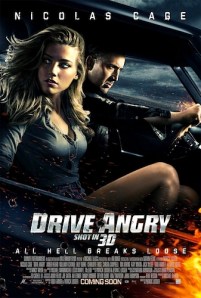 Nic Cage does the Taken thing with added CGI and supernatural posturing in this grindhouse-y actioner from the director of such inspiring films as The Prophecy 3, Dracula 2001 and the My Bloody Valentine remake.
  Only in that stuff flies at the camera and whatnot. You can indeed tell it was made for 3D, but that doesn’t mean it needs it. Indeed, the poke-the-audience stuff aside, none of it suggests it would look great in 3D — for all the pointlessness of cinema’s new money-spinning format, it can add something to the vistas in a film like Avatar. Drive Angry has nothing vaguely on that level.
 As noted, director Lussier does not have an inspiring CV: he started with numerous straight-to-video sequels, then a big screen sequel-no-one-wanted (even with Nathan Fillion in it) in White Noise: The Light, before what I guess must’ve been a modicum of success with My Bloody Valentine, which I seem to remember a (relatively) big fuss being made about because it was one of the first live-action things in true 3D or somesuch. Perhaps the massive flopping of Drive Angry will kill his career back off — his next project is apparently re-make threequel Halloween III, which I don’t imagine anyone anywhere is eagerly anticipating.
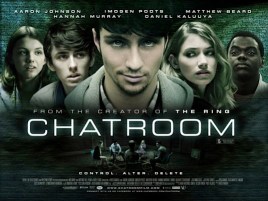 Chatroom is born of — or, at least, partly formed around — trying to find a viable way of depicting the world of online chatrooms on film. Putting on film this world it As It Really Is — people sat at a computer typing at each other — might work well enough for a single scene in
 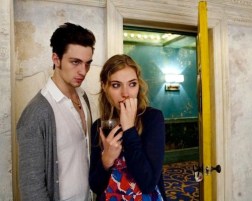 in this environment is also truthful. There have been many reviews that are completely dismissive of this facet of the film, leaving me to wonder if they were written by people who haven’t used or experienced such things. It’s a shame, then, that the film’s degeneration into a thriller hides the arguably-worthwhile potential to explain to such people what that online world can be like for people/kids using it.
 Despite a strong-ish start, perhaps the whole second half of the film is a wobbly mess; not directionless exactly, because by then it does know broadly where it’s going, but it doesn’t do much to suggest to the viewer that it has a real goal in mind. Character motivations and relationships feel as if they’ve not been fully thought out, or at least not fully brought together on screen. Some threads take inexplicable jumps; others aren’t adequately explained or justified. Occasionally it’s Nakata’s direction that overdoes things, for instance laying the soppy “this bit is emotional” music on thick when Matthew Beard’s performance could easily carry a particular sequence.
 The aforementioned Matthew Beard, perhaps the least recognisable cast member (his
 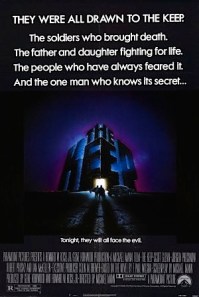 Michael Mann is arguably best known for his modern, urban, slick, intricate crime thrillers — films like
 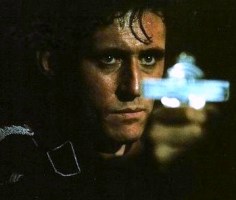 Should we long for a Director’s Cut, then? Maybe that would be an improvement, but I’m not convinced it would be good per se. You see, the film doesn’t just stick to giving us Nazis vs Whatever The Keep Contains, oh no. First the SS turn up, led by a Properly Evil Nazi, played straight by Gabriel Byrne. Escalation, great. Then there’s Ian McKellen as a professor drafted in to make sense of the keep’s mysteries. Also great — even the Good Nazi is going to have to die, right? Who better to root for than a saved-from-a-concentration-camp Jewish professor.
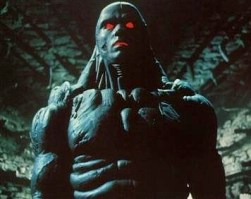 There are plus points, but they all come with a commensurate downside. The creature is well-realised at first, with some nice animated effects that are more effective than much of the over-cooked CGI spectacle we’d get today. The more we see of him, however, the less power he holds — he ends up essentially a very tall man. OK, it’s a bit better than that makes it sound, but the mysterious billowing smoke was spookier. The film on the whole is nicely shot, with some real standout moments of cinematography. But slow-mo and a smoke machine both get overused by the end, lending many of the visuals a tacky ’80s edge.
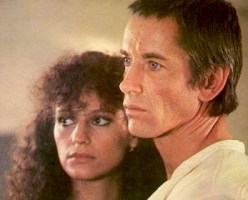 One thing the film never manages to be is remotely scary. It’s not aiming for cheap jump- or gore-based shocks (although there is a little goriness, it’s quite light; triply so by today’s standards), but it doesn’t manage any significant senses of dread or creepiness. As noted, early on it seems to be heading in the right direction — even the secluded mountain village, nestled in a harsh landscape but with greener-than-green grass and garishly painted houses, and towered over by the foreboding slab of stone that is the titular structure, is an uncanny start — but it never makes good on the promise.
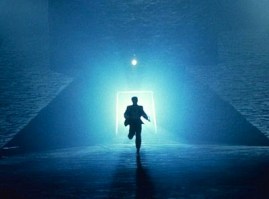 I would love to join their ranks, because there are numerous exciting ideas and moments of quality filmmaking to be found here; but I won’t be, because there’s too much muddled dross packed in around them. The result is that quite-rare thing: a decidedly mediocre film that I’m actually glad I’ve seen. But, unless someone wants to hire me for that remake, never again.
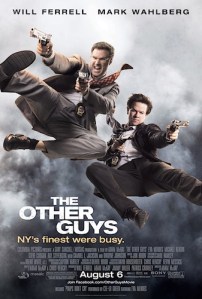 The Other Guys sounded like a great concept; so great I overlooked the fact it’s from the director of the massively over-rated
  Everyone loves The Rock and Jackson; no one likes Ferrell and Wahlberg; and they’re not assigned the case, they stumble upon it. Wouldn’t it have been more fun if everyone actually hated The Big Damn Heroes who make it hard for the regular guys to do their job? If a pair of normal detectives were assigned The Big Case and had to prove themselves worthy? Maybe even put the Super Pair in the shade, rather than killing them off in the first act?
 The Saint’s gone on vacation indeed — with
  Apparently the villains are Nazis, though there’s absolutely nothing to suggest that here (again, that’s something I’ve since read online). The Saint knows both the villain and a Mysterious Woman of old, but it’s never explained how or why or what their relationships are. It’s like a set of stock adventure-story elements assembled without any understanding of how or why they should connect, which makes for an unsatisfying and unenthralling experience.
 The rest of the cast don’t offer much compensation. Arthur Macrae as the Saint’s cowardly friend Monty is no replacement for the parade of ex-cons he formerly hired as manservants, while Sally Gray of
 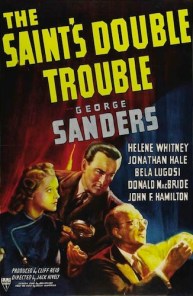 After two fun adventures, here RKO’s series turns in my least favourite film to star George Sanders as the Saint.
 Helene Whitney is fine in this role, but her character’s not a patch on
 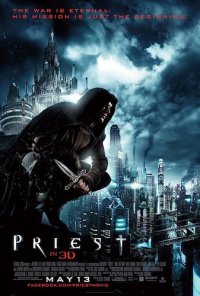 In a dystopian church-ruled future (could there be any other kind of church-ruled world), in which a war between men and vampires raged for centuries but has recently been settled (in man’s favour), no-longer-needed warrior-priest Paul Bettany is called upon to go against his vows and leave the city to rescue his niece after her parents are murdered and she is kidnapped in a vampire attack. I could go on, but it’s the kind of plot that sounds far more complicated in a short summary than it is to watch on screen.
 And after all that meandering, the story is a bit rushed. It tries to generate character and tension, but hasn’t spent enough time building them to earn it. There’s lots of awful dialogue, flooded with clichés… as is a lot of the plot, and the stock dystopian future setting, and the overuse of slow-mo. There’s some ideas with promise, but they’re largely shunted aside in favour of something from The Big Book of Standard Character Arcs. And I say “promising” — you know exactly how they’d play if the filmmakers had bothered to make more out of them.
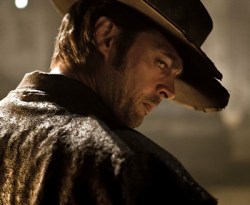 None of this is helped by weak acting, which considering the largely quality cast is probably down to the script and direction. How unlikely is Paul Bettany as an action leading man, eh? I thought Jason Statham was odd enough… And if you want a preview of
  Priest isn’t bad per se — well, depending on your tolerance levels. It’s no
 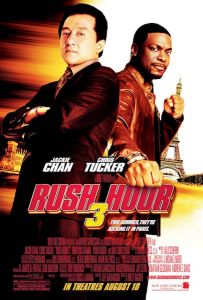 Belated sequels are often the worst kind, an actor/director/studio returning to past glories in the hope of creating new success. Even when they work, they’re not a patch on the original. (I’m sure there must be exceptions, but nothing comes to mind.) The third entry in the
  It’s ostensibly a thriller (albeit a comedy-action-thriller) and so there are plot twists, but they’re wholly predictable. It also lacks clarity in its villain, I felt — who it is, what they’re doing, why they’re doing it, and so on. It weakens the film, especially the ending: there’s the usual big action climax, followed by a little bit of business that dilutes the impact of the ending. It’s just badly structured.
 plus some sparing atop the Eiffel Tower (or, I presume, a surprisingly good set thereof) — is occasionally spectacular and single-handedly almost justifies the entire film’s existence. A car chase/fight through the streets of Paris is the other best bit, buoyed by both unusual choreography and Yvan Attal’s French taxi driver George, who’s probably the film’s best character.
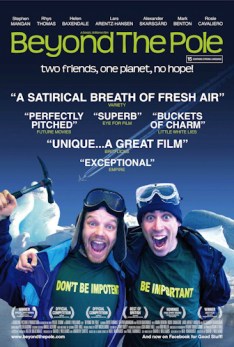 Adapted from a cult Radio 4 series, Beyond the Pole is a British mockumentary about “the first carbon neutral, vegetarian and organic expedition ever to attempt the North Pole”, starring Stephen Mangan Off
 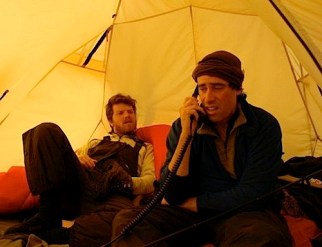 It’s also impressively realised. Its apparent low budget led me to assume we’d, a) see very little of the actual trip, and b) what we did see would be all inside-a-tent and green-screened. But no, it was really shot on floating sea ice off the coast of Greenland, and it makes for a highly effective polar landscape. Good work, filmmakers.
 100Films.co.uk