aka Låt den rätte komma in
2011 #29
Tomas Alfredson | 115 mins | Blu-ray | 15 / R
This review contains major spoilers.
 Oskar is a 12-year-old loner in Sweden in 1982, spending his days at school being bullied and filling his evenings with fantasies of revenge. Then a girl, Eli, and her father move in next door and it looks like he might finally make a friend.
Doesn’t sound like the setup for a vampire movie, does it? But, as you’re no doubt aware thanks to all the awards its won and praise its received in the past two years, Let the Right One In isn’t your typical vampire movie. If you’ve somehow managed to avoid hearing anything about it in that time, I encourage you to watch it before reading more — it’s hard to discuss any of it without spoiling at least some. Knowing it’s a vampire movie is too much, to be frank — it’d be grand to be able to see this completely cold.
And “cold” is an apt word (smooth link, eh?) as one of the many things that seems to mark the film out is the abundance of snow. We’re used to vampire films being Dark, visually, due to the necessity of a nighttime setting, but here the snow-covered locale makes most of the night scenes bright and white. Alfredson emphasises this with wide compositions that fill the frame with the white stuff.
Even more unconventional is the film’s treatment of vampires themselves. It’s not uncommon for tales to Do Vampires Differently by changing the basic rules, but Let the Right One In sticks to them — they drink blood, typically from the neck, can’t enter without invitation, burn up in sunlight, can fly — and changes the myth in less showy but more fundamental ways.  For instance, when the usual skills do crop up, they’re presented in a very grounded way — any CGI required is used subtly and incredibly effectively — or kept off screen. They’re at the best when used to slightly emphasise Eli’s weirdness — the way she drops ever so slightly slower than is natural from the climbing frame when she first meets Oskar, or to shape and manipulate her face almost imperceptibly at times.
Primarily, however, most vampire films glamorise their lifestyle in one way or another, even when they’re the villains; this is especially bad right now, with the likes of Twilight befouling our culture, but it’s nothing new. But being a vampire Let the Right One In-style is no fun at all, characterised by painful hunger, the difficulty of getting food undetected, guilt after successfully feeding, and, perhaps worst of all, loneliness.
Loneliness is the real key to the film because, even with all the horror — and the film is scary when appropriate — this is about two lonely outsider kids finding each other and getting something they were previously lacking from that newfound human contact. It’s a romance, in fact; a mixture of first love and true, pure (read: sexless) love. Though that’s not entirely true — it’s more complicated than that.
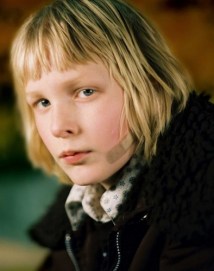 The story’s central relationships — mainly, Eli/Oskar and Eli/Håkan, he being the ‘dad’ figure who helps Eli survive — can be read various ways. The author/screenwriter, John Ajvide Lindqvist, has one interpretation — indeed, based on what I’ve read, the novel is quite clear on these points — but the film leaves many facts ambiguous. Is Håkan related to Eli? Does he love her? In what way? Does she love him? Does she even like him? Is he just a facilitator? Was he once in Oskar’s position? If he was, is she just manipulating Oskar? Or is it really love? Or is it just friendship? The joy of such well-placed ambiguities in a story is that each viewer can bring their own interpretation, without anyone being clearly right or wrong and without undermining the quality of the story being told. I think I know what I think; but, just as much, I enjoy the fact there are numerous possibilities. (Of course, equally valid is the argument that there are no ambiguities because most if not all have been cleared up Lindqvist and/or Alfredson in interviews. But where’s the fun in that?)
I said it was “sexless love”. Perhaps, though sex is certainly a theme — not only because it always is with vampires (the intrusive nature of what they do & all that), but also witness the scene where Eli clambers into bed with Oskar naked, or when he catches a glimpse of her changing and we get a rather explicit close-up. They’re both 12-year-olds, it’s easy to see why some/many/most would be wary of touching on any sexual overtones in the film, but they’re definitely there. Interestingly, Oskar is every inch the innocent, with his white-blonde hair, pale skin, cherub face, with it’s slight-but-heartfelt flickers of emotion, be that joy or triumph or sadness; to whom ‘going steady’ with a girl means nothing changes and you don’t do anything special. Does that negate the film’s sexuality? Or does it just mean Oskar is the antithesis of the corrupted Eli?
 Though most of Let the Right One In’s irregular take on vampires seems genuinely unique, one of those unusual elements — a 12-year-old girl being a vampire — immediately draws comparison to Interview with the Vampire. However, unlike that novel/film’s child bloodsucker Claudia (Kirsten Dunst’s character), who becomes an increasingly older woman trapped in a child’s body, Eli seems to have remained 12 — just like she says — even though she has existed for a very long time. Which version is more plausible? Well, let’s put it this way: vampires don’t exist. Duh. Both work for their respective points; neither disqualifies the other from being an interesting take on the creatures.
Another interesting point I learnt while reading up on the film is that Lindqvist’s novel is, apparently, somewhat autobiographical (aside from the vampire stuff, obviously). Oskar is Lindqvist, essentially, and it seems Alfredson could relate too. Perhaps this is what helps it feel so true. The character stuff, I mean, not the vampire stuff. Maybe that’s why Let Me In struggles to translate the tale as effectively: it’s taking a story set in a specific time and place for a reason (Lindqvist was 13 in 1982; plus it’s a year that has other significance for Sweden), and mashing it into a different one by someone who, maybe, doesn’t have quite as personal a connection as the previous authors.
I haven’t read the source novel so can’t make a comparison. Lindqvist adapted his own novel, making cuts partly to get past censors — one article I read asserted that, 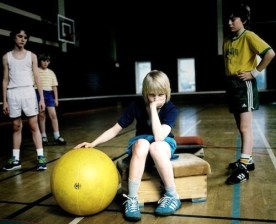 if they’d filmed some of the stuff in the novel, the filmmakers would’ve gone to prison — but also about refocussing the story to be a two-hour film instead of a novel. I’m not sure, therefore, how faithful the climax is, but it’s a sequence that seems made for the screen. I shan’t say much more on this point, just in case you’ve not seen the film and still read this far (tsk tsk), but it seems having a vampire for a best friend is a great way to deal with bullies.
Winning many awards and garnering much praise can sometimes hamper a film — especially when its hailed as an outstandingly innovative take on something familiar — but Let the Right One In manages to live up to this promise. It’s a horror movie and a character drama and does neither by halves, instead combining the two to transcend genre boundaries and just become bloody good.
Let the Right One In placed 3rd on my list of The Ten Best Films I Saw For the First Time in 2011, which can be read in full here.
See also my comparison of this and its US remake, Let Me In, here.

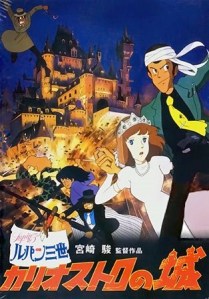 The Castle of Cagliostro, the second animated big-screen spin-off from manga-inspired anime TV series Lupin III, was the first film directed by Hayao Miyazaki, who even non-anime fans have heard of these days thanks to Spirited Away’s Oscar win (eight years ago now!) and Pixar’s recent championing of him.
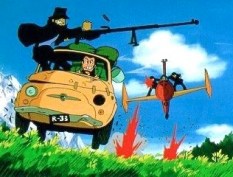 As I mentioned, this is the second spin-off film from a TV series, and at times it does feel like it: characters turn up under the impression the audience already knows who they are and what their connection is to the others. It’s not a major problem — most are introduced well enough within the context of the film that it can still be easily followed — but it’s there.
 Um, where was I? Oh yes: Indiana Jones; Roger Moore-era James Bond — it’s that kind of tone, more or less, and if you enjoy that kind of film then I don’t see why you wouldn’t enjoy this. Unless you think cartoons are for kiddies only (in which case, see the long sentence at the end of the last paragraph).
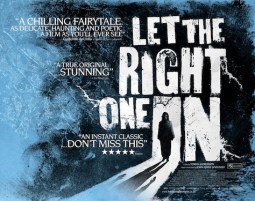 The most recent example of this speedy-remake phenomenon is Swedish vampire drama

 in fact, the director is keen to point out (in a surprisingly unpretentious fashion) that he doesn’t aim his work to slot into any particular genre — while Reeves set out to make a horror movie first and a young-love drama second. Though don’t go expecting out-and-out vampire thrills and gore from Let Me In, because it retains enough of the original’s DNA to make it still a pleasantly unusual genre entry.
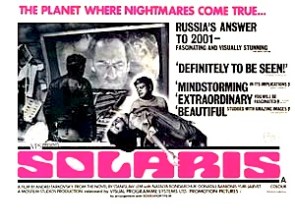 I don’t know if you’re aware of a website, dear reader, called
 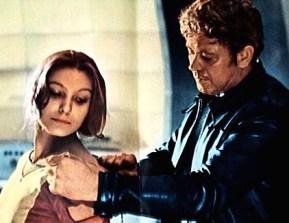 The fact that it’s the better part of three hours long, in Russian, and notoriously slow-paced, adds a different kind of weight. It’s quite easy to see how Soderbergh felt able to
 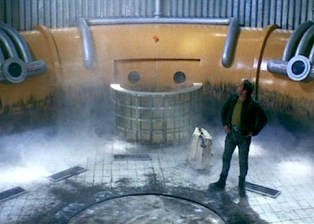 how it might work, or any other scientifically-bent notions that other films or filmmakers might choose to focus on. It also doesn’t centre on the romantic side of events, the route Soderbergh chose to pursue; or, if it does, it does so coldly and clinically and doesn’t feel romantic in the slightest. Alternatively, that could be the point.
 This is one of those films I always feel horrendously under-qualified to bother offering any kind of thought on. It’s the kind of film you suspect benefits most not just from repeated viewings and a desire to dig deep into its themes, but also a wider understanding of the director’s work and thematic concerns. This is only compounded in the case of Ozu by the fact I watched
 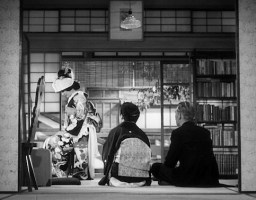 (which bolsters my belief that his most renowned work is indeed worth a second shot). One issue, I suspect, is that I knew nothing of Ozu before my first experience; having read up on him (if only a little), his idiosyncratic squared-off shots and straight-on close-ups feel less blatant and frequent here, and being aware of their deliberateness perhaps makes them less intrusive. That said, I remain unconvinced by it as a guiding notion — I’m sure there’s a reason beyond the proliferation of American cinema that the visual style we’re used to seeing in most film and TV is, well, the visual style we’re used to seeing.
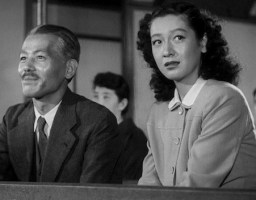 when the prospect of marriage and leaving her father seriously raises its head. (And I’m afraid that’s the closest to analysis you’ll find here.)
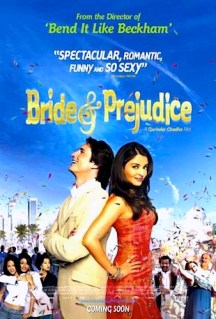 I don’t imagine Bride & Prejudice is going to convert many people who aren’t already predisposed to liking it in some way. That’s not to say it’s not good or doesn’t have potential crossover appeal, but it still has a whole list of things that will put certain viewers off.
 not to mention the numerous adaptations predating either of those, but Bride brings plenty that’s vastly different to the table. It converts the novel very accurately (as best I can tell, having only seen screen versions), retaining both the characterisation and the majority of the plot in a similar sequence of events.
 Little of the plot requires such modification, perhaps thanks to the culture it’s been grafted onto — the predominance of arranged marriages wouldn’t really work in a ’00s British setting — and those bits which are changed are relatively minor. Lydia (here, Lakhi) runs off with Wickham for an afternoon at the London Eye, rather than eloping; Georgiana (here, the slightly more modern Georgina) was impregnated at 16, less legally complicated than the novel’s 15.
 Is 1945-1998 actually a film? Or is it a piece of video Art? Or just another online video?
 attention didn’t already wander, that is). There are ultimately so many flashes and bleeps, and the effect is so lulling, that I had to force myself to remember these represented Big Nasty Bombs that were Not A Good Thing. Perhaps something more aurally grating would’ve been appropriate; the counter argument going that this would cause even more viewers to abandon the work.
 It’s generally taken as a rule that an original film is better than the remake, particularly so if that original is in a language other than English and the remake is American. But there’ll always be something to buck the trend, and in my view that’s Insomnia.
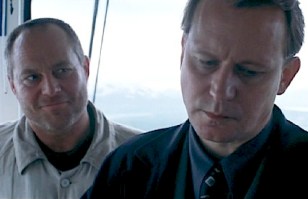 surprised how little his lack of sleep had to do with anything. Here, there are several scenes of Skarsgard struggling to sleep, he’s visibly rougher as the film progresses, and it seems to impact his judgement and sense of what’s going on more than in Nolan’s film. If the other character elements are apparently less developed, this is something the original does better.
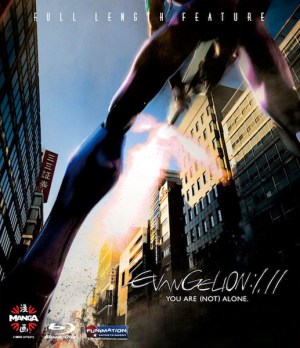 When I (first) reviewed
 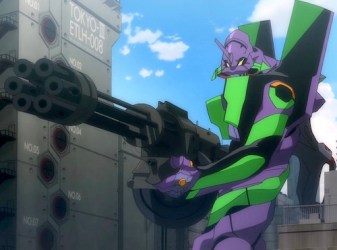 is a new addition I swear, while he also listens to a (digital, at least) cassette player rather than an iPod (other MP3 players are available, naturally). It’s not a major flaw — unlike, perhaps, the fact that the “covert” and top-secret Nerv organisation has great big signs plastered all over town and everyone seems to know about them — but, still, maybe a new bit of animation to replace the tape-playing close-ups would’ve been nice.
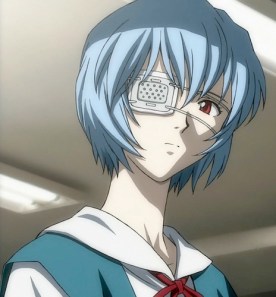 The pros and cons of the series remain. Shinji is alternately interesting, perhaps even complex, and a whiney little irritant. Here he has a character arc at least, suggesting he may be more sufferable next time out. His relationship with Major — sorry,
 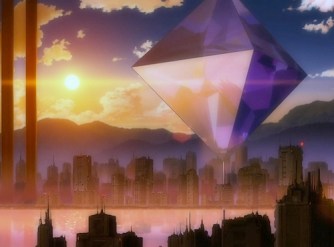 Another factor thrown up by the TV-series-to-feature conversion is the image quality. An HD big screen is a mixed blessing here. On one hand, it looks great on Blu-ray, with crisp lines and solid colours, the result of re-filming, colouring and CGI-ing the original animation elements rather than using the finished TV shots. On the other, such clarity sometimes shows up a lack of detail in the original animation — these elements were created for 4:3 mid-’90s TV, not a hi-def (home) cinema — and the solid colours and money-saving techniques (for example, showing something static rather than a lip-synched (ish) mouth during conversations) can remind the viewer of cheaper TV roots. Perhaps I’m being overly critical though, because much of it does look fabulous; at the very least, the thorough ground-up rebuild means it looks better than the TV series ever will, never mind has.
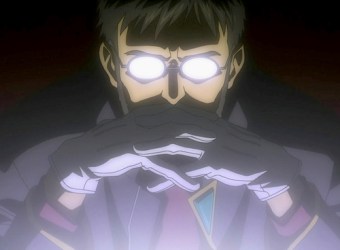 It’s enough to make one scurry back to the series for answers, though the three movies still to come promise whole new characters, plots and a — frankly, much-needed — brand-new ending. After two misfires (one in the series, one in
  100Films.co.uk