
Wong Kar Wai | 109 mins | streaming (HD) | 2.35:1 | Hong Kong & China / Mandarin & Cantonese | 15 / PG-13
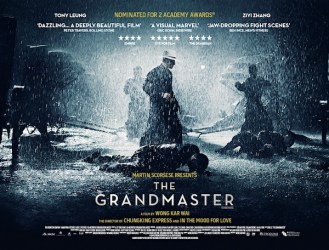 As a Western viewer, if you know anything about Ip Man beyond “he’s the chap who trained Bruce Lee”, it’s probably thanks to the pair of eponymous biopics starring Donnie Yen (soon to become a trilogy). Heck, if you know that much there’s a fair chance it’s due to those films. This take on the man, directed and co-written by Wong Kar Wai and starring Tony Leung as Ip, is tonally very different.
Some of the facts remain the same, naturally: Ip is a master of Wing Chung in Foshan, China, until the Japanese occupation ruins everyone’s lives. Post-war, he moves to Hong Kong and sets up a school there. Concurrently, there’s something about being the grandmaster of martial arts in all of China, or somesuch. When the previous incumbent is murdered by his disciple, the old man’s daughter, Gong Er (Ziyi Zhang), has revenge in mind.
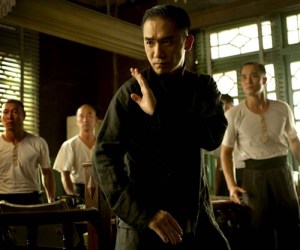
The Grandmaster is very much more an arthouse version of the story than the Ip Mans’ accessible action-movie stylistics, with elliptical storytelling and a carefully-measured pace, even in the action sequences. I’ve seen at least one review criticise Wong for leaning too heavily into ‘genre’ pictures — I guess that critic doesn’t actually watch too many genre pictures, because a good number of genre fans criticise this for being too arty. It is more “arty” than “genre”, even given its inclusion of numerous fantastic fight scenes. The duels are stunning, though pure adrenaline-junkie viewers seem to find even those a disappointment. Well, they’re wrong.
 It helps that it’s gorgeously shot. Ultra-crisp blue-black rain-soaked night time duels; rich golden hues in pre-occupation Foshan; cold bright-white snowy landscapes; a train platform fight that’s almost sepia-like. Between the photography and the ever-excellent action choreography of Yuen Woo-ping (The Matrix, Crouching Tiger, Kill Bill, et al), the film is immensely satisfying on a visual level.
One factor that may — or, as we will see, may not — have an effect on how the film fares beyond the purely visual is that there are at least three different cuts: a 130-minute original cut, a 122-minute international cut, and the 108-minute version released in the US by the Weinsten Company. “Ah,” you might think, “yet another Weinstein hack job.” Well, Wong himself says otherwise:
As a filmmaker, let me say that the luxury of creating a new cut for U.S. audiences was the opportunity to reshape it into something different than what I began with — a chance one doesn’t always get as a director and an undertaking much more meaningful than simply making something shorter or longer. The original version of The Grandmaster is about 2 hours, 10 minutes. Why not 2 hours, 9 minutes or 2 hours, 11 minutes? To me, the structure of a movie is like a clock or a prized watch — it’s about precision and perfect balance.
We always knew that we wanted to have a U.S. version that was a bit tighter and that helped clarify the complex historical context of this particular era in Chinese history, focusing further on the journeys of Ip Man and Gong Er. While the previous version was more chronological, adding narration and captions to explain certain plot points gave us the freedom to bring more life to moments in the characters’ stories. I also aimed to enhance the audience’s understanding of the challenges faced between North and South, especially during the Japanese invasion.
Well, the narration and explanatory title cards are at times useful, but at others feel heavy-handed. I guess that’s the result of them being added retroactively as an explanatory device — if Wong had felt that information needed to be in the film throughout production, I’m sure it could’ve been better integrated into the storytelling.
 However you look at it, the other Ip Man films are undoubtedly more palatable to a mainstream audience. Does that mean they’re worse? No. Better? Not necessarily. But I don’t think The Grandmaster is all it could’ve been. It seems to run out of story and lose its way as it gets towards the end. The focus shifts entirely to Gong Er, and it feels less clear what it’s meant to about as a whole film. It becomes a movie of great moments, and maybe even scenes, but an unsatisfying whole. But oh, the images…

This review is part of the 100 Films Advent Calendar 2015. Read more here.
 The only feature-length work of director Jean Vigo (though
  The romance is told in a way many describe as “poetic”, which seems to me to be something of a euphemism for “obliquely”. There are certainly poetic shots or sequences, like Jean’s dive where he sees a vision of Juliette, but the actual narrative is more social realist — low-key, and not spelt out or expounded upon for our benefit.
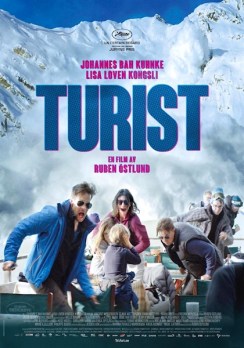 During a near-miss on a skiing holiday, a dad abandons his wife and kids. Cue days of passive-aggressive familial angst.
 Screened at the London Film Festival earlier this month, then made available on MUBI in the UK (where you can, if you want,
 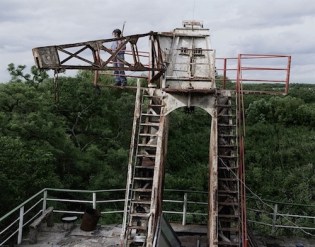 That’s the whole movie, more or less. I haven’t spoiled it for you because you’re not going to watch it because why would you? There is no discernible story or meaning; there is no characterisation; there is nothing but imagery and snippets of moments that signify nothing. It is a movie that has deliberately left out any explanations. Apparently the director has said it’s all a criticism of global capitalism, or something. Even with that extra-filmic information, it’s still difficult to ascertain much meaning. This isn’t realism — this isn’t avoiding “hello, person who is my brother” dialogue — this is obtuseness for obtuseness’ sake.
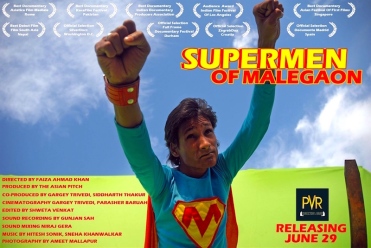 In the impoverished Indian town of Malegaon, everyone either works on the power looms and is paid a pittance, or is unemployed and so has even less; apart from the women, who are squirrelled away out of sight at home. The population is 75% Muslim, the remainder Hindu, and that leads to tension. Outside of work, there is nothing to do for entertainment… except go to the movies. And Malegaon loves the movies.
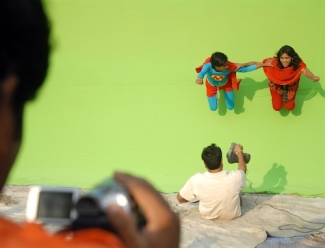 Supermen of Malegaon is the making-of story of Nasir’s most ambitious production to date. Having seen the use of greenscreen in one of those behind-the-scenes outtakes, he realised he could use the process to make a special effects movie — specifically, to make Superman fly to Malegaon. This documentary follows the trials and tribulations of Nasir and his band of hobby filmmakers through their film’s writing, planning, and its sometimes troubled shoot, until it’s completed. In the process, we meet some genuine characters, learn something of the unique lifestyle of Malegaon itself, and maybe even learn something about ourselves too.
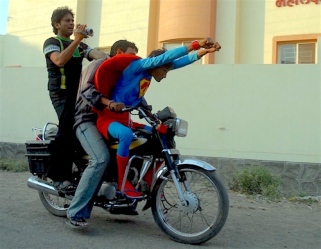
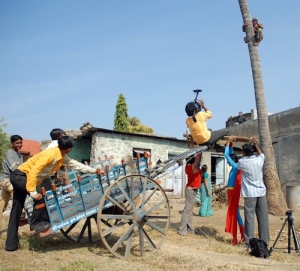 Even if it doesn’t, the situation in ‘Mollywood’ is an interesting one. This is a cottage industry: everyone involved has day jobs, funding the movies out of their own pocket, or by borrowing cash, or with favours, or by selling in-film adverts to local businesses — yes, that’s right, product placement, not that anyone involved would know that term. Women from Malegaon cannot appear in or work on the films due to local attitudes, so actresses are hired from nearby villages; the screenplay is written and shooting schedule arranged so that the actress only needs to be involved for the minimum number of days, to save money. Bicycles and motorbikes are used to create tracking shots; the director gets a piggyback for a high angle, or is raised and lowered on the arm of a cart to create a crane shot. The ingenuity and inventiveness of these literally-self-taught moviemakers is astonishing.
 which he turns down because he could make four whole films for that much money. Even that little is scraped together. Mollywood moviemaking isn’t a money spinner, it’s a hobby. Still, one of the writers wants to make it as a proper writer; wants to go to Bombay and do it as his career. This has been his aim for 15 years, he says, and Bombay is no closer.
 It’s an incredible, one-of-a-kind film; more powerful and life-affirming than it perhaps has any right to be. But then the filmmakers of Malegaon don’t really care about such things. They make movies because they want to, whether they ‘should’ or not; they make them better than you might expect; and it enriches their lives. Their story may do the same for you. In my opinion, it’s an essential film; a true must-see.
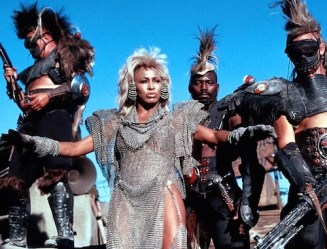
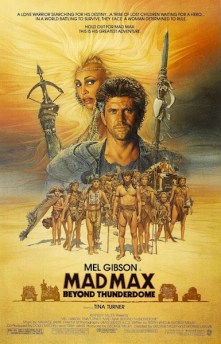 The third (and, for 30 years, final) Mad Max movie sees the titular post-apocalyptic drifter (Mel Gibson) rock up at last-outpost-of-humanity Bartertown in search of his pilfered car and camels. Max finds himself dragged before the town’s ruler, Aunty (Tina Turner), who has a job for him: kill the mutinous overseer of the city’s power supply, Master Blaster. As payment, she’ll arrange for the return of his belongings. The only conditions are he can’t reveal Aunty has employed him, and he has to do it in a fair fight in the town’s arena of combative justice — the Thunderdome. And then the story goes beyond that, funnily enough.
 I didn’t even notice the change in level until I read those comments afterwards. The film still reaches a 15 certificate in the UK, so clearly it isn’t toned down that much. And the lack of visible blood doesn’t mean it lacks creativity: Roger Ebert
 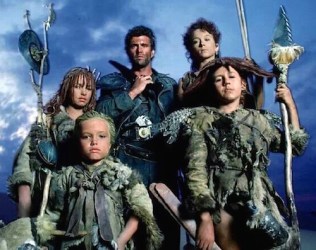 that have been forced to coexist because neither was enough to sustain an entire feature, but at least neither part feels unduly padded, meaning the narrative keeps on rolling. It doesn’t hit the same heights as the exceptional Mad Max 2 — especially with a climax that invites a direct comparison, and is good but not as good — but, as a post-apocalyptic action-adventure movie in its own right, it’s a good film.
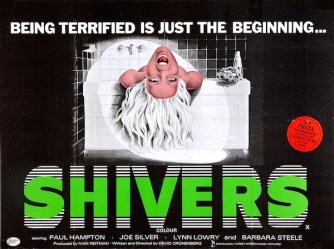 The first commercial (i.e. non-student) feature by horror maestro-to-be David Cronenberg, Shivers depicts the sexually-charged chaos that erupts after the spread of a man-made sexually-transmitted parasite in an isolated hyper-modern tower block.
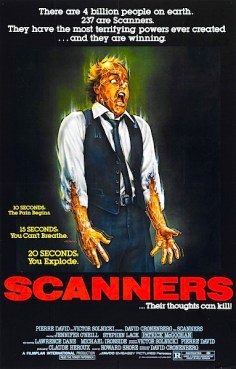 If you’re versed in sci-fi/fantasy cinema, you’ve heard of Scanners even if you haven’t seen it: it’s the one with the (in)famous exploding head. That moment is distinctly less shocking for those of us coming to the film as a new viewer at this point: gore perpetuates genre cinema nowadays, so it’s less striking,
 emotional journey or something is the core of the film. As if to make up for it, McGoohan is of course excellent, acting everyone else off the screen, while Ironside makes for an excellent villain, naturally. Some say that the final psychic battle, between Lack and Ironside, is underwhelming, but I thought it was excellently realised, a tense and effective struggle. Such brilliant effects and sequences are scattered throughout the film.
 James Woods is the owner of a trash TV station who’ll do pretty much anything for ratings. His hunt for the next ‘big’ thing leads him to come across the signal for a channel that shows just one bizarre, disturbing programme. Obsessed with finding out the truth behind it, he gets suckered in to a conspiracy that blurs the line between reality and imagination.
 I guess for some people the “ew”-inducing effects are the primary delight of the film. These are the kind of people who complain about the UK version being cut. In truth, this is actually the originally-released R-rated version; the so-called Director’s Cut adds just over a minute. Having read about
  100Films.co.uk