
Ron Howard | 123 mins | Blu-ray | 2.40:1 | UK, USA & Germany / English & German | 15 / R
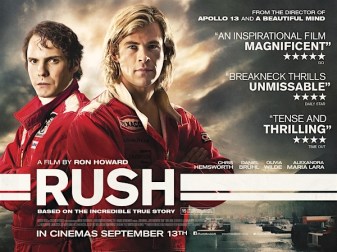 Screenwriter Peter Morgan (of The Queen and Frost/Nixon) and director Ron Howard (of Apollo 13 and A Beautiful Mind, as the trailer is keen to remind us, rather than, say, The Da Vinci Code) tell the story of the rivalry between racing drivers James Hunt (Chris Hemsworth) and Niki Lauda (Daniel Brühl) as they vie for the 1976 Formula 1 championship, a true story so full of twists and turns that (as Howard seems fond of saying in the special features) you wouldn’t accept it if it were fiction.
Appropriately, the racing sequences are the best part. Those were the days when F1 was a little wild and uncontrolled, which the film does a good job of conveying, and also of using to its advantage to create tense and exciting set pieces. Kudos to every element of production here, not only the brilliant camerawork and editing, and the array of special effects required to tie it together, but also the production design that makes the one or two tracks they filmed on look like circuits all around the world.
Unfortunately, the film stalls in the personal relationship scenes, an equally-weighted part of the narrative. They’re an undercooked mess of clunky dialogue and characters so sketchily drawn they barely resemble stick figures. Lauda’s story is the less objectionable of the two primary threads, because his lack of skill at social engagement at least makes it moderately unusual, and it goes somewhere when he has the accident. Hunt’s stuff is just noise. And he learns nothing from it — he doesn’t change — so there’s no arc. 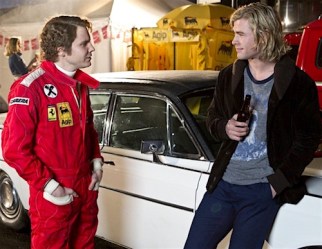 I presume the point of engaging with their personal lives away from the track was to add depth; to make sure it was a two-hander, rather than just about one or other of the drivers, and to ensure Hunt wasn’t just two-dimensional. However, without any growth on his part, or even some kind of active change, he’s just as flat, only now the star of some pointless scenes.
Considering the amount of unwarranted time spent on Hunt, it’s as if Morgan and Howard feel they have to lure us in by making the film about the English guy, then once they’ve got us it can transition to being about the real story, which is the Austrian fella. A “Lauda edit” would make for a better movie: strip out all the BS about Hunt’s personal life; focus right in on the 1976 season, including losing a good chunk of the first 45 minutes, which is so much preamble. The movie would focus more on what it’s really about, not have such a slow start, and feel all the better for it. Interestingly, of the ten-or-so minutes of deleted scenes on the Blu-ray, many are Lauda-focused and from early in the film. Would it have been more balanced to include them? However, a quick scan suggests they weren’t bad deletions, so maybe Hunt’s scenes should’ve been cut back in a similar fashion. Considering his general acclaim as a writer, it’s a little surprising that Morgan’s screenplay is so frequently the weak link.
Similarly, some have criticised Rush for being a bit of a rote, clichéd sports movie. That’s a slightly tricky one to address. I mean, it’s a true story; it happened. 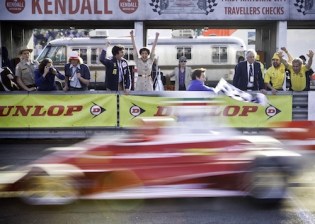 If that narrative fits snuggly into familiar plot beats, what are you meant to do? Change the truth to make it less like fiction? That’d be a first. Saying that, I’m taking it on faith (based on comments in the making-of) that the true story was so perfect you wouldn’t believe it if it had been fiction. Maybe they did streamline it. But assuming it’s real… well, it’s not the filmmakers’ fault if life imitates art.
One thing the film doesn’t do, to everyone’s credit, is fall into the stereotypical good guy/bad guy rivalry story. Each of the pair has his pros and his cons, and during the final race it’s genuinely hard to call who you want to win (I guess some will have their favourites regardless, but I know I’m not the only person who didn’t know who to root for). I’d argue that, when it comes to sports movies, you don’t get much less rote-genre-cliché than that.
The two leads give strong performances, particularly Brühl, because he has so much more to work with. Others are less well served. Olivia Wilde’s English accent is faultless, not glaringly over-egged like most yanks playing Brits, and that’s about the most I can say of her. Her mirror image, Alexandra Maria Lara, gets to inject some humanity into the Lauda story, and is pretty much the best supporting actor in a film full of roles but with few of significance. For example, for some reason Natalie Dormer has been shafted with a teeny tiny part. Were her scenes cut? Is it just because she’s mostly a TV actress? Surely she deserves better roles than this. And I didn’t even see Tom Wlaschiha, who is apparently in it too.
 All in all, I’m a little surprised how well-liked Rush is. I mean, as of posting it’s at #162 on the IMDb Top 250. That’s a pretty solid placement for the kind of film I’d expect to have a score in the mid- to high 7s on IMDb, enjoyed by some but dismissed by others, not be an 8.2 Top 250er. It is a good film with much going for it, the action scenes in particular, but there also plenty of times when I felt it dropped the ball — I didn’t buy Hunt’s storyline as good moviemaking at all. One of the 250 best movies ever made? No, probably not. There’s a lot to like, but don’t get carried away by the hype.

I’ve just noticed that three of my last four reviews have been sport-related true stories. Weird, random coincidence.
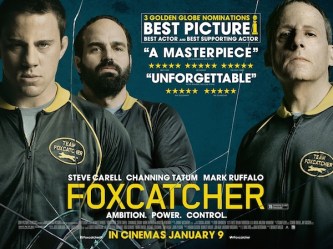 The director of
 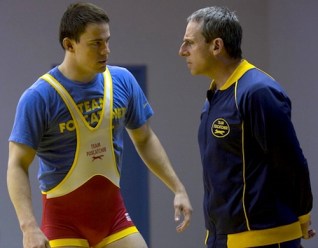 Fortunately, it has three leads who are up to carrying a narrative of that nature. In a rare dramatic role, and lumbered with a hefty prosthetic noise, Carrell’s John Du Pont almost feels like a caricature rather than a plausible human being… but apparently the film has actually toned down how odd the man was, so what are you gonna do? It’s a memorable performance none the less. Tatum is an understated lead, demonstrating he’s a better actor than you might expect as he displays emotional complexities in a man who doesn’t seem especially emotionally complex. Showing a character struggling with feelings he probably doesn’t quite understand is quite a feat, especially when it’s not explicitly conveyed in dialogue, so applause for Tatum there. Ruffalo, meanwhile, provides typically strong support, embodying a wrestler — right down to a very specific, unusual way of carrying himself — from the guy who plays Bruce Banner rather than the Hulk.
 making one wonder if anything the film may suggest is consequently wide of the mark.
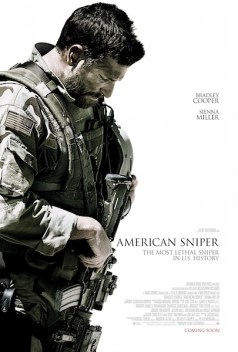 Politics aside, American Sniper is an adequately-made film. Eastwood’s direction is at best workmanlike, at worst laughably clichéd. Jason Hall’s screenplay rehashes better movies’ insights into the mental effects of war on combatants. Neither elicit much excitement from a half-arsed sniper-vs-sniper storyline. The film belongs to a bulked-up Bradley Cooper, who
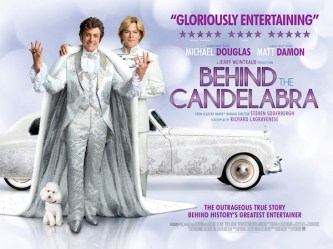 Steven Soderbergh’s supposed last-ever film (or, if you’re American, Steven Soderbergh’s first project after he supposedly quit film) is the story of Scott Thorson (Matt Damon), a young bisexual man in the ’70s who encounters famed flamboyant pianist Liberace (Michael Douglas) and ends up becoming his lover, which is just the start of a strange, tempestuous relationship.
 It looks great, too. The film, that is, not Rob Lowe’s face. The design teams have realised an excellent recreation of the period, which is then lensed with spot-on glossy cinematography by DP
 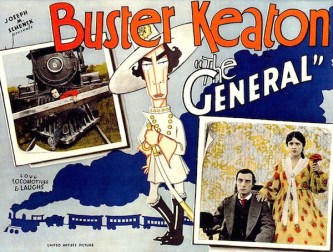 Poorly reviewed and a box office flop on its release, Buster Keaton’s The General has undergone a stark re-evaluation since: the United States National Film Registry deemed it so “culturally, historically, or aesthetically significant” that it was added to the registry in its first year, alongside the likes of
 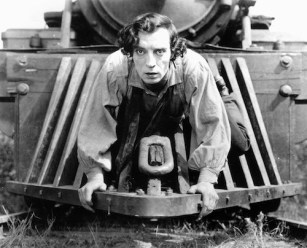 It was reportedly a very expensive film, and it looks it: there are tonnes of extras, not to mention elaborate choreography… of trains! Who knew old steam trains were so agile? There’s impressive physicality on display from Keaton, but the well-timed movements of those big old locomotives are quite extraordinary, especially for the era (I mean, for the past couple of decades you’ve been able to do pretty much anything thanks to a spot of computer-controlled what-have-you. Not much of that going on in the 1920s.)
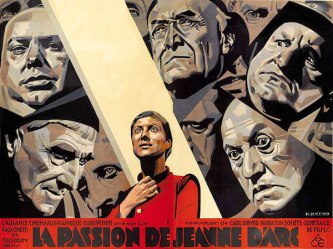 Widely regarded as one of the greatest movies of all time (look at
 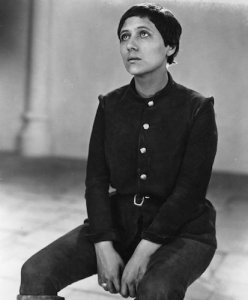 Dreyer based his telling on the written records of Joan’s trial. Although that’s grand for claims of historical accuracy, it’s hard to deny that silent cinema is ill-suited to thoroughly portraying something dialogue-heavy. There are many things silent film can — and, in this case, does — do very well indeed, but representing extensive verbal debate isn’t one of them. Bits where the judges argue amongst themselves — in silence, as far as the viewer is concerned — leave you longing to know what it is they’re so het up about. Sometimes it becomes clear from how events transpire; other times, not so much.
 neutral costumes on sparsely-decorated sets, and are almost entirely shot in close-ups — all elements that avoid the usual grandiosity of historical movies, both in the silent era and since. What we perceive as being ‘grand’ changes over time (things that were once “epic” can become small scale in the face of increasing budgets, for instance); pure simplicity, however, does not age much.
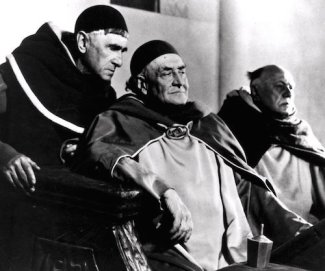 The actors playing the judges may be less individually memorable than Joan, but it’s their conflict — the personal battle between Joan and these men, as Dreyer saw it — that drives the film. Dreyer believed the judges felt genuine sympathy for Joan; that they did what they did not because of politics (they represented England, and she had led several successful campaigns against the Brits) but because of their devout belief in religious dogma. Dreyer says he tried to show this in the film, though it strikes me the judges still aren’t portrayed too kindly: they regularly seem contemptuous of Joan, and are outright duplicitous at times. Maybe that’s just religion for you.
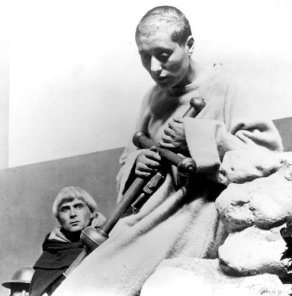 however, so I have no opinion. Instead, they offer two alternatives. On the correct-speed 20fps version, there’s a piano score by silent film composer Mie Yanashita. Apparently this is the only existing score set to 20fps, and Masters of Cinema spent so much restoring the picture that there was no money left to commission an original score. Personally, I don’t think they needed to. Yanashita’s is classically styled, which works best for the style of the film, and it heightens the mood of some sequences without being overly intrusive, by and large. Compared to Dreyer’s preferred viewing method, of course it affects the viewing experience — how could it not, when it marks out scenes (with pauses or a change of tone) and emphasises the feel of sequences (with changes in tempo, for instance). That’s what film music is for, really, so obviously that’s what it does. Would the film be purer in silence? Maybe. Better? That’s a matter of taste. This particular score is very good, though.
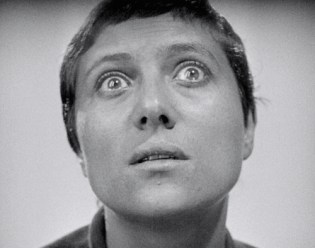 Some viewers describe how they’ve found The Passion of Joan of Arc to be moving, affecting, or life-changing on a par with a religious experience. I wouldn’t go that far, but then I’m not religious so perhaps not so easily swayed. As a dramatic, emotional, film-viewing experience, however, it is highly effective. As Dreyer wrote in 1950, “my film on Joan of Arc has incorrectly been called an avant-garde film, and it absolutely is not. It is not a film just for theoreticians of film, but a film of general interest for everyone and with a message for every open-minded human being.” A feat of visual storytelling unique to cinema, it struck me as an incredible movie, surprisingly accessible, and, nearly 90 years after it was made, timeless.
 Ridley Scott’s Crusades epic is probably best known as one of the foremost examples of the power of director’s cuts: after Scott was forced to make massive edits by a studio wanting a shorter runtime, the film’s summer theatrical release was so critically panned that an extended Director’s Cut appeared in LA cinemas before the end of the year, reaching the wider world with its DVD release the following May. The extended version adds 45 minutes to the film (and a further 4½ in music in the Roadshow Version), enough to completely rehabilitate its critical standing.
 A strong cast bolsters the human drama that sometimes gets lost in such grand stories. Bloom is a perfectly adequate if unexceptional lead, but around him we have the likes of Michael Sheen, David Thewlis, Alexander Siddig, Brendan Gleeson, and Edward Norton (well done if you can spot him…) There are even more names if you look to supporting roles. Most notable, however, are the co-leads: both Liam Neeson, as the knight who recruits Balian, and Jeremy Irons, as the wise advisor when he gets to Jerusalem, bring class to proceedings, while Eva Green provides mystery and heart as the love interest. Of everyone, she’s best served by the Director’s Cut, gaining a whole, vital subplot about her child that was entirely excised theatrically. It’s the kind of thing you can’t imagine not being there, and Scott agreed: it seems the chance to restore it was one of his main motivators for putting together a release of the longer version.
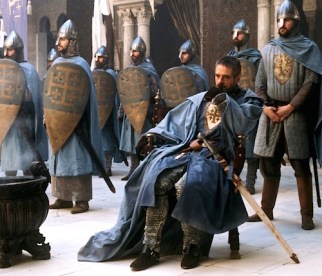 (I’d wager
 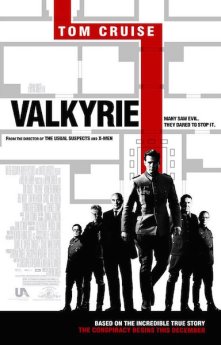 After abandoning the X-Men franchise for a
 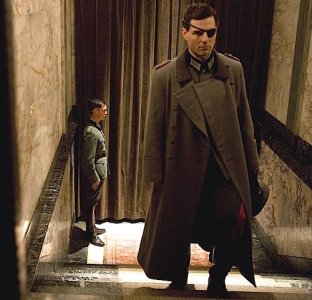 One of the stated aims of the conspiracy is to show the rest of the world that not everyone in Germany believed in what Hitler and his inner circle were doing. It may have taken us a long time to realise that, for fairly understandable reasons, but quality films like this help get the message out. Singer has crafted a proper thriller here, replete with scenes of edge-of-your-seat tension. Many a filmmaker can’t manage that with a fictional storyline, never mind one where we know exactly how it turns out.
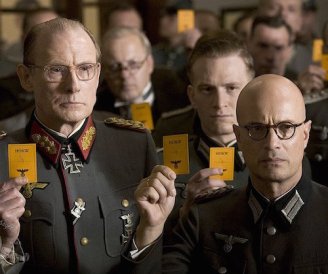 but nor is he in simplistic action hero mode.
 Steven Spielberg’s second feature (or “first” if you’re American) is based, loosely, on a true story. The fictionalised version sees Lou Jean (Goldie Hawn) breaking her husband (William Atherton) out of prison so they can travel cross state to liberate their baby from foster care. Everything goes smoothly until they accidentally kidnap a police officer (Michael Sacks), hundreds of police cars begin to follow them, and a multi-day slow-paced chase ensues.
 when filmmakers became contractually obliged to keep their compositions “TV safe”). The camerawork is frequently extraordinary, including at least one unbroken shot where the camera moves around inside and outside the car, like something out of
 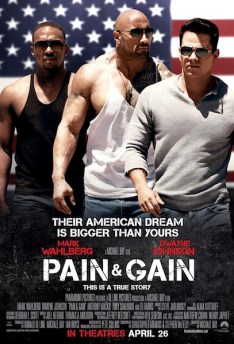 For his first non-sci-fi movie in a decade, divisive action director Michael Bay channels Tarantino (kinda) for this based-on-a-true-story crime comedy. Dwayne “The Rock” Johnson, Mark “Marky Mark” Wahlberg and Anthony “
 Bay is aided by leads who are surprisingly adept at comedy. Johnson is the best thing in it, consistently hilarious as his conscience battles former addictions and newfound religious convictions. I noted down some of his best lines to quote in the review, but they lose something without his delivery.
 After he’s become so sidetracked making the
  100Films.co.uk