2016 #62
Steven Spielberg | 151 mins | Blu-ray | 2.40:1 | USA & India / English | 12 / PG-13
 2013 Academy Awards
12 nominations — 2 wins
Winner: Best Actor, Best Production Design.
Nominated: Best Picture, Best Supporting Actor, Best Supporting Actress, Best Director, Best Adapted Screenplay, Best Film Editing, Best Cinematography, Best Costume Design, Best Score, Best Sound Mixing.
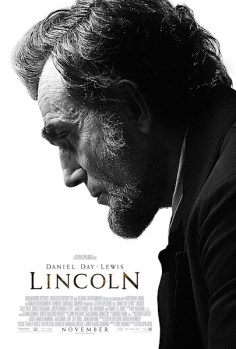 Daniel Day-Lewis allegedly stars in this account of the final months of President Abraham Lincoln’s life, which might more pertinently be called The 13th Amendment due to where its focus lies. I say “allegedly” because I’m not convinced they didn’t find a way to resurrect Lincoln to appear as himself, then just pretended it was Day-Lewis acting.
Although this project started life as a traditional biopic of the 16th President of the United States, as director-producer Steven Spielberg developed it over several years, it was eventually whittled down to what we have here. Most reviews and the like describe it as being about the final four months of Lincoln’s life, and in a literal sense that’s true because the last couple of months are covered at the tail-end of the movie. However, it’s really about one month: January 1865.
With the American Civil War not yet over, though clearly in its final stages, and an election recently reaffirming Lincoln’s presidency but bringing changes in the House of Representatives — changes that, importantly, don’t take effect for a few more weeks — the president decides now is the time to push through the unpopular 13th Amendment to the Constitution, which will abolish slavery. He wants it passed because it’s the right thing to do, though there is far from consensus on this point. However, the passing of the amendment would likely bring about the end of the war, which leads some to back it even though they don’t agree with the amendment in and of itself; and the forthcoming changes in the House mean there are a raft of senators soon to be looking for new jobs, whose votes might be bought with the promise of a cushty position in the near future.
If that all sounds very political, it is. I wouldn’t be the first to observe that Lincoln plays like a period version of The West Wing, but it bears repeating because it’s true. If the idea of men standing (and sitting) in rooms debating political manoeuvres — 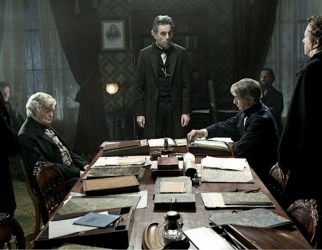 who might be persuaded to vote which way, and how they might be persuaded, and what they will want in return, and what deals need to be struck, and so on and so forth — sounds like it might make for an engrossing movie, then there’s a fair chance Lincoln will be your cup of tea. A not-insignificant proportion of viewers protest that it is boring, however, and while I in no way agree with them, your mileage may vary.
From a filmmaking perspective, this is first-class work. Spielberg shows a more restrained side to his proclivities than in the similarly-themed Amistad, but exhibits perhaps a little more flair than in his next film, Bridge of Spies. Much like that latter movie, his sentimental streak only really manifests itself in one short scene right near the end… though historians who contest the commonly-taught history of Lincoln as an upstanding man (a view this film clearly maintains) may argue the whole film gives in to this aspect of the director’s work. Either way, the film is a visual triumph, its production design award well-earned. Even more so, however, is the work of Spielberg’s regular DP, Janusz Kaminski, whose candle-and-gaslight photography of interiors is breathtakingly good. The whole picture exhibits a richness and a sharpness that, perhaps for the first time, made me wonder if 4K might be a really worthwhile idea after all.
The real meat of the film comes in the performances — not the actual political debate, because we all know how that should go, but the men performing said debate. Of course the title performance dominates the movie, but Day-Lewis does not. As I alluded to at the start, it’s hard to see the actor’s presence in the role — it’s not a performer, it is Abraham Lincoln. 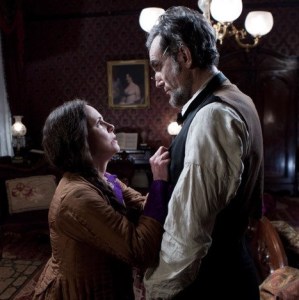 Not to do anyone else in the film — or, indeed, any other performance in any film ever — a disservice, but Day-Lewis embodies the President in a way few other actors have ever embodied a role. It’s quite remarkable.
It’s a real testament to the rest of the cast, then, that in the face of this powerhouse performance they all do such sterling work. Sally Field tackles a complex, potentially thankless role with aplomb. The movie is about the titular man, so her scenes are really about illuminating the President’s psyche and so creating the biopic side of the movie (i.e. the reason why it isn’t actually called The 13th Amendment), but that doesn’t mean she doesn’t make Molly a believable human being in her own right. Tommy Lee Jones also stands out as hardline abolitionist Thaddeus Stevens. Stevens doesn’t get on with Lincoln and thinks the 13th Amendment doesn’t go far enough, but will he concede it’s better than nothing in a social climate where many think the opposite? And then there’s James Spader as behind-the-scenes political persuader W.N. Bilbo (yes, like the Hobbit). When he first tumbles onto the screen he looks like a misplaced comedy creation, and he does bring some much needed levity to the film, but in a measured way that doesn’t tip the scales too far. It makes the whole better because of it.
They’re still the tip of the iceberg, however, because in the film’s expansive two-and-a-half-hour running time there’s space for accomplished performances from David Strathairn, Joseph Gordon-Levitt, Hal Holbrook, Jackie Earle Haley, Jared Harris, Lee Pace, Peter McRobbie, David Oyelowo, Adam Driver… I’m just naming them in the order they are in the cast listing. Some of them are only in one scene. I still think I’ve missed some people.
 For me, there are few black marks (unfortunate choice of phrase…) to be held against Lincoln. Does it give in to Spielberg’s sentimentality? Yeah, a little — but it’s a long, long way from the worst case of that, and I think you’d be nitpicky (or have a different opinion on history, which, you know, is a matter of opinion) to criticise the film too harshly for that. As to whether it’s boring, that’s entirely a matter of preference. If you think The West Wing is boring, people who write lists of “the greatest TV shows ever” will disagree with you, and you also likely won’t like Lincoln. I like The West Wing, though.
Lincoln is going to be remembered for Daniel Day-Lewis’ performance, and in many respects that’s fine, because (as I’ve said a couple of times now) it is an astonishing piece of acting. Fortunately for the viewer seeking out that performance, there’s an awful lot more to Spielberg’s polished political drama.
The UK network TV premiere of Lincoln is on Film4 tomorrow at 9pm.
It placed 13th on my list of The 20 Best Films I Saw For the First Time in 2016, which can be read in full here.

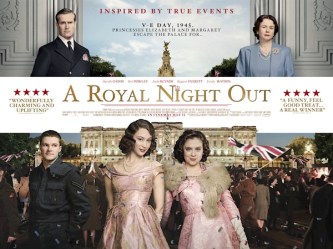 A somewhat remarkable true story gets romanticised in this likeable comedy about King Colin Firth (Rupert Everett) and Queen Olivia Colman (Emily Watson) allowing Princesses Elizabeth (Sarah Gadon) and Margaret (Bel Powley) to go out on the town on V.E. Day. When Margaret runs off, Liz teams up with a grumpy squaddie (Jack Reynor) to track her down.
 Inspired by real events (more on that later), The Bank Job sees the British Secret Service covertly enlist a gang of crooks to rob a bank’s vault in order to retrieve some compromising photos of a member of the royal family — not that the robbers know this is what they’re up to. Unfortunately for them, the vault also contains property belonging to an organised crime boss, who isn’t too happy it’s been pilfered.
 but, most pertinently, solid TV thrillers like
 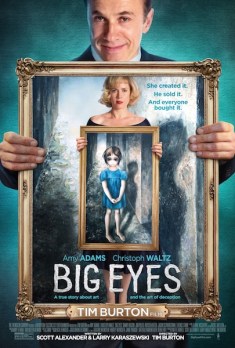 After a smidgen of early awards buzz that pegged it as a dark-horse major contender (which obviously never materialised into anything), everyone seemed to stop talking about Big Eyes, Tim Burton’s latest, and the first thing he’s made in over a decade that doesn’t instantly strike you as an obvious Burton-esque choice.
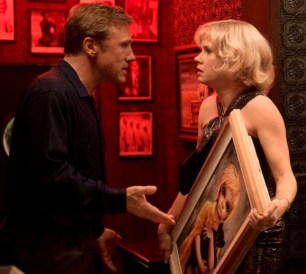 There’s thematic meat that could’ve filled the sandwich between those establishing and climactic, er, pieces of bread(?) — the tastes of critics versus the general public, and the disparity that exists there and what it means; or the inbuilt sexism of the era (though maybe everyone thought
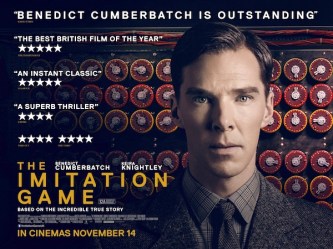 Alan Turing was a war hero: he led a team of cryptologists who managed to break the Germans’ Enigma encryption, thereby giving the Allies access to tonnes of vital information that (historians estimate) helped shorten the war by up to four years. This information was beyond top secret — so much so that they created a new designation for it, “ultra secret” — so when the war was over, Turing & co’s contribution went unrecognised for decades. Alan Turing was also a homosexual in an era when that was illegal. When he was caught, he was sentenced to chemical castration, which caused (or at least contributed) to him taking his own life. Fine way to treat a war hero, but that’s what you get with discriminatory attitudes.
 The screenplay by newcomer Graham Moore topped the Black List in 2011, so it’s probably of little surprise that it went on to win an Oscar, but I think it’s fair to say its quality, while good, isn’t that good. The use of three concurrently-told timelines seems to be too much for Moore and/or director Morten Tyldum to handle at times, occasionally flitting to a different era with little purpose beyond “it’s about time we told more of that storyline”. That’s not to say a wholly chronological telling would’ve been more effective — though perhaps it would’ve placated critical viewers who expected (and retrospectively demand) a cryptography-based wartime thriller — but the period juggling clouds the point as often as it illuminates it.
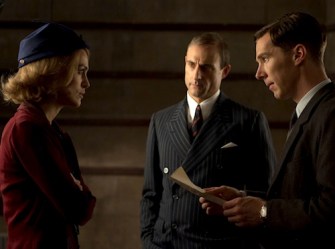 Also up for the golden man was Knightley, who does give one of her better turns as Turing’s sort-of-sidekick. The pair have a fairly complex relationship — both halves are key to conveying that, and they both do. At least as remarkable as either is young Alex Lawther, who arguably gets the film’s stand-out acting moment in his final scene, where a tumult of emotion is contained beneath a stiff-upper-lip surface in a tight close-up. On the strength of this, an actor to watch out for. The rest of the cast don’t get the same depth of material, but Charles Dance and Mark Strong provide exceptional value, as always, and Rory Kinnear does his best to bring some nuance and interest to a part he’s overqualified for.
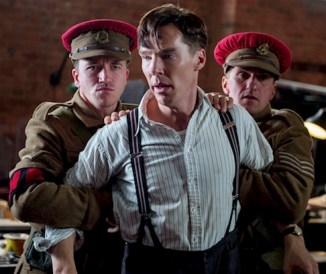 Perhaps that just stems from a frustration at some of the film’s other issues. It clearly has a flexible relationship with historical accuracy — well, what biopic doesn’t? Without wanting to spoil plot developments, some viewers feel the film suggesting Turing knew of the spy at Bletchley Park is insulting to his memory, because in real-life he didn’t even know the individual. Alternatively, is it not a way to integrate that part of the Enigma story into a film that otherwise wouldn’t have a satisfactory way to touch on it? Everyone’s mileage will vary on whether that should’ve been done or not.
 Without meaning to sound too judgemental (though when has that ever stopped me?), those factors making me think this is the kind of film “normal people” will probably love a lot more than “film fans” — which probably explains why it’s in the IMDb Top 250 but all the most-liked reviews on Letterboxd have exceptionally low scores. Personally, I’m going to side with the populous: not everything has to be a groundbreaking feat of Cinema to be a story worth telling and told well, and if it is indeed some kind of “historical revisionism” to say that there’s nothing wrong with being gay and the way Turing was treated post-war was horrendous, well, I’m OK with that revisionism.
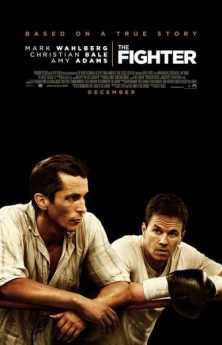 Oscar-winning true-story drama that relates the early career of boxer Micky Ward (Mark Wahlberg), a coulda-been-a-contender type held back by the training of his half-brother, ex-boxer turned drug addict Dicky (Christian Bale), and the management of his controlling mother (Melissa Leo), not to mention the cadre of harpy-ish sisters. Micky gains some confidence after entering a relationship with barmaid Charlene (Amy Adams), who’s prepared to stand up to his family. He breaks away from them and gets better opportunities, but soon realises that to win he’ll need to combine the best of both worlds.
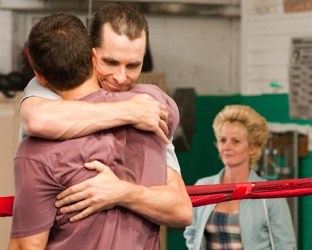 Although this is technically Ward’s story, it’s as much about his older half-brother, washed-up fighter turned part-time trainer and full-time crack addict Dicky Eklund. It’s another of Christian Bale’s extreme weight gain/loss roles (in this case, loss), but there’s more to it than such physical exertion. Bale inhabits the character, and a brief clip of the real Dicky during the credits suggests he’s done so very accurately. His performance is mesmeric and definitely worthy of that Oscar. For the rest of the cast, Amy Adams holds attention equally in a less showy role, and even Marky Mark isn’t half bad. Melissa Leo also won an Oscar for her performance, which I forgot until I read so after — it was the one she controversially funded her own ad campaign for. I guess that paid off.
 The Fighter isn’t without its faults, though. There’s a certain element of cliché to the story arc — whether that’s just fact emulating fiction, or the screenwriters imposing familiar shapes on to what really happened, I don’t know. It could also stand to lose a few minutes here and there, especially when it goes round in circles about whether Micky should be trusting his family or not. And talking of movie clichés and comparisons to other films about fighting, watching it in close proximity to
  When a warrior family are betrayed and killed, the surviving siblings seek vengeance.
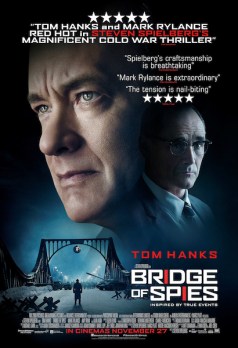 Steven Spielberg’s true-story Cold War drama stars Tom Hanks as insurance lawyer James B. Donovan, who is tapped to defend captured Soviet spy Rudolf Abel (Mark Rylance). After Donovan insists on doing his job properly, he manages to spare Abel the death penalty — which comes in handy when the Soviets capture spy-plane pilot Francis Gary Powers (Austin Stowell) and a prisoner exchange is suggested, which the Russians want Donovan to negotiate.
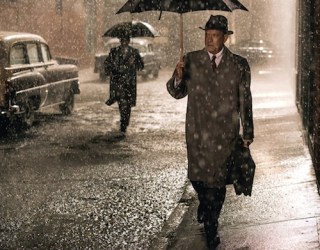 If we’re talking storytelling oddities, another is the manner in which Powers’ backstory is integrated. As Donovan continues to defend Abel, the film suddenly becomes subjected to scattered interjections, in which we see pilots being selected and then trained to fly secret reconnaissance missions in a new kind of plane. Any viewer who has read the blurb will know where this is going, but it’s so disconnected to the rest of the narrative that it felt misplaced, at least to me. The same is true when we suddenly meet Frederic Pryor (Will Rogers), an American student in Berlin who’s mistaken for a spy and arrested by the East. It turns out we need to know about him because Donovan attempts to use his negotiations to get a two-for-one deal, exchanging Abel for both Powers and Pryor. Knowing the stories of the men Donovan will be negotiating for is not a bad point, but I can’t help but feel there was a smoother way to integrate them into the film’s overall narrative.
 hints at emotions under the surface rather than declaiming them. A lesser film would’ve made a point of this — would’ve had Hanks’ lawyer struggling to understand and relate to his client’s low-key nature — but, instead, Donovan is a man who can identify with this mode of being, at least to an extent. There’s a reason they talk a couple of times about the ‘stoikiy muzhik’.
 allows the whole film to be equally as subtle, even as it remains gripping and entertaining. However, the storytelling quirks are a mixed success, the pace they sometimes lend offset by the almost non sequitur style of the captured Americans’ backstories. Nonetheless, this is a classy but still enjoyable dramatic thriller, which takes a seat among Spielberg’s better works.
 Blighted by behind-the-scenes difficulties, 47 Ronin wound up among
 Feeling in need of more intellectual fare after helming
  Though Spielberg is certainly not immune to the Africans’ plight — the depiction of life on a slave ship is appropriately harrowing — it’s clear from early on which side he expects us to identify with, in terms of cultural background if not shared morality: as survivors of the mutiny talk the next day, the slavers’ Spanish dialogue is subtitled but the slaves’ African dialect is not. It’s a simple but effective technique to align us with one side — as I say, not morally (in no regard is Spielberg trying to apologise for the slavers), but socially. Unfortunately, it’s not sustainable: later, when we need to understand the Africans to follow a scene’s point, their dialogue is suddenly subtitled, and from then it’s sporadically translated as needed. I can see why that choice was made, but it makes the unsubtitled bits feel like a cheat.
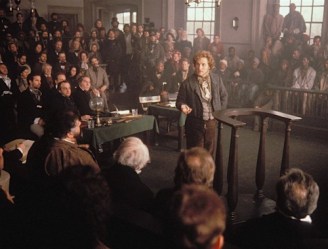 This can be said of Spielberg’s approach to the drama, too. Some of the courtroom stuff is suitably mired in legal technicalities and argument, but by film’s end it gets a little bit too… what’s the word? Not “preachy”. Not “sentimental”, exactly, though it’s born of that old criticism of Spielberg. “Melodramatic” may be on the money, though. It doesn’t help that everything reaches a climax — not only narratively, but also in the way it’s written, shot, acted, and scored — only for it to be revealed that it’s just the end of act two. Okay, that’s the truth of what happened (or near enough, for the purposes of this dramatisation), and by adapting it in that way it emulates the emotions the characters experienced; but from the audience’s perspective, you feel like you’ve reached the end… only to be served up another half-hour of movie. And it’s a long film too, so you feel that. It gets by because it’s fundamentally a good film, with strong performances and technical merits, but it’s a little bumpy for a bit.
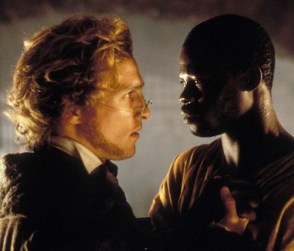 It’s easy to criticise Amistad, because Spielberg makes the production of very good movies look effortless, so the missteps stand out all the more. The story of La Amistad and its ‘cargo’ is a powerful one, and Spielberg has — naturally — turned it into a good film; but by remixing history to over-egg the message, it loses a little something. A valiant effort, but a film like
  100Films.co.uk