
 The second release in Warner Premiere’s series of direct-to-video DC Universe Animated Original Movies (which now stretches to 24 titles and counting) is adapted from writer and artist Darwyn Cooke’s acclaimed comic book miniseries DC: The New Frontier, which sees Golden Age heroes (Superman, Batman, Wonder Woman) meeting Silver Age heroes (the Flash, Green Lantern) for the first time in the 1950s.
With so many characters (those are just the tip of the iceberg), Justice League: The New Frontier has a many-pronged narrative to squeeze into its brisk hour-and-ten-minutes running time. The connecting tissue is an unknown entity that has decided to destroy all life on Earth, which eventually will lead all of the various characters to come together to combat it. Other than that, I’m not even going to attempt to summarise the story because there’s so darn much going on. Uncommonly, it spends a lot of time focused on the likes of Hal Jordan (David Boreanaz) and the Martian Manhunter (Miguel Ferrer) rather than the usual big names.
Frankly, there are too many characters, and the film doesn’t always seem to know what to do with all of them. The array of cameos in minor roles is fine, and sure to please thoroughly-versed comic book readers, but it’s the main characters who are sometimes sidelined. In some cases, literally: Wonder Woman disappears off to her island after two scenes; the Flash retires early on; Superman gets sunk in the ocean at the start of the climax. The plot feels underdeveloped too. There are snippets of Batman investigating the entity, for instance, but before he can really learn anything the thing just attacks, so his storyline was needless. Maybe Cooke’s original graphic novel had more time for all of this. If some things have had to be sacrificed to streamline the tale into a 70-minute movie, then it wouldn’t be uncommon for these DC animations. I’ve not read the book so I don’t know. 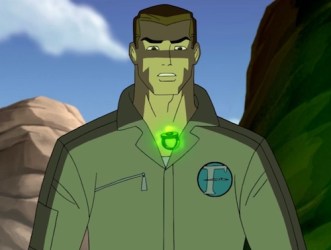 However, there are definitely bits that could’ve been sacrificed or abridged further (the Flash’s two early action sequences, for instance) to make more room to tell the story in full.
On the bright side, a period-set superhero movie makes a nice change; and it just gets on with it, rather than feeling the need to explain itself with alternate worlds or time travel or any such BS. It has the confidence to start with many of the heroes already in play, rather than worry about giving each one a full-blown origin story or something. At one point I thought it might manage to pull off something akin to Watchmen, but in the ’50s and with recognisable DC heroes. Such a comparison might be a kindness too far. There are some good concepts here, but the execution pootles out as it goes along. At times it feels a bit like a pilot episode, as if they were somehow expecting to spin a TV series out of it — for all I know maybe they were — but the problem with pilot episodes is that they are, by definition, unresolved. The New Frontier has a climax that wraps up the immediate threat, but it also feels like it was laying character and supporting cast groundwork for something longer-running.
On technical merits, the art design is… variable. At times it appears to have been inspired by Cooke’s awesome style, which is both pleasing in itself and marks a nice spot of variety from these animations’ norm, but at other points the style reverts to simplistic “Saturday morning cartoon” familiarity. Disappointingly, the actual animation is always of that level. Warner have definitely put out worse examples in this range (Superman vs The Elite), but they’ve also done much better (Batman: The Dark Knight Returns).
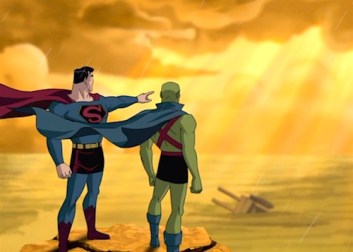 I really wanted to like The New Frontier, for all sorts of reasons. It does start well, with moments of promise sparkling here and there, but the longer it spends juggling so many balls, the fewer it can keep flying smoothly. (Do balls “fly” when juggled? Anyway, you get my point.) Considered as a whole, the overall result is fairly disappointing.

* The New Frontier has never had a disc release in the UK (or a theatrical one, naturally), so has never been classified by the BBFC (I thought you needed that for streaming or download nowadays, but turns out it’s optional). Amazon choose to list it as a PG, but the US’s PG-13, aka a 12, seems nearer the mark (depending how much you care about cartoon violence and blood, anyway). ^
 2015 Academy Awards
 I started the week by reviewing
 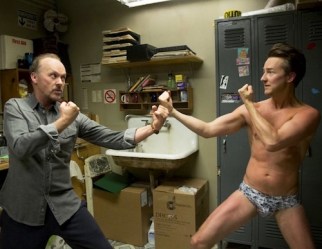 In part this is thanks to Keaton, who gives quite an immersive performance as the numbed, self-deluded star. Some people were very much behind him for the Best Actor gong, but I think it found its rightful home: Eddie Redmayne’s performance
  Famously, almost the entire film takes place in a single take. A fake one, of course. Well, I say of course —
 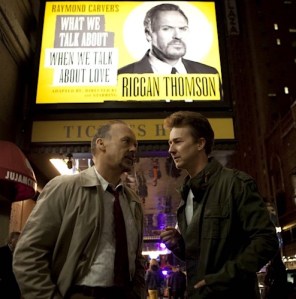 Birdman is an entertaining film, both funny enough to keep the spirits up and dramatic enough to feel there’s some depth there. It’s also a mightily impressive feat of technical moviemaking, but then I do love a long single take (even a fake one). Is it the Best Picture of 2014? Well, from the nominees, it’s not the funniest (
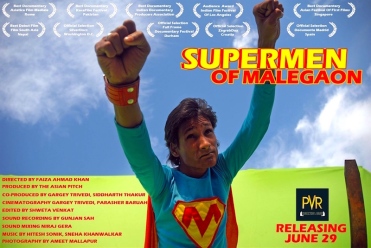 In the impoverished Indian town of Malegaon, everyone either works on the power looms and is paid a pittance, or is unemployed and so has even less; apart from the women, who are squirrelled away out of sight at home. The population is 75% Muslim, the remainder Hindu, and that leads to tension. Outside of work, there is nothing to do for entertainment… except go to the movies. And Malegaon loves the movies.
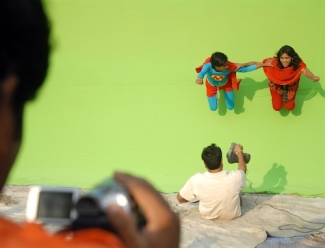 Supermen of Malegaon is the making-of story of Nasir’s most ambitious production to date. Having seen the use of greenscreen in one of those behind-the-scenes outtakes, he realised he could use the process to make a special effects movie — specifically, to make Superman fly to Malegaon. This documentary follows the trials and tribulations of Nasir and his band of hobby filmmakers through their film’s writing, planning, and its sometimes troubled shoot, until it’s completed. In the process, we meet some genuine characters, learn something of the unique lifestyle of Malegaon itself, and maybe even learn something about ourselves too.
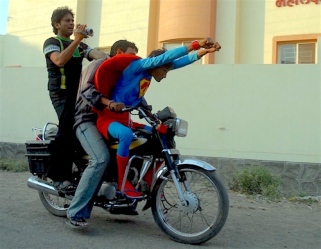
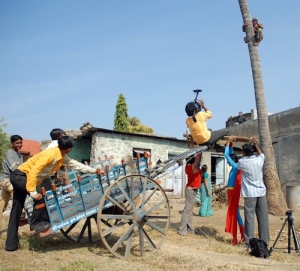 Even if it doesn’t, the situation in ‘Mollywood’ is an interesting one. This is a cottage industry: everyone involved has day jobs, funding the movies out of their own pocket, or by borrowing cash, or with favours, or by selling in-film adverts to local businesses — yes, that’s right, product placement, not that anyone involved would know that term. Women from Malegaon cannot appear in or work on the films due to local attitudes, so actresses are hired from nearby villages; the screenplay is written and shooting schedule arranged so that the actress only needs to be involved for the minimum number of days, to save money. Bicycles and motorbikes are used to create tracking shots; the director gets a piggyback for a high angle, or is raised and lowered on the arm of a cart to create a crane shot. The ingenuity and inventiveness of these literally-self-taught moviemakers is astonishing.
 which he turns down because he could make four whole films for that much money. Even that little is scraped together. Mollywood moviemaking isn’t a money spinner, it’s a hobby. Still, one of the writers wants to make it as a proper writer; wants to go to Bombay and do it as his career. This has been his aim for 15 years, he says, and Bombay is no closer.
 It’s an incredible, one-of-a-kind film; more powerful and life-affirming than it perhaps has any right to be. But then the filmmakers of Malegaon don’t really care about such things. They make movies because they want to, whether they ‘should’ or not; they make them better than you might expect; and it enriches their lives. Their story may do the same for you. In my opinion, it’s an essential film; a true must-see.
 Jon Schnepp’s widely-reviewed documentary about the batshit-crazy Nic Cage-starring Tim Burton-directed Superman movie that almost happened in 1999. If all you’ve seen are the photos of a stoned-looking Cage in a light-up abomination of a Superman costume that leaked onto the internet a few years ago, prepare to be amazed. Indeed, those infamous photos and footage are an aberration that this documentary explains.
 There seem to be an increasing number of “making-of documentaries about films that didn’t get made”, to the extent where it’s almost turning into a sub-genre. The highly-praised
  The kids’ phenomenon of the ’80s/’90s has never quite gone away, and this film is one thing that kept it ticking over in the ’00s. I watched out of nostalgia, which may’ve been a mistake.
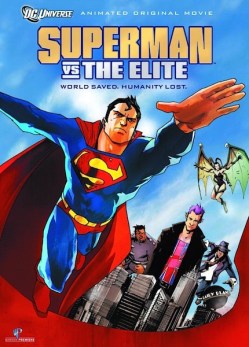 Adapted from acclaimed comic book story What’s So Funny About Truth, Justice & the American Way?, this DC animated movie sees the methods and morals of Superman (George Newbern) being questioned by the public and authorities alike when a super-villain escapes for the umpteenth time and kills more innocent bystanders. In the incident’s wake, a new super-powered team emerges — the titular Elite, led by Manchester Black (Robin Atkin Downes) — and their preparedness to execute criminals is met with great popularity around the world. How much humanity is humanity willing to sacrifice in the pursuit of conflict resolution? Are Superman’s high morals a thing of the past?
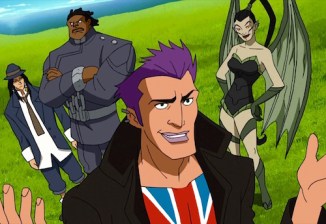 I assumed they were being faithful to a comic that hails from the ’80s, but it was actually published in 2001. It’s like Brit Pop never happened.
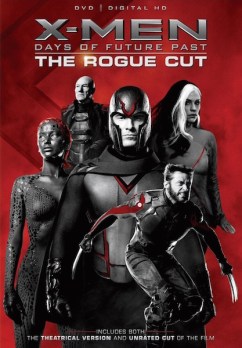 One of the big stories in the run-up to this fifth X-Men film’s release last year (my previous review is
 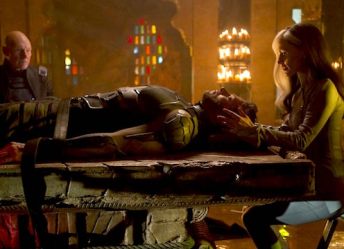 (though the theatrical cut only has 40 chapters, so I’m not entirely sure how that pans out). Most must be teeny extensions, however, and I look forward to
 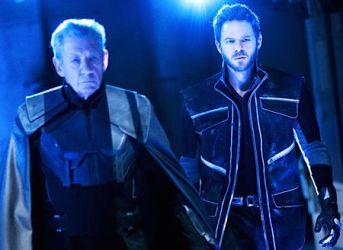 The Rogue Cut is worth seeing for anyone who enjoyed the theatrical version — and, in terms of a copy to own, the Blu-ray comes with both cuts and more special features (though it loses all the extras from the first release, including a few more deleted scenes) — but, unless you’re a huge fan of Rogue or Iceman, it’s not essential.
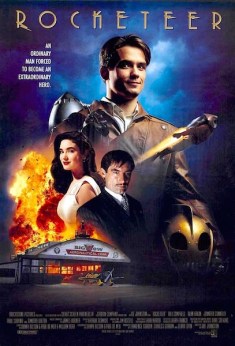 Based on an ’80s-created superhero modelled on the matinee serials of the ’30s and ’40s, The Rocketeer sets its scene in 1938, when stunt pilot Cliff Secord (Billy Campbell) winds up in possession of an experimental rocket pack. Initially donning it as part of the stunt show, when Cliff uses it to rescue another pilot he, a) attracts the attention of the hoods who originally stole it, and b) discovers his true calling as a hero, etc. Throw in a love interest (Jennifer Connelly) who’s a Hollywood extra with connections to the swashbuckling film star (Timothy Dalton) who’s really behind the theft, and you’ve got yourself an adventure!
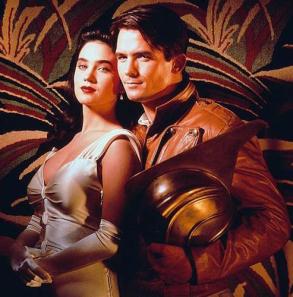 We all know effects alone do not make a good movie, but equally trying to make an effects-y movie when you can’t achieve said effects is a fool’s errand. Fortunately there’s some other derring-do to make up for it, and the climax atop a zeppelin isn’t at all bad.
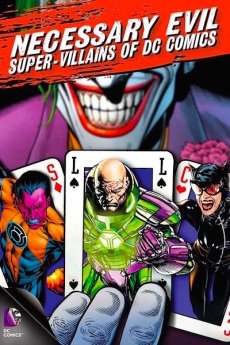 Christopher Lee narrates as a bunch of talking heads (writers, actors, psychologists) discuss the titular. The topics are quite universal — the psychological underpinnings apply not just to DC, not even just to comics, but to all fiction. Side effect: DC’s villains don’t always look so special.
 Will Smith is the eponymous drunken vagrant, who also has the powers of Superman, in this under-appreciated superhero comedy-drama. Hated by the public for the destruction he causes while ‘helping’, and wanted by the authorities for the same — though they can’t catch him because, you know, superpowers — he gets an image makeover when he saves wannabe entrepreneur Jason Bateman. Bateman’s wife, Charlize Theron, is less sure of Hancock’s merits.
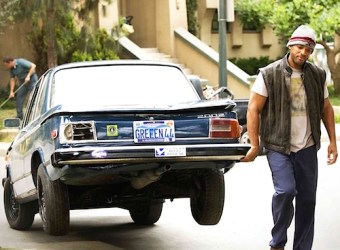 but it rubs against comedy stuff that feels like it’s from a Comedy. The extended cut includes an early sex/ejaculation joke/sequence that wasn’t in the theatrical cut because Berg thought it wasn’t funny and test audiences agreed. Goodness knows why it got put back, other than because of length — it accounts for over half of the extensions (more details
  Why indeed, because a) she’s not a supervillain, and b) even if she were, why get changed?! It’s a kind of bait-and-switch: she’s made to look like a villain because we think that’s what she’s about to be revealed as, and a big hero-vs-villain fight follows too… but she isn’t. It’s not quite up there with the magically-changing Batsuits of
  The film would work a lot better on the whole if the tone had been settled on as definitively as Smith’s performance, rather than trying to have its cake and eat it by mining both the “what if this were real?” and “haha, an unlikeable drunk superhero!” versions concurrently. For my money, however, if you treat Hancock as a fairly seriously-intended movie that was forced to contain more (half-arsed) action and (misjudged) comedy for the sake of box office, it’s not a bad experience at all.
 100Films.co.uk