
Sam Liu & Lauren Montgomery | 64 mins | Blu-ray | 1.78:1 | USA / English | 12 / PG-13
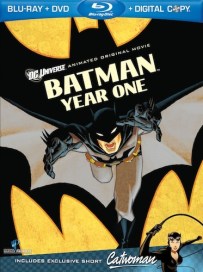 DC Comics’ latest direct-to-DVD animated movie is an adaptation of Frank Miller and David Mazzucchelli’s seminal 1987 Batman story, acclaimed as one of the greatest graphic novels of all time, and one of those that is often credited with helping the comic book medium grow up in the late ’80s.
The story concerns two men arriving in a sprawling metropolis that has become a rundown hive of criminal activity and police corruption. One a police officer, who sets out to be an honest force in a corrupt organisation; the other a billionaire who has trained himself to become a vigilante; both setting out to solve the city’s crime problem in their own way. They are, of course, Lieutenant James Gordon and Bruce Wayne, and the fact we know where this is going is incidental.
The film tells, quite literally, the story of Batman’s first year fighting crime — there are on-screen dates and everything. I say “quite literally”, but that’s not really true: Batman doesn’t turn up until a few months in. The plot description I’ve written above is actually a pretty decent variation of how the film pitches itself. Of course we know where it’s going, but it tries to make the emergence of the Batman concept more natural by treating it as if we don’t know. Because in the real world, dressing up in a cape and pretending you’re a bat is far from the first idea that springs to mind if you want to fight crime.
 As with the comic, this is a very down-to-Earth version of the Batman story. It’s even less sci-fi-y than Chris Nolan’s much-praised realistic films, in fact. There’s no Batmobile, no Batcave, no Bat signal, only a few gadgets (and those that are used are fully plausible), no cartoonish super-villains… This Gotham is a city where crime comes from gangsters, drug dealers, muggers and a thoroughly corrupt police force, and that’s what Batman sets out to fight. As in the Nolan films, the costumed foes will come later, a response to the Bat himself. It’s not afraid to take its time telling this story either. Especially at the start, the pace is very measured — there’s no rush to action or to Batman, but instead a slow build of character and drama. Some may see this as a flaw — those after a Batman Action Movie, largely — but it sets the tone for what is a more character-driven tale.
Top billing for the film goes to Breaking Bad’s Bryan Cranston, the voice of Jim Gordon. That might seem odd, but when you watch the film it becomes natural: there’s not just surprisingly little of Batman, there’s surprisingly little Bruce Wayne. It may concern the origin of Batman, but this is played as Gordon’s story; he’s the one who must face police corruption, a troubled marriage, personal threats, and hunt for the new vigilante stalking Gotham’s streets. Meanwhile, Bruce’s decision to adopt the Batman guise, plus his initial struggles to do it professionally, are conveyed in a couple of brief — albeit effective — scenes scattered throughout the film.
 Cranston, given easily the fullest character, gives the best performance too. Star of The O.C. and Southland, Ben McKenzie, was chosen to portray a 25-year-old Bruce Wayne in part due to his own youth. He’s fine when delivering dialogue, but his voiceover narration is oddly flat. Other ‘star’ name casting, like Battlestar Galactica’s Katee Sackoff or TV genre stalwart Eliza Dushku, only appear in small roles. Dushku makes for a surprisingly fitting Selina Kyle/Catwoman, considering the character design looks nothing like her. It’s a shame her story is such an aside — it would’ve been better to see some more of her and bring her up against Batman properly. Sackoff’s character, on the other hand, is just barely in it.
It’s been a good few years since I read the original comic, but it seems to me this was a pretty faithful adaptation — one of the reasons it’s shorter than the average DCU animated movie, in fact, is because they didn’t want to artificially draw out the story. This faithfulness certainly has its pros, but also cons. To put them succinctly, watching Year One can help you appreciate the work Christopher Nolan & company did expanding and rounding out the story when they more-or-less adapted it to make Batman Begins.
For those who’ve seen Begins but never read Year One, it’s not just the obvious “Bruce Wayne becomes Batman” plot that’s paralleled by Nolan’s work: there are numerous sequences, plot threads and themes that are taken almost verbatim from this telling of the story. These elements are integrated as one part of a different whole in that film, though — there’s nothing to do with Ra’s Al Ghul or the Scarecrow here.  Indeed, you can tell Nolan cherry-picked most of Year One’s best scenes for his version, because they’re generally speaking the ones that shine here too. (It makes me want to watch Begins again to see just how much of this made it in there.)
The other con of being so faithful is that, unfortunately, some of what kind of works on the page doesn’t necessarily in a standalone film. The birth of Catwoman is a subplot that doesn’t really go anywhere, for instance. It has potential to, but it’s never adequately developed and certainly isn’t resolved. The comic gets away with this a bit because you’re aware her later development and adventures were already told, or will be told later, but in a standalone film it could do with rounding off. Despite the obvious fact that the whole point of the story is to setup Batman for future tales, Year One does manage an ending. Obviously it’s not completely resolved — as with any superhero film — but it rounds out much of what it set in motion… mainly, again, on Gordon’s side of the story.
As a film in itself, the animation is beautifully fluid, in particular creating some excellent fight sequences. Of course there are times when the limited budget of a direct-to-DVD feature shows through — the streets are always very empty during car chases; occasionally we see static shots where there should be some movement, especially during dialogue — but all told there’s nothing to really criticise and much to like. Christopher Drake’s music also occasionally shines through. I confess to missing the work of Hans Zimmer and James Newton Howard, which is Batman’s musical soundscape for me now, but Drake sensibly doesn’t try to ape their style and instead makes his own work.
 Unfortunately Batman: Year One has arrived at the party a bit too late to be the definitive screen telling of Batman’s origin — by taking the best bits of Miller & Mazzucchelli’s tale and expanding it with some work of their own, Chris Nolan & friends take that title. But as a film in its own right, Year One is largely successful. Children (or childish fans) seeking animated Batman thrills may be disappointed by its slower pace and focus on character, because this is solid adult-focused entertainment.

Batman: Year One is released on DVD and Blu-ray in the US tomorrow, Tuesday 18th October, and on HMV-exclusive DVD in the UK on Friday 21st October.
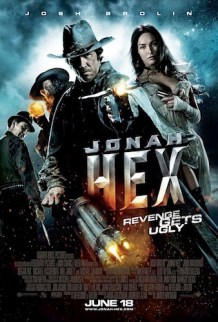 Jonah Hex is not a good film. Let’s just establish that, before I start being nice about it.
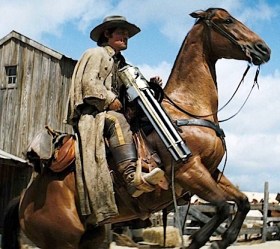 Much of the film rattles on in this way. And rattle it does: 73 minutes before credits. As blockbuster running times spiral out of control, such brevity is almost welcome. It doesn’t feel exceptionally short, mind, except for when the plot occasionally jumps forward.
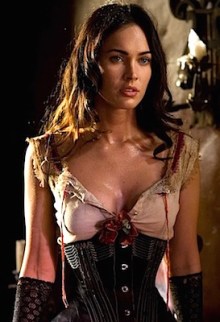 — usually improbably — or generally be a female. By “female” I mean “cleavage delivery device”. Considering her acting ability, her lack of presence is no real shame.
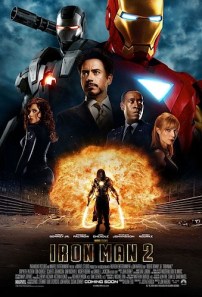 I’ve always contended that the first
  For starters, it relies on the story rather than the action. There are certainly some good sequences of the latter (more about those later), but there’s also a lot of story in between them — it’s not wall-to-wall explosions and punch-ups. Neither was the first, if you remember, and so it fits in that respect. It’s helped along by the ending of the first film, in which Tony Stark revealed he was Iron Man. That’s not something you do in superhero movies, which immediately lends this one a few new plot devices to play around with. Considering the burgeoning critical assessment that all superhero movies ever only tell the same two or three stories (an argument I think has a lot of validity), it’s nice to see anything to challenge the norm.
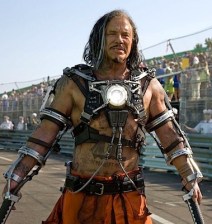 it’s the Penguin and whover-Christopher-Walken’s-character-was rather than Mr Freeze and Poison Ivy, if you will. They play to different sides of the hero: one is fighting Stark, one Iron Man (though there is naturally crossover); though they’re both intelligent, one functions as the brains and the other as the brawn. Mickey Rourke may go slightly underused, but it’s also part of the character, a quiet, thoughtful, intelligent hulk partnered with Sam Rockwell’s jabbering wannabe-Stark.
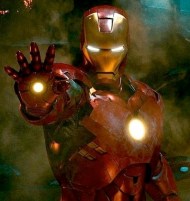 watched again later on Blu-ray, I enjoyed it a lot more. With Iron Man 2 I’m obviously distanced from trailers by a good year or so, and though one of their best moments is missing from the final cut, and the suitcase-suit is unavoidably spoilt by being so thoroughly screened during the promotion, watching now doesn’t have all the trailer-generated expectation to live up to. That famous Onion spoof about the first film’s trailer is, perhaps, even more applicable to the sequel.
 Aside from one unnecessary scene featuring Captain America’s shield and Agent Coulson leaving for New Mexico, and the fact that the film assumes everyone will know who Nick Fury is despite him being introduced fleetingly after the credits of the last film, the whole S.H.I.E.L.D./Avengers Initiative thing is worked into the plot well. If we didn’t know it was the beginning of the build-up to The Avengers, I think it would have sat much better with viewers. Even if it does end up blatantly laying the foundation for further stories, that’s hardly uncommon in franchise films of all kinds these days — at least we know this series will definitely pay it off, unlike so many franchise-wannabes that don’t make it past their first film. Plus, the film’s primary plot has its own villains and comes complete with a resolution; Fury, S.H.I.E.L.D. and co are a subplot that feed other subplots.
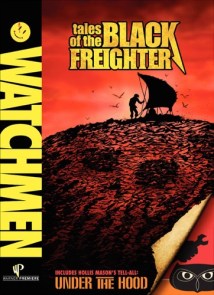 In the world of
  which could well have gone down a more modern-styled route.
 It’ll be interesting to see how it fits into the film when I finally get round to watching The Ultimate Cut — I already have some reservations waiting to be expressed in my review.
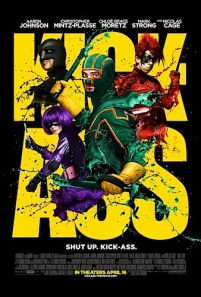 If you happen to remember my (first)
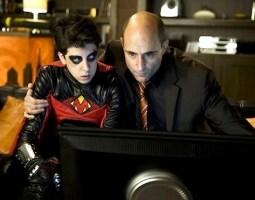
 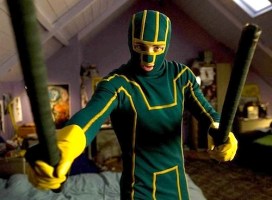 Elements and moments in this vein permeate the film: Nic Cage employing an Adam West Batman voice for Big Daddy; the black eyeliner required to complete his mask; the
  This, I suppose, could be seen as where it takes on
 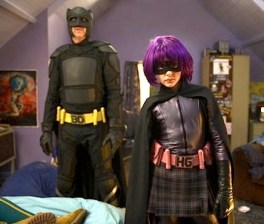 and the humour keeps rolling too — so the (arguably) topsy-turvy themes of the tale ultimately serve as a “downbeat good-for-nothing makes good” story arc.
 trying to lump himself in with those unfortunate souls who’ve suffered the emotional consequences of genuine internet bullying). I fall between the two camps on this one — that is to say, Tookey’s probably not a paedophile, but nor does the film set out to entice them. Vaughn said he cast Hit-Girl young to avoid sexualising her; if he’d cast a more physically developed 15-year-old, she would’ve been more suspect.
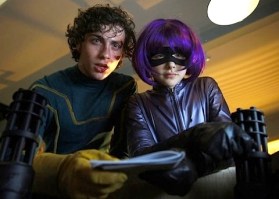 But, unlike their characters, they don’t tear it down with a baseball bat around the audiences’ head; by which I mean, they don’t spell it out in big idiot-friendly letters — “do you see why this is wrong? Do you see? Let me tell you again…” Instead, they let what occurs speak for itself. OK, the good guys do win in the end, and in a rather cool way — but would it be a more complete moral message if the grown man killed the little girl; if the hero got blown up by the bazooka? Perhaps it would; I don’t know; personally, I like it the way it is.
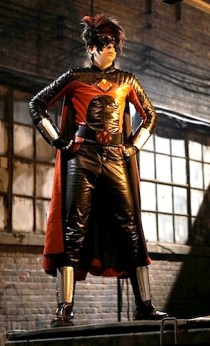 are deliberately extreme and provocative (but for a reason) — and the potential for audiences to misread the whole thing as “just cool”, and so have misread it themselves, as “just perverse”. I think that does the film a disservice.
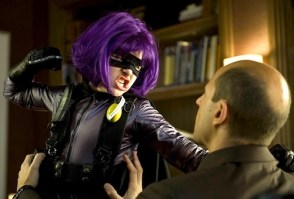 or be wary that every viewer might be a paedophile or violent psycho?
 I think that — along with
  bring back the dead and let you see a teeny bit into the future, shortly before some baddies explode in puffs of green smoke and some more baddies are revealed to have full-on superpowers. Where did these come from? No idea. The film offers no explanation, be it mutant gene or radioactive exposure or plain old training, instead just assuming viewers will accept that this is the real world… oh, but some people have these cool powers.
 here there might at least be a reason to keep watching, but the weak action is just icing on the cake of the clichéd story and bland characters. Director Rob Bowman claims he made an R-rated film which he was forced to cut to PG-13, the implication being that neutered the whole thing. Maybe that’s where all the action went, though on the evidence of what’s left I’m not sure I believe him.
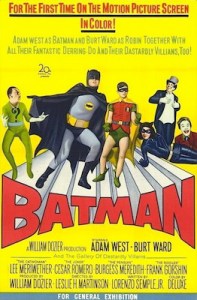 Having only recently subjected myself to the full horror of
 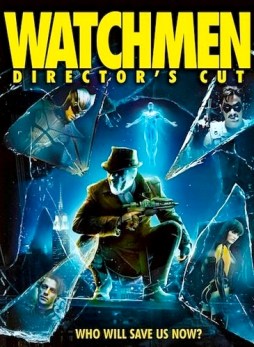 Hitting US Blu-ray so long ago that it’s shameful I haven’t watched it ’til now, and finally arriving in the UK next Monday, the Director’s Cut is Zack Snyder’s final vision of Watchmen: The Movie.
 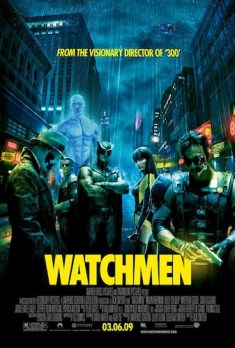 Watchmen didn’t flop. Let’s get that out of the way.
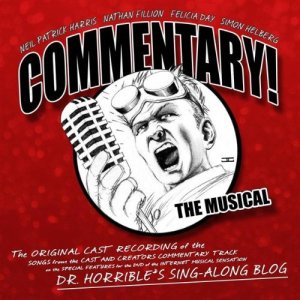 Commentary! The Musical falls somewhere between DVD extra, TV episode and short film. Whatever it should be classed as, it’s utter genius.
 100Films.co.uk