aka
Приключения Шерлока Холмса и доктора Ватсона: Собака Баскервилей
Priklyucheniya Sherloka Kholmsa i doktora Vatsona: Sobaka Baskerviley
The Adventures of Sherlock Holmes and Dr. Watson: The Hound of the Baskervilles
2015 #14
Igor Maslennikov | 146 mins | DVD | 4:3 | Soviet Union / Russian | PG
 Sherlock Holmes has appeared in more films than any other fictional character (yep, even those Marvel ones that are everywhere), which also means that Sir Arthur Conan Doyle’s Great Detective has been portrayed by a staggering number of actors. “Who’s the best?” debates usually settle around Basil Rathbone, Jeremy Brett and, these days, Benedict Cumberbatch, though there are ardent fans of Douglas Wilmer, Peter Cushing, Robert Downey Jr… I could go on. In certain rarified circles, however, the “Sherlockian’s Sherlock” is, believe it or not, a Russian: Vasily Livanov, who starred in five popular (in their homeland) Russian miniseries/TV movies between 1979 and 1986 that some regard as definitive adaptations. We even gave him an MBE for them in 2006, so I guess he’s state-recognised.
The most famous Holmes adventure of them all, The Hound of the Baskervilles, was the subject of the third series, a two-part feature-length adaptation. (So yes, technically it’s not a film, but it’s the length of a film and it’s ever-so filmicly made, so I’m counting it.) The story, if you don’t know it, sees Devon gent Sir Charles Baskerville dying and his Canadian heir, Henry Baskerville (Nikita Mikhalkov), coming to England to inherit the estate. However, Sir Charles’ physician, Dr Mortimer (Evgeny Steblov), fears the old chap was murdered, and that it’s somehow connected to an ancient legend of a dog-like beast that roams the moors and torments the Baskerville family. Who better to investigate such phenomenon, and the potential threat to the new Sir Baskerville’s life, than famed detective Sherlock Holmes and his trusty sidekick, Dr Watson.
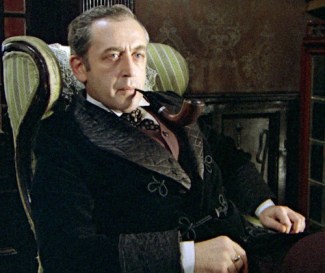 As many a Holmes fan will know, Baskervilles is not the best choice to get a handle on an actor’s interpretation of Holmes. Written by Doyle in the period after he’d killed Holmes off because he was tired of writing him, but before he later brought him back to life (as it were), presumably the author was still a bit bored with his creation, because Holmes disappears for a good chunk of the tale — in this adaptation, cited by many as the most faithful yet made, he’s in roughly the first and last half-hours, leaving a 72-minute stretch in the middle where he doesn’t appear at all. From what we do see of him, Livanov portrays a nicely understated Holmes. Clearly fiercely intelligent, but without the terseness of Cumberbatch’s version or the somewhat-jolly-hockey-sticks take of Rathbone. I’m compelled to get hold of the rest of the series to see what else he had to offer. (Sadly, only Baskervilles has reached UK DVD, but English-friendly imports are available. It’s also been released on Blu-ray, but I believe without English subtitles.)
The weight of the tale falls on Dr Watson, played here by Vitaly Solomin, who starred alongside Livanov in all his adventures. His is an excellent version of the character. Hopefully the Nigel Bruce-inspired image of Watson as a bumbling, useless sidekick has faded now, thanks to a couple of decades of strong interpretations from the likes of Edward Hardwicke, Ian Hart and Martin Freeman, but when this was produced it was presumably still de rigueur. Faithful to the original stories, however, Solomin’s Watson is highly competent; not expert at applying Holmes’ incredible deductive methodology, but nonetheless capable of maintaining an investigation in Holmes’ absence. Whatever Livanov’s merits, I’d happily watch the rest of the adaptations for Solomin’s Watson.
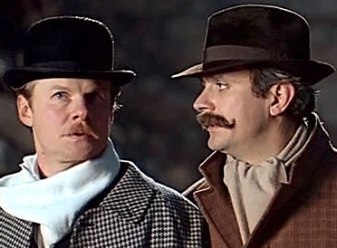 Several other cast members manage to be both faithful to the novel and different to how their characters are usually depicted on screen. For instance, Dr Mortimer is usually played as an older gent, but is quite young in the novel — this is a rare (the only?) instance of that being followed. It’s the first time I’ve seen him played as being a bit shifty and suspicious, too. It benefits the storytelling here, because there really aren’t many suspects — it’s abundantly clear whodunnit, even if you don’t know, because there are no other options! Perhaps most memorable from the supporting cast is “internationally acclaimed actor/director” Nikita Mikhalkov as Henry Baskerville. The role is usually played as young, handsome, keen and brave (in the Rathbone version, Richard Greene even gets top billing in the role, and his incarnation is at the centre of a played-up romantic subplot). Here, Henry is a little older, prone to drinking, readily amused in a larger-than-life fashion, frequently baffled by events, somewhat cowardly, and most often used for comic relief.
There’s certainly a stronger strand of humour than I recall from either the book or any previous adaptation (though I’ve not seen the Peter Cook/Dudley Moore comedy version, which one would hope is funnier), but it’s all texture with Sir Henry rather than a narrative driving force. It also plays down the supernatural or Gothic side of things, which other versions tend to ramp up — the Rathbone film and the 2002 BBC TV movie both insert a seance sequence, even, which works so well that I’d forgotten it wasn’t actually in the novel. It’s a good addition partly for the atmosphere, but also for playing up the sense of community amongst the small band of characters. Here, everyone feels very isolated and rarely seen — there are even scenes where they’re surprised to actually run into one another.  There’s more of an emphasis on people spying on each other suspiciously, which at least is rather appropriate to a murder mystery.
Indeed, I suppose this adaptation plays the story mostly as a detective mystery, if that’s not too obvious a thing to observe. Hound is far from the strongest mystery in the canon, mind, especially as presented here, with the the list of suspects seriously depleted by that absence of community. On the bright side, it makes up for it by having the ultimate revelation seem like proper detective work by Holmes. Normally the reveal hinges on him happening to spot a telling painting, an explanation that is implausible enough even without the element of happenstance. Here, the painting merely suggests a motive and a new line of enquiry to prove that theory. Nonetheless, the final summary contains a goodly number of “I don’t know, Watson”-type answers to dangling motivations/practicalities/etc. Anyone after a solid murder mystery, rather than a detective-led adventure, should look elsewhere.
The film itself is very well made. There’s some gorgeous cinematography by Dmitri Dolinin and Vladimir Ilyin; in particular, the cold morning on which Dr Mortimer examines Sir Charles’ body, mists drifting around some of the village houses, and anything on the moor in evening light, like when Watson finally finds Holmes. Also, just generally, it’s often very filmically shot — a shallow depth of field can pay dividends. The Russian city used as a double for Baker Street and its surroundings doesn’t look the least bit like Victorian London, though in fairness they’ve done their best to hide that, 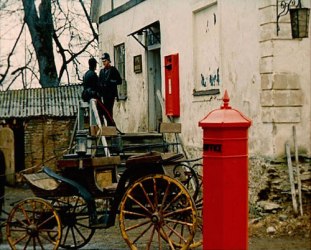 including scattering iconic red VR post boxes around willynilly. The Russian countryside probably doesn’t look very much like Dartmoor either, but its qualities work for the story: very desolate, barren, bare trees, waterlogged dirt tracks for roads, rubble strewn around, the buildings rundown… All very atmospheric for a Gothic horror-tinged mystery, and far superior to the picture-postcard look of some adaptations.
Sonically, Vladimir Dashkevich’s score is succinctly described as quirky, with a main theme that’s very pompously British (apparently based on a familiar piece from the BBC World Service, which the Russian audience would therefore immediately identify with Britishness), but graduating to some quite contemporary riff-y guitar stuff later on.
(Unfortunately, the UK DVD is a little messy. For all the lovely film-ness of much of the PQ, there’s occasionally some nasty video/digital artifacting. Similarly, the subtitles are mostly fine but with sporadic lapses. A few lines are missed, and homophonic substitutions abound: “here” for “hear” (several times), “stake” for “steak”, “to” for “too”, and the second vowel in “Sheldon” changes a few times to boot. Shame.)
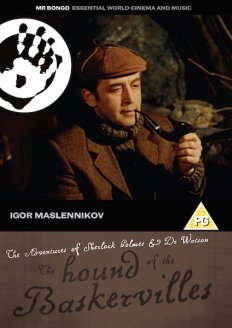 The Hound of the Baskervilles has been filmed far too many times (a quick search of IMDb throws up a couple of dozen versions, for starters), which makes it tricky for any version to stand out from the crowd. This one picks up bonus points for reportedly being the most faithful of them all, backing that up with some strong performances, atmospheric locations and classy direction by the series’ regular helmsman, Igor Maslennikov. It’s not perfect, but then I can’t think of an adaptation of Baskervilles I’ve seen that is. Is it the best Baskervilles? It depends what exactly you want in the mix, but I think you’d have to say it’s a contender.
This review is part of the Russia in Classic Film Blogathon. Be sure to check out the many other fantastic contributions collated by host Movies Silently.

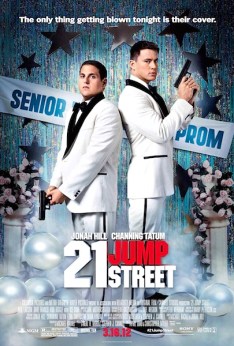 Having turned the unlikely-to-be-any-good story of a machine that makes it rain food into an entertaining and amusing movie, and the unlikely-to-be-any-good concept of a LEGO-centred film into an entertaining and amusing movie, is it any wonder that directors Phil Lord and Chris Miller also turned the unlikely-to-be-any-good premise of Channing Tatum and Jonah Hill starring in a remake of a forgotten ’80s teen TV series about police officers who go undercover in a high school to find drug dealers into an entertaining and amusing movie?
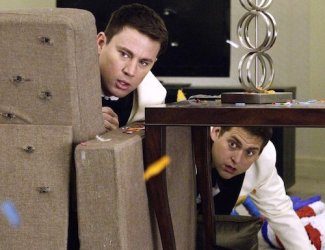 this leaves Hill hanging out with the cool kids — and being lured down the path of parties and their shallower friendship — while Tatum falls in with a gang of ultra-nerdy nerds and starts actually learning stuff. Distilled like that makes it sound pat, but in the film it works; in part because they don’t overplay the clichéd “friends fall out irretrievably… until it’s retrieved for the final act” story arc.
 Adapted from one of Agatha Christie’s best-regarded novels (now commonly known by its US title, And Then There Were None), Ten Little Indians sees a group of ten people invited to a remote location (in the book, an island; here, an alpine hotel) by a mysterious host, who doesn’t appear but does accuse them all of murder via a recorded message. Then, stranded, they begin to die one by one.
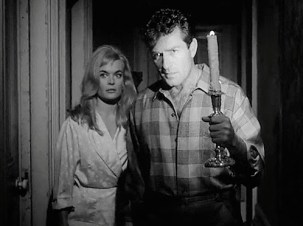 voiceover informs us this is our chance to have a guess. Ah, the ’60s.
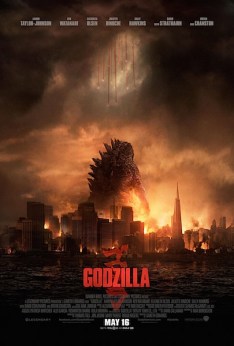 The second attempt at a US re-imagining of Godzilla received mixed reviews last summer, though there can be little doubt that it’s much more successful than the first,
  He’s denying us shots of it not to punish the viewer or to trick us, but literally to tease us, to build excitement and suspense and desire for the final battle. Too many people aren’t used to this — modern blockbusters have trained them for non-stop show-us-all-you’ve-got action from start to finish — and that’s a shame, and their loss, because Edwards’ method is superior to, and ultimately more entertaining than, 95% of other similar blockbusters.
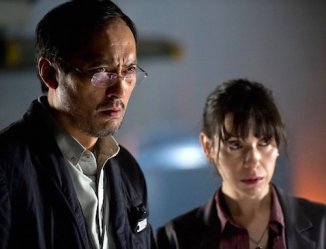 that simply aren’t present in the functional dialogue they have to work with, simply in the way they stand, the way they look at things… It’s not the focus of the film, it’ll pass many people by (indeed, it has), but I think there are some fine performances here. Not awards-winning ones, obviously, but in the hands of lesser actors, they would’ve been so much poorer.
 later, he slips quietly into the bay). Maybe, maybe not, but they always look big — more importantly, they feel big. There are various reasons for this, including Edwards’ shot choices: we often see them from a human perspective on the ground; when we do see wider shots, they’re from suitably far away, or high up, like a helicopter shot (if it were real…) Too many directors shoot their giant monsters with angles and perspectives as if they’re human-sized, which makes them come across as human-sized even when there’s a building next to them, never mind when they’re in places without reference points (coughatsea,PacifcRimcough). Edwards never does this, and it pays off. More than once I regretted that I can never be bothered to go to the cinema any more, because I bet this looked stunning on the big screen (I know I’m certainly
  most present big-budget summer tentpoles. That it got a little lost and under-appreciated in a summer of mega-hits is a real shame — it may not quite match summer 2014’s high points of
 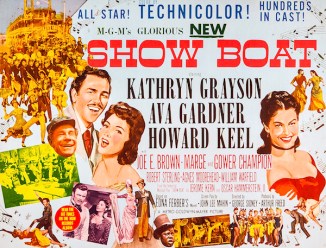 You’d be forgiven for thinking MGM want people to forget this movie even exists: it was dumped on US DVD back in 2000, it’s never had a UK disc release, and a long-rumoured special edition has never emerged. That’s a shame, because there’s a good-quality musical tucked away here.
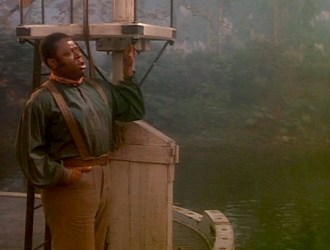 a bit fatalistic for a bright little musical about two people falling in love on a show boat? No, it’s just an indication of where things are going — into darkness, as modern parlance would have it, because from here on out everything goes to pot. To detail the ins and outs would be to spoil the narrative, but much of the film is more tragedy than cheesy Hollywood musical.
 Perhaps it isn’t a film to ease back with on a Sunday afternoon, but not every old film or musical needs to be. If you can get past the opening, Show Boat offers a tough, emotional, perhaps even challenging, view of the world that marks it out as a film deserving of some rediscovery. Can we have that special edition now, please?
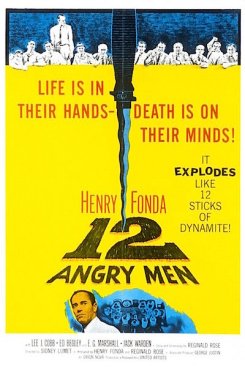 Twelve people sit around in two rooms and talk for an hour and a half in more or less real time — sounds like a recipe for dull pretension, and yet 12 Angry Men is anything but. In fact, it’s probably one of the most gripping thrillers ever made.
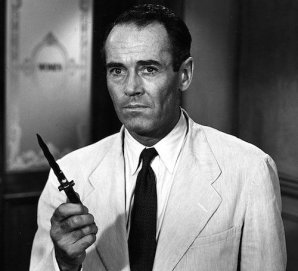 Slowly, steadily, surely, Fonda’s juror leads a recap of the evidence, analysing it, picking it apart, challenging presumptions and suppositions. Gradually, other jury members begin to be won over. This could be trite — of course our hero has to start convincing the others — but this is where the writing and cast shine again, because even men who seemed unswayable have their minds changed in a plausible fashion. Even then, the outcome rarely seems certain, each victory hard won, so that the film holds you rapt, desperate for sense and reason to prevail. There are moments of tension which may literally push you to the edge of your seat; moments of exultant success which may elicit an exclamation of approval similar to a point scored in a sports match.
 For all that 12 Angry Men seems to show justice being served in the face of adversity, what it actually shows is justice being served thanks to blind luck: if Juror Eight had been a weaker-willed man, or another who was just as prejudiced as his eleven compatriots, then the debate would never have occurred, the teenager condemned to death in the blink of an eye. What are the odds on every jury room containing a Henry Fonda? I don’t fancy them myself.
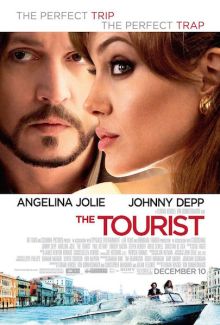 Much maligned on its release, I thought The Tourist was actually a decently entertaining light thriller.
 Released the same year as
  Even with the undercurrents of grief and the difficulties of moving on, this is fundamentally a light, amiable romance.
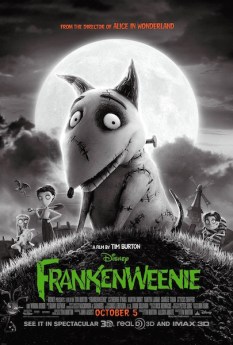 Inspired by two of Burton’s early-’80s shorts (which are most commonly found on
  Some say it doesn’t have enough of an edge. Well, maybe; but I thought it was surprisingly dark in places. Not so considering it’s a Tim Burton film based on resurrecting the dead, but for a Disney-branded animation, yes. Those edgier bits are here and there rather than consistent, but still, I’m not sure what those critics were expecting from a PG-rated Disney animation. I guess there’s an argument that Burton should have pushed it further and aimed for an adult audience, but can you imagine an American studio agreeing to finance an animation primarily targeted at anyone who’s entered their teens? Because I can’t.
 Based on a radio serial that spawned film serials, a famous TV series, and, eventually, comic books, The Green Hornet is a ‘superhero’ saga with a difference. For one thing, technically he’s just a vigilante — no superpowers here — and for another, as noted, it didn’t originate as a comic book. But that’s the milieu the character slots into these days, and so this attempted revival plays in that ballpark.
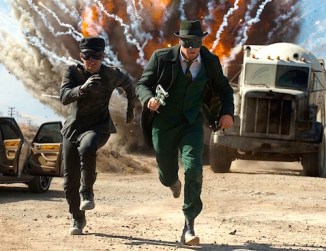 Well, screw them — The Green Hornet is brilliant. If you’re after the po-faced angsty worthiness of
 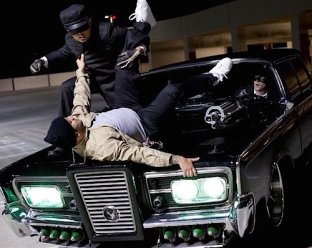 Then there’s Gondry’s direction, which is often as idiosyncratic as you’d expect. He’s at his peak during the action sequences, which explode in an array of effects and slow-motion to create multiple memorably unique fights and chases. Highlights are the first time Kato unveils his martial arts prowess, and the crazy car-driven climax. Chou and the tricked-out car, Black Beauty, are undoubtedly the stars of these bits — indeed, the film has an overall good line in making Kato the brains behind the operation. I imagine this is subverting the depiction of the Asian sidekick from previous versions, considering when they were made, but as I’ve never seen any I can’t comment fairly.
 100Films.co.uk