
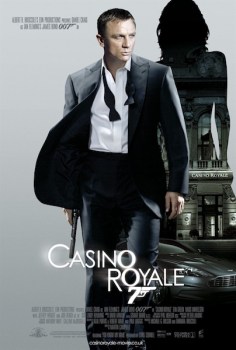
Every legend has its beginning.
Country: UK, USA, Czech Republic & Germany
Language: English
Runtime: 144 minutes
BBFC: 12A (cut, 2006) | 15 (uncut, 2012)
MPAA: PG-13 (cut)

Original Release: 14th November 2006 (Kuwait)
UK Release: 16th November 2006
US Release: 17th November 2006
First Seen: cinema, 16th November 2006
Stars
Daniel Craig (Layer Cake, The Girl with the Dragon Tattoo)
Eva Green (The Dreamers, Sin City: A Dame to Kill For)
Mads Mikkelsen (Valhalla Rising, The Hunt)
Judi Dench (Iris, Philomena)
Jeffrey Wright (Shaft, The Hunger Games: Catching Fire)
Director
Martin Campbell (GoldenEye, Green Lantern)
Screenwriters
Paul Haggis (Crash, The Next Three Days)
Neal Purvis (Die Another Day, Johnny English)
Robert Wade (Stoned, Skyfall)
Based on
Casino Royale, the first James Bond novel by Ian Fleming.
The Story
British agent James Bond, newly promoted to exclusive double-oh status, investigates a terrorist plot that leads him to Le Chiffre. Banker to the world’s terrorists, Le Chiffre has managed to lose a lot of his clients’ money, and intends to win it back in a high-stakes poker game at the eponymous establishment. Bond is charged with joining the game and bankrupting the banker, with treasury employee Vesper Lynd along to keep an eye on the money and off Bond’s perfectly-formed arse.
Our Hero
“James before he was Bond,” as the awful US tagline went. Daniel Craig instantly disproved the not-that-numerous-but-certainly-vocal critics (remember all the “Bond isn’t blond” rubbish?) by being perhaps the most convincing actually-is-a-highly-trained-agent Bond since Connery.
Our Villain
Le Chiffre, a total banker. Fond of poker, bleeds from his eye, brilliantly played by Mads Mikkelsen, who has deservedly gone on to many other things, no doubt some wholly due to this.
Best Supporting Character
Eva Green is Vesper Lynd, a woman so remarkable that Bond names his personal Martini recipe after her. He also falls in love with her. Considering the rest of the Bond canon, that’s not likely to end well.
Memorable Quote
“I’m afraid your friend Mathis is really… my friend Mathis.” — Le Chiffre
Memorable Scene
At dinner on the train to Montenegro, Bond meets Vesper for the first time. They verbally size each other up. She wins. “How was your lamb?” “Skewered. One sympathises.”
Write the Theme Tune…
Easily the best Bond theme of the Craig era (though I like the QoS one more than most, and my main objection to Adele’s is that it’s about a flying baby horse and its receptacle for bread waste), You Know My Name was co-written by the series’ regular composer since the mid ’90s, David Arnold. That meant he could integrate the tune into his score, which was a Good Thing.
Sing the Theme Tune…
Far removed from Bond’s Bassey-imitating default style, the slightly gravelly sound of Soundgarden’s Chris Cornell (the first male vocalist on a Bond theme for nearly 20 years) helped indicate the series’ harder, manlier new direction.
Technical Wizardry
After four films of honing the Maurice Binder “naked silhouettes” style, title designer Daniel Kleinman cuts loose with an array of inventive playing card-based imagery. The most original Bond title sequence since at least Thunderball and, by being so atypical, the most unique of them all.
Truly Special Effect
Chasing after a kidnapped Vesper in the middle of the night, Bond suddenly sees her in his headlights, tied up in the middle of the road. He swerves, his Aston Martin crashes, and barrel rolls… seven times. The stunt team set a world record with that, which (despite Fury Road’s best efforts) is still unbeaten a decade later.
Making of
James Ferguson, a doctor from Aberdeen, came up with the idea for the scene in which Bond is poisoned and then remotely diagnosed by experts at MI6 HQ in London. Ferguson, a Bond fan, was retained as medical adviser for future Bond films.
Previously on…
Casino Royale was adapted for TV in 1954, starring the great Peter Lorre as Le Chiffre, and its title (and little else) was used for the awful 1967 Bond spoof. This version is the 21st in the canonical James Bond film series, and the first time that series has performed a reboot: the film opens with Bond attaining his famed double-oh status, something we’ve never seen before.
Next time…
Daniel Craig’s second outing, the somewhat misunderstood and underrated Quantum of Solace, was the first direct sequel in the Bond canon, picking up on various plot threads from Casino Royale and even resolving a few of them. After Craig’s third, Skyfall, went off on its own, last year’s Spectre tried to tie together the entirety of Craig’s era, with mixed success. Beyond that, James Bond will return indefinitely, though Craig may not.
Awards
1 BAFTA (Sound)
8 BAFTA nominations (British Film, Actor (Daniel Craig), Adapted Screenplay, Music, Cinematography, Editing, Production Design, Visual Effects)
1 Saturn Award (Action/Adventure/Thriller Film)
4 Saturn nominations (Actor (Daniel Craig), Supporting Actress (Eva Green), Writing, Music)
2 World Stunt Awards (Best High Work, Best Stunt Coordination and/or 2nd Unit Director)
1 World Stunt Awards nomination (Best Fight)
What the Critics Said
“I never thought I would see a Bond movie where I cared, actually cared, about the people. But I care about Bond, and about Vesper Lynd, even though I know that (here it comes) a Martini Vesper is shaken, not stirred. Vesper Lynd, however, is definitely stirring, as she was in Bertolucci’s wonderful The Dreamers. Sometimes shaken, too. Vesper and James have a shower scene that answers, at last, why nobody in a Bond movie ever seems to have any real emotions.” — Roger Ebert
 Score:
 95%
95%What the Public Say
“While there is very much a dramatic and sensitive undercurrent to this Bond film, Casino Royale doesn’t shortchange the audience on action. From Bond chasing a skilled free runner enemy to a brutal staircase battle, Casino Royale delivers a harsher and bleaker sense of violence that had been missing from some of the predecessors and not seen since Timothy Dalton’s dark turn in Licence to Kill.” — vinnieh

Elsewhere on 100 Films…
Just before Quantum of Solace was released in 2008, I wrote that Casino Royale was “a damn fine Bond film, returning to Fleming and resetting the character without losing anything truly essential about the franchise. […] this one’s up there with the very best, not just of Bond but of action-spy-thrillers in general.”
In the early ’00s, it didn’t feel like the Bond series was in need of a reboot. Die Another Day had been a huge hit at the box office and gone down pretty well with critics (no, really, it did), and Brosnan was all set to do a fifth (though, considering his age, likely final) film as Britain’s top secret agent. Then Bourne happened, shifting the playing field of the spy-action genre, at the same time as Bond’s producers finally regained the rights to Fleming’s very first Bond novel. For the first time in the series’ 40-year history, they decided to reboot.
What Casino Royale does skilfully is acknowledge the changes brought by Bourne, but adapt them to Bond’s slightly more classical style (something Quantum of Solace fumbled). At the same time, it acknowledges and frequently subverts that Bond formula (“Shaken or stirred?” “Do I look like I give a damn.”), the antithesis of DAD’s uber-referentiality. In itself, it took Fleming’s relatively slight novel, with its lack of action by modern blockbuster standards, and expanded and modernised it effectively to fit current tastes. The result is arguably the best Bond movie ever made.

#19 will be… the last days of the human race.
 Well now, hasn’t this been a long time coming? Just over two years since its western disc release was first announced, just over three years since it debuted in Japanese cinemas, and just over four-and-a-half years since
  Change, and the embracing or rejection of it, is surely one of the major themes of Evangelion. This is more explicitly debated as 3.33 moves into its middle section, where we get an extended dose of Shinji’s traditional insecurities. Hey, it wouldn’t be Evangelion without Shinji having a self-pitying whinge, right? Fortunately there’s more going on than that, but this is a section light on action and heavy on the series’ more thoughtful elements. There are answers to some of the mysteries, but it again wouldn’t be Evangelion if it all made easy sense. At the same time, Shinji bonds with new Eva pilot Kaworu. A controversial character, apparently, and not just because of the homosexual overtones (which some reviewers claim to miss, presumably because they’re blind), but the scenes where they harmonise by playing piano together are quite fantastically animated.
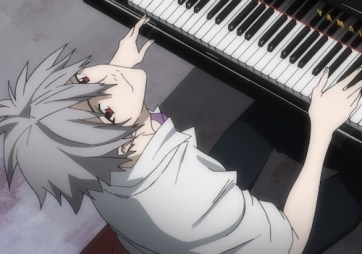 3.33 divides quite neatly into three half-hour sections. I guess that should be expected, as the whole tetralogy has been based in traditional Japanese ideas of narrative/musical structure, hence the films’ Japanese titles incorporating the names for the three movements: jo, ha, and kyū (序破急), which roughly equate to “beginning”, “middle”, and “end”. As discussed, the first is fantastic, some of the best material in the entire series, in my estimation. Also as discussed, the second is a lot slower, but has its plus points too. The third… ah, the third. Here we get some more action, which will please anyone who thrills to Eva combat, but it is also utterly mind-boggling. I’ve been reading up on a few fan sites since watching, and I’m still not absolutely sure what was going on or what it signified. You won’t find any enlightenment in the disc’s special features, which present a long list of extras at first glance, but turn out to be 19 repetitive trailers, TV spots, and promo reels. Yes, nineteen.
 So when will that conclusion come? Well, a few years ago Anno ‘joked’ that the finale might be released “four to six years” after 3.33. As we’re already almost at four years with no sign of a release date, I guess it wasn’t so much of a ‘joke’ after all. An English-friendly DVD/Blu-ray will inevitably take an additional couple of years, too. So an indefinite, but undoubtedly lengthy, wait begins…


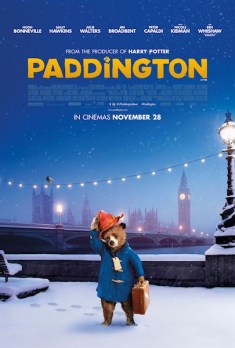 The signs weren’t good for Paddington as it geared up for release: its star voice actor, Colin Firth, pulled out late in production; on posters, the CGI lead character looked like the personification of the uncanny valley; and the BBFC rating that cited “sex references” made it sound like it had entirely the wrong tone for an adaptation of a beloved classic children’s book. But these portents were quickly consigned to history when the film received an adulatory response from critics and audiences alike.
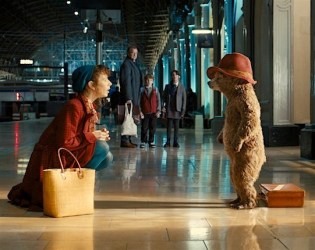 The rest of the cast are all very safe pairs of hands, meaning viewers can rest easy that, if there is a weak link, it won’t come from the performances. This is further cemented by supporting turns from the likes of (in order of appearance) Geoffrey Palmer, Imelda Staunton, Michael Gambon, Matt Lucas, Peter Capaldi, and Jim Broadbent, plus a host of faces viewers may recognise from British TV comedy.
 Hated by Americans and loved (well, ok, “liked”) by everyone else (well, ok, “by lots, but by no means all, of people who reside outside America”), Disney’s attempt to pull a
  I know some people complain about simplistic stories that are used to just string action sequences together, and that’s a perfectly valid thing to get annoyed about, but The Lone Ranger swings to the other extreme and uses an over-complicated story to string together its action sequences. All it actually needs is a little streamlining, because the film is allowed to swing off into too many sideplots. This makes the middle of the film a slog, and you feel every minute of its excessive two-and-a-half-hour running time.
 a recurring problem for Disney at the minute. To be frank, I’m not convinced anyone made a truly concerted effort to stem the overspend. When a gaggle of CG rabbits hopped on screen, all I could think was, “who allowed this?!” You’ve got a massively over-budgeted film that the studio want cut back, and one reason for that is CG bunnies that have almost no bearing on anything whatsoever! The amount of time and effort that must’ve gone into creating those fairly-realistic rabbits for such a short amount of screen time… it cost millions, surely. Millions that could’ve been saved with a simple snip during the writing stage if only someone had said, “well, those bunnies don’t add anything and they’ll be bloody expensive, so let’s lose them.”
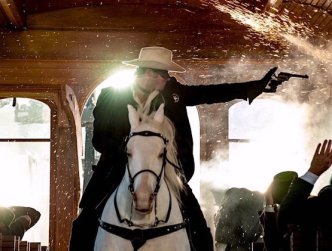 I’m not quite as effusive as Hughes, but The Lone Ranger is worth the time of anyone who enjoys an action-adventure blockbuster. It’s a three-star adventure-comedy bookended by a pair of five-star railroad action sequences, which make the trudge through the film’s middle hour-or-so feel worthwhile. There was a better movie to be made here — one that was half-an-hour shorter, more focused, and probably several tens of millions of dollars cheaper to make — but that doesn’t mean the one we got is meritless.
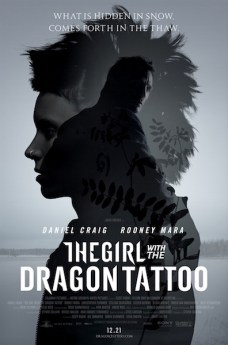 Stieg Larsson’s much-hyped novel comes to the screen for the second time in David Fincher’s much-hyped English-language re-adaptation. Somewhere between the pre-release build-up (do you remember the fuss over the trailer’s release? And all those magazine covers and articles?) and now, something clearly went awry: its UK TV premiere back in March was buried mid-week on ITV2.
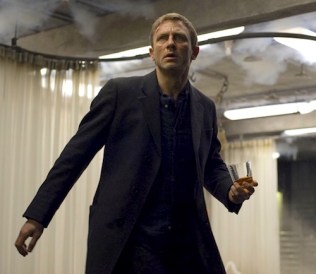 There are certainly changes, but nothing especially major. For example, the ending has been tweaked — not “completely changed”, as some reports had it, but just streamlined slightly. Some will struggle to even remember the difference if their experience of a previous version was long enough ago. Die hard fans, however, seem to regard it as a massive re-visioning of events. It isn’t.
 in particular, it’s beautifully shot, and there’s a vein of interest to be mined in discussing the fact it was consciously made using a five-act (as opposed to the usual three-act) structure (but not here today, sorry) — it feels unable to innovate or hone the genre in quite the way Se7en or
 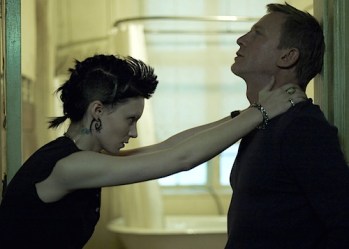 So my rating may come as a bit of a surprise given the focus of this review, which is primarily my fault for finding it so tough to shrug off all those contexts and comparisons. But hey, that’s something the film itself struggles with in many people’s eyes, too. If the viewer can divorce it from those ties, however, I think it’s still an exceptionally good thriller.
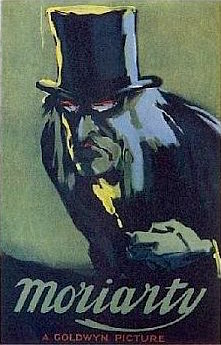 American actor William Gillette was the most iconic portrayer of Sherlock Holmes on stage, penning his own play (with permission from Conan Doyle) that he performed 1,300 times between 1899 and 1923. It was
 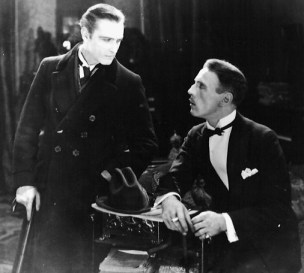 Yes, shades of 1985’s
 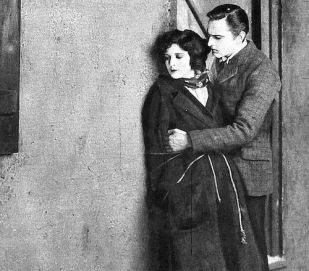 and in many respects they led to the abundance of crime-solving fiction that fills bookstores and TV schedules to this day, but there’s a reason most of Conan Doyle’s stories are prefixed with “The Adventure of” rather than “The Fiendishly Difficult to Solve Mystery of”.
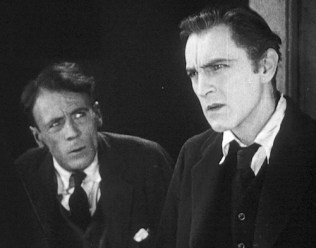 Barrymore makes for a solid, if perhaps unremarkable, Holmes. He has the right look for the role, and makes good use of the same staring-contemplatively-into-the-distance furrowed-brow expression that Basil Rathbone would employ a couple of decades later. He has down the precociousness of student Holmes, which develops into a kind of righteousness when older. He’s not as stand-offish and borderline unlikeable as some interpretations of the character, nor as affable as others. As I say, he sits in the middle, doing nothing wrong but not getting a chance to mark himself out either.
 He crops up in the years-later narrative too, used by Holmes to go undercover in the house where Alice is being held hostage by some of Moriarty’s many villainous associates. A major part of Holmes’ plan hinges on him turning up at these villains’ house, telling them what to do, and them obeying him. That this method succeeds is not due to Holmes’ considerable skill, but more due to the screenwriters’ lack of it.
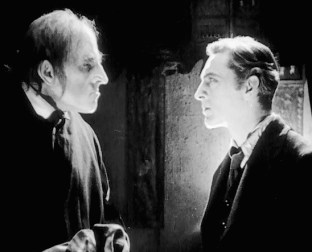 hardly seems worth such devotion except on a purely academic level.” He goes on to say that “it must be one of the blandest misuses of potentially exciting material ever,” that “it literally has no highlights,” that it “has no pictorial style of its own,” that Barrymore “clearly lends his profile to Holmes, and not much more,” that “if it is a major find, it is also a major disappointment.” Ooh, burn. (The
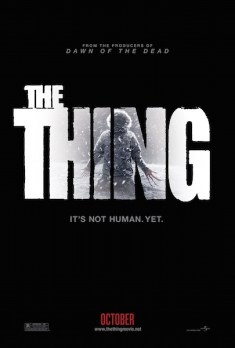 At some point during the process of remaking John Carpenter’s seminal 1982 sci-fi/horror
  Of course, it isn’t as good. There are many reasons for this, one of which is the fact that, because they haven’t just remade the other film, every homage/rip-off they come up with is inferior. So the blood testing scene from the ’82 film is replaced by shining a torch in someone’s mouth to see if they have fillings. God help you if you’ve taken care of your dental hygiene. The climax is typically overblown — this isn’t a spoiler, I’m preparing you if you’ve not seen it: the survivors venture into the alien’s spacecraft to stop it taking off. Some people get a kick out of getting to see inside the ship, and I suppose you could say that at least the remake-makers are trying to offer something new. Unfortunately, new is exactly what it’s not. The Thing is a bizarre creature, growing and morphing and warping in disgusting ways — what strange kind of spaceship would it call home? A bog-standard metal-corridors kind of one, apparently. The lack of imagination is staggering.
 The other element the making-of material is keen to underline is just how much effort was put in to make sure this ties back to its predecessor. Essentially, they looked at what was revealed about the Norwegian base in Carpenter’s film and used that to reverse engineer the events that had to occur in this film. However, the final result could’ve made some of these connections more explicit. For example, we don’t see when the guy who slit his throat performs that act. The moment is actually included among the disc’s deleted scenes, but why did they cut it?! The movie’s final scene, which directly links the two films, is intercut with the end credits — why?! It comes across as apologetic, like they’d rather it wasn’t there but feel it has to be. Either put the scene in the film proper, or put it as an after-credits easter egg for die hard fans; the halfway-house used in the final cut is just messy. If someone’s argument was, “casual viewers will find those linking scenes meaningless”, then watch your own movie! The helicopter being away for refuelling is referenced earlier in the film; Joel Edgerton’s character says they didn’t kill Lars but never says what they did do with him; and the last time we see Colin he’s alive (until a single shot of his frozen corpse, that is). To put it another way: they’ve done a bang-up job of making those things matter within the film itself, as well as in the context of linking up to the ’82 film, so why were they deleted or included only as an embarrassed afterthought?
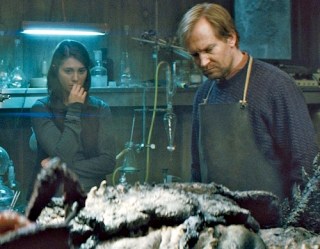 Or maybe they wouldn’t, because The Thing 2011 is a lesser film than the original. It does still offer some suitably gross effects work, albeit lessened by it being obvious CGI rather than gruesomely physical constructions, but there are still some resultantly tense sequences. Heck, it’s the first film in I-don’t-know-how-long that actually made me jump, once. Some viewers complain that there’s no “who might be an alien?”-type tension because the characters aren’t well-drawn enough, but I had that problem with Carpenter’s film too.
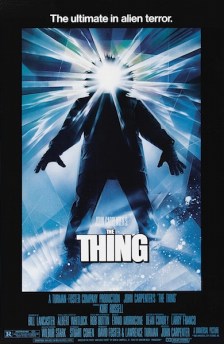 It’s just an ordinary day at the US Antarctic research base staffed by helicopter pilot MacReady (Kurt Russell) and his compatriots, until a helicopter buzzes overhead dropping grenades on a dog it’s pursued across the ice fields. The dog finds sanctuary in the US base; the helicopter and its crew are less fortunate. Realising it’s from a Norwegian facility an hour’s flight away, MacReady and the doctor brave inclement conditions to investigate. They find numerous corpses and the base burnt to ruins. What horrors befell the Norwegian base? And have they inadvertently brought them into their own…?
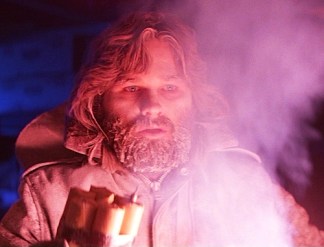 Even if you don’t want to get deep about it, The Thing has the “who’s human?” thrills to keep you engaged on that level. Accusations of boredom no doubt stem from the fact it’s a bit of a slow burn, the early acts building suspicion and unease as MacReady and co investigate. Even after the true nature of the threat is revealed, Carpenter paces himself, though the frequency of incidents begins to mount inexorably as we head towards the climax. Well, that’s just good structure.
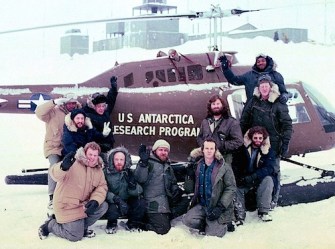 For me, it’s the psychological quandaries that are gripping and exciting, rather than any enjoyed disgust at the emetic special effects. However, knowing the characters a little better — thus caring if they’d been replaced or not, and also perhaps allowing us a chance to try to guess for ourselves — would have just made it that bit superior.
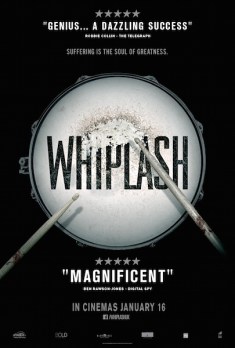 Mr Fantastic dates Supergirl and is taught the drums by J. Jonah Jameson in writer-director Damien Chazelle’s Oscar-winning music drama.
 Simmons’ Oscar is well earnt as the unpredictable Fletcher. If you’ve seen clips and trailers you might imagine it’s a fairly one-note turn, the Angry Teacher who possibly reveals a Heart Of Gold either just in time for the third act or at the very end. But no, there’s more to it than that, and Simmons negotiates every facet and nuance with the expertise of an experienced character actor. Commendations to both Chazelle and Simmons for wrong-footing me on what was actually going on with him more than once.
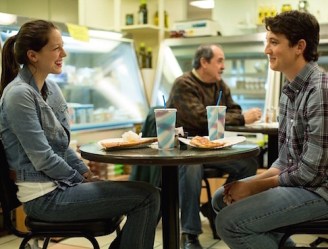 That thread could do with a boost in the middle, to give their relationship a little more weight when we reach the decisions Andrew must make about it later on. (Personally, I’d choose Melissa Benoist over J.K. Simmons any day, but I don’t think that’s the point…) The same could be said of Andrew’s relationship with his father (Paul Reiser), though that’s actually given more screen time and is consequently more impactful.
 100Films.co.uk