2014 #135
Joe Lynch | 86 mins | Blu-ray | 2.40:1 | USA / English | 15 / R
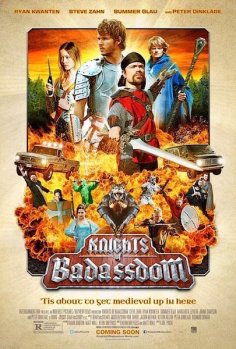 After being dumped by his long-time girlfriend, Joe (True Blood’s Ryan Kwanten) is persuaded to join his friends Eric (Treme’s Steve Zahn) and Hung (Game of Thrones’ Peter Dinklage) for a weekend of fantasy LARPing — that’s Live-Action Role-Playing to you and me. But things soon go south when it turns out Eric has accidentally released a real demon onto the world, and it’s up to these wannabe-warriors — along with gamemaster Ronnie (serial guest star Jimmi Simpson), ‘warlock’ Landon (Community’s Danny Pudi), believes-it’s-real Gunther (Brett Gipson), and his cousin Gwen (Firefly’s Summer Glau) — to save everyone.
Knights of Badassdom is perhaps best known for its behind-the-scenes wrangles, which saw it taken out of director Joe Lynch’s hands and re-edited in a way he wasn’t happy with. Having been shot in 2010, and gaining some anticipation in certain circles online thanks to funny clips/trailers and general hype, by the time the edited version was released Stateside in early 2014, reception was poor. A lot of this was put down to it still not being Lynch’s cut, but I disagree for two reasons: one, I thought this version was good fun; and two, based on what I’ve read, I’m not convinced Lynch’s preferred cut would help any of the elements that might need helping.
The film as it stands is primarily a comedy. I mean, of course it is — it’s about a bunch of people who spend their weekends dressed up as knights, wizards, orcs and the like, running around in the woods pretending to fight each other with rubber swords and ‘magic’. Whether the film is respectful to this group or taking the piss out of them is a matter of perspective, as I’ve read reviews that firmly assert both sides. Generally, it seems to be people involved in LARPing who think it’s fine, and those who aren’t who think it’s being insulting, which suggests they do have a sense of humour about their inherently daft pastime. 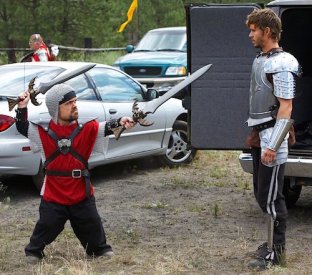 It’s a fine line to tread, and it seems to me that Knights of Badassdom manages it well. You get a sense of why people choose to do this and the fun that it can be — indeed, the final epic battle between the two factions of LARPers, complete with grand pre-fight speeches from each army’s general, and an awesome surprise, is kinda cool. Equally, the film doesn’t hold back from riffing off the sillier aspects of LARPing, including the rules of combat.
The flipside to this is the ‘real’ supernatural element: the unleashed demon that wreaks havoc, murdering innocent LARPers and eventually intruding on the aforementioned battle. This, it would seem, is where most of the cuts to Lynch’s vision have occurred. He’s a horror director, by both form and intent, and while some incredibly gruesome sights remain (a jaw is ripped off in unexpected and graphic fashion) this is apparently the element most reduced from the director’s cut. Personally, I’m fine with that. As my previous comment should imply, there’s already more than enough of it — literally, because much time in the middle of the film is wasted on the physical manifestation of the demon wandering around the woods and killing people. There’s no plot to that bit, just multiple setups for gory demises. Maybe Lynch’s version linked these better, but the impression I’ve got from interviews with him is he wants to put more gore back in.
Gorehounds are, naturally, excited for this; but as I see it, Knights of Badassdom is a comedy horror, a genre in which the emphasis falls firmly on the comedy side. There’s room for blood and guts in there, especially when used to humorous effect, but it’s not about the visceral thrills of seeing someone eviscerated — 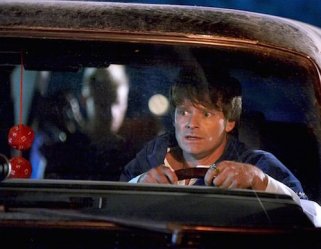 if that’s your bag, there are plenty of films to cater for it; is a comedy about role-players really the occasion? There are elements of the film that could do with tightening up — the beginning is a little slow, as well as the issues with the middle, and towards the climax it’s sporadically jumpy in a way that makes it clear something has been excised — but just adding gore is not what this film needs to improve it.
On the bright side, the gore is at least well-realised, with a commitment to using physical effects. I’ve read several reviews that criticise this side of the film, and I just can’t understand it. There is some weak CGI, but considering the budget of the movie it’s not too bad, and it’s barely featured anyway. Besides, it’s mostly used to depict a portal to hell — how do you know a real-life portal to hell doesn’t look like cheap CGI? The practical effects are all very good, including a final form for the demon that’s a man in a suit. OK, it doesn’t look real… because it’s a bloody hell demon and those things aren’t bloody real, are they! Honestly, I don’t know what people expect from special effects sometimes — it’s not like most of the effects in $250m movies actually look real, they just look better. But I digress.
According to the most recent interview with Lynch that I’ve found, this version of Badassdom has actually sold and rented pretty well, and the distributors (who aren’t the same people who messed with his cut — it got sold on at some point) have been in touch about possibly releasing his cut. At some point we may get to find out the truth of the matter, then, but I rather suspect those who were expecting a tighter, funnier movie may be disappointed, even if those who just want more blood may be satiated.
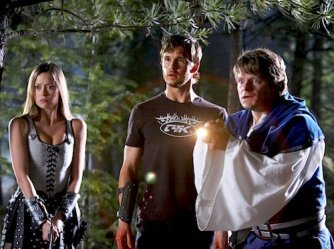 As it stands, Knights of Badassdom is an entertaining way to spend just under 90 minutes. A more restrained approach might yield a tighter movie, one that could be funnier by percentage (the trailer remains popular, and you don’t get more condensed than that), but I think it’s still well enough constructed to keep genre-minded viewers entertained.
The current cut of Knights of Badassdom finally makes its way to UK DVD today, and will be on Sky Movies from Friday 27th February.

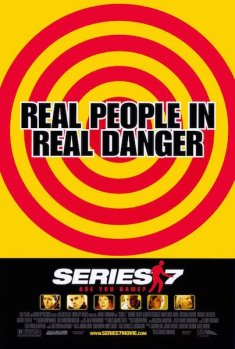 The debut of director Daniel Minahan — who’s since helmed episodes of over a dozen TV shows, including HBO hits Six Feet Under and Game of Thrones — is, ironically, styled as a faux TV programme. Another entry in the Battle Royale, etc. subgenre, it sees six randomly-selected people forced by law to participate in a kill-or-be-killed reality TV contest.

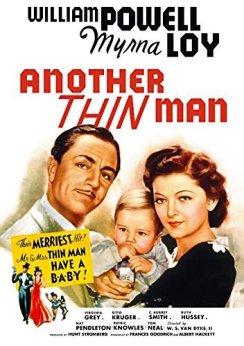 Husband-and-wife detective duo Nick and Nora Charles (William Powell and Myrna Loy) — now with a baby in tow — are once again coerced into investigating a crime when the manager of Nora’s estate fears a dismissed employee is plotting murder.
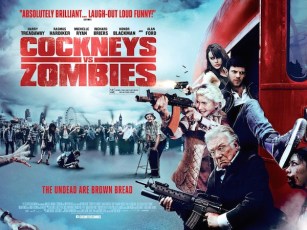 Screenwriter James Moran doesn’t like it when people compare Cockneys vs Zombies to
  And why is their imagination so stunted that they can’t accept them anyway?
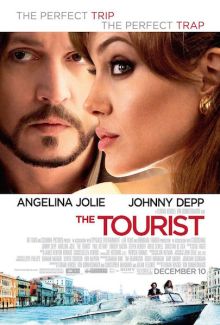 Much maligned on its release, I thought The Tourist was actually a decently entertaining light thriller.
 An unnamed woman (Martina Gedeck) goes to stay with some friends at their lodge in the Alps. The friends pop into town, leaving their dog behind with the woman. When she wakes up the next morning, they’ve not returned, and she finds an invisible wall surrounding the mountain. Exploring its boundaries, she sees people outside, paused mid-life, as if frozen. As hours turn into days turn into weeks, she begins to realise the need to fend for herself, farming the land and caring for her animals, which come to also include a cow and a cat. As weeks turn into years, she comes to accept her new life, from which it seems there may be no end…
 The Wall starts out with a compelling mysterious premise, but seems to have no interest in exploring it or answering the many questions it raises. In some respects that’s better than the kinds of rote explanation offered by lesser films — you know, “Aliens did it. Why? Because.” — but it’s a bit like a joke without a punchline. Taking the setup as a mere excuse for an exploration of the human condition, I don’t know that it’s that illuminating. Either way, it makes for a sporadically interesting but ultimately unsatisfying experience.
 25 years before Jennifer Lawrence had to
 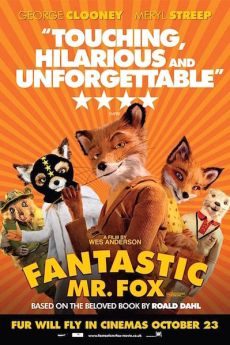 Quirky cult-y director Wes Anderson tries his hand at stop motion animation with this Roald Dahl adaptation, in which an all-star cast voice the tribulations of a gaggle of talking animals — led by the eponymous vulpine — who come into conflict with three vicious farmers.
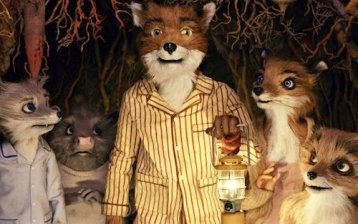 Compositionally, I thought I’d get sick of the squared-off 2D style, but Anderson’s cleverer than that. It might look flat and lacking in dimension at first, but that’s the starting point for variation, including some great bits of depth (farmer Bean trashing a caravan is a particular highlight of this), and when it breaks form (like a rabid dog chase) it’s all the more effective. There’s also a fantastic score by Alexandre Desplat. Not your usual plinky-plonky Quirky Kids’ Movie music (though there are instances of that), but something more raucous. Nice spaghetti Western riffs, too.
 Fantastic Mr. Fox is the kind of film I feel I may enjoy more on a re-watch. Indeed, some comments on film social networking sites (e.g.
  You know the kind of people who wait ages and ages for something and really want it and pre-order it or whatever and then when it finally arrives they… add it to a pile and don’t get round to watching/reading/listening to it for even longer than the ‘forever’ they were waiting in the first place? If you don’t, you do now — that’s me.
 To be precise, Panahi’s ban is from filmmaking, writing screenplays, leaving the country, or giving interviews, so they conclude that reading aloud an existing screenplay while someone else films him doesn’t contravene any of those rules. Nonetheless, the edited (not-a-)film was smuggled out of Iran on a USB stick hidden in a cake in time for its Cannes premiere.
 In fact, despite the singular input and focus put into this ‘project’, it could be used quite successfully as part of an argument against auteur theory. But that isn’t what it sets out to do either.
 questions that are always worth asking about purported documentaries.
 By 1947, Hergé’s boy reporter/adventurer Tintin had already been around and increasingly popular for nearly two decades; had survived World War 2 and the controversy of being published in a Nazi-controlled newspaper; and the release of his adventures had recently been transferred to a dedicated magazine, Le Journal de Tintin. What better time to bring the character to the big screen?
 In
In 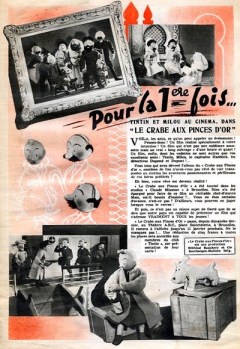 makes it look as if he’s permanently shocked by everything.
 100Films.co.uk