
Stanley Kubrick | 137 mins | Blu-ray | 1.66:1 | UK & USA / English | 18 / R
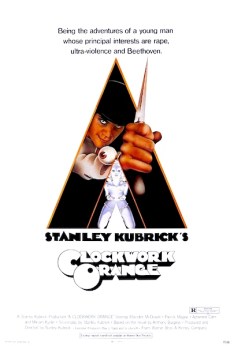 Yet more dystopian sci-fi! Who doesn’t love some dystopian sci-fi? Here we’re in the ’70s, though (makes a change from the ’80s), with writer-director Stanley Kubrick adapting Anthony Burgess’ novel into a film so controversially violent the director himself eventually banned it from release in the UK for decades. Almost 45 years on, it’s testament to the film’s power that it is still in parts shocking.
Set in a glum future Britain, the film follows eloquent juvenile delinquent Alex (Malcolm McDowell), whose violent acts eventually catch up with him when he’s imprisoned. Being the cocky little so-and-so that he is, he manages to get himself on a programme for rehabilitation and release… though that may not be all it’s cracked up to be.
The first half-hour or so of A Clockwork Orange is brilliant. I think there’s a reason this is the part that the majority of clips used when discussing the movie are lifted from, and it’s not just to do with spoilers: here is where the best imagery, and the most potent examinations of violence and the male group psyche, are to be found. It’s shocking and uncomfortable at times, funny and almost attractive at others (hence the perceived need for the ‘ban’), but the cumulative effect is precise and striking.
However, everything from Alex’s admission to prison onwards could do with tightening, in my view. It may be sacrilege to say this, but I think the film would benefit from having a good 15 to 20 minutes chopped out. All the prison bureaucracy stuff is funny, but is it relevant? “Relevance” isn’t the only deciding factor about what goes into a film, of course, but I feel like we’ve seen plenty of red-tape spoofing elsewhere. Maybe that’s just an 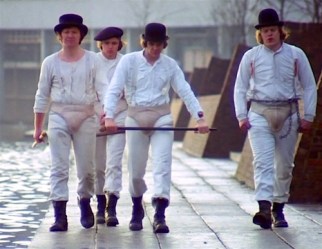 unfortunate byproduct of the film’s age. Other parts just go on a bit too long for my taste — there’s barely a sequence after Alex’s arrest that I didn’t feel would benefit from getting a wriggle on. I don’t think this is me bringing a youth-of-today “everything must be fast cut” perspective to the film, I just found it needlessly languorous at times. Maybe I was missing a point.
McDowell’s performance is fantastic throughout. I’ve seen Alex referred to as a villain (not often, but by at least one person), which strikes me (and, I’m sure, many others) as remarkably reductionist and point-missing. He’s not a hero, certainly — a mistake I think some critics of the film made, in part because the use of voiceover invites us to identify with him, and I guess anyone other than the hero having a voiceover narration was fairly new 45 years ago (feel free to correct me on that point). But he’s not a villain, especially when he comes up against the terrifying forces of the establishment. McDowell’s performance, and Kubrick/Burgess’ storytelling, is thankfully more complex than that.
That continues right through to the ending, which is quite different in the novel and film — though I say this as someone who’s not read the book, so apologies if this is off base. Reportedly Burgess ends with Alex moving away from violence of his own free will, primarily because he’s grown up and grown out of it; the point basically being that all young men go through a violent phase (even if Alex’s is extreme) and then grow out of it.  Kubrick ends on a much more ambiguous note… so ambiguous, I’m not really sure what it’s saying… or even what all the ambiguities actually are…
A Clockwork Orange remains a striking film, and not just because of the ultra-violence. It’s at its best early on, with the remainder not always working for me, but it’s a fascinating experience nonetheless.

A Clockwork Orange was viewed as part of my What Do You Mean You Haven’t Seen…? 2015 project, which you can read more about here.
This review is part of the 100 Films Advent Calendar 2015. Read more here.
 This neo-noir revenge drama with a twist has received such acclaim from critics and bloggers alike that it’s practically set up to fail.
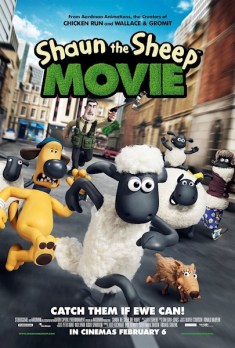 Shaun the Sheep started life in the 1995 Wallace & Gromit short
  (that US PG is thanks to a couple of oh-so-rude fart jokes), but there’s a sophistication to the way that simplicity is handled that adults can enjoy. There are also references and in-jokes for the grown-ups; not hidden dirty jokes that’ll put you in the awkward position of having to explain to the kids why you were laughing, but neat puns (note the towns that the Big City is twinned with) and references to other films (like
 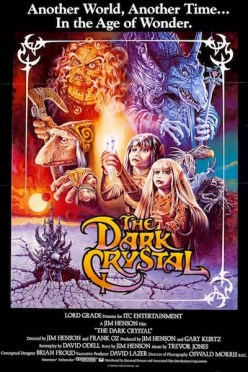 High-fantasy adventure about some elves trying to stop a crystal from destroying their planet.
 Essie Davis is best known for playing the sassy title role in
 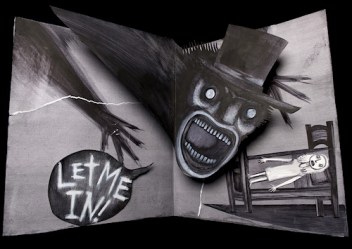 a horror film for people who think about what they’re watching, rather than just waiting for something to be thrown at the screen to make them jump. The slow burn tension will bore those content with the latter, who I suspect don’t tend to think a great deal (for one thing, they’d spot most of the jumps coming if they did).
 There is little in The Babadook that will make you jump, and even less that will make your stomach turn in disgust, but that’s absolutely fine. What it will do is chill your blood, make your hair stand on end, make you worry about every little creak or thump you hear elsewhere in the house after dark, and make you want to sleep with the lights on. Not just the bedroom lights, all the lights. Because once you’ve seen it, you can’t get rid of the Babadook.
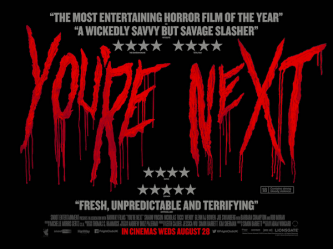 From the makers of
 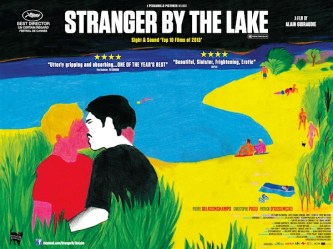 Iiiiiit’s the arthouse gay sex thriller!
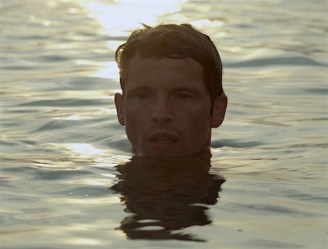 In this regard it has a very particular speed and style — even if there was a version without copious full-frontal male nudity and explicit sex, it still wouldn’t be for everyone. It helps to evoke both a certain time and place (lazy summer days on holiday) and a particular lifestyle (that of gay cruising — which, much to the (presumably straight) policeman’s bafflement, continues virtually unabated even after one of their number is murdered in unexplained circumstances). This is further emphasised by the gorgeous cinematography. Claire Mathon apparently shot it using only natural light, and it looks fantastic — understated (this isn’t a heavily-graded hyper-real kind of beauty), but sumptuous.
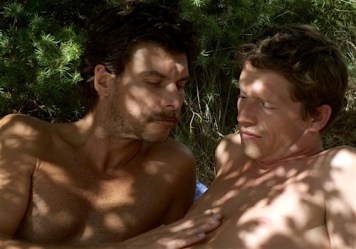 The style is supported by strong performances. I suppose some would say “brave”, by which they’d mean “they’re naked a lot and having gay sex”… so, I mean, maybe it is brave, but, still, that’d be a euphemistic description. What I mean is that they’re strong because they’re calm, understated, realistic, and believable without tipping over into amateurish. You feel Franck’s complex mix of fear and excitement, his lust overpowering common sense; there’s a certain timidity, maybe even naïvety, present in his eyes. Conversely, his lover Michel is unreadable; a closed book, where you never know what he’s thinking, feeling… plotting. Franck’s new friend Henri is similarly tricky to get an accurate handle on, but he’s the yin to Michel’s yang (or vice versa). He’s not plotting, he just is. Or maybe he was plotting all along…?
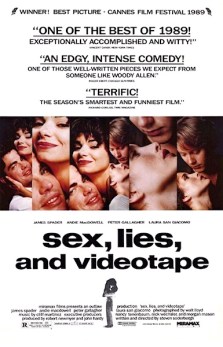 Four acquaintances partake in duplicitous relationships and candid sexual discourse in writer-director Steven Soderbergh’s debut drama.
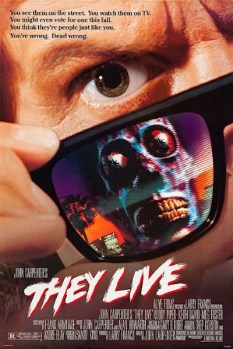 Sci-fi parable about aliens controlling us via subliminal advertising.
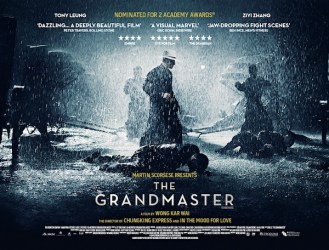 As a Western viewer, if you know anything about Ip Man beyond “he’s the chap who trained Bruce Lee”, it’s probably thanks to the
  It helps that it’s gorgeously shot. Ultra-crisp blue-black rain-soaked night time duels; rich golden hues in pre-occupation Foshan; cold bright-white snowy landscapes; a train platform fight that’s almost sepia-like. Between the photography and the ever-excellent action choreography of Yuen Woo-ping (
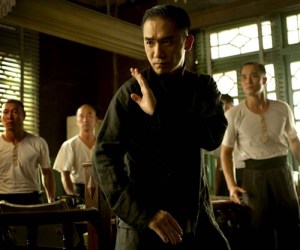 However you look at it, the other Ip Man films are undoubtedly more palatable to a mainstream audience. Does that mean they’re worse? No. Better? Not necessarily. But I don’t think The Grandmaster is all it could’ve been. It seems to run out of story and lose its way as it gets towards the end. The focus shifts entirely to Gong Er, and it feels less clear what it’s meant to about as a whole film. It becomes a movie of great moments, and maybe even scenes, but an unsatisfying whole. But oh, the images…
