
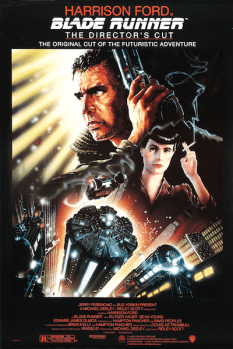

For clarification: as I didn’t see The Final Cut until after 100 Films started, and I’ve still not seen the theatrical cut, it’s only the 1992 Director’s Cut that is eligible for this list.
Country: USA, UK & Hong Kong
Language: English
Runtime: 116 minutes
BBFC: 15
MPAA: R
Original Release: 25th June 1982 (USA)
UK Release: 9th September 1982
Director’s Cut Release: 11th September 1992 (USA) | 27th November 1992 (UK)
First Seen: DVD, c.2001
Stars
Harrison Ford (Star Wars, Raiders of the Lost Ark)
Rutger Hauer (Soldier of Orange, The Hitcher)
Sean Young (No Way Out, Dr. Jekyll and Ms. Hyde)
Edward James Olmos (Wolfen, Battlestar Galactica)
Daryl Hannah (Splash, Kill Bill)
Director
Ridley Scott (Alien, The Martian)
Screenwriters
Hampton Fancher (The Mighty Quinn, The Minus Man)
David Peoples (Unforgiven, Twelve Monkeys)
Based on
Do Androids Dream of Electric Sheep?, a novel by Philip K. Dick.
The Story
L.A., 2019: cop Rick Deckard is dragged out of retirement to hunt and ‘retire’ a gang of Replicants — genetically-engineered androids, almost indistinguishable from humans, used for menial work off-world — who have come to Earth to extend their lives. As Deckard investigates, he comes to question what it means to be human…
Our Hero
Rick Deckard, former blade runner — which means nothing but does sound fairly cool. May or may not be a Replicant. (“He is!” “He isn’t!” “He is!” “He isn’t!”)
Our Villain
Roy Batty, definitely a Replicant. Committed the crime of wanting to live.
Best Supporting Character
Rachael — secretary, love interest, Replicant but believes herself to be human. Do we see a theme developing here?
Memorable Quote
“I’ve seen things you people wouldn’t believe. Attack ships on fire off the shoulder of Orion. I watched C-beams glitter in the dark near the Tannhauser gate. All those moments will be lost in time, like tears in rain.” — Roy Batty
Memorable Scene
At the imposing headquarters of the Tyrell Corporation, blade runner Holden sits employee Leon in front of a strange machine. He begins to administer a Voight-Kampff test, a series of questions designed to provoke a response that the machine analyses. “You’re in a desert, walking along in the sand, when all of a sudden you look down…” “What one?” “What?” “What desert?” Leon’s test isn’t going to go according to plan…
Memorable Music
The synthesised score by Vangelis should by all rights sound terribly dated and oh-so-’80s by now, yet it’s somehow timelessly futuristic.
Technical Wizardry
Visually, Blade Runner is a non-stop marvel: the noir cinematography, the vehicle and set design, the lived-in world, the believable effects… The entire thing is imaginatively conceived and magnificently realised with unwavering plausibility.
Truly Special Effect
The realisation of future-L.A. airspace — packed with giant skyscrapers, videoscreen adverts, flying cars, at night and in the rain — is literally faultless, and only gains impact for being achieved for real with models.
Making of
The Director’s Cut came about after a 70mm print was discovered in storage and an LA cinema got permission to screen it at a film festival in 1990. Only then did anyone realise the print was the workprint version of the film. Warner Bros organised more screenings, advertising them as a “Director’s Cut”. Ridley Scott wasn’t best pleased, which led to some screenings being cancelled. The rest sold out, however, and so Warner decided to create a genuine Director’s Cut. With Scott busy on other projects, film preservationist and restorer Michael Arick was put in charge, using notes and suggestion from Scott to do the best he could. Although Scott considered it better than the theatrical cut, he was never wholly happy with the ’92 version, which ultimately led to the creation of The Final Cut another 15 years later.
Next time…
Between 1995 and 2000, Philip K. Dick’s friend K.W. Jeter continued Deckard’s story in three novels, which apparently attempt to resolve the differences between Blade Runner and Do Androids Dream of Electric Sheep? In 1997, Westwood Studios and Virgin Interactive released a “sidequel” point-and-click adventure game, where you play as another blade runner in a storyline that takes place alongside the movie (it’s excellent, by the way, though I imagine you’d have a nightmare making it run today due to its age, which is a shame). Finally, a long-mooted sequel is in development for a January 2018 release.
Awards
2 Oscar nominations (Art Direction-Set Decoration, Visual Effects)
3 BAFTAs (Cinematography, Costume Design, Production Design)
5 BAFTA nominations (Editing, Make Up Artist, Score, Sound, Visual Effects)
4 Saturn nominations (Science Fiction Film, Supporting Actor (Rutger Hauer), Director, Special Effects)
Won the Hugo for Best Dramatic Presentation.
What the Critics Said
“This is, [Scott] says, the version he would have released in 1982 if he could have. The Ford narration was added because the studio feared audiences would not understand his story of a futuristic Los Angeles. The new ending, which is ironic and inconclusive and gives Ford an existentialist exit line, was of course dropped by studio executives for a more standard violent outcome. I watched the original Blade Runner on video a few years ago, and now, watching the director’s cut, I am left with the same over-all opinion of the movie: It looks fabulous, it uses special effects to create a new world of its own, but it is thin in its human story.” — Roger Ebert
 Score:
 89%
89%What the Public Say
“Its such a dark movie, but such a sad movie too. The sadness threatens to overpower everything. A character has her whole life undermined when she learns she isn’t real, not even her memories or experiences. It’s all a lie, a fabrication, as she is herself. Rick Deckard may not even be real. He might be just the same as Rachael. It’s not an idea I subscribe to, but it’s there, a possibility hanging over everything, underlined by the origami unicorn that he finds at the close of the film.” — ghost of 82

Elsewhere on 100 Films…
I reviewed The Final Cut in 2009, noting that it was “undeniably one of the most significant films of the last quarter-century thanks to its enduring influence. […] its dystopian future — all constant night-and-rain, busy streets, neon advertising, canyon-like decrepit skyscrapers towering over dirty streets, high technology rubbing with the everyday detritus of humanity — has been copied everywhere. Without this there’d probably be no Ghost in the Shell, no Dark City, no Matrix, no re-imagined Battlestar Galactica, no thousand other things that have nothing close to the brains but do have the look, the style, the feel.”
Blade Runner remains something of a divisive film: its thoughtful pace is not to everyone’s taste, especially if they’re expecting a sci-fi action-thriller starring Future Indiana Jones. Instead, it’s a philosophical sci-fi noir, as concerned with issues of what it means to be human as with chases or punch-ups. Remixing sci-fi and film noir influences in a fresh style, realised with some of the greatest design, set-building, and special effects of all time, it’s been inestimably influential on swathes of sci-fi that followed in its wake — and yet, almost 35 years on, it still looks futuristic and feels unique.

#14 will be… Troubled.
 The 24th official James Bond movie had a funny old ride on its cinema release a few months ago. It started well, with near-universal praise from UK critics; audience reaction was more mixed but erred towards the positive; then US critics tore into it, and US audiences (as usual) followed suit. The latter seems to have become the more accepted view, with the consensus seemingly that it’s decent enough, but a definite step down from the high of
 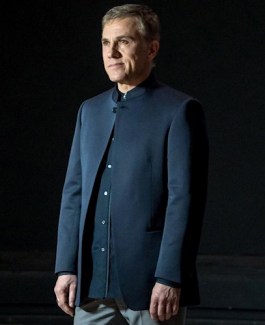 Spectre, to put it bluntly, pulls a
 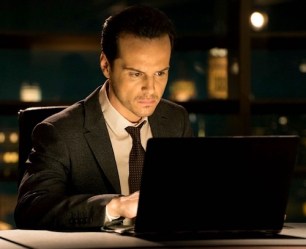 retaining the same general thrust. I still don’t think it works. There’s too much of M, Q and Moneypenny sat in an office trying to stop a man typing something into a computer (more on this in a minute), while Bond is busy running around a building and shooting at a helicopter. Personally, I’d’ve thrown it out and started again, but I guess they’d run out of time, and maybe it was better than the alternative.
 No, of course it isn’t, and it never was; but the point of Bond has never been realism. And besides, the reason you cast quality actors in minor roles is so they can pop in for a day or two and make their one scene exceptionally good. Bulk their part up if you’ve got a story to tell, by all means, but don’t shoehorn them in just because you’ve got them. For my money, Spectre is too much doing the latter.
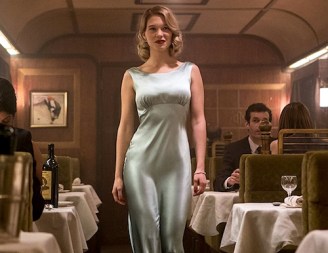 Or perhaps they’re just planning to go



 So says Peter Jackson in the special features accompanying this extended cut of his trilogy-closing saga-ending sixth Middle-earth movie, as
  Most obvious, and most discussed, is the dwarves’ war chariot action scene, whose bloody decapitations saw the film earn an R in the US and 15 over here. A seven-minute action sequence in the middle of the battle, it’s by far the largest single addition, and is mainly notable for all that blood and its use of the word “jambags”. Somewhat ironically, the sequence was a last-minute addition (the physical chariot was the last thing built for the films), which even as they’re shooting it Jackson acknowledges is an indulgence, and then of course it got bumped to the extended edition for being just that.
 Not a sausage, unless I missed something. It didn’t bother me too much because, quite frankly, I can’t quite remember what it was all about; but when I inevitably watch the extended trilogy back to back one day, it may do then. That said, I can’t imagine it’s a major fault, but again highlights the built-on-the-fly, ill-thought-through state of expanding The Hobbit 2 into The Hobbit 2 and 3.

 British Academy Film Awards 2016
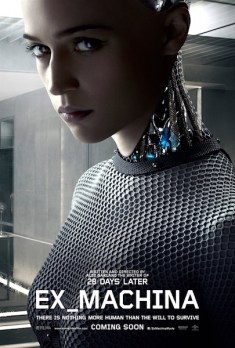 A British sci-fi movie from a first-time director will tomorrow take a place at the table (well, in the auditorium) alongside 2015’s biggest awards contenders, as it vies for multiple gongs at this year’s BAFTAs — and it stands a very plausible chance of walking away with several of them, too. I hope it does, because, after a year that brought us awards-quality sci-fi bombast (
 In truth, it’s not the most thorough deconstruction of what it means to be human and whether artificial intelligence can have that right, but it does touch on these issues and, in so doing, leaves them open for the viewer to mull over for themselves, or debate with friends, or however else one likes to consider their movies post-viewing (like, I dunno, writing about them on the internet or something).
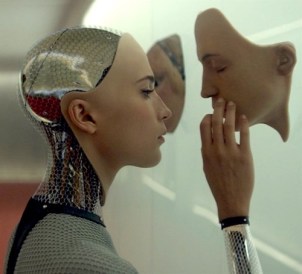 And his dance scene is surely one of 2015’s highlights (there’s an extended version hidden on the US Blu-ray, which is a treat). Garnering the most praise (and awards) is Alicia Vikander’s take on an AI. It’s a tricky role to tackle, because she’s not just a robot — that would defeat the point of Nathan’s exercise — but nor is she fully human. It’s a tightrope of a role, a fine line to walk, and Vikander negotiates it with aplomb. To say too much more would be to spoil it.
 Those after a dissertation-like hard-science deconstruction of the meaning and possibilities of AI will likely find Ex Machina slightly lacking, as will anyone after the crash-bang thrills most mainstream sci-fi provides. Viewers prepared for a decently thought-provoking dramatic thriller about near-future tech, however, should be both engrossed, and grateful that movies like this are (for the time being) still getting made.
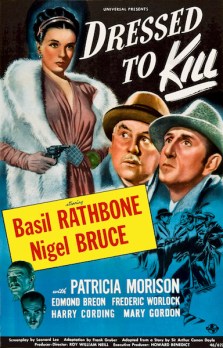 In the seven-and-a-bit years between 31st March 1939 and 7th June 1946, there were a total of 14 films released starring Basil Rathbone and Nigel Bruce as Sherlock Holmes and Dr Watson. By coincidence rather than design, I’ve spent nearly eight years viewing and reviewing them all for this blog — so yes, it’s taken me a little longer to watch them than it did to make them, which is ridiculous, but there you go.
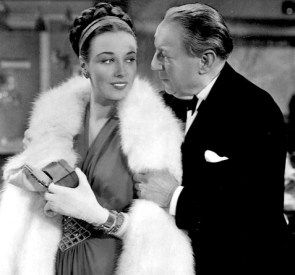 the story is explicitly referenced in the film, Watson having just had it published; then the film’s villainess turns up, played by Patricia Morison, functioning effectively as an Adler stand-in — and using some tricks she learnt from reading Watson’s story! The series hasn’t featured Adler before, so why not just name this character Irene Adler, have her devise those tricks from her own imagination, and be done with? Who knows.
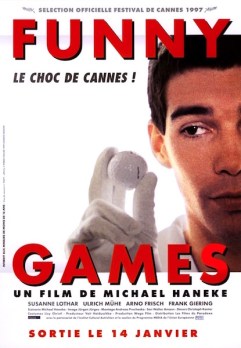 Arthouse favourite Michael Haneke criticises audience’s enjoyment of screen violence. It certainly achieves its aim of being a grim, brutal depiction of violence in real-life, creating a situation that feels inescapable not only for the characters but the audience too. Some cinematic trickery is also deployed to striking, if divisive, effect.

 Rachel McAdams takes a break from
