100 Films’ 100 Favourites #77
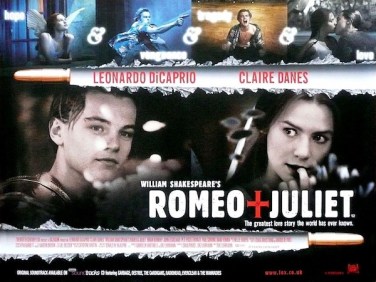
Hope & despair.
Tragedy & love.
Romeo & Juliet.

Full Title: William Shakespeare’s Romeo + Juliet
Country: USA
Language: English
Runtime: 120 minutes
BBFC: 12
MPAA: PG-13
Original Release: 1st November 1996 (USA)
UK Release: 28th March 1997
First Seen: VHS, c.1998
Stars
Leonardo DiCaprio (Titanic, The Wolf of Wall Street)
Claire Danes (Terminator 3: Rise of the Machines, Stardust)
Director
Baz Luhrmann (Strictly Ballroom, Moulin Rogue!)
Screenwriters
Craig Pearce (Strictly Ballroom, Moulin Rogue!)
Baz Luhrmann (Australia, The Great Gatsby)
William Shakespeare (My Own Private Idaho, 10 Things I Hate About You)
Based on
Some play, apparently.
The Story
Two households, both alike in dignity, in fair Verona, where we lay our scene. From ancient grudge break to new mutiny, where civil blood makes civil hands unclean. From forth the fatal loins of these two foes, a pair of star-crossed lovers take their life, whose misadventured piteous overthrows doth with their death bury their parents’ strife. The fearful passage of their death-marked love and the continuance of their parents’ rage, which, but their children’s end, naught could remove, is now the two hours’ traffic of our stage.
Our Heroes
Romeo Montague and Juliet Capulet, kids from feuding families who fall in love despite that conflict.
Our Villains
The rest of their families, whose animosity to one another, and thereby opposition to the coupling, results in tragedy.
Best Supporting Character
Romeo’s best friend, Mercutio, brought to flamboyant life by Harold Perrineau.
Memorable Quote
“Oh, what’s in a name? That which we call a rose by any other word would smell as sweet” — Juliet
Quote Most Likely To Be Used in Everyday Conversation
“O Romeo, Romeo, wherefore art thou Romeo?” — Juliet (rarely misquoted, regularly misunderstood)
Memorable Scene
The prologue, which sets out the film’s stylistic stall with a fast-cut and dramatically-scored montage of ultra-modern imagery to visualise the play’s prologue, as delivered by a TV news anchorwoman. It’s especially effective when paired with the first full scene, where the young men of the Capulet and Montague families clash at a gas station, which is similarly front-loaded with the film’s modern design, fast dialogue, and hyper-editing.
Memorable Music
The other films in the Red Curtain Trilogy (see Next Time) of course have a prominent role for music — one is about dancing, the other is a musical. While you’d think a Shakespeare adaptation would be all about the dialogue, the soundtrack plays a key role in Luhrmann’s vision, and certainly connected with viewers. They even once released a dedicated Music Edition on DVD. There is a score (memorable not least for its variation on O Fortuna, the much-reused O Verona), but it’s the songs by contemporary musicians — the kind of things the characters would listen to, I suppose — that have the greatest effect. Most recognisable is Des’ree’s Kissing You, which plays when the eponymous lovers first meet.
Technical Wizardry
The film is well known for its exuberant camerawork and editing. Obviously much of that is done in post-production, but it required on-set ingenuity as well. For the scene where Romeo and Juliet first kiss in a cramped elevator, the set walls were made in sections which could be raised to let the camera in. In the finished shot the camera circles the pair at speed, meaning the crew had to hurriedly raise the walls to let the camera past but speedily replace them to maintain the illusion.
Making of
Famously, the film modernises the characters’ use of swords and daggers by turning them into the brand names of guns. Shakespeare described Tybalt’s swordsmanship as “showy”, so to retain this for the film actor John Leguizamo worked with a choreographer, John O’Connell, to create a style of gunplay inspired by flamenco dancing.
Previously on…
Romeo + Juliet is the middle film in director Baz Luhrmann’s thematically-linked Red Curtain Trilogy. The first is dancing drama Strictly Ballroom.
Next time…
The Red Curtain Trilogy concluded with Moulin Rouge. There are also plenty of other modern-styled Shakespeare adaptations that you could argue owe this a debt.
Awards
1 Oscar nomination (Art Direction-Set Decoration)
4 BAFTAs (Director, Adapted Screenplay, Music, Production Design)
3 BAFTA nominations (Cinematography, Editing, Sound)
1 Saturn nomination (Costumes)
1 MTV Movie Award (Female Performance (Claire Danes))
5 MTV Movie Awards nominations (including Best Kiss — it lost to Independence Day!)
What the Critics Said
“While Shakespeare might well have applauded Aussie filmmaker Baz Luhrmann’s souped-up version of Romeo and Juliet, traditionalists [including many critics, if you check out Rotten Tomatoes] are sure to despise the psychedelic tunes and the flashy sets of this audacious adaptation. Not to mention Mercutio as drag queen. For all of its departures, Luhrmann’s largely successful reinterpretation is far from irreverent. He takes liberties with the world, but never the words of this achingly beautiful love story. […] Luhrmann, who pitted youthful brio against conventional wisdom in Strictly Ballroom, clearly enjoys thumbing his nose at authority. Perhaps he’s an eternal teenager, or merely a bit mad. In any case, his excesses only prove Shakespeare’s profundity and the timelessness of his themes.” — Rita Kempley, The Washington Post
What the Public Say
“in the play, and almost every adaptation, Romeo visits Juliet’s tomb, poisons himself and dies, and then Juliet wakes up, sees Romeo dead, and stabs herself to death. In this version, however, Juliet wakes up just as Romeo downs the poison, so she watches him die in her arms. Seeing her slowly start to wake as Romeo prepares to kill himself is almost unbearable. Especially the way the dialogue is manipulated; all the lines remain the same, but are just said at slightly different times (when Juliet laments the fact that Romeo didn’t leave any poison for her, she’s talking to him directly this time). And when Romeo dies, Juliet is left without her monologue, because she’s said everything to Romeo already. So instead, she cries and then wordlessly shoots herself in the head. It’s pretty gut-wrenching.” — Elizabeth, Chris and Elizabeth Watch Movies
Verdict
Shakespeare got a do-over for the MTV generation in this textually faithful re-imagining of arguably the Bard’s most famous work. Above, I alluded to critics’ dismissal of this adaptation — here are some choice quotes: “the kind of violent swank-trash music video that may make you feel like reaching for the remote”; “a classic play thrown in the path of a subway train”; “destined for the trash heap of Shakespeare adaptations”; “a monumental disaster.” I’d argue its subsequent, and largely enduring, success has put those old fuddy-duddies on the wrong side of history. Certainly, the fact it starred heartthrob du jour Leonardo DiCaprio ensured it reached an audience that otherwise would’ve had no interest. Oh, and it won BAFTAs — the film awards of Shakespeare’s homeland — for direction and screenplay. Shows what you know, yankees. Cultural impact aside, it’s a wildly inventive, daring work, which keeps it fresh and exciting even when its mid-’90s antics should by all rights have dated it into oblivion.

#78 will… kick it Jesus-style!

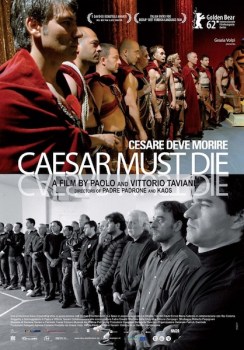 On the surface, this is a documentary about the inmates of Rome’s high-security Rebibbia prison — many of them with mafia connections — putting on a performance of Shakespeare’s Julius Caesar. However, it becomes clear fairly quickly that it’s all been staged, which is only more apparent when you learn some behind-the-scenes details (at least one prisoner had been released years earlier and returned to participate in this project).
 The director of minor horror
 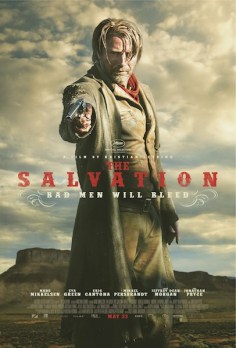 The spirit of the Spaghetti Western is kept alive in this Euro-minded South Africa-shot revenge Western.
 Score:



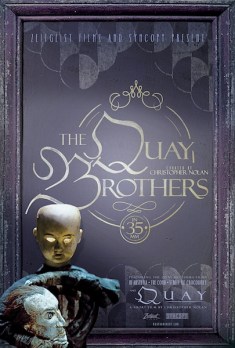 Christopher Nolan made a few headlines last year when his first post-
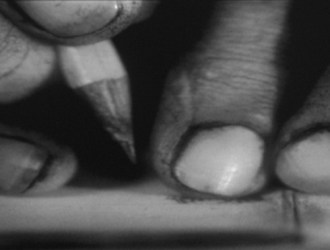 For all that In Absentia initially feels like flailing in deep water without armbands, accompanied with “what have I got myself into?!” thoughts, in retrospect I found it to be the most accessible of the three animations. It’s abstract and confusing for most of its running time, but by the end you can decipher some meaning; you can understand the relevance of the feelings it aims to generate — and if you haven’t got there yourself, or if you’re unsure, there’s a dedication to point you in the right direction. I didn’t get that with the next two; not so easily, anyway, which is why I say they’re less accessible rather than less good per se.
 Michael Brooke notes that it is “setting out to wrong-foot the viewer at every turn, and the result wilfully defies verbal analysis.” What can be easily discerned is that it’s about a dream, and it probably shouldn’t be a surprise that there’s some dream-logic involved. As to what else is to be gleaned, your guess is as good as mine.
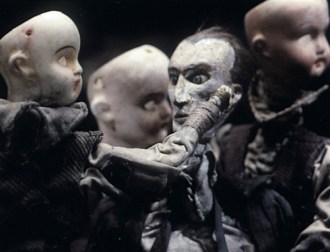 sometimes informative about the world the rest of us live in (In Absentia), sometimes a twisted analogy for it (Street of Crocodiles), and sometimes just fascinatingly unknowable (The Comb). All the films are teasingly oblique, and by all rights that should make them frustrating to the point of irritation, even abandonment… yet they’re kind of compelling nonetheless.
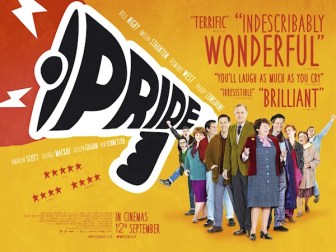 I don’t know if the true story behind Pride was big news back when it all actually happened in 1984, but I hadn’t heard of it until the film came along. For those who’ve still missed it, it’s about a group of gay activists deciding to form a group, LGSM, to support the striking Welsh miners — two groups who were poorly treated in one way or another by ’80s Britain.
 whose dancing display has to be seen to be believed. Bill Nighy and Paddy Considine are understated as quiet, hesitant characters who have inner steel, and Jessica Gunning makes a similar impact as a housewife who is completely emboldened by the activism.
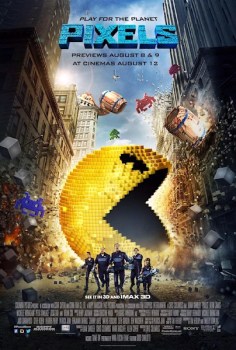 Adam Sandler, eh? He has his fans, though apparently not among people who can write because you rarely see a good word penned about him. The one exception is
 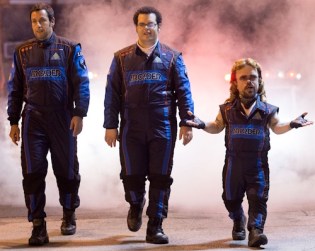 Pixels is the virtual definition of brain-off entertainment. The story has the plausibility of a kids’ daydream, the humour is frequently unimaginative, and the action sequences mostly coast on their basic concept rather than trying to elevate them. And Peter Dinklage is going to get a reputation for having terrible taste. I mean, I liked
 There are two stars in Mike Leigh’s biopic of famed British artist J.M.W. Turner: Timothy Spall, grunting his way through the title role with a deceptively layered realisation of an apparently simple but deeply complex man; and Dick Pope’s cinematography, which makes almost every frame look like a rich landscape painting, so that you feel you can almost see the brushstrokes.
 sometimes lack clear relevance (recognisable-off-the-telly actors turn up silently for what we’d call cameos if they were more famous). It creates a measured pace that is surely not to every taste, especially over the long running time, though personally I only found it sluggish towards the very end.
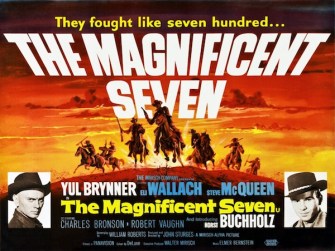 Described in the booklet accompanying the Ultimate Edition DVD release as “the last great American western before Sergio Leone reinvented the genre,” The Magnificent Seven doesn’t feel as dated as that might make it sound. Famously, it’s a remake of Akira Kurosawa’s
 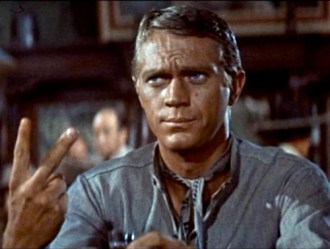 With even less screen time to go round than in Kurosawa’s original, the cast only get to provide thumbnail sketches of their characters. However, bearing that in mind, only Vaughn really feels shortchanged on time, while McQueen manages to steal every scene he’s in, even when he was supposed to just be in the background — much to Brynner’s annoyance. One reason this works is because the seven represent more or less the same things thematically, in some respects functioning as one hero character with seven parts. They are all unsettled drifters, good at killing but not at settling down; they have nothing to do but win and so be damned to go find another cause, or die trying. This is taken from Kurosawa’s film too, of course, but it fits just as well in its new setting, and the main scene where the seven discuss it is a definite highpoint of the movie.
 That’s not something that bothered me, but where I did find it suffering was in comparison to Kurosawa. While it has obviously been rejigged for its new setting, it’s not just borrowed the basic concept of seven violence-skilled loners defending a needy village, but rather retained all the bones of the samurai original. As with most remakes, it falters by not doing the same thing quite as well, for one reason or another. Still, if it is a faded copy then at least it’s of one of the greatest films ever made, which leaves it a mighty fine Western in its own right.

 100Films.co.uk