Assassin’s Creed (2016)

2017 #135
Justin Kurzel | 115 mins | download (HD+3D) | 2.35:1 | USA, France, UK, Hong Kong, Taiwan & Malta / English, Spanish & Arabic | 12 / PG-13

Assassin's Creed

There seemed to be great hope when the Assassin’s Creed movie was announced. Partly because it’s a popular video game series, so of course its fans were excited; but also because it attracted star Michael Fassbender, an actor doing Oscar-calibre work, who then hand-picked director Justin Kurzel, whose previous movies suggested loftier ambitions than just trashy blockbusters. Feelings seemed strong that this could be the first great video game adaptation. But it was not to be.

Fassbender plays Cal, a criminal who is ostensibly executed but then wakes up in a strange facility where a doctor (Marion Cotillard) informs him that they’re going to strap him into a machine called the Animus, which uses Cal’s DNA to kind of send him back in time to relive the memories of his ancestor, who was an Assassin (with a capital A, because they’re like a guild or something). Her organisation, the Templars (who are the bad guys, presumably), want to use this totally plausible science to access the aforementioned memories so that they can locate the world-changing MacGuffin, hidden away by Cal’s ancestor (who was a good guy, I think). Something like that, anyway.
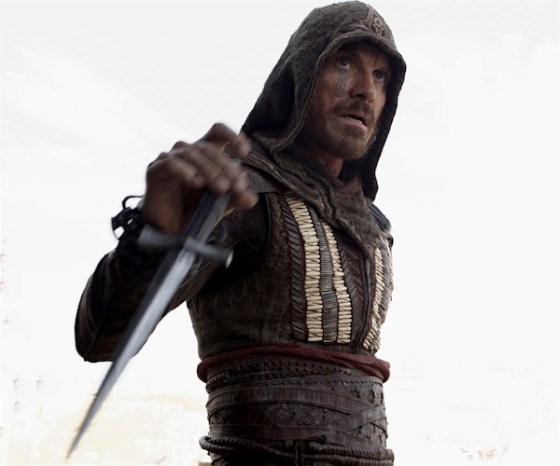
Academy Award Nominee Michael Fassbender

To be honest, a “something like that” feeling pervades the film. It’s a very strange viewing experience, in that you can follow what’s going on while at the same time feeling like it makes no sense whatsoever. Until the last act, anyway, when it goes thoroughly WTF. In part that’s because all the nonsensical bits and bobs that you let slide earlier finally come into play. Like, what’s going on with the other inmates? Are they actual Assassins? Did using the Animus make them Assassins? That seems to be what happens to Cal. So, how does that work exactly? And then the actual ending… what the hell was it all about? I’m not sure I could even summarise my confusion — like I said before: it’s both completely followable and completely nonsensical. Of course, it’s very much trying to leave things open for a sequel. I guess that won’t be happening…

For a video game adaptation marketed as an historical actioner, there’s altogether too much plot (whether it’s followable or not, the story is dull and unengaging) and too little action. What’s there is mostly well realised — apparently a lot of it was done for real, and although there’s obviously a lot of CGI background extension (with a nice painterly look), there’s a definite physicality to the parkour and fisticuffs that you don’t get with CGI body doubles. I mean, there are only three or four action sequences total, and only one and a half of them are really worth it, but at least there’s something to like in them. Unfortunately, the action carries no weight: our hero can’t change the past, just witness it as he helps the bad guys watch to see where the MacGuffin ended up. So we are literally watching someone watch someone else do all the action — like, y’know, watching someone else play a video game. It’s almost a meta commentary on video game movies, except I don’t think that was the intention.

Running and jumping

So what is it trying to comment on? I mean, it’s an action blockbuster, so “nothing” would be a perfectly adequate answer. Nonetheless, some reviews claim it’s trying to consider philosophical, religious, and/or genetics-related concepts. I suppose it does technically mention such things, but it fails to actively engage with them to such a degree that I think it’s doing it a kindness to even claim it’s attempting to be a thoughtful movie. In a similar shot at intelligence, apparently we were meant to feel neither the Templars nor Assassins are good or bad, but both morally grey. However, rather than creating ambiguity in who to root for, it just comes across as a smudge of indifference.

Nothing else impresses either. It’s a very visually gloomy film. I can’t discount the possibility that’s because I watched it in 3D, with the notorious darkening effect of the glasses, but my setup usually compensates for that (I don’t recall noting any undue darkness on other 3D viewing). Actually, the 3D itself was fine — good, even, at times — but it’s battling the largely unappealing visuals.

Come up to the lab and see what's on the slab

I’ve never played an Assassin’s Creed game, but I’d wager they don’t primarily consist of people nattering in a lab interspersed with the occasional period action scene. Maybe a greater adherence to such thrills, and less needlessly convoluted plotting, would’ve made for a more likeable movie. My rating’s possibly a tad harsh, but Assassin’s Creed could and should have been better.

2 out of 5

Assassin’s Creed is available on Sky Cinema from today.

Eye in the Sky (2015)

2017 #8
Gavin Hood | 102 mins | streaming (HD) | 2.35:1 | UK & South Africa / English & Somali | 15 / R

Eye in the Sky

Drone warfare is a fairly hot and contentious issue of our times, though as it seems to have “just kinda happened” I’m not sure how much significant public debate there’s been around it. It’s certainly provided fodder for moviemakers, however, with multiple productions seeking to be “the one about drones”. I’ve heard the best of these is Good Kill (though IMDb ratings disagree), but that’ll have to wait for another day (I’ve been sitting on this review since frickin’ January because I’ve still not got round to Good Kill!) Even if Eye in the Sky is the inferior film, it’s no slouch.

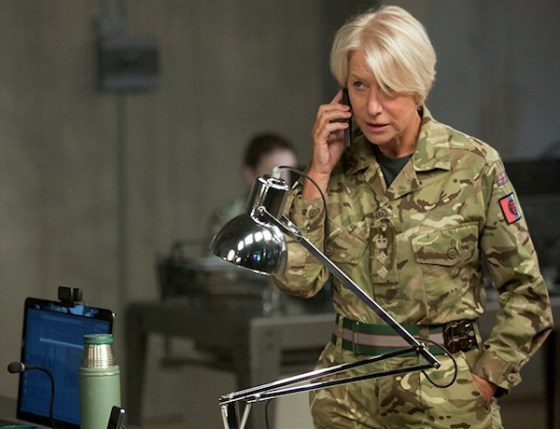
After a multinational mission is launched to capture wanted terrorists in Kenya, surveillance observes them prepping suicide bombers. The mission objective is changed to “kill”, but commanders watching from afar via drone are forced to reconsider their options due to a civilian presence near the target. It’s a tense thriller driven by a compelling moral dilemma — in fact, the dilemma is an old one: would you sacrifice one innocent life to potentially save dozens more? It’s just that it’s now framed in the super-modern context of using drones to dispatch death from the other side of the world.

Someone's got to make the call

Getting ahead of myself a little now, but events build to a very tense climax. That’s how you want your thrillers to end, isn’t it? It also pays off the sometimes slow, borderline stagey “people talking in rooms” film that precedes it. Maybe that’s unfair — yes, it’s people talking in rooms, but there’s dynamism in what they’re debating and, er, the number of different rooms it takes place in… It also has a very plausible line in the passing of the decision-making buck, up the chain through the military, then through politicians. I guess for this to work the operation depicted had to be British-led because, as the film reveals, the American military machine would’ve had no such compunction about possibly killing a little girl.

Much of the film lets you make up your own mind about its ethical conundrums, which is a strong point; but then, after all the actual debating is done and decisions have been made, it uses its final scene to show an outcome it could’ve left open-ended. This makes it seem to come down quite heavily in one direction. There’s not necessarily anything wrong with having a position and advocating it in art, but for a film which seems designed to tackle a contentious issue and put it up for genuine debate, it ends up feeling a tad one-sided. That said, there’s a long and well-liked screed on Letterboxd about how “it’s a film with an agenda that pretends to have none”, that agenda being to “have you rooting for the bombing of a little girl” — which is funny because I felt that, if anything, it came down a little too heavily the other way.

Emote control

One thing that distracted me to an inordinate degree was the agents on the ground using cameras disguised as birds and bugs — not just models with cameras in them, but imitation creatures that have the ability to fly around, reposition, etc. Even if such tech is possible nowadays, would Kenyan forces have access to it? And even if it’d been provided to them by their US/UK allies, would the equipment produce results of such good quality, or be capable of sending the images across such distances? Surely real-life drones are the size and shape they are (i.e. pretty big) for a reason? I guess the applicable point about this is: if you’re trying to make a serious modern-day moral thriller, don’t throw James Bond tech in there.

Nonetheless, Eye in the Sky manages to put a very-present moral issue up for debate, framing it as a kind of case study so that it also serves as a tense thriller. Thought-provoking and nail-biting.

4 out of 5

Anomalisa (2015)

2017 #2
Charlie Kaufman & Duke Johnson | 90 mins | streaming (HD) | 2.35:1 | USA / English | 15 / R

Anomalisa

Written and co-directed by Charlie Kaufman (of Being John Malkovich, Eternal Sunshine of the Spotless Mind, and so on), Anomalisa tells the story of Michael (David Thewlis), a depressed customer service expert who perceives everyone else as looking and sounding the same — until he meets Lisa (Jennifer Jason Leigh), whose uniqueness to him immediately attracts Michael.

If you hadn’t noticed, Anomalisa (a portmanteau of “anomaly” and “Lisa”, not “anonymous” and “Lisa” as I’d assumed) is an animated movie. Although an everyday kind of drama that would be largely achievable in live-action, it uses the form to its advantage when depicting the central conceit, giving every character who isn’t Michael and Lisa the same face and having them all voiced by the same actor (Tom Noonan). For me, this was the most effective part of the movie. It’s a really neat way of executing the concept of not being able to tell people apart. Noonan is the film’s real star, too, voicing “everyone else” in a way that makes them sound plausibly unique but also all the same, a tricky balancing act that he nails.

The one thing that did disappoint me about it was this: the inability to distinguish people is a genuine medical condition, but the film tackles it only as a signifier of Michael’s depression rather than as an issue some people live with. Conversely, I presume that’s a pretty rare condition, whereas depression and isolated feelings are increasingly widespread, so the film perhaps has more to say in that regard. Ultimately, I shouldn’t be criticising a film for not being about something it’s not trying to be about (even when I thought that was what it was going to be about).

Even puppets get the blues

As for the rest of the movie… hm. It takes an age to get going, but once it does there are a few funny scenes (the “toy” shop; the hotel shower; Michael struggling with his room key), and who’d’ve thought a puppet movie would have one of the more realistic sex scenes in the movies? Especially as it pulls that off without becoming laughable thanks to Team America. More pertinently, it gradually unfurls a sometimes touching story about isolation and love. However, by the time it reaches the happy-sad ending (one person’s life seems to have been transformed; the other continues to be miserable), I wasn’t sure what it all signified. Maybe the line that “sometimes the lesson is there is no lesson” is very relevant.

So, some good stuff, but that long slow open takes getting over, and I’m not sure what it all meant.

4 out of 5

Awakenings (1990)

2017 #154
Penny Marshall | 116 mins | TV | 16:9 | USA / English | 12 / PG-13

Awakenings

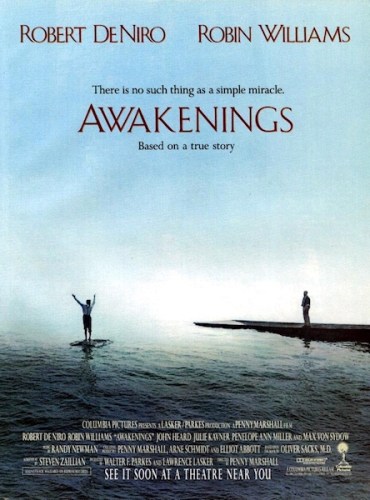
Based on a true story, Awakenings tells of Dr Malcolm Sayer (Robin Williams), who stumbles across an element of responsiveness in previously catatonic patients on his hospital ward. Finding a condition that links them buried in their medical histories, he supposes that a newly-invented drug might help their condition, subsequently testing it on Leonard (Robert De Niro), who ‘wakes up’ for the first time in 30 years. As Sayer continues his work, the new treatment reinvigorates the lives of more people than just the patients.

I hadn’t even heard of Awakenings until the untimely passing of Robin Williams, when it was brought to my attention by Mike of Films on the Box (er, I think — I can’t find where this occurred. Either it’s on someone else’s blog or I’ve entirely misremembered the circumstances). Frankly, I’m not sure why it isn’t better remembered. Okay, it’s a little schmaltzy towards the end, but there are plenty of films that are worse for that which are held in higher esteem by some. Perhaps it’s not schmaltzy enough for those people, but still too much for people who hate that kind of thing? Or maybe it’s something else — but I don’t know what, because the rest of the film is packed with quality and subtlety.

Such qualities are to be found in its writing — a screenplay by Steven Zaillian that conveys not only the usual story, character, and emotion, but also relates medical facts and processes in a way that is expedient to the narrative but still seems genuine. Whether it is or not I couldn’t say, but I didn’t feel conned by movieland brevity. Such qualities are to be found in the directing — unshowy work by Penny Marshall which matches the screenplay for its attention to detail in a way that never makes it feel as if we’re being fed a lot of information (although we are); that finds moments of beauty and life in the humanity of the characters, their plights, their successes, and their connections.

You waking up me? Well I'm the only one here...

Such qualities are to be found in the acting — De Niro’s immersive performance as a teenager trapped in a 50-year-old’s body, bookended by a medical condition so extreme that in lesser hands it could easily have become a caricature. Also Williams, giving quite possibly the most restrained performance of his career, but fully relatable as the socially inept doctor who is slowly, almost imperceptibly, brought out of his shell. And also an array of supporting performers, who each get their moment to shine in one way or another — although “shine” feels like the wrong word because, again, it’s understated. One or two moments aside (the schmaltziness I mentioned), there’s no grandstanding here.

Combine those successes with the knowledge that this is a true story (heck, you wouldn’t believe it if it weren’t) only makes the film’s events — and its messages about being attentive of others and embracing the life we’re given — all the more powerful.

4 out of 5

What We Do in the Shadows (2014)

2017 #138
Jemaine Clement & Taika Waititi | 86 mins | Blu-ray | 1.78:1 | New Zealand & USA / English & German | 15 / R

What We Do in the Shadows

There’s no two ways about it: I’m late to the party with What We Do in the Shadows. After rave reviews at film festivals and when it was released in some countries (including the UK) in 2014, its acclaim as a cult comedy seemed to reach a focal point in early 2015 when a Kickstarter campaign to give it a wider US release attracted over 7,000 backers and the best part of half-a-million dollars. I recall preordering the Blu-ray in the wake of the slow-burning fuss I kept hearing about it. That came out in April 2015, and swiftly ended up on one of my many unwatched piles… until now!

For the sake of those who are even later to it than me, it’s a mockumentary about a group of housemates in Wellington, New Zealand, who are vampires. With each of them being hundreds of years old, they’re thoroughly out of touch with the modern world — until they make some new, younger friends…

This juxtaposition allows the film two rich strands of humour. Firstly, it riffs off vampire movie clichés and references — there are bits about sleeping in coffins, turning into a bat, and so on. In a similar vein, each of the housemates is a version of a classic movie vampire: there’s a silent Nosferatu-ish one; a violent womanising Dracula-ish one; an effeminate dandyish one; and so on. There are also various scenes that play on vampires’ familiar abilities by featuring a neat and often surprising use of special effects — the film’s so low-budget and so naturalistically staged, you’re not expecting any outright fantastical stuff. That element of unexpectedness makes such moments all the more effective.

Night life

In the second strand, it embraces mundanity — putting these supernatural creatures in the same dull suburban lifestyles that we all know, like struggling to get into the good nightclubs, or a supposedly grand ball taking place in a rundown community centre. Perhaps best of all are bits which straddle the two stools — the practicalities of being a vampire; like how do you get dressed up to go out if you can’t see your reflection, or having to clean up the mess after drinking someone’s blood. The film plays these various comic facets with a great deal of wit and cleverness, but it’s also suitably silly, which allows the humour to function at various levels. What’s even more surprising is that, as it goes on and we build up a connection to these characters, it becomes actually quite touching at times.

Apparently writer-directors Jemaine Clement and Taika Waititi wrote more than 150 pages of screenplay for the film, then didn’t actually show it to any of the cast so they would improvise scenes and be surprised by plot developments. That resulted in over 125 hours of footage, which took almost a year to edit down to just an hour and a half. (No wonder the Blu-ray includes piles of deleted, extended, and additional footage.) On the one hand, perhaps that helps explain why the film is so funny — they were able to really cherrypick the best bits. On the other other, it makes the final result all the more impressive — that they were able to hone storylines and character arcs from that immense supply of material. And it still clocks in at just 86 minutes! Hollywood moviemakers who let their part-improvised comedies sprawl to baggy two-hours-plus running times might learn a thing or two here.

Drinking blood

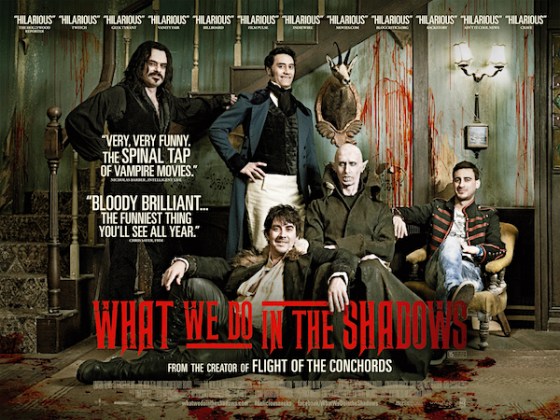
Perhaps the more familiar you are with vampire fiction the more you’ll get out of What We Do in the Shadows’ humour, but I don’t think that’s a prerequisite to enjoying it — I should think knowing the basics of vampire mythology is enough to get laughs from the majority of the movie without feeling like you’re missing anything. And in the end, the most important thing is that it’s incredibly funny. Or, as the poster accurately puts it, “hilarious, hilarious, hilarious, hilarious, hilarious, hilarious, hilarious, hilarious, hilarious, hilarious, hilarious, hilarious.”

5 out of 5

What We Do in the Shadows is available on iPlayer until 28th November.

It placed 12th on my list of The 17 Best Films I Saw For the First Time in 2017, which can be read in full here.

The UK TV premiere of Taika Waititi’s previous film, Boy, is on Film4 tonight at 10:50pm.
His new film,
Thor: Ragnarok, is out everywhere now and is reviewed here.

The Twilight Saga: Eclipse (2010)

2017 #142
David Slade | 119 mins | streaming (HD) | 2.35:1 | USA / English | 12 / PG-13

The Twilight Saga: Eclipse

For the third Halloween in a row, I’ve subjected myself to true cinematic horror: a Twilight film. I suppose this one’s theoretically the turning point of the franchise: it’s the middle movie in the film series, while in the books it’s the penultimate instalment — surely in every regard placed to set up the final conflict. Well, you wouldn’t know it, because this is another Twilight film where very little happens.

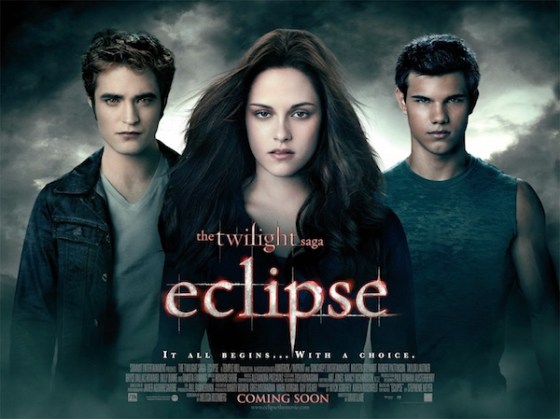
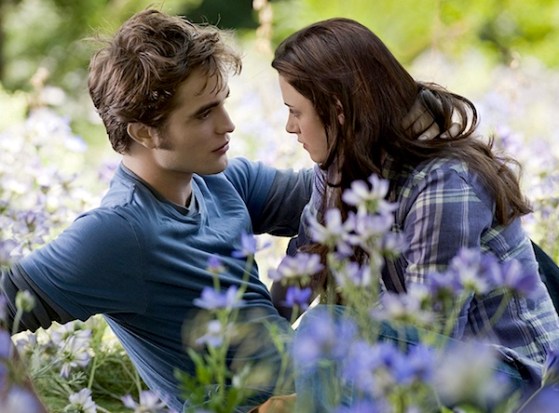
The plot, such as it is, sees Bella (Kristen Stewart) trying to juggle her romantic relationship with vampire Edward (Robert Pattinson) and her just-about-platonic friendship with werewolf Jacob (Taylor Lautner), which is tricky because the pair don’t get on owing to an ancient feud between their species. Just your regular high school problems, then. Meanwhile, a series of mysterious murders in Seattle have caught the attention of Edward’s de facto vamp family, because they reckon it’s probably not your bog standard serial killer, but rather something in their neck of the woods. (Their neck of the woods. Geddit? Neck of the woods. Nothing? Okay then.) What do they plan to do about it? Watch it… on the news… and… er… wait and see… if it comes near them… maybe?

So, that, but for two hours.

I know how to settle this... a stare off!

So yes, nothing happens — and yet, somehow, nothing happens less boringly than last time. I mean, it’s not great, but it’s not as bad. It actually has some passably good scenes and conflicts, for example. That said, it spends the whole movie getting to basically where the last one ended. The dialogue’s still shit as well. Especially the supposedly passionate stuff, which is like some 11-year-old-who’s-watched-too-many-movies’ idea of what would be romantic. Most of the scenes go on far longer than needed. Plots go round in circles (as I said, nothing happens). And there’s nothing as brilliantly awful as Face Punch, though Edward and Jacob do get one passingly amusing one-liner each. And I have absolutely no idea whatsoever why it’s called Eclipse. I suppose Twilight and New Moon didn’t mean a great deal either, but I still think they meant more than Eclipse.

This may sound a strange thing to say, but this one’s very much a romance movie. The first two must’ve been as well, because that’s what Twilight is, so I’m not sure why I felt it more this time. I suppose the first one had a lot on its plate establishing all the supernatural stuff, and New Moon had a lot of palaver building out the world further, mixing in werewolves and the vampire high council (or whatever). Eclipse does have the Seattle stuff, but that just pops up now and then in between Bella umming and ahhing over her relationships.

Team Abs

As to that, the story tries so. hard. to make you believe it’s possible Bella could change her mind and switch affections from Edward to Jacob — but did anyone ever really believe that was an actual possibility? The story just isn’t built that way. Before I watched the films, I could never understand why anyone would be Team Jacob. It seemed so obvious she’d end up with Edward, why waste your energy? But now, even still thinking it’s inevitable, if I had to pick a team it’d definitely be Team Jacob. The reason is Taylor Lautner. No, not because of his phwoarsome abs. I remember everyone being very surprised when Lautner joined BBC Three sitcom Cuckoo, but actually watching these films you can see he has at least some ability with comic timing. His character is also more down-to-earth and levelheaded than his vampiric rival. Put together, these traits make Jacob much more likeable than bloody Edward.

The rest of the cast are as much nonentities as ever. It’s no wonder it’s taken Kristen Stewart years to re-establish the positive career path she was on before Twilight. Original Victoria actress Rachelle Lefevre was fired because her schedule for another film overlapped, and her replacement is Bryce Dallas Howard. Although Victoria has been an antagonist throughout the series, and her storyline ostensibly comes to a head in this instalment, she’s barely present. Quite why they cast a relatively well-known actress in such a minor role, or why she agreed to do it, is a mystery. At least it doesn’t seem to have harmed her career.

Team Sparkles

Others have been less fortunate. I mean, Robert Pattinson still works, but in what lately? I thought the same about director David Slade, whose work here is perfectly serviceable while at no point being memorable. Previously he’d helmed well-received horror/thrillers Hard Candy and 30 Days of Night, a promising start to his career. However, since taking the Twilight dollar (he’d previously slagged off the series, comments he tried to pass off as a joke when he signed on for Eclipse) he’s shifted to TV, starting off poorly with a raft of pilot episodes like This American Housewife (not picked up), Awake (ditched after a half season), Crossbones (cancelled after nine episodes), and Powers (only available on PlayStation). But more recently he’s been an executive producer and director on Hannibal and American Gods, and has a Black Mirror coming up. I guess the era of prestige TV is working out for him.

Anyway, back to Eclipse. For a movie in which so little happens, I found it surprisingly unobjectionable. It’s not good, but I’d say it’s the least-bad Twilight so far. Of course, it wouldn’t make any sense to watch it without sitting through the previous two first, so my assessment is even more damning with faint praise than it sounds.

2 out of 5

See you this time next year for Breaking Dawn Part 1… and maybe Part 2, just to get this thing over with.

The Exorcist (1973)

2017 #150
William Friedkin | 122 mins | Blu-ray | 16:9 | USA / English & Arabic* | 18 / R

The Exorcist

Did you know The Exorcist was based on a true story? I didn’t, until I watched some of the special features on the Blu-ray release. “Based on” is a bit of a stretch, to be honest. “Inspired by” would be more accurate. But you get the sense from author and screenwriter William Peter Blatty that he believes all this stuff so much that he thinks “based on” would be fine.

The Exorcist does start out very plausibly. It’s about Regan MacNeil (Linda Blair), a sweet 12-year-old kid living with her mother Chris (Ellen Burstyn) in Washington, D.C. But one day Regan begins to act oddly: delivering insults and soiling herself at a party; yelling obscenities; slapping her beloved mother; somehow causing her bed to shake uncontrollably… Doctors run tests, but they reveal nothing. The only suggestion they’ve left to give is that Regan may believe she’s possessed by an evil spirit, and that she might be tricked into believing she’s cured if the church will perform a little-known procedure called an exorcism.

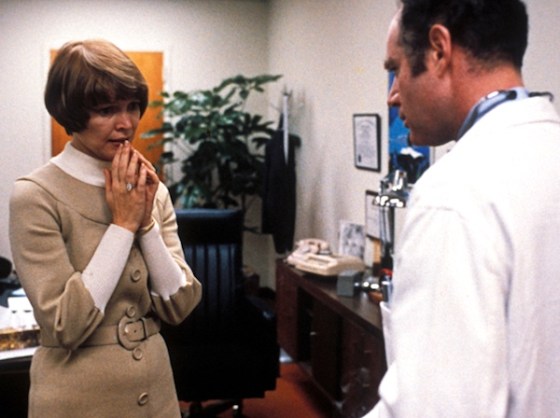
Worried mother

Everyone’s so busy talking about The Scary Stuff when it comes to The Exorcist, no one ever tells you how low-key and grounded a lot of it is. Okay, the talking in voices and spinning heads and vomiting green gunk and bloody crucifix masturbation are pretty memorable, so fair enough. Before that, though, it’s more of a character drama, about a single mother struggling to handle what appears to be her daughter’s out-of-control mental health problems. Meanwhile, a priest, Father Karras (Jason Miller), struggles with a crisis of faith brought on in part by his ailing mother. Naturally these two threads align when Chris calls on Karras to investigate Regan’s condition.

Another thing I’ve never heard about The Exorcist is how good Miller is. This is his film debut, before which he was a stage actor, but he delivers a very naturalistic performance as a man of the cloth who also has his head screwed on — his training in psychology keeps him suitably skeptical of what’s going on with Regan. Events conspire to challenge his point of view, of course. Karras has the clearest arc of anyone in the film, giving Miller the most scope to develop his role. I’d venture he’s the film’s most interesting character.

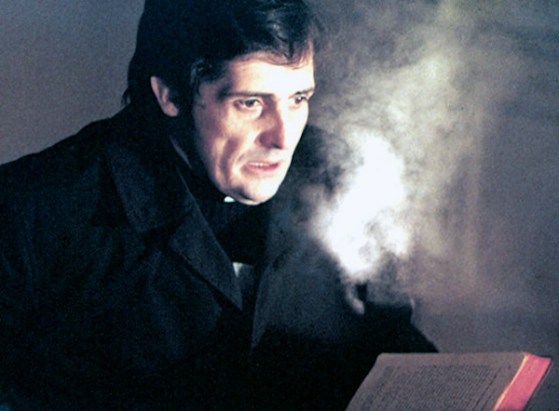
Father Karras

That’s not to dismiss Burstyn, who’s also excellent as the very together mom who begins to crack under the increasing strain of her daughter’s worsening, inexplicable condition. As said daughter, Blair’s performance is certainly memorable, though the potency of Regan is aided by special effects and voice work from another actress. Although second billed, Max von Sydow only pops in at the beginning and end in the titular role of Father Merrin. It’s no wonder someone later thought Merrin’s past was ripe for a prequel, because there’s a backstory there that’s only hinted at.

And no one ever says how little Tubular Bells is in it, either.

The thing people do say about The Exorcist is how scary it is. Tales of audiences fainting and running out during its initial theatrical run are the stuff of movie legend. Today its releases are branded as “the scariest film ever made”, with the justification of several polls that have named it thus. I can well believe that, in the early ’70s, it was indeed the most shocking film most people had ever seen, certainly from a major studio. The extreme bad language, the gruesome special effects, the morally depraved acts, and all of it happening to a child…

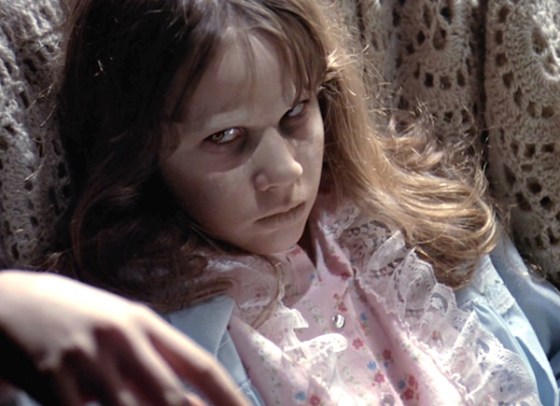
Regan... or is it?

It was surely an element of sensibilities being offended (especially in America), as much as it was actual horror, that provoked such radical reactions from audiences back in the day. Nowadays we’re a bit more deadened to those things — the last 40+ years have served up plenty of elaborate gore, and potty-mouthed pre-teen girls are more likely to be found in comedies (Hit-Girl is even younger than Regan when she utters the C word in Kick-Ass, for example). I also thought it frequently undermined its own intensity by cutting away from the scary scenes to more mundane stuff. Maybe the goal was to never give those scenes an ‘out’ — we always seem to leave them when supernatural stuff is still going on — but for me it killed the momentum that was building.
That’s not to say the horrific and shocking stuff is no longer powerful. What really works in its favour is how long the film spends being grounded and plausible — most of the first hour is a ’70s social drama about a child with a mental health problem. That level of realism helps the later horror scenes be all the more effective. They quite quickly transcend the realms of the plausible (unless you’re some kind of religious fanatic, I guess), but the grounded setup lends weight to them nonetheless. The climax in particular — the actual exorcism — might just be silly without the realistic world it’s been placed in. Instead, it’s a suitably tense climax.

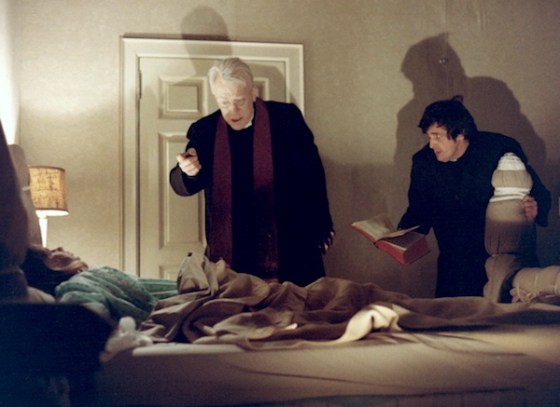
The exorcism

Obviously it was the extreme stuff that caught people’s attention and earnt The Exorcist a reputation that it still trades off to this day. However, I’d say it’s best regarded, not as a fright-fest, but as a film about characters: the mother who’ll do anything for her child; the priest battling with a crisis of faith. It’s a drama about real people in extreme circumstances, it’s just that these extreme circumstances happen to be horror movie fodder. In this respect it’s such a film of the ‘70s, which I mean in the best possible way.

5 out of 5

The Exorcist was viewed as part of my Blindspot 2017 project, which you can read more about here.

* IMDb lists half a dozen other languages, but Arabic’s the only one I remember being significant enough to earn subtitles. ^

Transformers: Age of Extinction 3D (2014)

2017 #90
Michael Bay | 165 mins | Blu-ray | 2.40:1 + 1.90:1 + 2.00:1 | USA & China / English | 12 / PG-13

Transformers: Age of Extinction

I thought I was done with Transformers movies. I watched Dark of the Moon back in 2014 and hated it — I gave it two stars and later couldn’t remember why I’d given it more than one. Fortunately that rounded out an initial trilogy, so when this fourth movie came out I didn’t feel I had to bother, especially when the reviews were even worse. When it made its debut on Sky Movies, rather than watch it I summarised other writers’ insightful/amusing commentary — though I acknowledged that “maybe one day I will cave and check out this renowned piece of cinematic excrement, because I am a completist and having seen three of the films I feel compelled to watch every new entry that turns up”.

Obviously, that day has come. The reason is 3D.

Regular readers will know I caved to imminently-obsolete technology back in April and bought a 3D-capable 4K TV (I wrote about it here). Long story short, the third and fourth Transformers movies were shot in 3D and are well-praised on the format. So after I rewatched the third in 3D and enjoyed it more than I remembered, the fourth called.

Here come the Transformers... again

On a purely technical level, Age of Extinction is a masterpiece. As well as 3D, significant chunks of the film were shot for IMAX, and the IMAX 3D stuff is incredible. Sometimes director Michael Bay uses it for just regular scenes, like Mark Wahlberg driving his truck or walking around an old theatre, and even those bits are a riot of depth and dimensionality. So when it opens out to show wide scenery, or for the action sequences… wow! And Bay chooses to use IMAX, like, all the time — as I said, for low-key regular stuff as well as the “epic” stuff you know it’s made for — so much so that it’s kinda weird they didn’t just shoot the whole movie in an expanded aspect ratio. (There are at least three aspect ratios used. I believe the fifth movie has five or more.) Some people hate shifting aspect ratios on Blu-ray, finding it odd when the screen suddenly fills up. Age of Extinction has the opposite effect, feeling odd when black bars appear to make it 2.40:1 for the odd shot here or there. Personally I love a shifting aspect ratio, but generally that’s because it’s the expansive IMAX stuff intruding now and then to impressive effect — when it does the opposite, it has a lessening effect.

And to round out my praise for the film’s technical merits, the sound design is positively thunderous. On a pure show-off level, this may well be the greatest Blu-ray I’ve ever seen.

As for the film itself…

Just normal people, standing around normally like normal people do

Age of Extinction is not really a movie for anyone interested in such trivial things as plot or character or internal logic. They certainly don’t concern Bay. He’s almost solely driven by the visual. It’s almost a different way of approaching the movie. If you can take it that way, I think it at least explains how some of its apparent missteps come about. For example: Wahlberg’s 17-year-old daughter is dating a 20-year-old fella — barely worthy of a raised eyebrow here in the UK, but a Shocking Thing in the US where the age of consent is (mostly) 18. But in Texas, where the film is set, they have this thing called the Romeo and Juliet law which, long story short, makes the relationship okay. Except the guy has this law printed on a card in his wallet. How skeevy is that?! I mean, why does he need it on him at all times in the form of a handy little card? What’s that for? But you see, here we are applying real-life logic. In BayWorld, having a little card with the law on it is a handy way to quickly dramatise the existence of said law and get it on screen. No, I agree, this doesn’t make a great deal of sense — as I said, if you think through the implications of why the character might possess this card, it makes the guy a massive creep — but the way Bay uses it in situ, I can kind of see what he was thinking. This kind of reasoning — of moviemaking driven more by visual thrust and expediency rather than plot coherence or character motivation — can be expanded to explain almost every plot hole, logic gap, or sudden time jump in the whole movie.

Elsewhere, It’s like someone set a challenge for how many explosions it’s possible to have in one movie. It’s just… mind-boggling. The film makes little sense as a story, or a series of events with cause and effect, or a paced action sequence with ebb and flow — it’s just a relentless assault of set pieces; things that would be a showcase stunt or effect in another movie just piled atop each other in a never-ending tumble of action. It’s, in its own strange way, impressive.

SPLOSIONS

It’s hard to describe the cumulative effect of these features, because the impact it has on the viewer is so rooted in the visual, the aural, the… not emotional, because there’s little feeling. The adrenal? As in adrenaline-generating. It makes no sense, and yet it makes its own sense. It’s almost avant-garde.

However, lest you think Bay is deliberately thinking everything out, just in a different way to the rest of us, there’s plenty of evidence that he isn’t. An obvious one is the film’s weird vein of anti-American-ism. Not overtly so, but it presents the CIA (and other US law enforcement) as corrupt and the government as incompetent because it can’t oversee them properly. This feels very odd from Bay, who’s usually so worshipful of the armed forces. Maybe he’s actually one of that weird breed of right-wingers who think it’s somehow most patriotic to hate the government and all of its institutions? Or maybe Bay is secretly left-wing — I mean, the entire ethos of Transformers is pro immigration and asylum. Or maybe he just doesn’t know what he is, or doesn’t see the inherent contradictions in what he’s putting on screen. Yeah, that version sounds about right.

It’s definitely way too long. In fact, it’s so long that when it finally finished I felt the same as if I’d just binge-watched an entire miniseries. Ironically, for a movie that doesn’t care about plot, there’s too much of it. Ironically, for a movie that uses visual shortcuts for expediency, it allows some scenes to run much longer than they need to. You could easily lose 30 to 45 minutes of this movie, either by ditching some of the plot or ditching some of the repetitive explosions; or, ideally, a bit of both.

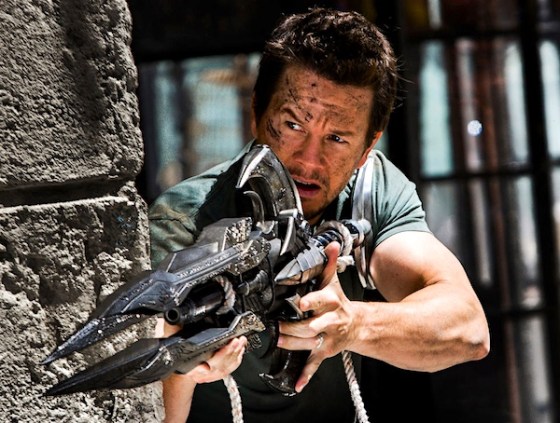
It's a sword... that's also a gun!

Despite supposedly being a fresh start for the series, Age of Extinction spins out of the events of the last movie (it’s set five years later, with both Autobots and Decepticons persona non grata after the destructive Battle of Chicago), but doesn’t even mention Sam (Shia LaBeouf’s character) or any of the other films’ humans. Optimus Prime and Bumblebee don’t seem in the least bit bothered to have nothing to do with their former friends. Why? Who knows. Do we care? I guess not. Maybe it’s just that the Autobots, the film’s supposed heroes, are actually horrible, horrible people. Rather than good and kind and fighting for righteousness or something, their behaviour is frequently mean and cruel. A couple of them are desperate to give up on humanity (the only reason they don’t? “Optimus said we can’t”), while another kills an alien just because it looks ugly. That’s literally the only reason.

At least with the humans there are actually seeds of character arcs, and attempted developments and payoffs too — like Marky Mark and Stanley Tucci both being inventors and so sharing a commonality, or the rivalry between dad and boyfriend that eventually sorts itself out (and creates one of the film’s few genuinely good lines). But screenwriter Ehren Kruger still doesn’t really know how to do his job — or, if he does, Bay must’ve come along and torn it up to the point where it doesn’t matter — so while you’re left able to see the germs of an idea and the broad shape of how it should work, it still kinda doesn’t quite gel (unless you’re kind enough to fill in the blanks yourself). Tucci, incidentally, is great. Goodness knows what made him agree to do the movie, but he’s clearly having fun with it.

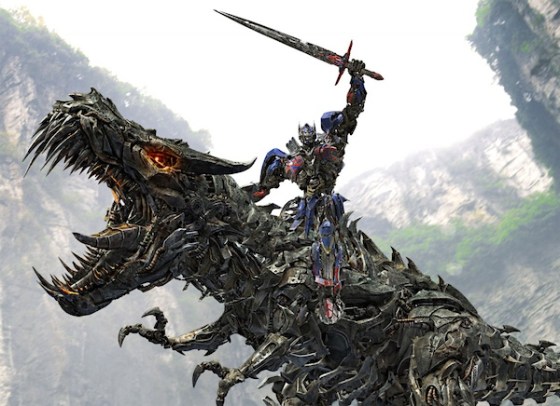
A robot knight riding a robot dinosaur, as you do

As a narrative movie, Transformers: Age of Extinction probably merits a two-out-of-five, at best. Approached purely as a demonstration of the visual splendour possible with IMAX 3D, it deserves full marks. As a sensory experience that combines both those things and everything else you get with a movie, it’s somewhere between the two.

3 out of 5

The fifth Transformers movie, The Last Knight, is released on DVD and Blu-ray in the UK on Monday. I’ll be getting it in 3D, of course, and reviewing it at a later date.

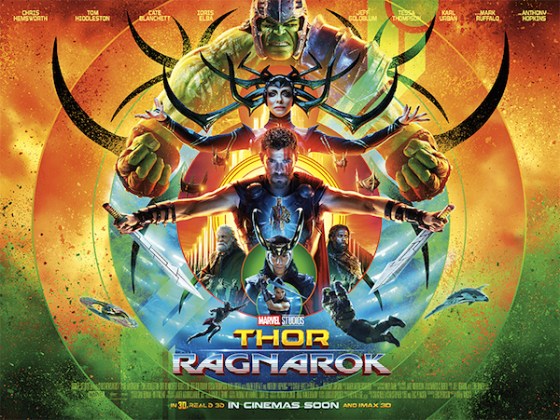
Thor: Ragnarok (2017)

2017 #148
Taika Waititi | 130 mins | cinema | 2.35:1 | USA / English | 12A / PG-13

Thor: Ragnarok

It’s been a busy year for the MCU. Long gone are the days of Marvel Studios putting out one or two movies a year — this is their third theatrical release in 2017, alongside three full seasons of Netflix shows and two network TV series currently running. Whew! Nonetheless, according to Rotten Tomatoes this Thor threequel is the best-reviewed thing they’ve released this year (so far). Some critics have even said it’s the best Marvel Studios movie ever made. Well, let’s not get too hasty.

Two years on from Age of Ultron, Thor (Chris Hemsworth) has been scouring the universe in search of Infinity Stones, to no success. After the Goddess of Death (Cate Blanchett) emerges from her prison intent on conquering Asgard, the God of Thunder is cast out to a remote world ruled over by the Grandmaster (Jeff Goldblum). There he must compete in gladiatorial championships in order to escape and prevent Ragnarok, the long-prophesied destruction of Asgard.

Having previously attempted to make the Thor movies Shakespearean (by hiring Kenneth Branagh to direct the first one) and Game of Thrones-esque (by hiring Alan Taylor to direct the second), to diminishing returns as far as critical reception and audience responsiveness went, Marvel have tried a different tack for this third instalment. Essentially, they’ve done what they’ve done to most of their movies of late: made it funny. Tonally, you could be forgiven for thinking this was a Guardians of the Galaxy sequel (apart from it not starring any Guardians characters, that is).

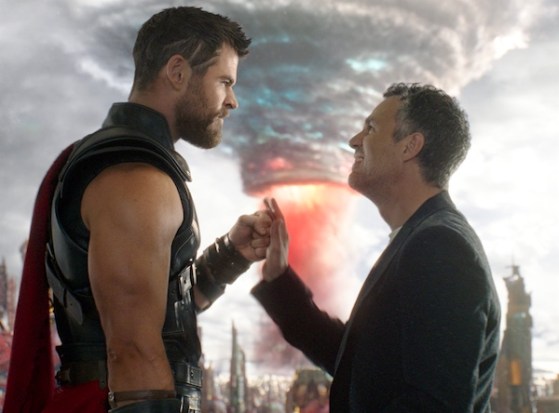
Not a buddy movie

To this end, they hired director Taika Waititi, who’s been gaining attention with this comedies What We Do in the Shadows and Hunt for the Wilderpeople. Waititi’s influence is definitely felt in the film’s splashes of irreverent humour, but everything else about Ragnarok is a typical Marvel Studios blockbuster. Critics who’ve said it’s more a Waititi movie than a Marvel movie were overselling it. The plot, the locations, the characters — they’re all your standard Marvel stuff. It’s colourful, it’s fun, it’s exciting — all standard Marvel operating procedure.

Therefore, just as with almost every Marvel movie, the devil is in the details. Ragnarok is a good one because of Waititi — because of the extra humour he injects, a consistent presence throughout the film, but also because he clearly has a good eye for imagery. If you want a taster, a lot of the most striking stuff is, unsurprisingly, included in the trailers. (Though, interestingly, there are several shots in the trailer that have been modified for the sake of spoilers. But to say more would be, y’know, a spoiler.) Action and more dramatic material are handled as well as ever. That’s the way the cookie crumbles with Marvel Studios movies: a bad or unremarkable director will make a bad or unremarkable Marvel movie, but a good or unique director can seemingly only make their presence felt so far as making “a good Marvel movie”, perhaps with a few of their own flourishes.

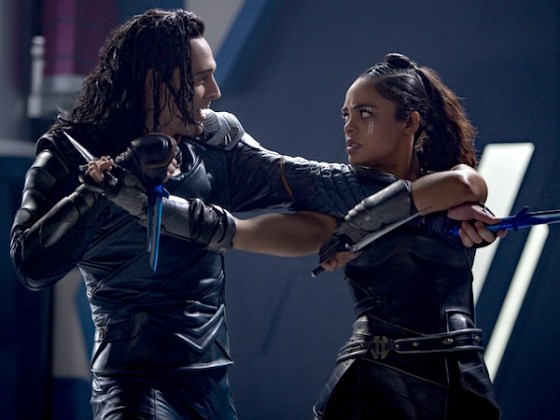
They're not buddies either

You may have heard some reports claim Ragnarok is an intergalactic buddy movie. It isn’t. Or, if it is, it’s a buddy movie where one of them’s Thor and the other one’s constantly changing. As the eponymous hero, Hemsworth gets to flex the comedic chops he revealed in movies like Ghostbusters. Everyone’s favourite Marvel movie villain, Loki (Tom Hiddleston), is back as well. While Ragnarok may ignore its predecessors tonally, it does a good job of continuing to build on Loki’s character arc. Blanchett is, if anything, under-hammy as the villain, pitching it too low when she’s sharing space with the likes of Goldblum. The expansive cast list means that both returning characters (such as Heimdall (Idris Elba) and Bruce Banner (Mark Ruffalo)) and newcomers (such as Skurge (Karl Urban) and Valkyrie (Tessa Thompson)) can only snag so much screen time each, but several of them are given efficiently-told arcs nonetheless (as usual, Heimdall mostly misses out).

Arguably the film’s standout character is Korg, voiced by Waititi and spewing lines that feel very much from the director’s wheelhouse, even though he’s not credited as a writer. Most of the biggest laughs come from him, especially as bits like “friend from work” are now very familiar from the trailers. There’s also a cameo from Dr Strange (Benedict Cumberbatch), which feels like it’s there just because they included that credits scene in his movie and so were committed to paying it off. I suppose it may have future benefits, as I believe Thor is now the only Avenger to have met Strange, but we shouldn’t be thinking about that — what have we all said before about the MCU being needlessly over-connected?

She's definitely not got any buddies

Talking of credits scenes, you may wish to know that there are two here, Marvel’s default number nowadays. Without spoiling anything, one is the vaguest of vague teases, the other a funny button on one of the film’s subplots. Neither are going to be remembered among the studio’s best credits additions.

If Thor: Ragnarok has a problem it’s the hype that’s been attached to it since the likeable trailers and glowing reviews started coming out. For those with appropriately managed expectations, make no mistake, it is a highly entertaining couple of hours. But it doesn’t break the Marvel mould, instead just filling it with more colourful materials. The best Marvel movie ever? No. The best thing they’ve released this year? Maybe.

4 out of 5

Thor: Ragnarok is in cinemas in the UK and various other countries now. It rolls out across the world in the coming weeks, ending with the US on November 3rd.

Twilight Zone: The Movie (1983)

2017 #129
Joe Dante, John Landis, George Miller & Steven Spielberg | 97 mins | streaming (HD) | 16:9 | USA / English | 12 / PG

Twilight Zone: The Movie

I can’t remember when I first heard of Twilight Zone: The Movie — certainly not until sometime this millennium — but I do remember being surprised I hadn’t heard of it before. Why wasn’t it more often talked about? After all, here’s a film based on a classic TV series, directed by some of the hottest genre filmmakers of the time: John Landis just after An American Werewolf in London; Joe Dante just before Gremlins; George Miller fresh from Mad Max 2; and, most of all, Steven Spielberg, coming off a run that encompassed Jaws, Close Encounters, Raiders of the Lost Ark, and E.T. I mean, Jesus, even if the movie wasn’t great then surely it should be well-known! It was only later still that I learnt about the infamous helicopter crash. Couple that with a mediocre critical reception and relatively poor box office results, and suddenly it’s no wonder no one ever talked about the film. My viewing of it was primarily motivated by attempting to complete the filmographies of Spielberg and Miller, but I’m glad I did because, on the whole, I rather enjoyed it.

As the original Twilight Zone was an anthology series, so is the movie — hence having four directors. Although the original plan was to have some characters crop up in each segment, thereby linking them all together, that idea didn’t come off. The end result, then, is really just five sci-fi/fantasy/horror short films stuck together — composer Jerry Goldsmith is the only key crew member to work across more than two segments. The advantage of that as a viewer is, if you don’t like one story, there’ll be another along before you know it. Because of that, I’ll take each part in turn.

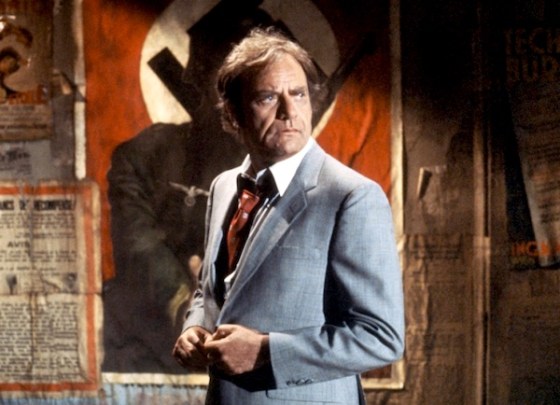
The Trump Zone

The film begins with a prologue, directed by John Landis, featuring Albert Brooks and Dan Aykroyd as a driver and a hitchhiker chatting about classic TV and scary stories. Although obviously the shortest segment, it’s good fun and sets a kind of comic tone — not one the rest of the film follows, to be fair, but it’s kind of effective in that it has a knowing wink to the audience: “we all know The Twilight Zone is a TV show. Now, here are four stories from it.”

Landis also directs the first full segment, Time Out, the only one of the four not adapted from an original TV episode. Basically, it’s about a Trump supporter. You might not have noticed that if watching before last year, for obvious reasons, but viewed now it’s kind of hard to miss. What’s depressing it that the point of the film is this guy’s views are outdated in 1983, and yet you have Trumpers spouting the same shit in 2017, three-and-a-half decades later. That aside, as a short moral parable it’s effective. It doesn’t have the ending that was scripted (thanks to the aforementioned tragedy), but I think the conclusion it does have is actually more appropriate. It feels kind of wrong to take that view, because the only reason it was changed was that terrible accident. Obviously it wasn’t worth it just for this segment to have a better ending, but there it is.

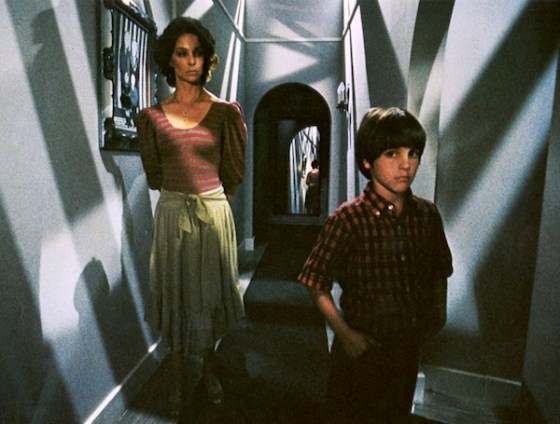
Scary kid? Check.

Segment two, Kick the Can, is Spielberg’s, and anyone familiar with his oeuvre — and the criticism of it — will see that right away: it’s shot in nostalgic golden hues and contains positive, sentimental moral lessons. In fact, it’s so cloyingly sweet, it’s like a parody of Spielberg’s worst excesses. It was originally intended to be the last film in the movie, and you can see why: it would’ve formed a positive, upbeat finale to the picture. I’m not sure why they moved it — possibly because they felt it was the least-good. That’s what a fair few critics believe, anyway.

Personally, segment three was my least favourite. This is Joe Dante’s short, titled It’s a Good Life, and is about a woman who accidentally knocks a boy off his bike, gives him a lift home, and finds a pretty strange situation therein. I found it to be kind of aimless; weird for the sake of weird. It’s prettily designed and shot, with bold cartoon colours, but if I watched the film again I’d give serious thought to just skipping it.

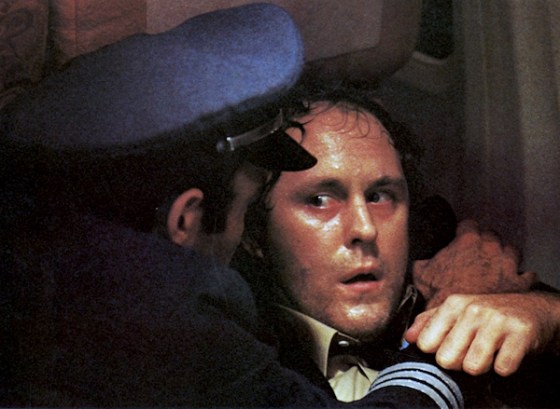
The final segment remakes arguably the most famous Twilight Zone episode: Nightmare at 20,000 Feet. It’s about a paranoid airplane passenger on a turbulent flight, who thinks he sees a monster on the wing. Naturally, no one believes him. I’ve not seen the original version so can’t compare, but director George Miller and star John Lithgow do a fantastic job of realising Richard Matheson’s story, loading it with tension and uncertainty — is it actually all in the passenger’s head? And if it isn’t, can they survive?

Fear of flying

On the whole, I liked Twilight Zone: The Movie more than I’d expected I would. Nonetheless, as a series of shorts, it’s destined to be a footnote in the career of all involved (even Landis has done a fair job of moving on from the controversy — as I said, I hadn’t even heard about it until relatively recently). The only truly great segment is Miller’s finale, but the others all have elements that make them worth a look.

4 out of 5