The Incredible Hulk (2008)

2008 #45
Louis Leterrier | 114 mins | cinema | 12A / PG-13

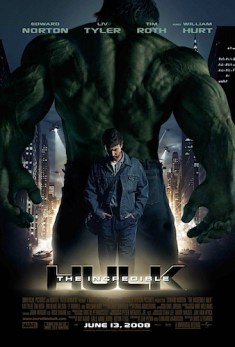
The Incredible HulkNow here’s something I didn’t think we’d see: a sequel to Ang Lee’s disappointing 2003 version of the Hulk, Marvel’s big green superhero-monster-thing. It’s not precisely a sequel though — for those who’ve somehow missed the behind-the-scenes goings on, this one has an all-new cast and crew, led by Hulk-fan Edward Norton on both leading man and (uncredited) writing duties. But does that mean it’s any better?

I think you’d be hard pushed to deny that this version is more entertaining. From the off it strikes a good balance between plot, character development and action. It doesn’t try to dig as far into the hero’s psychology as Lee’s film, but as that crippled the earlier attempt it’s for the best. Norton is a more appropriate Banner than Eric Bana was, achieving drama, humour and action with aplomb. In fact, even though there’s notably less of it, it seems Leterrier and his cast are as adept at crafting dramatic scenes as Lee and his lot were. They’re certainly better at action sequences, of which there are a good number and all well executed. Attempting an athletic chase over rooftops and through small streets so soon after Casino Royale and The Bourne Ultimatum did similar things to such acclaim seems a bold move, and while Hulk‘s version isn’t as memorable it doesn’t suffer unduly from comparison. The final monster-on-monster punch-up is immeasurably better than the first film’s bizarre climax, but the real stand out for me was the battle on the university campus. All of this is helped by vastly improved CGI. No longer is the Hulk an oversized action figure, but instead has weight and grit, and is altogether more believable. You’re never going to be convinced he’s real, obviously, but this time round they’ve made him more than close enough.

In terms of being a sequel, The Incredible Hulk pretty much has its cake and eats it. It makes good use of all the benefits of being Film 2 — it’s not an origin story, it doesn’t waste too much time introducing the characters — but without a dependence on the poor first film — new actors and a modified origin story distance it, so the main plot grows out of the basic ‘facts’ of Hulk’s origin rather than specific incidences from the first film. In fact, those who were lucky enough not to see Lee’s Hulk may well assume the opening credits’ origin story recap is just a retelling of the first film — and there’s no need to inform them otherwise. As well as dispensing with all the first film’s “evil dad” stuff, the version of the origin story here is apparently highly in debt to the ’70s live action Hulk TV series. In fact, there are also numerous nods and cameos to that version throughout (check out the IMDb trivia page for more).

Considering I did as much for Marvel’s other 2008 blockbuster, Iron Man, I feel I should make some comment on the brief franchise-building coda. Unlike Iron Man, however, Hulk doesn’t bury its scene after 10 minutes of credits, much to my joy. For those who don’t know, the brief scene sees Tony Stark — yes, Iron Man himself, naturally played by Robert Downey Jr — have a brief chat with General Ross about the problem of the Hulk. It’s initially immensely fanboy-pleasing, but is allying such a cool, likable hero as Stark with the despicable General Ross such a good idea? Of course, we’ll find out just what the Marvel planning bods have in mind come 2011.

In the end, this sequel is unquestionably superior to Hulk — who’d’ve thought a near-unknown director, whose major previous credit was the fairly risible Transporter 2, could best Ang Lee? The Incredible Hulk is a good blockbuster in its own right, requiring no need to have suffered the previous film, and there’s even room for a sequel. Now there’s something I didn’t think last time.

4 out of 5

Hard Boiled (1992)

aka Lat sau san taam

2008 #43
John Woo | 122 mins | DVD | 18 / R

Hard BoiledThe first John Woo film I saw was Mission: Impossible II. I think. It may’ve been Face/Off, which I love, but this works better with M:I-2 because most people don’t like it. Personally, I like M:I-2. It’s not the greatest action thriller ever, but it has its moments and the plot isn’t half as complex as some like to claim. It’s certainly more fun than Brian de Palma’s Euro-thriller first film, which in retrospect looks a bit like a proto-Bourne. Of course, what M:I-2 really had going for it were its action sequences, which are occasionally a bit out there but always expertly done. Face/Off’s are even better again. Anyone with a basic understanding of structure can’t fail to see what I’m going to say about Hard Boiled.

I don’t think realism is Woo’s strong point — at least, not in his straight-up action movies. That’s not a flaw, though, but a deliberate choice — he dispenses with the realism of what a gunfight would be like (presumably, bloody scary and with fewer shots fired) and pushes the male fantasy of mindless slaughter to the limit. Which means his action sequences are pure adrenaline-pumping fun. Chow Yun-Fat single handedly slaughtering a warehouse full of heavily armed gangsters? Well, of course! Or directly hitting a small object wedged in an electrical pipe with a shaky shooting arm? Naturally! The action may have all the realism of a Dali painting, but it also has all the gleeful fun of repeating everything your sibling said when you were five — except with more choreography. It’s a cliché, but there’s something about Woo’s action that makes you want to use the word “balletic”. Not that I’ve ever really watched ballet. I expect it involves fewer guns.

These sequences seem to have been designed with one thing in mind — cool. And they are. There are a few holes in the plot and characters’ logic, but that doesn’t matter when they can leap around firing two pistols at once and always hit their target, while the bad guys — who could shoot just fine when they slaughtered some innocents a few minutes ago — keep missing them… with machine guns. If you think about it too hard then of course it’s nonsensical, but somehow, in some way, this sort of action seems to appeal to most men (not all, of course, and if you enjoy it then don’t worry, it doesn’t mean you’re a bloodthirsty braindead weirdo). One particularly astounding sequence is achieved in a single long take, as Yun-Fat and Tony Leung make their way down several corridors killing Very Bad Men literally left, right and centre. It’s both exciting and technically impressive, considering how many squibs, blood packs, weapons and extras must have been involved to pull it off in one uncut shot.

If you don’t care for people shooting at each other, especially when it pushes believability beyond the limit, then there’s not really anything for you here. There’s some male bonding stuff, and other bits about duty and honour and sacrifice, and a climactic subplot involving lots of cwute lickle baby-wabies; but Hard Boiled is most at home when the bullets are flying and things are blowing up. And what a lovely home it is.

4 out of 5

Léon: Version Intégrale (1994/1996)

2008 #42
Luc Besson | 127 mins | DVD | 15*

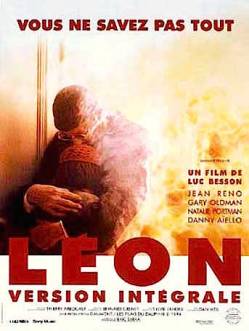
Léon: Version IntégraleI first saw Léon about 10 years ago, back when video was still an acceptable way of watching things. A friend leant it to me, insisting it was a film I absolutely had to see, and he wasn’t wrong. It’s remained one of my favourite films ever since, though typically I haven’t watched it more than once or twice in the intervening decade. (It also fostered a love for Sting’s closing song, Shape of My Heart, which is criminally missing from a Greatest Hits CD my dad owned (even though his dire song from Demolition Man is on there), and in moderately recent years was indifferently reused by both Sugababes and Craig David.)

I became aware of this extended cut a few years ago, a little while before it was released on R1 DVD. Having held out for a UK R2 release for about half a decade now, I gave in and bought the (apparently superior, and also in a Steelbook, which always has a way of persuading me) German R2. It’s labelled as a “Director’s Cut” but, as Besson states in the relatively lengthy booklet (translated with the aid of [the now defunct] Babel Fish), “the second version is neither better nor worse than the original” — it’s not a preferred cut, just a different, extended one.

But personally, I prefer this version. Not because there’s anything wrong with the original — far from it — but because this one has more. Sometimes you can have too much of a good thing of course, but I don’t think that’s happened here. The additions build on the characters and relationships, primarily between the two leads, and also add extra doses of humour and action. Besson wasn’t necessarily wrong to remove these things from his original cut — the extent of Léon and Mathilda’s relationship is especially controversial for some, and the extended scenes of Léon training Mathilda as a Cleaner are arguably extraneous — but they all add to the experience. Wisely, he doesn’t seem to have touched what was already there. Everything that was great about the original — from the astounding performances of Jean Reno, Natalie Portman and Gary Oldman, to the thrilling action sequences, and plenty else in between — remains intact. They’ve not been buggered about with, just expanded around.

Ultimately, the reason I prefer this version is quite simple: I love the film and the characters, I could happily take more of them, and I very much enjoyed all of the added material. I can understand objections to the insinuations about Léon and Mathilda’s relationship, but I didn’t find it any creepier here than it was before (besides which, any paedophilic notions come from her and he quashes them). The quality of the performances in the new scenes, plus other solid additions, make all the new bits worthwhile.

The version intégrale isn’t too much of a good thing, then, just more of a great thing. To my mind, Léon (in either cut) is unquestionably essential.

5 out of 5

* The original cut of Léon was last classified in 1996 and given an 18. The longer version was classified in 2009 and received a 15. That must be a pretty rare case of a longer version (technically) having a lower certificate. ^

The Adventures of Sherlock Holmes (1939)

2008 #39
Alfred Werker | 79 mins | DVD | PG

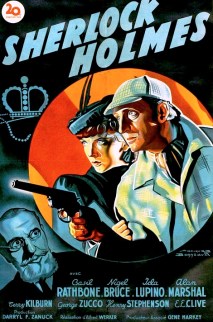
The Adventures of Sherlock HolmesNever mind waiting two or three years for a sequel these days — after the 1939 Hound of the Baskervilles was a box office success, Fox had a sequel out just five months later! I reviewed that first Rathbone/Bruce film back in February, promising an irregular series reviewing the further thirteen pictures the pair starred in. Well, I’ve finally got round to watching the second, and while I was a tad harsh on the first I found myself enjoying this one more.
The Adventures of Sherlock Holmes pits the titular detective against his arch-nemesis, Moriarty, in what’s really speaking a relatively weak plot — most depressing of all is how easily Moriarty’s plan to distract Holmes almost succeeds. But never mind that! There’s rain-lashed, fog-drenched Victorian London streets! Brutal murders by foul foreigners! Dastardly plots against the crown! Galloping carriages! Romantic subplots! A smattering of comedy! A song-and-dance number! (No, really, there is.) And a final shoot out… in the Tower of London! You can’t escape the joyous feeling that this was designed as pure entertainment, literally including something for everyone.

Bruce’s Watson may bumble about too much for the purists (me included, more often than not), the murder plot lacks proper explanation (the production notes on Optimum’s DVD pleasingly expand on this), Rathbone’s characterisation of Holmes may be a touch too friendly… but by then I’m just nitpicking. This sequel is atmospherically, entertainingly and excitingly executed, and that’s plenty good enough for me.

4 out of 5

Field of Dreams (1989)

2008 #38
Phil Alden Robinson | 103 mins | TV | PG / PG

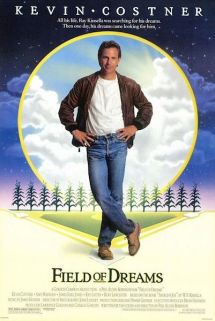
Field of DreamsI’ve never made much of an effort to see Field of Dreams, for a couple of reasons. Aside from its famous mantra/catchphrase (“if you build it he will come”), the only things I’d heard were it was mawkishly sentimental and was about Kevin Costner trying to build a baseball pitch for a ghost — which doesn’t sound particularly exciting and is about sport, something I’m not very fond of. Of course, as anyone who’s seen it will know, I was a tad misled on that last point, as the glorified rounders pitch is built in the first 20 minutes. What follows certainly has its fair share of sentimentality, but I wouldn’t call it mawkish.
In fact, it’s almost unremittingly pleasant. The lack of anything hard-hitting is no doubt why some have such a dim view of the film, as “nice” has become synonymous with “not very good” in modern parlance (I blame Primary School teachers desperate to increase vocabulary). Field of Dreams won’t shock you, it likely won’t make you think very hard, and any moral message or meaning it has is positive and reassuring… but what’s so wrong with that? The plot keeps moving, refusing to be bogged down in navel-gazing or star-gazing. The story is also too unusual to be marred by any serious degree of predictability, though some events are of course easily guessed, but the mystery of how the various elements would come together kept my attention throughout. Crucially, it doesn’t labour its sentimentality or batter you round the head with morals or meanings. It’s hardly ambiguous, but nor is it over done.

Field of Dreams may not be astounding filmmaking — it’s not especially complex, radical, thrilling, thought-provoking, intense or revolutionary, nor terribly serious or terribly funny, nor indeed wholly original — but it is nice. And I mean that in a good way.

4 out of 5

Field of Dreams is on ITV today, Saturday 27th September 2014, at 2:35pm.

Hulk (2003)

2008 #36
Ang Lee | 132 mins | DVD | 12 / PG-13

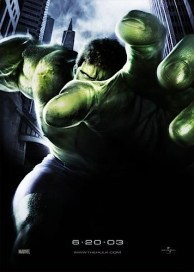
HulkWith the Edward Norton-starring (and -penned), Louis Leterrier-directed sequel/re-imagining of the Hulk coming this summer, I decided it was finally time to watch Ang Lee’s much derided 2003 attempt at bringing Marvel’s green monster-hero-thing to the big screen. Much like the lead character — in a Jekyll & Hyde-style, he’s mild-mannered scientist Bruce Banner by day, but the big green monstrous Hulk when angry — this is very much a film of two vastly different sides.

Indeed, the most striking thing about Lee’s interpretation of the Hulk is what a mish-mash of styles it is. On the one hand, it wants to be a drama/thriller, focussed on father-child issues and military cover-ups. On the other, it has comic book action sequences and a bizarre editing style inspired by comics — a compilation of unusual techniques that look like a Media Studies teacher’s wet dream. Not even Spider-Man was that kooky. In the end, it just means the cutting style feel out of place, firstly because for much of the film (at least the first 45 minutes) it’s the only reminder of the film’s comic roots, but especially because Lee’s use of the tricksy techniques is inconsistent — sometimes confusingly overused, sometimes apparently forgotten. Other technical elements also detract. Danny Elfman’s score is blandly uninspired, a carbon copy of his work on similar films. Worst of all is the CGI Hulk — it looks like they used an action figure he’s so plasticky. It gets by OK in early appearances, swathed in moody shadows, but in the glaring desert sunlight he doesn’t stand a chance.

The big, destructive sequences starring the Hulk himself are too little too late. There’s nothing wrong with sneaking drama into blockbusters, but this feels like a blockbuster snuck into a drama. There are fights because there have to be, not because anyone involved in making the film seems to want them. They’re badly placed thanks to the plot structure and the film’s pace topples under their weight. Even the climax wants to be a battle of wills between father and son, but turns into a nonsensical messy CGI splurge. That said, the dramatic moments don’t fare much better. Usually so watchable, Eric Bana can do little with the material offered here. The rest of the cast don’t suffer as much, and there are times when it almost works, but neither the dramatic nor blockbuster sides fully function in themselves, and certainly not when slammed together.

Hulk is not a film anyone could love — even the weakest comic adaptations usually have their fans — and, for a film aimed at a devoted fan base, this is perhaps its biggest flaw. Equally, it retains too much of the superhero genre for anyone to consider admiring it as a purely dramatic film. Hopefully Hulk-fan Norton’s film can marry the two halves better… or if not, at least create some cool destruction-filled action.

2 out of 5

I Am Legend (2007)

2008 #35
Francis Lawrence | 96 mins | DVD | 15 / PG-13

This review contains major spoilers.

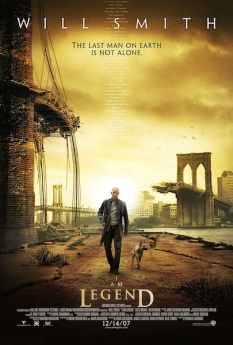
I Am LegendWill Smith stars in this adaptation of Richard Matheson’s classic sci-fi novel from the director of Constantine. The latter is a film I personally enjoyed (and which features a relatively early appearance of the currently prolific Shia LaBeouf) but received some mixed reactions on the whole. By a broadly similar token, I Am Legend has received a fair share of negative reviews, though my opinion is a little more divided.
Things go very well for the first half. It’s nicely paced, concentrating on a depiction of one man’s loneliness taken to the extreme. The script, and Smith’s acting, handle the material well. The deserted and destroyed New York looks as stunning as the trailers promised, while the CGI animals that roam it are as good as any. The flashbacks that punctuate the film are well executed too, drip-feeding clues to what happened while maintaining some mysteries of their own. There are some other good sequences: Neville’s exploration of a pitch-black Dark Seeker-infested building is tense, and the death of his pet dog — his one remaining companion — is moving, even if it was given away in the trailer. That scene is effectively played and shot, showing only Neville’s face as he is forced to euthanize the diseased animal by suffocation.

Sadly, this is where things begin to go down hill. The Dark Seekers — the film’s vampires/zombies/whatever — are crafted with pretty good CGI, but they’re still not life-like enough to work. If it were a mindless blockbuster they would’ve been more at home, but as it’s managed to be an effective drama they feel entirely out of place. It’s true that real actors couldn’t have managed the physical feats the creatures are made to pull off, but do they really need to do those things? I suspect not. The film also leaves several holes in the Dark Seeker’s actions — for example, they copy Neville’s trap, a move apparently beyond their intelligence, but the film neglects to explore why or how they did this.

Instead it moves on to the arrival of some more survivors. Quite where they came from, or how they got into the supposedly isolated Manhattan, is another inadequately explained set of circumstances. After they arrive, the film’s climax comes out of nowhere. It’s as if the screenwriters ran out of ways to keep things going so just bunged on a big climactic action sequence. And what happens in it is pretty silly too, especially Neville’s self sacrifice — why not get in the Magic Safe Hole too and then chuck the grenade out? Perhaps he just has a death wish by that point. It would seem most of the audience did. There’s also a pathetic epilogue, and an even worse final line that attempts to make sense of the title.

I Am Legend is something of a disappointment. The considered and effective first half gives way to an increasingly nonsensical second, marred by numerous flaws that stack up til a near-laughable conclusion comes from nowhere. I’ve been told that the ‘alternate theatrical cut’, with a handful of additional scenes and a new ending, is marginally more effective. I’m sure I’ll watch it someday and share my thoughts. For now, I Am Legend’s two halves of differing quality just leave it in the middle of the road.

3 out of 5

I Am Legend is on Watch tonight, Saturday 11th October 2014, at 9pm. It’s on again on Tuesday, when I’ll (re-)share my thoughts on the so-called “Alternate Theatrical Version”.

Throne of Blood (1957)

aka Kumonosu jô

2008 #33
Akira Kurosawa | 105 mins | DVD | PG or 12

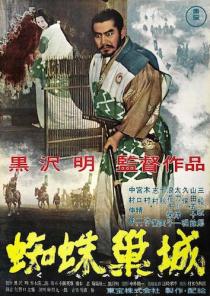
Throne of BloodKurosawa moves Macbeth from Scotland to 16th Century Japan in this retelling of Shakespeare’s infamous Scottish Play. I’ve heard this described as a loose adaptation — perhaps those reviewers have never read the play. Kurosawa sticks very closely to the structure of Shakespeare’s version of the story (though based on real events, Shakespeare changed key details), often choosing to adapt it scene-for-scene. It works well in the new setting, with some of the themes — honour, respect, betrayal — perhaps becoming more understandable when placed in samurai culture. Kurosawa changes other elements too — character names are understandably localised, there’s only one witch, there’s no version of the famous “Is this a dagger which I see before me?” monologue, and so on. It’s not all omissions however, as Kurosawa adds imagery and symbolism of his own. Again this helps to place the story in its new context, but also covers the loss of Shakespeare’s original language (a major sticking point for some critics).
Beyond the Shakespearean similarities (or lack of), there’s much to see in Throne of Blood — literally, thanks to the atmospheric cinematography. Most of the exteriors are doused in fog, and while this is sometimes over-done (an extended sequence of Washizu and Miki riding in and out of it goes on too long) it also makes for some amazing moments, such as when the trees of Cobweb Forest drift menacingly forward. The interior of the forest is suitably oppressive and scary too, the perfect location for encountering a witch. Kurosawa was inspired by Japanese Noh theatre in his construction of the film, so there are a lot of longer shots that allow the characters to be blocked as if on stage. It’s not overly theatrical, thankfully, and works suitably.

Cinematic techniques are not entirely abandoned however. The most memorable is the banquet scene, in which Washizu sees Miki’s ghost: we see Miki’s empty seat, the camera tracks forward to a shocked Washizu, then back to reveal the ghost of Miki sat at his place, before tracking and panning around the room to follow Mifune’s brilliant performance. It’s an infinitely more effective reveal than any amount of jiggery pokery with dissolves or CGI could provide. Similarly, Washizu’s iconic death scene — in which hundreds of arrows puncture him and the surrounding walls — is impressively achieved (using real arrows), including one seamless shot when an arrow pierces his neck.

Macbeth is my favourite Shakespeare play — it’s a great story, with great themes, imagery and language. Throne of Blood obviously loses some of this, but it doesn’t matter in the slightest — Kurosawa has constructed an excellent and well-conceived retelling with a few of his own flourishes.

5 out of 5

A note on the classification: the UK DVD from the BFI is rated PG, classified in 1991. A few months after the DVD’s release in 2001, the film was re-submitted to the BBFC and received a 12. Quite way the rating was raised isn’t explained, and copies of the DVD still bear a PG on the cover.

Iron Man (2008)

2008 #31
Jon Favreau | 126 mins | cinema | 12A / PG-13

This review contains spoilers.

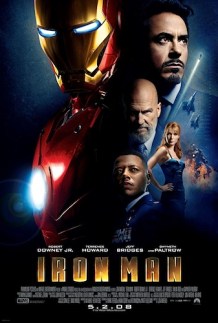
Iron Man“Iron Man, Iron Man, does whatever an iron can. Flattens clothes, nice and smooth; burns a hole if he doesn’t move. Look out! Here comes the Iron Man!”

OK, maybe not…

Irritating ‘humorous’ review intros aside, Iron Man has never been at the forefront of my comics experience. X-Men and Batman, yes yes yes; a few of Alan Moore’s, of course; a solid stab at getting through Preacher; occasional diversions into Spider-Man or Ghost Rider… But never Iron Man (or a slew of others, but they don’t have a surprisingly successful movie currently in cinemas). Whilst he’s obviously a popular character with fans, the film’s phenomenal success — both financially and critically — has rather taken me by surprise, and consequently dragged me to the cinema for the first time in over 10 months.

Tony Stark is, perhaps, Marvel’s answer to Bruce Wayne: the billionaire playboy CEO of a huge technology company who uses his technological know-how to become a superhero in the wake of personal tragedy — but in Stark’s case the company is an amoral weapons manufacturer and the playboy lifestyle isn’t just a front. What this means for the viewer is that, in the title role, Robert Downey Jr gets to shine. He has all the best lines and comedic moments (of which there are plenty) and a couple of cool action bits too (of which there are few). As he’s the hero this would seem just, but you only have to look at earlier entries in the Batman franchise to see how the hero can be sidelined for the villain. Elsewhere in the cast, Gwyneth Paltrow brings humanity to proceedings as the improbably named Pepper Potts, whose biggest flaw is that the filmmakers refuse to have anyone make a joke about her name. Not even one! Jeff Bridges gives a suitably dastardly performance as the eventual villain, but the plot woefully underuses him.

Because this is an origin story, you see, and sadly falls into most of the typical origin story traps: the ‘major’ villain exists only to provide a final act punch-up while the rest of the film explores how Ordinary Man (or Ordinary Rich Man in this case) gained Super Powers (or Built Super Suit) and went on to Save Mankind (or Save Some Foreigners, but I’ll leave deeper debates over the film’s dubious international perspective to others). It used to be the case that superheroes arrived on the screen ready to go — look at Burton’s original Batman, for example — but since the genre’s ’00s revival it’s all about the origins. What this typically means is a decent-enough first film that serves only to introduce the characters for the sake of a fully-formed second entry. One can only hope this will be the case with Iron Man.

The primary exception to this rule is Batman Begins, which succeeds because it’s less about the origin story and more an exploration of Batman’s psychology in general, something only vaguely alluded to in preceding efforts. Where Iron Man falters on this score is in completing Stark’s move from uncaring weapons manufacturer to socially conscious hero relatively early on, from which point he spends ages building his suit and battling, not an evil villain, but off-screen corporate machinations. The final fight, when it arrives, lacks punch (literally) and is over too soon. The amount of time, depth and humour awarded to the characters is to be applauded, but it comes at the expense of some excitement. At least it makes a change, as it’s thoroughly unusual to find the balance skewed that way.

To touch on an exceedingly minor element, the fan-pleasing post-credits scene with Samuel L. Jackson as Nick Fury is quite disappointing. While it’s cool to see Jackson as Fury, and a nice lead for the now-confirmed Avengers movie (which will come after Iron Man 2, so you have to wonder why the scene is at the end of this film), it’s too brief. When Fury informs Stark he’s not the only superhero in the world it provides a mixed reaction: on the one hand, we’re all too aware that from the Marvel Universe we’ve had three X-Mens, three Spider-Mans, a Daredevil, an Elektra, a Hulk (and soon another), a Punisher, and even a Ghost Rider — if they all take place in the same filmic universe then Stark ought to have noticed at least a couple of them on the news! And if they’re not in the same universe, one wonders if the cast of The Avengers movie will be padded with second-string heroes who barely warrant their own film. But that’s a debate for another review (one in three years’ time, in fact).

This may all sound a tad harsh on Iron Man, but when a film receives near unrelenting praise from most quarters it’s hard not to spy the faults when coming to it late. What it most resembles is a great TV pilot: at the end you enjoyed what you just saw, but your thoughts lie with what’s to come — “that’s the setup, now what will they do?” Hopefully Iron Man 2, due in two years, can take the many positive elements and run with them.

4 out of 5

Sweeney Todd: The Demon Barber of Fleet Street (2007)

2008 #30
Tim Burton | 112 mins | DVD | 18 / R

Sweeney ToddTim Burton and Johnny Depp collaborate for the sixth time (as the DVD’s blurb is so keen to point out) for a film adaptation of Stephen Sondheim’s musical adaptation of the classic tale of the titular barber who slaughters instead of shaves and sells the resultant meat to all of London in the pies of his accomplice, Mrs Lovett.

As with 2005’s Charlie and the Chocolate Factory, the announcement of Burton as director of Sweeney Todd was one of those “well, of course” moments, despite the vastly different audiences. And with Burton come Depp and Helena Bonham Carter, naturally. But whereas the eventual product of Charlie resulted in a “that’s that done then” feeling of the inevitable, Sweeney is more of an unknown quantity for me — I’m familiar with the basic story, of course, but not this particular version. It’s a dark tale, but told here in a heavily stylised manner — no gritty realism to be found (for that try the Ray Winstone TV movie), but instead there’s bold and striking performances, design, direction, and storytelling. One is tempted to call it “theatrical”, but the direction is anything but and the actors do much more than project for the benefit of the back row. It’s anti-naturalistic in all elements, which suits both the ghoulish and musical subject matters perfectly, but is consequently not to everyone’s taste.

As for the musical elements, Sweeney is done in an operatic style — the majority of dialogue is sung and the story is almost entirely told through these songs, rather than having a couple of numbers peppered throughout (quite how they managed to edit a trailer that was both comprehensible and light on song is near miraculous). Anyone who’s seen an Andrew Lloyd Webber production will be familiar with this way of doing things. Personally, I find it a more immersive style — everyone’s singing from the word go, not disconcertingly launching into song a little way in. The cast’s voices may not be perfect (and I’m far from a knowledgeable judge), but they do the job more than adequately. Rough moments almost add to the film’s style, and the cast’s acting abilities more than make up for them anyway. One casting oddity is Anthony Head, who turns up for a sole inconsequential line. He may not be a regular film actor, but surely he’s bigger (and certainly better) than a glorified extra? He’s not even listed in the end credits. I smell deleted scenes… (A bit of IMDb reading reveals I’m right. Sadly, these aren’t included on the DVD.)

The other striking element of Sweeney Todd is its look. London here is a dingy monochrome metropolis, interrupted only by fanciful fairytale-coloured fantasies like the song By the Sea, and, of course, gallons of vibrant spurting blood. Wisely held off until relatively late in the film, when the blood comes it is all the more shocking. And from that point it flows like wine — or, more accurately, squirts like a stamped-on ketchup bottle — in perfectly judged amounts: it gushes far more than you’d normally see but, because Burton never pushes it to the mad excess that Tarantino did in Kill Bill, it remains on the disturbing side of believable. The stylised theatricality of it almost makes you question the high classifications, but the underlying morals and sheer bloody volume ultimately justify them.

Yet there’s something missing from Sweeney Todd. I can’t work out what it is — perhaps the numerous numbers Burton cut or trimmed have unbalanced proceedings slightly, in some frustratingly ephemeral way? — but despite all this praise and only vague criticisms, I’m certain it’s a four-star film. A very solid four, to be sure, but it doesn’t achieve enough to pass higher.

4 out of 5

Sweeney Todd: The Demon Barber of Fleet Street is on Channel 4 tonight, Saturday 9th August 2014, at 11:10pm.