Batman: Gotham Knight (2008)

2008 #65
Shojiro Nishimi, Futoshi Higashide, Hiroshi Morioka, Yasuhiro Aoki, Toshiyuki Kubooka & Jong-Sik Nam | 73 mins | DVD | 15 / PG-13

Batman: Gotham KnightGotham Knight is an American-Japanese produced anime — the animation is Japanese and anime-styled, but the original soundtrack is English — that aims to bridge the gap between Batman Begins and The Dark Knight. In this case that equates to six short films, with some narrative connections, strung together to make a movie.

Overseen by executive produce Bruce Timm (Batman: The Animated Series, and most of the DCAU) and all with story credits to Jordan Goldberg (Nolan’s assistant on Batman Begins and now associate producer on The Dark Knight), the shorts, in order of appearance, are:

  • Have I Got a Story For You, written by Josh Olson (A History of Violence) and directed by first-time director Shojiro Nishimi;
  • Crossfire, written by Greg Rucka (Gotham Central and other comics) and directed by first-time director Futoshi Higashide;
  • Field Test, written by Goldberg and directed by Hiroshi Morioka (Tsubasa Chronicle);
  • In Darkness Dwells, written by David Goyer (Batman Begins, Blade trilogy) and directed by Yasyhiro Aoki (one episode of Tweeny Witches);
  • Working Through Pain, written by Brian Azzarello (100 Bullets and other comics) and directed by first-time director Toshiyuki Kubooka;
  • Deadshot, written by Alan Burnett (Batman: Mask of the Phantasm) and directed by Jong-Sik Nam (He-Man 2002).
  • Compiling that list, one has to wonder about the blurb’s claim that these shorts are directed by “some of the world’s most visionary animators”. I suppose the key word is “animators” (rather than “directors”), as some have worked on things like Neon Genesis Evangelion, various iterations of Gundam, and even Akira. Regardless of their level of experience, they all seem to do a fine job here, even managing a couple of vaguely memorable moments among fairly stock dialogue scenes and effective, if occasionally unoriginal, fights.

    The six-stories/one-film concept works well enough on the whole. While these are clearly standalone pieces in terms of style and each telling a complete story, they still work best when viewed together — most follow on from the preceding entry and some elements skip across films. These links are nicely varied. For example, while the end of Film 1 merely leads directly to Film 2, there’s a relatively minor action at the end of Film 3 that is picked up in Film 5, and a large chunk of Film 3 is spent on something seemingly insignificant that is picked up on in Film 6. There are some missed opportunities in this respect, such as the transition from the fourth to fifth entries. It would be neater if Batman’s injury in Film 5 was the one from Film 4; based on the settings and their consecutive sequence, I presume this is what was intended, so it’s a shame the wound’s in a completely different place.

    Gotham Knight seems to be squarely aimed at fans — who else could work out that the long-haired mustachioed crime lord here is actually Eric Roberts’ character in The Dark Knight! This is just one of several other factors that seem strange considering Gotham Knight is meant to bridge Nolan’s two live-action Bat-epics: Alfred is the traditional posh Englishman; few/no other characters sound like their Nolan-era counterparts; one segment even features the Burton-style Batmobile! It’s also a shame that the Scarecrow short isn’t last as it would lead even more directly into The Dark Knight. On the other hand, it succeeds in crafting a decent-enough ‘real world’ explanation for Killer Croc, which is no small feat, and Kevin Conroy, now in his mid-50s, still makes a good younger Batman. Thankfully he doesn’t attempt Bale’s over-done Bat-voice, though a nod in that direction might’ve been nice.

    I’ve managed to get this far without invoking The Animatrix, unquestionably the forefather of this and other similar projects. Gotham Knight takes the concept a step further by linking its shorts so clearly, and while it’s not wholly satisfying in this respect, it’s a successful enough step in the right direction. If we do get a The Dark Knight 2, I’d be quite happy to see another direct-to-DVD effort in this vein.

    4 out of 5

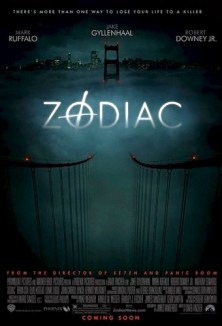
    Zodiac (2007)

    2008 #64
    David Fincher | 151 mins | DVD | 15 / R

    Context time: I’m a David Fincher fan. Se7en and Fight Club number among my favourite films of all time; I’ve always found The Game to be an immensely enjoyable thriller; much the same can be said of Panic Room, especially the famous slow motion sequence, which is one of my favourite action scenes ever; and I love The Hire series of short films, which Fincher produced but (sadly) never directed. I’ve never seen Alien³ (or Aliens, or any other entry in that series bar Ridley Scott’s first for that matter), but considering its troubled production history one might say it barely counts. All this considered, why’s it taken me so long to see Zodiac? Well, laziness, to be honest, but I’m here now. And unlike another recently-viewed highly-anticipated film (namely, Southland Tales), this was more than worth the wait.

    As other reviews have pointed out, Zodiac is really a film about obsession, and it makes for as engrossing a tale as the case was for those investigating it. In following the story the film chooses to eschew normal structural niceties for fact-following, yet structure is never a problem. Yes, it jumps from character to character, and if you step back and analyse it that’s odd, but while watching it doesn’t matter one jot — this is more like real life than some shallow crime thriller dependent on a twist ending. That level of realism is key throughout, be it the period detail or the exemplary performances — both are excellent and accurate without being showy. Much like Fincher’s direction, in fact, which is appropriately more restrained than usual, though he can still display a suitable level of flair when warranted.

    Some have called it slow, even dull, but I was totally engrossed throughout and never overwhelmed by the number of facts being thrown around — and I was watching it in the middle of the night when I should have been asleep. At 5AM, when it finally ended, I was even wishing there was more. (It seems a shame that the recently-released (in the UK) director’s cut adds barely five minutes.) It does exactly what it aims to: it’s not about the killer’s mind and it’s not a whodunnit; it’s about procedure, obsession, and how one deals with an unsolved mystery. The fact it isn’t definitively solved — and yet, for all the characters, there’s a way out or a solution that satisfies them — is possibly the most telling part of the whole film.

    After the disappointment of the long-awaited Southland Tales, it’s especially pleasing that the long-awaited Zodiac is such a triumph. It’s easily up there with Fight Club and Se7en, and perhaps even surpasses them both. My most unreserved full marks since Dark City.

    5 out of 5

    Zodiac placed 2nd on my list of The Ten Best Films I Saw For the First Time in 2008, which can be read in full here.

    My more thorough review of the Zodiac: Director’s Cut can now be read here.

    Agatha (1979)

    2008 #62
    Michael Apted | 100 mins | TV | PG / PG

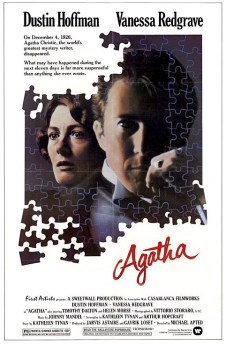
    AgathaThere are no giant wasps in sight as Vanessa Redgrave’s Agatha Christie goes missing for eleven days in December 1926, and Dustin Hoffman’s journalist tries to track her down. While the frame of the story is true, the reasons behind Christie’s disappearance, and what occurred during it, aren’t known — which makes it fertile ground for speculation. Sadly, a fantastical plot about jewel thieves and shapeshifting aliens is much more exciting than the down-to-earth mystery we’re offered here.

    It’s easy to see the attraction of Christie’s disappearance: it’s a real-life mystery about arguably the greatest mystery author ever, with enough unusual events surrounding it to make it extra suspicious and a long enough gap for something significant to have happened. But while the idea is initially exciting, when it comes to retelling it there isn’t a great deal there — the facts of her disappearance are just the ‘before & after’, amounting to little more than an abandoned car, an assumed name and some amnesia. Unless one invents something to fill those missing days, there’s little to tell (she went to a hotel and forgot what happened, essentially) — so, of course, this film fills in the gap. With a murder mystery, naturally. Sort of, anyway.

    To be honest, I found it a tad confusing for the most part. While the initial setup is well handled, showing what drives Christie to run away (consciously or not) and the beginning of the police search, it begins to flounder once the plot slides into its fully fictional phase. Hoffman’s journalist, who had been hoping to interview Christie, manages to stumble across her at the hotel, where he pretends not to know who she is, while she… has health treatments… It’s only at the conclusion, when Christie’s plan begins to come together, that one realises there was a plan at all. It’s a shame the revelation comes so late because it’s actually not that bad a plot, and makes for quite a neat and almost plausible (providing you can accept Christie as a potential murderess (sort of)) explanation for everything.

    The performances do nothing to raise the film. Redgrave is lumbered with little to do, mostly wandering around looking dazed. Her performance is decent but the material she has is lacking. Hoffman, on the other hand, is just flat, while Timothy Dalton’s sneering Colonel Christie sadly barely features. On a more technical level, the police investigation subplot is disappointingly forgotten halfway through, and everything is shot with too little light. Sometimes the latter is effective, such as during a train journey where occasional flashes of light illuminate Christie’s uncomfortably blank face, but at other times it merely obscures events. (It’s possible this is just the print, of course.)

    Christie’s disappearance remains a fascinating mystery, though in all likelihood the true causes were either very internal or mental health related — not the easiest thing to depict in a movie, especially when your audience is likely expecting a thriller. Agatha has a game stab at weaving an interesting tale into the gaps in the facts, but by the end I was wondering if a straightforward biopic mightn’t have been a better idea.

    3 out of 5

    The Wizard of Oz (1939)

    2008 #60
    Victor Fleming | 98 mins | DVD | U / G

    The Wizard of OzThe Wizard of Oz is one of those films whose reputation unavoidably precedes it. Considering it’s nearly 70 years old now, that’s a reputation long in the making.
    The biggest problem with this is that, coming to it for the first time as an adult, one knows just about everything that’s going to happen. There are still some gaps to fill for the uninitiated — it takes a surprisingly long time to get to Oz, and a surprisingly quick time from there to the Wizard — but it mostly feels oddly disconcerting: it’s such a well-known tale, even to those of us who hadn’t seen it, that having it played out in full, complete with bits one didn’t know about, is strange. That’s not really anything to do with the film, of course, just my personal impression.

    My other observations amount to little more than “the second half is surprisingly light on musical numbers” and “the transition from sepia to full colour is still highly effective and glorious to watch” — as the (very interesting) restoration featurette on the DVD details, it literally looks better now than it ever has before. Beyond that, I had the sense that the film would exert a greater sense of wonder over the very young. That’s appropriate enough, but it means that, coming to it a tad later in life, it’s not a film I’m ever likely to really love.

    4 out of 5

    Cathy Come Home (1966)

    2008 #59
    Ken Loach | 77 mins | DVD | PG

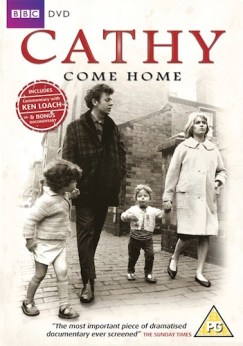
    Cathy Come HomeTechnically a one-off TV drama from the BBC’s Wednesday Play strand, Cathy Come Home more than deserves consideration as a film in its own right, due to it being an early work of director Ken Loach, the fact that it’s shot largely on film using relatively experimental storytelling techniques, and also considering the huge social impact it had.
    The piece tells the story of Cathy, a young woman who leaves behind a comfortable life for the excitement of the big city. There she falls in love with Reg, who she marries and has children with. But, through a series of incidents and accidents — most of them no fault of their own — Cathy, Reg and the children wind up without a house, and then gradually slide down the scale toward homelessness. In this respect the film can remind us of a facet of the ‘good old days’ that is often overlooked when our collective memory of the ’60s is made up of James Bond, the Beatles, and programmes like Mad Men. The drama also had a big impact at the time: 12 million watched, it boosted the newly-formed charity Shelter, led to debates in parliament, and, eventually, changes to the law.

    Loach structures the film cleverly: Cathy and Reg’s slide into poverty is all too believable, while at the same time allowing the viewer to see a cross section of the homeless experience. He employs a documentary style throughout, so effectively that it still fools some into believing the whole piece is factual. In fact there’s a mix of interviews with those really suffering such situations, and performed scenes that are shot and cut disjointedly, as if they were observed rather than written. While some of the performances give the game away, they’re never poor enough to really detract. The downside of this style is that the storyline isn’t always clear. I’m still not sure if it was Cathy’s children that died in the caravan fire or someone else’s, just one among a few such examples. While ambiguity is no bad thing — the cruelly unresolved ending being a case in point — it sometimes just seems like a hole in the narrative. However, these moments are relatively minor, and certainly don’t dint the film’s impact.

    Cathy Come Home is a powerful piece of work; an undoubted television classic that (bar a few technically-incongruous studio scenes shot on video) wouldn’t look out of place on a big screen. As an important and timely history lesson, a challenge to prejudices that some of us may hold, and a reminder of how close most of us are to such a fate — especially right now — it remains essential viewing. Sadly, I suspect it always will.

    5 out of 5

    Flushed Away (2006)

    2008 #57
    David Bowers & Sam Fell | 81 mins | DVD | U / PG

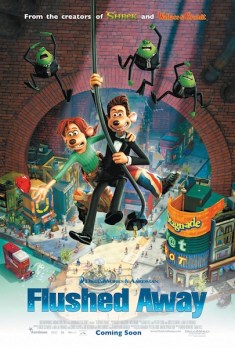
    Flushed AwayAardman Animations, the Bristol-based company most famous for Wallace & Gromit and Creature Comforts, branch out into CGI for the first time with this tale of rats trying to save the sewers of London. CGI rats? Yes, thoughts of Ratatouille are inevitable. Can Aardman beat Pixar at their own game? You might be surprised…
    The primary reason for comparison here, as mentioned, are the rats. Despite Pixar’s stated intention to redeem rats in the eyes of viewers — to turn them from vermin into loveable little fluffy things, essentially — I felt the same about bloody rodents at the end of Ratatouille as I did at the start. Here, however, they’re Disneyfied (oh the irony) — where Pixar had cartooned versions of the real thing, Aardman have given them a human shape. It’s surely this disjunction from reality that makes them more likeable, but it does mean there’s never that distracting “but they’re vermin” impulse. They’re humanisation is helped by the performances of a star-studded cast, including Hugh Jackman and Kate Winslet amongst the ratty voices. Ian McKellen is a fabulously dastardly villain, ably supported by a pair of comedy henchman… and Jean Reno as a French frog. Yep, the humour is that British.

    One thing Pixar unquestionably still excel at is the actual animation, however. Ratatouille is gorgeous to watch and will take some effort to beat; Flushed Away, on the other hand, doesn’t really come close to Pixar’s earlier efforts, never mind Ratatouille’s artistry. It’s mostly passable, especially once the action migrates to the mini-London in the sewers, but at other times it looks little better than a computer game. The second biggest mistake (I’ll get to the worst in a minute) is opening the film in a pristine up-market house — presumably it was an artistic choice to have it so tidy and clean, but this has the unfortunate side effect of highlighting the animation’s plainness right from the start. Once the story moves underground the level of detail improves, but it takes a little while to get there.

    A bigger error was made with the lip-synching, however, and obviously this dogs the film throughout. Aardman consciously designed the characters’ mouth movements to imitate the clay animation the company usually employs (Flushed Away is CG because of the volume of water featured, an element too complex to achieve in stop motion). Instead of invoking that stop motion feel it just looks cheap and underdone — such jerkiness is easily ignored as part of the technique when viewing clay animation, but there’s no need or excuse for it in CGI. Ultimately it looks like the animators were lazy or the rendering has skipped frames, and is frequently distracting.

    It’s possible to put the disappointing quality of the animation aside though, because the script’s a good’un. Like the animation it doesn’t really get going until we’re flushed into the sewers, but once there it’s pleasantly witty, full of good one-liners and clever visual gags. The latter includes a good line in intertextuality, with entertaining and easily-noticed references to Finding Nemo, X-Men and others, including numerous nods to Wallace & Gromit. They don’t dominate, but their variety makes for a nice bit of I-spy for both kids and adults of varying degrees of film-buffery.

    Despite the inevitable comparisons, Flushed Away is really a very different beast to Ratatouille. Pixar’s effort is, for want of a better word, artistic; Flushed Away is simply a family-orientated slice of adventure-comedy… rather of the kind you might expect Pixar to produce. Aardman’s initial CG effort is not better or worse than ‘the other CG rat flick’, but it is perhaps more like what you — or, at least, kids — would expect. With a starry cast, strong script and good sense of visual comedy, Flushed Away manages to overcome its lower production values to create an above-average piece of entertainment. And that’s, as Wallace would say, cracking.

    4 out of 5

    Gentlemen Prefer Blondes (1953)

    2008 #56
    Howard Hawks | 87 mins | DVD | U

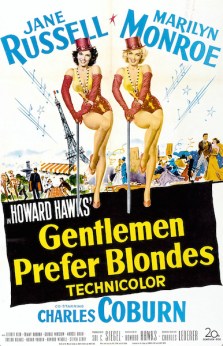
    Gentlemen Prefer BlondesIt’s easy to see how Gentlemen Prefer Blondes helped launch Marilyn Monroe as a sex-symbol superstar — her ditzy, breathy blonde, who may just be cleverer than she looks, is clearly the star of the film.
    For starters, she gets the lion’s share of the best bits. Diamonds Are a Girl’s Best Friend has justifiably become a classic song and there’s a solid routine attached, but the rest of the musical numbers are disappointingly weak. Jane Russell does get her fair share of good lines, but the most memorable comedic moment is Monroe’s: climbing out of a window, she gets stuck halfway and has to enlist the help of a little boy — and a big coat — to pretend she’s standing outside in the cold. That last one makes more sense in context…

    Frankly, it’s all a bit sillier than I expected, more in line with the likes of Texas Across the River and the Road to… series than my memories of Some Like It Hot. That’s not necessarily a bad thing (I enjoyed both those examples), but it didn’t gel with my expectations of a film that’s got a greater reputation than they do.

    I suspect said reputation is founded on Monroe’s career-making performance. I don’t have anything against her, but I’m not especially a fan either; yet despite my indifference she’s easily the best reason to watch this. Famously, when told she wasn’t the star of the film Monroe replied, “well whatever I am, I’m still the blonde.” The clue’s in the title, people.

    3 out of 5

    Gentlemen Prefer Blondes is on More4 today, Monday 6th April 2015, at 12:45pm.

    Stardust (2007)

    2008 #55
    Matthew Vaughn | 122 mins | DVD | PG / PG-13

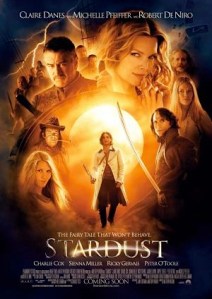
    StardustPerhaps the simplest way to describe Stardust — to a film aficionado, at any rate — is as “the British Princess Bride”. That may do it a disservice however, as this tale of a boy entering a magical realm to find a fallen star is sufficiently its own beast to stand apart from such (admittedly lofty) comparisons, and be much more than a simple rehash with different accents.
    Stardust succeeds in numerous ways. The plot is a good mix of fantasy archetypes, fairytale morality, a slight-but-knowing modern filter (thanks primarily to top-and-tail narration from Ian McKellen), humour and action. It rattles along, occasionally running the risk of becoming episodic, but thankfully avoiding it by linking and returning to various episodes. For a British film the effects work is perhaps surprisingly good, with impressive sequences that neither suggest restraint or budget limitations, nor smack of ambitious overreaching by the filmmakers (unlike, for example, the recent Tin Man miniseries).

    This sort of fantasy adventure film is a somewhat unexpected choice for co-writer/director Vaughn, who previously produced Lock Stock, Snatch and Mean Machine, and directed Layer Cake, but his direction is neither over-grounded in reality (as you might expect from his background), nor over-done to the point of distraction (as if he were compensating). Instead, he demonstrates an entirely appropriate flair and skill, which promises much for future work.

    If you watch a lot of British TV the cast seems star-studded, though even if not there’s the likes of Robert De Niro and Michelle Pfeiffer in major roles. Both are clearly having a whale of a time — as is everyone else, to be fair. De Niro’s role is especially surprising and fun, though to say any more would ruin it. It stands out as one of the best and most memorable elements in a film loaded with them. Charlie Cox is a likeable lead, while Claire Danes’ fallen star is pleasing subversive — you’d expect her to be sweetness and light (literally), but she is in fact amusingly stroppy — and Mark Strong is a perfectly villainous villain. They’re just three further standouts from an almost uniformly excellent ensemble. “Almost” because, sadly, the film’s weakest links are also among the cast. Ricky Gervais plays himself, as ever, almost shattering the well-constructed universe in the process; and Sienna Miller is too bitchy — and, to be frank, too wooden — for us to believe our hero could ever really want her.

    But these are minor, easily ignored flaws in what is otherwise a fantastically entertaining fantasy. In fact, in recalling it for this review, it’s just magicked itself an extra star. How very appropriate.

    5 out of 5

    Stardust placed 4th on my list of The Ten Best Films I Saw For the First Time in 2008, which can be read in full here.

    The Jane Austen Book Club (2007)

    2008 #54
    Robin Swicord | 101 mins | DVD | 12 / PG-13

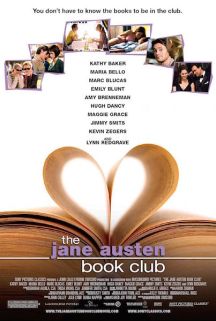
    The Jane Austen Book ClubI like to think I have a fairly high tolerance for ‘chick flicks’ — over the years I’ve rather enjoyed films such as Love Actually or Bring It On, and not just because of the male-friendly porn-stand-in scenes or cheerleader costumes — but even I was a bit uncertain about this one at first. However, as it progressed, gradually revealing more about the characters, their lives, and how they cope with what the world throws at them, I found myself increasingly enjoying it. By the time we had to pause it twenty minutes from the end, I found myself itching to continue to find out what would happen.

    Inevitably, it’s not flawless. At times it feels like a collection of subplots linked only by the monthly book group meetings, with whichever plot thread is the focus of a scene becoming the de facto main story… until the next scene begins, of course. A working knowledge of Austen’s novels is helpful too. I presumed the film (and book on which it is based) merely invoked Austen’s perennially popular name to boost sales, but there’s actually a fair bit of analysis of the books thrown in, which often reflects what’s happening to the characters. You can get by without an Austen familiarity, but I found the Pride & Prejudice segments made more sense than the others thanks to my (marginally) increased understanding of that particular text.

    It would be very easy to pigeonhole The Jane Austen Book Club as a ‘film for women’… and, to be honest, that wouldn’t be at all unfair: it’s as squarely aimed at a female audience as Die Hard is aimed at blokes. It’s also ultimately disposable, apparently with nothing new or revelatory to say about womankind. In spite of all that, I enjoyed it more than I probably had any reason to — and not just because of the male-friendly lesbian character.

    4 out of 5

    Hairspray (2007)

    2008 #53
    Adam Shankman | 111 mins | DVD | PG / PG

    HairsprayWho’d’ve thought a John Waters film could become a bright and breezy musical? It’s a bit of a surprise but, thanks to a successful Broadway version, that’s exactly what’s happened. But while the key to Hairspray’s success may be its positive attitude and memorable songs, perhaps the key to its quality — and the eventual score of this review — are the issues it tackles around those.

    It’s the latter that I found must surprising while watching the film. Everything about its advertising campaign, largely young cast and candy-coloured design suggested Hairspray was a light-as-air feel-good flick — no bad thing, but nothing more than a couple of hours of disposable fun. Pleasantly that’s not the case, as the film tackles head-on issues of racism and other such discrimination, with the ‘beautiful people’ — led by a deliciously bitchy Michelle Pfeiffer — doing their best to keep down those who are in any way different, be they black or, in the case of lead character Tracy Turnblad, fat. The apparently fluffy style of the film in many ways makes it perfect to tackle such issues, showing how they can permeate every area of life, not just Serious Social Dramas, and forces those who would normally avoid the latter type of drama to face up to them. Its ultimately happy ending may be more in keeping with the film’s overriding optimism than with reality, but equally it’s wholly appropriate: the crusade against oppression has to end well here, because if it didn’t the concluding message would be “don’t bother fighting, things won’t change”.

    The film’s unwavering optimism is perfectly encapsulated by newcomer Nikki Blonsky, leading the cast as Tracy. She’s instantly and constantly likeable, irrepressibly chirpy and yet not annoying — an impressive feat. Equally remarkably, she’s never overshadowed by the heavyweights who round out the cast; instead, they provide able support. Even John Travolta, disturbingly convincing as a housewife (under a ton of makeup), doesn’t steal the show — he comes close, but Blonsky’s performance holds sway. Elsewhere, Christopher Walken, Queen Latifah, James Marsden and Zac Efron all get catchy songs and have a whale of a time — and, unlike the Ocean’s… sequels, the fun the cast is having is infectious.

    The first credit at the close is an unusual one: “Directed and Choreographed by Adam Shankman”. Rather than shirking in either department, the rare combination seems to have helped proceedings: the numbers are all exemplarily executed and the direction doesn’t suffer elsewhere. It’s an indication of the music’s quality that even the three cut songs, which play over the end credits, are pretty good and wouldn’t’ve been out of place in the film itself. The first of these is clearly the actual closing number, though the decision to bump it to the end credits, thereby leaving You Can’t Stop the Beat as the final song of the film proper, was a wise one — it makes for a stronger, catchier, more upbeat finale.

    Hairspray is a deft mix of issue-driven drama and colourful musical levity. Catchy, optimistic, uplifting, funny and fun, it may just surprise you.

    5 out of 5

    Hairspray is on Film4 today, Tuesday 11th November 2014, at 6:45pm.

    Hairspray placed 6th on my list of The Ten Best Films I Saw For the First Time in 2008, which can be read in full here.