
Jaume Collet-Serra | 113 mins | Blu-ray | 2.40:1 | Canada, France, Germany, Japan, UK & USA / English | 12 / PG-13
 Following the surprise success of Taken, Liam Neeson again finds himself in action man mode as an American caught up in a Europe-set thriller. This time he’s some kind of scientist travelling to a conference with his wife, when he’s caught in a car accident. Managing to return to the hotel, he finds his wife doesn’t know him and there’s someone else who says they are him…
As premises go it’s an intriguing one; the kind of thing that gets you on board and you have no idea how they might satisfactorily resolve. That makes a change when most films, especially thriller and action movies, play out a string of interchangeable but familiar beats. In the film’s special features, producer Leonard Goldberg talks about how, having made thrillers his whole life, when he starts reading or watching them he can usually figure it all out early on, but the novel on which Unknown is based managed to surprise him. Thinking if it could surprise him it might surprise others too, he snapped up the rights, and I must say I think he was right. Additional kudos to the distributors for keeping any hint of those twists out of the marketing — a rare feat these days. (Well, if they were there, I didn’t pick up on them.)
That said, it’s all a bit implausible, but I suppose no worse than many other entries in the action-thriller genre. It’s only the fairly realistic setup that throws you off the scent — if you were aware of developments from the post-twist third act, and therefore the tone that pitches, the whole thing would be more acceptable from the outset. I’ve seen other reviews and viewer comments criticise this ending, but personally I thought that was when it got good, kicking into a higher gear and retrospectively making the iffy earlier bits make a lot more sense. Plus it’s where you’ll find some of what the film does best: Frank Langella turning up briefly for one great scene with YouTube’s  Hitler (aka Bruno Ganz) and a cool exit; a really good car chase; and a couple of solid punch-ups, including a particularly good one at the climax.
This variability left me torn as to rating — and, more importantly, what that rating is used as a signifier for: an overall impression of the film. I was thinking 3 for most of it — a passable if occasionally plodding identity thriller with a mite too much coincidence and believability-stretching. But the impressively and pleasurably unforeseen twist casts the entire movie in a new light, and for the enjoyment that gave I’m tempted up towards a 4. In the end, maybe the answer lies in your view of how to judge a movie’s quality: is it how you felt towards it as it played out, or is it looking back at the totality of the experience afterwards? Both are valid approaches, and in the majority of films would probably result in the same opinion. But some films have a changes-everything-you’ve-seen twist, and by changing everything you’ve seen it might change your opinion; it would certainly change your experience on any subsequent viewings. Unknown certainly has one of those twists.
The other way, the way that makes all criticism an art rather than a science, is in how you feel. While I was unconvinced for much of the running time, the surprises turned Unknown into a flawed but enjoyable film that has appeal to any fan of a good thriller. That might merit an extra star; stick with it and you might even agree; but thinking back on it a while later, the earlier parts overshadow things. Maybe a second viewing would change my opinion, but for now it feels like 3.

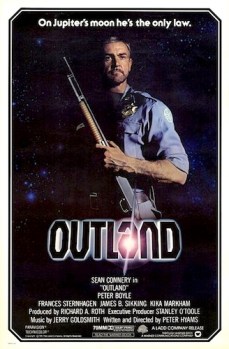 I first encountered Outland in a similar context to a lot of people, I think, based on reviews and whatnot I’ve read; that is, as “
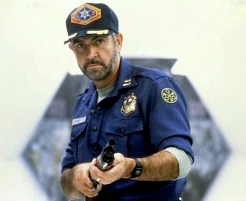 It works as well in space as it does anywhere else.


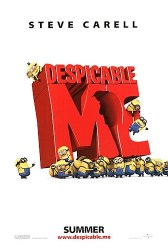
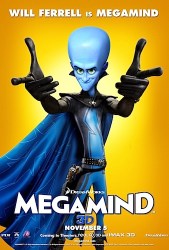


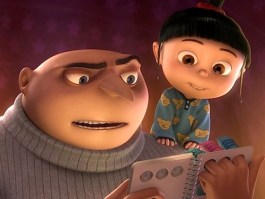
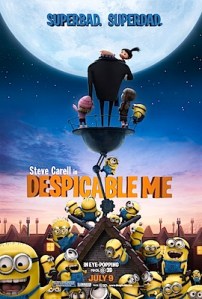 A venture into the increasingly-popular CG family film market from Universal, Despicable Me is about a supervillain who comes to question his evil ways. It was released the same year as the similarly-themed
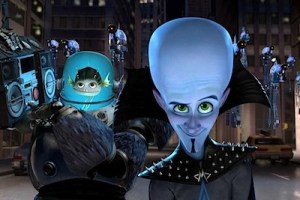
  The film’s country is officially listed as USA because it’s made with American money, but it feels more like a French production (albeit dubbed with US voices). Look at those directors’ names (though only Coffin is French — Renaud is actually American); it was made entirely in a French studio (Mac Guff in Paris); and it has a kind of feel that doesn’t seem like it came from a US studio. So while technically, yes, it’s American, I don’t think the French side should be wholly ignored. I’m not saying it makes it bad, but perhaps it lessens the apparent superhero feel — that’s a very American genre, after all.
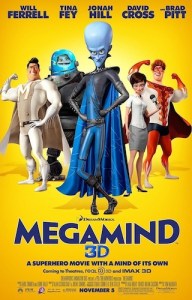 From the co-director of
  There’s a starry voice cast behind the characters, and fortunately they never overwhelm their roles. Which is good, because I’m not really a fan of Will Ferrell and he’s the lead. There’s also the likes of Brad Pitt, Tina Fey, Jonah Hill and Ben Stiller rounding out proceedings — not that it matters because, as I say, the voices fit their roles seamlessly.
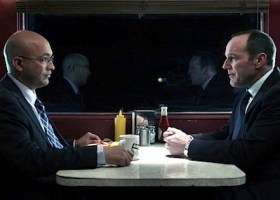 Despite that aim, these aren’t glaring holes that desperately need a fix. Rather they’re join-the-dots enterprises; the thing most people won’t have noticed at all, that fans may have wondered about, that it’s more fun to connect up than strictly necessary. It makes this piece resolutely fan-only — while it’s quite good, it’s more admin than a story in its own right, showing how various films connect together in the lead-up to
  It’s a standalone piece, and though it’s brief (under three minutes before the credits role), it still manages to add quite a lot to the character of Agent Coulson, who in the main films to this point has been a minor (albeit increasingly major) supporting role. I suppose it’s fitting that Clark Gregg has been the star of these connecting shorts, as he’s one of the main links across the films (he appears in
 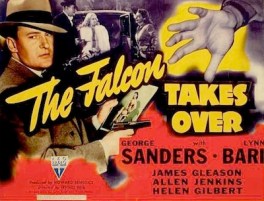 Quite outside of the Falcon film series, this third entry is notable for being the first screen adaptation of a Raymond Chandler novel. Ditching Chandler’s then-unknown Philip Marlowe in favour of the Falcon in the lead role, this is a version of the character’s second mystery, Farewell, My Lovely — which would be
  As usual, it doesn’t have the same je ne sais quoi that makes the Saint films particularly entertaining (yeah, you know I mean wit); and I can well believe it has “
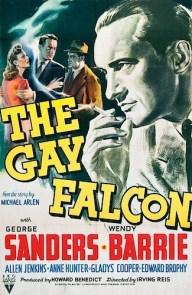 Worried about the cost of renewing the licence to popular hero the Saint, RKO instead acquired Michael Arlen’s the Falcon and essentially modelled him as a replacement, much to the chagrin of Saint creator Leslie Charteris. And who can blame him? They even cast the star of the Saint, George Sanders. Cheeky.
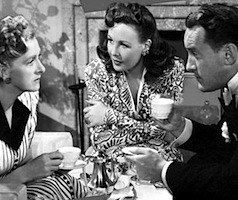 The story (the only one in the series adapted from a work by Arlen) is a solid mystery about jewellery thieves, which doesn’t seem to have quite the scale of the Saint films. Those were often contained to one city, but they felt somehow grander, like the schemes being foiled were of broad significance; here, it’s basically work for the police. To put it another way, if there was always the sensation that the Saint was an anterior James Bond, you could say the Falcon is more like Sherlock Holmes.
 The Gay Falcon makes for solid enough entertainment, mixing thrills with humour to decent effect. But despite attempts to emulate it, not least with the same leading man and woman, it’s no the Saint — they’ve not injected Gay Laurence with quite the same way with words and the supporting cast lacks a Teal or ‘Pearly’ Gates type to really make it click. Whether future entries stray further from Arlen’s original and more into Saint territory, or not, remains to be seen.

 100Films.co.uk