
Michael Mann | 91 mins | TV | 2.35:1 | UK / English | 18 / R
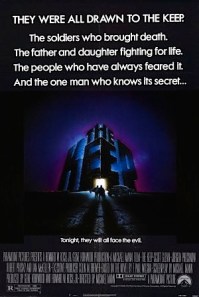 Michael Mann is arguably best known for his modern, urban, slick, intricate crime thrillers — films like Heat, Collateral and Miami Vice; all movies that I have greatly enjoyed (yes, including Miami Vice). So it’s a bit of a surprise to discover his second feature in the director’s chair was a supernatural fantasy/horror set during World War II. I confess that I’d never even heard of it before I read Mike’s piece at Films on the Box the other day, after which my interest was sufficiently piqued to make sure to watch it (obviously, as there’s now this review).
And it’s really good… for about half an hour or so. The opening sees a platoon (or whatever) of Nazis arrive in a remote Romanian mountain village to occupy a deserted castle for some kind of defence purposes that don’t look to make a great deal of strategic sense. But shh, because the castle — the titular keep — has walls lined with metal crosses and, spookily, is built back to front: as Jürgen Prochnow’s character, the One Good Nazi, observes, “this place was not constructed to keep something… out.” Oh dear.
At this point Mann — on both writing (adapted from a novel by F. Paul Wilson) and directing duties — has managed to turn in a film that is genuinely creepy, with an effective sense of foreboding and mystery. But the longer it goes on, the more evident it becomes that chunks of the story are missing, the result of the studio hacking away at Mann’s three-hour-ish cut. Events become convoluted and borderline nonsensical, and whatever thematic points the film has to make about evil and belief get lost in the mix. I’m certain there’s something there, because long-ish discussions between various pairs of characters remain, but what Mann was driving at, God only knows.
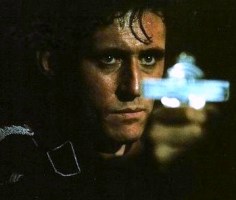 Should we long for a Director’s Cut, then? Maybe that would be an improvement, but I’m not convinced it would be good per se. You see, the film doesn’t just stick to giving us Nazis vs Whatever The Keep Contains, oh no. First the SS turn up, led by a Properly Evil Nazi, played straight by Gabriel Byrne. Escalation, great. Then there’s Ian McKellen as a professor drafted in to make sense of the keep’s mysteries. Also great — even the Good Nazi is going to have to die, right? Who better to root for than a saved-from-a-concentration-camp Jewish professor.
But oh, then we meet Scott Glenn, and his glowing purple eyes, riding across Europe on a motorbike to somehow save the day. And that entire element of the film is awfully hokey. Not to mention that it leads to a morally dubious sexual liaison: Glenn persuade some border guards to let him pass using only the power of his glowy eyes; later, about five minutes after meeting the ostensible heroine (McKellen’s character’s daughter, the only female), he’s managed to persuade her to wriggle around naked on his lap — coincidence? I guess this sequence is meant to be titillating, but the random grabbing, fidgetiness, soft focus, and the film’s constant softcore porno music (which naturally continues unabated during this segment) make it just laughable.
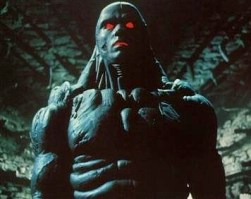 There are plus points, but they all come with a commensurate downside. The creature is well-realised at first, with some nice animated effects that are more effective than much of the over-cooked CGI spectacle we’d get today. The more we see of him, however, the less power he holds — he ends up essentially a very tall man. OK, it’s a bit better than that makes it sound, but the mysterious billowing smoke was spookier. The film on the whole is nicely shot, with some real standout moments of cinematography. But slow-mo and a smoke machine both get overused by the end, lending many of the visuals a tacky ’80s edge.
So too the score by Tangerine Dream, which has the odd moody moment but also plenty of cringe-inducing synths. Vangelis’ work on Blade Runner is a good example of how this most ’80s of sounds can age well; The Keep is an example of when it can’t. (For more on that element in particular, do see the ghost of 82’s review.) And talking of sound, what the bloody hell is going on with the accents? This Romanian village seems to be located somewhere in the US, including McKellen offering an OTT Chicago twang. Even his considerable acting skills get buried beneath that.
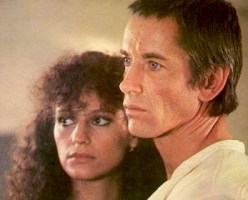 One thing the film never manages to be is remotely scary. It’s not aiming for cheap jump- or gore-based shocks (although there is a little goriness, it’s quite light; triply so by today’s standards), but it doesn’t manage any significant senses of dread or creepiness. As noted, early on it seems to be heading in the right direction — even the secluded mountain village, nestled in a harsh landscape but with greener-than-green grass and garishly painted houses, and towered over by the foreboding slab of stone that is the titular structure, is an uncanny start — but it never makes good on the promise.
I’d love to see a remake of The Keep; one with a boldness and a vision to take what works, ditch what doesn’t, and craft a suitably creepy Nazis-vs-the-supernatural horror movie out of what’s left. Of course, I’m thinking specifically about what I feel works and doesn’t — anyone who’s read the novel, which apparently is much chunkier and ties into other works by the author, would surely have a very different opinion and despise what I’d do given half a chance. Indeed, though the film has been disowned by Mann (reportedly he’s even blocked it being released on DVD), it has quite the cult following — look it up on LOVEFiLM, or at the boards on IMDb, and four- or five-star ratings abound, with people numbering it among their favourite films ever.
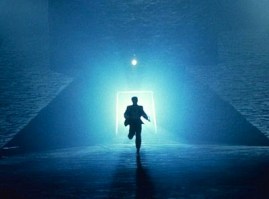 I would love to join their ranks, because there are numerous exciting ideas and moments of quality filmmaking to be found here; but I won’t be, because there’s too much muddled dross packed in around them. The result is that quite-rare thing: a decidedly mediocre film that I’m actually glad I’ve seen. But, unless someone wants to hire me for that remake, never again.

This review is part of the 100 Films Advent Calendar 2012. Read more here.
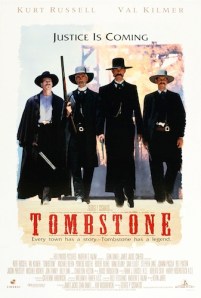 The story of the OK Corral is one I know by name only; I haven’t even seen the
  That may be down to historical accuracy. There’s a distinct feeling of veracity to proceedings, and as I understand it a concerted effort was made in that regard. The Movies perhaps shouldn’t worry about sticking too closely to fact (if you want an accurate lesson, read a textbook), but when they can manage to be both factually accurate and entertaining, it’s all the better. Cosmatos & co appear to balance this well.
 Mainstream US superhero comics underwent something of a revolution — or an evolution, if you prefer — in the ’80s, moving from simplistic good vs evil tales-of-the-week to deeper, thematic- and character-driven stories that in some cases took months or even years to relate in full. It’s a change that’s still felt today (some would contend that they’ve been stuck for decades in a rut these developments ultimately led to). It’s generally considered that there were three works at the forefront of this wave of more adult-orientated comics, all of which still rotationally top Best Graphic Novel Ever polls today: Alan Moore and Dave Gibson’s
  Like Year One before it, the team behind these direct-to-DVD DC animated movies have taken a reverent route to bringing DKR to the screen. It’s in two parts because the original story is too long to faithfully adapt in their limited-length movies (it’ll work out at about two-and-a-half hours all told, which isn’t commercially viable for a direct-to-disc animation), but that also works out OK from a storytelling point of view: this first half ends with a major threat wrapped up and a great cliffhanger to kick off the second half. Those with less appreciation for the economics of film production have slated DC/Warner for splitting the film in two like this, but in some ways it works to its benefit artistically as well as commercially.
 Stylistically, the film retains Miller’s designs, albeit a bit smartened up to work consistently as animation. Some will bemoan that homogenising but others may delight in it — Miller’s art is generally a bit on the scruffy side, I think. Is it an appropriate mark of respect that they’ve translated it so literally from page to screen, or would it have been more interesting for the filmmakers to have taken Miller’s plot and situated it in a world drawn from their own designs? I’m not going to argue that they could have improved on Miller’s work, but it might have been interesting to see the story given a spin in a different artistic style.
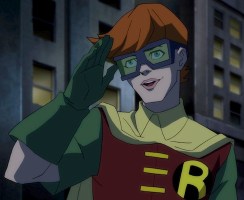 Voice work — the other major addition of an animated re-telling, of course — ranges from solid to very good. I wasn’t convinced by the casting of former RoboCop Peter Weller as Bruce Wayne/Batman, but he’s pretty darn good, carrying exactly the right kind of aged gruffness. It’s unique, I think, to see an active Batman this old on screen — sure, Nolan forwarded things eight years for Rises, but he’s still played by a relatively young and fit Christian Bale, whereas this Batman is grey, in his mid 50s and looking even older. I don’t recall a significant weak link in the rest of the cast, with
 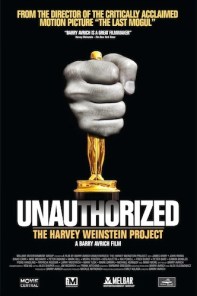 The documentary that Weinstein reportedly tried to stop existing, including discouraging people from participating in interviews. Either he needn’t have worried or really is a complete megalomaniac, because while there is a certain warts-and-all aspect to Avrich’s cinematic biography, it can’t help but admire all that Weinstein has achieved.
 Even for those who were following film culture through this era, and in spite of Harvey’s apparent efforts, there are numerous interviewees who were there — former Miramax employees, for instance — to offer insight. Thanks to archive footage we get even more opinions, including a fair few comments from Harvey himself. How much of this was available at the time, I obviously don’t know. Even if it is mostly recap, it’s a concise and well-constructed one.
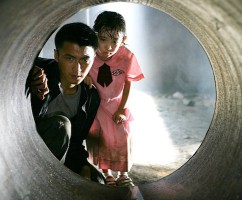
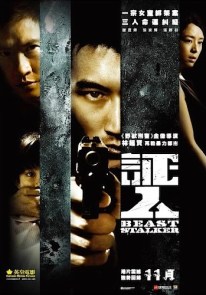 While in pursuit of an accused murderer, a cop (Nicholas Tse) accidentally kills the daughter of said murderer’s prosecutor (Jingchu Zhang). Three months later, just days before his trial, the accused has the prosecutor’s other daughter kidnapped, to persuade her to destroy the evidence proving his guilt. Despite having spent the intervening time in reclusive self doubt, the cop sets out to rescue the kidnapped little girl.
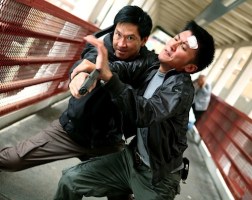 making them a little perfunctory — the real meat actually lies in the plot’s twists and turns. This is more one for fans of thrillers than beat-’em-ups.
 The top performance comes from Nick Cheung as a for-hire kidnapper with the Bondian trait of being blinded in one eye while the other only has black-and-white vision. He gets added complexity thanks to an invalided wife he tenderly cares for — he’s only in this life of crime to pay off his debts and medical bills, y’know. Cheung’s largely silent turn manages a fine balance of menace and sympathy. He won a couple of HK awards for it,
  A brief couple of scenes with a bullied colleague play out nicely, though unfortunately they contrast with a painfully written bit in which another colleague tells Tse’s character what people think of him. “They said you were horrible, but I like working for you,” she tells him (I paraphrase), for no discernible reason. It doesn’t even matter that we’re told that, because we’ve already seen it. I just don’t get it.
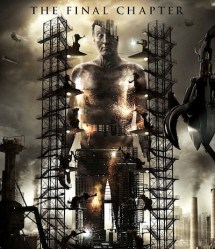 Talking of Halloween, you may have noticed that I’ve been re-posting all of my Saw reviews. Now seemed as good a time as any. To accompany that, I wrote some new words on my opinion of the franchise as a whole. If you missed it, you can read those
  #81a Dr. No (1962)
 #83 Prometheus (2012)
 Before
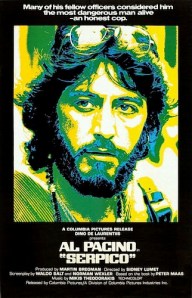
  As the titular copper, it’s a typically strong performance from Al Pacino. Not his best work — I don’t think the part really gives him enough to deliver that — but he’s more often than not the most engaging element of the film. This was his fifth film; considering
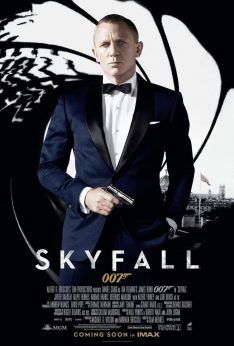 Bond is back, and you’ve surely seen the torrent of 4- and 5-star reviews (and the insignificant handful of dissenting voices). I’m pleased to report that the consensus is correct: Skyfall is Bond at his best.
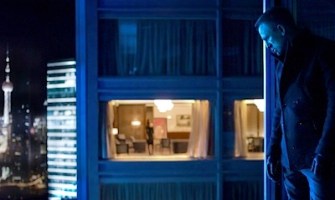 Technically speaking, the film looks gorgeous thanks to Roger Deakins’ cinematography. Best looking Bond ever? There’s little I can think of to dispute that. Obviously it could be said to lack some of that ’60s glamour, but from a purely photographic perspective, it shines. (Incidentally, this shot isn’t actually in the film.) I’m less sold on Thomas Newman’s score. While in no way bad, and with undoubted sparing but precise use of the Bond theme, it didn’t always click for me. The fact I at times felt like I was listening to cues from
 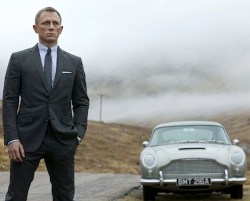 honestly, there perhaps aren’t as many twists as you might expect in that department, but the ways they’ve nodded to the franchise’s history are sublime.
  Lewis Gilbert is the director of
 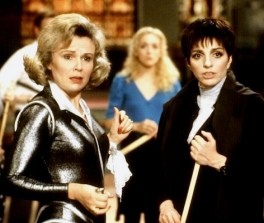 The standout from the cast is probably Julie Walters, in a relatively early big-screen role. Considering how well-known she is now she seems quite lowly billed and little-featured, but bearing in mind this is a US production from the early ’90s, it’s less surprising. She’s very good (isn’t she always?) as the group’s newest member, a posh English lady who sticks her oar in and is a bit too blunt with her comments. I seem to remember her generating most of the laughs in this comedy-drama, although that’s not to disparage anyone else’s work.
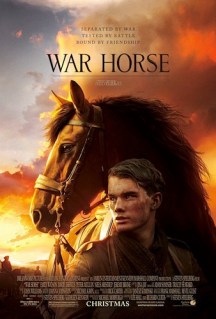 After decades telling tales from the Second World War, Spielberg moves back a conflict. That said, the BD’s special features make sure to point out this “is not his First World War movie” — it’s just a good tale about a boy and his horse.
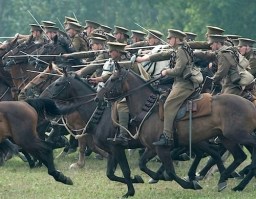 It can’t be denied that there’s factual inaccuracy here (the climax takes place at the Somme in the lead up to Armistice Day in 1918, but that battle was actually fought in 1916), or the occasional heavy dose of sentimentality (it’s directed by Spielberg and co-penned by Richard Curtis — what did you expect?), but I think it carries through these with a scale and heart that is, primarily, entertaining. It is based on a children’s novel and I think aims to be a family film (it should by rights be a PG; my twitter rant on that subject is
 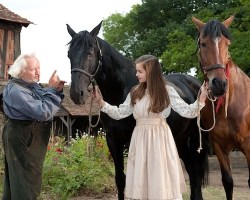 Aiding the sense of the epic is Janusz Kaminski’s cinematography, which is regularly stunning and definitely one of the film’s standout achievements. The beauty of some shots is immediately obvious — he lenses the countryside idyll of Dartmoor in a sweeping fashion, bathed in summer sunlight — but there are striking compositions to be found throughout, be they in close-ups, cavalry charges, horse auctions, battlefield hospitals… There’s often a lovely texture to things too, from the likes of drifting snow or chaff, or the way light streaks across a room. The final scene, fully tinted orange, calls to mind the likes of
 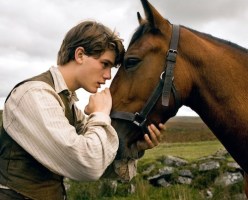 one that isn’t afraid to depict some of the nastier realities of the world, but in a way that makes them relatable for a younger audience. I think that’s important; but this isn’t a Worthy Film for that, it’s just something it does well. I think it also nails sensations of adventure and, yes, sentimentality.
 100Films.co.uk