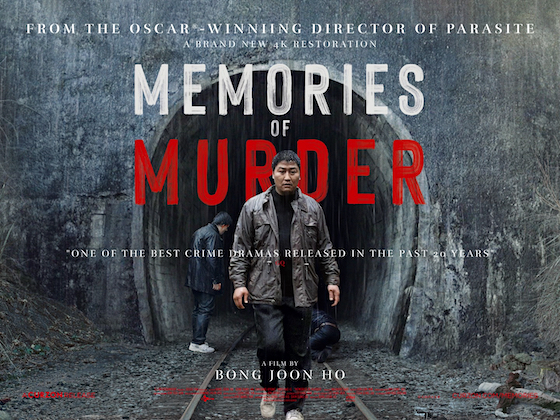
Memories of Murder (2003)

aka Salinui chueok

2019 #15
Bong Joon Ho | 131 mins | download (HD) | 1.85:1 | South Korea / Korean | 15

Memories of Murder

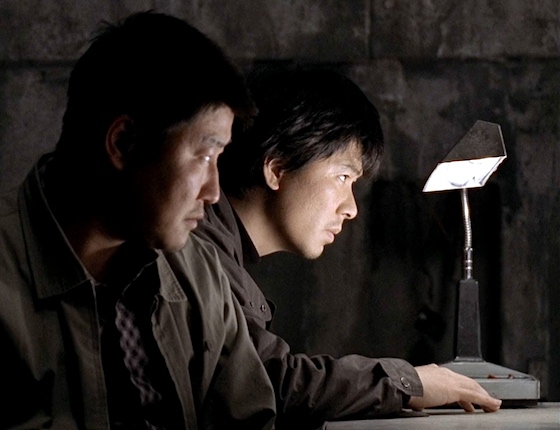
South Korean director Bong Joon Ho has gradually risen in prominence over the past few years, culminating in Parasite’s history-making success at this year’s Oscars (yes, that was only earlier this year). Memories of Murder wasn’t his debut work, but it was what initially garnered him some attention outside Korea. It’s been surprisingly hard to come by for a while now, but a new 4K restoration is released in the UK via Curzon today (it’s coming to US cinemas for a limited run in October, and new Blu-ray releases (including one from Criterion) will follow).

In 1986, two women are raped and murdered in provincial South Korea. The local detective, Park Doo-man (Bong regular Song Kang-ho), has never dealt with a case of this magnitude and relies on old-fashioned methods — his main one being to have his partner, Cho (Kim Roi-ha), beat confessions out of suspects. After a modern-minded big-city ‘tec, Seo Tae-yoon (Kim Sang-kyung), volunteers to help, the old and the new clash. As more crimes are committed, more clues are gathered, and more suspects are apprehended, but then cleared. Can the police ever get close to their man?

Loosely based on the true story of Korea’s first serial murders, and taking a procedural approach to the crime thriller genre, Memories of Murder invites comparison to David Fincher’s Zodiac for its methodical, realistic narrative style and plot that follows obsessed investigators chasing unsolved murders in the past. Zodiac is one of my favourite films (it placed 3rd in 100 Favourites II), so it’s a tall order to be pitched against it. Fortunately, Memories of Murder is strong enough to withstand the comparison.

Investigators

A lot of praise that applies to Zodiac could be copy-and-pasted here. In addition to the facets I’ve already mentioned, there are several fine performances (not least from Song, who’s clearly become a Bong regular for a reason); several striking set piece crimes and/or discoveries without indulging in glorification of real crimes; and a commentary on the methods and obsessions of investigators that goes beyond ‘doing the job’. It does none of this in the same way as Fincher would a couple of years later, but it’s a different perspective within the same genre headspace.

Memories of Murder is already a well-regarded film (on top of a 91% Tomatometer score, it’s on the IMDb Top 250 and in the top 100 of Letterboxd’s version ) but, having been out of widespread circulation for a few years, and with renewed interest in Bong’s back catalogue, it’s ripe for wider (re)discovery.

5 out of 5

Memories of Murder is available to rent on Curzon Home Cinema from today.

It placed 5th on my list of The Best Films I Saw in 2019, after being viewed as part of What Do You Mean You Haven’t Seen…? 2019.

Le Mans ’66 (2019)

aka Ford v Ferrari

2020 #177
James Mangold | 153 mins | Blu-ray (UHD) | 2.39:1 | USA / English & Italian |
12 / PG-13

Le Mans '66

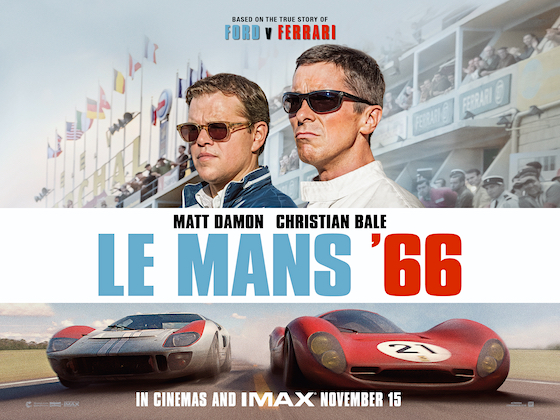
Did you know that Ford tried to buy Ferrari in the ’60s? I didn’t. As per this film, Ford were desperate to appeal to a younger market and an association with motor racing seemed the way to do that. Ferrari were the regular winners of the Le Mans 24-hour race but were struggling financially, so Ford made an offer; but Ferrari played them, merely using Ford’s interest to get a better deal from Fiat. Pissed off, Ford set about making a racing car by themselves to beat Ferrari at their own game. Enter former Le Mans-winning driver turned race-car designer Carroll Shelby (Matt Damon), a smooth-talking American who’s as adept at charming higher-ups as he is at making fast cars; and his favoured mechanic and driver, Ken Miles (Christian Bale), a quick-tempered Brit who rubs the Ford execs up the wrong way. With Ford’s money behind them, but also management watching over them, can Shelby and Miles engineer a car good enough to beat Ferrari at Le Mans?

That the film goes by one of two different titles depending where you live might seem like an incidental point of trivia — it’s not the first time this has happened (Avengers Assemble is probably the most famous recent example), and it wasn’t an artistic decision, nor even a marketing one, apparently, but instead legal necessity (according to director James Mangold, you can’t use brand names in a title in the UK and/or Europe) — but it’s also a lens through which we can consider the film’s focus. To wit, is it more about the rivalry between Ford and Ferrari (as in the original title) or winning the 1966 Le Mans race (as in the UK title)? The consensus seems to be that the original title sounds more dynamic, but I think the international one is more accurate. The head of Ford has it in for Ferrari, but our two heroes are more interested in winning the race, rivalry or not.

Winner!

To some extent the story has been streamlined in that direction. The original screenplay was an ensemble about the entire team building the Le Mans car — more historically accurate, I’m sure, but I’d wager less dramatic and personal. That’s what’s gained by focusing on Shelby and Miles, the two key figures. To the film’s credit, it still doesn’t pretend they did it alone. The role attributed to other mechanics may not be as large as it was in real life, but nor does the film try to pass it off as the achievement of just two men. What it primarily adds is relatable drama. This isn’t just a movie about building and/or racing a car, but about these two particular men — what motivates them; how their ego gets in the way, especially in Miles’s case.

The film plays to the lead actors’ strengths in this respect, with Damon turning on the easy charm and Bale, who famously stays in character throughout a shoot, embodying someone who is superb at their job but can be belligerent. The standout from a quality supporting cast is Caitriona Balfe. She may just have the typical Wife role, but she’s made to be a bit more badass than that usually allows… before getting relegated it to the sidelines for the finale, naturally.

Said finale is the eponymous Le Mans event, of course. It’s not the only race sequence in the film, but it’s by far the longest. Nonetheless, they’re all suitably thrilling in how they’re shot and edited. One of the film’s genres on IMDb is “Action”, and though it doesn’t really conform to my idea of what an Action movie is — not least in the fact that there are only three or four of these “action sequence” race scenes throughout the two-and-a-half-hour movie — I can see where they’re coming from.

We are golden

That runtime is quite long, but it doesn’t drag… once it gets going, anyway. The slowest part is early on, getting the story up and running, which I feel could have been streamlined. Ford’s attempt to buy Ferrari initially seems like an aside, but obviously it comes to frame the whole rivalry; but Miles’s woes with the IRS barely have anything to do with the rest of the movie, and, other than providing an extended introduction to the man, I don’t think you’d lose much by losing them. The film was clearly trimmed a fair bit, though, because there are loads of little bits you can spot in the making-of that aren’t in the finished film. Said making-of also highlights the choices behind the cinematography. The visuals are very golden — that kind of “wasn’t the past pretty” atmosphere — but the behind-the-scenes footage shows the shooting conditions to be much duller and greyer, revealing how much the orange/gold light comes from the camerawork and grading.

Le Mans ’66 might look like a film for car nuts, and I’m sure they’ll get a lot out of it — alongside the likes of Rush, I guess this kind of thing would be their favourite movie (both those films currently sit in the IMDb Top 250). But the rest of us are by no means left out, thanks to involving characters and exciting race scenes, even if some plot beats border on clichéd. Le Mans ’66 may not reinvent the wheel, but it works hard at refining it.

4 out of 5

Le Mans ’66 is available on Sky Cinema and Now TV from midnight tonight.

Jodorowsky’s Dune (2013)

2018 #228
Frank Pavich | 90 mins | Blu-ray | 1.78:1 | France & USA / English, French, German & Spanish | 12A / PG-13

Jodorowsky's Dune

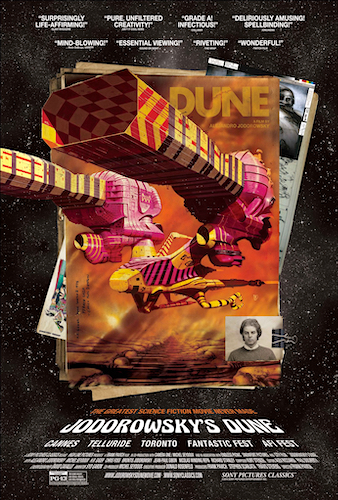
In 1974, director Alejandro Jodorowsky was hot off a pair of psychedelic projects — “acid Western” El Topo and surrealist fantasy The Holy Mountain — that had brought some cult attention and success (El Topo was the original “midnight movie”, while The Holy Mountain was apparently second only to that year’s Bond film at the Italian box office). Consequently, his French distributor, Michel Seydoux, offered to produce whatever he wanted to do next. Jodorowsky’s answer was Dune. He’d never read it, but he had a friend who said it was fantastic.

So begins the crazy story of how a director of surrealist Mexican art-films came this close to making an epic space opera out of one of the most acclaimed science-fiction novels ever written, but, in his failure, accidentally helped give birth to Star Wars (sort of), Alien (indirectly), and possibly the entire history of screen science-fiction that did actually get made in the ensuing 40 years. Sounds like a bit of a stretch? Um, well, yeah… but that doesn’t stop some of this documentary’s contributors from asserting it, and they do kind of have evidence.

Mind you, Jodorowsky’s Dune is full of interviewees making grand assertions, not least the eponymous filmmaker himself. He unironically describes his Dune as “the most important picture in the history of humanity”. He pitches himself as a prophet, thinks of his crew as spiritual warriors, and is convinced the film was going to be a great message for humanity; that it would literally change the world. The lack of self-awareness when he considers Douglas Trumbull to be full of his own importance is palpable. Jodorowsky’s regard for himself and the project may seem deluded, but at least he was committed. They spent two-and-a-half years developing this movie, including storyboarding every shot and getting exactly the right kind of people for the cast and crew — he pursued Dalí literally around the world to persuade him to play the Emperor; he rejected Trumbull, not because of an ego clash, but because he felt he was a technician rather than a spiritual person. He’s a bit barmy, but Jodorowsky definitely believed what he was doing was some grand transcendent enterprise.

A Chris Foss spaceship design for Dune

Such an attitude might get you far with arty types, but it doesn’t wash with the moneymen of Hollywood. The film had a projected budget of $15 million, and they went to the Hollywood studios seeking the last $5 million. In hand they had a giant tome containing all the storyboards, the costume and production designs, and so on. The book convinced them — it was well planned out and reasonably costed — but this barmy director — whose only previous films were weird psychedelic experiences; whose response to “make it under two hours” was, “why? If it needs be, it’ll be 12 hours, or 20!” — he didn’t fill them with confidence. And so they didn’t get the money, and the film fell through. Well, duh. Surely they could see how that was going to go? Maybe people just weren’t as savvy in the ’70s, especially these optimistic, committed artists.

All the documentary’s interviewees act like this was a problem with Hollywood moneymen having no vision, but c’mon, it’s easy to see where they were coming from. Plus, the fact that “the book convinced them” is just the word of Seydoux. Maybe Jodorowsky’s history and attitude was just a convenient excuse, because a lot of the stuff that was designed and planned is quite out there, especially to the mind of a ’70s Hollywood suit. It brings us back to how everyone’s making grand assertions: they all act like the film was going to be an unquestionable masterpiece, but it seems to me there’s a much higher chance it would’ve been terrible. For one thing, there’s doubt over if they even could have made it. It was an insanely ambitious project, with plans to do things George Lucas wouldn’t even attempt in the prequel trilogy, never mind what he struggled to get done in 1977. But there’s a first time for everything — 2001 still holds up, after all, and that was made seven years earlier. Still, I don’t know how successful Jodorowsky’s surrealist mindset would’ve made it as a movie — it probably would’ve been even less palatable to a mainstream audience than the Lynch version.

Dune storyboards

That said, there seems little doubt Jodorowsky was ahead of his time here. For starters, the idea of making a 12-hour film isn’t so ludicrous anymore. In the deleted scenes (there’s a hefty 46 minutes of them on the Blu-ray), he acknowledges people wouldn’t sit through that, saying he was prepared to release it in chunks if necessary — so, just like Lord of the Rings would do to huge success 25 years later? Jump forward another 20 years, and it’s even how they’re doing Dune, in two parts! Of course, it was unprecedented in 1975; and, decades later, Rings was still seen as a gamble, but it paid off and Hollywood is now littered with franchises where instalments connect up as closely as TV series. And what of TV series, where you’re also seeing 12-hour (or longer) single narratives.

Aside from general questions of form, when you look at some of Dune’s storyboards and plans you can see mirrors to stuff that wouldn’t be done until later. This is where the claim that Jodorowsky’s work on Dune led to Star Wars, Alien, et al, comes from, because you can see parallels between what he did and what would come after. His film was never made, but they produced 20 copies of that book I mentioned, and only two are known to exist (one with Jodorowsky, one with Seydoux). The rest were left with Hollywood studios. Were they passed around behind-the-scenes? Did the likes of Lucas and Spielberg and Ridley Scott and Mike Hodges and James Cameron really see them and pilfer ideas? Or is it just coincidence — Jodorowsky thought of them first but couldn’t execute them, then others thought of them independently and pulled it off. Pick your own side.

However, the claim that Dune led almost directly to Alien is less dubious. After he rejected Trumbull, Jodorowsky saw John Carpenter’s Dark Star and was impressed enough to hunt down its visual effects guy, Dan O’Bannon. Concept artists he hired included Chris Foss (painter of sci-fi book covers, mainly spaceships); Moebius (French comic book artist, for costume designs and storyboards); and H.R. Giger (German artist, who designed the dark and twisted world of the film’s villains). Those who know their Alien history might recognise all of those names: after Dune fell through, O’Bannon went on to write Alien, and all three of those designers followed on to the project. Maybe Alien would have come together just as well without the lead-in from Dune, we’ll never know, but those connections are pretty striking.

Giger at work on Dune

Lest you feel bad for everyone just ripping Jodorowsky off, he was able to recycle some of the ideas himself. His vision for Dune was only broadly faithful (one of the better deleted scenes is about his attitude to adaptation, which it seems Frank Herbert agreed with; i.e. that it’s not about being faithful, but reimagining something as a new, different work of art), and so he had plenty of fresh ideas that, presumably, weren’t tied up in the rights to Dune. Jodorowsky and Moebius piled some of these directly into later comic book collaborations, like The Incal and The Metabarons. A good idea never dies, I guess. Well, whether they were good ideas or just good in Jodorowsky’s mind, I don’t know. It does make me interested to read those books, though.

Jodorowsky’s Dune is an interesting “what if” in the history of science-fiction cinema, and this documentary does a good job of being a making-of for a movie that was never made. (If you think this review reads like I’ve just regurgitated the entire story, I promise, there’s a lot more in the film; not to mention the unique benefits of hearing it from the horses’ mouths, rather than my abridgement for the sake of appending my own opinions.) Some critics assert the documentary does more than just recount interesting anecdotes; that it offers some kind of transcendent viewpoint about the creation of art. Maybe if you’re of a similarly spiritual disposition to Jodorowsky himself, that’s what you’ll take from it. For me, it’s most interesting as a window into what might have been. If it had been made, would Jodorowsky’s Dune occupy the place of Star Wars in our culture? Its devotees think so. I don’t, to be honest. But it’s fun to think about.

4 out of 5

The trailer for Denis Villeneuve’s new adaptation of Dune will be released later today.

The 100-Week Roundup XI

This week: an underrated crime thriller based on the same true-life story as a Hitchcock classic; an investigation of the trauma left by conflict in a film I’ve nicknamed “Gulf War Rashomon”; and a test of this “just post my notes already” roundup format with one of my favourite films I watched in 2018.

They are…

  • Compulsion (1959)
  • Heathers (1988)
  • Courage Under Fire (1996)


    Compulsion
    (1959)

    2018 #194
    Richard Fleischer | 99 mins | TV | 2.35:1 | USA / English | 12

    Compulsion

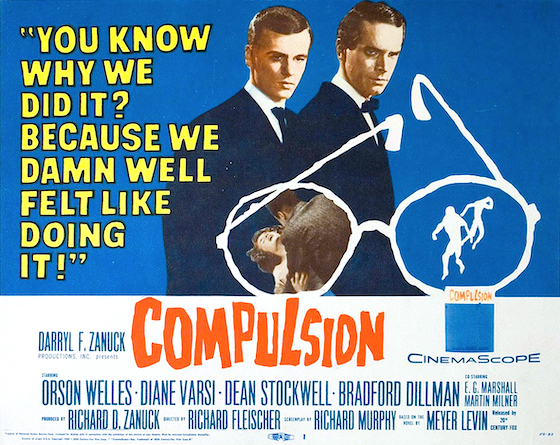
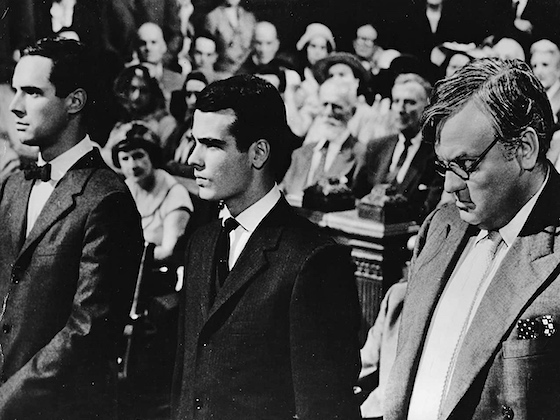
    Based on a novel that was based on the Leopold and Loeb case (which has also been the inspiration for various other films, most notably Alfred Hitchcock’s Rope), Compulsion is the story of two students who think their intellectual superiority will allow them to get away with the perfect murder.

    Playing the students, Dean Stockwell and Bradford Dillman are both fantastic. They’re two different types of well-to-do prodigies: Dillman charming and cocksure; Stockwell both awkward and supremely confident of his own exceptionalness. Their performances keep things compelling, even as the events unfolding are a foregone conclusion. You should and will hate them — even if they weren’t murderers, they’d be insufferable pricks (they sound like any number of modern-day politicians, don’t they?); that they’re cold-blooded killers just makes them worse. But even though you’ll never root for them, they’re still addictively watchable. Also, bearing in mind when the film was made, there’s a strong undercurrent of their homosexuality. It disappears as the film goes on, becoming more concerned with the case than the relationship between the two guys, but it’s discernibly there at the start.

    And then Orson Welles turns up. Despite getting top billing, he has more of a third act cameo that turns into the film’s most grandstanding moment: his closing speech at the trial; a real tour de force against capital punishment. Apparently it was issued on vinyl, it’s that good. The three stars got and get all the recognition (they shared Best Actor at Cannes that year), but there are also fine supporting performances from Martin Milner and Diane Varsi as a couple of fellow students who get caught up in the case in different ways; and E.G. Marshall is very good as DA Horn, the man who eventually catches the guys and therefore becomes Welles’ courtroom nemesis. He’s particularly understated during Welles’ big speech, gradually shifting from annoyance and hatred to agreement, ultimately rising to his feet at the end as if in a silent standing ovation.

    Stillman, Stockwell and Welles

    Aside from that obvious Big Scene, there are several other memorable ones: Dillman calmly talking to his teddy bear while Stockwell frantically searches for misplaced glasses, for example; or the cat-and-mouse scenes where the DA interviews the lads separately. Much of it is fantastically shot, too. There’s an occasional showy bit (like focusing on glasses on a nightstand as it gets dark outside, then showing the culprit and investigator reflected one in each lens), but also a general level of quality that often helps emphasise the darkness in the lads’ souls.

    I don’t think Compulsion is widely discussed anymore (it has fewer ratings on IMDb than Love on a Leash!), but I thought it was a brilliant film; one that can withstand comparison to more-acclaimed versions of the same story. It’s definitely underrated today.

    5 out of 5

    Heathers
    (1988)

    2018 #196
    Michael Lehmann | 103 mins | Blu-ray | 1.85:1 | USA / English | 15 / R

    Heathers

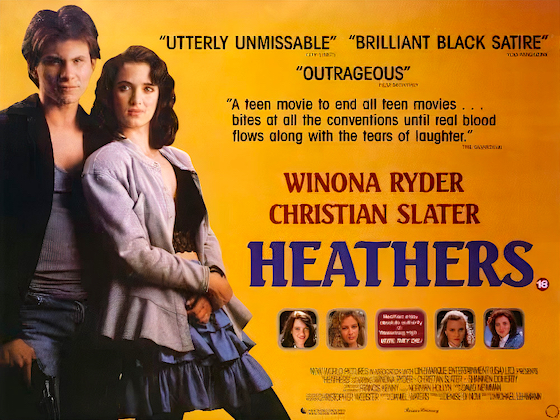
    Heathers was one of my favourite films I watched in 2018 (it placed 5th on my list of The 26 Best Films I Saw For the First Time in 2018), but I didn’t make any notes on it at the time, and (obviously) it’s now two years since I watched it. Oh dear.

    So, in the spirit of the point of these roundups (to clear old unreviewed films, regardless of how much or little I have to say about them), we’ll have to make do with repeating my brief summary from the aforementioned “best of” list. Though I’ll also add that I watched this on Arrow’s then-new Blu-ray edition, which comes from a 4K restoration and looks absolutely fantastic.

    The darkness that’s barely concealed beneath the pleasant veneer of American high schools is exposed in this pitch-black comedy, which mixes violent teen wish fulfilment with a certain degree of societal satire to boundary-pushing effect. It’s not as transgressively shocking 30 years on as it might’ve been back in the ’80s, but it’s still so very.

    5 out of 5

    Courage Under Fire
    (1996)

    2018 #197
    Edward Zwick | 108 mins | TV (HD) | 1.85:1 | USA / English | 15 / R

    Courage Under Fire

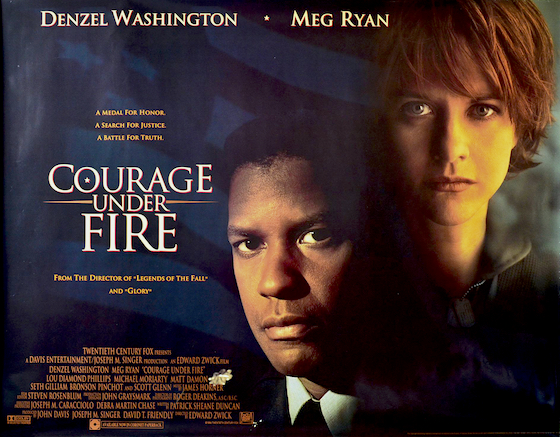
    It’s “Gulf War Rashomon” when a traumatised tank commander (Denzel Washington) encounters conflicting accounts of what happened while he investigates whether a helicopter pilot (Meg Ryan) deserves to be posthumously awarded the Medal of Honor, which would make her the first woman to receive it. As higher-ups put pressure on him to just push the honour through, he remains committed to uncovering the truth…

    The mystery of what really went on is not as clever or engrossing as the film thinks it is, but it still works as a meditation on how we acknowledge wartime heroism and the place of truth in doing so. It’s also a consideration of how many people are affected, in different ways, by the sacrifices of war.

    There are some decent performances along the way: Washington is always good value, and a before-he-was-famous Matt Damon demonstrates his commitment to the profession by losing a ton of weight between filming the flashback and “present day” scenes (endangering his health in the process) to portray a medical specialist indelibly affected by what went on ‘over there’. Apparently Mark Kermode said the casting of Meg Ryan as a chopper pilot was “the benchmark for a casting decision so ludicrous that it takes the viewer out of the film,” but I suspect that says more about how she was regarded at the time (best known for romcoms) than her actual performance (she’s no standout, but she’s fine).

    3 out of 5

  • The 100-Week Roundup X

    These 100-week roundups are a clearing house for reviews I haven’t got round to writing up 100 weeks (i.e. almost two years) after I actually watched the films in question. As I mentioned in my August review, I’ve recently fallen behind even on that, so the 100-week moniker isn’t technically accurate right now. Hopefully I’ll catch up soon.

    This time, we have a motley bunch from September 2018: two one-star films that made my “worst of year” list; and two four-star films, one of which made my “best of year” list. They are…

  • Lost in Space (1998)
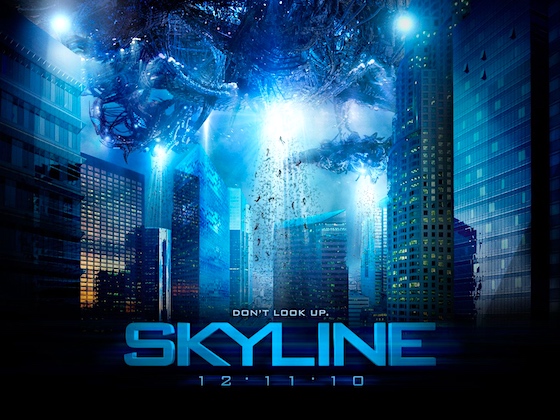
  • Skyline (2010)
  • April and the Extraordinary World (2015)
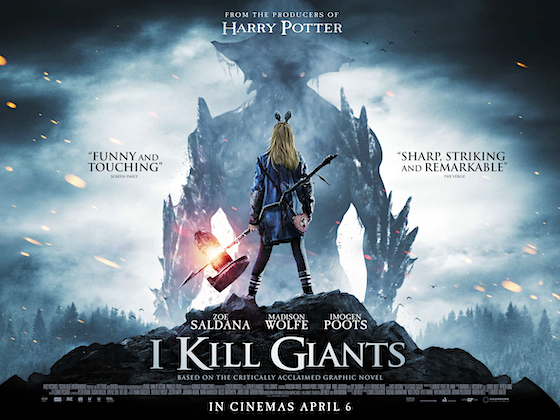
  • I Kill Giants (2018)


    Lost in Space
    (1998)

    2018 #189
    Stephen Hopkins | 125 mins | digital (HD) | 2.39:1 | USA / English | PG / PG-13

    Lost in Space

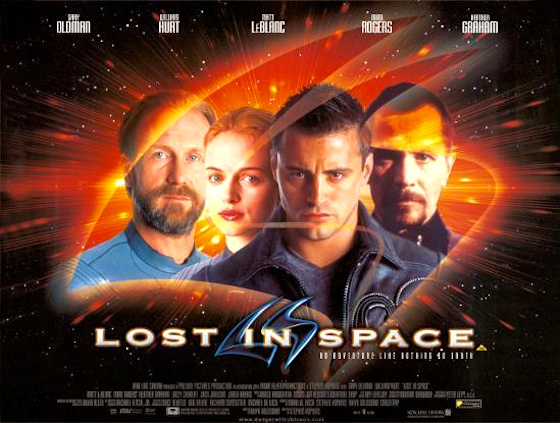
    I remember this reboot of the classic ’60s sci-fi series being received very poorly indeed when it came out in 1998; and so, even though I was a young sci-fi nut at the time, I didn’t bother to see it — and then spent the next 20 years not bothering to see it. But with the recent re-reboot on Netflix going down rather well, I thought maybe it was time to see for myself. I shouldn’t have bothered — it’s truly terrible.

    It gets off on the wrong foot, starting with a load of over-ambitious CGI, and that continues unabated throughout the entire movie. Anyone who moans about the quality of CGI in modern blockbusters should be made to watch this so they can understand what they’re complaining about. Maybe it looked ok back in ’98, I can’t remember (I suspect not), but watched now it looks like an old computer game, never mind an old movie.

    Poor effects can be forgiven if the film itself is any good, but the opening action scene is both fundamentally needless and stuffed to bursting with cliches, and the rest of the film is no better — just nonstop bad designs, bad dialogue, bad ideas, more bad CGI… Even the end credits are painful, playing like a spoof of the worst excesses of the ’90s, from the trippy “look what our computer graphics program can do” visuals to the dance-remix-with-dialogue-samples version of the theme.

    So, it turns out the critics at the time were right. I have seen even worse movies in my time, but there aren’t many merits here — there’s one effect that is well realised, at least. But that doesn’t come close to justifying the film, or for anyone to waste their time watching it. It really is very, very bad.

    1 out of 5

    Lost in Space featured on my list of The Five Worst Films I Saw For the First Time in 2018.

    Skyline
    (2010)

    2018 #190
    The Brothers Strause | 93 mins | digital (HD) | 2.35:1 | USA / English | 15 / PG-13

    Skyline

    In a Cloverfield-esque setup, a bunch of young people awaken from a boozy party to discover an Independence Day-esque alien invasion happening outside their window. What follows just feels like familiar parts from even more movies Frankensteined together in a failed attempt to produce something original.

    In terms of overall quality, it’s like a direct-to-Syfy movie granted a minor-blockbuster effects budget. Goodness knows how it landed a cinema release. The directors were visual effects artists who, based on their IMDb credits, moved into directing music videos before springboarding into film directing with Aliens vs Predator: Requiem, the sequel to the much maligned AVP that, shockingly, managed to be even worse. Skyline was their second feature — and, in a seemingly-rare bit of justice for directors making shitty blockbusters, their last (they’ve gone back to effects, where they continue to have a long list of high-profile credits). They completely financed Skyline themselves, forking out just $500,000 for the shoot before spending $10 million on the effects. It couldn’t be any clearer where their priorities were…

    And it feels like a film made by VFX artists. For one thing, one of the main characters is a VFX artist. He lives in a swanky apartment, with a hot wife and a hot mistress, drives a Ferrari and owns a yacht. Either this is extremely obvious wish fulfilment, or at one point VFX guys were doing very well indeed. (Considering there was that whole thing a few years back about major VFX companies shutting down, either this was made before the bubble burst, or some were able to weather the storm to a sickening degree. Or, like I said, it’s wish fulfilment.) Aside from that, it’s like a CGI showcase. Everything’s shot handheld, all the better to show off how realistically the CGI’s been integrated. The screenplay puts in no effort, with thinly sketched characters and a flat, uninspired storyline that rips off other movies with abandon, runs on a shortage of logic, features weak world-building with inconsistent rules, and seems to just… keep… going… until, after you think it’s definitely over this time, there’s yet another scene: a mind-bendingly gross and laughable finale.

    And yet, years later, someone made a sequel! I’ve even heard it recommended (though it has a lowly 5.3 on IMDb). Someday, I’ll have to see…

    1 out of 5

    Skyline featured on my list of The Five Worst Films I Saw For the First Time in 2018.

    April and the Extraordinary World
    (2015)

    aka Avril et le monde truqué

    2018 #191
    Christian Desmares & Franck Ekinci | 102 mins | digital (HD) | 1.85:1 | France, Belgium & Canada / French | PG / PG

    April and the Extraordinary World

    This French animation is an alternate-history steampunk adventure that follows orphan April (voiced by Marion Cotillard in the original audio) as she investigates a decades-long spate of missing scientists, including her own parents.

    The tone is one of pulp adventure, which is right up my street, and consequently I found the film a lot of fun. It’s a great adventure, abundant with imaginative sci-fi/fantasy ideas, engaging characters, and laced with humour. The independent French production means it’s not beholden to Hollywood homogenisation — there’s some very dark stuff in the world-building details, which contrasts somewhat with the light adventure tone of the actual plot, and some viewers may find this spread of tones problematic. More of an issue for me came when, a while in, the plot heads off into barmy sci-fi territory. No spoilers, but it wasn’t quite what I was expecting from the original premise. But this is perhaps more an issue of expectation than actuality — it wasn’t severe enough to lose me, just take the shine off something that was otherwise headed for perfection; and, as I adjusted to where the story was going, I enjoyed it more again.

    Resolutely unproblematic is the visual style. The design and animation, inspired by the works of comic book artist Jacques Tardi, are absolutely gorgeous — like a ligne claire comic sprung to life. When US animations try to ape an artist’s style, it often winds up as a movie-ised imitation — at best you can recognise the inspiration, but it’s still been filtered and reinterpreted (cf. Batman: The Dark Knight Returns). But this is like the panels just started moving, with full fluidity (none of the “jerkily moving between static poses” you sometimes get with cheaply-done modern animation). That applies to character animation as much as anything, but the wildly imaginative steampunk alternate history allows the designers and animators to really cut loose, with a fabulously invented world.

    Put alongside the likes of Long Way North and The Secret of Kells, it’s a reminder that we should look further afield than the US and Japan for great animation.

    4 out of 5

    April and the Extraordinary World placed 26th on my list of The Best Films I Saw in 2018.

    I Kill Giants
    (2018)

    2018 #193
    Anders Walter | 106 mins | digital (HD) | 2.39:1 | Belgium, UK, USA & China / English | 12 / PG-13

    I Kill Giants

    The past few years have seen a random, unexpected mini-genre pop up: dramas about Serious Issues where the protagonists also have something to do with giant monsters. I’m not talking about Pacific Rim or Godzilla, but movies where the monsters are either imaginary or in some other way analogous to the very real problems experienced by the characters. Films like A Monster Calls, about a teenage boy coping with impending bereavement, or Colossal, in which Anne Hathaway discovers she’s controlling a giant monster that keeps appearing (and which kept its big issue a secret in the marketing, so I will too). I don’t know if there’s really enough of these to call it a “genre”, but three films in as many years that fit roughly in that very specific bucket strikes me as a lot; and I watched all three in the span of a few months, just to emphasise the point.

    Anyway, the latest entry in this genre I may’ve just invented is I Kill Giants. Based on a graphic novel by Joe Kelly (who also penned this adaptation) and J.M. Ken Niimura, it’s about American schoolgirl Barbara (Madison Wolfe) who believes giants are coming to attack her hometown and she’s the only one prepared to fight them. Whether these giants are real or just an outward expression of an inner conflict is, of course, why this ties in with the other films I mentioned.

    There’s plenty of stuff I liked a lot in I Kill Giants. The female focus. The power of friendship, and of small acts of kindness. The acceptance of being a bit different and an outsider, within reason. The magical realism in its handling of the giants. Unfortunately, it takes a bit too long to get to its conclusion — it’s not exactly repetitive, but there is some running on the spot. When the finale comes, it’s an effective twist. I’d guessed many of the reveals, and I think the film definitely expects you to guess at least one (which it then wrong-foots you about). But narrative trickery isn’t really the point. It’s impossible to discuss which other film it’s most similar to without spoilers, but the other one dealt with certain stuff better due to being upfront about it, rather than lacking it all into the final ten minutes. That’s the ending’s biggest flaw: that another film did fundamentally the same thing recently and, overall, better. That’s not the film’s fault.

    Not a perfect film, then, but it has a lot to commend it. Just be aware it’s one where the journey is more rewarding than the destination.

    4 out of 5

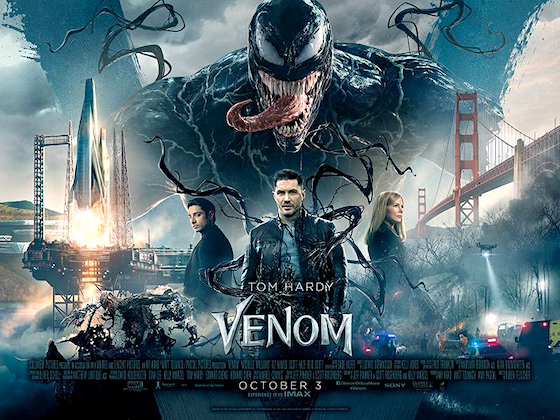
  • Venom (2018)

    2020 #181
    Ruben Fleischer | 112 mins | Blu-ray (UHD) | 2.40:1 | USA & China / English | 15 / PG-13

    Venom

    The fad for shared universes, provoked by the success of the MCU, seems to be dying off: the Dark Universe, the DC Extended Universe, Fox’s X-Men films, the MonsterVerse, sundry others most of us can’t even remember — they all either died a quick, brutal death, or circumstances have wiped them out. Even those that are ongoing have either abandoned close interconnectedness (like the DCEU) or don’t have long-term plans (the MonsterVerse, which has nothing announced beyond Godzilla vs. Kong). The MCU still seems to be going strong (although we haven’t actually had a new MCU movie in over a year now, so who knows what the future will hold?), but other than that? Everyone seems to have realised the formula is impossible (or too much hard work) to replicate.

    The exception lies in Sony’s desire to launch a superhero universe out of the one character whose rights they own: Spider-Man. It started when they abandoned Spider-Man 4 to go the reboot route with The Amazing Spider-Man, the sequel to which teased all sorts of stuff to come, some of which was announced. Those movies’ failure to live up to their titles (i.e. they were not amazing, in any respect) saw such plans cancelled, but it seems Sony don’t give up so easily — even after they loaned out Spider-Man himself to the MCU, moves to form their own universe have continued.

    Which is what brings us to Venom. For those not in the know, he started life as a Spider-Man villain (if you’re not a comic book reader, you’re most likely to know him from his appearance in Spider-Man 3, a move forced by the studio that contributed to the film’s relative failure), but he later became an anti-hero in his own right, which positions him quite nicely for Sony’s first actually-filmed-and-released foray into a shared Spidey universe. (A lot of the other Spider-Man characters they own the rights to are villains, though after the success of Joker I guess they’ll feel emboldened to attempt villain-centred films.) And, to the surprise of some, Venom earnt over $850 million at the global box office, making it the 7th highest grossing film of 2018. Sony’s Spider-Man-universe-without-Spider-Man is definitely underway (there’s a sequel due next year, alongside other Spidey-related films both ready for release and in active development).

    Venomous

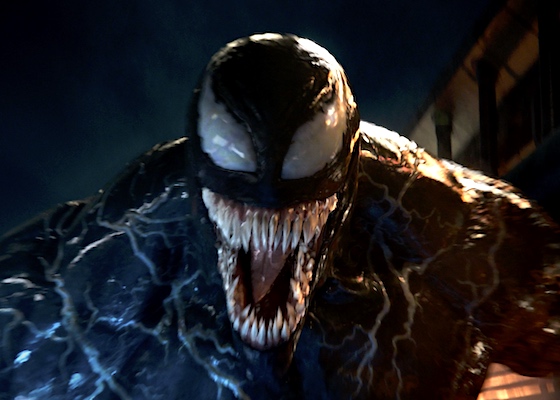
    But enough about future plans, because perhaps one reason Venom has been such a success at launching a new universe is that it didn’t try too hard. Unlike The Mummy or Batman v Superman, this isn’t a film bogged down with characters and references designed to tee-up future spin-offs. It’s an entirely standalone adventure, in which struggling journalist Eddie Brock (Tom Hardy) bonds with an alien symbiote that can take over his body and do powerful things. The alien is one of several brought to Earth by the explorations of Elon Musk-esque tech billionaire Carlton Drake (Riz Ahmed). In the mould of many an overconfident movie scientist before him, Drake hasn’t bargained on the aliens having their own agenda — to invade Earth and eat the populace, i.e. us. But for some reason Brock’s alien, Venom, takes a liking to the planet and vows to protect it.

    It takes the movie quite a while to get to that point, mind. Sorry if you were wary of spoilers, but, I mean, it’s hardly a surprise that (a) a race of aliens that look like Venom are going to turn out to have vicious motives, and (b) the titular character is going to turn out to be a good guy who wants to save us. There’s certainly a place for slow-burn movies that take their time to get to the point or to reveal the monster, but I’m not sure a summer superhero blockbuster is one of them. While Venom isn’t exactly boring until Venom turns up, it does feel like we’re going through motions until we get to what we’ve come for, i.e. a crazy powerful alien kicking ass and biting off heads.

    It feels further unbalanced because Venom is actually quite short. You might’ve clocked the 112 minute (aka 1 hour 52 minutes) running time and thought that sounded pretty reasonable (even if nowadays most blockbusters are well over 2 hours), but the actual content of the movie runs only a little over an hour-and-a-half, topped up by a long credits scroll and a lengthy post-credit promo clip for Into the Spider-Verse. (I can see why they included that in cinemas, but leaving it in the home release feels unnecessary. Apparently it’s cut from some digital versions.) According to IMDb, Hardy has said that half-an-hour or so was cut from the film, including his favourite sequences. Why those cuts were made and what exactly went, I don’t know, but even in the released version it feels like they could’ve slimmed down the first 50 minutes and put in more of Venom himself.

    Note the lack of Venom

    Partly this is the plot suffering from having to be an origin story, with all the usual issues that brings: a lot of time spent on setup; a villain who’s sidelined for the bigger point of Eddie and Venom finally coming together. Once it reaches that point, it’s allowed to indulge in the barminess of the character and the situation a little. All while playing safely within a PG-13 box, of course. Venom is kind of a ’90s teenager’s idea of what it means to be edgy and dark, and by staying faithful to that the film version consequently feels quite like an early-’00s superhero movie. There’s even an Eminem theme song. It reminds you how far superhero movies have come, though. I mean, they were hardly held in the highest esteem back then (aside from breakout examples, like the first couple of X-Men and Spider-Man movies), and it’s not just time that has changed attitudes but also developments in how they present themselves. But now, that it’s a bit of a throwback is part of Venom‘s charm — or another reason to dismiss it, if there’s no nostalgia in that for you.

    Certainly, the cast are all better than this. Sometimes that elevates it — Hardy is having a ball talking to himself and doing random shit like climbing in lobster tanks — but other times it feels like people are here for a payday. Riz Ahmed’s character arc is gradually whittled down to nothing, replaced by a CGI monster. And what made four-time Oscar nominee Michelle Williams decide this was a part worth her time? (Turns out the answer is “the chance to work with Tom Hardy.” But I’m sure the cheque didn’t hurt either.) Hardy has spoken a few times about how he wanted to make a movie his son could actually see. A superhero movie seems a good shout for that but I don’t know that Venom was the right pick. The film is clearly aiming for a PG-13 (there’s only one “fuck”; it’s not particularly gory), but the horror sequences and violence were enough to push it up to a 15 over here. And that’s probably fair — there are twisted and broken bodies (even if they then fix themselves), and several instances of biting off heads (it’s not shown in graphic detail, but we’re fully aware that’s what’s happening).

    Real mature

    All things considered, I wasn’t sure what I thought of Venom. It’s kind of fun, in a juvenile way (juvenile like teenagers who think violence and edgy dialogue is “grown up”). But it’s also kind of rubbish in places, in part because it can be so juvenile (juvenile like… yeah, same again). There’s a chance it’ll tee-up a superior sequel — with the origin stuff out of the way, hopefully we can expect a more original storyline; and, as it was such a hit, maybe that’ll allow the filmmakers leeway to go even barmier. For one thing, a brief sequel tease suggests Woody Harrelson is all ready to Woody Harrelson it up. Until then, I guess this’ll do as a crazy placeholder.

    3 out of 5

    Venom is available on Netflix in the UK from today.

    The Man Who Laughs (1928)

    2020 #189
    Paul Leni | 110 mins | Blu-ray | 1.20:1 | USA / silent | PG

    The Man Who Laughs

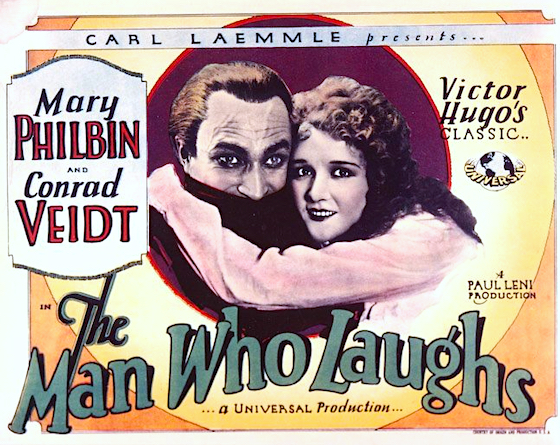
    Just over 90 years ago, in the final years of the silent era, The Man Who Laughs was a “super-production” — an expensive and major release, designed to follow in the footsteps of successes like The Hunchback of Notre Dame and The Phantom of the Opera, with an acclaimed imported director (Paul Leni, Waxworks) and star (Conrad Veidt, The Cabinet of Dr Caligari), a shared leading lady from Phantom (Mary Philbin), and adapted from another novel by the author of Hunchback (Victor Hugo). It did, I believe, live up to its pedigree and expectations. But today it’s primarily remembered for one thing: being the visual inspiration behind a certain comic book supervillain…

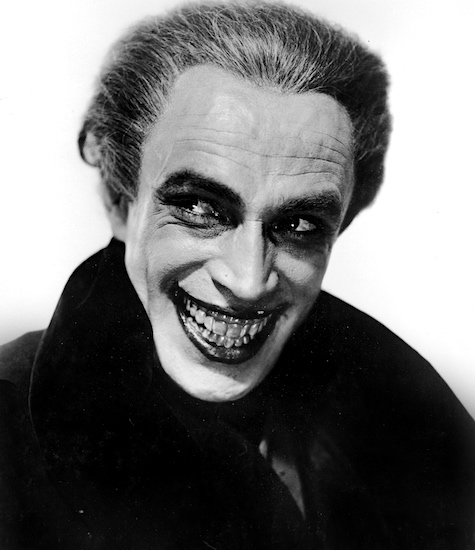
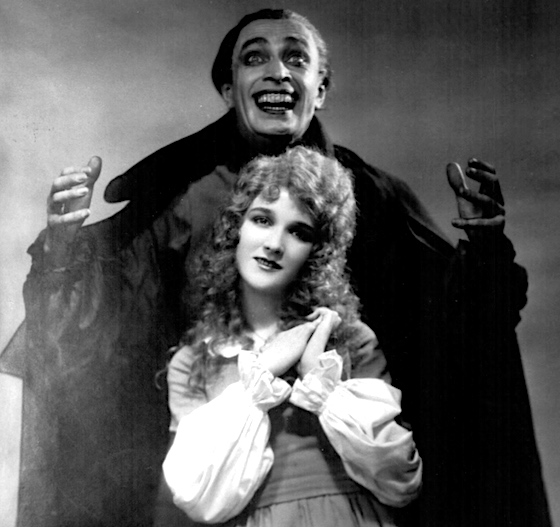
    Perhaps because of the connections to the aforementioned films, and because it inspired such a violent character, and because of the publicity stills that inspired that look, and because its production studio (Universal) would shortly become renowned for their iconic interpretations of the cornerstones of horror (Dracula, Frankenstein, et al), The Man Who Laughs has often been cited as a horror movie. It isn’t. Well, some of the first 15 minutes do play a bit like one — execution by iron maiden; mutilation and abandonment of a child; dangling corpses of hanged men — but then it jumps forward in time and becomes a romantic melodrama, with a bit of antiestablishment satire and a swashbuckling climax thrown in for good measure.

    I was only Jokering

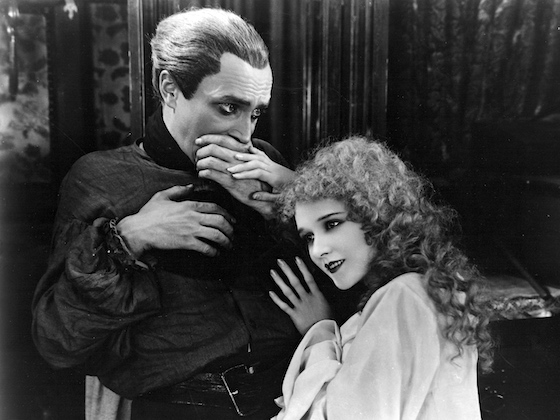
    The story begins in 1690, with King James II punishing a rebellious lord by handing his son, Gwynplaine, to comprachicos (invented by Hugo for the novel; it means “child-buyers”) who mutilate the boy’s mouth into a permanent grin. And then he executes the lord in an iron maiden for good measure. When all the comprachicos are later exiled, they abandon the boy. Wandering through the snow, the kid finds a woman frozen to death, but her baby still alive in her arms. (Like I said, the first 15 minutes are pretty bleak.) He rescues the baby, who it’ll turn out is blind, and soon the pair are taken in by a wandering performer, Ursus (Cesare Gravina). Jump forward a couple of decades and Gwynplaine (Veidt) is now a popular attraction himself thanks to his laughing face, and the baby has grown into a beautiful young woman, Dea (Philbin), and the pair are in love. Let’s not think too much about the background to that relationship, eh? Gwynplaine feels unworthy of Dea’s love because he’s so hideous, but she doesn’t care because she’s literally blind.

    Meanwhile, Gwynplaine’s fame and unique facial features lead to it being discovered that he’s really a noble, kicking off a bunch of courtly intrigue — I could explain it, but then we’d just be getting into the plot of the entire movie. Suffice to say, it involves a scheming courtier, Barkilphedro (Brandon Hurst), who was partly responsible for Gwynplaine’s dad’s death; a horny duchess, Josiana (Olga Baclanova), who we first meet while a peasant messenger spies on her having a bath (nothing explicit is actually seen — it cuts away just in time — but it was still too risqué for British censors, who cut away even sooner); and Queen Anne (Josphine Cromwell), best known today as “the one Olivia Colman played in The Favourite (there’s considerably less swearing, gout, lesbianism, and bunny rabbits in this version).

    With the “beauty and the beast” angle to the film’s central romance, the film does withstand comparison to other variations of that story — like, um, Beauty and the Beast, but also, again, The Hunchback of Notre Dame. The difference here is in how people react to the ‘beast’. Only he himself seems to find him monstrous. The public find him inescapably hilarious, which isn’t nice for him to live with, but has made him popular and beloved rather than reviled. The love of his life is besotted with him unconditionally. Josiana comes to see his show and for some reason finds him instantly attractive (in fairness, I think she’s attracted to any man with a pulse).

    Tale as old as time...

    A more apt comparison is to a film made over 50 years later, David Lynch’s The Elephant Man — a parallel I spotted for myself, but also is mentioned in two essays in the booklet accompanying Eureka’s new Blu-ray release, so I’m certainly not alone in feeling this. Both concern a man who is physically disfigured and has fallen in with fairground sideshow folk, who despises himself but comes to find love and compassion from others. They even both climax with a grandstanding speech where the man in question declares his worth to the world, with the famous “I am a human being!” bit from The Elephant Man seeming like an echo of a scene here where Gwynplaine, forced to join the House of Lords by order of the Queen, eventually rejects her command, declaring his independence with the assertion that “God made me a man!” As Travis Crawford writes in the aforementioned booklet, “while sinister clowns would ultimately become an unlikely horror cliche, Gwynplaine’s gruesome disfigurement makes him a figure of pity, not menace… more Pierrot than Pennywise.” The Man Who Laughs is less concerned with examining and affirming the fundamental humanity underneath ‘freaks’ than Lynch’s film (this is a classical melodrama, after all), but it’s certainly an aspect of the story that, despite how he looks, Gwynplaine is still a human being; that, despite his fixed grin, he’s full of all the emotions of any human being.

    Before I go, a quick word on the film’s soundtrack. “But it’s a silent movie.” Yes, but as you surely know, silent movies aren’t meant to be watched actually silent. The Blu-ray release (both the new UK one and an earlier US one from Flicker Alley) comes with two audio options: a new 2018 score by the Berklee Silent Film Orchestra, and the original 1928 Movietone sync track, which is not just general music backing but also includes some music clearly framed as diegetic, plus occasional sound effects, and even dialogue (in the form of background crowd noise, mostly). Now, the film was originally released as silent, then withdrawn and re-released with this accompanying soundtrack, so I guess the option of a new score isn’t wholly unmerited. Nonetheless, it still seems slightly off to me that you’d supplant an authentic original track with a modern creation. As if to underline this point, the booklet reveals that the new score is actually little more than a final-year project by a group of students! It’s lovely for them that they were able to present their work at the San Francisco Silent Film Festival and it was well received, and that it’s now included as an option on the film’s official releases… but presenting it as the primary audio option? No thanks. I suggest you choose the 1928 soundtrack.

    I said it's NOT a horror movie!

    It’s probably unlikely that The Man Who Laughs can escape its status as a trivia footnote for the Joker at this point (heck, Flicker Alley’s release even plays up the connection on its cover, taking the film’s most Joker-esque photo and decorating it in the character’s colours of purple and green). Certainly, no one should watch it for that reason alone — the inspiration for the Joker begins and ends with the grinning-man imagery; there’s nothing in the film itself that contributes to the character. There’s also little here to support its reputation as an influential early horror movie — those seeking horror thrills shouldn’t watch for that reason either. But for all the things The Man Who Laughs is not, what it is is a well-made and performed drama; one that deserves to stand and be appreciated on its own merits, not those that others have mistakenly conferred on it.

    4 out of 5

    The Man Who Laughs is released on Blu-ray in the UK today.

    Jumanji: The Next Level (2019)

    2020 #78
    Jake Kasdan | 123 mins | digital (UHD) | 2.39:1 | USA / English | 12 / PG-13

    Jumanji: The Next Level

    The previous Jumanji movie, Welcome to the Jungle, was officially a sequel to the 1995 original. In practice, however, that amounted to little more than a brief nod / tribute to original star Robin Williams, and maybe a few Easter eggs scattered about. The Next Level, on the other hand, is much more in the traditional “direct followup” mould.

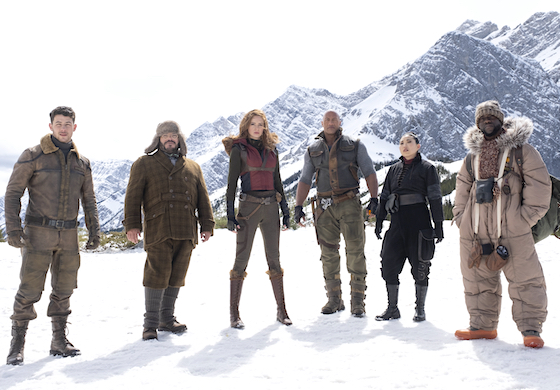
    Despite our quartet of heroes having destroyed the eponymous game at the end of the last movie, one of them rescued and repaired it, and when he goes back in (for old times’ sake or something) the others must follow to rescue him. But he’s not repaired it properly, and so his septuagenarian grandfather and his chum are sucked in too, and everyone’s inhabiting a different character. And so The Next Level plays with a lot of the same comedic ideas as its predecessor — i.e. the mismatch between real-life person and in-game persona — but mixes up who’s imitating who. Primarily, this means The Rock gets to do an impression of Danny DeVito, Kevin Hart is being Danny Glover, and Jack Black is a black American football player. Karen Gillan doesn’t immediately get to join in the fun, but the film has some tricks up its sleeve. Anyway, once in the game, they head off on an Indiana Jones-type adventure — again, much like the first movie.

    For many, this repetition of ideas has been a stumbling block. “The same but slightly different” doesn’t really cut it for a sequel nowadays, when you can easily rewatch the thing it’s repeating. However, I don’t think The Next Level is actually such a slavish clone. The “mismatched identities” schtick arguably worked better the first time, when it was a shiny new gag, but the fact most of the cast get to play at being someone else keeps it at least a bit fresh. There are also several new characters in the mix, with an especially entertaining performance from Awkwafina. More importantly, the adventure itself is considerably different. In my review of Welcome to the Jungle I noted that its locales were “jungle, jungle, and jungle”. Here, we get snowy mountains, vast desert, plus towns and castles. To me, it feels like they took what worked in the first movie and polished it. It’s still fundamentally the same kind of comedy action-adventure — if you disliked the first movie, there’s no reason this should appeal to you more — but refined.

    Snow wonder it's better

    That said, there’s still ideas left on the table. That game malfunctioning only affects who gets zapped in and which characters they play, but what if it kept glitching throughout? It’s arguably a tricky conceit to manage — if you’re going to do it, you’ve got to integrate it; but you can’t really have our heroes winning (or losing) thanks to random mistakes. But this is why Hollywood filmmakers get paid the big bucks, right? To solve these kind of things. Do it right and the glitches could’ve added an extra zing, either to the humour or as an obstacle to winning or, ideally, both. (Also, on a slightly more personal level, I think it’s a shame they didn’t release it on 3D Blu-ray this time. It was released theatrically in 3D, so a conversion exists, but they didn’t bother to put it on disc anywhere in the world. Adventure movies like this can look great in the format, and there’s a sequence with rope bridges that could’ve been really special.)

    I was surprised how much I liked Welcome to the Jungle, but I held back somewhat on the sequel because of the reactions I’d seen. As it is, I was surprised again, because I think The Next Level is an even more enjoyable adventure.

    There’s now a third (aka fourth, or you could even say fifth, depending what you count) Jumanji in development, which a credit scene here teases might go off in a new direction; plus cast and crew interviews have hinted at some other intriguing additions to the mythology that spin out of this movie. There’s no guarantee it’ll be a success, of course, but, nonetheless, next time I won’t be so reticent.

    4 out of 5

    Jumanji: The Next Level is available on Sky Cinema and Now TV from today.

    The 100-Week Roundup IX

    I’ve not been doing too well with reviews lately — this is my first for over a fortnight, having missed self-imposed deadlines for the likes of Knives Out (on Amazon Prime), The Peanut Butter Falcon (on Netflix), Joker (on Sky Cinema), and Spaceship Earth (on DVD & Blu-ray). I’ve also slipped on these 100-week updates — this one should really have been at the end of July, and there should’ve already been another in August, with a third due soon. Oh dear.
    So, it’s catchup time, and it begins with my final reviews from August 2018

  • The Most Unknown (2018)
  • Zorro (1975)


    The Most Unknown
    (2018)

    2018 #185
    Ian Cheney | 92 mins | digital (HD) | 2.35:1 | USA / English

    The Most Unknown

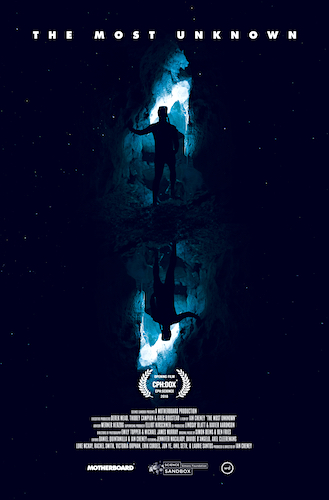
    This film is an experiment. Nine scientists meet for the first time in a chain of encounters around the world. It begins under a mountain, and ends on a monkey island.

    In this documentary, nine scientists working on some of the hardest problems across all fields (the “most unknowns”) meet each other in a daisy chain of one-on-one interviews / lab tours. It not only touches on the basics of what the unknowns they’re investigating are, but also how they go about investigating or discovering these things — the day-to-day realities of actually “doing” Science. Alongside that, it reveals the scientific mindset; what motivates them. The nine individuals are very different people working on very different problems in very different fields, but the film draws out the similarities in their natures that drive them to explore the unknown.
    If you’re concerned it might be all a bit “inside baseball” if you’re not a science geek, don’t be. These people work in vastly different fields — to us laypeople they’re all “scientists”, but to each other their specialities make them as different from one another as we are from them. This, arguably, is an insight in itself. It feels kind of obvious — of course a physicist and a microbiologist are completely different types of scientist — but I do think we have a tendency to lump all scientists together. Think of news reports: it’s not “chemists have discovered” or “psychologists have discovered”, it’s “scientists have discovered”.

    Science, innit

    It also reminds you that scientists are humans too, via little incidental details. For example, the equipment that vibrates samples to sheer out the DNA is labelled, “My name is Bond, James Bond. I like things shaken, not stirred.” Or the woman who plays Pokémon Go on her remote research island, because the lack of visitors means you find really good Pokémon there.

    You might also learn something about movies. The last scientist, a cognitive psychologist, talks about how people assess the quality of movies. Turns out, rather than considering their overall experience, they tend to focus on two points: the peak of how good it was, and how it ended. Pleasantly, this kinda confirms my long-held theory that an awful lot of movies are judged primarily on the quality of their third act. (My exception to this “rule” has always been films that lose you early on and put themselves on a hiding to nothing. Well, science can’t explain everything, I guess.)

    Plus, as a film, it’s beautifully shot. A lot of this science is taking place in extreme locations, which bring with them a beauty and wonder of their own.

    4 out of 5

    The Most Unknown is currently available on YouTube from its production company, split into nine instalments. (It used to be on Netflix, but was removed just the other day. If I’d published this review on time…)

    Zorro
    (1975)

    2018 #186
    Duccio Tessari | 118 mins | digital (HD) | 1.85:1 | Italy & France / English | PG / G

    Zorro

    This Italian-French version of the adventures of the famous masked vigilante (played by the great Alain Delon) is tonally similar to Richard Lester’s The Three Musketeers: genuine swashbuckling (including some elaborate stunt-filled sequences) mixed with plenty of humour and daftness. Plus, being set in 19th century California but filmed in Spain, it also has more than a dash of the Spaghetti Western in its DNA. The whole mix makes it a lot of fun.

    Of particular note is the final sword fight, an epic duel for the ages. It sees Zorro and chief villain Colonel Huerta pursue each other around the castle, clashing blades at every turn, at first accompanied by a crowd of spectators but, as their fight moves higher and higher, ending atop the bell tower, each with a rapier in one hand and a flaming torch in the other, thrashing their weapons at each other with all the vigour and vitriol of men who really, really want to kill each other.

    Another highlight is, arguably, the cheesy main theme. On the one hand it’s slathered all over the film inappropriately; on the other, it underlines the light, silly, comic tone. Plus it’s sung by someone called Oliver Onions. Can’t beat that.

    4 out of 5

  • Split Second (1992)

    2020 #135
    Tony Maylam | 91 mins | digital (HD) | 16:9 | UK / English | 18 / R

    Split Second

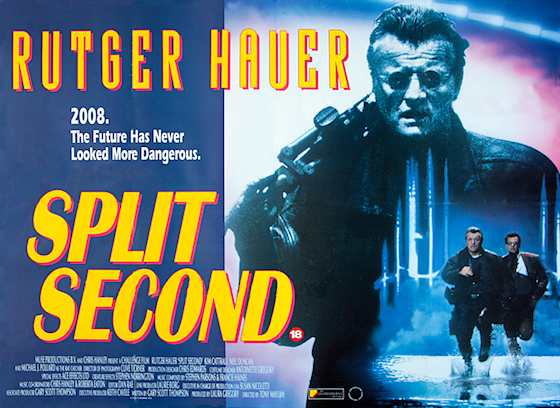
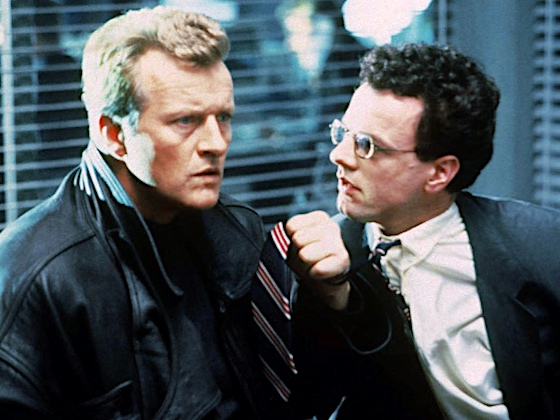
    I confess, I hadn’t even heard of Split Second before a remastered Blu-ray release was announced a couple of months ago (more details about that at the end). A sci-fi/action/horror hybrid starring Rutger Hauer is the kind of thing that sounds interesting to me, but the fact I’d never come across it before seemed like a red flag. Fortunately, it’s on Prime Video, so I didn’t have to make a blind buy, and this is a recommendable course of action for anyone similarly unacquainted with the film. I did go on to purchase the Blu-ray, but I can see why others would not. Split Second isn’t exactly in “so bad it’s good” territory, but it has a distinctive quality that will not be to everyone’s taste.

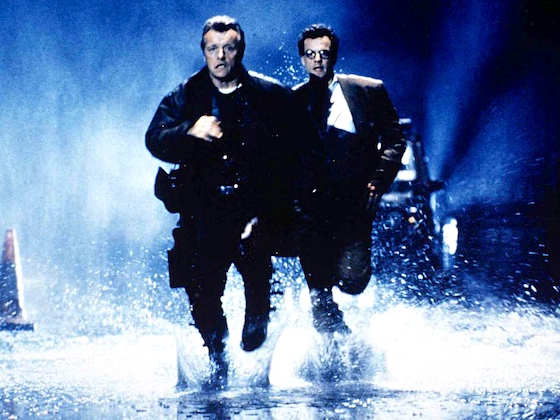
    Set in the future-year 2008, when London has been flooded thanks to global warming and pollution has turned day into night, Hauer chomps cigars, chocolate, and scenery as Harley Stone, a badass rogue cop on the hunt for the serial killer who murdered his partner three years ago. Assigned to keep him in check is rookie cop Dick Durkin (Alastair Duncan), and together the pair realise their quarry may not be altogether human…

    And if you’re wondering what the film’s title has to do with any of this… yeah, bugger all. One of the working titles was Black Tide, which suits the film so much better. I mean, it’s still not wholly fitting — the global warming/pollution stuff is dystopian-future scene-setting without any true bearing on the actual plot — but at least it evokes the tone and style of the film more than “Split Second”, which sounds like a Steven Segal movie.

    Stone Dick

    It’s almost hard to describe what that tone and style is, mind. It starts out almost like budget Blade Runner — it’s the future (so we’re told); it’s night; it’s raining; a hardbitten cop visits a seedy nightclub; etc. But then we get Stone’s first line of dialogue, which comes after a guard dog barks at him. He flashes his warrant card — at the dog — and says “police, dickhead.” To the dog. It’s hilariously terrible and awesome in one fell swoop. Hauer doesn’t give it an overtly comical delivery, and so you can’t quite tell if Stone is deadpanning or genuinely offering this information… to a dog.

    This kind of almost-a-comedy-but-not-actually tone pops up increasingly as the film goes on, as if it was shot in order and the cast gradually realised how ridiculous it all was. By the time you get to the point where a deranged Durkin is demanding bigger guns, you’ll be cackling. Or you’ll be thinking “what is this godawful crap?!”, which goes back to my initial point: some people will delight in it all, while others will feel they’ve wasted their time on a low-budget no-mark that should’ve been left forgotten in the early ’90s.

    I’m the former. You couldn’t reasonably call this a great movie — parts do border on “so bad it’s good”, and there’s much joy from the cast clearly realising it’s ludicrous. Plus, there’s a sense it’s not quite sure what it wants to be. It jumps from genre to genre as it goes on, and even the final monster (designed by Stephen Norrington, who’d go on to direct Blade and The League of Extraordinary Gentlemen) looks to be a mishmash born of uncertain direction, part hell-demon, part tech nightmare (is that a motorcycle helmet?!) But good golly does that crazy mix make for some barmy fun.

    Watery London

    I tell you what, though: the underlying concept isn’t bad. This is exactly the kind of movie I think someone should actually spend the money and effort to remake: something with decent ideas and intentions, but which didn’t come off on the first go. Iron out the plot (mixing genres is fine; jumping between them feels “made up as we went along”), smooth out the tone (keep the deadpan humour, up the thrills and scares), and give it a decent budget (this one has a rough-around-the-edges feel), and you could have something special. Especially if you retitle it Black Tide.

    3 out of 5

    Split Second is released on Blu-ray by 101 Films in the UK today. A matching edition will be released in the US on August 11th. It’s also currently available on Amazon Prime Video in both the UK and the US.