
Yes yes yes, it’s May, it’s the summer, it’s exciting. But before all that, let’s take a little peek at how 100 Films’ seventh year fared in April…
What Do You Mean You Haven’t Seen…?
It was bound to happen eventually: I didn’t see a WDYMYHS film this month. It just never panned out, especially over the last few days. The aim is to watch one in the early days of May to make up for it, and then of course another later.
So moving on:
 #38a Harry Potter and the Philosopher’s Stone: Extended Version (2001/2004)
#39 The Last Boy Scout (1991)
#40 Fantastic Four: Rise of the Silver Surfer, aka 4: Rise of the Silver Surfer (2007)
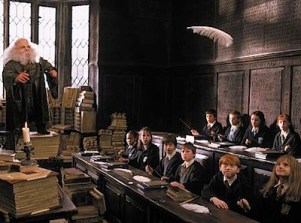
#40a Harry Potter and the Chamber of Secrets: Extended Version (2002/2005)
#41 The Dinosaur Project (2012)
#42 Ted (2012)
#42a Harry Potter and the Prisoner of Azkaban (2004)
#43 Man on a Ledge (2012)
#43a Harry Potter and the Goblet of Fire (2005)
A slow month this one, as you can see, though with five brand-new films watched (alongside four already-seen Harry Potters), it’s far from my worst ever. And that’s with the first week given over to Game of Thrones season two, too. And it’s not even my worst April: 2010 only had three films. Plus, ending at 43, I’m marginally ahead of this time in 2010 and 2012, only a little behind 2007 and 2011, and at double (or more) where I was in 2008 and 2009. Also, as April is precisely one-third through the year, the target number is 33, and I’m well ahead of that.
As you may have guessed, I’ve mounted a re-watch of the Harry Potter series, one every Sunday. This was started almost on a whim, but rather neatly I’ll be watching one on every Sunday in April and May (if it continues to plan). As I’ve never reviewed the first four, I’ll be covering them with full-ish reviews (the first two definitely count as extended cuts anyway, and those pieces are already up — see above); and for the sake of completeness, I’ll attempt some kind of overview on the final four too.
Inspired by Fantastic Four 2… which then wasn’t that bad so didn’t make its own list. There are too many awful alternatives.
I was going to go with “comic book movies”, but then you really have to broaden the remit. I imagine the results are more or less the same anyway. As ever, there’s the caveat that I haven’t seen loads of films, so these are the worst I’ve seen (so no Catwoman, The Spirit, never-released Fantastic Four, etc).
- Superhero Movie
 You might have expected Batman & Robin to top this list. It would be a fair choice. But, believe it or not, it actually has some redeeming features. Not many, but some. This woefully unimaginative spoof has none whatsoever. I’m not even sure it had any laughs. OK, it might not be a ‘real’ superhero movie… but then again, look at the title. It counts.
 - Batman & Robin
 These days, it’s difficult to imagine Hollywood managing to kill off a franchise they didn’t want to. Even those which are consistently a bit rubbish. I imagine this is where they learnt their lesson, turning a reliable cash cow into a despised monstrosity. How the genre got back on its feet just a few years later (and grew stronger than ever) is a minor miracle.
 - The League of Extraordinary Gentlemen
 I really wanted to like this — a great concept, based on a great comic, with great people involved in the film — and on its release, I convinced myself I did. But it’s a bit of a mess really, isn’t it; and the needs of being a PG-13 blockbuster wrecked a lot of the comic’s best ideas. Shame. (It has left me always abbreviating the comic’s title as LXG too, though.)
 - The Punisher (1989)
 I don’t actually know that much about the Punisher, but I don’t believe this is a very good rendition of the comic (where’s the skull emblem?!). And even if it is, it isn’t a very good film. I’ve largely wiped it from my memory, but I recall it being the twin sins of boring and amateurishly made. The two ’00s movies starring the character didn’t go down well, but I can’t imagine they’re worse.
 - Elektra
 A lot of people didn’t like Daredevil. I did. It has flaws, certainly, but it got a lot right. Nonetheless, I had no particular hopes for this spin-off featuring a fan-favourite character who had been mediocrely rendered on screen first time out (and not recast). Low expectations were good, because it’s a mess that doesn’t deliver in any notable respect.
And one I do like…
- Mystery Men
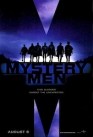 There are many great superhero movies, but this is an undervalued one. Coming in the genre’s quiet period, between the death of the Batman franchise and the rebirth afforded by X-Men, I think this all-star comedy would fare better today. That said, I’ve not seen it for years, and sometimes comedy dates badly, so maybe I should’ve re-watched before putting it here… But I definitely did love it.
There are plenty more films that deserve a place on this list — what should I have made room for?
Next month on 100 Films in a Year…
Can I post more reviews?!
Can I watch two WDYMYHS films?!
Can I reach the month’s aim: #41?!
…which I’ve already passed. Tension, deflated.
 Picking up more or less where
  their presence and storyline drag the film down.
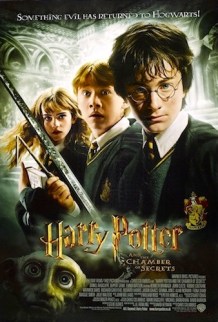 This extended cut takes the already-lengthy second instalment in the Harry Potter franchise and pushes it to nearly three hours (though if you lop off the extensive end credits it’s more like two-and-three-quarters). As with the extended version of
 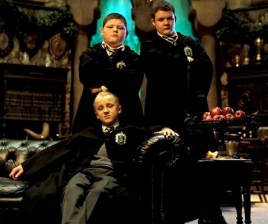 The longest extension comes near the start, when Harry misspeaks while using Floo powder and ends up in the nasty part of Diagon Alley. In the theatrical version he just walks out of the creepy shop, but here he has to hide as Malfoys Senior and Junior enter to sell some items. Though it has the advantage of showing us how Lucius treats his son when out of sight of more respectable wizards, and possibly seeds something for later films (what is the one item Malfoy isn’t prepared to sell?), it dilutes the introduction of Jason Isaacs’ villain, which in the theatrical version came slightly later in the bookshop, where he bumps into Harry, Hermione and the Weasleys as they’re leaving Lockhart’s signing. It’s a more effective, more dramatic introduction to someone who will become a major character as the series progresses.
 There are, arguably, three notable additions to the cast this time out. The first is Lucius Malfoy who, as discussed, will come into his own later. Then there’s Gilderoy Lockhart, a preening wizard celebrity played with relish by Kenneth Branagh. He’s often very amusing and there’s not enough of him. And then there’s Dobby. Apparently Dobby is a beloved character; apparently kids really like him. I’ve always found him intensely irritating, and was surprised how much Rowling made me warm to him in
 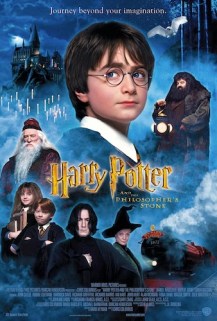 Originally created for the film’s US TV premiere in May 2004, then later released on the film’s Ultimate Edition in 2009 (and not making it to the UK in HD until the Wizard’s Collection last September), this Extended Version of the first Harry Potter film adds six-and-a-half minutes of new bits and bobs to the already lengthy adaptation.
 (See all of that with pictures
 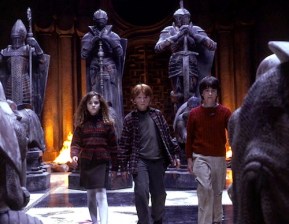 that wasn’t common practice back at the turn of the millennium (unless your name was Ridley Scott), so the filmmakers can’t be blamed for not doing it. As it stands, I think they mostly struck a fair balance between fidelity and the fact it’s an adaptation. Similarly, Columbus’ direction is rarely exemplary, but it’s competent with some memorable moments.
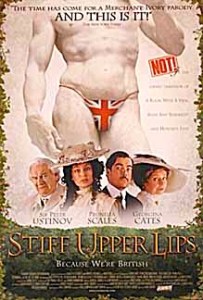 Spoof of British ‘Heritage’ films and TV series, particularly the work of Merchant Ivory. It was probably a bit belated: released in 1998, you’ll note most targets are from the ’80s. It only even made it to TV recently (I watched on
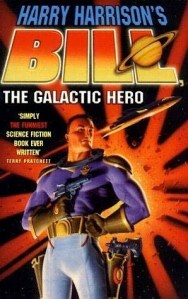 (described by no less than Terry Pratchett as “the funniest science fiction book ever written”), and he’s trying to fund it through
  What’s on offer varies from project to project, of course. In
  Kurt Russell gets embroiled in a fever dream of mystical Chinese tomfoolery in San Francisco’s Chinatown in this cult ’80s adventure from writer/director John Carpenter.
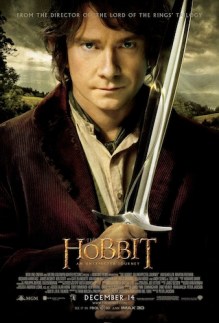 So here we are: nine years after his last tour of duty in Middle-earth, and after a Guillermo del Toro-shaped attempt at not having to serve again, Peter Jackson returns to the world of hobbits, dwarves, elves, orcs, and the rest, to tell the tale some have been clamouring for him to make since
 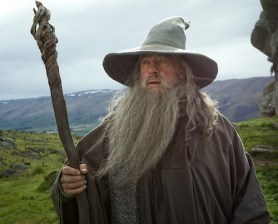 And, I have to say, as someone who hasn’t read the novel since primary school, I couldn’t spot the joins. I could take some guesses, but not many, and considering how long the film is I’m sure there must be quite a lot added.
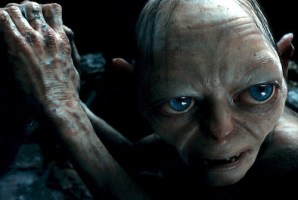 but I could have, and knowing you can do something makes all the difference. There’s also the little timer on the Blu-ray player, which means I can know that it took forty minutes to get out of Bag End rather than just thinking it feels like it. Does that somehow make it more palatable? Would I have been as bothered as others by the film’s length and pacing had I seen it in a cinema initially? It’s tough — nay, impossible — to say, because while there are those other subliminal factors, I also felt like I flat out enjoyed the film for itself, not just for my potential ability to escape it. But it is long and it is episodic, so maybe the association of watching individualistic episodes of TV back to back feeds into the acceptance of that? It’s a circular argument, so we’ll leave it there.
 Howard Shore returns to deliver another fantastic score. After he composed the iconic Fellowship theme for, um, Fellowship, I thought he could never muster anything else as monumental. And, in fairness, that theme is still the defining aspect of the series’ score (its absence here is at times felt, by me at least); but he produced another excellent motif for
 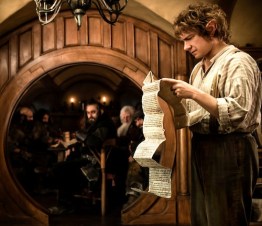 Without the breadth and world-changing story of The Lord of the Rings, The Hobbit was always going to be a somewhat smaller experience. By emphasising the backstory of the dwarves’ stolen homeland and the hints of war-to-come that will ultimately lead in to Rings’ story, Jackson has made it considerably more epic — for good or ill. For me, the whole experience clicked. I don’t think it’s as good as Lord of the Rings, but it is the next best thing.
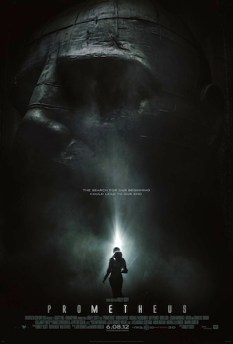 Ridley Scott’s not-an-
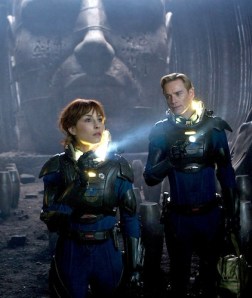 And then, to top it off, it doesn’t have a real ending! They may as well slap “to be continued” on screen, such is the obvious lack of conclusion. It’s immensely frustrating, only to be topped off with a “in case we don’t get the sequel” bit of connective tissue to the Alien series. Mysteries and unanswered questions aren’t a problem in and of themselves — there are plenty in Prometheus’ franchise forbears,
 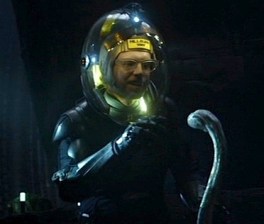 No character is fully developed. Some barely register, suggesting too big a cast, while others suffer from being plain stupid, or doing inexplicably stupid things, or just piss-poor acting. There’s some thing made about Shaw (Noomi Rapace) being religious or a true believer or something, but it’s not properly explained and doesn’t go anywhere. David (Michael Fassbender) and the way he’s treated by the other characters are both very interesting areas, and clearly of huge thematic resonance, but he acts inconsistently for no obvious reason, and despite the horrendous things he does to Shaw at one point, she just gets on with him again in the next scene, and… well, that’s far from being the film’s only plot hole or inconsistency.
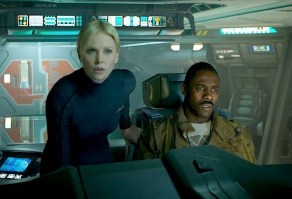 The daft thing is, I think a lot of people would’ve been happy if it had chosen to just go all-out as a schlocky alien horror movie. That’s what Alien is: an exceptionally well-made haunted house movie in space. There’s no shame in that (well, maybe in cinéaste circles, but pish.) But that’s not where Prometheus pitches itself. There’s too much other stuff for it to be just that; stuff that’s apparently aiming to be Profound. So when the horror does turn up, it doesn’t belong.
 Prometheus is a funny old beast, then. There’s lots of good stuff in there, but also lots of baffling decisions and confusing shifts of tone, emphasis, style… Considering it was made by an experienced master-filmmaker, who was presumably granted all the time, freedom and money he wanted to craft the film he desired, it’s baffling how it ended up feeling like such a hodge-podge. Many fans have blamed Lindelof, brought in late on to re-write the screenplay; but considering Scott ruined
  Most films have a reputation of one kind or another, even if it’s only in certain circles and you have to go searching to find it. I suppose Conan’s is best summed up by
  The guy doing the voiceover narration is godawful though, and there’s far too much of him. It’s never made clear why he’s the one telling the story either, unless I missed it.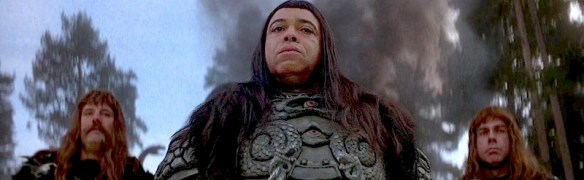
 100Films.co.uk