
 Most films have a reputation of one kind or another, even if it’s only in certain circles and you have to go searching to find it. I suppose Conan’s is best summed up by its status on iCheckMovies: it appears on one official list, the 500 Essential Cult Movies; a list of films so cult-y, I’ve only seen 98 of them. So it’s not a film of great critical acclaim, or box office success; heck, it’s not even on the Empire 500, which surprised me because I’d always thought it was fairly popular — I mean, they bothered to remake it!
You may recall I didn’t care for the remake. Nothing new in that. Unfortunately, I didn’t much care for the original either.
Actually, that’s a mite unfair. I watched the film in two halves, and while the first almost bored me (to be blunt, I fell asleep halfway through; though it wasn’t wholly the film’s fault), the second was more entertaining. The first is episodic, a series of near-disconnected sequences telling Conan’s life story. Towards the middle, the last few of these coalesce into a series of events that drive the film into a proper narrative, which takes us through to the end.
John Milius, directing and co-writing (with, of all people, Oliver Stone), chooses to play much of the film with very little dialogue. It’s a striking effect that often pays off, both creating a sense of an epic story passed down the ages (how often, if someone tells you a tale from myth or legend, is there dialogue?), and minimising the potentially negative effects of his cast. For all his skill as an action man, Arnie is hardly a great actor.  The guy doing the voiceover narration is godawful though, and there’s far too much of him. It’s never made clear why he’s the one telling the story either, unless I missed it.
Telling the story visually allows Milius to conjure up some fantastic visuals on occasion. The murder of Conan’s mother is a particularly striking moment, as is the way Conan is aged from preteen moppet to muscly Arnie mere minutes later. A giant temple teeming with disciples offers multiple instances for impressive shots, the huge set and numerous extras creating a sense of scale that CGI will never match. Then there are the action sequences, again somehow heightened without people yelling meaningless nothings at each other. Conan and friends raiding the temple to rescue the princess, and the subsequent graveyard battle, are two particular standouts.
In places the film has aged badly. It looks more ’70s than ’80s, which considering it’s from the start of the decade shouldn’t be a surprise. Not that that’s a problem, just an observation, albeit one that perhaps emphasises age. Much of it looks good, but for every expertly-realised giant snake there’s the two villainous henchman who look like Spinal Tap rejects.
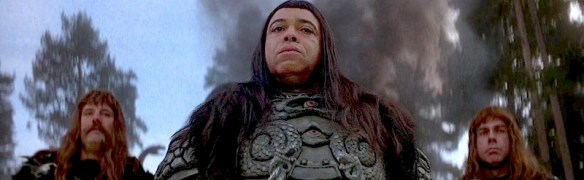
Most of the film is actually a well-realised fantasy landscape (shot in Spain, which I think helps — America always somehow looks like America on screen, whether it’s doubling for a fantasy world or an alien planet or even just another country), but those two kicked me out of it every time they showed up.
My initial assessment of Conan was possibly a bit harsh, born of finding the first half of the film a struggle. The second half, while not perfect, has much more to commend it. The film ends with a “there’s much more story to be told” epilogue (even though the film tells a complete tale in itself — take note, present franchise filmmakers!), which does lead me to want to see the sequel, even if those who love even this hate it. We’ll (and by that obviously I mean “I’ll”) see.

* There are goodness-knows-how-many different versions of Conan. I watched one of them. (I think it was fairly uncut though). ^
 Time flies: this is 13 years old! Originally a Jim Carrey vehicle (feels obvious once you know), Ben Stiller is the prospective son-in-law meeting Teri Polo’s parents (Robert De Niro, Blythe Danner) for the first time. Disaster ensues in a riot of unfortunate events targeting our hapless hero.
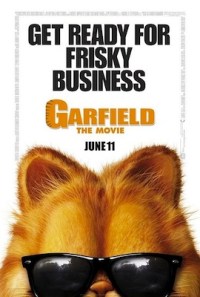 Bill Murray presumably needed some money, otherwise why else voice the titular food-loving sort-of-fourth-wall-breaking moggy in this juvenile adaptation of the long-running newspaper strip? Offering little in the way of laughs, the film’s main success is the cute (real) dog who co-stars as Garfield’s competriot, Odie. The real wonder is how they got him to interact with the CGI cat. Elsewhere, animals are live-action with CG mouths, giving an unsettled presentation of the film’s four-legged characters. Meanwhile, humans Breckin Meyer and Jennifer Love Hewitt engage in a charmless romantic subplot. Oddly, one for dog lovers (with fast-forward to hand) only.
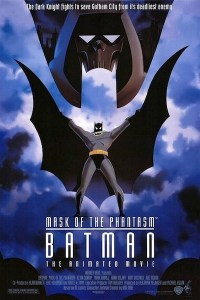 Batman movies have a habit of provoking strong reactions.
 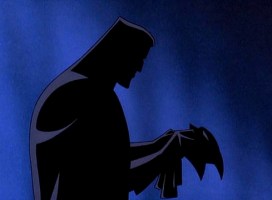 One of the main reasons the film succeeds is that look back at Bruce Wayne’s early days as a crime fighter. Batman’s origin is oft told — too oft, truth be told — but they thankfully don’t rehash it here. Instead, early in Batman’s career Bruce falls in love and finds happiness, causing him to question whether to continue down the path he’s already dedicated his life to. The scene where he talks to his parents’ grave, expressing his guilt at potentially finding happiness after so much mourning, is one of the most powerful, emotional moments in all of Batman’s many iterations.
 But instead of falling in some nasty halfway-house, Phantasm turns up trumps on all fronts.
 Shortly after I watched Tinker Tailor, it was announced that they (“they” in this instance being Working Title, I think) are planning a new film adaptation of Daphne du Maurier’s perennially popular novel Rebecca. This news was greeted (at least on the websites where I read it) with cries in the comments along the lines of, “you can’t remake Hitchcock!” Such is the power of
 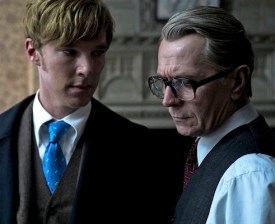 Yet, for all that, the film is excellent. It may not match the TV series in places, in my subjective opinion, but in its own right it shines. Gary Oldman does the impossible and offers a Smiley that is neither an imitation of Guinness’ nor a deliberate counterpoint, but stands apart as an equally proficient rendering of the character. The rest of the cast are equally up to task, with the exception of Kathy Burke, who stands out like a sore thumb in my opinion.
 Another noteworthy advantage of the film is that it’s gorgeously shot. The TV series actually has its own appeal in this area, with a realism that is quite pleasing. The film occasionally goes grander (look at the depiction of meeting rooms in The Circus for a major example — while the TV series goes for any old room in Whitehall, the film offers stonking soundproof ‘pods’), but it works in its own way.
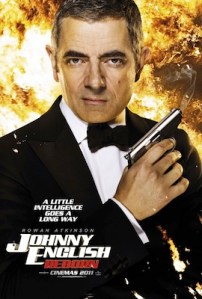 From the director of Oscar Wilde adaptation
  Two of them are very nearly inspired: a
  Apparently Ben Miller, English’s sidekick from the original adverts and first movie, filmed a cameo that was ultimately cut. A lot of people seem moderately upset about that on forums. I like Miller, but to be honest I’d forgotten he was in the first one.
 It’s funny what movies sometimes pique your interest. I saw a trailer for relationship drama Love and Other Impossible Pursuits (or, as it was retitled in America, The Other Woman) on some completely unrelated US Blu-ray earlier this year (I forget which film it was, but the only connection was the disc’s distribution company) and wondered why I’d never heard of it before — after all, it looked like a Worthy Drama, starring Oscar Winner Natalie Portman and Lisa Kudrow From
  As I was brought to the film by its trailer, it pays to say it’s actually very different. The advert hides the baby’s death but hints at it, as if it’s a Big Reveal they clumsily didn’t want to give away. But no, it’s brought up within the first five or so minutes and actually drives a lot of the film. The emphasised “other woman” facet is present, though in a slightly different way to normal: this is how such relationships continue as a long-term status quo, rather than the immediate impact of an affair.
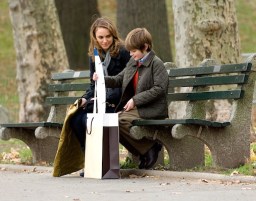 I can imagine that flashback working within the shape of a novel, where structure works differently. Indeed, I got the impression the book is probably very novelistic; maybe a character study, even. Those are two things that don’t always transfer well to film. I don’t think it’s about Being The Other Woman, despite the US title; nor do I think it’s about Being The Stepmother; nor is it about Losing A Baby. Those things are all in there, certainly, but rather than any of them be The Story, they’re elements in the exploration of the character of Emilia. I’m not sure that works for a movie; not for this one at any rate.
 Period sci-fi comedy/action/adventure Iron Sky is the 21st century answer to
 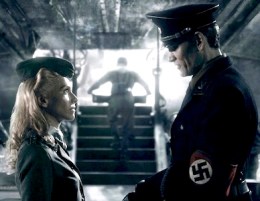 they’d be the gung-ho spotless heroes defeating that Natzees for a second time.
 Seen by some as a
 Controversial supernatural mystery drama. Nicole Kidman’s rationalist husband dies suddenly; years later, as she gets engaged to another man, a boy arrives claiming to be her husband reincarnated. More realistic art house drama about grief and insecurity than thrill-giving occult mystery, it nonetheless keeps you guessing as Kidman is slowly convinced by the boy’s tale, while family relationships collapse around her. Full of quiet understated performances, Kidman is particularly captivating and, as the boy, Cameron Bright is mesmerisingly unreadable. Poorly received, with some
