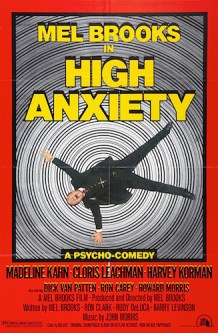
Fatal Instinct (1993)

2009 #86
Carl Reiner | 90 mins | download | 15 / PG-13
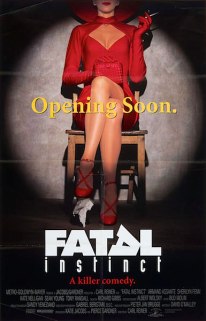
Fatal InstinctHaving just recently laid into High Anxiety, a spoof in a broadly similar style that also took on thrillers, it seems a little hypocritical to praise this, which flopped so badly in the US it went straight to video over here. Unfortunately, life isn’t that simple, and where Mel Brooks’ effort failed to amuse me this succeeded.

The plot, such as it is, doesn’t bear much discussion, being a loose amalgamation of half a dozen other films in the name of spoofery. So too the performances — no one distinguishes themselves as a comedic genius, but none let the side down. Reiner’s direction is equally fine, setting up and paying off the visual, verbal and aural jokes perfectly well. He drops the ball in a couple of instances however, allowing several jokes to run on well past their natural conclusion, and indulging in a few well-worn staples of the genre — the on-screen-musicians-playing-the-score turn up, for example, although at least there’s a nice variation at one point involving a tape player.

It’s a little difficult to understand exactly why it flopped so badly in the US as it followed in the wake of the similarly-styled Hot Shots!, which was successful enough to spawn a sequel. But then perhaps exactly that hindered it — Fatal Instinct’s release came just a few months after Hot Shots! Part Deux.

Or perhaps its targets were just too broad to attract a mass audience. While it ostensibly tackles then-recent thrillers like Basic Instinct, Cape Fear and Fatal Attraction (though the latter was already six years old at this point), it also has a lot of time devoted to the tropes of film noir, in particular Double Indemnity. Relying so heavily on a 50-year-old film isn’t likely to earn you much favour among the masses.

I’ve not seen any of those ’80s/’90s thrillers it targets, but Fatal Instinct seems to stick to the most famous bits, making the references easy to appreciate even for those with just a passing knowledge. Conversely, it seemed to me that having seen Double Indemnity would be a major advantage. But then again, perhaps that’s simply because I spotted the references to it and missed references to the films I hadn’t seen without, er, missing them, and anyone who hadn’t seen Double Indemnity would survive in much the same way. At the very least I’m sure it’s easier to follow than this paragraph…

Fatal Instinct may not be terribly original in and of itself — though, obviously, the films it chooses to spoof set it apart from its kin — and some of the gags are very much old hat (a roving camera bumps into something and breaks the lens, for instance), while others go on too long — as does the film itself, actually — but anyone who enjoyed all the films mentioned in this review may find it’s capable of raising a few smiles.

3 out of 5

Shadow of the Vampire (2000)

2009 #56
E. Elias Merhige | 81 mins | TV | 15 / R

Shadow of the Vampire“What if Max Schreck really was a vampire?” is the simple, thoroughly daft, and equally promising, premise of this low-budget horror/drama/comedy.

Having the advantage of such a good concept to kick things off, all starts well, but the longer it runs the more it loses it. Screenwriter Steven A. Katz seems unsure of what Shreck/Orlok actually wants or what the rules governing his existence are, leaving him little more than a threat for the sake of a threat. Still, Willem Dafoe’s performance in the role is brilliant, reveling in the chance to overact — and yet, somehow, subtly overact — as a silent movie vampire. The rest of the cast are fine; in particular, the obsessive and mildly unhinged Murnau seems to suit Malkovich down to the ground. It’s also scary in places, as it should be, because it’s a vampire horror movie that just happens to take the making of another real one as its starting point. Unfortunately, as the plot becomes confusing and ill explained towards the end, so the scares dissipate alongside the viewer’s understanding.

My confusion over the film’s third act may have an external explanation, however. The BBFC list the PAL running time as 88 minutes, but BBC Four’s showing only just hit 81. It certainly felt like there was a chunk missing somewhere in the middle — a slew of characters just disappear and there’s an unexplained leap in the plot — but I can’t think of a reasonable explanation for why or how the BBC would cut seven minutes out of the middle of a film, and the only detailed plot descriptions I can find don’t describe anything I missed.

Nonetheless, even allowing for omissions Katz gives up on any semblance of following the facts toward the end (and throughout, apparently): almost everyone involved is slaughtered, even when they clearly survived in reality, while one character is driven out of his mind, even when he clearly wasn’t… well, presumably. That said, we all know Schreck wasn’t a vampire — his life isn’t nearly mysterious enough to allow for the possibility, should you even believe in such a possibility being possible — so with that leap already taken, why not take as many others as you fancy? Perhaps because it’s not as clever, and not nearly as much fun, as fitting the preposterous tale around the known facts.

Merhige’s direction is occasionally very interesting, such as a couple of grand shots early on, but at other times is perfunctory. To be kind, one might say he goes too far in the aim of replicating silent film style — certainly the intertitles that needlessly replace chunks of the plot are a step beyond. He does manage to create and maintain a weird, unsettling atmosphere, which remains even when all sense disappears.

It’s difficult to accurately assess a film when it appears a good chunk has been lost somewhere in the middle, especially when one suspects some of its major flaws — namely, a lack of coherence at the end — may be due to this omission. On the other hand, I can’t find any evidence that something has been cut, so maybe it just doesn’t make sense? Either way, even on the evidence of what I’ve seen it feels like Shadow of the Vampire takes a good idea, runs well for a while, but winds up uncertain of what to do with it. Though it remains interesting, I won’t be rushing to see any fuller form.

3 out of 5

High Anxiety (1977)

2009 #65
Mel Brooks | 94 mins | TV | 15 / PG

High AnxietyMel Brooks pays comedic tribute to Alfred Hitchcock — in case you can’t tell, the second credit is a prominent dedication — but those unfamiliar with the Master of Suspense’s output need not apply.
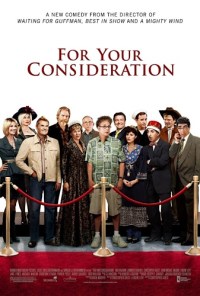
Brooks presents a largely Hitchcockian plot, though the clearest references come in a couple of sketches and one-liners. To be fair, there are several significant Hitchcock films I’ve still not seen, leaving the nagging sensation that some allusions and gags simply passed me by. On the other hand, maybe they just weren’t funny — I can’t remember many laughs that didn’t spring from a Hitchcock reference of some kind.

Indeed, whole chunks pass by without a laugh. At other times, bits that are clearly meant to be funny just don’t hit home (though I’m aware that, inevitably, they will for some people), while some gags are almost reassuringly familiar: a dramatic piece of music kicks in, causing characters to look around until they see a band in full swing has appeared nearby, for just one example.

Things pick up considerably in the second half, which is also more obviously Hitchcockian to my mind. Some scenes offer very good, though specific, riffs on famous Hitchcock moments — a version of Psycho’s shower scene is particularly memorable, though a scatological take on The Birds will please some — but these are almost exclusively asides to the story, little sketches inserted wherever Brooks can find space to squeeze them in. They provide welcome amusement, but are far from integrated into the plot.

At this point I’m beginning to suspect Brooks’ humour just doesn’t gel with me. I enjoyed Spaceballs when I was younger, but watching it a couple of years ago I found it more embarrassing than entertaining. Even the widely praised Blazing Saddles raised little more than the occasional smile. High Anxiety, unfortunately, now joins this line-up.

2 out of 5

For Your Consideration (2006)

2009 #57
Christopher Guest | 79 mins | TV | 12 / PG-13

For Your ConsiderationThe makers of This is Spinal Tap and Best in Show — along with all their usual cast members — swing their satirical sights from others’ work to their own industry. Unfortunately, it’s not a patch on their previous efforts.

The biggest problem is that most of the gags feel a little familiar. It’s not that they’re unfunny, just that they don’t feel very original. Worst off are the numerous jokes about the internet, mobile phones and other technology, which feel more 1996 than 2006. It’s all lacking in subtlety, taking a broad swipe at the whole filmmaking industry rather than incisively mining its constituent parts for something insightful.

The best bits come in the second half, when the cast and crew (of the fictional film-within-a-film, that is) hit the campaign trail to promote their movie. The styles of TV shows that various people appear on — the different levels awarded to the leads, other cast members, the writers, and so on — has some decent satire, the closest For Your Consideration comes to being truly revealing.

Most disappointing is that this should have been so good. The team who basically invented the spoof documentary finally taking on their own industry? Brilliant! But it feels like they felt the same way and rushed into production without properly thinking it through. Which, in its own way, is rather ironic.

3 out of 5

In Bruges (2008)

2009 #22
Martin McDonagh | 102 mins | TV | 18 / R

This review contains minor spoilers.

In BrugesIn Bruges has gathered quite a bit of indie-level praise and acclaim, culminating in wider recognition at the Oscars and other awards ceremonies at the start of this year. For those like me, finally getting round to seeing it in the wake of all this, it comes with quite a burden of expectation on its shoulders. Can it possibly be the modern classic many make it out to be? I mean, it is set in, y’know, Bruges…
First and (perhaps) foremost, In Bruges is hilariously funny, much more so than most by-the-numbers ‘comedy’ films can manage. The easily-offended might disagree, and some jokes are a tad too obvious (Americans are fat! Fat people can’t climb tight stairs!), but it’s nice to genuinely laugh at a film rather than force the odd smirk so as to at least get something from an otherwise wasted 90 minutes. It’s also dark and occasionally tragic though, and in this respect it’s unsurprising that writer/director McDonagh started out as an acclaimed and award-winning playwright, as stage plays mix humour and darkness more frequently (and with wider extremes) than films ever dare to. His theatrical roots also go some way to explaining the amount and ferocity of the swearing (again, something plays are more prepared to indulge in), but so too the brilliance of the dialogue. That it takes a playwright to craft such a good film is perhaps an irony, but not a troubling one.

Good dialogue is wasted without a good cast however, and thankfully everyone here gives a fantastic performance. The standout is Colin Farrell as hitman Ray. He initially seems a confident, cocky, experienced young hitman, and therefore verges dangerously close to stereotype, but we soon realise he’s actually twitchy, nervous, insecure, and genuinely sorry for the sole act of violence he committed. It might look like a Black Comedy With Nasty Violence to some — certainly, there are reviews that suggest some viewers are incapable of seeing anything beyond that — but there’s a lot more depth in the characters than the surface would suggest. Brendan Gleeson and Ralph Fiennes give consummate supporting performances, like Farrell chipping away at the stereotyped facades to find the hidden facets that the script is kind enough to reveal.

The quality of McDonagh’s writing (and direction) doesn’t stop with character and dialogue. The story is thematically considered, with a variety of paintings and associated imagery to occupy those who might be interested. Events are beautifully tied together and, best of all, none of the early scenes feel oddly inserted or have that nagging sense that they’re merely an excuse for something to be there later — everything works first time, and then has a seamless payoff too. Some viewers have criticised the ending, but I suspect they’re largely more used to mainstream fare and viewers who have ever enjoyed an indie film won’t bat an eyelid. All in, it’s easy to see why the screenplay has become the film’s prime awards nominee and winner.

Nominations, wins and buzz weigh heavy, but In Bruges has shoulders broad enough to carry such expectation with ease. “There’s never been a classic movie made in Bruges,” one character truthfully espouses, “until now.” It seems she couldn’t’ve been more right.

5 out of 5

In Bruges placed 2nd on my list of The Ten Best Films I Saw For the First Time in 2009, which can be read in full here.

Commentary! The Musical (2008)

2009 26a
Jed Whedon & Joss Whedon | 42 mins | DVD

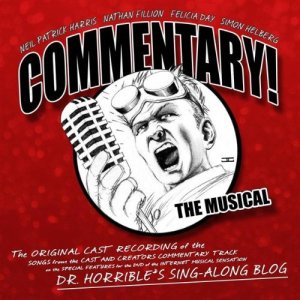
Commentary! The MusicalCommentary! The Musical falls somewhere between DVD extra, TV episode and short film. Whatever it should be classed as, it’s utter genius.

You’ve surely heard of Dr. Horrible’s Sing-Along Blog, the project Joss Whedon created during the infamous US Writers’ Strike. (That in itself you could debate the status of. Three-part miniseries? Short film? Feature film? (At 42 minutes it’s over the Academy’s boundary.) And endlessly on.) Well, on the Dr. Horrible DVD can be found this — an alternate audio track, on which the cast and crew discuss the making of the feature… except it’s all scripted and the majority is sung. Not your traditional audio commentary then.

As an audio commentary, it does little to illuminate the production of Dr Horrible — though, surprisingly, it does do some — but instead focuses its energy on spoofing commentary tracks, DVD extras, and the American film and TV industry in general. Specific targets include the Writers’ Strike and its lack of success, rivalry between lead actors, the importance of ensemble cast members, Asians in US TV and film, the dissection of art by DVD extras, and many more. It’s almost all incredibly funny — inevitably there are a few duff gags and dull songs, although they are uncommonly rare — and it moves at a rate of knots, meaning it rewards multiple listens to pick up every gag. Having already re-listened to a couple of tracks, I can attest to noticing funny lines that I was too busy laughing through before. In a spot of technical impressiveness, the commentary is often surprisingly scene-specific, sometimes even shot-specific. When you consider the effort that must’ve been involved to script and time both songs and spoken dialogue to make this happen, it’s even more impressive.

It’s this careful scripting and the sure-handed attentiveness to theme that marks Commentary! The Musical out as a fictional work in its own right, rather than ‘merely’ a DVD extra, in much the same way that Mystery Science Theater 3000 or the short-lived (and easily forgotten) Rob Brydon series Director’s Commentary are original works. With its well-targeted thematically-appropriate comedy and plentiful gags, it’s pure delight for fans of DVDs, or anyone else with a mind open to the concept.

5 out of 5

Be Kind Rewind (2008)

2008 #90
Michel Gondry | 97 mins | DVD | 12 / PG-13

Be Kind RewindThe work of Michel Gondry and the comedy of Jack Black are both, shall we say, acquired tastes, and not ones you would necessarily expect to overlap. Yet here they do — at least to an extent — but while Black is again doing his usual schtick as the Ker-Azy Best Mate, it’s the writer-director who is perhaps offering some surprises.

Gondry has exactly the sort of fanbase you’d expect for a French director who started out in music videos for Bjork and The Chemical Brothers before progressing to films like Eternal Sunshine of the Spotless Mind and The Science of Sleep. It’s not inconceivable those fans may’ve been a bit surprised by this effort, about two video store clerks who begin to remake well-known movies when all the store’s tapes are accidentally wiped, because it seems so thoroughly mainstream; or, to put it a nicer way, accessible. That’s not to say it doesn’t have an oddness about it — early plot points hit unreal levels, before the film becomes more grounded — but for the most part it errs on the side of realism. It’s almost hard to believe Gondry wrote and directed it, considering his previous output.

In fact, so conceivable is so much of the story that one could almost believe it was a fictionalised version of real events. The way the films are remade — using elaborate cardboard props and cunning camera tricks — are all pleasantly innovative, but well within the bounds of believability; and when they gain a previously-meaningless nickname (“sweded”) and explode with cult popularity, it’s heavily reminiscent of so many Internet-based crazes, several of which do revolve around retelling popular films. Indeed, placing the concept of ‘sweding’ at the heart of the film taps into the popularity such things tend to garner, and the enjoyability of the idea helps carry the film through some rougher patches.

And Be Kind Rewind is at its best — and, crucially, funniest — during the ‘sweding’ of recognisable films. These sequences are packed with the vicarious joy of recreating iconic moments from beloved films with just a video camera, some mates, and a pile of card. It’s here that the lovability of the concept comes to the fore, and it would perhaps benefit from even more of this. On the other hand, an endless stream of re-made movies is no substitute for a proper plot, so Gondry wisely limits how many films we see being ‘sweded’.

The problem is, the rest of the story doesn’t always do a great deal to make up for it. There’s a surprising number of stock moments and subplots considering Gondry’s roots, and some threads are underplayed to the point of seeming extraneous. In particular, a romantic subplot is so inconclusive — not even ‘resolved’ in an open-ended manner — that one wonders why it was included at all.

Your enjoyment of Be Kind Rewind is likely to ride on how much you like the idea of ‘sweding’. If it sounds like a fun thing to watch or do, the goodwill engendered by the concept may carry you through the film’s weaker moments. If, however, you think it sounds faintly silly, there’s not much else on offer besides a familiar moral message about community, and achieving your goals, and all that jazz.

4 out of 5

Wallace and Gromit in A Matter of Loaf and Death (2008)

2008 #88a
Nick Park | 29 mins | TV | PG

Wallace and Gromit are phenomenally popular, as proven this Christmas Day when their latest adventure became the most-watched programme on British TV for three years (and that was just the overnights — ratings will rise when official figures are released in a couple of weeks). Not only that, but the TV premiere of their big screen adventure also made the Christmas Day top ten, a not insignificant feat. Popularity does not necessarily mean quality, of course, and in this case such figures come on the back of three popular shorts and a successful feature film. They were all extremely good too and, luckily, A Matter of Loaf and Death doesn’t let the batch down. (I feel there should be a better baking pun there…)
As ever it’s packed with inventive humour, both visual and verbal, and Gromit remains one of the finest silent comedy characters ever created. The amount of emotion and story that can be conveyed with a lump of plasticine is tribute to the abilities of Park and his team of animators. The rest of the creation is top notch too, not just in terms of impressive craft on characters and sets, but also in the use of lighting and camera angles to evoke other films while not losing the series’ individuality. If anyone still thinks stop motion is about a locked-off camera at a flat angle they are sorely mistaken.

Film fans will also delight in a slew of movie references, from a poster for Citizen Canine to an Aliens-inspired climax, and numerous even subtler ones in between. This is a feast that will undoubtedly reward seconds — and more.

If there’s one problem it’s that it’s too short. I don’t mean that in the usual “I just want more” way, but literally that it could perhaps do with being longer. There’s easily a feature-length story here, meaning it feels a little abridged as a half-hour short. It’s not rushed, thankfully, just not played out as effectively as it could be with double the running time.

The last three Wallace & Gromit adventures have each won Park an Oscar (and the first only lost out to Park’s own Creature Comforts). Will this bring the series’ fourth? It would certainly be deserved.

5 out of 5

Sunset Blvd. (1950)

(aka Sunset Boulevard, of course. See here if you’re really interested.)

2008 #22
Billy Wilder | 106 mins | DVD | PG

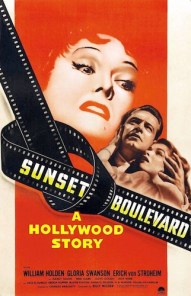
Sunset BoulevardSunset Blvd. may not be the first movie about the movies, but for the amount of controversy it caused and the impact it’s had it may as well have been. It’s certainly a well respected film — I’m sure I could cite any number of Greatest Films Ever lists it’s turned up on, but everyone always disagrees about those.* Nonetheless, any film with such acclaim attached to it also has more than its fair share of expectation, with anything less than total brilliance liable to falter.

And, to my expectation-laden eyes, falter it does — not fatally, by any means, but enough to damage my opinion. William Holden makes for an effective enough lead, his dialogue and narration peppered with memorable quotes and observations. Gloria Swanson is fantastic as the deluded, pitiable faded star, especially when she sinks to her lowest in the final scenes. The opening is iconic for good reason, the final shot equally glorious, both meaningful and creepy. But the plot has a tendency to meander in the middle, sometimes latching on to half-introduced ideas and characters to vaguely examine another facet of the industry. It certainly has a lot to say about the workings of Hollywood during the studio system and, viewing it 58 years on, what has or hasn’t changed since.

It’s by no means a bad film, just occasionally puzzling when its huge acclaim contrasts with the flaws I perceived. As such, it’s tempting to say Sunset Blvd. is overrated. But really that would be a slightly sensational way of saying I’m not entirely sure what to make of it. One day I’m likely to see it again with better-informed eyes, but for now…

4 out of 5

* Incidentally, while I’m mentioning Greatest Films polls, I’ve just discovered The 1,000 Greatest Films, a list that compiles 1,604 different lists to create a ‘definitive’ one. Sunset Blvd. placed 31st on the 2007 update.

Starwoids (2001)

2008 #17
Dennis Przywara | 79 mins | DVD | PG

StarwoidsAnother fan documentary (following yesterday’s review of Done the Impossible), Starwoids tells the tale of two groups of Star Wars fans who queued for six weeks to be the first to see The Phantom Menace. Alongside this, the film takes a couple of diversions into general Star Wars fandom.

The main story here is the more interesting element. You might think an hour of people standing in line is pretty dull, but, surprisingly, enough happens to hold the attention. The two groups make a structurally pleasing contrast: one is just a group of fans, who have a great time playing games and hanging out in line. Their biggest worries are the police moving them off the pavement, and where to go to the toilet. The other group was organised by fansite CountingDown.com, and turns from a bunch of people having fun into a 24-hour television studio and media event on a sidewalk, provoking arguments, governments and revolutions. Przywara uses no narration for the majority of the film, so these contrasts are left for the viewer and participants to draw out on their own. Generally it works, though leaps in time and the skipping of certain events occasionally make it hard to follow what’s going on, especially at the more argumentative camp.

The asides into broader fandom work fairly well. They break up the occasional monotony of people queuing, but are neither entirely related to the release of Episode I nor delve far into painting a picture of Star Wars fandom as whole. This dilutes the focus of the film a little: it’s neither a comprehensive overview of fans nor entirely centred on the anticipation of one film. It would be a lesser film if they were missing, however, as Star Wars: The Musical, the life of a toy collector, and the woman whose car is painted like an X-Wing are among the highlights. A trip to find filming locations in Death Valley is a misguided inclusion though, as the lack of comparative clips or stills from the film itself renders it fairly pointless.

Eventually the hundreds of queuing fans get to see Episode I. First reaction: they love it. Przywara returns four days later, and then a year later — amusingly, no one is asked for a retrospective opinion on the (generally reviled) film. Personally, I’d much rather watch Starwoids again: while the fans’ aggressive nature makes it a somewhat more depressing experience than Done the Impossible, the insight into what it’s like to be completely obsessed (and to queue for a month and a half) are both interesting and entertaining.

4 out of 5