2010 #75
Kirk Jones | 94 mins | TV | U / PG
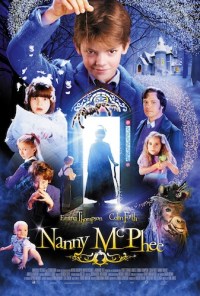 Nanny McPhee is brilliant. But to expand more directly on that sentence would be a conclusion, and so, before that, I present a collection of thoughts on bits I liked. Let’s call it “a review”.
The story is excellent, the kind of tale that imparts moral messages and lessons without you even realising — perfect for kids… and adults. It rattles along throughout, but particularly during the opening, which is surely what you want in a kids’ film: keep their attention! Emma Thompson’s screenplay is a delight. She’s in full control of her material, which allows her to set up rules — such as Nanny McPhee having five lessons to teach — and than almost immediately subvert them — though to tell you how would be to ruin a bit of the fun. Humour is rife, and without even realising it you develop a care for the characters.
Some have criticised the film for having no likeable characters. I can only think they were actually watching something else. Are the children a menace? Certainly — but they clearly have hearts of gold; they’ve been neglected and to an extent rejected; they’re acting up for attention. And they care about each other and always band together — they aren’t squabbling brats, they’re a gang, sticking together to defend themselves from a world that they perceive is out to get them. This is never clearer than when Angela Lansbury’s evil, rich Aunt turns up to take one away, and they do all they can to prevent it. And there are consequences; consequences, in fact, that matter to them, rather than more of the semi-neglectful treatment they’re used to.
 And even if you can’t engage with the troublesome children, surely Nanny McPhee coming in to sort them out is therefore a blessing? To say the children are a naughty, nasty rabble but McPhee is an oppressive, overbearing force is just trying to have your cake and eat it — pick a side, or pick both, oh awkward viewer. (And by “viewer” here I mean “one IMDb commenter I read”.)
The cast are exemplary without exception. Thompson, ‘uglying up’ as the titular nanny, conveys all the quiet authority necessary at the start, then softens without ever losing the sense she’s doing what is required; as she states, she never chooses sides. Colin Firth is naturally suited to being a dashing-if-bumbling type, so is also spotless as the father who does care but has forgotten how to show it, with the weight of the realities of the world — otherwise known as Money — pressing down on him. They’re ably supported by an array of British talent: Celia Imrie as a pink, fluffy, and dastardly potential fiancee; Imelda Staunton as a beleaguered ex-army chef; David Jacobi and Patrick Barlow as a Tweedledum and Tweedledee-style pair of comedy funeral attendants; Angela Lansbury as the controlling old Aunt.
 Not to mention Kelly MacDonald, the film’s sweetness and light — not like Anne Hathaway’s caricatured (deliberately) White Queen in Tim Burton’s Alice, thank goodness, but more Cinderella-y; the downtrodden but caring servant, who, when given the chance, — well, I wouldn’t want to spoil the ending. You’ll probably guess it anyway. But that’s not the point; indeed, that’s Good Writing, isn’t it — everything must be seeded well in advance, otherwise it’s all a deus ex machina. But this isn’t a time to rant about storytelling mores.
Even the rabble of children are pitch-perfect. With a cast this young that’s as much the skill of Thompson’s writing and Kirk Jones’ directing as any genuine acting talent, but that doesn’t make it any less of an achievement. As the eldest and therefore leader, Thomas Sangster is superb as ever. He gets the most to do, evolving from the awkwardest of the awkward to reveal intelligence and caring. The scene where he visits his father at work to ask him not to marry is almost heartbreaking, the boy’s well-meaning confused for his previous obstructiveness; and what he does next just shows how much he’s evolved. If there’s one flaw among the children it’s that Eliza Bennett (seen to good effect in Inkheart, shot just a year later) isn’t given much to do as the eldest girl; that’s an inevitable side effect when you’ve got a mass of kids fighting for time alongside several significant adult parts.
 Around the large cast, there’s plenty more to see. The primary-coloured sets and costumes work marvellously, a delightful mash between reality (the actual buildings, sets, costumes, etc, all look real and period-accurate) and fantasy (the bright colours!) It could’ve been garish; instead, it’s vibrant. The effects are properly magical. They don’t overwhelm, always serving the story rather than themselves, which is probably what makes them all the more effective. The climax is another highlight — though what occurs at the wedding (oh, it’s obvious there’ll be one) I shan’t spoil by describing.
I confess, Nanny McPhee took me by surprise. It always sounded a bit too much like Mary Poppins; it might be passably nice but little more, I thought. But no. It’s its own film, with its own magical nanny. It’s a children’s film, but with plenty for adults to engage with — assuming it doesn’t simply unleash your inner child, which it may well do. It’s exciting, funny, touching, magical and charming, quite often all at once. It’s brilliant.
Nanny McPhee placed 5th on my list of The Ten Best Films I Saw For the First Time in 2010, which can be read in full here.

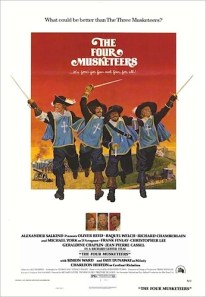 Richard Lester’s Four Musketeers was shot at the same time as the previous year’s Three Musketeers, because it was originally meant to be one film that was split in two when someone realised how darn long it was. This split led to a legal battle over actors’ fees and, eventually, a new standard clause in actors’ contracts to prevent such two-for-one ‘cheats’ by producers in future.
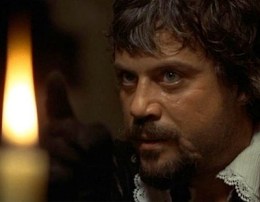 the murder of Constance; the cold-blooded execution of Milady; and ending up with Richelieu still in power too — none of it sits well with the jolly swashbuckling tone that still dominates. There are some good action sequences nonetheless — for instance, the ice-covered lake; breakfast/siege in the ruined fort; and the burning-building finale — which go some way to make up for the shortcomings.
 I like a good swashbuckler. I don’t know exactly what it is about sword fights, but they’re probably my most favourite kind of action sequence. The 1973 Three Musketeers, then, is a film I’m slightly amazed I’ve not seen before. Especially as I absolutely loved it.
 Thanks to this most of the fights aren’t strictly sword fights, I suppose. Indeed, Oliver Reed seems to dispense with his blade at the earliest opportunity and turn instead to sticks, wet towels, whatever else happens to be at hand. It lends a certain kind of organised chaos to proceedings; the kind that elevates a technically proficient duel into a funny, exciting, memorable segment of cinema. I would list standouts, but instead may I recommend you watch the film and, every time an action sequence starts, count it as one I mentioned. But particularly the one in the laundry and d’Artagnan and Rochefort’s lightbox-lit nighttime duel. And also— Now, this is why I said I wasn’t going to list any.
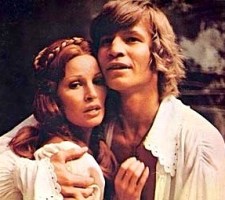 Constance and Faye Dunaway as the conniving Milady de Winter. York earns his place as the lead amongst such company, though, making a d’Artagnan who is by turns athletic, clumsy, hot-headed, loyal, and funny. As I said, everyone pitches the lightness just right, but York perhaps most of all — he doesn’t send up the youngest musketeer, doesn’t make him a pun-dispensing action hero, but finds all the humour in his actions and dialogue.
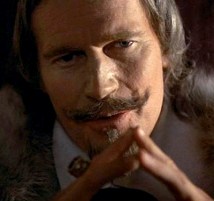 It also means the film ends with a sort of “Next Time” trailer, which feels very bizarre indeed, but is also a tantalising glimpse of what’s still to come.
 A Good Woman adapts Oscar Wilde’s 1892 play Lady Windermere’s Fan, switching the setting to the Amalfi Coast in 1930. If one didn’t know better, one would believe that’s when and where it was always set.
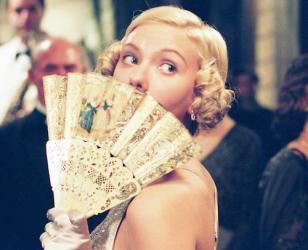 So it seems one’s perception of the film lies in what it is compared to. Compared to Wilde’s original, it may indeed be a pale imitation, relocated to an inappropriate country and period, with lacklustre performances and incongruous Wilde-penned lines crowbarred in. Taken without the context of the work it’s adapted from, however, I thought it was a flawed but, more importantly, highly amusing film.
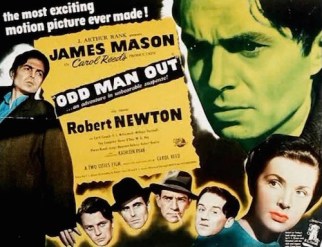 It may be a bit of a cop out to begin a review by pointing you to another, but I must recommend
 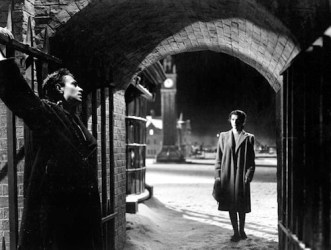 Robert Newton’s Lukey. (You’ll also note Newton’s performance is criticised in Colin’s piece so, in aid of not sounding like I’m too easily influenced, I’d like to point out I didn’t make the connection between his comments and my own notes on Newton until afterwards.) Shell and Lukey have a bit of a point in the end, but I didn’t enjoy getting through them in comparison to the rest of the film.
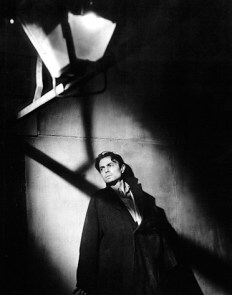 The score, by William Alwyn, is really nice, particularly in certain places — for example when it begins to snow and Johnny wanders the streets, or at its most effective during the haunting climax, as Kathleen hauls a near-dead Johnny through the falling snow towards the safety of the shipyard as the police finally close in.
 There’s probably a worthwhile biopic to be made about Verity Lambert. In 1963, she became not only the youngest-ever producer of a BBC television programme, but the first female one too; the programme she was charged with launching was
  Before I set off really critiquing the film, let’s just remember this: it’s a student effort. In that context, I’ve seen far worse — heck, I’ve been involved in the production of worse. Cowell and Guy have set themselves an almost Herculean task by choosing a period tale, which obviously necessitates all sorts of extra effort in terms of costumes, locations, dialogue… And to make it worse, they’ve chosen the ’60s, evoked so faultlessly in almost 40 hours (and counting) of
  which he accepts with merely a muttered “damn” when she leaves. Sorry, what? There’s nothing believable in that scene, never mind accurate.
 Technically, the piece is just as much a mixed bag. Stephen Cheung’s direction picks out some decent angles, avoiding the flat point-and-shoot trap some student filmmakers are apt to fall into, while the sepia-ish wash helps the period tone and adds a small amount of welcome gloss. The editing is a little rough around the edges, particularly at scene changes and toward the end. YouTube claims it’s viewable in 1080p — whether something went wrong in shooting, editing or at YouTube’s end I don’t know, but it isn’t that high quality. (This last point doesn’t impact on my score at all, it’s just an observation.)
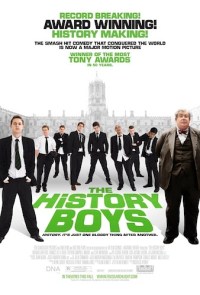 Nicholas Hytner’s film of Alan Bennett’s play, about a group of unlikely ’80s grammar school boys trying out for Oxbridge, sticks with a Bennett screenplay and the original West End/Broadway cast. However, it succeeds in not being very stagey — to the credit of Bennett’s screen adaptation and Hytner’s direction, I should imagine.
 I said it wasn’t stagey. That’s not entirely true: the exception is the finale, which in both execution and dialogue feels incredibly Theatrical. But it’s a nice idea — much better than a half dozen “what happened next” screens of text — and I wouldn’t want to lose something so effective. It also succinctly reminds us that, though this story is over, lives go on.
 Alternate histories are always fun, and nothing seems to have provoked more than the Second World War. Which, as a defining event in modern history for a good chunk of the world, is understandable. It Happened Here is perhaps one of the earliest examples, depicting a 1940s Britain under Nazi occupation.
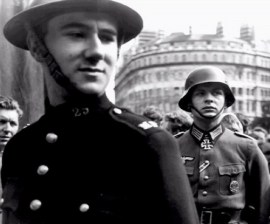 namely, the quiet but methodical enacting of The Final Solution in an occupied territory. The whole film builds to this point, gradually showing the darker and deeper levels of cooperation — which starts out almost harmless and ends with organised mass murder — meaning it never feels like Brownlow and Mollo are pushing an agenda too hard, but still confront us with the reality: that we’d probably succumb too, and this is where we’d end up.
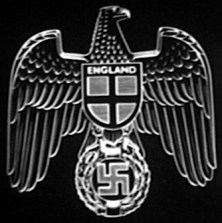 Another controversy arose over the villains being British collaborators — few German Nazis are seen — and the ease with which many agreed. But this is based in the facts of what occurred in other occupied territories; maybe Britain’s plucky spirit would’ve shown through, as many like to believe, or maybe many would have caved for the easier life — or, indeed, life at all. The film is examining several perspectives of occupation, and using the fictional context to good effect: this could have happened, the film says, however much we like to believe we wouldn’t have collaborated like (and/or resisted better than), say, the French.
 Nonetheless, It Happened Here is more anti-Nazi than pro-Nazi propaganda, in my opinion, though it’s easy to see why any material critical of the Allies could have outweighed the overall bias when the film was first released, just 20 years after victory in Europe. Generally, and viewed from a much more removed perspective, Brownlow and Mollo do a good job of offering conflicting perspectives with minimal comment, allowing the viewer to decide how ridiculous certain newsreels or opinions are, or how weak or misguided characters may or may not be — on both sides.
 Living Free is, in many ways, a tale of obsession. I’m certain that wasn’t Joy Adamson’s intention in writing the book, and I don’t think it’s the filmmakers’ intention either, but the facts can still play that way. The Adamsons devote months of their time, give up a promising career, spend all their savings, drive themselves into debt, and are nearly killed several times, all in a frequently-extreme effort to save three delinquent lion cubs who would be put down were it not for their sentimental attachment.
 The rest of the story moves into What Happened Next territory: Elsa dies, the Adamsons’ obsession with finding and saving her cubs begins. The film skips the book Living Free, adapting threequel Forever Free instead, presumably for dramatic reasons — I imagine Elsa and cubs just living isn’t as much of a Story as her death and subsequent events.
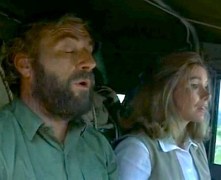 Living Free isn’t as endearing as Born Free. By the very nature of trying to keep the cubs wild, they’re less relatable than Elsa and consequently we become less attached to them. As you may’ve guessed, I found it more interesting to look on the film as a story of obsession, one that threatens to ruin the Adamsons’ lives, though ultimately it has an upbeat ending.

