2011 #30
Matt Reeves | 116 mins | Blu-ray | 15 / R
This review contains major spoilers.
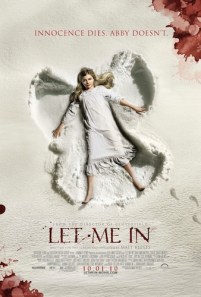 Owen is a 12-year-old loner in New Mexico in 1983, spending his days at school being bullied and filling his evenings spying on his neighbours. Then a girl, Abby, and her father move in next door and it looks like he might finally make a friend.
Doesn’t sound like the setup for a vampire movie, does it? Unless you’ve seen Let the Right One In, in which case it’s very much the-same-but-different. Indeed, it’s so much the same that one’s thoughts naturally gravitate to the occasions where it does differ. This may be doing the film a disservice, but I’m tempted to say “serves them right” for remaking it so damn fast and making it so damn similar. Some have asserted that it’s the same film for those who can’t handle reading subtitles. It’s not that bad, but you can see where they’re coming from.
Writer-director Reeves establishes that this isn’t exactly the same from the start: we get a title card to inform us it’s 1983, whereas the original left the era almost incidental as background detail; and then it begins halfway through the story. This is presumably because it’s a recently-made American/Hollywood low-key genre film and that’s one of their rules. It also introduces a new character, a detective who will play a larger role in the film that follows. Not that large, though; fore-fronting him in this way draws attention that he might not garner otherwise. Is it deserved? Debate among yourselves.
 The nighttime scenes are bathed in the orange glow of street-lighting, a nice choice of colour scheme as it’s evocative of the real world, especially as it’s not unnaturally overdone: the colour is abundant where there is such lighting, but more natural tones are used in forests, etc. It also provides a very different feel to the original, where a more white, snow-emphasising light was adopted throughout. Despite its realism, though, such a solidly orange palette does make the US one feel more visually stylised. Ironic.
Secondary adult characters are pared back (with the exception of that police officer). Owen’s parents are all but removed — you never really see his mum’s face and only hear his dad down the phone — and they all seem to have roles (teacher, neighbour, etc) rather than names. The fact that some key characters are stripped of their names — most notably, Abby’s ‘dad’ — while others retain theirs (as per the credits, at least) makes it seem like a thematic point that wound up half-arsed. Reeves makes minor additions to the story elsewhere. We visit the pool earlier, for instance, where Owen doesn’t swim, which makes the climactic pay-off even sweeter.
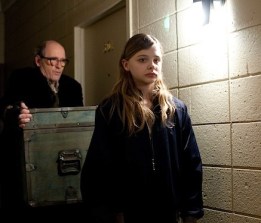 Despite it being easier to spot omissions than additions, Reeves’ film runs the same length as the original and feels faster moving. This may just be because I knew the story well, watching both versions just 24 hours apart, but some things are quantifiable: as well as far fewer scenes with the neighbours — in the original, characters; here, victim-extras — there’s also fewer arty shots of scenery, which helped give the original its sedate arthouse tone. What’s taken the place of all these things? Scenes from the novel, you might think, but from what I’ve read it’s faithful to the film more than novel — stuff I’ve read about being in the novel but not the Swedish film hasn’t been reinstated here either.
There are some notable changes to significant traits of the main characters: Owen finding very old photos of Abby with another boy suggests this is definitely her helper-finding MO; Owen is no longer obsessed with death (no file of newspaper clippings) and doesn’t carry his knife as much — for instance, when the policeman finds Abby asleep in the bath, instead of threatening him with the knife Owen just says “wait!” Minor tweaks? Maybe, but I think it removes some nice nuance, complexity and ambiguity.
Another notable change is the sexual element. It factors even earlier, with Owen voyeuristically observing it all around him — spying on neighbours as they begin to get it on, watching a young couple kissing in the shop, etc. 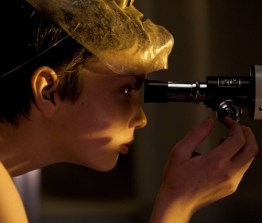 It seems he isn’t innocent in the same way Oskar was, that Reeves is building up his awareness of sexuality… but then he asks Abby to go steady and he still considers it to mean you don’t “do anything special”. What? Also, if she says “I’m not a girl”, surely the logical response is “you’re a boy?!”, not “what are you?” — especially if the only answer she’ll give is “I’m nothing”. But she’s not a boy — probably. It’s not explicit, but she seems much girlier, and of course it would remove any dangerous homosexual element. Or possibly they just wanted to make damn sure they didn’t need to include The Crotch Shot. Considering they’ve changed the bully’s teasing of Owen from “piggy” to “little girl”, it seems even more obvious a shame to have stripped Abby of her androgyny. Unless that’s the point? They tease Owen about being a little girl, before getting their asses kicked — or, rather, bodies ripped apart — by one.
The worst thing about Let Me In, though, is that any time there’s a scene that’s a direct lift from the original, it feels less well played, by the director, by the cast and sometimes, despite the faithfulness, by the screenplay. The aforementioned swimming pool climax is a case in point: the original version is perfect, but directly copying it would be a no no, so instead Reeves jazzes it up… and, unsurprisingly, it doesn’t work half as well. You can’t improve on perfection.
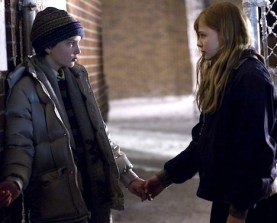 Similarly, the CGI is overdone throughout. It’s not bad per se, just used too overtly. Whereas the original remained grounded and (perhaps surprisingly) plausible, Reeves occasionally indulges in more stereotypical horror movie excess — take Abby’s first attack in the underpass, for instance: superficially similar, but in this version a computer-aided Abby flies all over the place. It draws attention to its has-to-be-fakery and is therefore a less effective sequence.
As I mentioned in my other review, choices for cuts to the novel for the original adaptation were partly about getting it past censors but also about making the story work as a film, and all were made by the original author. This is probably why Let Me In reproduces the film version so faithfully, rather than re-adding bits from the novel: when the original author has already approved cuts, why re-do the job? The answer might be “to offer something different” — a valid consideration, I think, when you’re remaking a work so soon after the original — but you can see why Reeves didn’t. Of course, being American, it censors the tale further (losing any potential homosexual undercurrent, references (visual or otherwise) to castration, etc).
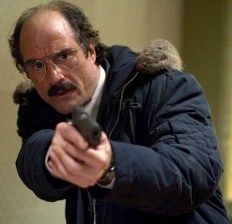 It’s probably unfair to judge Let Me In by watching it so close to the Swedish version. I expect it benefits from a bit of distance. It’s still a well-made film, still an unusual take on a familiar genre. But it is — obviously — not as original or innovative. It’s also not as well acted, not as nuanced, not as beautifully made — the images Reeves conjures up do not burn themselves into your mind in the way so many from the original do.
If you’ve not seen the original, I’d wager it comes across a lot better. But do yourself a favour and watch the original first — you wouldn’t want the inferior version to ruin any of its surprises, would you.
See also my comparison of this and the Swedish original, Let the Right One In, here.
Let Me In is out on UK DVD and Blu-ray today.
The UK TV premiere of Let Me In is on BBC Two tonight, Sunday 11th January 2014, at 10pm.

 A faded action movie star (Burt Reynolds) thinks he’s been signed up to play King Lear with the RSC… but when he arrives in England, he finds it’s just a small village amateur dramatics group. Hilarity, and the odd heart-warming message, ensue.
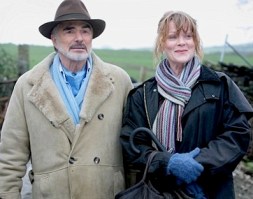 Imelda Staunton and Derek Jacobi, all ceaselessly watchable, plus a supporting cast of faces you’ll likely recognise from British telly.
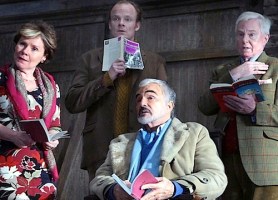 Probably the best bit is the series of films Reynolds’ character is known for: Ultimate Finality 4 plays as a nice, subtly-used background gag.
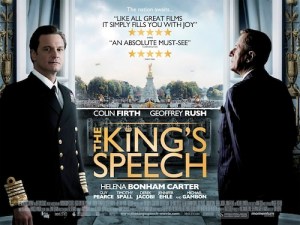 Britain seems to be having a grand time of it at the Oscars of late — following
  And if the authors of the book missed out on an on-screen credit, at least they’ve had plenty of tie-in promotion (including a featurette on the Blu-ray).
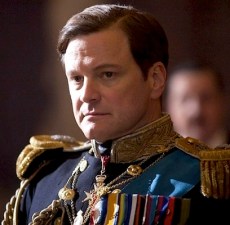 but Firth presents a much more convincing stammerer than you usually see (I have this on good authority from someone who knows several stammerers). It’s not just the Oscar bait element he nails though, as he also brings truth and gravitas to the rest of the role. It’s a complex part — he’s a man who has the throne unexpectedly thrust upon him, at a transitional time for the monarchy, as the nation is launched into one of its most difficult periods.
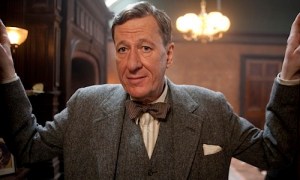 Guy Pearce as the youthful, playboy-ish David / King Edward VIII; Timothy Spall doing a decent Churchill impersonation, which sparks one nice moment just before the titular speech; plus
 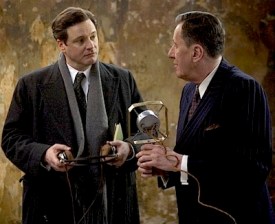 It looks odd, and to be honest I’m struggling to place my finger on what exactly is odd about it, but it’s slightly off-normal, slightly stylised, and I quite like it… but considering Momentum seem to have ballsed up the transfer to at least some degree, I’m not sure how much the oddness is a choice of Hooper and DoP Danny Cohen and how much a dodgy transfer/compression. Screen-grabs of the US release (which is at least 1080p, but not wholly praised in other areas, it seems) don’t help much. But as I said, I’m no real expert on Blu-ray quality, so don’t take my word as gospel by any means.
 There doesn’t seem to be much love in the world for Easy Virtue, a witty adaptation of Noel Coward’s play (previously filmed
 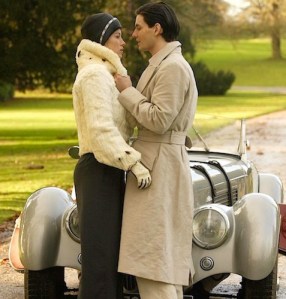 possibly in the soundtrack CD’s liner notes — that the following was Elliott’s idea.) Standards from the era are present and correct, but Cole Porter-styled reinterpretations of modern songs like Car Wash and Sex Bomb raise a smile whenever they turn up unexpectedly. It’s fabulously cheeky.
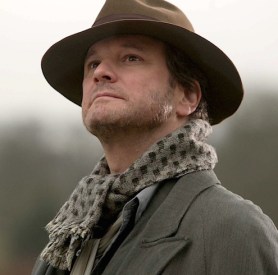 It’s still not a big part, nor a showy one, but those little closing tweaks left him standing out for me.
 Michael Caine killing hoodies. How great does that sound? As a film premise, that’s awesome. If it doesn’t get you excited about seeing this movie, then what kind of film fan are you, eh?
 Which in some ways is quite a chilling way to feel. I’ll be buying the Daily Mail and watching Sky News next.
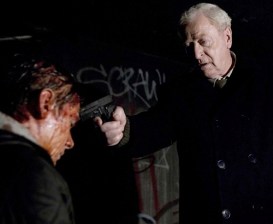 Whatever you may think of the revenge thriller it turns into, I think it’s hard to deny these early scenes have a realism and power. It is, of course, to the credit of Caine that he performs all this flawlessly. Oh yes, he’s (to quote another review) “the king of cool” when blowing away the scum that surround him, but before that he’s an affecting old gent, abandoned by the world.
 The counter to that would be that a murder spree may be viscerally satisfying but isn’t a real-world solution, so this is just as useless at relevancy as Death Wish.
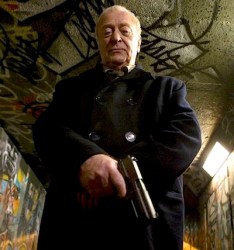 Some will think it tackles these, others that it’s just a facile revenge movie; some will think it’s cool, others despicable; some will think it plausible, others anything but. Or maybe, rather like me, you’ll think it’s all of those things, however mutually exclusive they may seem.
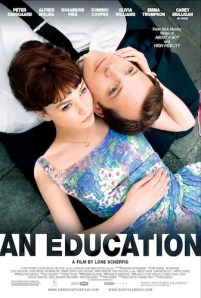 It seems that every year, come Oscar season, there’s a British-made film we’re led to back so thoroughly that it gains nothing but incessant praise from every (British) quarter. Just to look at recent years, from the 2006 selection it was
  Based on a true story, the film tracks 1960s schoolgirl Jenny (Carey Mulligan) as she falls for an older man (Peter Sarsgaard) who represents a culture- and glamour-filled escape from her drab suburban life and its focus on getting a place at Oxford. It’s a romance and a coming-of-age tale, albeit one with a more naturalistic bent than your regular offering; more down-to-Earth and British than either something Hollywoodised or American-indie-fied. There are, perhaps, few massive surprises in the plot — anyone who doesn’t guess this won’t end well has somehow failed to encounter a “schoolgirl falls for glamorous older man” story before — but Nick Hornby’s screenplay and Scherfig’s direction execute it all with admirable conviction. You don’t feel like you’re watching something familiar.
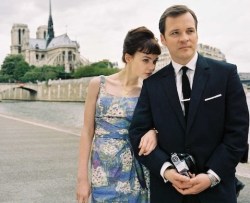 I’ve read some complain there’s no ending. I can only presume they walked out of the cinema or stopped their DVD before the film reached, y’know, the end. Sometimes I appreciate how people can criticise the lack of an ending, even when I disagree (see:
 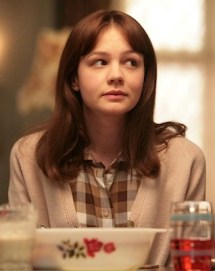 The film hangs on Carey Mulligan, justly nominated for her performance. Quite aside from whether the performance is awards-worthy or not, it’s effortlessly watchable. Mulligan is exceptionally easy to fall in love with — if you haven’t already when she was Ada Clare or Sally Sparrow, I’m sure Jenny Mellor will enchant you. On the other hand, some have found her character too pretentious or naïve — maybe your own background will dictate if you see these negative traits. Jenny is probably a little of both, but I wouldn’t say she’s wholly naïve and I wouldn’t say she’s pretentious, exactly — she’s clever, and she wants to experience the world. What’s wrong with that?
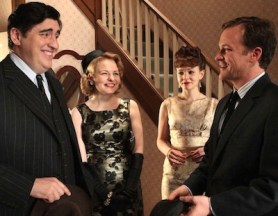 It’s slightly remiss of me not to mention Peter Sarsgaard, what with him being the other half of the film’s romantic relationship. He’s good, his Colin Firth-esque accent pitch-perfect, but while he’s spot on in the part — absolutely no complaints — I can’t think of any scenes where there isn’t someone else (usually Mulligan or Molina) grabbing the spotlight.
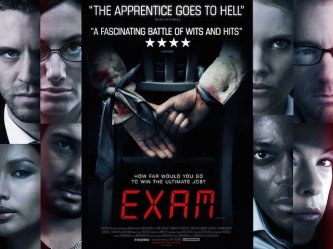 There’s an argument that the less you know going into any film the better. Naturally there are some films this applies to more than others, and Exam is one such film. Eight young professional types go into a job exam/interview; the next hour-and-a-half is all mysteries and riddles — which is why you wouldn’t want to know too much.
 Such a contained story relies heavily on its characters and the actors’ performances. Largely a cast of un- (or little-) knowns, all are decent — one or two may be subpar, but I’ve seen a lot worse. I don’t quite understand how some viewers can find White, played by Luke Mably, to be a completely likeable character in spite of his obvious flaws — he has his moments, but surely he’s not agreeable overall? Not a jot. That said, his is the standout part, a scene-stealing performance from Mably. There’s no clear-cut audience-favourite, which (from reading a few reviews) seems to be a problem for some viewers. As far as I’m concerned, it’s a good thing: never mind the realism of there being one perfect person every viewer will love, audience-favourites will either predictably win or be shockingly dispatched, so what’s the point?
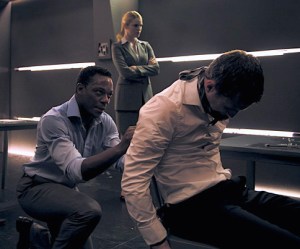 it’s quite nice to find a plot that doesn’t feel the need to tie everything in to its reveal; a plot that can wrong-foot you by occasionally focusing on something that’s ultimately irrelevant.
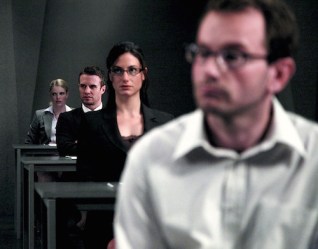 and films that invite pondering tend to invite repeat viewing; but then again it works equally well (better, ultimately) as a straight-up “what’s going on?” thriller.
 The first sequel (I say that in the hope there’ll be more) to
  there’s a perhaps surprising undercurrent of genuine emotion and serious issues. This is one of the things that marks these two films out from the overcrowded kids’ film genre: they’re prepared to tackle things in an appropriate way, never allowing them to overwhelm and make an Issue Film but not sanitising them because It’s For Kids. The ending to a lovely picnic may well bring a tear to your eye.
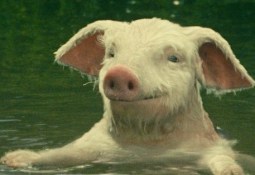 CGI is also used again to magical effect. And, even more than that, to very cute effect. It feels like a bunch of scampering CG piglets, or a cuddly CG baby elephant, should be a little disturbing and wrong, but they’re not — they’re all incredibly cute, in fact. Aww. And they get up to plenty of funny and entertaining things. As with most of the enjoyment in both Nanny McPhees, it may be aimed at children, but I think it’s done in a way that appropriately-hearted adults can enjoy too.
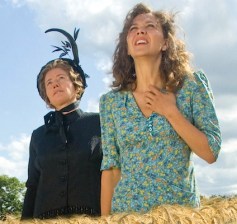 I loved the first Nanny McPhee, which always sets a sequel up for failure. However, Thompson (though she’s not in the director’s chair I think we can be certain she’s in charge of this series) doesn’t disappoint. She’s taken a brave route by setting the film in a completely different era with an all-new supporting cast (except for one lovely last-minute surprise for the attentive), but it’s paid off handsomely. This is at least as magical as the first, perhaps even more so.
 So begins Monsters. Expecting an epic SF-action movie where soldiers kitted out with futuristic weaponry battle an alien menace? You might be disappointed. Indeed, the relatively low
 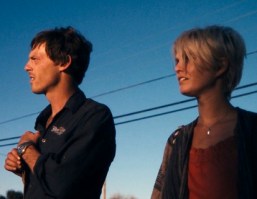 Only without being as worthy or on-the-nose as that makes it sound, I promise. As writer-director, Edwards has made a film that’s relatively Arty (for want of a better word), with lingering shots and wordless scenes. It tells the story visually quite often, letting the Infected Zone signposts or candlelit shrines to dead children or stunning scenery do the talking when dialogue isn’t necessary.
 The CGI is virtually faultless, which is doubly impressive as the vast majority of it is on shaky handheld shots, not nice clean plates. And Edwards created it all by himself I believe. Writer, director, cinematographer, single-handed visual effects unit — it’s no wonder much of the focus on Monsters has been on the clearly considerable skill of its creator. Much of the CGI would, I imagine, pass the casual viewer by: everyone knows the aliens are CG, but the film is littered with signposts and other such set and scenery extensions. It’s the kind of thing a bigger budgeted film would simply have created physically, but, working with next-to-no money, Edwards has managed to paint flawless versions of everything from simple road signs up to border checkpoints with his computer (and even bigger things, but they’d be CG’d in a big-budget movie too, so… well, hopefully you see my point). There’s the odd thing that doesn’t sit with complete realism, but even that depends how hard you’re looking. I’d say they’re the exception rather than the rule and very easy to forgive — nothing ruins its own shot, never mind the whole film.
 it’s easy to think what we saw in the night-vision sequence has led to this. But it hasn’t, because the military were Americans and we’re in Mexico. I’d wager this passes some viewers by, and perhaps it’s meant to, but there’s another clue: one of the soldiers whistling the Ride of the Valkyries; and when we get to the end of the film, as a pair of humvees trundle out to retrieve our heroes (by this point stranded in an evacuation zone just inside the US border), we hear the same soldier whistling again. And here’s where the change comes: rather than reaching the bit we’ve already seen and going beyond it, Edwards cuts off before he even reaches it. To put it another way, the chronological end of events is only at the beginning. It’s quite clever, and it also obscures what happens to the characters (how I shan’t say). That’ll irritate some, especially as even when you piece it back together it’s inconclusive. I’ll leave it to others to argue whether that’s the point and whether it matters. The final shot is clever though: instead of closing on the characters’ finally kissing, it ends on them being pulled apart. Technically their separation is only temporary — they’re both going with the military after all — but, as we saw at the beginning, one of them might not survive the journey home; a more permanent pulling apart. Nice metaphorical linking, Edwards.
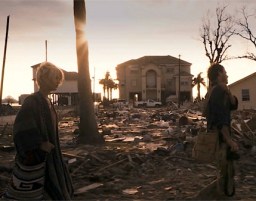 Another review I read somewhere commented that it’s a shame
  emerging with their low-budget, story/concept-driven genre films, not to mention Chris Nolan being allowed to do more or less what he likes in the big budget sphere, it’s easy to see why this is a very exciting time to be a lover of proper science-fiction. If they all continue to make films like this, we can look forward to an astounding future.
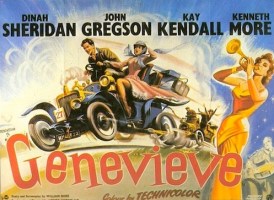 The further behind one gets on reviews, the easier it becomes to forget a film. Or not so much forget the film itself, but when one watched it. Or, to put it another way, I was a little surprised when I looked back over the 20 films I had left to review and saw Genevieve still there. At least I had a hundred or so words of notes for this one.
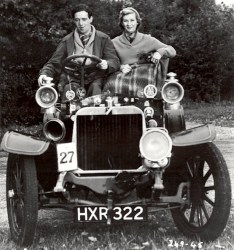 heightened by an evening of irritations and revelations, tipping the second half’s journey-back into an out-and-out race. It’s the second half that contains the more overt comedy as the rivals compete to scupper each other’s chances. That’s not to do down the more gentle style of the opening half, which has its moments. That said, depending on one’s perspective, the realistic sparring of the married couple during the opening scenes might be seen to give the film a bit of an edge of reality, making it not just the staged, (relatively) high-concept comedy it could have been.
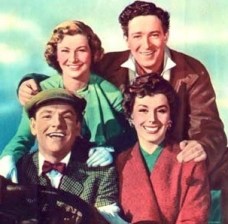 Director Henry Cornelius was vetoed on most of his first [casting] choices… and he was forced to make it at studios he didn’t want to work at. Cornelius’ displeasure was acutely felt by cast and crew as he didn’t hide how unhappy he was. He was also seemingly highly lecherous. Consequently both Dinah Sheridan and Kay Kendall carried whistles on them at all times… Olive Dodds, Rank’s head of contract artists, later testified that every leading cast member came to her at one point and said they wanted off the film.”
