Kill List (2011)

2016 #51
Ben Wheatley | 92 mins | streaming (HD) | 2.35:1 | UK / English | 18

I appear to be coming at director Ben Wheatley’s films in reverse order (having covered A Field in England in 2013 and Sightseers in 2014), and now I reach, not his feature debut (that’ll be ‘next time’, I guess), but certainly the film that brought him wider attention.

To describe too much of the plot of Kill List, or to even name its genres, is to give away some of its mystery. It’s a problem for reviewers, and has been since it came out — I read an interview with Wheatley where he said he didn’t envy their job, trying to accurately assess and ‘sell’ the film without actually telling people why they should watch it! The marketing people go a little way towards that for us, though, billing it as a horror movie when it seems to be nothing of the sort for a very long time.

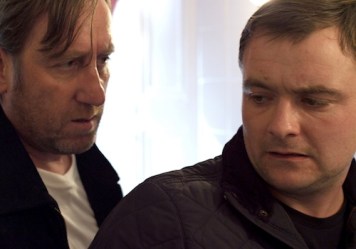
It begins in that classic British tradition, the “kitchen sink” drama. Jay (Neil Maskell) and his wife (MyAnna Buring) argue about the fact he’s not got a job and the money’s run out. It becomes clear something happened in Jay’s recent past to spook him out of work. Then his mate Gal (Michael Smiley) comes round with a new girlfriend, Fiona (Emma Fryer), for one of moviedom’s more uncomfortable dinner parties. Gal talks Jay into joining him on a new job (there’s some criticism of the film for being a “one last job” movie, but I don’t recall it being presented as that — Gal talks him back into work, not for a definitively final go-round. Maybe I missed something); elsewhere, Fiona’s actions hint at something more… unusual going on.
Kill List mixes in its genre elements — and they’re elements from a couple of different genres at that — so gradually that, as I said, it’s hard to discuss them without spoiling the film. (Much like the film itself, this review is getting progressively more revealing, so jump off when you’ve had enough.) It’s kind of a compilation of traditional British movie genres: we begin with kitchen sink, then discover we’re actually watching a crime film, before the final act swerves (though not without foreshadowing) into folk horror. The skill of Wheatley, and his co-writer Amy Jump, is in not making these transitions too implausible. That’s not to say they’re not surprising, but the doom-laden music, inexplicable proclamations by some characters, and a couple of very strange events should all clue the viewer in to the film not being a common-or-garden hitman flick.

Even as the latter, it is, again, very “low-key British”. It follows through on its domestic setup, presenting the mundanities of the profession — it’s the kind of film where the dealmaking and mission-giving are dealt with in a dialogue-free montage, but we do see characters discussing how they’ll get out of the hotel lobby without an injury being noticed, who’s going to clean up the blood in the sink, and the quality of the hotel’s free toiletries. The biggest threat the characters initially face is their credit card being declined, which might, potentially, later, draw attention to them.

The final act is naturally where the film reveals its overarching purpose… or rather doesn’t reveal, because there are a shortage of answers here. It’s a lot more straightforward than A Field in England, but it still offers few (or, some would say, no) explanations for what’s occurred. According to Wheatley, the screenplay was more explicit about what was happening and why, and so was some of what they shot, but he cut back on the exposition to leave it up to audience interpretation. This isn’t a film to passively watch and have everything explained, but even viewers prepared to do a little work for themselves may find it frustrating.

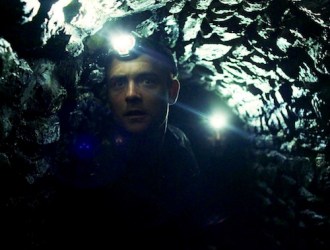
Nonetheless, there is striking, unnerving imagery to be found during the movie’s climax, Wheatley and regular DP Laurie Rose using the pitch-black nighttime setting to create dread rather than merely accidentally hide things, as so many under-lit movies seem to nowadays. The handheld camerawork and jumpy cutting that earlier in the film was just a little New Wave-y comes into its own here, aligning us with Jay’s disorientation and confusion. While the ultimate result is arguably predictable, to get too caught up in the minutiae of whether it’s a twist or not is to miss the point. What the point is… well, that’s debatable, but I don’t think it’s meant to be a twist for the sake of a twist. (Others disagree.)

The odd mash-up of domestic drama, mundane crime, and folk horror by all rights shouldn’t work, so credit is definitely due for the movie’s flow. Memorable sequences keep it ticking over throughout — and so they should: taking inspiration from the likes of Kubrick and Stephen King, Wheatley started from specific images and worked backwards to a plot. Here, I think that method has been effective. The abstruse ending won’t be to everyone’s taste, but the journey there is worth experiencing.
4 out of 5

It’s Ben Wheatley Night on Film4 this evening, beginning with Kill List at 10:45pm, followed by Sightseers at 12:35am and A Field in England at 2:15am.

Wheatley’s new movie, High-Rise, is currently showing in scattered preview screenings around the UK (mainly in London, because of course), and is on general release from next Friday, March 18th.
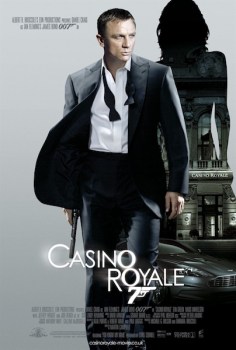
Casino Royale (2006)

100 Films’ 100 Favourites #18

Everyone has a past.
Every legend has its beginning.

Country: UK, USA, Czech Republic & Germany
Language: English
Runtime: 144 minutes
BBFC: 12A (cut, 2006) | 15 (uncut, 2012)
MPAA: PG-13 (cut)

Original Release: 14th November 2006 (Kuwait)
UK Release: 16th November 2006
US Release: 17th November 2006
First Seen: cinema, 16th November 2006

Stars
Daniel Craig (Layer Cake, The Girl with the Dragon Tattoo)
Eva Green (The Dreamers, Sin City: A Dame to Kill For)
Mads Mikkelsen (Valhalla Rising, The Hunt)
Judi Dench (Iris, Philomena)
Jeffrey Wright (Shaft, The Hunger Games: Catching Fire)

Director
Martin Campbell (GoldenEye, Green Lantern)

Screenwriters
Paul Haggis (Crash, The Next Three Days)
Neal Purvis (Die Another Day, Johnny English)
Robert Wade (Stoned, Skyfall)

Based on
Casino Royale, the first James Bond novel by Ian Fleming.

The Story
British agent James Bond, newly promoted to exclusive double-oh status, investigates a terrorist plot that leads him to Le Chiffre. Banker to the world’s terrorists, Le Chiffre has managed to lose a lot of his clients’ money, and intends to win it back in a high-stakes poker game at the eponymous establishment. Bond is charged with joining the game and bankrupting the banker, with treasury employee Vesper Lynd along to keep an eye on the money and off Bond’s perfectly-formed arse.

Our Hero
“James before he was Bond,” as the awful US tagline went. Daniel Craig instantly disproved the not-that-numerous-but-certainly-vocal critics (remember all the “Bond isn’t blond” rubbish?) by being perhaps the most convincing actually-is-a-highly-trained-agent Bond since Connery.

Our Villain
Le Chiffre, a total banker. Fond of poker, bleeds from his eye, brilliantly played by Mads Mikkelsen, who has deservedly gone on to many other things, no doubt some wholly due to this.

Best Supporting Character
Eva Green is Vesper Lynd, a woman so remarkable that Bond names his personal Martini recipe after her. He also falls in love with her. Considering the rest of the Bond canon, that’s not likely to end well.

Memorable Quote
“I’m afraid your friend Mathis is really… my friend Mathis.” — Le Chiffre

Memorable Scene
At dinner on the train to Montenegro, Bond meets Vesper for the first time. They verbally size each other up. She wins. “How was your lamb?” “Skewered. One sympathises.”

Write the Theme Tune…
Easily the best Bond theme of the Craig era (though I like the QoS one more than most, and my main objection to Adele’s is that it’s about a flying baby horse and its receptacle for bread waste), You Know My Name was co-written by the series’ regular composer since the mid ’90s, David Arnold. That meant he could integrate the tune into his score, which was a Good Thing.

Sing the Theme Tune…
Far removed from Bond’s Bassey-imitating default style, the slightly gravelly sound of Soundgarden’s Chris Cornell (the first male vocalist on a Bond theme for nearly 20 years) helped indicate the series’ harder, manlier new direction.

Technical Wizardry
After four films of honing the Maurice Binder “naked silhouettes” style, title designer Daniel Kleinman cuts loose with an array of inventive playing card-based imagery. The most original Bond title sequence since at least Thunderball and, by being so atypical, the most unique of them all.

Truly Special Effect
Chasing after a kidnapped Vesper in the middle of the night, Bond suddenly sees her in his headlights, tied up in the middle of the road. He swerves, his Aston Martin crashes, and barrel rolls… seven times. The stunt team set a world record with that, which (despite Fury Road’s best efforts) is still unbeaten a decade later.

Making of
James Ferguson, a doctor from Aberdeen, came up with the idea for the scene in which Bond is poisoned and then remotely diagnosed by experts at MI6 HQ in London. Ferguson, a Bond fan, was retained as medical adviser for future Bond films.

Previously on…
Casino Royale was adapted for TV in 1954, starring the great Peter Lorre as Le Chiffre, and its title (and little else) was used for the awful 1967 Bond spoof. This version is the 21st in the canonical James Bond film series, and the first time that series has performed a reboot: the film opens with Bond attaining his famed double-oh status, something we’ve never seen before.

Next time…
Daniel Craig’s second outing, the somewhat misunderstood and underrated Quantum of Solace, was the first direct sequel in the Bond canon, picking up on various plot threads from Casino Royale and even resolving a few of them. After Craig’s third, Skyfall, went off on its own, last year’s Spectre tried to tie together the entirety of Craig’s era, with mixed success. Beyond that, James Bond will return indefinitely, though Craig may not.

Awards
1 BAFTA (Sound)
8 BAFTA nominations (British Film, Actor (Daniel Craig), Adapted Screenplay, Music, Cinematography, Editing, Production Design, Visual Effects)
1 Saturn Award (Action/Adventure/Thriller Film)
4 Saturn nominations (Actor (Daniel Craig), Supporting Actress (Eva Green), Writing, Music)
2 World Stunt Awards (Best High Work, Best Stunt Coordination and/or 2nd Unit Director)
1 World Stunt Awards nomination (Best Fight)

What the Critics Said
“I never thought I would see a Bond movie where I cared, actually cared, about the people. But I care about Bond, and about Vesper Lynd, even though I know that (here it comes) a Martini Vesper is shaken, not stirred. Vesper Lynd, however, is definitely stirring, as she was in Bertolucci’s wonderful The Dreamers. Sometimes shaken, too. Vesper and James have a shower scene that answers, at last, why nobody in a Bond movie ever seems to have any real emotions.” — Roger Ebert

Score: 95%

What the Public Say
“While there is very much a dramatic and sensitive undercurrent to this Bond film, Casino Royale doesn’t shortchange the audience on action. From Bond chasing a skilled free runner enemy to a brutal staircase battle, Casino Royale delivers a harsher and bleaker sense of violence that had been missing from some of the predecessors and not seen since Timothy Dalton’s dark turn in Licence to Kill.” — vinnieh

Elsewhere on 100 Films
Just before Quantum of Solace was released in 2008, I wrote that Casino Royale was “a damn fine Bond film, returning to Fleming and resetting the character without losing anything truly essential about the franchise. […] this one’s up there with the very best, not just of Bond but of action-spy-thrillers in general.”

Verdict

In the early ’00s, it didn’t feel like the Bond series was in need of a reboot. Die Another Day had been a huge hit at the box office and gone down pretty well with critics (no, really, it did), and Brosnan was all set to do a fifth (though, considering his age, likely final) film as Britain’s top secret agent. Then Bourne happened, shifting the playing field of the spy-action genre, at the same time as Bond’s producers finally regained the rights to Fleming’s very first Bond novel. For the first time in the series’ 40-year history, they decided to reboot.

What Casino Royale does skilfully is acknowledge the changes brought by Bourne, but adapt them to Bond’s slightly more classical style (something Quantum of Solace fumbled). At the same time, it acknowledges and frequently subverts that Bond formula (“Shaken or stirred?” “Do I look like I give a damn.”), the antithesis of DAD’s uber-referentiality. In itself, it took Fleming’s relatively slight novel, with its lack of action by modern blockbuster standards, and expanded and modernised it effectively to fit current tastes. The result is arguably the best Bond movie ever made.

#19 will be… the last days of the human race.

Macbeth (2015)

2016 #23
Justin Kurzel | 113 mins | Blu-ray | 2.39:1 | UK, France & USA / English | 15 / R

Macbeth is my favourite Shakespeare play. Not that I’m a great scholar of the Bard, but I’ve seen and/or read enough to have a favourite. I also think it’s one of his most accessible works: its story and characters are relatively straightforward without being devoid of complexity; it’s got some immensely effective imagery and dialogue, including a solid compliment of famous lines; and it’s not excessively long either (it’s Shakespeare’s shortest tragedy, in fact). I also studied it twice over in secondary school, so I know it fairly well. Now, this doesn’t mean I have exacting standards when it comes to film adaptations (Shakespeare is plenty open to interpretation), but it does mean I have my expectations up, especially as there isn’t a film version of Macbeth that could reasonably be described as “definitive” (though I know Polanski’s has its fans). After this latest effort, that’s still the case — but that doesn’t mean it’s without merit. Far from it.

For thems that don’t know, Macbeth is set in 11th Century Scotland, where the eponymous character (Michael Fassbender) is a lord and general in the army of King Duncan (David Thewlis). After winning a decisive battle, Macbeth and his BFF Banquo (Paddy Considine) bump into a coven of witches, who forecast Macbeth will receive a new title and eventually become king. Although the men are naturally dubious, they soon learn that Macbeth has indeed been granted the prophesied thaneship. With the prospect of being king too tantalising to ignore, Macbeth’s ambitious spouse (Marion Cotillard) eggs him on to plot regicide…

Although director Justin Kurzel (of Snowtown, a film I have no intention of watching thanks to ghost of 82’s review) wasn’t hired until after the film was in development and Fassbender had been cast, the final film has been very much guided by his vision. The text is heavily cut (a copy & paste & delete-bits job that somehow took three screenwriters), to the displeasure of some critics, though this is primarily because Kurzel chose to supplant some of the dialogue with Filmmaking. In a film?! How very dare he! What I mean, more specifically, is that he’s visualised parts of the text; applied the old rule of “show don’t tell”. So rather than a messenger giving the King a full account of Macbeth being awesome in battle, we see some of the combat; Banquo has hardly any lines early on, but we still understand his friendship with Macbeth just from the way they look at one another and go into battle together.
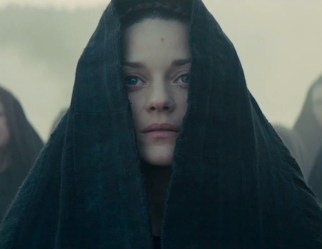
Throughout, it’s the imagery that Kurzel and DoP Adam Arkapaw have crafted that’s the real standout of this particular adaptation (however good the cast are, and I’ll come to them). The compositions, the unusual use of almost tableaux-like blocking, the lighting, the colour palettes, the rhythm of the editing and the use of slow-mo… This is a highly filmic film, in a good way. At times, it manages to turn Shakespeare into an action movie, a feat rarely (if ever) accomplished previously. At others, it’s just mighty purdy. The pictures are well complemented by the score, composed by the director’s younger brother, Jed Kurzel (he’s also scored the likes of The Babadook and Slow West, so it’s not just nepotism). His work here is appropriately haunting and folksy.

To say the text has been cut and the film is strongest in its visuals does not mean this is an empty-headed version of Shakespeare, however. The director and his cast have some interesting variations on the usual depictions of the characters, in particular Lady Macbeth’s motivations. Normally shown as greedy and power-mad, here she is grief-stricken — there’s a single line in the play that’s interpretable as the Macbeths having lost a child, which here is both made explicit and highlighted in an opening funeral scene. These characters are acting out of some kind of desperation or emptiness rather than pure greed. When, later, she (spoiler!) goes mad, it’s subtle and sad, rather than frantic and delirious. Cotillard is fantastic in all of this, and certainly worked hard for it: the way the French language applies emphasis is not suited to delivering iambic pentameter, apparently, so she worked hard with a dialect coach to nail her delivery. Her accent clearly marks Lady Macbeth as the only non-Scottish character here, which becomes another layer added to this interpretation.

As Macbeth, Fassbender negotiates well the accomplished general who is also dominated by his wife. Here the guiding concept was Macbeth The Warrior; to portray him both as someone looking to replace what he’s lost by the battle being over, and as suffering from PTSD after what he’s witnessed, hence repeated hallucinations of a boy killed in battle. This isn’t out of place with the text, of course — “is this a dagger I see before me” and all that. Fassbender is on furious form, particularly as Macbeth gives in to his paranoia later on. A word too for the supporting cast, in particular Sean Harris as Macduff, who makes the character feel more essential to the story (as he should, considering the climax) than I remember him being in previous versions.

Some of this analysis is thanks to the short handful of featurettes found on the UK Blu-ray (the US release, out tomorrow, has different special features, so I’ve no idea what the overlap will be, if any). There’s no commentary track, which is a real shame. I don’t often get round to listening to them, but I’d be interested to hear Kurzel talk through his and his cast’s decisions on a scene-by-scene basis. The special features that there are give some insight into how thoroughly they thought through their adaptation and prepared for it, but that only means the lack of further insight is even more pronounced. And Kurzel, Fassbender, Cotillard, and Arkapaw are all now working on the film of Assassin’s Creed, out this December, which is an intriguing prospect — is it going to be an arthouse video game adaptation? I suspect not, but maybe it will be the rarest thing in cinematic history: a good film based on a computer game.

I was initially on the fence about whether this Macbeth was a 4-star or a 5-star achievement, especially as I maintain it’s not the be-all-and-end-all of Macbeth on screen. But it’s one of those films that, whatever the experience of actually sitting and watching it is like (at times: odd), its imagery and feel really stay with you.

5 out of 5

Macbeth is released on DVD and Blu-ray in the US tomorrow, and is out in the UK already.
Next month, Polanski’s
Macbeth is one of the initial releases in Criterion’s new UK range (yay!)

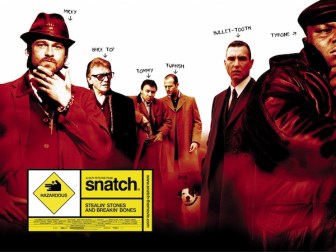
Snatch. (2000)

2016 #2
Guy Ritchie | 103 mins | streaming (HD) | 16:9 | UK & USA / English & Russian | 18 / R

Guy Ritchie’s second feature met with relative indifference 16 years ago, consensus deeming it Lock Stock Mk.2 and finding Ritchie needed to branch out if he was to meet his debut’s promise. (It only took a further four films to realise that for himself.) The consensus is very different today: taking IMDb’s Top 250 as a bellwether, Snatch is #94 and Lock Stock is #138.
I thought it was like Pulp Fiction refashioned in the style of Lock Stock, but with more-connected stories that play concurrently.

It was fine. Above average, even.

That’s all I have to say about it.

4 out of 5

Snatch was viewed as part of my What Do You Mean You Haven’t Seen…? 2016 project, which you can read more about here.

Paddington (2014)

2015 #182
Paul King | 95 mins | streaming (HD) | 2.35:1 | UK & France / English | PG / PG

The signs weren’t good for Paddington as it geared up for release: its star voice actor, Colin Firth, pulled out late in production; on posters, the CGI lead character looked like the personification of the uncanny valley; and the BBFC rating that cited “sex references” made it sound like it had entirely the wrong tone for an adaptation of a beloved classic children’s book. But these portents were quickly consigned to history when the film received an adulatory response from critics and audiences alike.
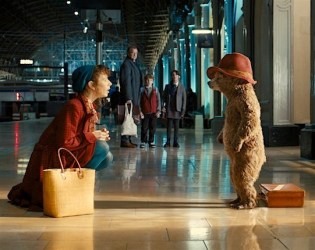
The story follows young bear Paddington (in the end voiced by Ben Whishaw) as he leaves his native Peru in search of a new home in London. There he temporarily falls in with the Brown family: reluctant father Henry (Hugh Bonneville), hippyish mum Mary (Sally Hawkins), moody teenage daughter Judy (Madeleine Harris), keen son Jonathan (Samuel Joslin), and their barmy housekeeper, Mrs Bird (Julie Walters). As they try to find Paddington a permanent home, he comes to the attention of museum taxidermist Millicent (Nicole Kidman), who wants to add him to her permanent collection…

Paddington is a fine example of why you can’t judge a film by its marketing, because the critics were right: this is a joyous, funny movie; a delight for all ages. It also shows that sometimes euphemistic PR phrases like “creative differences” or “we agreed he wasn’t right for the part” aren’t actually euphemistic at all: Firth would’ve been all wrong for Paddington, at least as he’s realised here, and so his departure was a wise move for the sake of the character. Whishaw, on the other hand, nails it, his boyish tones being resolutely character-appropriate.

The rest of the cast are all very safe pairs of hands, meaning viewers can rest easy that, if there is a weak link, it won’t come from the performances. This is further cemented by supporting turns from the likes of (in order of appearance) Geoffrey Palmer, Imelda Staunton, Michael Gambon, Matt Lucas, Peter Capaldi, and Jim Broadbent, plus a host of faces viewers may recognise from British TV comedy.

Fortunately, the screenplay (by director Paul King) is no slouch either. The film mixes various styles of comedy, as verbal humour rubs shoulders with pure slapstick, sight gags sit alongside witty spoofery, and there’s even a spot of pantomime-esque cross-dressing. This isn’t a case of “throw everything at the screen and see what sticks”, though. There’s a resolutely good-natured tone that’s liable to keep a smile on your face, and perhaps even win over more sceptical audience members — just as the initially-grumpier members of the Brown clan are too.

Inevitably a sequel is in development, but King is reportedly being given as much time as he feels he needs to get it right — always a good thing. Whenever it rolls around, I suspect it will be met with considerably fewer doubts. Not pandering to the criticisms of its pre-release hype, Paddington emerges with a sure-handed approach and material that merits such confidence. A delightful movie for viewers of any age.

4 out of 5

Bloody Sunday (2002)

100 Films’ 100 Favourites #14

January 30, 1972
a day written in history
a day when innocence died
when truth was sacrificed
and lives were changed forever

Country: UK & Ireland
Language: English
Runtime: 110 minutes
BBFC: 15
MPAA: R

Original Release: 20th January 2002 (UK)
First Seen: TV, 20th January 2002

Stars
James Nesbitt (Millions, The Hobbit: An Unexpected Journey)
Tim Pigott-Smith (The Remains of the Day, V for Vendetta)
Nicholas Farrell (Chariots of Fire, Hamlet)
Kathy Kiera Clarke (The Most Fertile Man in Ireland, Cherrybomb)

Director
Paul Greengrass (United 93, Captain Phillips)

Screenwriter
Paul Greengrass (The Murder of Stephen Lawrence, United 93)

The Story
Derry, Northern Ireland, 30th January 1972: MP Ivan Cooper leads a peaceful march to protest internment. British paratroopers observing the march, geed up after previous conflicts, respond to minor rioting by shooting into the unarmed crowd and at fleeing civilians.

Our Hero
James Nesbitt stars as MP and civil rights activist Ivan Cooper, a Protestant who was elected in a mostly Catholic constituency, and the organiser of what was supposed to be a peaceful protest march.

Our Villains
The British Army don’t come across in the best light, with Tim Piggot-Smith’s Major General Robert Ford issuing hostile orders, and the troops eager for a fight. The depiction is tempered by Nicholas Farrell as Brigadier Patrick MacLellan, battling his conscious even as he must carry out his orders.

Memorable Quote
“I just want to say this to the British Government. You know what you’ve just done, don’t you? You’ve destroyed the civil rights movement, and you’ve given the IRA the biggest victory it will ever have. All over this city tonight, young men — boys — will be joining the IRA, and you will reap a whirlwind.” — Ivan Cooper

Memorable Scene
After the day is done, Ivan Cooper delivers the above statement at a press conference. Intercut, at inconspicuous locations and under the cover of dark, young men queue up to join the IRA.

Technical Wizardry
Shot handheld on 16mm by cinematographer Ivan Strasburg, Bloody Sunday looks like news footage. It’s not trying to pass itself off as documentary, but rather it places the viewer in the heart of events. Clever shot selection and Clare Douglas’ editing mean that, even though a sense of confusion is evoked, the chronology and geography of events is maintained.

Making of
“Making the film Bloody Sunday was important for me, not only as an actor but for my understanding of myself as an Ulsterman. It helped me realise that this episode was the watershed, and that the ensuing 30 years of conflict in Northern Ireland were in large part due to what happened that day in 1972. For it was on that night that young men all over the country joined up with the IRA in a sense of rage and injustice at what had happened.” — James Nesbitt, The Independent

Awards
1 BAFTA TV Award (Photography and Lighting)
4 BAFTA TV Award nominations (Actor (James Nesbitt), Single Drama, Editing, Sound)
2 British Independent Film Awards (Actor (James Nesbitt), Director)
3 British Independent Film Award nominations (Best British Independent Film, Screenplay, Technical Achievement (Cinematography))
4 Irish Film and Television Awards (Feature Film, Director, Script, Sound)
4 Irish Film and Television Award nominations (Actor (James Nesbitt), Actress (Kathy Kiera Clarke), Photography, Editing)
Won the Golden Bear at the Berlin International Film Festival (tied with Spirited Away).

What the Critics Said
“you have to remind yourself at moments that you’re not looking at a documentary. […] Filmed in 16mm, with a hand-held camera that seems to be breathlessly attempting to keep up with the chaotic events, the movie has a stunning immediacy. It doesn’t feel as if Greengrass has staged the events, but that his camera (in the expert hands of cinematographer Ivan Strasburg) happened to be there when the tragedy occurred, a witness to the British officers’ planning, to the marchers’ anger and panic, to the soldiers’ gung-ho macho and to the cover-up that followed.” — David Ansen, Newsweek

Score: 92%

What the Public Say
“The film has been criticized by some as focusing too much on the Cooper character, encouraging a “great man” view of history. This criticism seems overblown when one considers the breadth of Bloody Sunday, but Greengrass does acknowledge an interest in placing Cooper at the fore as a kind of “man between worlds,” being a Protestant politician campaigning for peace across Northern Ireland and for civil rights denied to his Catholic countrymen.” — spinenumbered, Make Mine Criterion!
(Be advised, the Criterion Collection edition of the film described in this article is wishful thinking rather than a genuine release.)

Verdict

Bloody Sunday is a tough film to write about in a somewhat frivolous format like this one. It’s a film about a terrible moment in history, a shameful day for the British Army and a tragic one for the people of Northern Ireland, which it presents with documentary realism and an objective perspective, more concerned with presenting the facts as best it can than with apportioning blame. Even given that, it’s an inescapably emotional and affecting film. Powerful moviemaking.

#15 will be… extreme ways.

AfterDeath (2015)

2015 #197
Gez Medinger & Robin Schmidt | 89 mins | streaming (HD) | 2.35:1 | UK / English | 18*

A woman wakes up on a beach in the middle of the night. Stumbling away, she comes across a beach house with three strangers inside. They establish that the last thing they remember was being in a nightclub when there was some kind of accident, and then they woke up here. Fortunately, they’re not stupid and quickly twig this place is some kind of afterlife, then begin to work out how to get out — not that they’re helped by the lighthouse beam which causes immense pain, or that if they run away from the house they end up back at the house, or the vicious smoke-monster that’s flying around…

A low-budget British single-location thriller with a mostly unknown cast (the lead is Miranda Raison, who you may recognise from Spooks, 24: Live Another Day, or even things that aren’t about spies), AfterDeath mainly trades on the mystery established by its situation. The characters are quickly sketched and somewhat archetypal, and the twists in their storylines aren’t all that surprising, but combined with the relatively brisk running time this means they crack on with trying to solve what’s going on. There are some familiar elements to this (the looping ‘world’), but also ideas fresh enough to keep it watchable.

Hampering that watchability is the ugly digital cinematography. There’s always the possibility this was affected by the fact I was watching via streaming, but I normally get next-best-thing-to-Blu-ray quality from Amazon Instant Video (where I watched this, obviously) so I’m inclined to think it’s just the shooting and grading choices of the filmmakers. The end result is frequently murky, making the film look like it was shot or finished on cheap equipment, exacerbating the low-budget feel in a negative way.

AfterDeath is billed in part as a horror, emphasised by the skull imagery used on the poster. It’s not particularly scary though, so if you’re after that kind of thrill then it’s one to miss. As single-location mysteries go, it’s not remarkably original or exceptionally engaging, but the story and its revelations are solidly executed and the whole is decently performed, providing you don’t strain your eyes trying to see what’s happening.

3 out of 5

* The film doesn’t actually have a BBFC certificate, but the trailer is rated 18. ^

Spectre (2015)

2015 #168
Sam Mendes | 148 mins | cinema | 2.35:1 | UK & USA / English | 12A / PG-13

Regular readers will remember I shared my spoiler-free thoughts on Spectre when it came out. Consequently, this review contains major spoilers, of the “if you read this you will know every twist that happens in the movie” variety.

The 24th official James Bond movie had a funny old ride on its cinema release a few months ago. It started well, with near-universal praise from UK critics; audience reaction was more mixed but erred towards the positive; then US critics tore into it, and US audiences (as usual) followed suit. The latter seems to have become the more accepted view, with the consensus seemingly that it’s decent enough, but a definite step down from the high of Skyfall and a middle-of-the-road instalment in the context of the entire series.
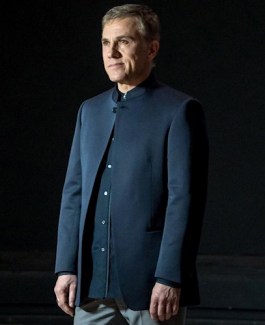
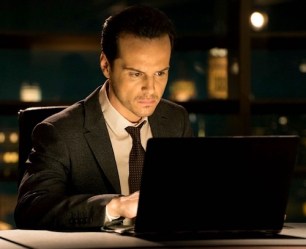
Spectre sees Bond (Daniel Craig) charged by dead-M (a Judi Dench cameo) with tracking down an assassin, as a way in to a secretive organisation that Bond’s other recent nemeses seem to have been a part of. While new-M (Ralph Fiennes) is distracted in London dealing with MI5 upstart Denbigh (Andrew Scott) and his dubious information-sharing plan that will make MI6 obsolete, Bond follows a trail of breadcrumbs to Rome, Austria, and Africa as he attempts to track down the organisation’s leader (Christoph Waltz).

That’s the foreshortened version of the plot, because much of Spectre plays like a detective movie: Bond uncovers clues that send him in new directions moving closer and closer to his goal. Where this falls down is there’s no mystery for him to unearth, at least not to the audience. We (and he) know this secret organisation exists, and we also know who’s in charge — it’s pretty hard to have not heard that Christoph Waltz is playing a Bond villain. So what twist does the film wheel out to keep this worthwhile? Is Waltz actually a front for the real villain? No. Perhaps there will be an incredible reveal about who Waltz’s character really is? Well…

Spectre, to put it bluntly, pulls a Star Trek Into Darkness — and considering writer Damon Lindelof recently admitted they’d messed up the reveal that (spoiler!) Benedict Cumberbatch was actually Khan (and J.J. Abrams admitted they’d messed up the film more generally, but that’s another issue), it’s a shame Spectre tried to repeat the same trick. So yes, as everyone predicted since the day he was cast, Waltz is playing Blofeld. The problem is, the film plays this as a twist/reveal, but it’s not a revelation to the characters, only to the viewer. In this interview with Empire magazine, director Sam Mendes says that not revealing Blofeld’s identity to the viewing public in advance was important because it’s a detective story and Bond doesn’t know the identity of the ‘murderer’, and we shouldn’t know before Bond. Which is poppycock, frankly, because the name Blofeld means nothing to Bond — the revelation for him is that his deceased childhood acquaintance is, a) alive, b) has become a super-villain, and c) has spent the last few years deliberately toying with Bond because of some childhood grudge. That’s why it’s just like the Khan ‘twist’: it means absolutely bugger all to the characters, but it does mean something to the audience. I’m certain there were ways to handle it in-film to make it work both ways — to make it a twist that Oberhauser is also Blofeld — but they don’t pursue that option even a little bit. And of course we all knew anyway, so it feels even sillier. If they’d played the “someone else we’re keeping secret might be Blofeld” game — if there’d been some misdirection to make us thing Denbigh would be unmasked as the big man behind it all — maybe it would’ve worked. But they didn’t.

For me, this is the point where the whole film went off the boil. It occurs at the start of a torture scene, which I thought was an over-complicated wannabe-Casino Royale sequence that consequently doesn’t work, and provides the gateway to an underwhelming final section in London. It seems the film’s third act was always a problem — if you read about what was revealed by the Sony leaks (in this coverage, for example), it’s clear the film entered production with the climax still not nailed down, because no one could quite agree on it. From that article, it indeed sounds like most of the film remained the same (or at least near enough), but the third act has definitely been re-worked, albeit retaining the same general thrust. I still don’t think it works. There’s too much of M, Q and Moneypenny sat in an office trying to stop a man typing something into a computer (more on this in a minute), while Bond is busy running around a building and shooting at a helicopter. Personally, I’d’ve thrown it out and started again, but I guess they’d run out of time, and maybe it was better than the alternative.

The leaked draft also ended with Bond executing Blofeld, shooting him in the head at point blank range. The studio thought this callous. In the finished film, he spares him, the movie justifying this as Bond rejecting his former life as a government assassin to go off and be with the woman he’s fallen completely in love with in the last three days. Was it Sony’s note that changed Blofeld’s fate, or a desire to keep Bond’s Moriarty in play for future instalments? I guess we’ll find out once Bond 25 starts ramping up. I wouldn’t mind seeing a good deal more of Waltz in the role. In Spectre he’s almost entirely constrained to the third act, thanks to that attempt at a twist; now he’s been established, surely next time they can let him loose across the entire movie? Reports indicate the return or otherwise of Waltz will hinge on Craig’s decision about returning (despite ‘news’ to the contrary last week, this seems to still be up in the air), so we’ll have to wait and see on both fronts.

Back to the issue of M, Q and Moneypenny. I’ve seen critics of the film assert that it was a mistake to cast actors of the calibre of Ralph Fiennes, Naomie Harris, and Ben Whishaw only to give them so little to do. This tickles me a little, because if anything I thought they played too large a role. All three have their place within a Bond narrative, and that place may have changed somewhat over the years (particularly with regards to Moneypenny), but it feels like we spend as much time with them saving the day as with Bond. This isn’t Mission: Impossible — it isn’t a team effort. Is it realistic that a lone agent goes around saving the world? No, of course it isn’t, and it never was; but the point of Bond has never been realism. And besides, the reason you cast quality actors in minor roles is so they can pop in for a day or two and make their one scene exceptionally good. Bulk their part up if you’ve got a story to tell, by all means, but don’t shoehorn them in just because you’ve got them. For my money, Spectre is too much doing the latter.
I could go on and on about a Bond movie (as anyone who’s read my 5,000 words on Skyfall will know), and obviously there are whole swathes of the film I’ve not touched on (the girls, the gadgets, the titles, that bloody song, the action sequences, the emptiness of Rome’s streets), but for now I’ll finish off with some more thoughts on that Mendes interview. (If you’re interested in “why we did that” behind-the-scenes stuff, do read the whole thing — there’s more interesting stuff there than I’m going to mention.) For starters, he reveals that the memorable opening “single take” is actually four shots stitched together, and challenges you to spot the cuts. It’s a fantastic opener, but, to be frank, I don’t think the transitions are that hard to ascertain. (From memory: there’s definitely one as they enter the building, another before they enter the hotel room, and the third is somewhere around when Bond climbs out the window onto the rooftops).

Despite the Sony leaks, Mendes thinks Bond killing Blofeld was never an option. He says it’s “sewn into the fabric of the film” that the story takes a man who kills for a living (and states as much at one point) to a position where he chooses not to kill. See too: M saying a licence to kill is also a licence not to kill; and the idea that, to Blofeld, being exposed and incarcerated is worse than being killed. This is a thematic thread the film arguably gets right, though sending Bond off to a “happy ending” seems a risky strategy when it comes to luring back a leading man they hope to retain but who may prefer to leave. Or perhaps they’re just planning to go On Her Majesty’s Secret Service on us. Mendes also says the ending was deliberately written as a way for Craig to leave, intending it to be an in-film conclusion that would serve as an exit if he chose not to come back, but which was also open enough that he could return without it being implausible. Time will tell which it will be.

As I mentioned in my ‘initial thoughts’ piece, it takes time and repeated viewings to settle a film into a ranking among the Bond pantheon… but it’s no fun just waiting, so let’s have a crack now. The broadest way of categorising that is, “is Spectre top ten material?” As a widely divisive Bond film, everyone’s going to have a very different opinion (when don’t they?), but when I tried to list my top ten Bond films for the sake of comparison, I got easily into double digits before I began to consider Spectre. Maybe I’m being too harsh now — I did fundamentally like it for most of the running time, but there are niggles throughout and the last couple of reels left a sour taste. For a film that should build on the excellence of Casino Royale and Skyfall, as well as finally fulfil a decade-long promise to restore more “classic Bond” elements to the franchise, it wasn’t all it could’ve been.

4 out of 5

Spectre is released on DVD and Blu-ray in the UK on Monday.

Ex Machina (2015)

2016 #26
Alex Garland | 108 mins | Blu-ray | 2.40:1 | UK / English | 15 / R

BAFTABritish Academy Film Awards 2016
5 nominations

Nominated: Best British Film; Best Supporting Actress (Alicia Vikander); Best Original Screenplay; Best Special Visual Effects; Outstanding Debut by a British Writer, Director or Producer.

A British sci-fi movie from a first-time director will tomorrow take a place at the table (well, in the auditorium) alongside 2015’s biggest awards contenders, as it vies for multiple gongs at this year’s BAFTAs — and it stands a very plausible chance of walking away with several of them, too. I hope it does, because, after a year that brought us awards-quality sci-fi bombast (Mad Max, Star Wars), it’s fantastic that a small film about three people sat in rooms talking can stand toe-to-toe with them as one of the year’s best.

The increasingly ubiquitous (and deservedly so) Domhnall Gleeson stars as Caleb, a programmer at search engine giant Google Bluebook who wins a staff lottery to spend a week with the company’s reclusive founder, Nathan, played by the increasingly ubiquitous (and deservedly so) Oscar Isaac. However, on his arrival he learns he’s not just there to hang out: Nathan wants him to perform a Turing test on an AI he’s built. The point of the Turing test (as I’m sure you know) is for a human to interact with an AI but not realise it’s an AI, so Caleb’s surprised when said AI — Ava, played by the increasingly ubiquitous (and deservedly so) Alicia Vikander — comes in the form of a robot that’s obviously a robot. The real test is whether Caleb can know he’s talking to something non-human and still come to be convinced it’s human. As Caleb begins his interviews with Ava, it becomes apparent that there’s something else going on at this remote facility, where regular power cuts mean they’re all locked in…

As is probably clear, Ex Machina is a sci-fi movie of the thoughtful variety. It’s a film that considers ideas of artificial life, how we test it and what it means to create it, and only gradually builds in thriller elements that pay off in its final twenty-or-so minutes. In truth, it’s not the most thorough deconstruction of what it means to be human and whether artificial intelligence can have that right, but it does touch on these issues and, in so doing, leaves them open for the viewer to mull over for themselves, or debate with friends, or however else one likes to consider their movies post-viewing (like, I dunno, writing about them on the internet or something).

There are thematic similarities to Blade Runner, which (in case you’ve not seen it) also deals with the humanity or otherwise of man-made intelligence. Mulling on that comparison, I’m tempted to say Ex Machina is almost the inverse of Blade Runner, in this regard: Ridley Scott’s classic is ostensibly an SF-noir thriller (Harrison Ford is a cop hunting down some rogue robots), but by its end has revealed a considered exploration of what it means to be human, and whether these artificial creatures can lay claim to that. Conversely, Alex Garland’s film seems like it’s sitting us down to consider those same issues, but is actually laying the groundwork for revelations and twists that build to an edge-of-your-seat climax. I’m not saying one’s better than the other in this respect, just that they’re approaching the same topics almost from opposite ends.

Also like Blade Runner, Ex Machina is an exceptionally well made and performed film. Not in the same way as Blade Runner — it’s bright and clean and modern, in a Google-y, Apple-y kind of way — but to a similar level of internal consistency and accomplishment. Gleeson’s Caleb may seem a little plain, a blank page for the other characters to write on, but as his insecurities begin to come to the fore you realise that’s almost the point. Isaac is suitably overbearing as the alcohol-dependent genius behind Bluebook and Ava, an initially affable but quickly disquieting presence — he may be a threat, or may just be a bit odd. And his dance scene is surely one of 2015’s highlights (there’s an extended version hidden on the US Blu-ray, which is a treat). Garnering the most praise (and awards) is Alicia Vikander’s take on an AI. It’s a tricky role to tackle, because she’s not just a robot — that would defeat the point of Nathan’s exercise — but nor is she fully human. It’s a tightrope of a role, a fine line to walk, and Vikander negotiates it with aplomb. To say too much more would be to spoil it.

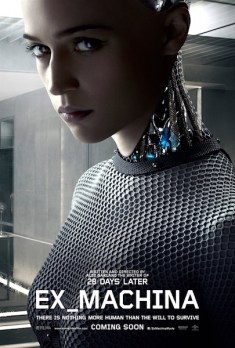
Aside from the acting, the film’s most striking element is surely the design of Ava. Her face and hands appear to be human, but everything else is robotic, and much of it transparent. This isn’t a case of slipping an actor into a suit painted with circuitboards — you can see the metal limbs and motors in her arms and legs, the metal spine in her back, the various computers or power sources or whatever glowing and spinning inside her. Occasionally she dresses in clothes and her workings are covered, but she spends most of the film with them on display. The CGI is literally flawless, which for a relatively-low-budget little British sci-fi-drama is all the more remarkable. I guess the visual effects awards are going to go to the big films, Star Wars or Mad Max or The Revenant (the bear seems to be very popular), but I do wonder if the work here is more deserving. You know how it must’ve been done — mo-cap suits and CGI — but there’s still a feeling of “how did they do that?”, because it’s so faultless. In fact, you don’t even wonder how they did it, because you just accept it; it’s only if you actively stop to consider it that you realise it’s physically impossible and must be CGI.

Those after a dissertation-like hard-science deconstruction of the meaning and possibilities of AI will likely find Ex Machina slightly lacking, as will anyone after the crash-bang thrills most mainstream sci-fi provides. Viewers prepared for a decently thought-provoking dramatic thriller about near-future tech, however, should be both engrossed, and grateful that movies like this are (for the time being) still getting made.
5 out of 5

The British Academy Film Awards are tomorrow night, televised on BBC One from 9pm.

Ex Machina placed 20th on my list of The 20 Best Films I Saw For the First Time in 2016, which can be read in full here.

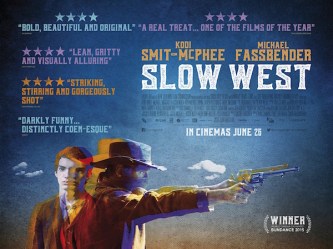
Slow West (2015)

2015 #199
John Maclean | 84 mins | streaming (HD) | 1.66:1 | UK & New Zealand / English & French | 15 / R

The Coens and Wes Anderson are common reference points in reviews of this slightly quirky Western, which sees Michael Fassbender’s experienced outlaw-type help wet-behind-the-ears Scotsman Kodi Smit-McPhee track the girl he loves, who emigrated for mysterious reasons, also known by the bounty hunters on their trail.

The aforementioned comparisons aren’t wildly inaccurate, but are perhaps reductive. Writer-director Maclean has his own variation on that voice, bringing an occasional comically askew perspective to underscore tense confrontations and well-crafted shootouts. Vibrant photography by DP Robbie Ryan and a pleasantly brisk running time further the enjoyment.

A promising calling card and distinctive treat.

4 out of 5