aka Sin City: Recut ∙ Extended ∙ Unrated
2014 #126
Robert Rodriguez & Frank Miller with Quentin Tarantino | 142 mins | Blu-ray | 1.85:1 | USA / English | 18
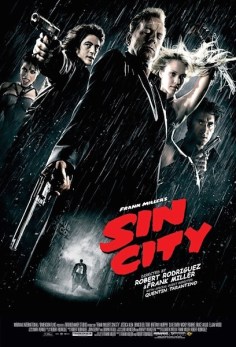 Adapted from a series of graphic novels by Frank Miller, Sin City is a noir homage, replete with high-contrast black-and-white cinematography, dialogue so hard boiled you couldn’t crack it with a sledgehammer, and all the requisite downtrodden heroes, corrupt authority figures, dangerous dames, etc. There’s also the very modern inclusion of shocking ultra-violence and nudity, but I guess a fair degree of that would’ve crept into classic noir if the mores of the time allowed — pretty much the point of the genre is the dark grubbiness of the world, after all.
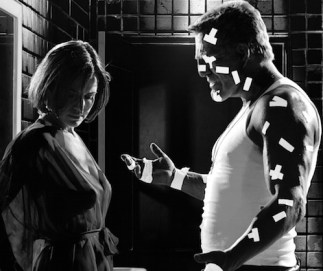
Anyway, Sin City: The Film is probably best known for its slavish faithfulness to Miller’s original comics; or rather the way that manifested itself: the film was shot digitally (when that was still remarkable rather than the norm, as it has become since) and almost entirely on green screen, with cast members who share scenes sometimes not even meeting, and whole roles being recorded in a day or two rather than the usual couple of weeks. It helps that the movie is a collection of short stories, meaning no one person is in it for more than about 40 minutes. The point of this was to then emulate the comic’s visuals: black-and-white with minimal grey in between, but occasional splashes of colour and other striking effects — blood is sometimes stark white, sometimes red; one character has blue eyes, another golden hair; plasters or necklaces are sometimes rendered as flat white blocks; and so on.
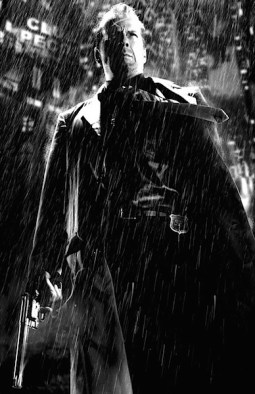 The DVD-premiering extended version, dubbed Recut & Extended (or, in the US, “Recut, Extended, Unrated”) is even more faithful to the comics than the theatrical version. Some of the books’ scenes that were excised are now included, and the structure has been rejigged to present each of the four stories one by one in their entirety (whereas the original version had a small amount of intercutting). The total running time is 17 minutes and 40 seconds longer, an increase of some 14.2%… which is a thoroughly misleading figure. As a presentational choice, each of the four stories is offered for individual viewing, plus option to “play all”. However, rather than that showing them as a single film, they play as four shorts back to back, with a full set of section-specific end credits rolling each time. The actual amount of new material in the film itself is reported to be 6 minutes and 55 seconds, or only a 5.6% increase from the theatrical cut. I’m sure the extensions are great for die-hard fans, but for most the additions are all but unnoticeable — look at that Movie-Censorship.com list and you’ll see there are only three or four new bits that could reasonably be described as “scenes” (ranging from under 30 seconds to about two minutes), and then just a bunch of extended ‘moments’.
The lack of notable new material isn’t the issue, though. The real problem is the re-structure. Let’s not beat around the bush: it scuttles the film. Individually, each of the three longer narratives is fine, but when watched back-to-back as if it were still one film, the structure is unbalanced. Then there’s the shorter story, The Customer is Always Right, starring Josh Hartnett as The Man. In the original cut, his character features in a standalone pre-titles style-establisher (both for the visuals and the kind of tough tales we’re about to be told), and then a neat coda bookend before the end credits. These two scenes have been placed together in this version, and it sucks.
 For one, the second scene belongs more truly to The Big Fat Kill (the final story, starring Clive Owen’s Dwight and the whores of Old Town led by Rosaria Dawson). For another, because this recut purports to be in chronological order, The Customer is Always Right plays second. So we get 47 minutes of Bruce Willis protecting Jessica Alba from a paedophile in That Yellow Bastard, then we get a one-scene story that rightly belongs at the beginning (complete with title card, now 50 minutes into the ‘film’), then we get a scene that, actually, belongs in a completely different place. The next full story is The Hard Goodbye (the one with Mickey Rourke under a slab of prosthetics as Marv), followed by The Big Fat Kill — and it’s after this that the second scene with The Man belongs. Divorced of that context, the scene is robbed of almost all its meaning.
I guess Sin City: Recut & Extended isn’t really meant to be viewed as a single film — hence why there are four sets of end credits, and why the cool opening titles featuring Miller’s original art is nowhere to be seen. Even allowing for that, though, I think the second scene with The Man has been badly placed. A chronological cut of a non-chronological film is an interesting idea, but this doesn’t even get that right. And even if it weren’t for the regular interruption by lengthy credits sequences, the re-order makes for a very stop-start viewing experience, something the theatrical version avoided by divvying up one story and having characters make brief cameos in each other’s tales.
 In the end, I enjoyed Sin City considerably less than I did nine years ago in the cinema. This is partly down to the restructure, but I’m not sure wholly so. I don’t think it’s aged particularly well, as things produced at the forefront of emerging technology are wont to do: some of the CGI looks dirt cheap, the shot compositions are often unimaginatively flat, and there’s an occasional internet-video style to the picture quality. It’s not just the visuals, sadly, with amateurish performances from reliable actors, possibly a result of the hurried filming schedule. Just because you can capture an entire part in a single day doesn’t mean you should. Then there’s Jessica Alba, who’s just awful here.
For all that, there are shots that are striking, when the elements come together to make something that still looks fresh and creative even after nearly a decade of the film’s visual tricks being emulated by lesser movies or integrated into general cinematic language. One thing that struck me was that the most memorable moments were all from the trailer — Sin City did have one helluva trailer. The stories and characters aren’t bad, thanks to the hyper-noir style being a deliberate choice, though perhaps it sometimes goes too far with the voiceover narration. Maybe, again, this is the fault of watching the longer cut; maybe there’s just a little too much of it in any version.
Quite often an extended cut will become the definitive version of a film — these days, it’s often a way to get the originally-intended cut past a studio who insist on a shorter running time or PG-13 certificate; or it’s a chance to revisit and improve a project that hadn’t quite worked. Not so with Sin City. This is a version for fans of the books who want to see every last drop included… but even then it falls short, because apparently a few moments are still nowhere to be found.  None of the present additions are game-changing, and though some are good in their own way, there’s nothing noteworthy enough to compensate for the destruction of the original cut’s well-balanced structure. For the average punter — and certainly for the first-time viewer — the theatrical cut is unquestionably the way to go.
This year’s sequel, Sin City: A Dame to Kill For, will be reviewed tomorrow.
Both reviews are part of the 100 Films Advent Calendar 2014. Read more here.
Sin City: Recut & Extended received a “dishonourable mention” on my list of The Five Worst Films I Saw in 2014, which can be read in full here.

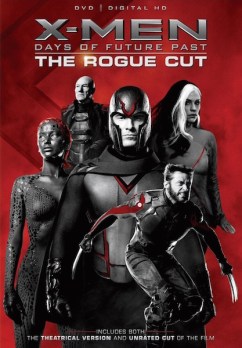 One of the big stories in the run-up to this fifth X-Men film’s release last year (my previous review is
 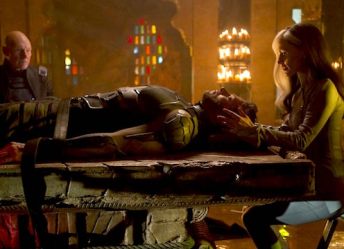 (though the theatrical cut only has 40 chapters, so I’m not entirely sure how that pans out). Most must be teeny extensions, however, and I look forward to
 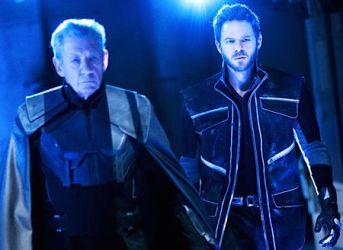 The Rogue Cut is worth seeing for anyone who enjoyed the theatrical version — and, in terms of a copy to own, the Blu-ray comes with both cuts and more special features (though it loses all the extras from the first release, including a few more deleted scenes) — but, unless you’re a huge fan of Rogue or Iceman, it’s not essential.
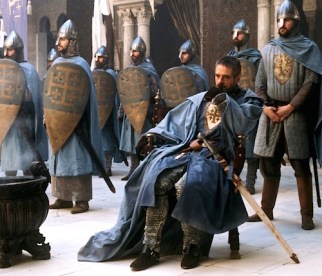
 Ridley Scott’s Crusades epic is probably best known as one of the foremost examples of the power of director’s cuts: after Scott was forced to make massive edits by a studio wanting a shorter runtime, the film’s summer theatrical release was so critically panned that an extended Director’s Cut appeared in LA cinemas before the end of the year, reaching the wider world with its DVD release the following May. The extended version adds 45 minutes to the film (and a further 4½ in music in the Roadshow Version), enough to completely rehabilitate its critical standing.
 A strong cast bolsters the human drama that sometimes gets lost in such grand stories. Bloom is a perfectly adequate if unexceptional lead, but around him we have the likes of Michael Sheen, David Thewlis, Alexander Siddig, Brendan Gleeson, and Edward Norton (well done if you can spot him…) There are even more names if you look to supporting roles. Most notable, however, are the co-leads: both Liam Neeson, as the knight who recruits Balian, and Jeremy Irons, as the wise advisor when he gets to Jerusalem, bring class to proceedings, while Eva Green provides mystery and heart as the love interest. Of everyone, she’s best served by the Director’s Cut, gaining a whole, vital subplot about her child that was entirely excised theatrically. It’s the kind of thing you can’t imagine not being there, and Scott agreed: it seems the chance to restore it was one of his main motivators for putting together a release of the longer version.
 (I’d wager
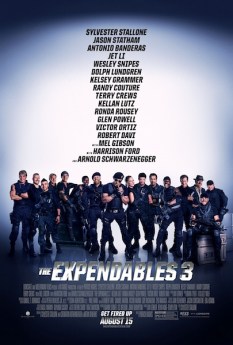 Oscar-nominated screenwriter Sylvester Stallone continues his examination of masculinity and machismo amongst older men in this trilogy-forming instalment of his Expendables franchise.
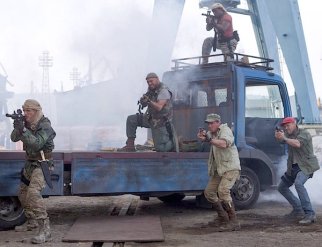 though occasionally obscured by camerawork and editing that turns it into a cacophony of violence. The Blu-ray release helps expose this: the special features include an extended version of Statham’s main battle from the climax, and in that focused form you can see how it’s been carefully constructed and designed. In the film itself, it’s chopped up into ten-second chunks and intercut with everyone else’s duels. It becomes like an impressionistic painting of shooting, punching, kicking, stabbing, running, jumping… It’s a war, as the now-double-sized team of heroes takes on a literal army, and some will revel in the over-the-top-ness of it all. The sheer excess does have a certain charm.
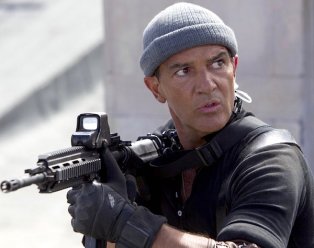 The best addition, unquestionably, is Antonio Banderas. He’s a parkour-performing blabbermouth who keeps pestering Grammer for a job, but no one wants him because he won’t stop talking. And he’s hilarious. Of the 93 changes in the five-minutes-longer extended version (yes,
 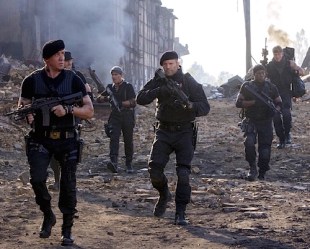 I kind of hope they do make more. The Expendables movies aren’t great films — heck, they aren’t even really great action films — and they’re a bit too cheesy and in-joke-y for the own good — and yet, somehow, I can’t resist them, and I’ll be happy to keep watching them for as long as Stallone and co can keep making them. After all, there are an awful lot of ageing action actors who’ve not appeared yet…
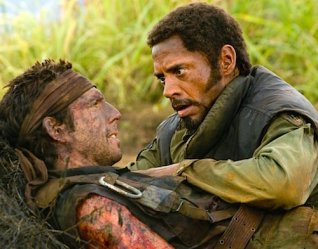
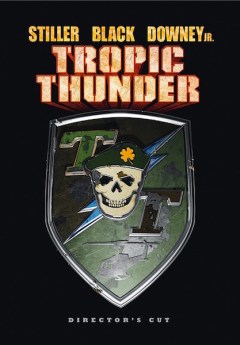 A bunch of obstreperous actors are too much to handle for the director of a Vietnam war movie, so he dumps them in the jungle to shoot it with hidden cameras. Things go awry; hilarity ensues.
 The film may run a little long in the middle, though I don’t think that’s the fault of this extended cut. It adds just over 17 minutes across many little changes and extensions
 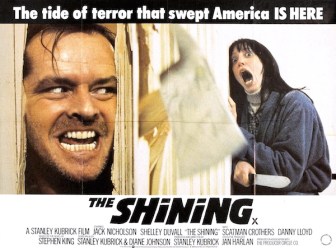 Fêted director Stanley Kubrick turned his hand to horror for this Stephen King adaptation. Poorly received on release (it was nominated for two Razzies: Worst Actress and Worst Director) and reviled by King (he attempted his own version as a
 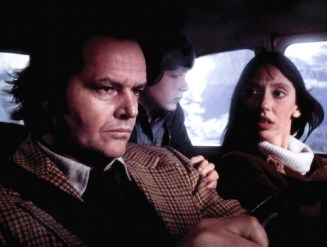 Gradually, inexorably, the film builds a sense of dread; a fear so deep-seated that it feels almost primal. There are few jumps or gory moments, the easy stomping ground of lesser films. There’s just… unease. It’s a feeling that’s tricky to put into words, because it’s not exactly “scary”; even “terrifying” feels too lightweight. There are undoubtedly sequences of suspense, where we fear what’s coming or what will happen to the characters (everyone knows the “Here’s Johnny!” bit, for instance), but that’s not where the film’s impact really lies.
 At the start of their audio commentary on The Desolation of Smaug, co-screenwriters Peter Jackson and Philippa Boyens note that, when the decision was made to extend the already-shot Hobbit duology to a trilogy, it wasn’t a third movie that need to be created but a second. That is to say, it was the middle instalment that required the most extra material, including a new prologue and climax. The
 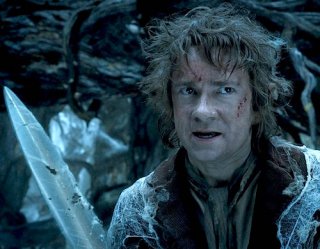 The extended cut amps him up even more, with an extra part in Mirkwood and a moment where he stands up for Thorin in Laketown. In fairness, he doesn’t have as much character development in this film as the first, while Thorin is on a definite arc and Gandalf is off on his own side-plot, but he’s undoubtedly a key character. I really don’t understand that complaint.
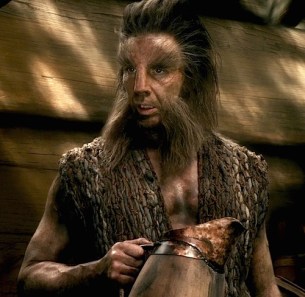 Even if some of the additions are worthless, on balance this is a better version of the film: more Beorn, more of the atmospheric Mirkwood, an additional character whose appearance will hopefully pay off in the extended
  2013 Academy Awards
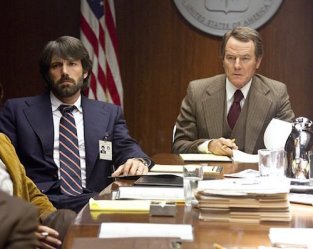
 Argo is probably the most traditionally entertaining from 2012’s crop of Best Picture nominees. I know a lot of people awarded that honour to
 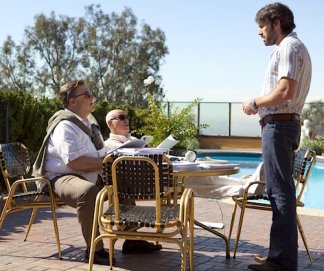 This is where we get the humour, mainly directed at the movie industry. Some say this is why it won the big awards: Hollywood loves a look at itself, and here it’s both satirical (“So you want to come to Hollywood, act like a big shot, without actually doing anything? You’ll fit right in!”) and congratulatory — after all, the plan goes ahead and so (spoilers) Hollywood saves the day. The film creates just the right balance between taking the mick out of Hollywood and bigging-up its role in saving some lives, while also not spending too long on this section that we forget the perilous situation on the other side of the world. After all, once all the fun and games in Tinseltown are over, it’s back to the serious business in Iran.
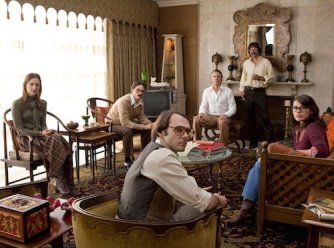 That’s just artistic licence, really — it’s not as if these people were safe, they just had a damn good plan; and, as I said, you need a dramatic ending for a thriller. However, all the “chasing them down the runaway” stuff is a bit full-on and action-movie-ish. It’s not even accurate to how it would go in real life, if it had happened, because the militia’s cars would need to be travelling phenomenally fast to keep up with the plane, and they aren’t seen to be affected by its jets either. For me, the rest of the climax — the guards checking the ‘crew’ out, phoning the LA office, later running up to the control tower, etc — all works; assuming you accept the film is still a Hollywood thriller, not a fact-bound documentary, and so needs a suitably dramatic climax. It’s a shame they didn’t leave it at that, but not a deal breaker either.
 That was in the ’70s — adjusted for inflation, it comes to over $350 million. For a drama about a couple divorcing and arguing over custody of their kid! Today, it’d be lucky to earn a tenth of that, even if it was up for Oscars. But I digress.) It’s a surprising Oscar pick these days because it’s a genuinely enjoyable watch, rather than a gruelling look at something-or-other serious.
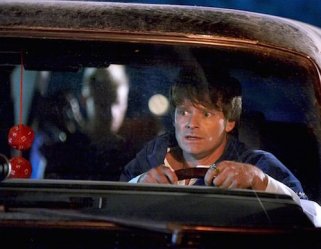
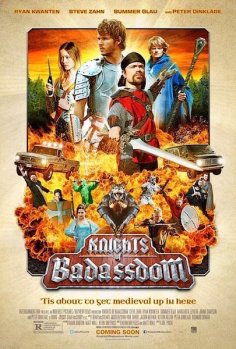 After being dumped by his long-time girlfriend, Joe (
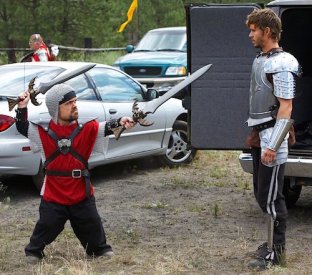 It’s a fine line to tread, and it seems to me that Knights of Badassdom manages it well. You get a sense of why people choose to do this and the fun that it can be — indeed, the final epic battle between the two factions of LARPers, complete with grand pre-fight speeches from each army’s general, and an awesome surprise, is kinda cool. Equally, the film doesn’t hold back from riffing off the sillier aspects of LARPing, including the rules of combat.
 if that’s your bag, there are plenty of films to cater for it; is a comedy about role-players really the occasion? There are elements of the film that could do with tightening up — the beginning is a little slow, as well as the issues with the middle, and towards the climax it’s sporadically jumpy in a way that makes it clear something has been excised — but just adding gore is not what this film needs to improve it.
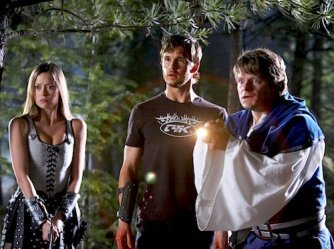 As it stands, Knights of Badassdom is an entertaining way to spend just under 90 minutes. A more restrained approach might yield a tighter movie, one that could be funnier by percentage (the trailer remains popular, and you don’t get more condensed than that), but I think it’s still well enough constructed to keep genre-minded viewers entertained.
 100Films.co.uk