
Lone Scherfig | 100 mins | Blu-ray | 12 / PG-13
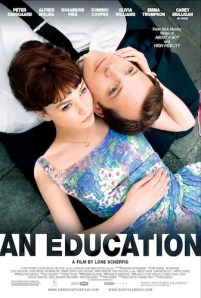 It seems that every year, come Oscar season, there’s a British-made film we’re led to back so thoroughly that it gains nothing but incessant praise from every (British) quarter. Just to look at recent years, from the 2006 selection it was The Queen; from 2007, Atonement; and at the awards for 2008 and 2010 we were actually backing the big winner, Slumdog Millionaire and The King’s Speech respectively. I’m not going to say any of these films support my next point, but it often feels like the Great British Hope is being over-praised. Everyone here gets so caught up in Oscar fever that the one British film with a chance becomes The Greatest Film Ever Made for a couple of months, then when viewed with a steady head months or years later it often turns out to be good, but not that good.
An Education was the Great British Hope of 2009. It could’ve had Best Actress, or Adapted Screenplay, or even Best Picture… but unlike The Queen, Atonement, Slumdog Millionaire and The King’s Speech, it didn’t take home a single award. “How could they neglect such a masterpiece,” I’m sure some Brit with Oscar fever cried. Particularly when they gave Best Actress to Sandra Bullock. So we know what to expect when viewed 14 months after its Oscar ceremony was held, with an appropriately steady head… but, actually, it turns out that An Education is — to use a properly British expression — bloody good.
 Based on a true story, the film tracks 1960s schoolgirl Jenny (Carey Mulligan) as she falls for an older man (Peter Sarsgaard) who represents a culture- and glamour-filled escape from her drab suburban life and its focus on getting a place at Oxford. It’s a romance and a coming-of-age tale, albeit one with a more naturalistic bent than your regular offering; more down-to-Earth and British than either something Hollywoodised or American-indie-fied. There are, perhaps, few massive surprises in the plot — anyone who doesn’t guess this won’t end well has somehow failed to encounter a “schoolgirl falls for glamorous older man” story before — but Nick Hornby’s screenplay and Scherfig’s direction execute it all with admirable conviction. You don’t feel like you’re watching something familiar.
Plus, Jenny’s induction into her new friends’ higher-class world isn’t marred by the usual abundance of “embarrassing faux pas” humour that such tales normally fall back on. I’ve never understood where the entertainment value is supposed to lie in seeing the character we’re asked to like being put through the kind of social embarrassment that happens all too often in real life and that we’d really rather like to forget. Perhaps it’s only missing here because these characters have to like Jenny throughout the film, rather than abandoning her as an inexperienced little girl after just one scene; but whatever the reason, thank heavens for it.
 I’ve read some complain there’s no ending. I can only presume they walked out of the cinema or stopped their DVD before the film reached, y’know, the end. Sometimes I appreciate how people can criticise the lack of an ending, even when I disagree (see: In Bruges), but not here. An Education shows us all we need to see and comes to the conclusions it needs to come to, no more.
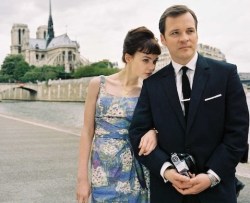
The ’60s are wonderfully evoked with an excellent use of locations — the sequence in Paris stands out, using landmarks and recognisable locations without once letting on it was shot almost 50 years late —, costume design, and some intermittently stunning photography. The last isn’t to say it doesn’t all look great, just some bits really pop out. Credit to DoP John de Borman, then, for making Jenny’s school and home life appear drab and stifling and her new-life seem glamorous and fun, without slathering either on too thick or making the difference glaringly obvious.
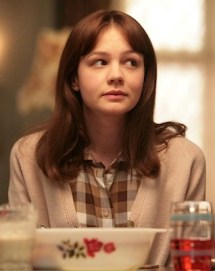 The film hangs on Carey Mulligan, justly nominated for her performance. Quite aside from whether the performance is awards-worthy or not, it’s effortlessly watchable. Mulligan is exceptionally easy to fall in love with — if you haven’t already when she was Ada Clare or Sally Sparrow, I’m sure Jenny Mellor will enchant you. On the other hand, some have found her character too pretentious or naïve — maybe your own background will dictate if you see these negative traits. Jenny is probably a little of both, but I wouldn’t say she’s wholly naïve and I wouldn’t say she’s pretentious, exactly — she’s clever, and she wants to experience the world. What’s wrong with that?
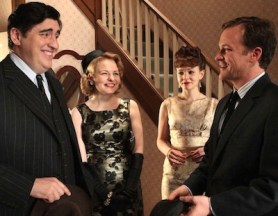
The whole cast are uniformly excellent, mind. Alfred Molina’s scene-stealing oppressive/comedic dad is the most obvious contender, but Olivia Williams is also memorable in a relatively tiny role, and Emma Thompson makes an effective cameo as the authoritarian headmistress. Rosamund Pike is also noteworthy for playing against type as vacuous-but-kind Helen, mercilessly teased by her ‘friends’ but sadly aware that she’s not keeping pace with them, despite her efforts. That Jenny is so clearly her intellectual superior but still takes advice from her and doesn’t sink to the boys’ teasing is an additional credit to that character. Plus there’s Dominic Cooper, the new James McAvoy in terms of the sheer volume of films he pops up in. Surely he’s now only a Last King of Scotland away from McAvoy-level stardom?
 It’s slightly remiss of me not to mention Peter Sarsgaard, what with him being the other half of the film’s romantic relationship. He’s good, his Colin Firth-esque accent pitch-perfect, but while he’s spot on in the part — absolutely no complaints — I can’t think of any scenes where there isn’t someone else (usually Mulligan or Molina) grabbing the spotlight.
As noted, this was in danger of being of those films that aren’t as good as everyone said — the kind of British film where everyone jumps on the bandwagon of Our Oscar Contender and smothers it with undue praise — but An Education manages to withstand all that. It’s an excellent film, liable to provoke a beautiful kind of envy or faux-nostalgia (depending on one’s own (lack of) experience of the worlds and times Jenny gets to see); and even if it doesn’t, it remains funny, moving and, even if you feel you may’ve heard a similar story before, rather truthful.

The UK TV premiere of An Education is on BBC Two and BBC HD tomorrow, May 13th, at 8:30pm.
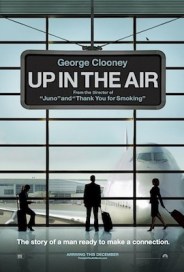 Sometimes, it’s best to just come clean: I don’t have much to say about Up in the Air.
 Cowriter-director Jason Reitman has created a surprisingly likeable film. It’s easy to see how Clooney’s character — very much the centre of the piece — could be irritating or vapid or any number of other negative adjectives, but instead he’s… well, he’s George Clooney, isn’t he? He’s all charm. If you were going to be fired, you’d probably want George Clooney to be doing it. For a character who is essentially an expansion of the
  Up in the Air got its Best Picture nom in the first year the Oscars went back to 10 nominations for the big prize. I’m not sure many would disagree that it’s one of The Other Ones — one of the ones that quite probably wouldn’t’ve been there if it hadn’t been for the category doubling in size. And if it was, it’d be The Other One — the token indie/comedy nomination that everyone knows isn’t going to win but was quite good all the same.
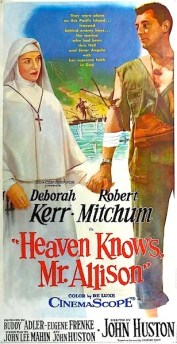 The title may sound like a ’40s rom-com or a ’70s TV sitcom, but Heaven Knows, Mr. Allison is nothing of the sort. It’s set in the south Pacific in 1944, at the height of World War II, and begins with titular US Marine Allison (Robert Mitchum) washing up on an island that’s occupied only by a novice nun, Sister Angela (Deborah Kerr). He was the only survivor of a Japanese attack on a submarine; she ultimately the only survivor of a Japanese raid on the island. With no hope of rescue they must plot their own escape.
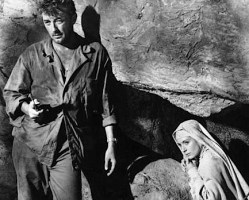 There’s also a kind of burgeoning romance between the two — as a novice nun she has yet to take her final vows — which creates a different kind of will-they-won’t-they than the usual love-hate dynamic. It all leads to a pleasing ending, where your expectations for what a Hollywood film will do (especially with the groundwork that’s been laid) are subverted in favour of a more plausible turn of events. It’s not the kind of ending that makes the film — it’s already done more than enough to hold one’s interest — but if done wrong I think it would have undermined the rest.
 The first sequel (I say that in the hope there’ll be more) to
  there’s a perhaps surprising undercurrent of genuine emotion and serious issues. This is one of the things that marks these two films out from the overcrowded kids’ film genre: they’re prepared to tackle things in an appropriate way, never allowing them to overwhelm and make an Issue Film but not sanitising them because It’s For Kids. The ending to a lovely picnic may well bring a tear to your eye.
 CGI is also used again to magical effect. And, even more than that, to very cute effect. It feels like a bunch of scampering CG piglets, or a cuddly CG baby elephant, should be a little disturbing and wrong, but they’re not — they’re all incredibly cute, in fact. Aww. And they get up to plenty of funny and entertaining things. As with most of the enjoyment in both Nanny McPhees, it may be aimed at children, but I think it’s done in a way that appropriately-hearted adults can enjoy too.
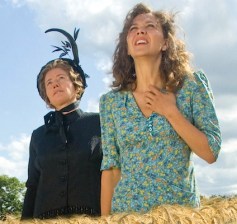 I loved the first Nanny McPhee, which always sets a sequel up for failure. However, Thompson (though she’s not in the director’s chair I think we can be certain she’s in charge of this series) doesn’t disappoint. She’s taken a brave route by setting the film in a completely different era with an all-new supporting cast (except for one lovely last-minute surprise for the attentive), but it’s paid off handsomely. This is at least as magical as the first, perhaps even more so.
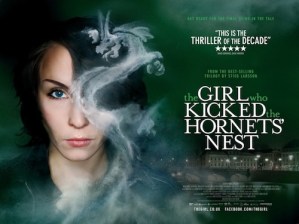 The Girl Who Kicked the Hornets’ Nest — or, in America, Hornet’s Nest (oh, Americans!) — or, translated from the original Swedish, The Pipe Dream That Was Blown Up — or, according to a different translation, The Air Castle That Was Blown Up (guess that’s a cultural thing…) — is the third and final part of Stieg Larsson’s Millennium trilogy.
 while the villains futilely attempt to stop the heroes publishing everything they already seem to know.
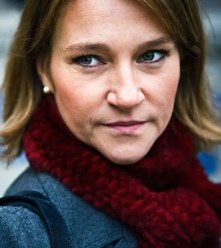 The other cornerstone of the film is Lisbeth’s trial for the attempted murder of her father at the end of Played with Fire. The final third of the film is dominated by a series of immensely satisfying courtroom scenes in which the defence trounce the opposition, not through American-esque grandstanding but through a quiet and thorough application of facts and truth. You can see the satisfaction bubbling under Lisbeth’s almost-static face as the prosecution unknowingly hang themselves, the defence — Mikael Blomkvist’s sister Annika, for what it’s worth — holding back her killer evidence until the prosecution have dug themselves a pit so deep even this mixed metaphor would be buried. Both Lisbeth and Annika walk all over them by remaining calm and logical, dispatching the case against Lisbeth in a way that becomes an absolute joy for the viewer.
 It means Lisbeth remains an unknowable, elusive mystery, but then isn’t that part of what makes her so fascinating? The full exposure of her troubled (to say the least) history in this episode clears up some of her ambiguity without lessening her as a character. It’s a testament to the understated excellence of the performance that actions as little as a smile or saying “thank you” are huge revelations.
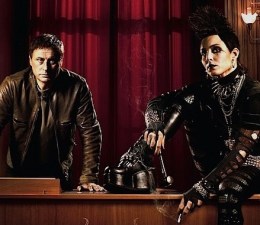 the second balances on top of the events in its predecessor. The difference is, I properly enjoyed Hornets’ Nest. I wouldn’t watch it again in isolation (unlike Dragon Tattoo, which doesn’t need its two sequels to function as a story), and perhaps it had too much going on for its own good — or perhaps I’m being too demanding of the intricacies of the investigation — but it’s a solid final episode with a lot of satisfying moments.
 A World War II espionage thriller about the OSS — spies, basically, and the forerunner to the CIA. Despite all the thrills this should elicit, especially when directed by Fritz Lang, I wasn’t particularly impressed.
 This is probably the benefit of being based on a non-fiction book.
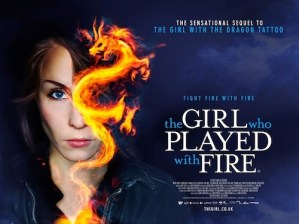 Creating any kind of sequel is hard — the endless array of failed attempts is testament to that — but I think creating a direct sequel to a successful crime thriller may be the hardest.
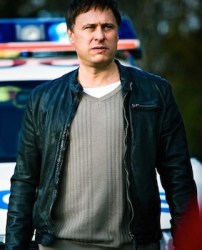 and they need a brand new case to become embroiled in. And it’s got to be as good as the last one, but it can’t be the same because we’ve had that mystery solved. You could have a different solution, of course; you could change some of the details, naturally; but police dramas on TV vary their types of murders every week for a reason. So in your new tale, the new characters have to be just as interesting as the first batch, the new mystery has to be just as intriguing too, and it really ought to be a notably different crime being investigated.
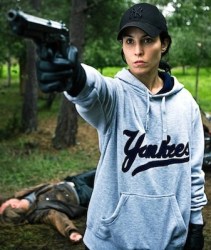 One solution to the sequel problem is to “make it personal”, and that’s exactly what we get in The Girl Who Played with Fire. A journalist and his girlfriend working for Mikael are murdered and Lisbeth is suspected of the crime. It’s somewhere around here that the coincidences begin to pile up. It makes perfect sense as a plot in itself, but in bringing Mikael and Lisbeth back together it doesn’t work — it’s not related to their previous encounter, so it’s entirely coincidental. Coincidence is a dangerous thing in fiction; it asks your audience to accept something that doesn’t fit our logic of how stories work. It happens all the time in real life of course, but in real life a flipped coin with a 50/50 chance of being heads or tails could turn up heads twenty times in a row, but a person asked to estimate twenty results of a flipped coin will never put more than two or three of one side in a row (unless they know to subvert it… look, this isn’t the point).
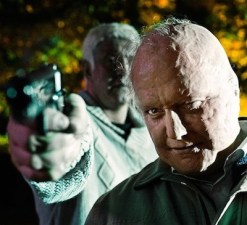 it’s never seriously looked into and, consequently, other dramas have tackled the issue with greater depth, sensitivity and insight. What Mikael and Lisbeth are actually looking into is a conspiracy of sorts around some murders. The way the trail is followed isn’t as clever as it was in Dragon Tattoo and, consequently, isn’t as interesting. The two protagonists go about their investigations independently. This is a long-held technique in novel writing — multiple strands allows the author to alternate which is followed from chapter to chapter, almost by itself providing momentum and the must-keep-reading factor as the reader has to race through the next chapter to rejoin the thread of the previous one (it’s not that simple or we’d all be churning them out… but look, I’m getting off the point again). The problem here is that Dragon Tattoo was largely at its best when the two were together, so keeping them apart is less satisfying. To top that off, they’re each finding out different things, which means as the audience we can feel a few steps ahead of the characters as we have the benefit of both sides of the case. That’s not always a bad thing, but it can be slightly disconcerting when you know the answers your hero is still searching for.
 Despite Lisbeth being the focus of much of the attention laden on these books/films/remakes, she’s a less engaging character when by herself. Here she shuffles around silently, digging up files that she and we stare at to reveal information. There are only a few moments for her (and, consequently, Noomi Rapace) to show off what endeared her to viewers before — her confrontation with a pair of arson-bent bikers, for instance.
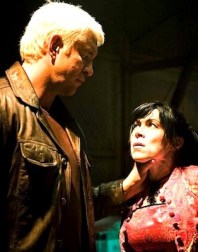 It also feels less filmic than the first film. Is it poor direction? Is it just the opened-up 1.78:1 ratio? I’ve read that all three films were shot like this, as they were intended for Swedish TV, meaning Dragon Tattoo’s Blu-ray is cropped to 2.35:1. You hardly ever see 2.35:1 on TV (
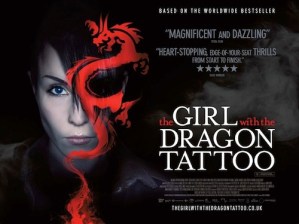 From the same production company that brought us the
 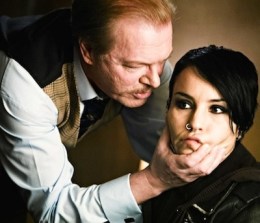 The original title translates as Men Who Hate Women, which is certainly very apt. The subject matter is grim and dark; horribly plausible, in fact. It’s unwaveringly depicted with some brutal, hard-to-watch scenes. They’re not exploitative though, as a lesser film merrily would be, and that makes them appropriate to the tale being told. Subplots about the two leads support the themes underpinning the main investigation — both about abuses of power, in different ways — justifying their apparent tangentiality, and consequently the film’s length.
 Despite the modern stylings, dark themes and attention-grabbing characters, much of the film unfolds as a procedural whodunnit like, for instance, the Wallanders, complete with piles of red herrings and last-minute twists. This is probably why the book has sold so well and the film has taken over $100 million worldwide: it tickles the same nerves as all those ever-popular TV police dramas. Indeed, this adaptation is rooted in a television miniseries (an extended version exists as two 90-minute TV episodes) but it doesn’t look like it: it’s quite beautifully shot; not showy or stylised, but there are some lovely shots of scenery in particular.
 With Dragon Tattoo featuring material that seems ideally suited to the director who gave us
 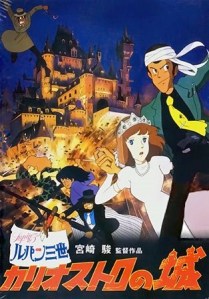 The Castle of Cagliostro, the second animated big-screen spin-off from manga-inspired anime TV series
 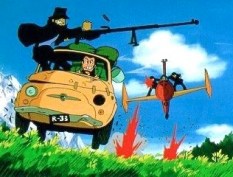 As I mentioned, this is the second spin-off film from a TV series, and at times it does feel like it: characters turn up under the impression the audience already knows who they are and what their connection is to the others. It’s not a major problem — most are introduced well enough within the context of the film that it can still be easily followed — but it’s there.
 Um, where was I? Oh yes: Indiana Jones; Roger Moore-era James Bond — it’s that kind of tone, more or less, and if you enjoy that kind of film then I don’t see why you wouldn’t enjoy this. Unless you think cartoons are for kiddies only (in which case, see the long sentence at the end of the last paragraph).
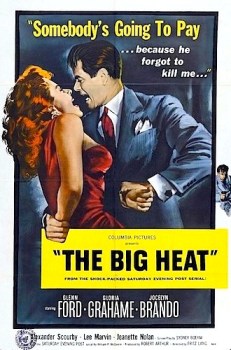 Fritz Lang is probably best remembered for the films he made in Germany; medium-defining classics like
 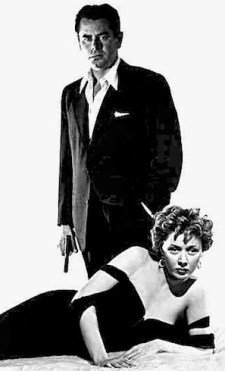 but it does manage what might be described as twists in how far it’s willing to go — mainly, who gets killed and how.
 100Films.co.uk