The Past Month on TV #64

Christmas TV is already underway in the UK (I believe the first things that were explicitly a “Christmas special” aired over the weekend) — so, before my usual Christmassy roundup, here’s one final regular TV column for 2020.

His Dark Materials  Series 2
His Dark Materials series 2

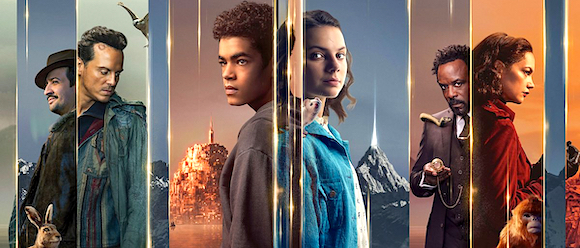
In a world where innumerable film and TV productions have been affected by Covid and its associated lockdowns, His Dark Materials got lucky: by hurrying on to produce their second series before the young cast aged too much, they’d virtually wrapped filming before the first UK lockdown hit. The only casualty: a standalone episode detailing what one character was up to during the rest of the season. That’s frustrating for fans (as I understand it, the events intended for that episode aren’t actually in the original novel, but were dreamt up afresh by the show’s writers in collaboration with original author Philip Pullman), and if you know there’s an episode missing then you can spot its absence (there are some scenes and references in the season finale that I wager would make more sense had we seen the missing episode), but the series mostly survives without it.

So, picking up from series one’s massive cliffhanger, this second run adapts the trilogy’s second novel, The Subtle Knife — a mysterious item of arguably even greater value than the Golden Compass that (sort of) lends its name to (the US version of) book one. Despite tackling a whole novel, I’ve seen some describe this season as boring, with too little incident. I guess that’s the advantage of waiting until the end and watching it all in just six days: I was suitably engrossed, and it moved, if not at a fair old lick, then certainly at a reasonable pace. But it’s not a show that’s always big on action — instead, it’s big on ideas, with underpinning concepts on the boundaries of science and fantasy that have to be explained and understood by the viewer. Nonetheless, there’s still plenty of conflict between our heroes and villains; and while it may seem clear who’s on which side, there are enough shades of grey, and emerging uncertainties about who’s really got the right motives, to keep it pleasantly complicated, engrossing, and believable.

I’m sure I once read that the original plan was to adapt the trilogy of novels over five seasons — one for book one, two each for books two and three. Now, they’ve reached the point where book two has been done in a single season, and now book three is plotted out to be completed in one more run of eight episodes too. But, shockingly, it hasn’t been commissioned yet. I bloody hope the BBC (and HBO) do the right thing, because I think overall this is an excellent show, with still-timely issues of freedom and control, that merits completion on screen. And, simply, I’m excitedly looking forward to the next (final) series already.

Update: This afternoon, while I was too busy writing this post to notice the news, the BBC and HBO officially recommissioned His Dark Materials for its third and final series. Hurrah!

The Good Place  Season 4
The Good Place season 4The Good Place ended forever ago, right? Well, the series finale originally aired back in January, so… this year, yeah, forever ago.

As with every previous season of the show, this one noodles around in a new setup for the first half-dozen-or-so episodes, before swinging into one long multi-part story through to the end of the season — and, in this case, the end of the series. In that respect, it’s always been kind of an odd show, structurally, and season four is no different. Most of the jeopardy and drama is resolved a couple of episodes before the end, leaving us to watch events play out for these characters we’ve come to love, rather than trying to keep us hooked primarily by plot, unlike pretty much every other programme ever. To be clear, this is not a criticism: it absolutely works. Rather than shooting for a series finale that has the big climax of the plot plus a bunch of rushed wrap-ups, here the more-than-double-length finale is like a coda to the entire show. It’s the series’ highest rated episode on IMDb, so I’m not alone in liking this approach.

The Good Place did, actually, start out as a show that seemed to be primarily about its plot — it’s name was mostly made off the back of one plot point in season one — but along the way it’s really developed a care for its ragtag gang of heroes, and taken us along for a once-in-an-afterlifetime ride with them, to the point where I’m actually kinda sad to see them go… but I loved watching them leave.

Baptiste  Series 1
BaptisteThe breakout star of BBC drama The Missing here gets his own spinoff series. Julien Baptiste is a retired police detective who specialises in finding missing people, which is exactly what he did across two series of The Missing (I reviewed the second here). But instead of a third series, he gets a spinoff, in which he… has to search for a missing person. Hm. But that’s just the inciting incident: before long, Julien finds himself embroiled in the affairs of an Eastern European criminal empire, with his family under threat. Okay, fair enough. Unfortunately, although Baptiste shares the same main creatives as its parent show — sibling screenwriters Harry and Jack Williams — what they’ve cooked up here just isn’t as inventive or captivating as their two seasons of The Missing, both of which were fantastic. Sure, they still conjure up plenty of unexpected twists and developments, but it lacks the same spark that was there before. But let’s not get carried away: it’s not a bad serial, just not as high-quality as the two seasons that preceded it. It’s been recommissioned, so perhaps next time they’ll recapture the magic.

Smiley’s People
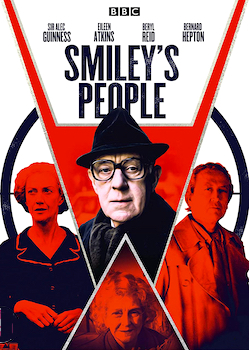
Smiley's PeopleJohn le Carré’s spy mystery Tinker Tailor Soldier Spy is one of the most acclaimed works of the genre, and the 1979 TV adaptation is justly fêted as one of the great miniseries. But Tinker Tailor is actually the first book in a loose trilogy, and in 1982 they also adapted the third book (they skipped the second because its overseas settings were deemed too expensive; as I understand it, the plot also doesn’t have that much bearing on the overall events — this isn’t “one story in three parts” like many a trilogy). Smiley’s People doesn’t enjoy quite the same reputation as its forebear, and I’m afraid I’m not going to challenge that position. Like Baptiste, it’s not bad, it just lacks that je ne sais quoi that makes its predecessor a solid-gold classic. One thing they do share is a damnably complicated plot — I struggled to follow the narrative watching it one episode per day back to back, so goodness knows how anyone kept up with it once a week over a month and a half back in the ’80s.

I watched it on the BBC’s recently-released Blu-ray, which is a tough one to recommend it. It’s clearly been mastered from the original film (where possible — some negatives were missing so they had to resort to less-good elements), but then it’s been slathered in digital noise reduction (DNR) as if in some misguided attempt to hide that it was actually shot on grainy film stock as opposed to weirdly-soft HD video. It’s so rare for things to be over-DNRed these days that you’d think we were finally past it, but obviously not. And yet, while the series never looks as good as it could, the fact it has been restored means it’s a lot better than the old DVDs, and the chances of anyone ever doing it again and getting it right are basically non-existent. Sometimes, we just have to settle for what we can get. That certainly sounds like a le Carré moral, doesn’t it?

Elementary  Season 7 Episodes 9-13
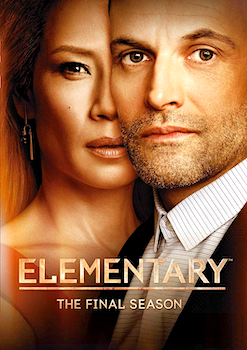
Elementary season 7The other “Sherlock Holmes in the modern day” show finally came to an end last year, though I suspect its finishing shall remain more final: whereas Sherlock always had a stop-start “we could make more anytime” production, accompanied with cast & crew chatter about wanting to sporadically do make new episodes forever, Elementary is much more traditional US network TV show — and the diminishing episode orders of the final couple of seasons and summertime broadcasts of the last couple of seasons don’t suggest an enduring hit poised for a revival.

Despite that, the finale itself left things open for more, imitating Sherlock’s “Holmes and Watson continue” final beat. This kind of open-ended ‘ending’ fits a show like Sherlock, where there’s a realistic chance it will return someday. For a show like Elementary, where the chance it might ever return is infinitesimally small, it just feels inconclusive. Like, if you want it to be a true finale, you need to give some closure; an actual ending. As it is, despite a narrative that condenses several years and major life events (Joan gets cancer then goes into remission across a single cut), the episode fails to truly answer why this is the point at which we stop following Sherlock and Joan’s adventures.

There are some people who’ll tell you Elementary is better than Sherlock. I’m not one of them. I’ve warmed to it down the years, but I’ve never thought it was a particularly good realisation of Holmes and Watson — whatever its faults, Sherlock feels like it’s an attempt to adapt Arthur Conan Doyle’s work, whereas Elementary has taken a few names and basic character points and then gone its own way. I’ll concede that there are some things Elementary has done better, although that’s an almost-inevitable side effect of having c.22 episodes a year to play with instead of Sherlock’s three TV movies every couple of years. But it’s also an almost-standard US network procedural — I can remember every single episode of Sherlock, for good or ill, whereas very few of Elementary’s 154 instalments stick in my memory.

Also watched…
  • Ghosts Series 2 — The second series of the supernatural sitcom digs more into the backstory of its various titular spooks, which seems to be a deep well for plot ideas and humour — one episode, for example, Rashomons it up by recounting one ghost’s death from the various perspectives of others who were already there to witness it. A Christmas special is imminent, and a third series is already commissioned.
  • Leverage Season 1 Episodes 1-3 — Now that I’m done with Elementary, this is my new pick for a “bung it on anytime”, “easy to watch”, US procedural. So far, it’s filling that void nicely. It’s a minor-network production from the late ‘00s, so it already feels a bit dated (it doesn’t quite have the cinematic swagger we expect from top-drawer TV now; the score, in particular, sounds like it was dropped in from a royalty-free library CD), but if you can let the production values slide, it’s good fun in a “bit of a romp” way. That’s how I like my heist movies/shows, so it ticks the right boxes for me.
  • Neil Brand’s Sound of TV — The music maestro follows up his series on the sound of movies from a few years ago (shamefully, I never got round to it) with a trio of episodes covering TV themes, advertising jingles, and TV scores. Very informative and entertaining, but you feel like the topic is so big (particularly the last one) that it could’ve withstood a few more episodes.
  • Richard Osman’s House of Games Night Series 1 — This daytime quiz show has been running for a while, but apparently became quite the success during lockdown, leading to a primetime evening spin-off — which, as I understand it, is just the exact same show but in a different time slot. It’s quite fun: there’s a good “play along at home” quality, and having the same contestants compete across the series means you end up rooting for your favourites.
  • Staged Series 1 Extended — If you didn’t know, Netflix has an extended version of this BBC lockdown hit — there’s about 29 minutes of new material spread across the six episodes, which is a fair old chunk (equivalent to almost two whole extra episodes). And that’s why I rewatched it: because it was good and I’d like to see the extra stuff. Plus, there are new episodes coming in January, so it’s a good time to recap.
  • The Vicar of Dibley in Lockdown — The clergywoman returns for a trio of bitesize Zoom sermons, which together form a kind of comedic “review of the year” (and if you’re prepared to wait for the compilation version airing in a day or two, it’s apparently got some extra material). Many of Dibley’s supporting cast are sadly no longer with us, so I doubt we’ll ever get a proper return for the show, but this is a pleasant little sliver of nostalgia mixed with current events.

    Things to Catch Up On
    The Mandalorian season 2This month, I have mostly been missing The Mandalorian season 2. Well, as regular readers will know, I never even got round to season 1. Naturally, it’s been basically impossible to avoid spoilers — though as those amount to “look which legacy character has turned up this week” rather than actual plot stuff, perhaps it will be okay. Or maybe the series doesn’t really have any plot to spoil, it’s just endless fan service — that would certainly seem to tally with some people’s view of the show. Others love it though, so I’ll see for myself… someday…

    Next month… will come after my regular Christmas TV roundup, which will likely include a bunch of seasonal sitcom specials, plus the New Year’s Day Doctor Who.

  • A Christmas 100-Week Roundup

    Breaking the precise order of 100-week reviews, here are a handful of Christmas films I watched back in December 2018. One of them has its UK network TV premiere today, so it seemed like a good time to share them.

  • The Christmas Chronicles (2018)
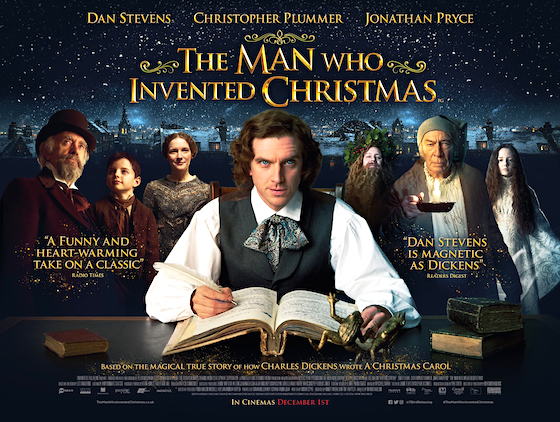
  • The Man Who Invented Christmas (2017)
  • A Christmas Carol (2018)


    The Christmas Chronicles
    (2018)

    2018 #248
    Clay Kaytis | 104 mins | digital (UHD) | 1.85:1 | USA / English | PG

    The Christmas Chronicles

    Netflix’s big-budget Christmas adventure got a sequel this year, which shows this first one must’ve been a hit (by whatever secret metric Netflix use nowadays) — and it’s well deserved, because The Christmas Chronicles is a lot of fun.

    The setup is two home-alone siblings set out to catch Santa on video (thank goodness they didn’t use that inciting incident to launch a found-footage Christmas movie), but things go awry and the pair end up having to help the man in red save Christmas.

    Like many a live-action American kids’ movie, The Christmas Chronicles is a bit cheesy to begin with, but it has an ace up its sleeve: Kurt Russell as Santa. Once he turns up, with a perfectly-pitched performances, the film really takes off — figuratively and literally, thanks to his flying sleigh. From there, the film develops a spot-on streak of irreverence. A chainsaw-wielding elf! Fist-bumping Santa! A jailhouse song performance! Santa snowboarding out of the sky! There are lots of funny little gags too — not big clever “jokes” per se, just well-played moments.

    Sure, there’s an element of comfort and cliché to the “sad kids who need to recapture Christmas spirit” stuff, but Russell’s cool Santa, and the tone he brings with him, enliven proceedings no end. The film manages to dodge the traps of being cloying or overly cheesy, without disappearing into a well of grim cynicism. It works so well that some of the final few minutes might just bring a little tear to the eye.

    Any criticisms (I had a whole paragraph about the kids’ limp family motto and its predictable use) just feel like nitpicking. This is designed to be a frothy, easy Christmas treat, and as that it would be perfectly adequate; but when you add Russell’s superb incarnation of Santa into the mix, it’s elevated to something very good indeed. A great movie? Not particularly. A great movie to watch at Christmas? Oh yes.

    4 out of 5

    (That is the UK poster I’ve used above, despite the fact it’s got the title of Harry Potter 1 wrong.)

    The Man Who Invented Christmas
    (2017)

    2018 #258
    Bharat Nalluri | 104 mins | digital (HD) | 2.35:1 | Ireland & Canada / English | PG / PG

    The Man Who Invented Christmas

    “Charles Dickens writes A Christmas Carol” is the simplified plot of this film. Well, it’s not even that simplified: it’s the plot. In this telling, various parts of Dickens’s story are inspired by characters and situations he encounters in real life — how convenient. It’s all thoroughly far-fetched, of course, but not without a certain Christmas charm and amusement for those feeling forgiving in the festive season.

    Dickens is played by the dashing Dan Stevens. It’s another thing that seems like artifice — making the author young and handsome so he can be the main character in a movie — until you learn Dickens was actually only 31 when he wrote the book. And he’d already written works including Oliver Twist and Nicholas Nickleby by this point!

    But don’t dwell on that too much, because it’s liable to make your life feel crushingly inadequate; and this is a lightweight film — a bit of festive froth — designed to brighten your days with a bit of seasonal cheer, not darken them with realisations of your own shortcomings.

    3 out of 5

    The UK network TV premiere of The Man Who Invented Christmas is on Channel 4 today at 4:55pm.

    A Christmas Carol
    (2018)

    2018 #260
    Tom Cairns | 72 mins | digital (HD) | 16:9 | UK / English | PG

    A Christmas Carol

    Simon Callow has carved out a little niche playing Charles Dickens in various settings — the highest profile is probably in a 2005 episode of Doctor Who, but he was cast in that due to already being renowned for his recreations of Dickens’s public readings. This film is, effectively, one of those: based on Dickens’s own performance adaptation of A Christmas Carol, Callow reads the story and… that’s about it.

    A couple of things make it screen worthy. Director Tom Cairns stages proceedings in inventive and enlivening ways, using different rooms, lighting, props, and practical effects, some almost magical, plus music and sound effects mixed in a suitably evocative way, to lend an appropriate atmosphere to every scene and event. A lot of it is shot in long takes, which underline the impressiveness of both the staging (it’s often modified and varied within a single shot) and Callow’s performance, which is enhanced and complemented by Cairns’s work.

    And it is a performance, not just a reading. Callow inhabits all the characters, thereby bringing a sense of life to take the words beyond mere narration; but he executes it in a subtle-enough way that his turn doesn’t descend into some overripe actorly ‘showcase’. It’s very well judged. Indeed, it feels like the kind of thing that should become a staple of Christmas Eve evenings on the BBC.

    4 out of 5

  • The 100-Week Roundup XV

    I’ve fallen terribly behind with these 100-Week Roundups — I should be on to films from 2019 by now (because 100 weeks is c.23 months), but I still have 17 reviews from 2018 to go. I considered trying to cram more into each roundup, but that just takes longer to compile, so my aim is to post a more-than-average number of roundups in the next fortnight with the goal of at least completing 2018 before 2020 ends. We’ll see how that goes.

    For now, we’re in November 2018 and looking at…

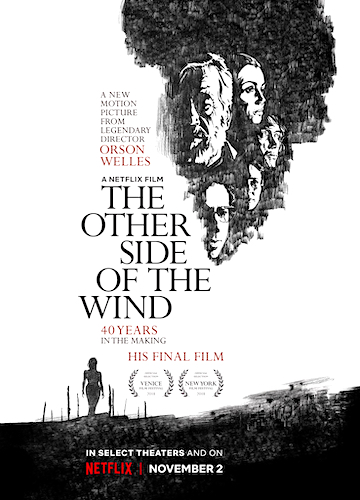
  • The Other Side of the Wind (2018)
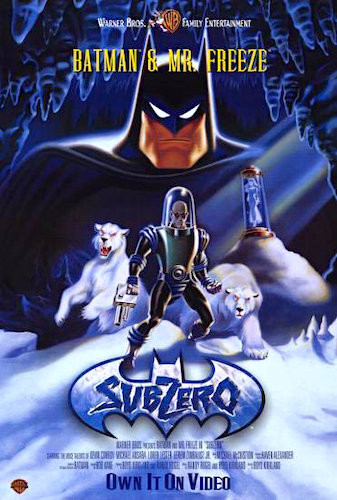
  • Batman & Mr. Freeze: SubZero (1998)
  • Paper Moon (1973)
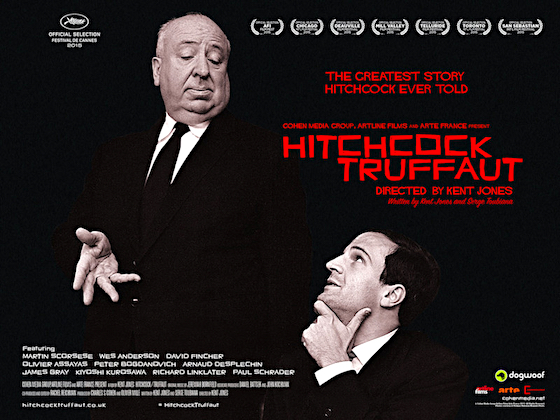
  • Hitchcock/Truffaut (2015)


    The Other Side of the Wind
    (2018)

    2018 #226
    Orson Welles | 122 mins | digital (UHD) | 1.37:1 + 1.85:1 | France, Iran & USA / English | 15 / R

    The Other Side of the Wind

    One of my draft intros for The Other Side of the Wind was to talk about how it feels like “a 2018 film” because it’s different; innovative; unique — modern. But then to note that, of course, it was all shot in the 1970s, but never completed for financial and legal reasons. That’s only partially true, though, because while it does feel modern in some ways, it still looks and feels very ’70s; and while it’s no doubt experimental and avant-garde, it’s in a very ’70s way. And the look of the film stock is very ’70s. It’s a strange, undoubtedly compromised movie — but so are many of the films Orson Welles managed to complete while he was alive, thanks to studio interference, so it’s hardly a sore thumb in that regard.

    The film tells the story of the final days of Jake Hannaford (John Huston), a film director working on his comeback movie (you’ve gotta think there’s some autobiography in here, then, right?) It’s a portrait of the man’s final hours, supposedly assembled from dozens of sources that were shooting him at the time — Welles prefiguring the ‘found footage’ genre by a decade or two. But this isn’t a horror movie… well, not in the traditional sense: in my notes I described it as “a frantically-cut display of pompous self-declared intellectuals pontificating about something and nothing in a battle of pretentiousness. That perhaps explains why, at a time when Netflix movies routinely ‘break out’, the flash of interest the film’s release provoked has not resulted in any kind of sustained wide admiration.

    Whatever your thoughts on the final film (and it’s clearly one for cineastes and completists rather than general audiences), it seems remarkable that it took so long for anyone to be willing to fund the completion of a film by The Great Orson Welles. But that’s actually a story unto itself, told in the accompanying documentary A Final Cut for Orson: 40 Years in the Making (which is hidden in the film’s “Trailers & More” section, but is definitely worth seeking out if you’re interested). Among the revelations there are that Welles shot almost 100 hours of footage, spread across 1,083 film elements, all of which had to be fully inventoried. Matching it up was a problem that would have been insurmountable even ten years ago; it’s only possible now thanks to digital techniques and algorithms — and, of course, a big chunk of change from Netflix. Welles had only cut together about 45 minutes, with the rest completed based on the style of those parts, his notes and letters, and recordings of some of his direction that was retained on the sound reels.

    Was the effort worth it? It’s certainly a fascinating project to see brought to some kind of fruition. In the end, I’m not sure what it all signified. The story is pretty straightforward, but it’s jumbled in amongst a lot of hyperactive editing, as well as a bizarre film-within-a-film. There are things here which still feel ahead of their time even now, and things that were certainly ahead of their time when shot in the early ’70s (even if other people have done them since), which is always exciting. Combine that with Welles’s status and this is unquestionably a fascinating, must-see movie for cinephiles.

    3 out of 5

    Batman & Mr. Freeze: SubZero
    (1998)

    2018 #227
    Boyd Kirkland | 67 mins | Blu-ray | 1.33:1 | USA / English | PG

    Batman & Mr. Freeze: SubZero

    It’s now so ingrained in Bat-canon that it’s easy to forget, but Batman: The Animated Series actually invented Mr Freeze’s backstory about his dead wife, etc. It was so successful that the episode (Heart of Ice) won an Emmy, the character was brought back to life in the comics (complete with this new backstory), and just a few years later it was used in Batman & Robin (which, considering how much that film was happy to ignore about other characters, e.g. Bane, just goes to show… something).

    So, with The Animated Series responsible for such a major revival of the character, it kinda makes sense they’d choose him to star in their second animated feature — although another version of events is he was chosen to tie-in with Batman & Robin, but then SubZero was pushed back after the live-action film was a critical flop. That makes sense, because while Heart of Ice is fantastic and influential, none of Freeze’s other Animated Series appearances have a great deal to offer. TV episode Deep Freeze is sci-fi B-movie gubbins featuring Freeze as a cog in the plot rather than its driving force; and, after all the effort to humanise him, in Cold Comfort he’s just a villain doing villainous things with incredibly thin motivation.

    SubZero is, at least, a step above those. It doesn’t withstand comparison to its predecessor movie, the genuine classic Mask of the Phantasm — that had entertainment value for kids, but was also a thoughtful, mature story about what drives Bruce Wayne to be Batman. SubZero, on the other hand, is just an action-adventure ride. It’s not bad for what it is (there’s a pretty great car chase halfway through, and the explosive climax aboard an abandoned oil derrick going up in flames is rather good), but no more than that. At least it finally provides a neat end to Freeze’s story… even if it is kinda hurried in a last-minute news report.

    3 out of 5

    Paper Moon
    (1973)

    2018 #235
    Peter Bogdanovich | 98 mins | TV (HD) | 1.85:1 | USA / English | PG / PG

    Paper Moon

    I do try to avoid this situation arising in a ‘review’, but I watched Paper Moon over two years ago and didn’t make any significant notes on it, so I’m afraid I can’t say much of my own opinion. What I can tell you is that I happened to spot it in the TV schedule and decided to watch it primarily to tick it off the IMDb Top 250, thinking it was a bit of an also-ran on that list (based on iCheckMovies, it’s not very widely regarded outside of IMDb; indeed, it’s not even on the Top 250 anymore). But that was serendipitous, because I wound up really enjoying it.

    Sticking with IMDb, here are some interesting points of trivia:

    “At 1 hour, 6 minutes, 58 seconds, Tatum O’Neal’s performance is the longest to ever win an Academy Award in a supporting acting category.” I guess category fraud isn’t a recent phenomena: O’Neal’s a lead — the lead, even — but I bet that supporting award was an easier win, especially as she was a child. Which also ties to this item: “some Hollywood insiders suspected that O’Neal’s performance was ‘manufactured’ by director Peter Bogdanovich. It was revealed that the director had gone to great lengths, sometimes requiring as many as 50 takes, to capture the ‘effortless’ natural quality for which Tatum was critically praised.” But I’ll add a big “hmm” to that point, because I think it’s very much a point of view thing. Every performance in a movie is “manufactured”, in the sense that multiple takes are done and the director and editor later make selections — is requiring 50 takes for a child actor to nail it any different than Kubrick or Fincher putting adult actors through 100 or more takes until they get what they want?

    On a more positive note, “Orson Welles, a close friend of Bogdanovich, did some uncredited consulting on the cinematography. It was Welles who suggested shooting black and white photography through a red filter, adding higher contrast to the images.” Good idea, Orson, because the film does look rather gorgeous.

    5 out of 5

    Hitchcock/Truffaut
    (2015)

    2018 #236
    Kent Jones | 77 mins | TV | 16:9 | France & USA / English, French & Japanese | 12 / PG-13

    Hitchcock/Truffaut

    In 1962, film directors Alfred Hitchcock and François Truffaut locked themselves away in Hollywood for a week to excavate the secrets behind the mise-en-scène in cinema. Based on the original recordings of this meeting — used to produce the mythical book Hitchcock/Truffaut — this film illustrates the greatest cinema lesson of all time… Hitchcock’s incredibly modern art is elucidated and explained by today’s leading filmmakers, who discuss how Truffaut’s book influenced their work. — adapted from IMDb

    This film version of Hitchcock/Truffaut is about so much at once. On balance, it’s mostly about analysing Hitchcock’s films; but it’s also about the interview itself; and the importance and impact of the book, both on the general critical perception of Hitchcock and how it influenced specific directors; but it’s also about how Hitchcock’s actual films have influenced those directors; and there’s also insights into directing from those directors; and also some bits on Truffaut’s films, and the differences between him and Hitchcock as filmmakers. Whew!

    It’s a funny film, really: it acknowledges the book’s influence, but doesn’t really dig into it; it analyses some of Hitch’s obsessions and films (most especially Vertigo and Psycho), but not comprehensively. Some have said it feels like a companion piece to the book; I’ve not read the book, but I can believe that — if the book were a movie, this would be a special feature on the DVD. Less kindly, you could call it a feature-length advert — certainly, I really want to get the book now. (I got it as a Christmas present not long after. I’ve not read it yet.)

    That said, here’s an iInteresting counterpoint from a Letterboxd review: “One of the things (just one) that makes the book so essential is that it’s a discussion of the craft of filmmaking from two (very different) filmmakers. In adding commentary from a wide variety of other directors, Jones highlights that element of the book while widening and updating its focus: it isn’t just a conversation between Hitchcock and Truffaut, but between those two men and David Fincher, and James Gray and Kyoshi Kurosawa and Arnaud Desplechin, etc. Rather than a mere supplement to the book, a video essay adding moving pictures to the book’s conversations, Jones’s film builds something new and on-going upon it.”

    I didn’t think Hitchcock/Truffaut (the film) was all it could be; and yet, thanks to the topics discussed and people interviewed, it’s still a must-see for any fan of Hitchcock, or just movies in general.

    4 out of 5

  • Jojo Rabbit (2019)

    2019 #145
    Taika Waititi | 108 mins | cinema | 1.85:1 | USA, New Zealand & Czech Republic / English | 12A / PG-13

    Jojo Rabbit

    So much was said about Jojo Rabbit on its release (last October in the US; at the start of this year here in the UK) — and, indeed, before its release, thanks to it debuting on the festival circuit — that, coming to it now, it feels like there’s nothing fresh to add. Doubly so as it’s been through the usual cycle of backlash and backlash-to-the-backlash (rinsed and repeated several times over). That said, it does seem to have dropped out of the conversation and consciousness somewhat, which perhaps hints at its longer-term reception — in short, it’s no Parasite. (Maybe that’s an unfair comparison anyway, given Parasite is the kind of movie that’s already attracted “greatest of all time” status some places.)

    And so, faced with nothing fresh to say, I will instead just explain and/or justify my own full-marks star rating. “Justify” feels like the right word, because some people (some critics, in particular) really took against the film. Others, less vitriolic, thought it didn’t measure up to writer-director Taika Waititi’s high standard. I don’t think it’s as good as Hunt for the Wilderpeople or What We Do in the Shadows (both modern classics, more or less), but I did like it a lot. When it hit the mark with its humour, it was very, very funny; but it balances this with emotional and hard-hitting bits. The balance it strikes between the two is uncommon but well managed. On a micro level, some parts are outstanding (like the title sequence cut to the Beatles), but I also felt it was a little long in places.

    My friend Hitler

    Before it came out, some were worried about the wider reaction to a comedy where the ‘heroes’ were Nazis. But, of course, Nazis aren’t the heroes, and it’s not difficult to understand that. Indeed, I can see why some critics were saying that, despite expectations, it’s not actually a particularly hard-hitting movie, because it’s not really shocking (unless you’re easily shocked by an imaginary-friend Hitler being a comedic character; and considering that humorous screen depictions of Hitler date back to at least The Great Dictator, so it’s hardly a revolutionary idea).

    Despite some doubts, in the end I rounded my score up to a full 5 because, while it’s not perfect, it contains an awful lot that I enjoyed an awful lot. One to rewatch and reconsider, perhaps.

    5 out of 5

    Jojo Rabbit is available on Sky Cinema and Now TV from today.

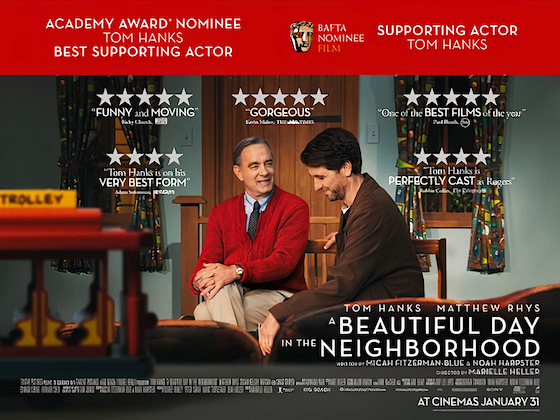
    A Beautiful Day in the Neighborhood (2019)

    2020 #195
    Marielle Heller | 109 mins | digital (UHD) | 1.85:1 + 1.33:1 | USA & China / English | PG / PG

    A Beautiful Day in the Neighborhood

    Thanks to the ubiquity of their films and television programmes, American culture permeates the world. Even if something isn’t directly exported, there are enough references to it in other media that we all get to know it by osmosis. (If you think I’m exaggerating, here’s one example: there are many documented cases of people trying to “plead the fifth” when being interviewed by law enforcement in countries where the fifth amendment to their constitution has nothing to do with criminal procedure.) So, it’s all the more unusual that Mr Rogers is apparently an influential part of American childhoods, but he wasn’t (as far as I’m aware) widely known outside of the US until a couple of years ago. That was thanks to the acclaim garnered by documentary Won’t You Be My Neighbor? As these things often go, that was followed by a biopic — which is this.

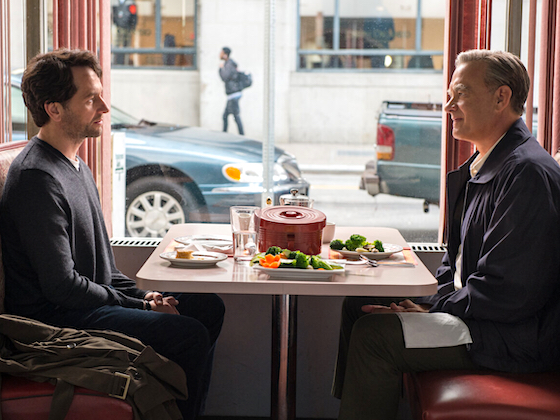
    However, rather than try to tell Mr Rogers’ whole life story, A Beautiful Day in the Neighborhood (a reference to the fictional land in his TV series, which is presumably why the US spelling was retained even for the UK release (except on DVD covers, etc)) focuses on one man’s encounter with Rogers. That man is Lloyd Vogel (Matthew Rhys), a cynical journalist with familial problems aplenty. He’s assigned to write a puff piece on Rogers — a couple of hundred words for a magazine issue about “heroes”. The pair seem an ill fit, but that’s the point — it’s basically a punishment from his long-suffering, usually-indulgent editor. Lloyd is initially reluctant, then sceptical — surely the whole “Mr Rogers” thing is a persona; an act? But as he spends more time with the man, it begins to change his view on the world too.

    Okay, it probably takes a while for the film to get to that point, exactly, but I’m not spoiling anything — you know that’s where it’s going. “I met this guy whose world view was so much more positive and optimistic than mine… and it didn’t affect me at all, I’m still a grumpy bastard.” That’s not a story Hollywood’s going to tell, is it? Heck, that’s not even a story. So, yeah, of course Mr Rogers’ fundamentally decent and kindly nature is going to have an impact on Lloyd.

    A beautiful lunch in the neighbourhood

    Despite Mr Rogers being the focal point, then, the film is really more about Lloyd’s personal journey. But that journey is instigated and facilitated by Mr Rogers, so his “supporting character” part is vital. And who better to portray the very embodiment of decency than Tom Hanks? Rogers’ widow has said that Hanks was the perfect actor to play her husband; for his part, he’s said taking the role was “terrifying” due to the cultural significance. Hanks is as accomplished in the role as you’d expect, and it deservedly earnt his sixth acting Oscar nomination (his first in almost 20 years, and long overdue, I think).

    If it all sounds a bit predictable, director Marielle Heller dodges that with some indie-movie-esque flourishes. There’s a touch of Wes Anderson to how she uses Mr Rogers’ TV show, switching into Academy ratio to demarcate us entering a different ‘world’ — not just literally clips from the show, but bookend narration, dream sequences, location transitions, and so on. IMDb lists the 1.33:1 ratio as just being used for “TV scenes”, but I think that undersells its use and effectiveness, which is more comparable to (say) how Anderson used three different ratios in The Grand Budapest Hotel.

    Its those kind of inescapable but well-considered flourishes — plus the believable transition in Lloyd’s character, which is more grounded in reality than the “slightly unlikeable guy becomes super positive” cliché — that elevate A Beautiful Day in the Neighborhood out of the predictable or twee, and into being a genuinely heartwarming kinda film.

    4 out of 5

    A Beautiful Day in the Neighbourhood is available on Sky Cinema and Now TV from today.

    Bloodshot (2020)

    2020 #178
    David S.F. Wilson | 109 mins | digital (UHD) | 2.39:1 | USA & China / English |
    12 / PG-13

    Bloodshot

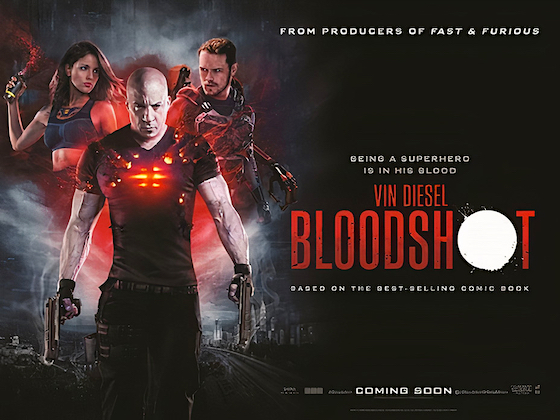
    If you only know about comic books from the movie universes they spawn, you’d be forgiven for thinking Marvel and DC are the be-all and end-all of that medium. Not so, of course. One of the other publishers with their own stable of superheroes just waiting to make the leap to the screen is Valiant, and (if you hadn’t already guessed) Bloodshot is one of theirs. Indeed, at one point it was intended that it would be an Iron Man-style jumping off point for another cinematic universe, but I can’t imagine that’s still on the cards.

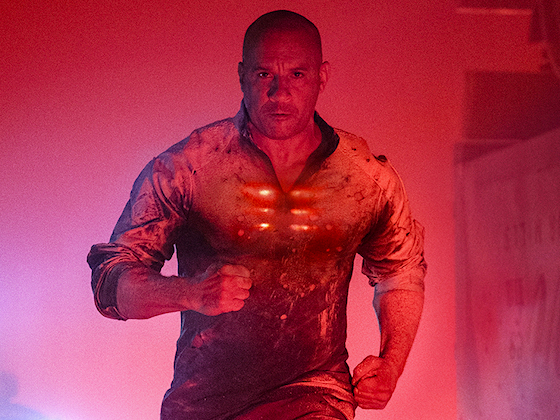
    Anyway, in this screen incarnation, Bloodshot stars Vin Diesel as Ray Garrison, a US Marine who is kidnapped and killed along with his wife… but then he wakes up, albeit with amnesia. An experimental scientific programme has seen nanite tech injected into his bloodstream, giving him increased strength and healing abilities. Increased strength? Speed healing? Amnesia? I guess he’s Cyber-Wolverine, only without the cool claws. Anyway, Ray begins to have flashbacks, and he heads off to kill the terrorists who killed him and his wife. But all is not as it seems…

    I don’t know why I’m holding back — the trailer spoiled more of the plot than that. And I’m not trying to spare you so you can enjoy the story as the movie unfolds, because Bloodshot is not a film I particularly recommend; and what is enjoyable about it has nothing to do with its storyline. That said, the twist I’ve implied exists would’ve been quite good — certainly one of the film’s higher points — if they hadn’t blown it in the trailer. The only other thrills come from its action sequences, which are passable, albeit constructed with a prominent degree of sloppiness that indicates the filmmakers either weren’t skilled enough or weren’t attentive enough to truly get it right. For example, they didn’t even bother to put British number plates on any of the cars during a chase that supposedly takes place in London; not to mention that the streets they’re darting around look nothing like the UK.

    Kind of a superhero

    Poor location scouting aside, there’s copious amounts of the computer-generated bombast that’s par for the course in a modern blockbuster. But underneath that digital set dressing, Bloodshot feels like a throwback to the comic book adaptations of 20 years ago; one of those superhero-movies-they’d-rather-weren’t-superhero-movies we got in the late ’90s or early ’00s, before X-Men and Spider-Man finally straightened everyone out. It even has the kind of plasticky CGI stunt doubles you haven’t seen in at least 15 years (Marvel & co use CGI stunt doubles all the time, of course, but they’re better done than these ones).

    Like those half-arsed efforts of old, Bloodshot is, when taken as a brain-off sci-fi actioner, mostly adequate. That’s about the best that can be said for it. I was going to say that it’s probably bland enough to scrape a passing grade, but, the further I get from it, the more it lessens in my memory. My score sides with that hindsight.

    2 out of 5

    Bloodshot is available on Sky Cinema and Now TV from today.

    Enola Holmes (2020)

    2020 #214
    Harry Bradbeer | 123 mins | digital (UHD) | 2.35:1 | UK / English | 12 / PG-13

    Enola Holmes

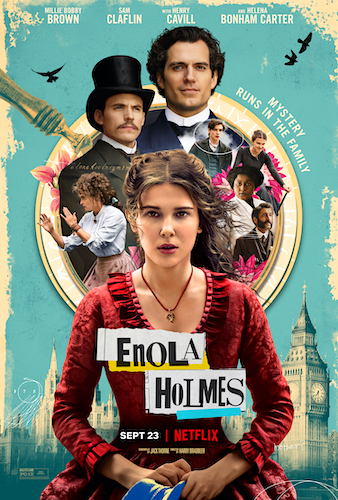
    The latest screen incarnation of Sherlock Holmes is not really about the Great Detective at all. Instead, Enola Holmes introduces us to his eponymous young sister — not part of Sir Arthur Conan Doyle’s original canon, but a creation of author Nancy Springer, on whose series of young adult mystery novels this film is based. (Nor, I feel I should point out, was Sherlock’s Eurus drawn from canon, despite what some hardcore Sherlock fans berating Netflix’s Enola promos seem to believe.) Indeed, the film imagines a whole family for Sherlock and his elder brother Mycroft: a father who died when Enola was young; and a mother, Eudoria, who has since raised Enola to be a multi-talented, independent, forward-thinking young woman.

    But when Enola (Mille Bobby Brown) wakes on her 16th birthday, she finds that Eudoria (Helena Bonham Carter) has disappeared. She summons her brothers, famous detective Sherlock (Henry Cavill) and uptight government man Mycroft (Sam Claflin), and various clues to Eudoria’s actions and intentions are unearthed — but not always shared among the siblings, because the brothers want little to do with their younger sister, resolving to send her to a finishing school to learn how to be a ‘proper’ lady. That doesn’t fit with Enola’s plans, though, so she escapes and runs away to find her mother. On her journey, she runs into similarly young Lord Tewkesbury (Louis Partridge), who is also on the run from his family, for reasons that, it will emerge, are even more sinister than Enola’s…

    Enola and Sherlock

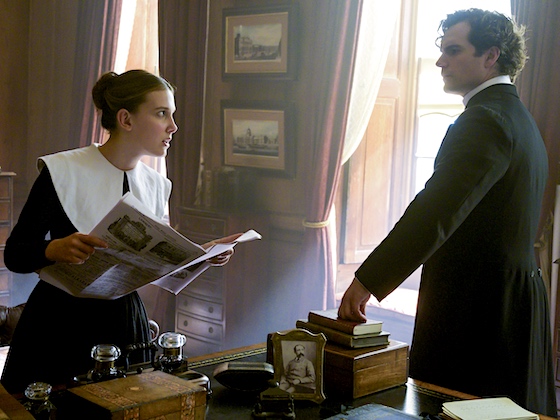
    As a story set in the world of Sherlock Holmes, Enola Holmes is… well… um… Look, I’ve been fond of Henry Cavill since The Tudors, but he’s not my idea of Sherlock Holmes; and apparently Dr Watson doesn’t even exist? Sacrilege! While I can’t forgive the latter, the weird casting decision of Cavill is somewhat justified by the film itself. I’m not sure it was conceived to include a ‘traditional’ Holmes, and Cavill fits the character as he has been written: as an admirable, kindly, almost mentor-like older brother to Enola. Perhaps if they’d cast a more traditionally Holmesian actor then that person would have managed to shift it towards a traditional portrayal, but I suspect that’s not what the filmmakers wanted. Arguably that makes this a bad Holmes adaptation (if you’ve changed the style and nature of the character, is it actually an “adaptation”?), but then, it’s not really about him.

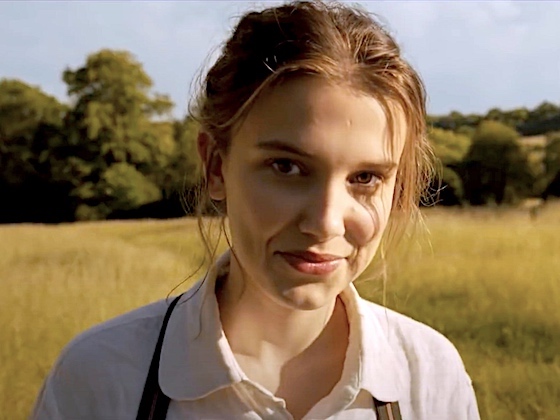
    It’s about Enola — as per, y’know, the title — and in that role Mille Bobby Brown proves that her success as Eleven in Stranger Things was not a fluke. In the wrong hands, the confident, capable, and headstrong Enola could have been brattish, but Brown brings enough charm to sweep us along. She frequently turns to speak to camera, like some kind of Victorian teenage Fleabag, which, again, could have been irritating, but mostly works to bring us into her confidence and, occasionally, underscore the fun and thrill of her adventure. However, there’s more room for nuance in how the character is written. Enola is by no means perfect, but we’re rarely allowed to see deficiencies. This works when she’s putting on a brave face to a world that would underestimate her, but a little more sense that she’s new to all this and doesn’t always get it right wouldn’t go amiss.

    Victorian teenage Fleabag

    So, while I don’t imagine Sherlockians will be inducting this into their favourite screen iterations of the Great Detective, it works as a female-led YA mystery-adventure. Originally produced by Warner Bros for a cinematic release, but sold to Netflix after the pandemic hit, I suspect this might have actually done quite well in cinemas. It’s good fun, accessible entertainment; the kind of thing that once upon a time would have been a PG-rated family blockbuster hit (nowadays it’s rated 12/PG-13, though with their “allow children in so long as they’re with adults” rules, those certs are really the modern-day equivalent of what used to be PG). Now, it looks to have been a hit for Netflix: it seems to have been widely viewed, based on how the number of ratings on IMDb and Letterboxd shot up over the first 24 hours (and kept going), and it’s been the #1 film on Netflix UK for a whole week (and, apparently, set a record for being #1 in the most countries on its release day). I suspect this won’t be the last adventure we see for Miss Holmes…

    4 out of 5

    Enola Holmes is available on Netflix now.

    The 100-Week Roundup XI

    This week: an underrated crime thriller based on the same true-life story as a Hitchcock classic; an investigation of the trauma left by conflict in a film I’ve nicknamed “Gulf War Rashomon”; and a test of this “just post my notes already” roundup format with one of my favourite films I watched in 2018.

    They are…

  • Compulsion (1959)
  • Heathers (1988)
  • Courage Under Fire (1996)


    Compulsion
    (1959)

    2018 #194
    Richard Fleischer | 99 mins | TV | 2.35:1 | USA / English | 12

    Compulsion

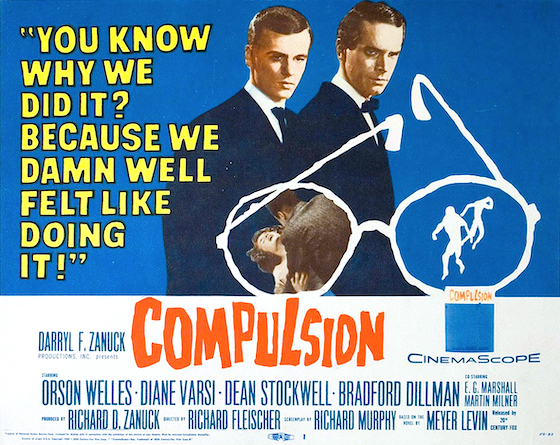
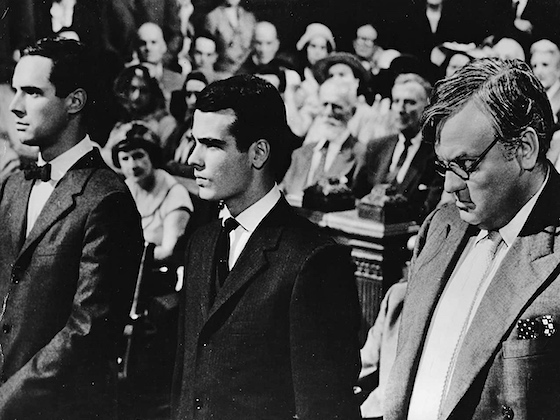
    Based on a novel that was based on the Leopold and Loeb case (which has also been the inspiration for various other films, most notably Alfred Hitchcock’s Rope), Compulsion is the story of two students who think their intellectual superiority will allow them to get away with the perfect murder.

    Playing the students, Dean Stockwell and Bradford Dillman are both fantastic. They’re two different types of well-to-do prodigies: Dillman charming and cocksure; Stockwell both awkward and supremely confident of his own exceptionalness. Their performances keep things compelling, even as the events unfolding are a foregone conclusion. You should and will hate them — even if they weren’t murderers, they’d be insufferable pricks (they sound like any number of modern-day politicians, don’t they?); that they’re cold-blooded killers just makes them worse. But even though you’ll never root for them, they’re still addictively watchable. Also, bearing in mind when the film was made, there’s a strong undercurrent of their homosexuality. It disappears as the film goes on, becoming more concerned with the case than the relationship between the two guys, but it’s discernibly there at the start.

    And then Orson Welles turns up. Despite getting top billing, he has more of a third act cameo that turns into the film’s most grandstanding moment: his closing speech at the trial; a real tour de force against capital punishment. Apparently it was issued on vinyl, it’s that good. The three stars got and get all the recognition (they shared Best Actor at Cannes that year), but there are also fine supporting performances from Martin Milner and Diane Varsi as a couple of fellow students who get caught up in the case in different ways; and E.G. Marshall is very good as DA Horn, the man who eventually catches the guys and therefore becomes Welles’ courtroom nemesis. He’s particularly understated during Welles’ big speech, gradually shifting from annoyance and hatred to agreement, ultimately rising to his feet at the end as if in a silent standing ovation.

    Stillman, Stockwell and Welles

    Aside from that obvious Big Scene, there are several other memorable ones: Dillman calmly talking to his teddy bear while Stockwell frantically searches for misplaced glasses, for example; or the cat-and-mouse scenes where the DA interviews the lads separately. Much of it is fantastically shot, too. There’s an occasional showy bit (like focusing on glasses on a nightstand as it gets dark outside, then showing the culprit and investigator reflected one in each lens), but also a general level of quality that often helps emphasise the darkness in the lads’ souls.

    I don’t think Compulsion is widely discussed anymore (it has fewer ratings on IMDb than Love on a Leash!), but I thought it was a brilliant film; one that can withstand comparison to more-acclaimed versions of the same story. It’s definitely underrated today.

    5 out of 5

    Heathers
    (1988)

    2018 #196
    Michael Lehmann | 103 mins | Blu-ray | 1.85:1 | USA / English | 15 / R

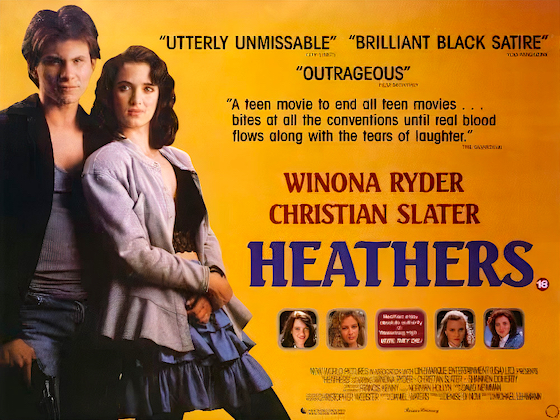
    Heathers

    Heathers was one of my favourite films I watched in 2018 (it placed 5th on my list of The 26 Best Films I Saw For the First Time in 2018), but I didn’t make any notes on it at the time, and (obviously) it’s now two years since I watched it. Oh dear.

    So, in the spirit of the point of these roundups (to clear old unreviewed films, regardless of how much or little I have to say about them), we’ll have to make do with repeating my brief summary from the aforementioned “best of” list. Though I’ll also add that I watched this on Arrow’s then-new Blu-ray edition, which comes from a 4K restoration and looks absolutely fantastic.

    The darkness that’s barely concealed beneath the pleasant veneer of American high schools is exposed in this pitch-black comedy, which mixes violent teen wish fulfilment with a certain degree of societal satire to boundary-pushing effect. It’s not as transgressively shocking 30 years on as it might’ve been back in the ’80s, but it’s still so very.

    5 out of 5

    Courage Under Fire
    (1996)

    2018 #197
    Edward Zwick | 108 mins | TV (HD) | 1.85:1 | USA / English | 15 / R

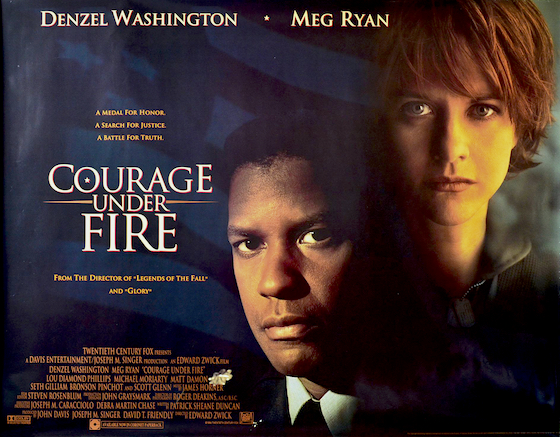
    Courage Under Fire

    It’s “Gulf War Rashomon” when a traumatised tank commander (Denzel Washington) encounters conflicting accounts of what happened while he investigates whether a helicopter pilot (Meg Ryan) deserves to be posthumously awarded the Medal of Honor, which would make her the first woman to receive it. As higher-ups put pressure on him to just push the honour through, he remains committed to uncovering the truth…

    The mystery of what really went on is not as clever or engrossing as the film thinks it is, but it still works as a meditation on how we acknowledge wartime heroism and the place of truth in doing so. It’s also a consideration of how many people are affected, in different ways, by the sacrifices of war.

    There are some decent performances along the way: Washington is always good value, and a before-he-was-famous Matt Damon demonstrates his commitment to the profession by losing a ton of weight between filming the flashback and “present day” scenes (endangering his health in the process) to portray a medical specialist indelibly affected by what went on ‘over there’. Apparently Mark Kermode said the casting of Meg Ryan as a chopper pilot was “the benchmark for a casting decision so ludicrous that it takes the viewer out of the film,” but I suspect that says more about how she was regarded at the time (best known for romcoms) than her actual performance (she’s no standout, but she’s fine).

    3 out of 5

  • The 100-Week Roundup X

    These 100-week roundups are a clearing house for reviews I haven’t got round to writing up 100 weeks (i.e. almost two years) after I actually watched the films in question. As I mentioned in my August review, I’ve recently fallen behind even on that, so the 100-week moniker isn’t technically accurate right now. Hopefully I’ll catch up soon.

    This time, we have a motley bunch from September 2018: two one-star films that made my “worst of year” list; and two four-star films, one of which made my “best of year” list. They are…

  • Lost in Space (1998)
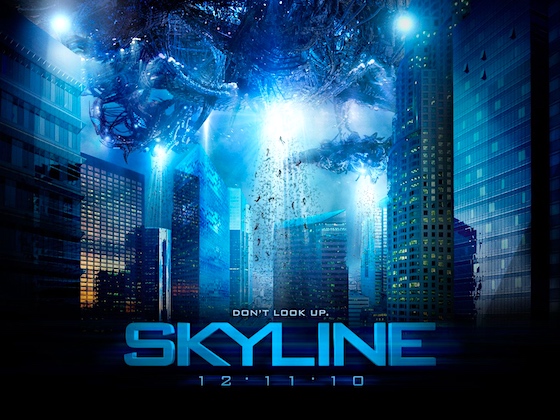
  • Skyline (2010)
  • April and the Extraordinary World (2015)
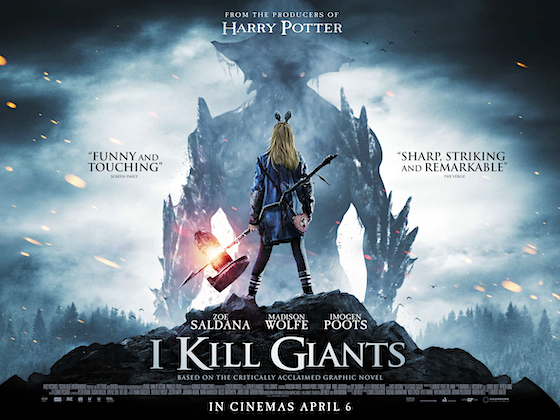
  • I Kill Giants (2018)


    Lost in Space
    (1998)

    2018 #189
    Stephen Hopkins | 125 mins | digital (HD) | 2.39:1 | USA / English | PG / PG-13

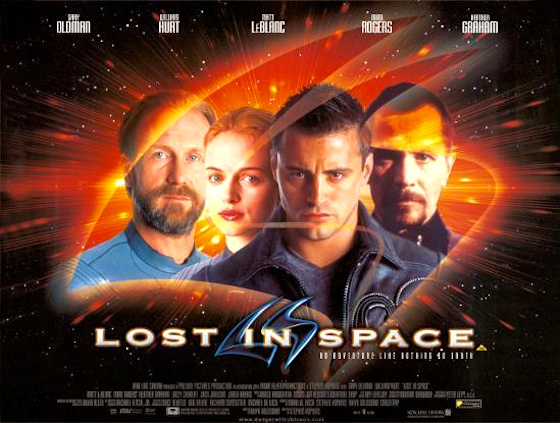
    Lost in Space

    I remember this reboot of the classic ’60s sci-fi series being received very poorly indeed when it came out in 1998; and so, even though I was a young sci-fi nut at the time, I didn’t bother to see it — and then spent the next 20 years not bothering to see it. But with the recent re-reboot on Netflix going down rather well, I thought maybe it was time to see for myself. I shouldn’t have bothered — it’s truly terrible.

    It gets off on the wrong foot, starting with a load of over-ambitious CGI, and that continues unabated throughout the entire movie. Anyone who moans about the quality of CGI in modern blockbusters should be made to watch this so they can understand what they’re complaining about. Maybe it looked ok back in ’98, I can’t remember (I suspect not), but watched now it looks like an old computer game, never mind an old movie.

    Poor effects can be forgiven if the film itself is any good, but the opening action scene is both fundamentally needless and stuffed to bursting with cliches, and the rest of the film is no better — just nonstop bad designs, bad dialogue, bad ideas, more bad CGI… Even the end credits are painful, playing like a spoof of the worst excesses of the ’90s, from the trippy “look what our computer graphics program can do” visuals to the dance-remix-with-dialogue-samples version of the theme.

    So, it turns out the critics at the time were right. I have seen even worse movies in my time, but there aren’t many merits here — there’s one effect that is well realised, at least. But that doesn’t come close to justifying the film, or for anyone to waste their time watching it. It really is very, very bad.

    1 out of 5

    Lost in Space featured on my list of The Five Worst Films I Saw For the First Time in 2018.

    Skyline
    (2010)

    2018 #190
    The Brothers Strause | 93 mins | digital (HD) | 2.35:1 | USA / English | 15 / PG-13

    Skyline

    In a Cloverfield-esque setup, a bunch of young people awaken from a boozy party to discover an Independence Day-esque alien invasion happening outside their window. What follows just feels like familiar parts from even more movies Frankensteined together in a failed attempt to produce something original.

    In terms of overall quality, it’s like a direct-to-Syfy movie granted a minor-blockbuster effects budget. Goodness knows how it landed a cinema release. The directors were visual effects artists who, based on their IMDb credits, moved into directing music videos before springboarding into film directing with Aliens vs Predator: Requiem, the sequel to the much maligned AVP that, shockingly, managed to be even worse. Skyline was their second feature — and, in a seemingly-rare bit of justice for directors making shitty blockbusters, their last (they’ve gone back to effects, where they continue to have a long list of high-profile credits). They completely financed Skyline themselves, forking out just $500,000 for the shoot before spending $10 million on the effects. It couldn’t be any clearer where their priorities were…

    And it feels like a film made by VFX artists. For one thing, one of the main characters is a VFX artist. He lives in a swanky apartment, with a hot wife and a hot mistress, drives a Ferrari and owns a yacht. Either this is extremely obvious wish fulfilment, or at one point VFX guys were doing very well indeed. (Considering there was that whole thing a few years back about major VFX companies shutting down, either this was made before the bubble burst, or some were able to weather the storm to a sickening degree. Or, like I said, it’s wish fulfilment.) Aside from that, it’s like a CGI showcase. Everything’s shot handheld, all the better to show off how realistically the CGI’s been integrated. The screenplay puts in no effort, with thinly sketched characters and a flat, uninspired storyline that rips off other movies with abandon, runs on a shortage of logic, features weak world-building with inconsistent rules, and seems to just… keep… going… until, after you think it’s definitely over this time, there’s yet another scene: a mind-bendingly gross and laughable finale.

    And yet, years later, someone made a sequel! I’ve even heard it recommended (though it has a lowly 5.3 on IMDb). Someday, I’ll have to see…

    1 out of 5

    Skyline featured on my list of The Five Worst Films I Saw For the First Time in 2018.

    April and the Extraordinary World
    (2015)

    aka Avril et le monde truqué

    2018 #191
    Christian Desmares & Franck Ekinci | 102 mins | digital (HD) | 1.85:1 | France, Belgium & Canada / French | PG / PG

    April and the Extraordinary World

    This French animation is an alternate-history steampunk adventure that follows orphan April (voiced by Marion Cotillard in the original audio) as she investigates a decades-long spate of missing scientists, including her own parents.

    The tone is one of pulp adventure, which is right up my street, and consequently I found the film a lot of fun. It’s a great adventure, abundant with imaginative sci-fi/fantasy ideas, engaging characters, and laced with humour. The independent French production means it’s not beholden to Hollywood homogenisation — there’s some very dark stuff in the world-building details, which contrasts somewhat with the light adventure tone of the actual plot, and some viewers may find this spread of tones problematic. More of an issue for me came when, a while in, the plot heads off into barmy sci-fi territory. No spoilers, but it wasn’t quite what I was expecting from the original premise. But this is perhaps more an issue of expectation than actuality — it wasn’t severe enough to lose me, just take the shine off something that was otherwise headed for perfection; and, as I adjusted to where the story was going, I enjoyed it more again.

    Resolutely unproblematic is the visual style. The design and animation, inspired by the works of comic book artist Jacques Tardi, are absolutely gorgeous — like a ligne claire comic sprung to life. When US animations try to ape an artist’s style, it often winds up as a movie-ised imitation — at best you can recognise the inspiration, but it’s still been filtered and reinterpreted (cf. Batman: The Dark Knight Returns). But this is like the panels just started moving, with full fluidity (none of the “jerkily moving between static poses” you sometimes get with cheaply-done modern animation). That applies to character animation as much as anything, but the wildly imaginative steampunk alternate history allows the designers and animators to really cut loose, with a fabulously invented world.

    Put alongside the likes of Long Way North and The Secret of Kells, it’s a reminder that we should look further afield than the US and Japan for great animation.

    4 out of 5

    April and the Extraordinary World placed 26th on my list of The Best Films I Saw in 2018.

    I Kill Giants
    (2018)

    2018 #193
    Anders Walter | 106 mins | digital (HD) | 2.39:1 | Belgium, UK, USA & China / English | 12 / PG-13

    I Kill Giants

    The past few years have seen a random, unexpected mini-genre pop up: dramas about Serious Issues where the protagonists also have something to do with giant monsters. I’m not talking about Pacific Rim or Godzilla, but movies where the monsters are either imaginary or in some other way analogous to the very real problems experienced by the characters. Films like A Monster Calls, about a teenage boy coping with impending bereavement, or Colossal, in which Anne Hathaway discovers she’s controlling a giant monster that keeps appearing (and which kept its big issue a secret in the marketing, so I will too). I don’t know if there’s really enough of these to call it a “genre”, but three films in as many years that fit roughly in that very specific bucket strikes me as a lot; and I watched all three in the span of a few months, just to emphasise the point.

    Anyway, the latest entry in this genre I may’ve just invented is I Kill Giants. Based on a graphic novel by Joe Kelly (who also penned this adaptation) and J.M. Ken Niimura, it’s about American schoolgirl Barbara (Madison Wolfe) who believes giants are coming to attack her hometown and she’s the only one prepared to fight them. Whether these giants are real or just an outward expression of an inner conflict is, of course, why this ties in with the other films I mentioned.

    There’s plenty of stuff I liked a lot in I Kill Giants. The female focus. The power of friendship, and of small acts of kindness. The acceptance of being a bit different and an outsider, within reason. The magical realism in its handling of the giants. Unfortunately, it takes a bit too long to get to its conclusion — it’s not exactly repetitive, but there is some running on the spot. When the finale comes, it’s an effective twist. I’d guessed many of the reveals, and I think the film definitely expects you to guess at least one (which it then wrong-foots you about). But narrative trickery isn’t really the point. It’s impossible to discuss which other film it’s most similar to without spoilers, but the other one dealt with certain stuff better due to being upfront about it, rather than lacking it all into the final ten minutes. That’s the ending’s biggest flaw: that another film did fundamentally the same thing recently and, overall, better. That’s not the film’s fault.

    Not a perfect film, then, but it has a lot to commend it. Just be aware it’s one where the journey is more rewarding than the destination.

    4 out of 5

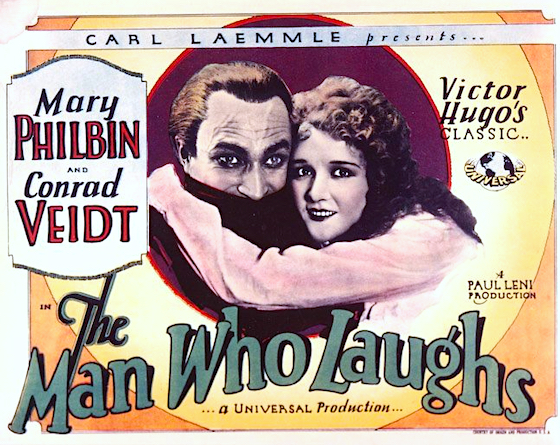
  • The Man Who Laughs (1928)

    2020 #189
    Paul Leni | 110 mins | Blu-ray | 1.20:1 | USA / silent | PG

    The Man Who Laughs

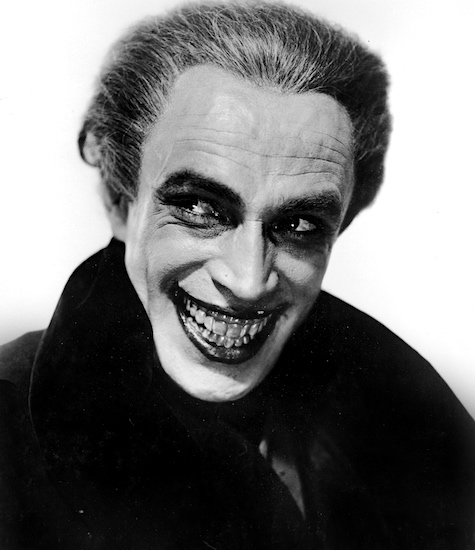
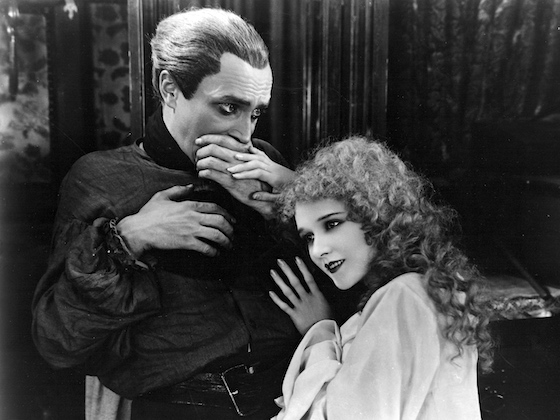
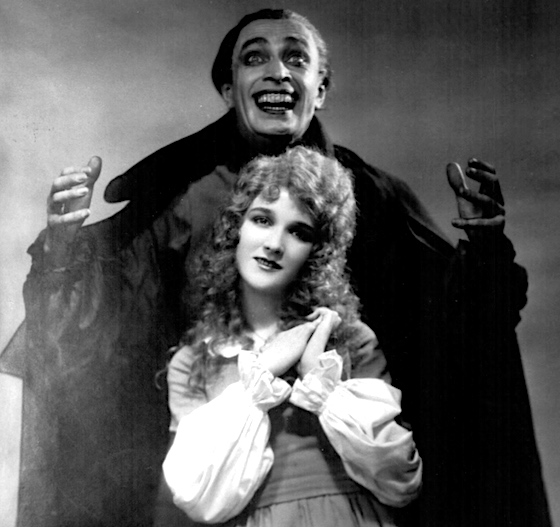
    Just over 90 years ago, in the final years of the silent era, The Man Who Laughs was a “super-production” — an expensive and major release, designed to follow in the footsteps of successes like The Hunchback of Notre Dame and The Phantom of the Opera, with an acclaimed imported director (Paul Leni, Waxworks) and star (Conrad Veidt, The Cabinet of Dr Caligari), a shared leading lady from Phantom (Mary Philbin), and adapted from another novel by the author of Hunchback (Victor Hugo). It did, I believe, live up to its pedigree and expectations. But today it’s primarily remembered for one thing: being the visual inspiration behind a certain comic book supervillain…

    Perhaps because of the connections to the aforementioned films, and because it inspired such a violent character, and because of the publicity stills that inspired that look, and because its production studio (Universal) would shortly become renowned for their iconic interpretations of the cornerstones of horror (Dracula, Frankenstein, et al), The Man Who Laughs has often been cited as a horror movie. It isn’t. Well, some of the first 15 minutes do play a bit like one — execution by iron maiden; mutilation and abandonment of a child; dangling corpses of hanged men — but then it jumps forward in time and becomes a romantic melodrama, with a bit of antiestablishment satire and a swashbuckling climax thrown in for good measure.

    I was only Jokering

    The story begins in 1690, with King James II punishing a rebellious lord by handing his son, Gwynplaine, to comprachicos (invented by Hugo for the novel; it means “child-buyers”) who mutilate the boy’s mouth into a permanent grin. And then he executes the lord in an iron maiden for good measure. When all the comprachicos are later exiled, they abandon the boy. Wandering through the snow, the kid finds a woman frozen to death, but her baby still alive in her arms. (Like I said, the first 15 minutes are pretty bleak.) He rescues the baby, who it’ll turn out is blind, and soon the pair are taken in by a wandering performer, Ursus (Cesare Gravina). Jump forward a couple of decades and Gwynplaine (Veidt) is now a popular attraction himself thanks to his laughing face, and the baby has grown into a beautiful young woman, Dea (Philbin), and the pair are in love. Let’s not think too much about the background to that relationship, eh? Gwynplaine feels unworthy of Dea’s love because he’s so hideous, but she doesn’t care because she’s literally blind.

    Meanwhile, Gwynplaine’s fame and unique facial features lead to it being discovered that he’s really a noble, kicking off a bunch of courtly intrigue — I could explain it, but then we’d just be getting into the plot of the entire movie. Suffice to say, it involves a scheming courtier, Barkilphedro (Brandon Hurst), who was partly responsible for Gwynplaine’s dad’s death; a horny duchess, Josiana (Olga Baclanova), who we first meet while a peasant messenger spies on her having a bath (nothing explicit is actually seen — it cuts away just in time — but it was still too risqué for British censors, who cut away even sooner); and Queen Anne (Josphine Cromwell), best known today as “the one Olivia Colman played in The Favourite (there’s considerably less swearing, gout, lesbianism, and bunny rabbits in this version).

    With the “beauty and the beast” angle to the film’s central romance, the film does withstand comparison to other variations of that story — like, um, Beauty and the Beast, but also, again, The Hunchback of Notre Dame. The difference here is in how people react to the ‘beast’. Only he himself seems to find him monstrous. The public find him inescapably hilarious, which isn’t nice for him to live with, but has made him popular and beloved rather than reviled. The love of his life is besotted with him unconditionally. Josiana comes to see his show and for some reason finds him instantly attractive (in fairness, I think she’s attracted to any man with a pulse).

    Tale as old as time...

    A more apt comparison is to a film made over 50 years later, David Lynch’s The Elephant Man — a parallel I spotted for myself, but also is mentioned in two essays in the booklet accompanying Eureka’s new Blu-ray release, so I’m certainly not alone in feeling this. Both concern a man who is physically disfigured and has fallen in with fairground sideshow folk, who despises himself but comes to find love and compassion from others. They even both climax with a grandstanding speech where the man in question declares his worth to the world, with the famous “I am a human being!” bit from The Elephant Man seeming like an echo of a scene here where Gwynplaine, forced to join the House of Lords by order of the Queen, eventually rejects her command, declaring his independence with the assertion that “God made me a man!” As Travis Crawford writes in the aforementioned booklet, “while sinister clowns would ultimately become an unlikely horror cliche, Gwynplaine’s gruesome disfigurement makes him a figure of pity, not menace… more Pierrot than Pennywise.” The Man Who Laughs is less concerned with examining and affirming the fundamental humanity underneath ‘freaks’ than Lynch’s film (this is a classical melodrama, after all), but it’s certainly an aspect of the story that, despite how he looks, Gwynplaine is still a human being; that, despite his fixed grin, he’s full of all the emotions of any human being.

    Before I go, a quick word on the film’s soundtrack. “But it’s a silent movie.” Yes, but as you surely know, silent movies aren’t meant to be watched actually silent. The Blu-ray release (both the new UK one and an earlier US one from Flicker Alley) comes with two audio options: a new 2018 score by the Berklee Silent Film Orchestra, and the original 1928 Movietone sync track, which is not just general music backing but also includes some music clearly framed as diegetic, plus occasional sound effects, and even dialogue (in the form of background crowd noise, mostly). Now, the film was originally released as silent, then withdrawn and re-released with this accompanying soundtrack, so I guess the option of a new score isn’t wholly unmerited. Nonetheless, it still seems slightly off to me that you’d supplant an authentic original track with a modern creation. As if to underline this point, the booklet reveals that the new score is actually little more than a final-year project by a group of students! It’s lovely for them that they were able to present their work at the San Francisco Silent Film Festival and it was well received, and that it’s now included as an option on the film’s official releases… but presenting it as the primary audio option? No thanks. I suggest you choose the 1928 soundtrack.

    I said it's NOT a horror movie!

    It’s probably unlikely that The Man Who Laughs can escape its status as a trivia footnote for the Joker at this point (heck, Flicker Alley’s release even plays up the connection on its cover, taking the film’s most Joker-esque photo and decorating it in the character’s colours of purple and green). Certainly, no one should watch it for that reason alone — the inspiration for the Joker begins and ends with the grinning-man imagery; there’s nothing in the film itself that contributes to the character. There’s also little here to support its reputation as an influential early horror movie — those seeking horror thrills shouldn’t watch for that reason either. But for all the things The Man Who Laughs is not, what it is is a well-made and performed drama; one that deserves to stand and be appreciated on its own merits, not those that others have mistakenly conferred on it.

    4 out of 5

    The Man Who Laughs is released on Blu-ray in the UK today.