2015 #76
Matthew Vaughn | 129 mins | Blu-ray | 2.39:1 | UK / English | 15* / R
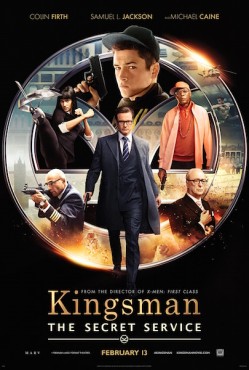 The team behind Kick-Ass bring that same reverent irreverence to the spy genre in this comedy-action-thriller that aims to bring the fun of ’60s/’70s spy-fi back to a genre that’s become oh so serious.
Developed alongside the Mark Millar/Dave Gibbons comic book The Secret Service, Matthew Vaughn’s film casts Colin Firth as Harry Hart, an agent for an independent intelligence operation, Kingsman, who recruits council estate kid Eggsy (Taron Egerton), the son of a fallen comrade, into the group’s elite training programme. As Eggsy battles tough training challenges and the snobbery of his Oxbridge-sourced competitors, Harry investigates suspicious tech mogul Richmond Valentine (Samuel L. Jackson), who is secretly kidnapping people of importance and publicly giving away free SIM cards to everyone on the planet, but for what nefarious purpose?
There are several things going on in Kingsman that make it a uniquely entertaining proposition, especially in the current blockbuster climate. Part of the setup is “My Fair Lady with gentlemen spies”, as chavvy Eggsy is reshaped to be an old-fashioned besuited gent, inspired by the story of how Dr. No director Terence Young took a rough young Scottish chap called Sean Connery under his wing and taught him how to dress and behave as a gentlemen in preparation for his star-making role as the original superspy. It’s one of those ideas that you wonder why no one thought of developing into a fiction sooner. It could have come across as datedly classist, but Vaughn and co-screenwriter Jane Goldman nail it as a 21st Century character arc: being a gentlemen is not about speaking correctly or lording it over the lower classes, but about a universal level of good behaviour, politeness, and doing the right thing. It successfully and acutely dodges any potential accusations of classism.
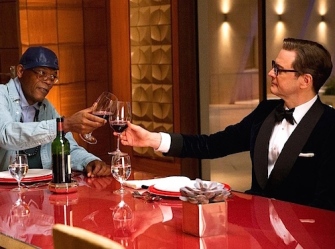 An even bigger part of the film’s triumph, and what likely led it to over $400 million worldwide in spite of its higher-than-PG-13 classifications (it’s Vaughn’s highest-grossing film to date, incidentally; even more so than his X-Men instalment), is that it takes the ever-popular James Bond formula and brings it up to date. However much you might love Casino Royale and Skyfall (and I do), the Bourne influence is undeniable. They’re not Bond movies in the same mould as the Connery and Moore movies that established the franchise’s enduring popularity around the globe; they’re modern thrillers, faithful in their way to Ian Fleming’s creation, but also zeitgeisty. Vaughn and co have looked at the DNA of those ’60s and ’70s Bond classics and given them a fresh lick of paint. So we have just-beyond-possible gadgets, a megalomaniacal supervillain, complete with epic mountain base, his own personal army, a physical tic, a uniquely-gifted almost-superhuman henchwoman, and a tongue-in-cheek tone that isn’t all-out spoof but lets you know no one believes any of this could actually happen and that’s OK.
Despite the overall tone of modern blockbusters, I don’t think the appetite for movies like this ever went away; or if it did, it quite quickly made a resurgence: a similar itch has been scratched in recent years by superhero movies, especially the Marvel ones. Audiences — or, perhaps, studio execs — seem currently more ready to accept outlandish action sequences, melodramatic stakes, and an occasionally-humorous tone if they were dressed up in colourful suits and pitched in the realm of sci-fi/fantasy, 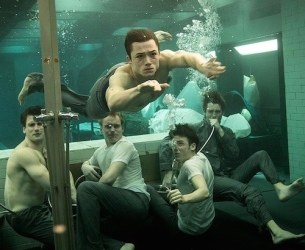 rather than the supposed real-world universe of spy movies. What the worldwide success of Kingsman proves is that audiences don’t need the set-dressing of superpowers to accept an action movie that’s less than deadly serious. It’s a place I don’t think the Bond movies could go anymore — not without accusations of returning to the disliked Moore or late-Brosnan films — but it’s one many people clearly like, and Kingsman fulfils it.
Another clever move by Vaughn and co was to aim it at adults. Every blockbuster is PG-13 these days to keep the box office high, but Kingsman shows you can cut loose and still make good money. By specifically setting out to make an R-rated version of the classic Bond formula, everything gets ramped up to 11. On the one hand, that earns the controversy of That Joke in the final act (as Vaughn has said, not wrongly, it’s a variation on the classic Bond film finale; Mark Strong’s Merlin even closes his videoscreen, Q-style), but on the other it allows for crazed action sequences. The (faked-)single-take church massacre has to be seen to be believed; a highly-choreographed orgy of violence that is a marvellous assault on the senses, demonstrating the benefits of clear camerawork and highly-trained professional stunt- and effects-people over fast-cut close-up ShakyCam handwavery. Later on, a certain sequence set to Land of Hope and Glory would be inconceivable in any other movie. Things like this perfectly demonstrate why the world needs these less-than-serious kinds of film: they let creativity loose, crafting moments and sequences that are exciting, funny, unique, and memorable.
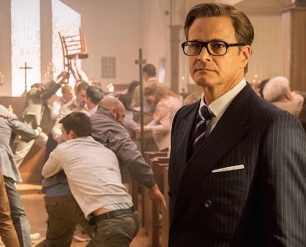 Criticisms of the film tend to pan out to nought, in my opinion. Is there too much violence? There’s a lot, certainly, but part of the point of that church sequence (for instance) is just how long it goes on. Other excellent action sequences (the pub fight you might’ve seen in clips; the car chase in reverse gear; the skydiving) aren’t predicated on killing. Similarly, Samuel L. Jackson’s baseball-capped lisping billionaire is a perfect modern riff on the traditional Bond villain, not some kind of attack on Americans or people with speech impediments. Some have even attempted a political reading of the film, arguing it’s fundamentally conservative and right-wing because the villain is an environmentalist. Again, I don’t think the film really supports such an interpretation. In fact, I think it’s completely apolitical — just like its titular organisation, in fact — and such perspectives are being entirely read into it by the kind of people who read too much of this kind of thing into everything.
If there’s any fault, it’s perhaps in an overabundance of ideas. One fewer training sequence might’ve been better — but then, which would you lose? Based on the trailer, some scenes were cut as it is (sadly there’s no deleted scenes section on the Blu-ray), and the film doesn’t really outstay its welcome. For me, it wasn’t as balls-to-the-wall revolutionary as Kick-Ass and, when we have actually had lighter-toned action films in the past few years, it doesn’t reconstruct its genre quite as much as Vaughn and Goldman’s adaptation of Stardust did for fantasy.
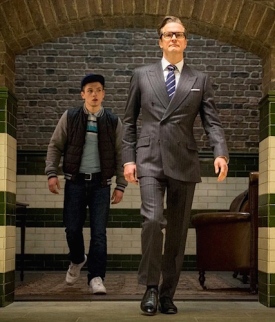 Not everything hinges on being wall-to-wall groundbreaking, though, and Kingsman has so much to recommend it. It ticks all the requisite boxes of being exciting and funny, and some of its sequences are executed breathtakingly. The plot may move along familiar tracks — deliberately so — but it pulls out a few mysteries and surprises along the way. There’s an array of likeable performances, particularly from Firth, Egerton (sure to get a lot of work off the back of this), Jackson and Strong, and Sofia Boutella’s blade-legged henchwoman is yet another why-has-no-one-done-that great idea.
I’m more than happy for the Bond series to carry on down its current, serious-minded path, but I’m ever so glad Kingsman has come along to provide the level of pure entertainment and unabashed fun that series used to do so well. If they can keep this quality up, may there be many sequels.
Kingsman: The Secret Service is released on DVD and Blu-ray in the UK today, and the US tomorrow.
It placed 13th on my list of The 20 Best Films I Saw For the First Time in 2015, which can be read in full here.
* During editing, the BBFC advised the film would receive an 18 certificate unless changes were made. The submitted version was classified 15. Normally such edits are applied globally (despite what some websites like to claim), but this has been a less clear case: vastly different running times were posted by the BBFC and their German equivalent, but Vaughn stated in an interview that nothing was cut for the UK. Now, the UK and US Blu-rays have identical running times, so it seems likely he was (unsurprisingly) telling the truth. Another “the UK version is cut!” storm in a teacup? Yessir. ^

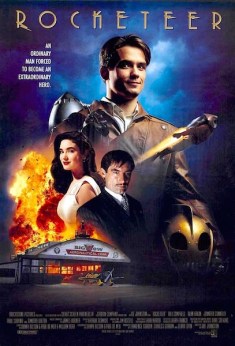 Based on an ’80s-created superhero modelled on the matinee serials of the ’30s and ’40s, The Rocketeer sets its scene in 1938, when stunt pilot Cliff Secord (Billy Campbell) winds up in possession of an experimental rocket pack. Initially donning it as part of the stunt show, when Cliff uses it to rescue another pilot he, a) attracts the attention of the hoods who originally stole it, and b) discovers his true calling as a hero, etc. Throw in a love interest (Jennifer Connelly) who’s a Hollywood extra with connections to the swashbuckling film star (Timothy Dalton) who’s really behind the theft, and you’ve got yourself an adventure!
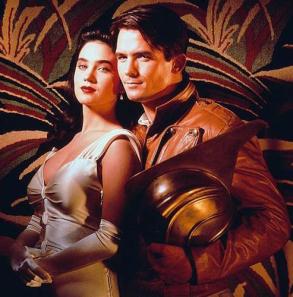 We all know effects alone do not make a good movie, but equally trying to make an effects-y movie when you can’t achieve said effects is a fool’s errand. Fortunately there’s some other derring-do to make up for it, and the climax atop a zeppelin isn’t at all bad.
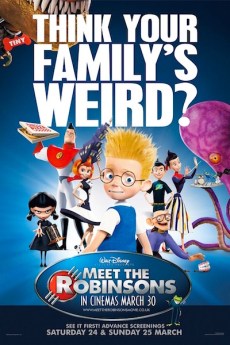 Disney’s 47th Animated Classic comes from their weak ’00s period, after the end of the so-called Renaissance and before what’s apparently been dubbed the neo-Renaissance (presumably no one could think of a synonym). This hails from the tail end of that lamentable era, though, so there are signs of recovery: Meet the Robinsons isn’t bad, just mediocre.
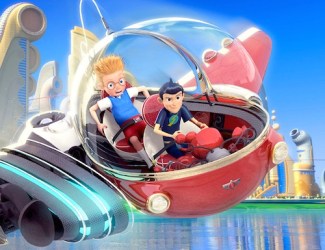 The time travel element of the plot is weakly thought-through. It’s not the point of the film, which is more about family ‘n’ stuff, but it’s central enough that it robs the already-underpowered climax of much weight — you’re too busy thinking “wait, does that make sense?” to be invested in events. Finally, the animation style has aged badly, now looking plain and under-detailed.
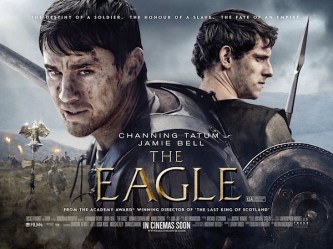 Channing Tatum is a brave Roman general whose father lost his company’s standard, the titular eagle, north of Hadrian’s Wall (a real historic event, coincidentally depicted in
 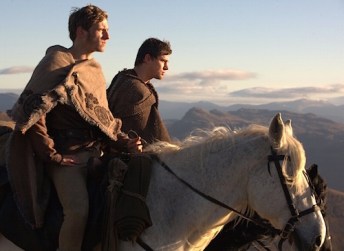 quality to the setting, characters, and imagery that’s quite striking.
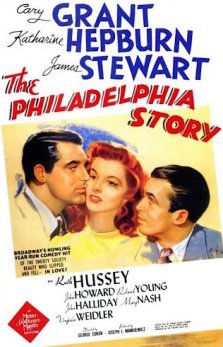 Katharine Hepburn is the
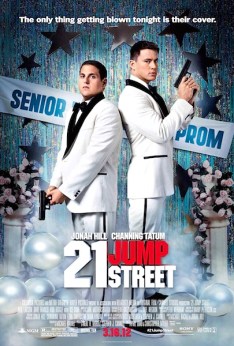 Having turned the unlikely-to-be-any-good story of a machine that makes it rain food into
  this leaves Hill hanging out with the cool kids — and being lured down the path of parties and their shallower friendship — while Tatum falls in with a gang of ultra-nerdy nerds and starts actually learning stuff. Distilled like that makes it sound pat, but in the film it works; in part because they don’t overplay the clichéd “friends fall out irretrievably… until it’s retrieved for the final act” story arc.
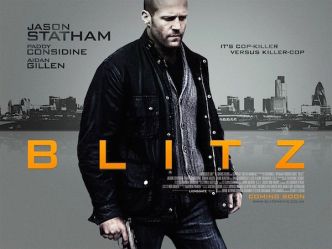 Jason Statham plays the kind of copper who wakes up on his sofa in the middle of the night, immediately pours himself a whiskey in a mug, then goes out and beats up three youths who were trying to nick a car, in this godawful crime novel adaptation.
 At least it has some so-bad-they’re-good one-liners — “Aren’t you going to take any notes?” “Do I look like I carry a pencil?” Unfortunately, their presence meant the thing Blitz most reminded me of was
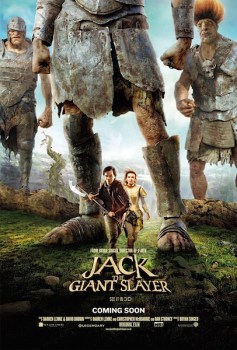 The influence of Peter Jackson’s
 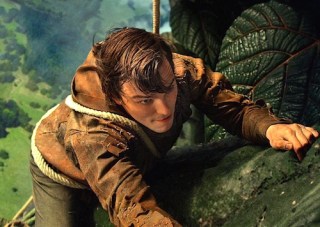 A computer-animated prologue wants to be the one from
  overacted characters, and bright-and-cheerful CGI are more or less acceptable, in a “it’s no classic but it’ll pass two hours just fine” kind of way. Produced on those kinds of terms, this might have passed muster for some. Might.
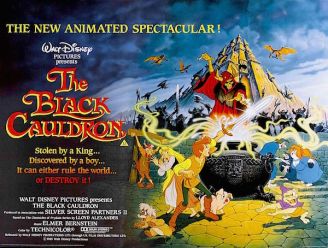 The Black Cauldron is best remembered as an intriguing footnote in the history of Disney animation. Their 25th ‘official’ film, it was the first with no songs, the first to earn a PG (after being cut — twice — to avoid a PG-13), and flopped so badly they disowned it for over a decade. Fully-animated sequences were cut after disastrous test screenings for parents, and famed exec Jeffrey Katzenberg, who came into Disney management during the film’s production, reportedly ordered 12 minutes cut, muddling the film’s story. What a mess.
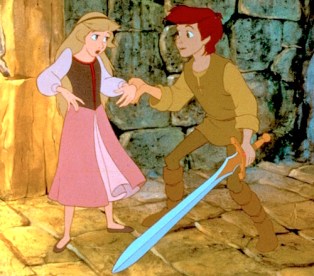 It’s always interesting when a company like Disney break outside of the norm, and it’s certainly brought them some degree of success in recent years with the likes of
 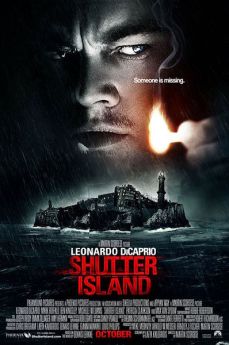 Adapted from a novel by Dennis Lehane (whose work also inspired
 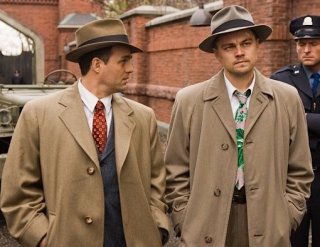 Besides, the film has other delights beyond being an elaborate guessing game. One of the things Lehane set out to do in his novel was write “a gothic”, and Scorsese and co have taken that ball and run with it. It’s overflowing with a fantastic atmosphere: unsettling, creepy, chilling, horror-movie scary when needed (some sequences are properly hair-raising); truly gothic-feeling. Every aspect of filmmaking — the direction, the photography, the editing, the sets and locations, the music — work in harmony to create a coherent mood.
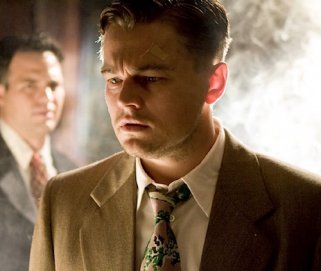 And then, after Scorsese and co have done their best to shred your nerves, in the final half-hour the pathos is immense. Quite without realising it had brought me to that point, I had a tear in my eye. This is in part thanks to some great performances, though you do need to reach the twist to fully appreciate them. Everyone reveals more levels once you know it, and indeed it’s clear a great amount of effort went into ensuring re-watchability — that if you view it again knowing the answers, you can spot things; not clues, per se, but elements in the performance, the design, the staging, that tie in to the reveal.
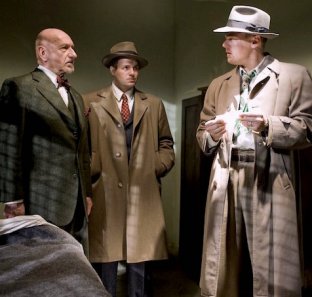 I think the more you let Shutter Island percolate after it’s over, the better it becomes. Solving the mystery and guessing at the twists occupies so much of your time on a first viewing that you almost miss the details in the characters and the world, but they build up nonetheless. There’s layers and depth here, and a plausibly realistic depiction (even according to an expert) of something that’s incredibly hard to depict in fiction. You can view Shutter Island as just an atmospheric gothic mystery chiller, and as that it’s a quality piece of work, but it’s the extra depth that mark it out as, actually, a great movie.
 100Films.co.uk