
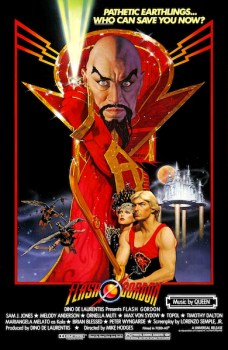
Who can save you now?
Country: UK & USA
Language: English
Runtime: 115 minutes
BBFC: A (1980) | PG (1987)
MPAA: PG

Original Release: 5th December 1980 (USA)
UK Release: 11th December 1980
First Seen: c.1995
Stars
Sam J. Jones (10, Ted)
Melody Anderson (Dead & Buried, Firewalker)
Max von Sydow (The Seventh Seal, The Exorcist)
Topol (Fiddler on the Roof, For Your Eyes Only)
Ornella Muti (The Last Woman, Tales of Ordinary Madness)
Director
Mike Hodges (Get Carter, Croupier)
Screenwriter
Lorenzo Semple Jr. (Batman: The Movie, Three Days of the Condor)
Adaptation by
Michael Allin (Enter the Dragon, I’ll Be Home for Christmas)
Based on
Flash Gordon, a newspaper comic strip created by Alex Raymond.
The Story
American football player Flash Gordon and journalist Dale Arden accidentally end up on the spaceship of scientist Dr Zarkov, which transports them to the planet Mongo. There, they learn the planet’s evil Emperor, Ming the Merciless, is subjecting Earth to natural disasters in a bid to destroy it. Flash must unite the warring factions on Mongo to defeat Ming and save the Earth.
Our Hero
He’s a miracle, king of the impossible. Just a man, with a man’s courage, but he can never fail. He’ll save every one of us. Flash! Ah-ah!
Our Villains
Max von Sydow is deliciously villainous as evil emperor Ming the Merciless. There’s a handful of similarly entertaining underlings, too, like scheming right-hand-man Klytus, who gets a great death, and right-hand-woman Kala, who gets some of the very best lines.
Best Supporting Character
Prince Vultan may be culturally iconic for one two-word exclamation, but it kind of encapsulates the presence he brings throughout the film.
Memorable Quote
Zogi: “Do you, Ming the Merciless, Ruler of the Universe, take this Earthling Dale Arden, to be your Empress of the Hour?”
Ming: “Of the hour, yes.”
Zogi: “Do you promise to use her as you will?”
Ming: “Certainly!”
Zogi: “Not to blast her into space? …uh, until such time as you grow weary of her.”
Ming: “I do.”
Quote Most Likely To Be Used in Everyday Conversation
“Gordon’s alive?!” — Prince Vultan
(Not that it’s likely to be appropriate in everyday conversation, but you’re still going to hear it said — especially if you’re ever around Brian Blessed.)
Memorable Scene
In Ming’s harem, Flash’s love interest Dale and Ming’s rebellious daughter Aura end up wrestling on a giant bed. Kinky! But it’s knowingly directed, with cutaways to sniggering servants indicating a deliberate commentary on such gratuitous girl-on-girl spectacles in other films.
Write the Theme Tune…
“Dum dum dum dum dum dum dum dum FLASH! Ah-ah! Saviour of the universe!” Rock group Queen composed the entire score for Flash Gordon, and their unmistakeable sound is a significant part of the film. Best of all is that main theme, surely one of the most memorable and hummable pop themes for a movie ever recorded. If you’re interested in the making of the soundtrack, there’s a detailed article on Queen’s official site.
Technical Wizardry
The design work is great. The sets, costumes, and spaceships are all huge, vibrant, retro, often ridiculous, and wonderful.
Truly Special Effect
Skies full of swirling rainbow colours, rainbow clouds for the spaceships to float through, platforms that tilt over a rainbow vortex… OK, there’s a lot of rainbows, but it’s unique and looks great.
Letting the Side Down
There is so little that’s bad about Flash Gordon that I’ve left this section in just to point out that there is nothing bad about Flash Gordon.
Previously on…
The most famous earlier version of Flash Gordon must be the three cinema serials starring Buster Crabbe that were produced between 1936 and 1940. They’re great fun (I nearly made space for one of them on this list, but… not quite). There was also a live-action TV series in the ’50s and an animated one in 1979.
Next time…
An animated TV movie followed that last TV series in 1982. Flash was part of the Defenders of the Earth animated series in the mid ’80s, alongside other heroes such as the Phantom. Another animated series came along in 1996, while a live-action reboot was attempted in 2007. It looked terrible, and I’ve heard it’s one of the worst TV shows ever made. Reports of a new film being in development come along now and then, with Kingsman’s Matthew Vaughn being the most recently attached director. Until that rolls around, Flash’s main claim to current pop culture relevance comes courtesy of Ted and its sequel.
Awards
3 BAFTA nominations (Music (because Queen), Costume Design, Production Design/Art Direction)
3 Saturn nominations (Science Fiction Film, Supporting Actor (Max von Sydow), Costumes)
1 Razzie nomination (Worst Actor (Sam J. Jones))
Nominated for the Hugo for Best Dramatic Presentation
What the Critics Said
“Flash Gordon is played for laughs, and wisely so. It is no more sophisticated than the comic strip it’s based on, and that takes the curse off of material that was old before it was born. This is space opera, a genre invented by Edgar Rice Burroughs and Hugo Gernsback and other men of unlimited imagination harnessed to definitely limited skills. It’s fun to see it done with energy and love and without the pseudo-meaningful apparatus of the Force and Trekkie Power.” — Roger Ebert
 Score:
 82%
82%What the Public Say
“Star Wars was squarely heterosexual, but Flash Gordon could only have emerged from the same pop-culture closet that birthed David Bowie, Elton John, Mick Jagger, and Freddie Mercury […] As for the empty-headed dialogue and the puerile plot, isn’t it obvious those are both part of the point? Everyone involved (well, except maybe Sam J. Jones) knows precisely what this is and performs accordingly, with a straight face but with a small gleam in the eye. […] I don’t know if I’d want to know anyone who couldn’t love this movie, or at least enjoy it on some level.” — Rob Gonsalves, eFilmCritic.com

Elsewhere on 100 Films…
In 2009 I said that Flash Gordon was better than Star Wars. Well, I mean, I don’t know if I exactly stand by that, but I’m also not going to contradict it — Flash Gordon is awesome.
Once reviled for being a laughably silly Star Wars cash in, the world has gradually begun to realise the truth: that Flash Gordon was always in on the joke. And it’s so obviously in on the joke, it makes a lot of the old reviews criticising it look embarrassingly tin-eared. It’s not meant to be a serious sci-fi adventure, like its big-screen Trek and Wars contemporaries. It’s designed to be camp, colourful, over-the-top, driven by cliffhangers and wackiness. It’s funny, it’s fun — it’s Flash! Ah-ah!

#31 will be… slightly more expensive.
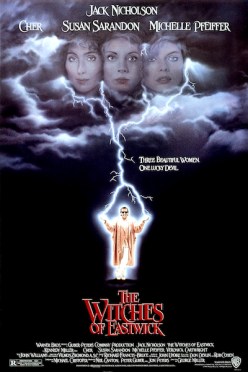 The first US feature from the director of
 These days, Steven Spielberg is as well-known for his Oscar-worthy historical prestige pictures as he is for his action-adventure genre movies, so it’s kinda strange (at least for me) to imagine the time in his career at which this film came about. I mean, it’s an adaptation of a controversial literary novel about the miserable lives of black women in the American South during the early decades of the 20th Century, directed by the white guy known for
 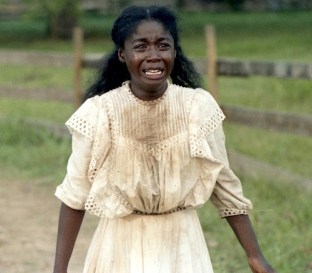 it never quite feels like we’re getting the full force of the story’s brutality. That’s a mixed blessing: as a viewer, we’re spared all the horrors you can infer from what actually happens; at the same time, how much should a story about such horrors be sparing us from them? Though as it was at one point advertised with the tagline, “
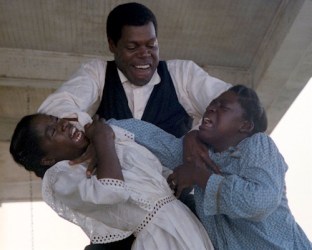 Spielberg’s first foray into Serious filmmaking is a long way from being an unqualified success, but it’s not a bad movie either, and at least it was the gateway to him making some superior dramas. Bonus points, too, for a mainstream big name director tackling a story about the historical lives of black women — depressingly, that still feels like it would be a noteworthy move 30 years later.
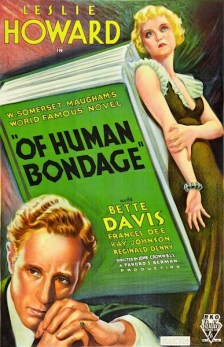 W. Somerset Maugham’s semi-autobiographical novel Of Human Bondage is, per
 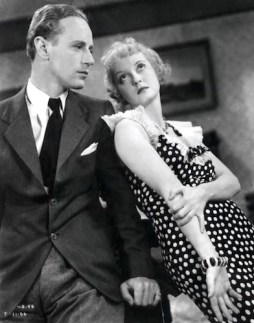 so she destroys his belongings and disappears. Eventually he meets her again, when she’s in search of his medical opinion. She has contracted syphilis from working as a prostitute, but rejects Philip’s advice to quit. Her ultimate fate remains unknown.
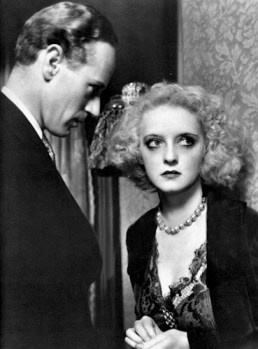
 The film begins in Paris, with Philip (Leslie Howard) being told he’ll never make it as an artist. He instantly decides to become a medical student, during which time he meets Mildred (Bette Davis). From there, the rest of the film follows the plot described in the second paragraph, albeit with some notable modifications (which I’ll come to later), with parts of the third paragraph (the patient, his daughter, abandoning travel for marriage) surfacing during the third act.
 In the film it’s not syphilis that does for her, but tuberculosis, and prostitution is never mentioned, or even really alluded to. The changes were no doubt due to the infamous Production Code. (There are paintings of naked French women all over Philip’s apartment, though, but I guess that counts as Art. Sadly, there’s no meta-funny dialogue about painting anyone like one of his French girls.) Of Human Bondage is often labelled as a Pre-Code film — as coming from that narrow era between the Code being invented and anyone seriously bothering to apply it. The latter came about in 1934, when an amendment to the Code stated that any film released after July 1st 1934 had to receive a certificate of approval before it could be released. Of Human Bondage premiered on June 28th, which I guess is why it gets labelled a Pre-Code film, but it went on wide release from July 20th, so fell under the Code’s new remit after all. The print held by the Library of Congress (used for the US Blu-ray release) even has the Code certificate at the start (it’s #53, if you’re curious).
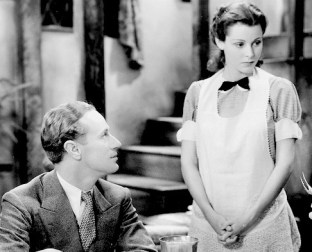 When Davis is off screen, it feels like the film is waiting for her to return. Her arc aside, it’s a take-it-or-leave-it damp squib of a drama — there’s nothing wrong with it, it’s just not all that engaging. Howard has definitely been better; his romance with Sally arrives too late to have much emotional weight, though it’s easy to believe he could fall in love with Frances Dee at first sight.
 and independent firm Price Waterhouse were hired to manage the voting next year — a job they still do today.
 Scorsese tells the story of Jesus in this controversial epic adapted from Nikos Kazantzakis’ novel. I have no idea how much is actually rooted in scripture — a disclaimer is keen to establish the film isn’t based on the Gospels, but obviously that’s just to appease the devout.
 2013 Academy Awards
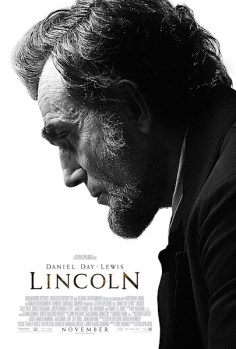 Daniel Day-Lewis allegedly stars in this account of the final months of President Abraham Lincoln’s life, which might more pertinently be called The 13th Amendment due to where its focus lies. I say “allegedly” because I’m not convinced they didn’t find a way to resurrect Lincoln to appear as himself, then just pretended it was Day-Lewis acting.
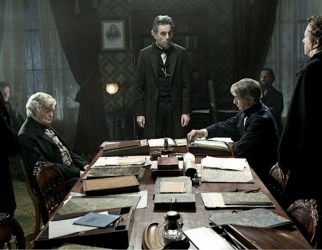 who might be persuaded to vote which way, and how they might be persuaded, and what they will want in return, and what deals need to be struck, and so on and so forth — sounds like it might make for an engrossing movie, then there’s a fair chance Lincoln will be your cup of tea. A not-insignificant proportion of viewers protest that it is boring, however, and while I in no way agree with them, your mileage may vary.
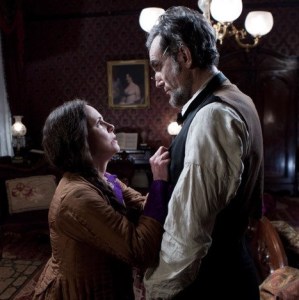 Not to do anyone else in the film — or, indeed, any other performance in any film ever — a disservice, but Day-Lewis embodies the President in a way few other actors have ever embodied a role. It’s quite remarkable.
 For me, there are few black marks (unfortunate choice of phrase…) to be held against Lincoln. Does it give in to Spielberg’s sentimentality? Yeah, a little — but it’s a long, long way from the worst case of that, and I think you’d be nitpicky (or have a different opinion on history, which, you know, is a matter of opinion) to criticise the film too harshly for that. As to whether it’s boring, that’s entirely a matter of preference. If you think The West Wing is boring, people who write lists of “the greatest TV shows ever” will disagree with you, and you also likely won’t like Lincoln. I like The West Wing, though.


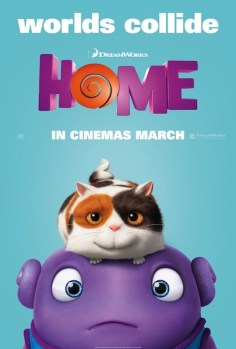 Oh (Jim Parsons) is a Boov, a race of friendly aliens looking for a new home planet to escape their enemies. When they arrive on Earth, Oh tries to invite everyone to a party, but accidentally alerts their enemies to their new home. Outcast, he bumps into Tip (Rihanna), a girl accidentally left behind when the rest of mankind was relocated by the Boov. Desperate for friendship, Oh agrees to help her find her mother.
 but the entire universe, including our enemies”? Why is there no option to cancel such a transmission that is going to take 40 hours to reach said enemies? I mean, that last one’s a stupid question, because why is there even a way to message the enemies?


 100Films.co.uk