Captain America: Civil War (2016)

2016 #92
Anthony & Joe Russo | 147 mins | cinema | 2.35:1 | USA / English, German, Russian, Xhosa & Romanian | 12A / PG-13

This review contains spoilers.
(because, at this point, I’m not sure there’d be much point writing about it otherwise)

We’re now on to the 13th film in the Marvel Cinematic Universe, and while you don’t need to have seen all 12 preceding movies to follow the events of Civil War, you do need at least four — and, to get everything, a further four or five beyond that. (Don’t worry about the four TV series — it’s increasingly clear that they’re only notionally connected to the movies.) So the Marvel model for a “shared universe” is not discrete stories that take place in the same world, but a series of ever-more-connected narratives. It’s working for them, though, as the continually stellar box office totals prove.

Ostensibly the third Captain America movie, Civil War is as much a sequel to Avengers: Age of Ultron as it is to The Winter Soldier: it throws us straight in to action with the new Avengers line-up established at the end of Ultron, as they battle what turns out to be a villain from Winter Soldier. As I said, ever-more-connected. This particular mission goes disastrously wrong, bringing to a head plans that the governments of the world had been cooking up for a while: the Sokovia Accords, a way to control the Avengers and give them some accountability. Team leader Steve Rogers / Captain America (Chris Evans) isn’t keen — he’s worried political interests will conflict with the Avengers’ ability to do good. Bankroller Tony Stark / Iron Man (Robert Downey Jr.) is on board, however — spooked by having created Ultron, and after being confronted by the mother of an American lad who died in Sokovia (because the Sokovian deaths didn’t matter enough, I guess), he thinks the Avengers need reining in. The burgeoning conflict is clarified when Rogers’ childhood friend Bucky Barnes, aka Soviet agent the Winter Soldier (Sebastian Stan), emerges from hiding to attack the signing of the Accords — Rogers wants to save him; Stark needs to bring him in, dead or alive. As most of the other heroes we’ve met in the preceding 12 movies (not to mention a couple of new ones) pick sides, battle lines are drawn for an almighty clash.

As complicated as the plot sounds once you start trying to succinctly summarise it, Civil War is easy to follow as it unfurls. In fact, it’s to its credit that it can’t be readily summarised in any more detail than “Cap and Iron Man disagree; fight” without really getting into it. Screenwriters Christopher Markus and Stephen McFeely have followed up the political thriller of Winter Soldier with another global thriller storyline, again bringing different genre textures to the superheroics that are nonetheless present and correct. The film’s style mixes in just the right amount of realism — no one’s pretending this isn’t a comic book movie, with some elements of comic book logic and a casual acceptance of people having world-changing powers; but if such people did exist, this is the kind of way they would be handled by the authorities.

So while Civil War does work as a popcorn-guzzling action spectacular, the themes it raises — primarily of how we oversee and control those who claim to protect us — are relevant to real life, if you want them to be. The film attempts to make it a genuine debate by placing Cap and Stark as the figureheads of each side. Sure, that’s borrowed from the original comic book storyline that inspired the film, but it works perfectly for the movies: Iron Man is the basis around which the whole MCU was originally built, while Captain America is almost its break out star, emerging from the mess of The First Avenger to become one of the shining lights of every film he’s starred in since, at least two of which commonly compete for the crown of the MCU’s best movie. So who better to place at the heart of the conflict? Who better to present viewers with a genuine choice?

Well, maybe. But the debate is partially stalled by the fact this is a Captain America movie rather than an Avengers one. Yeah, you can side with Tony Stark & co, but you know Cap’s going to come out to the good, one way or another. As it pans out, it’s not a total victory (Team Cap are all now fugitives, presumably until Infinity War), but, morally, Cap wins, and even Tony knows it. Would it have been better to frame the political/thematic issues in an Avengers movie, to make it a genuine contest? Maybe. It’s almost hard to imagine it divorced of this context now, and a lot of that context is Cap-based. The rest of the cast of The Avengers may be hanging around, but the narrative drive comes back to Steve and Bucky, a throughline that belongs to the Captain America trilogy. You can’t doubt that this is a Captain America film — tonally, it fits better with The Winter Soldier than Age of Ultron — even as it is, really, also an Avengers one.

If we’re talking about hero-vs-hero conflicts and movies that give you something to think about, it’s only fair that we drag this year’s other big silver screen superhero battle into the fray. There’s little doubt that Civil War is a more readily entertaining film than Batman v Superman, and clearly a more popular one, but it left me with less to think about. That’s not to say there isn’t thematic weight here — I’ve just spent a couple of paragraphs referring to its attempts to engage with such debates, after all — but I felt like the film kinda covers what there is to say. Maybe Batman v Superman leaves its issues more open; or maybe they’re less well conveyed; or maybe we struggle to read them into it because they’re not actually there. Whatever the truth, I came out of Zack Snyder’s movie with lots going on in my mind and wrote 2,500 words about it that contained half or less of my thoughts. I came out of Civil War thinking, “well that was fun.”

On that visceral level, there are a couple of stunning action sequences. The car/foot chase between Cap, Bucky and Black Panther is fantastic, casually throwing in cool moments like the way Bucky steals a motorbike. The climactic two-on-one fight is also a sight, throwing in strong choreography and seamless effects work to create a battle that has a real ebb and flow, a back and forth over who has the upper hand. And the centrepiece of it all, of course, is the two teams facing off at the airport. For fans of superheroes, this is pretty much the ultimate expression of the genre yet brought to live-action moviemaking. For my money, the antics of Ant-Man — and Giant-Man — are by and large (pun very much intended) the best bit of it, but maybe I’m just a little biased. Certainly, that everyone’s favourite webslinger is in the mix is the icing on the cake, and Tom Holland seems to have quickly nailed Spidey. Personally, I still find it a bit odd him turning up, especially in such a minor role. There’s still a slight sense that the MCU is made up of second/third-string heroes, who needed that shared universe to kickstart their big-screen life. Spidey most certainly does not need that… or didn’t before Sony effed it up with the last two movies, anyway. Maybe he does now.

And while I’m talking about Spider-Man, let’s talk about those post-credits scenes. Peter Parker is the star of the second one, and it’s Marvel Studio’s usual kind of tease, though perhaps less teasing than normal — “hey, remember that kid who was Spider-Man? He’s Spider-Man!” Thanks, guys. Before that, though, the mid-credits scene is a mid-credits scene for the sake of a mid-credits scene. By establishing where Bucky ends up, it’s surely an essential part of the overall narrative. Okay, it has the requisite teaser properties, hinting at where we might find Team Cap come the start of Avengers 3; and it teases Black Panther too, but only very, very mildly — like the Spidey scene, it’s basically saying, “hey, remember that foreign prince who was Black Panther? He lives in a foreign country… where he’s Black Panther!” Other than that, it’s kinda important to answer the question of “hey, what happened to Bucky?” next time Cap turns up. So why isn’t the scene just in the film? Well, it is in the film — just after a few of the credits — so what does it matter, right?

As I was saying — there’s plenty more action in the movie. Sadly, much of it falls foul of the dreaded ShakyCam. Watching Civil War just days after The Raid 2 made that especially frustrating. With all the time and effort they put into training actors these days, plus all the effects technology they have at their disposal to paint out wires or replace faces (something they’ve been able to do unnoticeably since Jurassic Park, for pity’s sake!), you’d think a $250 million movie could manage better. (If you’re wondering what they did spend $250 million on, it was stuff like, “eh, we may as well just use CGI for the close-ups, too”.)

One thing the film definitely gets right, in my view, is its villain. So central is the Cap/Iron Man conflict that it seemed any villain would be an afterthought, at best; and it doesn’t help that the MCU is renowned for having weak antagonists. Indeed, for most of the movie Zemo seems like the expected nonentity; a villain for the sake of a villain, who’s being seeded earlier in the film just so he doesn’t come completely out of nowhere at the climax. But then, when his whole story and plan is revealed, it turns out that all along he may have been one of the most interesting villains the MCU has yet offered. His motivation is simple but effective; his methodology cunning and almost successful — even after the heroes know what he was trying to get them to do, they do it anyway! His final scene with Black Panther may be the best part of the entire movie. Nice work, Daniel Brühl.

In the end, Civil War leaves plenty open for future Marvel movies. Well, of course it does — half the time MCU movies are feature-length trailers for the next MCU movie. Where Civil War is really clever, however, is that it does that stage-setting while also feeling conclusory. As the third part in the Captain America trilogy, it actually makes a pretty satisfying end to that narrative. As the third part in the “trilogy in five parts” that is The Avengers trilogy, well, it’s clearly not the end, but it’s a fairly discrete segment.

It may well also be the best MCU movie so far, too. There aren’t many 13th films that can say that.

4 out of 5

Ghost in the Shell (1995)

100 Films’ 100 Favourites #36

It’s found its voice…
now it needs a body.

Original Title: Kôkaku Kidôtai
Also Known As: Mobile Armored Riot Police: Ghost in the Shell (Japan)

Country: Japan
Language: Japanese
Runtime: 83 minutes
BBFC: 15

Original Release: 18th November 1995 (Japan)
UK Release: 8th December 1995
First Seen: DVD, 2000

Stars
Atsuko Tanaka (Ghost in the Shell 2: Innocence, Bayonetta: Bloody Fate)
Akio Ôtsuka (Black Jack, Paprika)
Kôichi Yamadera (Ninja Scroll, Cowboy Bebop: The Movie)
Yutaka Nakano (Cowboy Bebop: The Movie, Ghost in the Shell 2: Innocence)
Tamio Ôki (Journey to Agartha, Wolf Children)

Director
Mamoru Oshii (Patlabor: The Movie, Ghost in the Shell 2: Innocence)

Screenwriter
Kazunori Itō (Patlabor: The Movie, .hack//SIGN)

Based on
The Ghost in the Shell (攻殻機動隊 Kōkaku Kidōtai, literally Mobile Armoured Riot Police), a manga by Masamune Shirow.

The Story
Japan, 2029: Public Security officer Major Motoko Kusanagi and her team are assigned to track down and capture a dangerous hacker known as the Puppet Master, but they soon find themselves embroiled in a far-reaching conspiracy…

Our Hero
In a future world where humans can undergo varying degrees of cyberisation, Major Motoko Kusanagi is a “full-body prosthesis augmented-cybernetic human” — only her brain is organic. Her body is a generic mass production model, so she can blend in while being a kick-ass law enforcement officer.

Our Villain
The Puppet Master, a cyber criminal who hacks into people’s brains and gives them false memories. But is there something even worse going on behind the hacker?

Best Supporting Character
Kusanagi’s second-in-command Batou is stoic to the point of brusqueness — apparently quite a different characterisation to his portrayal in other Ghost in the Shell media.

Memorable Quote
“If we all reacted the same way, we’d be predictable, and there’s always more than one way to view a situation. What’s true for the group is also true for the individual. It’s simple: overspecialise, and you breed in weakness. It’s slow death.” — Major Kusanagi

Memorable Scene
Pursuing the Puppet Master, Kusanagi comes face to face with a six-legged tank. After a blazing gun battle, she tries to physically rip it open, her cybernetic body straining to breaking point — and beyond…

Technical Wizardry
Ghost in the Shell was groundbreaking in its skilful combination of traditional 2D animation with CGI additions. It used a process called “digitally generated animation” (DGA), which combined cel animation with computer graphics to create lens effects that simulated depth, motion, and unusual lightning techniques, as well as mixing in 3D CGI and digital audio.

Letting the Side Down
In 2008, Oshii revisited the film to create Ghost in the Shell 2.0, which regraded the colour, replaced some of the original animation with new CGI, omitted several scenes, and featured a remixed and re-recorded soundtrack. (More details here.) As is almost always the case when directors fiddle with their creations decades later, it wasn’t well received by fans.

Next time…
As befalls many a popular anime franchise, Ghost in the Shell has spawned a raft of sequels and reboots. The only direct sequel, Innocence, was released in 2004. TV series Ghost in the Shell: Stand Alone Complex ran for two seasons between 2002 and 2005, with the first run compiled into movie The Laughing Man and the second into Individual Eleven, all of which were followed by a final film, Solid State Society. Another reboot came in 2013 with direct-to-video series Ghost in the Shell: Arise, which so far totals five episodes and, last year, continuation film Ghost in the Shell: The New Movie. (Only four episodes have so far been released in the West, but the movie — which continues the story from the fifth episode — came out on Monday in the UK. Just to make things more complicated.) A live-action American remake is currently shooting for release in March 2017 — you’ve probably heard about it.

Awards
5 Annie Awards nominations (Animated Feature, Directing, Producing, Writing, Production Design)

What the Critics Said
“When Akira first blasted out of Japan back in 1991 it looked like the Western concept of widescreen animation would be changed forever. […] Unfortunately, it was not to be. Sure, on video, the Manga scene has gone from strength to strength, but as far as theatrical releases are concerned, nothing has really come along to match Akira’s sheer retina-scalding magnificence. Until now. […] From its baddie-eviscerating opening sequence through innumerable car chases, shoot outs and tongue-in-cheek dialogue exchanges, this is exactly the kind of film that James Cameron would make if they ever let him through the Disney front gates.” — Clark Collis, Empire

Score: 95%

What the Public Say
“both the film and Oshii have fallen into a kind of disrepute among the anime community. The common line on GITS is that it’s wordy, masturbatory, and pretentious with nothing going on intellectually and that the (plainly inferior but more easily accessible) GITS: SAC is a better alternative. I wanted to write this article to respond to that notion. GITS is a highly thoughtful film and worthy of comparison to virtually any scifi feature you could name. ” — tamerlane, too long for twitlonger

Verdict

Ghost in the Shell was the first anime I consciously saw, which maybe helps it earn a place here. It’s an initially accessible movie that’s also very complicated — there are pulse-pounding action scenes and a thriller storyline to keep things exciting, but also a lot of deep philosophical discussions, touching on themes of gender and identity. I think for some viewers the latter are a negative, while for others they’re the entire point. (I imagine the forthcoming Hollywood remake will either ditch or seriously curtail them, but you never know.) The combination makes for a stimulating (in multiple senses) sci-fi actioner.

Next… who ya gonna call? #37 !

Gangs of New York (2002)

100 Films’ 100 Favourites #35

America was born in the streets

Country: USA & Italy
Language: English
Runtime: 168 minutes
BBFC: 18
MPAA: R

Original Release: 20th December 2002
UK Release: 9th January 2003
First Seen: cinema, 2003

Stars
Leonardo DiCaprio (Titanic, The Revenant)
Daniel Day-Lewis (My Left Foot, Lincoln)
Cameron Diaz (There’s Something About Mary, My Sister’s Keeper)
Jim Broadbent (Moulin Rouge!, Another Year)
Liam Neeson (Schindler’s List, Kingdom of Heaven)

Director
Martin Scorsese (Goodfellas, The Departed)

Screenwriters
Jay Cocks (The Age of Innocence, Silence)
Steven Zaillian (Schindler’s List, The Girl with the Dragon Tattoo)
Kenneth Lonergan (The Adventures of Rocky & Bullwinkle, Margaret)

Story by
Jay Cocks (Strange Days, De-Lovely)

Inspired by
The Gangs of New York: An Informal History of the Underworld, a non-fiction book written in 1927 by Herbert Asbury.

The Story
New York City, 1846: after his father is murdered in a fight by fellow gang leader Bill ‘the Butcher’, young Amsterdam Vallon is dumped in an orphanage. Sixteen years later, he returns to the Five Points district. With revenge in mind, he tries to establish himself with the ruling gang and get close to their leader — Bill.

Our Hero
In the first of his five (to date) collaborations with Scorsese (or six if you count that advertising short they were paid an insane amount for), Leonardo DiCaprio is Amsterdam Vallon, son of a murdered gang leader who, decades later, plots his revenge. His nemesis is a cunning so-and-so, however…

Our Villain
Although he’s a ruthless killer, and the unquestionable villain from the outset, Daniel Day-Lewis manages to render Bill a perversely charming creation, who unavoidably captivates your attention whenever he’s on screen.

Best Supporting Character
Priest Vallon, Amsterdam’s father, only appears in the opening sequence, but his influence and death hangs over the rest of the movie. That’s why you need an actor of Liam Neeson’s calibre for the part, and of course such casting pays off.

Memorable Quote
“I’m 47. 47 years old. You know how I stayed alive this long? All these years? Fear. The spectacle of fearsome acts. Somebody steals from me, I cut off his hands. He offends me, I cut out his tongue. He rises against me, I cut off his head, stick it on a pike, raise it high up so all on the streets can see. That’s what preserves the order of things. Fear.” — Bill

Memorable Scene
Scorsese captures an entire lifecycle in New York’s Five Points within a single tracking shot, which begins with immigrants arriving fresh off the boat and ends with coffins lined up on the quay.

Memorable Music
I have mixed feelings about U2 (because, y’know, Bono), but the theme they crafted for GangsThe Hands That Built America — is a pretty good track, and sits very appropriately at the end of the movie. It was Oscar-nominated, but lost to Eminem’s Lose Yourself from 8 Mile.

Letting the Side Down
Scorsese tried to make Gangs of New York for ages. At one point, he wanted Meryl Streep for the lead female role. He ended up with Cameron Diaz. Say no more, eh.

Making of
Unable to film in New York, which no longer looked like it did back in the mid-1800s, the production was mounted on a large set at Rome’s Cinecittà Studio. According to Wikipedia, production designer Dante Ferretti constructed “over a mile of mid-nineteenth century buildings, consisting of a five-block area of Lower Manhattan, including the Five Points slum, a section of the East River waterfront and two full-sized sailing ships, a thirty-building stretch of lower Broadway, a patrician mansion, and replicas of Tammany Hall, a church, a saloon, a Chinese theater, and a gambling casino.” Now that is a set!

Awards
10 Oscar nominations (Picture, Director, Actor (Daniel Day-Lewis), Original Screenplay, Cinematography, Art Direction-Set Decoration, Costume Design, Film Editing, Sound, Original Song)
1 BAFTA (Actor (Daniel Day-Lewis))
11 BAFTA nominations (Film, Director, Original Screenplay, Cinematography, Music, Production Design, Costume Design, Editing, Sound, Visual Effects, Make Up/Hair)
2 World Stunt Award nominations (Best Fight (the opening), Best Stunt Coordinator and/or 2nd Unit Director)
1 Teen Choice Award nomination (Choice Movie Liplock)

What the Critics Said
“The ambition is immense. This is Scorsese’s version of D.W. Griffith’s Birth of a Nation and Michael Cimino’s Heaven’s Gate and there are echoes of Kurosawa, Eisenstein and Visconti, as well as the nod to Welles […] As with Heaven’s Gate, judgment on this film must await Scorsese’s longer version. Nevertheless, this remains an astonishing achievement, a film with a passionate sense of life, by one of the greatest filmmakers at work today.” — Philip French, The Observer

Score: 75%

What the Public Say
“This movie, even if it ended with Amsterdam’s degradation rather than his triumph, would be fabulous, probably only inferior to Raging Bull and Goodfellas among Scorsese’s oeuvre. The problem is that the movie is nearly three hours long, and that the movie continues after Amsterdam’s maiming. There is a marvelous story to be told about American tyranny, about the immigrant experience, about just how firmly entrenched the powerful are. Do you choose bellicose racism as Bill does, or do you throw your lot in with benevolent corruption as Tweed does? It hardly seems to matter; you will be expunged and forgotten in the slop and grime of the Five Points all the same while someone else wears a tall hat and eats well.” — speakerformediocrities, Seeing Things Secondhand

Verdict

Gangs of New York ended up with a bit of a mixed reception when it finally came out in 2002, which is only to be expected after Scorsese had been intending to make it for over 20 years, and the version he had shot was stuck in editing for a year (considering all the Director’s Cuts we get nowadays, why have we never had Scorsese’s original 48-minutes-longer cut?) It’s undoubtedly a compromised film, then, but one that retains a rich atmosphere, engaging performances (even if it suffers from two of the leads, DiCaprio and Diaz, being two of the least accomplished), and an impressive sense of scale. It may have a relatively simplistic revenge-tale throughline, but class swirls around it.

#36 will be… 攻殻機動隊.

The Iron Giant (1999)

2016 #86
Brad Bird | 83 mins | DVD | 2.35:1 | USA / English | U / PG

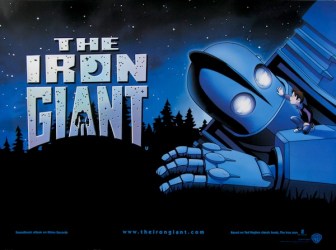
Adapted (loosely) from Ted Hughes’ children’s novel The Iron Man, the feature debut of director Brad Bird (The Incredibles, Ratatouille, now live-action stuff) relocates the book’s story to ’50s America and mixes in some Cold War elements. The film was somewhat verboten in our household when it came out, because the book was beloved and the film looked so different, but its reputation has only grown in the ensuing decade-and-a-half — and Hughes approved of it anyway.
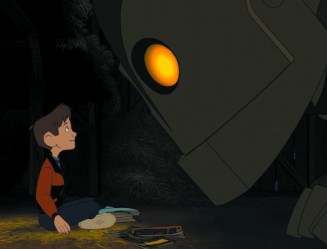
This version sees the titular robot (voiced by Vin Diesel) crash to Earth near Maine in late 1957, the home of nine-year-old Hogarth Hughes (Eli Marienthal) and his mom Annie (Jennifer Aniston). After the giant eats the Hughes’ TV aerial, Hogarth tracks it to take a photo, and ends up saving it from electrocution when it tries to eat a power station. As the giant sneaks around the countryside eating cars and causing train crashes, it attracts the attention of government agent Fox Mulder from the FBI’s X Files Kent Mansley from the Bureau of Unexplained Phenomena (Christopher McDonald), who’s intent on uncovering and destroying the giant. Hogarth tries to hide the friendly creature with the help of artist Dean (Harry Connick Jr.), but could it be Mansley isn’t so wrong about the threat it poses?

The story, as reconstructed by Bird and screenwriter Tim McCanlies, integrates influences from ’50s B-movies (very apt for a giant robot ‘monster’) and Cold War/Space Race paranoia for a potent storyline that has a different emphasis from the novel’s “world peace” finale, but nonetheless is promoting understanding of alien/foreign powers and, y’know, deep stuff like that. Alternatively — or, rather, concurrently — it’s an E.T.-esque tale of a boy and his quirky alien friend. Bird was keen to emphasise character over action and mindless spectacle, and that’s really where the film’s strengths lie.

Well, that and the technical aspects. The animation is stunningly well done, exhibiting exceptional fluidity and detail in its character animation, in particular. That’s in spite of the film having a reduced budget and time schedule thanks to the box office failure of previous animations by the studio — in Bird’s words, they had “one-third of the money of a Disney or DreamWorks film, and half of the production schedule”, but that meant greater production freedom (so long as they managed that budget). I guess that’s why the film’s ended up only growing in stature since its first release — because it’s able to be committed to its creators’ vision, rather than being battered into homogeneity by a studio desperate for a return on considerable investment.

Beautifully animated and affectingly told, with a style that nicely homages classic sci-fi movies, The Iron Giant is a film that deserves the reputation it has gradually amassed — and which only continues to grow, I think. Last year saw the release of an extended Signature Edition, with a couple of short scenes added, which comes to US Blu-ray (alongside the original version) later this year. Just from reading about those new scenes, I’m not convinced they’ll improve the experience, but it’ll certainly be worth finding out.

5 out of 5

The Iron Giant was viewed as part of my What Do You Mean You Haven’t Seen…? 2016 project, which you can read more about here.

This review is also part of 1999 Week.

Election (1999)

2016 #74
Alexander Payne | 103 mins | streaming (HD) | 2.35:1 | USA / English | 15 / R

The third feature (but first you’re likely to have heard of) by writer-director Alexander Payne (Sideways, The Descendants, Nebraska; he also co-wrote Jurassic Park III, did you know that? I didn’t know that) stars Matthew Broderick as a high school teacher who tries to stop Reese Witherspoon’s perfect student from becoming president of the school council.

With Witherspoon largest on the poster, and the title being Election, you’d naturally assume that’s where the film’s focus lies. Really, it’s about Broderick and the disintegration of his life, from a happily married man and dedicated teacher beloved by his students, to… well, where he ends up (no spoilers!) The poor guy’s really put through the ringer, though a lot of it is of his own making, so how much we sympathise is questionable.

Indeed, the whole film has a conflicted idea of identification. It has you side with a teacher who wants to tear down the dreams of a bright, dedicated, enthusiastic young student. And I don’t mean it tries to get you to side with him — you do side with him. But then it proceeds to tear his whole life apart, as if in punishment for what he wanted to do; and, by extension, it punishes you for wanting him to do it. So maybe those ideas of identification aren’t actually conflicted — which might imply it doesn’t know where it wants you to lay your support — but, rather, it knows exactly who you’re going to support, and thinks you’re a bad, bad person for doing so.

Broderick is suitably exasperated as the man whose life slowly falls apart, and Witherspoon is primly perfect as the overly-chirpy student — I’m sure she must remind everyone of someone they knew at school, and that’ll just make you dislike her all the more. (If there wasn’t someone like that in your class… are you sure it wasn’t you? Just sayin’.) It’s also the debut of Chris Klein (who went on to quality cinema like American Pie, the Rollerball remake, and Street Fighter: The Legend of Chun-Li), as the nice-but-dim jock who Broderick taps to stand against Witherspoon in the election. His younger sister, played by Jessica Campbell (who stopped acting a couple of years later, it seems), is a jilted lesbian rebel who also stands in the election on a platform of wanting to destroy the system, and is clearly the film’s most likeable character. Or maybe that’s just me.

A bit like Office Space, Election is the kind of indie comedy that is more wryly amusing than laugh-out-loud hilarious (though it has its moments), and is no doubt more appealing the more you feel like you know the characters. I think Payne has matured into more interesting (and, sometimes, funnier) work, but this was clearly a strong starting point.

4 out of 5

This review is part of 1999 Week.

Fight Club (1999)

100 Films’ 100 Favourites #29

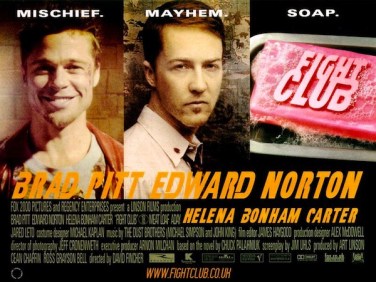
Mischief. Mayhem. Soap.

Country: USA & Germany
Language: English
Runtime: 139 minutes
BBFC: 18 (cut, 1999) | 18 (uncut, 2005)
MPAA: R

Original Release: 15th October 1999 (USA)
UK Release: 12th November 1999
First Seen: TV, c.2001

Stars
Edward Norton (American History X, 25th Hour)
Brad Pitt (Interview with the Vampire, World War Z)
Helena Bonham Carter (Room with a View, The King’s Speech)
Meat Loaf (The Rocky Horror Picture Show, Tenacious D in The Pick of Destiny)

Director
David Fincher (Se7en, The Social Network)

Screenwriter
Jim Urls (Sweet Talk, Jumper)

Based on
Fight Club, a novel by Chuck Palahniuk.

The Story
The film’s nameless narrator is growing increasingly disillusioned with his mundane consumerist lifestyle, when he bumps into Tyler Durden. A free-spirited soap salesman, the pair have a fight for the heck of it. Finally experiencing some kind of genuine feeling, they set up an underground club for fighting, but it gradually becomes clear that Tyler may have bigger ideas…

Our Heroes
I am Jack’s nameless narrator. I am also Jack’s friend, Tyler Durden. Yes, just his friend…

Our Villains
The establishment! Capitalism! What’ve you got?

Best Supporting Character
Helena Bonham Carter hasn’t been fucked like that since grade school.

Memorable Quote
“The first rule of Fight Club is: you do not talk about Fight Club. The second rule of Fight Club is: you do not talk about Fight Club! ” — Tyler Durden

Quote Most Likely To Be Used in Everyday Conversation
“You are not special. You are not a beautiful or unique snowflake. You’re the same decaying organic matter as everything else.” — Tyler Durden

Memorable Scene
Called into his manager’s office to discuss his bad behaviour, the Narrator decides the best method of getting his own way is by enacting physical violence… on himself.

Technical Wizardry / Truly Special Effect
For what’s essentially a drama, Fight Club is overloaded with special effects and visual trickery. I don’t know if any are particularly groundbreaking in and of themselves, but several are particularly striking. A personal favourite, thanks to the perfect execution of the idea, is the shot where the Narrator’s condo is transformed into a living IKEA catalogue.

Making of
Marla’s original post-coital line was, “I want to have your abortion.” The studio objected to such an offensive line, so Fincher agreed to change it on the condition that the new line had to be used. The studio agreed, apparently unaware that such an agreement was never going to end well. Fincher wrote the replacement line, “I haven’t been fucked like that since grade school.” The studio asked for the original line back; Fincher refused. (It must say something about American values that abortion is considered more shocking than underage sex.)

Next time…
Nothing from the film, but Chuck Palahniuk has continued his novel in 10-issue comic book series Fight Club 2. A second comic series, Fight Club 3, is planned.

Awards
1 Oscar nomination (Sound Effects Editing)
1 MTV Movie Awards nominations (Best Fight for Edward Norton fighting himself)
1 BRIT Award nomination (Best Soundtrack — it lost to Notting Hill)

What the Critics Said
“Three factors elevate Fincher’s apocalyptic stew to something approaching art. First is Norton’s performance, as sneaky and shocking as that in his film debut Primal Fear. Second is Palahniuk’s story, which dances on a razor’s edge between life and death, expression and repression, ecstasy and agony. Third is Fincher’s dedication to making a film that looks and sound likes no other, one that powerfully illustrates what dementia looks like from inside and out.” — Carrie Rickey, Philadelphia Inquirer

Score: 79%

What the Public Say
“it’s hard to believe Fight Club is now 15 years old. As I was watching the film last night I found it hard to review because it is so ingrained in pop culture now it would be almost sacrilegious to say something bad about it. […] The first time I saw Fight Club I did not see the twist of [REDACTED] coming. I remember being surprised, but also very confused. I didn’t really understand how it worked then. On the second viewing it is easy to see a million clues pointing to this from the very beginning. Director David Fincher is very clever in how he orchestrates the film by giving you all these hints. He’s very good at walking that tight rope of not giving away too much. The twist is definitely one of the highlights of the film and why it is so memorable. It doesn’t feel cheap to me as some of these things normally do.” — Sherise, The Girl that Loved to Review

Elsewhere on 100 Films
I reviewed Fight Club as part of a retrospective on Fincher’s films back in 2011, saying “Fincher’s films often look great, but Fight Club is surely the most visually inventive. A list of exciting spectacles could be endless […] To top it off, the ‘regular’ cinematography is grounded in Fincher’s trademark darkness, as if every shot was conceived as just black and he added only what light was necessary.”

Verdict

A controversial film to this day, Fight Club is a violent, explicit exploration of the turn-of-the-millennium Western male psyche, which hasn’t necessarily lost its relevance in the ensuing decade-and-a-half. Criticised by some for endorsing the anarchic lifestyle it depicts, praised by others for satirising that mode of thinking, and criticised by other others for not satirising it well enough, the film can certainly provoke a spread of views. There’s little doubt that David Fincher’s direction is memorably slick and inspired, however, and it has one of the most talked-about twists in movie history.

#33 will… boldly go where no comedy has gone before.

Office Space (1999)

2016 #54
Mike Judge | 86 mins | streaming (HD) | 1.85:1 | USA / English | 15 / R

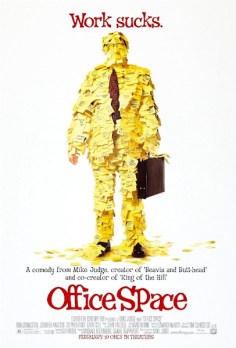
“From the creator of Beavis and Butt-Head” is not a designation that’s going to help sell a film to many people anymore. That the same fella also went on to write and direct the mediocre Idiocracy does it no favour in my eyes, either. The man in question is Mike Judge, and his first live-action feature — this — quickly became a cult favourite, apparently beloved of IT guys and office workers in general everywhere. Well, one has to see what all the fuss is about, doesn’t one?
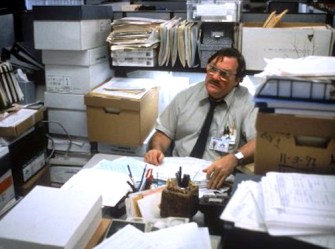
Office Space is, in its way, the story of Peter Gibbons (Ron Livingston), a frustrated office drone. He agrees to go to a hypnotism session with his girlfriend to try to alleviate his stress. While under, he reaches a state of relaxation… so relaxed, he doesn’t even register when the hypnotherapist dies before bringing Peter out of his trance. In his state of newfound enlightenment, his honesty gets him a promotion at work, he finally asks out the girl at the local restaurant (Jennifer Aniston), and, when his IT friends are laid off, sets about scamming the company he works for.

So, there’s sort of a wish-fulfilment thing going on here, which must partly explain its popularity. It’s a film about low-level white collar workers, stuck in unfulfilling office jobs, having to do the repetitious and sometimes stupid bidding of the higher-ups — guys who don’t actually do anything, really, but will certainly get to keep their jobs when lay-offs are needed, even as the little guys who actually do the work get the sack. Wouldn’t it be great to find yourself in a position where you could stick it to Management?

In truth, the plot doesn’t quite fill the slight running time, and Judge doesn’t seem to quite know how to end it — clearly he doesn’t want his hero figure getting caught out, but it can’t just go on forever. Fortunately, this is a comedy, and so plot matters only so much if the rest is funny. In some respects it’s a story of “first world problems” — these guys have decent jobs, making decent money, but it’s boring — but at least it finds the humour in this. Little vignettes of office life, a mix of light satire and gentle surrealism, keep the amusement ticking over too.
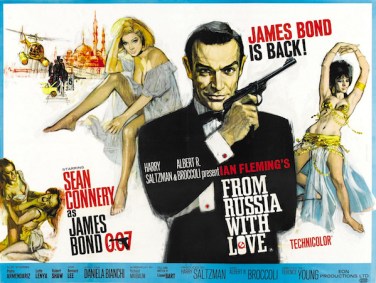

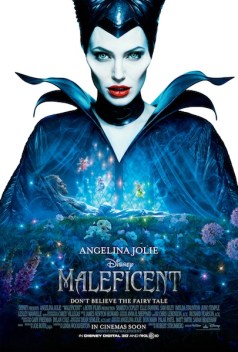
I’m not about to sign up for the cult of Office Space, but it is a funny way to spend a brisk under-90-minutes — more “quite amusing” than “laugh-out-loud funny”, though. As it’s now 17 years old, you also have to wonder if it’s a bit of a time-capsule for a passed era.

4 out of 5

This review is part of 1999 Week.

From Russia with Love (1963)

100 Films’ 100 Favourites #32

James Bond is back!
His new incredible women!
His new incredible enemies!
His new incredible adventures!

Country: UK
Language: English, Russian, Turkish & Romany
Runtime: 115 minutes
BBFC: A (1963) | PG (1987)
MPAA: GP (1971) | PG (1994)

Original Release: 11th October 1963 (UK)
US Release: 8th April 1964
First Seen: TV, c.1995

Stars
Sean Connery (Darby O’Gill and the Little People, Zardoz)
Daniela Bianchi (Special Mission Lady Chaplin, Operation Kid Brother)
Pedro Armendariz (Fort Apache, 3 Godfathers)
Lotte Lenya (The Threepenny Opera, The Roman Spring of Mrs. Stone)
Robert Shaw (A Man for All Seasons, Jaws)

Director
Terence Young (Dr. No, Wait Until Dark)

Screenwriter
Richard Maibaum (Bigger Than Life, Licence to Kill)

Adapted by
Johanna Harwood (Dr. No, Call Me Bwana)

Based on
From Russia with Love, the fifth James Bond novel by Ian Fleming — one of John F. Kennedy’s favourite novels.

The Story
When Soviet consulate clerk Tatiana Romanova offers to defect, she has one condition: that she is extracted by James Bond. Although M smells a trap, as collateral Tatiana offers a Lektor, a decoding machine MI6 have wanted for years. Bond travels to Istanbul to steal the Lektor, unaware he’s being manipulated by the criminal organisation SPECTRE…

Our Hero
The name’s Bond, James Bond. In only his second big-screen outing, so Connery is still establishing the character here — considering all the ‘fun’ antics that came since, Bond is quite a hard bastard in Dr. No and From Russia with Love (which is only appropriate for a government-sponsored killer, of course).

Our Villains
They may not be as grandiose as the volcano-dwelling types that came later in the series, but From Russia with Love has two of Bond’s most memorable adversaries: the hard former KGB officer Rosa Klebb, with her deadly shoe (well, it sounds silly when you put it like that), and assassin Red Grant, who may not know what wine to have with fish but could certainly gut you like one. A fish, that is. Not wine. You can’t gut wine.

Best Supporting Character
Kerim Bey, British Intelligence’s man in Turkey. An affable, witty soul, he’s also an invaluable ally during Bond’s time in Istanbul.

Memorable Quote
Tatiana: “I think my mouth is too big.”
Bond: “I think it’s a very lovely mouth. It’s just the right size… for me, anyway.”

Memorable Scene
On the Orient Express, SPECTRE assassin Red Grant manages to corner Bond in his compartment. Although he has Bond at gunpoint, Grant is distracted by the offer of gold coins hidden in Bond’s case. Bond tricks Grant into setting off the case’s booby trap, allowing Bond to tackle him. A rough close-quarters fight ensues.

Write the Theme Tune…
Having arranged and performed Monty Norman’s James Bond Theme for Dr. No (for which he didn’t receive a credit), John Barry was the main composer for Bond’s second adventure. However, the producers tapped Lionel Bart — then popular from Oliver! — to write the title song. Barry didn’t like that Bart’s lyrics had nothing to do with the film’s story, a point he set out to rectify when given full control of the soundtrack to Goldfinger.

Sing the Theme Tune…
A good answer if you’re ever faced with a trivia question about James Bond theme singers, Matt Monro was — so Wikipedia tells me — known as “The Man With The Golden Voice” and “became one of the most popular entertainers on the international music scene during the 1960s and 1970s.” With the Bond formula not yet fully established, a snippet of his song is heard on a radio early in the film, but not played in full until the end credits. (The title credits are scored with an instrumental version of the song, plus the James Bond Theme.)

Technical Wizardry
Projecting the title credits on writhing half-naked girls? It’ll never catch on.

Making of
Although Red Grant is presented as a physically-imposing male specimen, including showing off his half-naked physique the first time he appears, in reality actor Robert Shaw had to stand on a box when opposite Sean Connery because he was so much shorter than the Scot. (4 inches shorter, according to CelebHeights.com. Yes, that’s a real website.)

Previously on…
This is the second film about the adventures of James Bond, after the previous year’s Dr. No.

Next time…
The next film, Goldfinger, set the template for much of the rest of the Bond series. To date, that has encompassed a further 22 canonical movies, with the series’ 25th already in development. From Russia with Love was adapted for radio in 2012, the third of (to date) five Bond radio adaptations starring Toby Stephens as 007.

Awards
1 BAFTA nomination (British Cinematography (Colour))

What the Critics Said
“Don’t miss it! This is to say, don’t miss it if you can still get the least bit of fun out of lurid adventure fiction and pseudo-realistic fantasy. For this mad melodramatization of a desperate adventure of Bond with sinister characters in Istanbul and on the Orient Express is fictional exaggeration on a grand scale and in a dashing style, thoroughly illogical and improbable, but with tongue blithely wedged in cheek.” — Bosley Crowther, The New York Times

Score: 96%

What the Public Say
From Russia with Love turned out to be amongst the best of the Bonds. Distinctly low key, and relying on the strength of its cast over the spectacular thrills and gadgetry that would come to define the series, it’s a great couple of hours’ cinema that may delight viewers who come to it expecting the same old nonsense from 007.” — Mike, Films on the Box

Elsewhere on 100 Films
I reviewed From Russia with Love as part of a retrospective on Connery’s Bond back in 2012, when I noted it was “a very faithful rendition of the book. That makes it a Cold War spy thriller, albeit one with fantastical touches […] Mostly, though, it feels remarkably plausible. Sequences like the theft of a decoding machine from the Russian consulate, or the famous confined train carriage fight with Red Grant, have real-world heft rather than typical Bond action sequence fantasticism.”

Verdict

It’s only the second Bond movie, so there’s no template yet, but in retrospect From Russia with Love is an oddity among the Bond flicks of the ’60s and ’70s. Although it has many of the series’ regular trappings — exciting action, exotic locations, beautiful women, grotesque villains, nifty gadgets — it also functions as a straight-up ’60s Cold War spy thriller, with few of the fantastical touches the Bond films would become known for. Such atypicality means anyone looking for a “Bond formula” movie will be disappointed, but otherwise it’s an accomplished thriller, and one of the series’ finest instalments.

The first rule of #29 is… don’t talk about #29.

Maleficent (2014)

2016 #84
Robert Stromberg | 93 mins | streaming (HD) | 2.35:1 | USA & UK / English | PG / PG

Disney seem to be embarking on a project to remake all of their most beloved animated movies in live action,* with Cinderella being one of the highest grossing movies of last year, The Jungle Book currently doing gangbusters at the box office worldwide, an all-star Beauty and the Beast hotly anticipated for next year, and others in the pipeline that include Mulan, Pinocchio, The Sword in the Stone, both Peter Pan and Tinkerbell, another 101 Dalmatians, an Aladdin prequel, Winnie the Pooh, and Tim Burton’s Dumbo. (No, I did not make those last two up.)
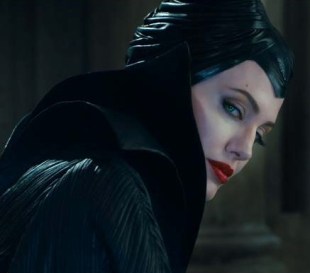
But it all started… back in 2010, when Tim Burton’s Alice in Wonderland was an unexpectedly ginormous hit. But then there were a couple of years off, so you could argue the current wave started here: a revisionist re-telling of Sleeping Beauty from the point of view of its villainess. In this version, we meet Maleficent as a child, protector of some fairy kingdom that borders the human kingdom. One day she meets a trespassing human boy, Stefan; they fall in love; eventually, he stops visiting, set on making his fortune in the king’s castle. After Maleficent has grown up to be Angelina Jolie doing an English accent and Stefan has grown up to be Sharlto Copley doing a Scottish accent (goodness knows why), the human king decides to invade the fairy land. Maleficent repels his forces, and the dying king vows whoever can defeat her will be named heir. So power-hungry Stefan does something terrible, and we’re on the road to the story we know… more or less.

It’s an interesting idea to take an archetypal villain who’s evil for evil’s sake and try to give her motivation, to understand why she did terrible things. Maleficent makes a fair fist of this, beginning long before the familiar tale to establish a run of events that tip the titular character to the dark side. What Stefan does to her to win power is pretty dark, and a clear analogy to a real-world crime that you wouldn’t expect from a PG-rated Disney movie. Our sympathies, at this point, lie with Maleficent. Of course, then she goes and condemns an innocent child to eternal slumber, so that’s less nice.

However, this is a Disney movie — you don’t get to turn a villain into the central character and have her be evil throughout. This is where the film gets really revisionist, because Maleficent keeps an eye on cursed Princess Aurora (Elle Fanning) as she grows, doing more to keep her alive than the trio of fairies she’s supposedly in the care of, and her heart is gradually warmed to the girl. Unfortunately, Maleficent was too good at the cursing malarkey: unable to lift her own spell, it plays out regardless, and the film serves us new renditions of the impassable thorns, giant dragon, and true love’s first kiss. It’s in the last where Maleficent is thematically revisionist rather than just a massive rewrite. Your mileage may vary on whether this version is obvious and cheesy, or actually more meaningful and (for the primary audience of little kiddies) more thought-provoking than the original’s — I’d go with the latter.
So in some respects, Maleficent is a success. In others, it’s a bit of a mess. For all the additional character development given to Maleficent herself, the rest of the characters are two-dimensional at best. It’s ironic that, in a movie all about fleshing out and understanding the villain, the new villain (i.e. Stefan) is so flat. Other elements are just pointless or nonsensical, like the corridor of iron spikes Maleficent & co briefly have to squeeze along. It’s not a bad idea per se — it’s been established that iron hurts fairies (goodness knows why, but there you go), so it’s a reasonable concept for a physical obstacle — but it’s really poorly integrated into the story, and it’s bested by… walking through it carefully. Thrilling.

Parts of the film test-screened poorly — mainly the first act, with audiences wondering why it took so long for Jolie to turn up. Consequently, the whole thing was thrown out and reshot; in the process, Peter Capaldi and Miranda Richardson were deleted (and after they’d had to endure hours of transformative prosthetics for their roles, too), and Maleficent was given a new backstory. How far this extended into the rest of the movie, I’m not sure, but at times it feels like stuff has been cut or rearranged. Certainly the story flies past — if it wasn’t trimmed down in the edit, it needed expanding back at the screenplay stage.

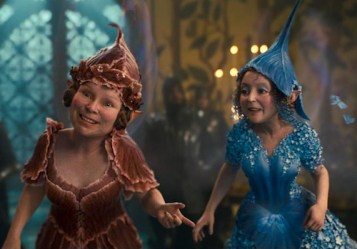
Then there’s the uncanny-valley-tastic rendition of the three fairies, with mini plasticky-CGI versions of Imelda Staunton, Juno Temple and Lesley Manville floating around until they jarringly turn into live action; the unintentional hilarity of the Prince Charming-type apparently being from the kingdom of Ofsted (it’s actually Ulfstead, but still); and the original film’s famous song, Once Upon a Dream, being slowly murdered by Lana Del Rey. Perhaps surprisingly, the work of production-designer-turned-director Robert Stromberg is pretty decent, though over-fond of crash zooms during action sequences, and an overall visual style that’s reminiscent of the likes of Burton’s Alice in Wonderland and Sam Raimi’s Oz the Great and Powerful — both of which Stromberg designed, funnily enough.

For all its faults, Maleficent was still the fourth highest grossing movie of 2014 — though the top grosser was Transformers: Age of Extinction and second was The Hobbit: The Battle of the Five Armies, so that shows what quality matters to the box office. Nonetheless, it’s no wonder Disney have kicked into gear with the live-action remakes, and even a Maleficent sequel is in development. (No idea how that’ll work — Sleepier Beauty?) On the bright side, there is something more interesting going on here than just an animated film being re-done with real people (and copious CGI). Certainly, anyone interested in fairytales being deconstructed and/or reconstructed should be sure to check it out.

3 out of 5

Maleficent is available on Netflix UK as of this week.

* At least they’re not trying to tie them together as another shared universe! ^

The Past Month on TV #3

Superheroes, spies and Sherlock in this month’s spoiler-free TV round-up.

Daredevil (Season 2)
DaredevilIt’s certainly the summer of good-guy-on-good-guy dust-ups in the superhero subgenre this year, with Batman v Superman lighting up the box office last month and Captain America v Iron Man set to do the same next week (in the UK and 41 other countries, anyway; “next month” everywhere else). First out of the gate, however, was Daredevil v Punisher, in the second season of Netflix’s initial Marvel-derived success. Also throwing love-of-his-life Elektra into the mix, plus some additional plot elements teased in season one, meant Daredevil had more to do this year. However, far from feeling overstuffed (like so many a weak superhero sequel), it rose to the occasion, with a second run that was arguably even better than the first. Charlie Cox continues to be a real star as Matt Murdock, Jon Bernthal gave an excellent rendition of Frank Castle as a genuine human being, and supporting players like Deborah Ann Woll and Rosario Dawson shine too. Also, less widely praised but one of the season’s subtle successes for me, was Geoffrey Cantor stepping ably into the series’ Ben-Urich-shaped hole. And the fights were both plentiful and eye-poppingly choreographed, even more so than the first season’s. Exciting stuff all round.
Elementary (Season 4 Episodes 14-16)
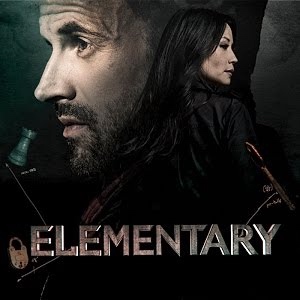
ElementaryI’m a little surprised I’m still with this “Sherlock Holmes in modern day America with a female Dr Watson” series, because it was never a particularly good version of Sherlock Holmes and it still isn’t. What it has turned out to be is a decent show in its own right (for a US network procedural, anyway), with sometimes-interesting characters who happen to share the names and the odd characteristic of Sir Arthur Conan Doyle’s famed creations. It’s so much its own show that it’s never really bothered adapting the canon, so it was very odd when episode 16, Hounded, didn’t just use a few names from The Hound of the Baskervilles (as the series has in the past), but actually had a passable swing at modernising the entire plot. It doesn’t seem to have gone down too well with critics and viewers, though for my money it did a much better job than Sherlock’s disappointing attempt.
The Night Manager
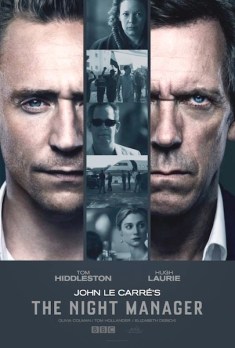
The Night ManagerA lavish, all-star, ultra-hyped John le Carré adaptation that, thank goodness, lives up to its reputation. Although it wrapped up in the UK a couple of weeks ago, it only started in the US last night, and I recommend any America-based readers who enjoy a good thriller to get on board tout suite. The Night Manager doesn’t have a Tinker Tailor-style twisty-turny plot, but fills that gap with tension and suspense. Tom Hiddleston is a likeable hero, dragged in to something that might seem over his head, but which it emerges he has an affinity for. Hugh Laurie is a personably chilling villain, Olivia Colman kicks Whitehall ass, Tom Hollander perfectly judges a part that could’ve been caricature, and Elizabeth Debicki shows a very different side after her ice-cold villainess in The Man from U.N.C.L.E. As for talk of Hiddleston being the next Bond… initially his character here couldn’t seem further away from 007, lending credence to my presumption that everyone declared “he could be Bond!” just because he was in a spy series. But as it goes on, he gets to be suave, cunning, and sleep with pretty much every female character that isn’t his boss. So, yes, he could be Bond. At this point he’s certainly a better pick than too-old-for-it-now Idris Elba.
Also watched…
  • Gilmore Girls Season 4 Episode 18-Season 6 Episode 9Paul Anka, aww!
  • The People v. OJ Simpson: American Crime Story Season 1 Episodes 3-5 — aka The “22 Years Ago No One Knew Who the Kardashians Were, Isn’t That Funny?” Show.
  • Person of Interest Season 4 Episodes 4-15 — I know I moaned about this last month, but I’m actually rather enjoying this season now. Just as they cancel it. Typical.

    Things to Catch Up On
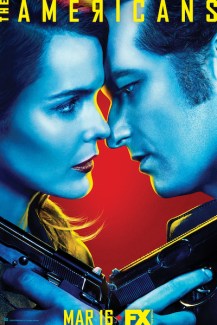
    The AmericansThis month, I have mostly been missing season four of The Americans, aka the most underrated drama on television. Well, apart from with critics, that is, who’ve given this run 100% on Rotten Tomatoes. I don’t know if anyone bothers to air it over here anymore (ITV ditched it after the second season), but I’ve always got it via other means anyhow, so it’s a moot point for me. I also save it all up and binge over a couple of weeks, because it really suits it — in the same way it suits, say, Game of Thrones, but as no one watches The Americans it’s much easier to avoid spoilers. This year, that means I won’t get stuck into it until sometime in June. Can’t wait. Well, I can, because I am. But you know what I mean.

    Next month… Game of F***ing Thrones returns!