The Past Month on TV #13

When I started this TV coverage almost a year ago I promised short reviews, but with three major releases falling under its purview this month — plus a big crossover and the best thing that was on TV this Christmas (and sundry other bits to mention too) — I find myself with quite a bit to say…

A Series of Unfortunate Events (Season 1)
A Series of Unfortunate EventsI’ve never read A Series of Unfortunate Events, the 13-book cycle of faux-gothic novels by Lemony Snicket that recount the terrible lives of the Baudelaire orphans as they are stalked by the scheming Count Olaf. I am, however, a verified fan / defender of the 2004 movie adaptation (I even included it in my 100 Favourites series last year) — one of few, it seemed, because the movie wasn’t a huge hit and, though it only adapted the first three of the books, no sequels were forthcoming. So I was most excited when it was announced Netflix were re-adapting the books for the small screen — and, fortunately, the new version turns out to be (aside from a few wobbles) a veritably fine drama.

The biggest of those wobbles is getting started. The series has a very particular tone and style, and that does take some getting used to. Indeed, some people will never click with it. You may well have already heard it described as “a cross between Wes Anderson and Tim Burton”, a summation which I’m afraid can’t be improved upon or reasonably substituted with another because that is precisely what it is like. If you do decide to sample the programme (assuming you haven’t already, because if you already have then any advice about what you should consider doing if you do watch it would be inherently pointless because you already have), I would recommend treating the first two episodes as a feature-length double-bill. Although delightfully structured to serve as individual segments (there’s a nice surprise at the end of episode one, even if you’re familiar with the story from other media, and a cleverly staged recap/flashback at the top of episode two), I feel like it might take the full opening story to completely settle into the tone and style the show is shooting for and — I think, on balance — hitting.

One of the big points in its favour are the scripts, which are infused with wit — not just gags in the dialogue, but at times the very structure and construction of the piece.* It also makes good repeated use of one of my favourite comedic techniques, unnecessary repetition, as well as making good comedic use of one of my repeated favourite techniques, unnecessary repetition. I suppose one might describe the style as arch, and that will not be to all tastes, but it was to mine. A lengthy sequence in episode two dedicated to explaining the difference in meaning between “literally” and “figuratively” certainly helped sway me. It’s delivered by Snicket himself, who, in the form of Patrick Warburton, regularly appears on screen to elucidate and comment upon events. I wasn’t sure of Warburton’s casting at first, but he leaves behind the kind of likeable dullards he usually plays to nail Snicket’s verbose, florid declarations and keen intelligence.

Creepy Count OlafAs Olaf, Neil Patrick Harris has the difficult task of being both comically inept and genuinely menacing, as well as appearing in any number of disguises (well, four). Opinion seems divided on whether he manages this better than Jim Carrey in the film, but, well, that’s opinions for you. Personally, I thought he was very good. The extra screen time here (what was done in 108 minutes of film is granted 299 minutes of TV) means he has to work at a different level and pace to Carrey, and I think there are multiple moments where he nails it. Similarly, some may think the child actors are guilty of vigorously flat delivery of their lines, but I think this is just another aspect of the Wes Anderson-esque style — as the viewer (and, possibly, the cast) become more accustomed to the material, so the quality of the performances (and/or the perception thereof) improves.

Another thing I want to mention is its pacing as a TV series. Netflix’s usual all-at-once release strategy encourages binge-watching, this we know, but it also encourages what I’m going to call “binge storytelling” — that is, series that are designed to be viewed in their entirety, like very long movies. Maybe it shouldn’t be surprising that Unfortunate Events breaks this mould (it’s adapted from four novels, so not being one long story is inherent), but a viewer might naturally expect the season’s eight episodes to consequently play like four movies split into halves. Not so. Rather, it plays like a series made up of two-parters. That’s a very fine distinction, perhaps, but there is a difference. To try to explain what I’m getting at from another angle: it isn’t structured as four movies that have had to be split in two to fit the format, but as eight one-hours where each pair present a change in location and guest cast, even as several narrative threads flow across them all. See? Well, don’t worry if not. Instead, just enjoy the theme song — which changes slightly every episode, therefore encouraging that episodic viewing. I’ve found it to be a total earworm. Look away! Looook awaaay!
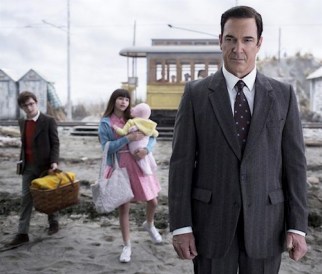
The sorry seafrontI think most would’ve thought A Series of Unfortunate Events was dead on screen after the film, but this series (and the reaction to it) suggests Netflix have been vindicated for deciding to revive the property. Let’s hope they have the common sense to do the right thing and commission the two more seasons needed to complete this sorry tale. In the meantime, I’m very favourably disposed to read all the books…

* Incidentally, fun game on social media / comment sections: spot the people who are utterly baffled why both screen adaptations of Unfortunate Events have treated it so comically. Seems some people didn’t get the joke when they were kids. ^

Sherlock (Series 4)
Sherlock series 4Sherlock comes to an end (for now) with another variable and divisive series. That’s actually the way it’s been received ever since the start (for all the people who think it only lost its way in the third run, there were plenty who slated various parts of it during the first and second series too), so I don’t think we should be so surprised. For my part, I enjoyed it on the whole.

Opener The Six Thatchers seems to be widely despised, though for the life of me I can’t work out why. Okay, there’s the death at the end, but that was a somewhat inevitable eventuality and it’s fairly well handled. If you’re going to write off something just because it kills off a character you like… well, you need to grow up, frankly. I’m sure that’s not the only reason there are people who dislike the episode, though. Personally I enjoyed all the espionage action stuff. Sherlock has always been about adventures rather than cases and this is surely in-keeping. Anyway, it’s not a perfect episode, but it’s certainly not worse than, say, series one’s The Blind Banker.

The Lying Detective also has its detractors, but on the whole was much better received (seems to be people who hated Six Thatchers enjoyed Lying Detective and vice versa, as a rule). Between Toby Jones’ excellent, creepy performance, the riffs and reflections of certain real news stories, and the well-done adaptation of a memorable Conan Doyle original, plus the series’ visual and narrative tricks being executed just about as well as ever, I’d actually argue it’s one of the programme’s very best episodes.

But then we come to the finale, The Final Problem, which is (if you’ll excuse the pun) a problematic tale. Bits of it work magnificently, like Moriarty’s arrival and the Molly scene, but other sections are severely lacking in logic (even allowing for the heightened world of the show) or are inert — ironically so: Sherlock, John, and Mycroft spend the middle of the episode moving, but as they’re just being led from game to game it comes to very little end. It feels like it needed a good script editor to give it a going-over and give it a clearer impetus. And as for the finale, with the magically-timed arrival of another DVD from Mary… ugh. The idea behind the final montage is nice, but why not have, say, Mrs Hudson narrate it?
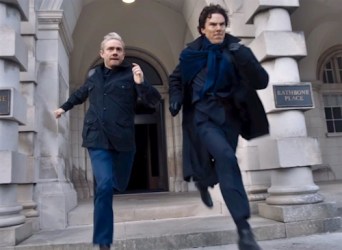
Rathbone PlaceSherlock’s commitment to being a fast-paced, audience-challenging adventure drama that strives to be constantly engaging and entertaining is definitely commendable, and a welcome contrast to much of the slow, dour TV drama we tend to produce over here — even if the end result is sometimes messy or unpopular. With events in-show leaving our heroes reset to a more familiar Holmesian situation, here’s hoping the big-name cast can be tempted back for a few more adventures in a couple of years.

Gilmore Girls: A Year in the Life
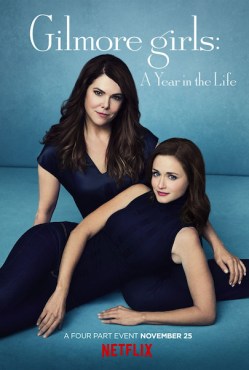
Gilmore Girls: A Year in the LifeNine years on and Gilmore Girls graduates from being considered a twee comedy-drama on disparaged network The WB to a major cultural event, thanks to it being produced for the arbiter of all modern televisual culture, Netflix. Instead of 22 42-minute episodes of network TV we get four feature-length instalments, though it’s still very much a series: the pros and cons are shared across the board.

Pros: at its best it’s still funny, quick-witted, kooky, and sometimes even emotional. It’s a nostalgic visit to old friends, with a nice line in surprise cameos from old characters (even if you know they’re in it, most of them suddenly appear in a scene, hence “surprise”). Cons: at its worst its hero characters aren’t wholly supportable and its narrative choices come overburdened with thematic tin-eared-ness. I’ve always liked that the characters aren’t as perfect as they think they are, but I’m not sure the show knows the characters aren’t as perfect as it thinks they are. It’s hard to know exactly how deep the delusion goes: character-deep, which is kinda clever and maybe even more sophisticated than some people give the show credit for; or writer-deep, which is a little… sad? Unfortunately, there’s plenty of evidence it’s the latter (we’re constantly told of Rory’s prior success but see little evidence to suggest she’s actually capable of it).

Still, what the show sometimes lacks in realism (be that social or psychological) it makes up for with its fast-paced pop culture banter (not always as on display here as normal, I must say) and delightful kookiness. In the latter camp, an extended selection of songs from Stars Hollow: The Musical seems to get a lot of flack, but I thought it was a consistently amusing highlight. Yes, it’s an over-long aside from the main action, but that’s the kind of thing you can do when you’re given double-length episodes and creative freedom. Conversely, the finale goes overboard with this increased liberty.

Final four wordsBizarrest of all is the problematic ending. Thematically, A Year in the Life begins to look like it might be about moving on, new horizons, that kind of thing — indeed, I kind of expected it to end with Lorelei moving out of Stars Hollow. But the climax — the infamous final four words… well, you could see the development as a signal of a fresh start (very literally, new life), but it doesn’t play that way. Given Rory’s personal story (her career and relationships falling apart) and situation (single, living at home), it’s less a new path forward and more a depressingly regressive loop. If you’re interested in a fuller dissection of these issues, allow me to recommend this review and, in particular, this discussion at The Verge, which both have a pretty good handle on it in my opinion. And if you want a way to reconcile the early cute perfectness with the divergent behaviour of characters as the series rolls on, this fan theory from Cracked is imperfect but fun.

A Year in the Life is never Gilmore Girls at its best (there are highs, but most work thanks to “it’s fun to have them back” nostalgia), but it does reflect the show at its worst. Flawed characters are great for drama, but only if the show is aware of their flaws. Lost amongst all its zany fun, I’m not convinced Gilmore Girls actually understands its protagonists as well as it thinks it does.

Peter Pan Goes Wrong
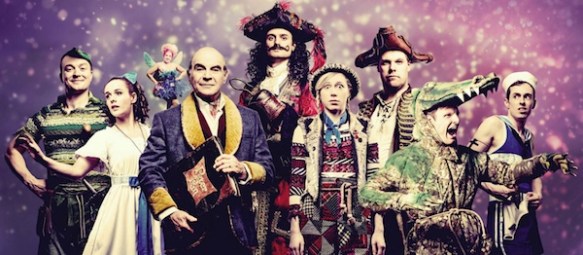
Christmas seems so long ago now, doesn’t it, but it’s okay: the best thing that was on TV during the festive season isn’t all that Christmassy, and if you missed it and you’re in the UK it’s still available on iPlayer for a little while yet. If you’re outside the UK, I don’t know if there’s anywhere you can see it (legally), but it’s worth seeking out. Based on the stage show, it does what it says on the tin: it’s about an amateur production of Peter Pan that goes wrong. Farcically, hilariously wrong. It’s the kind of thing that’s far, far funnier than you feel it should be — and I know I’m not alone in saying this because it went down a storm on Twitter too. And the theatre company that originated it have several other shows — here’s hoping the BBC make them a Christmas fixture.

The Flash / Arrow / Legends of Tomorrow Invasion!
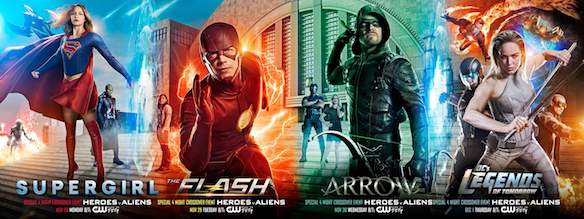
Arrowverse - Invasion!
The Arrowverse’s three-night crossover masquerading as a four-night crossover (Supergirl had one scene, which they repeated in Flash anyway) was certainly a hit for The CW in terms of ratings. Quality-wise… well, it was about on a par with the individual series as a whole, which is to be expected I suppose. It was quite neat that the episodes of Flash and Arrow managed to feel like instalments of their own show as well as part of the crossover — especially Arrow, which was also marking its 100th episode — though that was to the detriment of the overarching story: the alien threat that drove the piece was occasionally sidelined, then hurriedly wrapped-up in a frantic final episode. That last part was ostensibly an instalment of the less-popular Legends of Tomorrow, but their regulars only had a little something to do before being shoved aside in favour of characters from the more popular shows. As I don’t watch Legends anymore I can’t say it bothered me, but I almost felt bad for them. I presume there’ll be another such crossover next season, but hopefully next time they’ll fully embrace it: focus on giving adequate time to the story that brings them all together, rather than trying to concurrently maintain the series’ individuality.

Also watched…
  • Elementary Season 5 Episodes 1-3 — you can never have enough Sherlock Holmes.
  • Outnumbered 2016 Christmas Special — another contender for the best comedy of the season. I liked that it wasn’t a big-fuss return, just another vignette from the lives of the Brockmans.
  • Vicious Series Finale — conversely, this was as odd and kind-of-funny / kind-of-terrible as it always has been. A fitting way to end, then, I guess.

    Things to Catch Up On
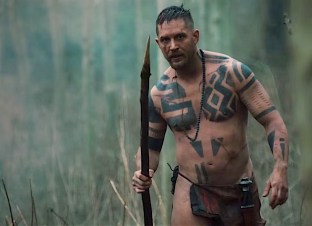
    TabooThis month, I have mostly been missing Taboo, the BBC’s dark new period drama starring Tom Hardy and written by Steven Knight. I’m sure I’ll get round to it soon, but then I’ve been saying that about Peaky Blinders (you know, the BBC’s dark period drama written by Steven Knight and sometimes starring Tom Hardy) for years and still haven’t even started it. Its scheduling on BBC One on Saturday nights feels thoroughly at odds with how it looks (surely midweek BBC Two?), but putting a proper drama on our highest-profile channel on its highest-profile night seems to have been a popular move, so what do I know?

    120 days until new Twin Peaks

    Next month… Studio Ghibli’s first TV series comes to Amazon Prime… but it’s quite long and it doesn’t look that good, so I’m not sure I’ll bother.

  • Hunt for the Wilderpeople (2016)

    2017 #4
    Taika Waititi | 101 mins | streaming (HD) | 2.35:1 | New Zealand / English | 12 / PG-13

    Hunt for the Wilderpeople

    The most recent feature from the director of the very-different-to-each-other What We Do in the Shadows and Thor: Ragnarok, this very-different-again* adventure-comedy-drama was a surprise hit in its native New Zealand, then around the rest of the world, before it wound up as Empire magazine’s pick for the best film of 2016.

    Young Ricky Baker (Julian Dennison) is a delinquent who’s been rejected by every foster family in the city, so in a last-ditch attempt to avoid juvie he’s homed at the remote farm of kindly Bella (Rima Te Wiata) and her terse, irritable husband, Hec (Sam Neill). Despite initial misgivings, Ricky warms to his new home, so when child services threaten to take him away again he runs away into the bush. He’s soon found by Hec, but as child services launch a nationwide manhunt for the missing pair, they decide to go on the run as fugitives.

    So yes, let’s get the obvious out of the way: Ricky and Hec end up bonding and working together and all that jazz. But this isn’t the kind of movie where it’s all about developing mutual respect and having heartfelt hugs and making declarations of everlasting father-son love. Well, maybe it is a little, in its own way — but it’s also the kind of movie where they (spoilers!) write awesome birthday songs, end up in a punch-up with some hunters, steal all-important loo roll, meet a girl worthy of the old Flake adverts, eat relaxing sausages, stumble into a vicious fight with a giant boar, and engage in the wildest third-act police car chase since… I dunno, Blues Brothers or something.

    Skuxx 4 life

    Writer-director Waititi (adapting the book Wild Pork and Watercress by Barry Crump) keeps a fairly tight hand on the film’s tone, a slightly leftfield view of the world that isn’t as extremely stylised as, say, Wes Anderson, but nonetheless is heightened beyond the normal boundaries of real-life. I only say a “fairly tight” grip because a couple of comic cameos arguably stretch things a little too far, but that’s a minor complaint. Mostly he’s skilful in balancing the comedy with genuine emotion, so that the former never neuters the latter, but equally the latter never dares become too sickly. The events of the plot may not be plausible, but the emotional underpinnings are.

    Nonetheless, it’s regularly hilarious, especially when centred on Dennison and Neill’s interactions. It’s the kind of role and deadpan performance that will no doubt have some hailing Dennison as a real find, and maybe he will be, or maybe he’ll go the way of most child stars with “breakthrough” roles like this and never be heard from again. Pardon my cynicism, but it seems to be such a perfect marrying of actor and role that I’m not sure it marks the start of a glittering career so much as one superb turn. Maybe I’m wrong; time will tell. Neill, on the other hand, juggles grumpiness, likeability, and pathos in a manner that suggests his near-relegation to “the guy from Jurassic Park” for the last quarter-century is a real shame. I’m not intending to dismiss everything he’s done between then and now (some of which I’m a definite fan of), but this is likely the best showcase of his abilities for a long time.

    Unhappy campers

    The rest of the cast don’t shirk, with particular note to the kind of double act performed by Rachel House and Oscar Kightley as (respectively) the ‘dedicated’ child services agent and her escorting policeman who lead the manhunt. Whoever was in charge of the soundtrack did an excellent job with several amusing song picks, while the highlight of the score (credited to three composers) is an unusual use of the increasingly ubiquitous Christmas tune Carol of the Bells (the scene in question has nothing to do with Christmas, for starters). Cinematographically, DP Lachlan Milne makes marvellous use of New Zealand’s truly majestical scenery — well, why wouldn’t you?

    Whether or not Hunt for the Wilderpeople is the best film of last year is immaterial — I mean, it’s a little film from a small country on the other side of the world: it’s not like it’s going to be in competition this awards season, is it? But maybe it should be. Few films get to be this funny without being overworked, this sweet without being cloying, and this quirky without being keraaazy, all at the same time.

    5 out of 5

    In the UK, Hunt for the Wilderpeople is available on Netflix now, and is released on DVD and Blu-ray tomorrow.

    It placed 4th on my list of The 17 Best Films I Saw For the First Time in 2017, which can be read in full here.

    * Well, from what I know they all seem very different to each other — I’ve not seen the other two. ^

    Ivan Vasilievich: Back to the Future (1973)

    aka Иван Васильевич меняет профессию / Ivan Vasilievich Changes Profession

    2016 #112
    Leonid Gaidai | 92 mins | streaming (HD) | 4:3 | Soviet Union / Russian

    Ivan Vasilievich: Back to the Future

    I know: having seen the title of this film, you’re probably thinking some variation of, “so what’s that then?” Well, it’s only a better sci-fi film than Aliens, 2001, Metropolis, Blade Runner, or Solaris! It’s only a better comedy than Monty Python and the Holy Grail, Sherlock Jr., Some Like It Hot, It Happened One Night, or The Kid! Only a better adventure movie than North by Northwest, Lawrence of Arabia, The Treasure of the Sierra Madre, Indiana Jones and the Last Crusade, or The Bridge on the River Kwai! Only the best musical ever made that isn’t The Lion King, and the 8th greatest film of one of cinema’s defining decades, the ’70s — that’s what!

    Well, “that’s what” according to IMDb voters, anyway, who’ve placed it in the upper echelons of all those best-of lists. In fact, it’s a Russian sci-fi comedy, adapted from a play by Mikhail Bulgakov (most famous to Western audiences now for the TV series A Young Doctor’s Notebook starring Daniel “Harry Potter” Radcliffe and Jon “Mad Men” Hamm). Apparently it’s a huge popular classic in Russia, hence why it’s scored so well on an international movie website and shot up those lists; and, because of that, it’s a moderately (in)famous film on movie-list-checking website iCheckMovies (at least, it is in the parts of it I frequent), because it’s a film you have to see if you want to complete any of the aforementioned lists.

    And so I have seen it — courtesy of Mosfilm’s YouTube channel, where it’s available for free, in HD, with English subtitles — just in case this review makes you want to watch it too. Which, you never know, it might, because it’s actually kinda fun. In the end.

    Terrible meal

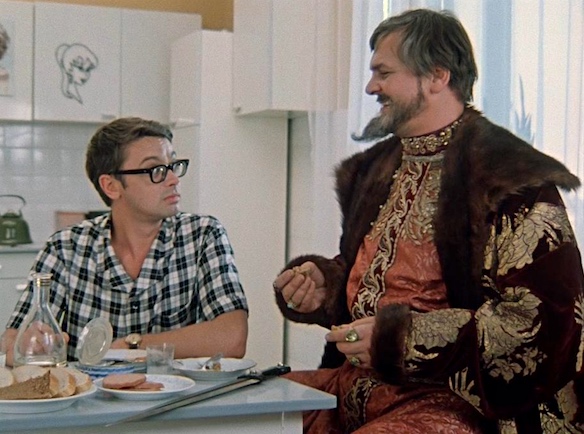
    The plot concerns scientist Shurik (Alexsandr Demyanenko), who is trying to perfect a time machine in his apartment (as you do) but is getting grief from his busybody building supervisor Ivan Vasilievich (Yuri Yakovlev). Meanwhile, George (Leonid Kuavlev) is trying to rob a neighbouring apartment. To cut a lot of faffing short, the three of them end up transported to the past, where it turns out Ivan Vasilievich is the spitting image of Ivan the Terrible (also Yuri Yakovlev) and — to cut some more farce equally short — Ivan Vasilievich and George end up stuck in the past, pretending to be Mr Terrible and his chum, while Shurik and the real Mr Terrible are returned to the present day. More hijinks ensue!

    So, you can see why its original title is the wittily understated statement Ivan Vasilievich Changes Profession, and how its English title can just about get away with being such a blatant attempt to cash-in on a popular movie.

    As for the film itself, it starts off not so hot, somewhat overacted and a little hard to get a grip on what’s happening — it’s also a sequel or sorts, so perhaps launches with the idea you’ve seen the previous adventures of Shurik and so know what kind of thing to expect. But as it continues… well, maybe it’s a kind of Stockholm syndrome, but I ended up rather enjoying it. It’s not genius, but it’s a fairly amusing farce once it gets going. Very of its time as an early-’70s mainstream-style silly comedy, but what’s wrong with being of your time? It also sounds like it’s fairly faithful to Bulgakov’s original play, which is a little surprising, but there you go.

    Terrible face

    Unsurprisingly, Ivan Vasilievich is not a better film than all those ones I listed at the start. If it got wider exposure and more IMDb votes, I’m sure it would drop down lickety-split. At the same time, I’m actually quite glad I watched it: after I eventually warmed to it, it was kinda fun.

    3 out of 5

    The Last Dragonslayer (2016)

    2016 #195
    Jamie Stone | 101 mins | download (HD) | 2.00:1 | UK / English

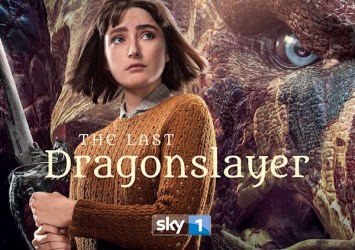
    The Last DragonslayerI’m not sure whether to commend or condemn Sky1 for having the balls to schedule a light family-friendly fantasy drama against Doctor Who on Christmas Day — that seems like damning yourself to low ratings. But then Sky never exactly stands at the pinnacle of the charts, and, in the catch-up-driven landscape of modern TV, does it even matter? I mean, as if to show their disregard for schedules, the premiere broadcast was actually at 3am the night before.
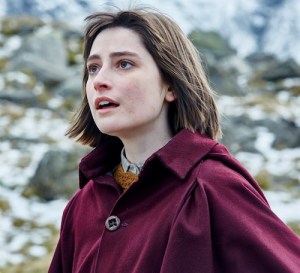
    Anyway: adapted from the novel by Jasper Fforde (the first in a series, as will eventually become clear), The Last Dragonslayer is the story of Jennifer Strange (Ellise Chappell), a teenage orphan living in the Ununited Kingdom (a name never uttered on screen, perhaps for fear of looking like political commentary in the current climate). This is an alternate-world Britain where magic exists but is on the wane — it’s powered by dragons, but they’re dying out; besides which, the public have become more enamoured with things like technology and supermarkets. Adopted by the kindly wizard Zambini (Andrew Buchan), Jennifer learns about the importance of magic, and the importance of dragons to magic, which is a bit of a problem when the country’s seers have a mass vision that the last dragon will be slain on Sunday, and shortly thereafter Jennifer discovers her long-prophesied role as the last official dragonslayer.

    Jennifer StrangeAbout now you’re probably thinking The Last Dragonslayer is completely derivative of every other major young-adult fantasy franchise of the last… well, forever. It’s hard to deny that the plot is, at least in its broadest thematic strokes, a pretty familiar affair. What makes the enterprise worthwhile is its humorous execution. This isn’t a spoof of the genre, more a satirical mash-up of familiar fantasy building blocks and modern life. So, for example, the king’s chief knight is also a pop star, followed around by a gaggle of adoring female fans; when Jennifer finds herself in need of money, her dragonslaying assistant signs a sponsorship deal with soft drink brand Fizzipop that requires her to film an advert, make at least two promotional appearances, and wear a branded T-shirt until the dragon is slain. It’s this whimsical slant on our world that is arguably Dragonslayer’s most successful aspect.
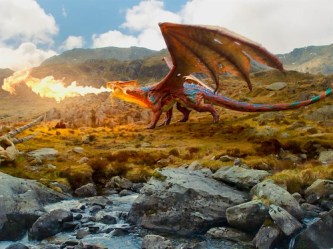
    Another would be its characters. Chappell makes Jennifer a capable hero without having to resort to the kind of self-serious moping that dogs so many current young adult leads (Katniss, I’m looking at you). Buchan also gets to move away from the moping that’s so often called for in series like Broadchurch, making the affectionate, skilful Zambini an easily likeable character within just a few deceptively simple scenes. Without meaning to spoil the plot, he’s not in it enough. The slack is taken up by the likes of Pauline Collins and Ricky Tomlinson as a pair of batty magicians, Matt “Toast” Berry as the immature monarch, and Anna Chancellor as the smarmy corporate head of supermarket giant Stuff Co. The only weak like for me was Richard E. Grant as the voice of Maltcaisson, the last dragon — it just didn’t feel like he had the vocal presence to be playing a huge majestic beast. But not everyone can be John Hurt or Benedict Cumberbatch, I suppose.

    Dragon breathI guess The Last Dragonslayer’s irreverent, sometimes silly tone won’t be to all tastes, but I enjoyed it very much. Unsurprisingly (all things considered) the book is the first in a series, and so not everything is fully resolved by the film’s end. Let’s hope that, in spite of their scheduling, it’s done well enough for Sky that sequels are forthcoming.
    4 out of 5

    Witness for the Prosecution (1957)

    2016 #157
    Billy Wilder | 112 mins | DVD | 1.85:1 | USA / English | U

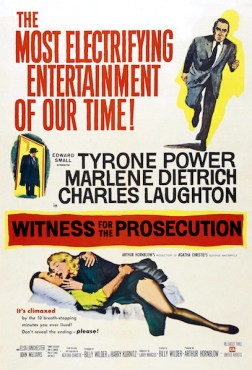
    Witness for the ProsecutionCharles Laughton and Marlene Dietrich shine in this adaptation of Agatha Christie’s play (in turn based on her short story), about a man accused of murder but who proclaims his innocence (Tyrone Power), the barrister who decides to take the case (Laughton), and the man’s wife who agrees to alibi him but seems somehow suspicious (Dietrich).
    Despite expanding the action from the play, it’s still dialogue-heavy and a little stagey in places — but between the engrossingly labyrinthine plot, those captivating performances, and some humour added by screenwriters Billy Wilder and Harry Kurnitz, such potential criticisms are irrelevant.

    Helluva twist, too.

    5 out of 5

    A new adaptation of The Witness for the Prosecution begins on BBC One tonight at 9pm.

    Wizardhood (2016)

    2016 #186
    edited by Tim Stiefler | 78 mins | download (HD) | 2.35:1 | UK & USA / English

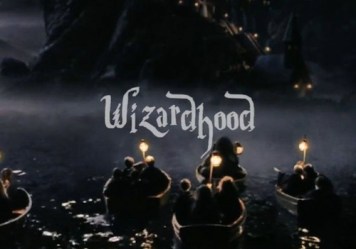
    WizardhoodAt the tail end of last month, a story did the rounds on entertainment sites about a fan edit that took the eight-film, 20-hour Harry Potter series and reduced it into a single movie that ran just 78 minutes — a reduction of over 93%. You see stories about these kind of fan edits all the time (or you do if you read certain sites, anyway), but I usually don’t get round to watching them. I mean, who has time for a dozens-of-hours supercut that puts every piece of footage from every Marvel movie (and short) into chronological order, or whatever? But as I was off to Harry Potter Land — and as it’s less than an hour-and-a-half long — I did make time for Wizardhood (like Boyhood, see?)
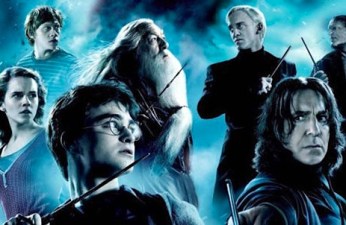
    (I did debate whether this merited a new number, because it’s a fan edit of other people’s movies; but it’s such a radical restructuring of that material, and (as I’ll come to in a moment) it’s designed to function as a film rather than as a long video summary, so I’ve decided it does count, as would any official major re-edit.)

    So how exactly do you go about making such a huge reduction? Is it just a really, really long “previously on”-style montage? No, thank goodness, it isn’t. What editor Tim Stiefler (a 27-year-old New Yorker, if you’re interested) has produced is less an abridgement and more a complete retelling of the Potter story. His cut doesn’t even attempt to tell whole swathes of the story, instead ditching them entirely. Stiefler has clearly tried to make a film out of this material, not just a long précis of the story. That means we don’t just get a series of vital scenes that further the plot. Instead, moments are allowed to play out a bit to convey their emotional impact or their humour. He’s even selected a couple of the series’ many action sequences, presumably based on the points in his cut that benefit from that adrenaline boost — just as you would if you were pacing a ‘real’ film.

    Harry Potter and the Streamlined StoryWizardhood focuses in on the main narrative of Harry vs Voldemort, and the need to destroy the Horcruxes. In practice, that means there’s a chunk of Film 1 to establish the world, followed by cursory scenes from Films 2, 3, 4 and 5, mainly for texture and pace, before great chunks of Films 6, 7 and 8 are used to complete the narrative. In the process it also focuses on certain characters. It’s centred around Harry, Ron and Hermione, obviously. The latter two are only really there because they’re always around Harry, although Stiefler makes a decent subplot out of their relationship. Also retaining much of their storylines are Dumbledore and Snape, who both have primary roles in Harry’s story. Draco Malfoy and Neville Longbottom get subplots, again mainly because they have vital roles to play in the main tale. There are a couple of scenes featuring major players like McGonagall, Hagrid, Ginny, and Umbridge, but otherwise every major character is cut: the Dursleys and Sirius Black don’t even appear; the likes of Lupin and Mrs Weasley are in a shot or two without any dialogue; and so on (I’m not going to list everyone!)

    It’s a little hard to say how Wizardhood works as a standalone movie, because if you’ve seen all eight films in full then your brain can fill in the gaps. That said, it does seem fairly smooth. It’s so efficiently and cleverly edited that there are barely any lines or moments that aren’t relevant to the version of the story it’s telling, and the excised stuff is so thoroughly removed that you kind of don’t miss it. It’s not the ideal way to view the Harry Potter saga — it loses so much of the texture, the plot, the characters — but as an exercise in telling the series’ primary conflict in a single-film-length way, it’s an impressive piece of work.

    4 out of 5

    The full Harry Potter series is on ITV daily from Christmas Eve to New Year’s Eve, beginning with Philosopher’s Stone today at 1:30pm. If you want to see Wizardhood, you’ll have to go looking

    Young Adam (2003)

    100 Films’ 100 Favourites #100

    Everyone has a past.
    Everyone has a secret.

    Country: UK & France
    Language: English
    Runtime: 98 minutes
    BBFC: 18
    MPAA: NC-17 (uncut) | R (cut)

    Original Release: 4th September 2003 (Netherlands)
    UK Release: 26th September 2003
    First Seen: DVD, c.2005

    Stars
    Ewan McGregor (Shallow Grave, Big Fish)
    Tilda Swinton (Orlando, We Need to Talk About Kevin)
    Peter Mullan (Trainspotting, Tyrannosaur)
    Emily Mortimer (Lovely & Amazing, Match Point)

    Director
    David Mackenzie (Starred Up, Hell or High Water)

    Screenwriter
    David Mackenzie (The Last Great Wilderness, Hallam Foe)

    Based on
    Young Adam, a novel by Alexander Trocchi.

    The Story
    Joe is earning his keep helping transport coal on a barge between Glasgow and Edinburgh, spending his free time lusting after his employer’s wife, when he spots a woman’s dead body floating in the canal — something Joe knows more about than he lets on…

    Our Hero
    Joe is a young drifter, who’s wound up working on a barge with Les and Ella Gault and their son. He’s a horny bugger, sex obsessed to the point of distraction, which will have an effect on everyone’s lives.

    Our Villain
    It wouldn’t be quite accurate to say the film is a murder mystery — especially as it’s not clear if the woman was indeed murdered. But how did she die? How was Joe involved? He’s the main character, which makes him the hero, but is he actually a bad’un?

    Best Supporting Character
    Harried barge wife Ella is not anyone’s typical image of desirability, but nonetheless becomes the object of Joe’s own brand of affections, which brings her some happiness… for a while. Mainly, it’s a brilliant, layered performance by Tilda Swinton.

    Memorable Quote
    Joe: “Are you sorry?”
    Ella: “Fat lot of good that would do me.”

    Memorable Scene
    Cathie, another of Joe’s lovers, comes home soaking wet. As she undresses, she berates him for doing nothing useful with his time. He informs he has made custard, which he throws over her, followed by various other condiments. Then there is, shall we say, an act with (at best) debatable consent. I believe this is a version of something called “sploshing” (thanks, internet).

    Memorable Music
    David Byrne’s ambient score haunts the soundtrack, as essential to the film’s grey mood as the drizzly Scottish locations and overcast photography. My favourite part is the plaintive closing song, The Great Western Road.

    Awards
    4 BAFTA Scotland Awards (Film, Actor in a Scottish Film (Ewan McGregor), Actress in a Scottish Film (Tilda Swinton), Director)
    4 British Independent Film Award nominations (British Independent Film, Actor (Ewan McGregor), Actress (Tilda Swinton), Director)
    3 Empire Awards nominations (British Film, British Actor (Ewan McGregor), British Actress (Emily Mortimer))

    What the Critics Said
    “Joe is a hard case. Opaque. Not tender, not good with the small talk. Around women, he has a certain intensity that informs them he plans to have sex with them, and it is up to them to agree or go away. He is not a rapist, but he has only one purpose in his mind, and some women find that intensity of focus to be exciting. It’s as if, at the same time, he cares nothing for them and can think only of them. […] He is not a murderer but a man unwilling to intervene, a man so detached, so cold, so willing to sacrifice others to his own convenience, that perhaps in his mind it occurs that he would feel better about the young woman’s death if he had actually, actively, killed her. Then at least he would know what he had done and would not find such emptiness when he looks inside himself. This is an almost Dostoyevskian study of a man brooding upon evil until it paralyzes him. […] The death of the girl and the plot surrounding it are handled not as a crime or a mystery but as an event that jars characters out of their fixed orbits. When you have a policy of behavior, a pose toward the world, that has hardened like concrete into who you are, it takes more than guilt to break you loose.” — Roger Ebert, Chicago Sun-Times

    Score: 62%

    What the Public Say
    “McGregor, putting his meat and two veg on show once again, is really good as the conflicted and sex addict, Swinton does almost steal the show as the sex-craving barge woman, who also gets naked, and Mortimer in the flashbacks is very good, with her clothes off too. The film is just stuffed with sexual scenes, and with the dead body premise it combines film noir and melodrama, all adding up to a well crafted and most watchable period drama.” — Jackson Booth-Millard @ IMDb

    Verdict

    Part murder mystery, part beat character study, part erotic drama, Young Adam is an enigmatic, moody, conflicted film — in a good way. It presents a grimily realistic view of life and sex, around which writhes a murder mystery that, as it turns out, doesn’t contain a murder and, relatively quickly, isn’t much of a mystery. Instead it’s something of an ethical dilemma, presented to a character who’s not exactly unethical but isn’t necessarily concerned about doing what’s right either, especially if it’s against his own interests. Not a cheery one, then, but a film of grey morals, grey imagery, and grey mood — in a good way.

    Next time… looking back over my 100 favourites.

    X2 (2003)

    100 Films’ 100 Favourites #99

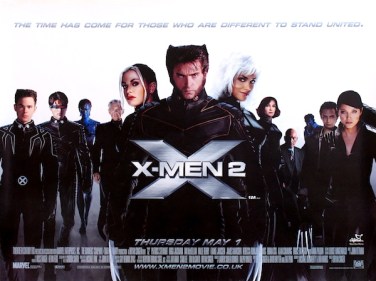
    The time has come for those who are different to stand united.

    Also Known As: X-Men 2 (promotional/DVD title), X2: X-Men United (US promotional title)

    Country: USA & Canada
    Language: English
    Runtime: 134 minutes
    BBFC: 12A
    MPAA: PG-13

    Original Release: 25th April 2003 (Lithuania)
    UK Release: 1st May 2003
    US Release: 2nd May 2003
    First Seen: cinema, May 2003

    Stars
    Hugh Jackman (Van Helsing, The Prestige)
    Patrick Stewart (Dune, Hamlet)
    Ian McKellen (Gods and Monsters, Mr. Holmes)
    Brian Cox (Braveheart, Troy)
    Alan Cumming (Emma, Josie and the Pussycats)

    Director
    Bryan Singer (Apt Pupil, X-Men: Days of Future Past)

    Screenwriters
    Michael Dougherty (Superman Returns, Trick ‘r Treat)
    Dan Harris (Superman Returns, Imaginary Heroes)
    David Hayter (X-Men, Wolves)

    Story by
    David Hayter (The Scorpion King, Watchmen)
    Zak Penn (Last Action Hero, The Incredible Hulk)
    Bryan Singer (X-Men, The Triangle)

    Based on
    The X-Men, comic book superheroes created by Stan Lee and Jack Kirby. In part inspired by the graphic novel God Loves, Man Kills by Chris Claremont and Brent Anderson.

    The Story
    When a mutant attempts to assassinate the president, military scientist William Stryker uses it as a pretext to step up his persecution of mutants. With the X-Men occupied hunting for the would-be assassin, the school is attacked and the remaining students flee with Wolverine — whose still-mysterious past has some connection to Stryker.

    Our Heroes
    The X-Men, a team of mutants — humans who have evolved superpowers — organised by Professor Charles Xavier. As well as returning heroes Wolverine, Cyclops, Jean Grey, Storm, and Rogue (see X-Men), the roster this time includes Bobby Drake, aka Iceman, who can generate and manipulate ice, and John Allerdyce, aka Pyro, who can control fire. Plus Kurt Wagner, aka Nightcrawler, a demonic-looking blue-skinned German teleporter.

    Our Villains
    Col. William Stryker, a military scientist who wants to eradicate mutants, and plans to use Xavier’s mutant-finding Cerebro machine to do so. Has a role in Wolverine’s mysterious past…

    Best Supporting Character
    Imprisoned at the end of the last film, Magneto is tortured by Stryker for information on Cerebro… until he escapes and teams up with the X-Men to stop the new threat.

    Memorable Quote
    “Have you ever tried… not being a mutant?” — Bobby’s mom

    Memorable Scene
    When Stryker launches a military assault on the school, Wolverine goes full berserker to defend the students, before he comes face to face with Stryker — as it turns out, not for the first time.

    Write the Theme Tune…
    I’ve always loved John Ottman’s main theme for X2, so I’ve been very pleased that Bryan Singer has made it the recurrent theme for the X-Men series since he retook the directorial reins for Day of Future Past. Its appearance there is quite short, but Apocalypse has two fantastic renditions.

    Making of
    The set for Stryker’s underground base was the largest in North America at the time — so large that cast and crew used bicycles to get to the bathroom as quickly as possible. Some areas of the set weren’t even used in the film, such as a room that was to be the setting of a Nightcrawler vs. Toad fight. (Several other sets were built and not used, including the X-Men’s famous Danger Room training centre. After also dropping its inclusion from the first X-Men, it finally turns up in The Last Stand.)

    Previously on…
    The film that started the modern era of comic book movies, X-Men.

    Next time…
    The trilogy was rounded out by X-Men: The Last Stand, though answers about Wolverine’s past were saved for spin-off movie X-Men Origins: Wolverine. More history was revealed in prequel X-Men: First Class, before time travel adventure X-Men: Days of Future Past combined both casts. The prequels continued with this summer’s ’80s-set X-Men: Apocalypse, with a ’90s-set follow-up in the works. Spin-offs include The Wolverine and next year’s third Wolverine movie, Logan, as well as Deadpool, the perpetually delayed Gambit, and X-Men: The New Mutants. TV series Legion is based on the X-Men licence but may or may not be connected to the films, and other connected (or not) TV series are in development.

    Awards
    1 Saturn Award (Science Fiction Film)
    6 Saturn nominations (Director, Writing, Music, Costumes, Make Up, Special Effects)
    Nominated for the Hugo for Best Dramatic Presentation, Long Form
    2 Kids’ Choice Awards nominations (including Favorite Female Butt Kicker (Halle Berry))
    1 MTV Movie Awards Mexico nomination (Sexiest Female Villain (Rebecca Romijn) — she lost to Demi Moore in Charlie’s Angels: Full Throttle)

    What the Critics Said
    X2 is also possessed of an emotional complexity that won’t surprise comics fans, but will delight connoisseurs of the summer blockbuster. […] The plot, in which hatred of a minority group threatens to spark a global war, is frighteningly topical and Singer doesn’t flinch from showing that resolution often comes at a bitter price — albeit one which paves the way for a pleasingly inevitable X3. Yet it’s not all FX-augmented naval-gazing. Though it does get very dark, X2 is unashamedly entertaining, with crowd-pleasing moments for geeks (the appearance of metal-skinned muscle man Colossus in full armoured form should benefit upholsterers everywhere) and non-geeks (a Nightcrawler-led mid-air rescue is exhilarating) alike.” — William Thomas, Empire

    Score: 86%

    What the Public Say
    “it was the perfect superhero film sequel, the one that truly set the bar for all future sequels (and many managed to match it, thankfully.) Singer understood what worked about the first film, he understood that the audience wanted ‘more of the same’ but not just the same story over again. The core elements were preserved. The team’s personalities, diversity, and relationships that formed the emotional core of the first film, and were the most faithful thing about Singer’s adaptation, were carried on, as was the emphasis on Magneto (Ian McKellen) and Charles’ (Patrick Stewart) relationship and contrasting philosophies. The driving elements of the plot, though different than the driving elements of X-Men‘s plot, didn’t feel like they ‘came out of nowhere.’ Everything felt familiar without necessarily being the same. The ‘new’ elements that were introduced really did broaden the world, but were based in elements X-Men had already established. […] Although I, unlike many fans, didn’t consider this an improvement over Singer’s first X-Men film, I also don’t think it needed to be. And despite my preference for the first film, X2 was to a certain extent really when the series hit its stride and showed that it had staying power.” — Kat, Love. Think. Speak.

    Verdict

    If there’s one trend in the modern superhero era that’s gone under-analysed (at least as far as I’m aware), it’s this: sequels that are better than their predecessor, upending the accepted order of things. It’s not a universal occurrence (Iron Man 2, anyone?), but it happens often enough that many reviews of first films now note they’re setup for a sequel. And as with so many things in the current superhero epoch, it started with the X-Men.

    Personally I’ve always slightly preferred the first movie, but X2 does polish up the action sequences, engages with the series’ thematic subtexts in an effective manner, and adds significantly to the ongoing mystery of Wolverine’s past. Coupled with a shock ending that teased a big plot to come, everything looked so good for the third movie. Sadly, the whole “sequels are better” thing still doesn’t regularly extend to third movies. (Suffice to say, The Last Stand will not be next week’s #100.)

    #100 is the moment when… Ewan McGregor drops his Jedi knickers and pulls out his real lightsaber.

    Who Framed Roger Rabbit (1988)

    100 Films’ 100 Favourites #97

    It’s the story of a man, a woman,
    and a rabbit in a triangle of trouble.

    Country: USA
    Language: English
    Runtime: 104 minutes
    BBFC: PG
    MPAA: PG

    Original Release: 22nd June 1988 (USA)
    UK Release: 2nd December 1988
    First Seen: VHS, c.1991

    Stars
    Bob Hoskins (The Long Good Friday, Super Mario Bros.)
    Christopher Lloyd (Back to the Future, Addams Family Values)
    Charles Fleischer (A Nightmare on Elm Street, Gridlock’d)
    Kathleen Turner (Romancing the Stone, The Virgin Suicides)

    Director
    Robert Zemeckis (Back to the Future, Beowulf)

    Screenwriters
    Jeffrey Price (Doc Hollywood, Dr. Seuss’ How the Grinch Stole Christmas)
    Peter S. Seaman (Wild Wild West, Shrek the Third)

    Based on
    Who Censored Roger Rabbit?, a novel by Gary K. Wolf.

    Animation Director
    Richard Williams (Raggedy Ann & Andy: A Musical Adventure, The Thief and the Cobbler)

    The Story
    When cartoon movie superstar Roger Rabbit is accused of murder, rundown private detective Eddie Valiant overcomes his dislike of toons to take the case — which masks a much bigger conspiracy…

    Our Heroes
    Eddie Valiant is an alcoholic Hollywood PI who used to work high-profile cases involving toons, but now dislikes them because one killed his brother. Nonetheless, an innate sense of justice (and a pair of handcuffs) brings him to the aid of Roger Rabbit, the manic major cartoon star who’s accused of murder and on the run for his life.

    Our Villain
    The cheerily named Judge Doom, the sinister and literally-black-hatted judge responsible for Toontown who has developed a special substance especially for killing toons, called “Dip”. Very keen to introduce Roger to it.

    Best Supporting Character
    Jessica Rabbit, Roger’s human (well, cartoon human) wife. A slinky, sexy, 2D femme fatale, she’s the cartoon character even people who aren’t attracted to cartoon characters are attracted to.

    Memorable Quote
    “I’m not bad, I’m just drawn that way.” — Jessica Rabbit

    Memorable Scene
    When Judge Doom and his henchmen discover Roger in hiding, he and Eddie escape in a cab — an anthropomorphic toon cab called Benny. Cue a chase involving a real human in a cartoon vehicle, which exemplifies the film’s technical chutzpah.

    Technical Wizardry
    The whole film is a technical marvel, what with many of the lead characters being created in 2D animation integrated into live-action footage. What’s even more impressive is that they’re 2D characters who exist convincingly within a 3D space. Production went to a lot of effort to pull this off, including using life-size models on set. (And if you need proof of how hard it is to do right, watch Cool World.) In total, 326 animators worked full-time on the film, drawing and painting 82,080 frames of animation. Animation director Richard Williams estimates that, after including storyboards and concept art, well over a million drawings were completed for the film.

    Making of
    With a production budget estimated at $70 million, Roger Rabbit was the most expensive film produced in the ’80s. Animation is expensive, of course, and the team were dedicated: when Eddie takes Roger Rabbit into the backroom of the bar to cut the handcuffs, the ceiling lamp is bumped and swings around, meaning lots of work for the animators to match the shadows between the live-action footage and the animation — something most viewers aren’t even going to notice, at least not consciously. Apparently “bump the lamp” has since become a term used by Disney employees to mean going the extra mile to make something special even when most viewers won’t notice.

    Next time…
    Three short animations starring Roger Rabbit were made to promote the film and screened with other movies (they’re all available on the DVD/Blu-ray release). Although the original book is very different (and therefore any sequels to it are presumably unlikely to provide suitable movie material), Gary K. Wolf has nonetheless penned two follow-ups: 1991’s Who P-P-P-Plugged Roger Rabbit? and 2014’s Who Wacked Roger Rabbit? Talk of a movie sequel has occurred ever since the original film was a hit — J.J. Abrams met with Spielberg in 1989 to work on an outline and storyboards, for example. Nat Mauldin wrote a prequel titled Roger Rabbit: The Toon Platoon, about Roger and his animated friends having to rescue Jessica from the Nazis in 1941, but Spielberg decided he couldn’t satirise the Nazis after directing Schindler’s List. Retitled Who Discovered Roger Rabbit, the screenplay was reworked to cover Roger’s rise to fame on Broadway. That version got quite far: Alan Menken wrote five songs and test footage was shot that mixed live-action, traditional animation and CGI, but it was abandoned when the budget spiralled over $100 million. Nonetheless, various people involved have expressed their interest ever since, with numerous scripts supposedly in the works. Even Bob Hoskins’ death hasn’t stopped such talk, though it seems to have led to a definite focus on any follow-up being a prequel.

    Awards
    4 Oscars (Editing, Sound Effects Editing, Visual Effects, Special Achievement Award to Richard Williams for “animation direction and creation of the cartoon characters”)
    3 Oscar nomination (Cinematography, Art Direction-Set Decoration, Sound)
    1 BAFTA (Special Effects)
    4 BAFTA nominations (Adapted Screenplay, Cinematography, Editing, Production Design)
    1 Annie Award (Technical Achievement)
    3 Saturn Awards (Fantasy Film, Director, Special Effects)
    5 Saturn nominations (Actor (Bob Hoskins), Supporting Actor (Christopher Lloyd), Supporting Actress (Joanna Cassidy), Writing, Music)
    Won the Hugo for Best Dramatic Presentation

    What the Critics Said
    “This splendidly entertaining film, which craftily combines live action with cartoon animation, […] is an absolutely new and novel motion-picture concept. Illusion on the big screen has never been better executed or more uproarious in effect. Assuming you can withstand the laughs during the first 10 minutes of the film — with its dazzling, breakneck animated sequence and introduction of the goofy star, Roger — then brace yourself; you`re in for the ride of your life, disbelieving all you will see and hear.” — Roger Hurlburt, Sun Sentinel

    Score: 97%

    What the Public Say
    Who Framed Roger Rabbit is not a children’s film; it’s too noir for that; there’s scenes of drinking, smoking, sexual intrigue and murder. The strong animated aspect, however, draws children into the film and these dark overtones engage them in a completely different way. That’s one of the things that’s so special about Roger Rabbit; you feel as if you’re watching a film made for an adult audience using elements that appeal to one’s more childish side. The USA and UK ratings of the film are a PG, so younger audiences can still watch. However, the twisting noir-esque plot focusing on Judge Doom’s attempt to destroy The Red Car trolley service and ToonTown in order to build a freeway can be hard enough for adults to follow. […] This is why the film works so well; everyone is committed and the characters show no awareness that they’re in a PG rated noir with elements of comedy; they commit as if they are in a 1940s, life-or-death, grown-up movie.” — queenieem, the6fingeredblog

    Verdict

    “Effects movies” used to mean lots of model work and now of course means non-stop wall-to-wall CGI, but you could also apply it to Roger Rabbit, considering the monumental effort involved in animating half the cast, not to mention props and locations. But that would undersell it, because while the technical achievement remains impressive today (bearing in mind the limitations of the time) it’s all in service of the characters and the story. Even as you marvel at the visuals, you’re engrossed by the mystery and kept amused by the gags, including clever and witty references to cartoons and film noir.

    I’ve always liked Roger Rabbit, but I re-watched it recently for this project and discovered I really love it. I think it’s underrated, even — it’s a masterpiece.

    #98 will be… the beginnings of another stage of human evolution.

    V for Vendetta (2005)

    100 Films’ 100 Favourites #96

    Freedom! Forever!

    Country: UK, USA & Germany
    Language: English
    Runtime: 132 minutes
    BBFC: 15
    MPAA: R

    Original Release: 23rd February 2006 (Finland)
    UK Release: 17th March 2006
    US Release: 17th March 2006
    First Seen: cinema, 2006

    Stars
    Natalie Portman (Léon, Thor)
    Hugo Weaving (The Matrix, Captain America: The First Avenger)
    Stephen Rea (The Crying Game, Underworld Awakening)
    Stephen Fry (Wilde, The Hobbit: The Desolation of Smaug)
    John Hurt (Alien, Hellboy)

    Director
    James McTeigue (Ninja Assassin, The Raven)

    Screenwriters
    The Wachowski Brothers (The Matrix, Speed Racer)

    Based on
    V for Vendetta, a graphic novel by Alan Moore & David Lloyd.

    The Story
    In the near future, Britain is ruled by a tyrannical fascist government — considering the film was made in 2005, it’s probably set in about 2016 right? Anyway, masked freedom fighter V has his sights set on overthrowing the oppressive regime, partly in revenge for what they did to him…

    Our Heroes
    In lieu of the more commonplace sobriquet, permit me to suggest the character of this dramatis persona. Voilà! In view, a humble vaudevillian veteran, cast vicariously as both victim and villain by the vicissitudes of Fate. His visage, no mere veneer of vanity, is a vestige of the vox populi, now vacant, vanished. However, this valorous visitation of a by-gone vexation, stands vivified and has vowed to vanquish the venal and virulent vermin vanguarding vice and vouchsafing the violently vicious and voracious violation of volition. The only verdict is vengeance; a vendetta, held as a votive, not in vain, for the value and veracity of such shall one day vindicate the vigilant and the virtuous. Verily, this vichyssoise of verbiage veers most verbose, so let me simply add that you may call him V. Also Evey, a young woman V rescues and subsequently takes under his wing as a kind of protégée.

    Our Villains
    The fascist regime ruling near-future England, led by Supreme Chancellor Donald Trump Adam Sutler and enforced by numerous toadies.

    Best Supporting Character
    Gordon Deitrich is a TV host who delivers government-sanctioned comedy to the masses, despite his distaste for the regime. Could something inspire him to stand up for what’s right? But at what cost?

    Memorable Quote
    “People should not be afraid of their governments. Governments should be afraid of their people.” — V

    Memorable Scene
    Bit of a spoiler, this, but the film’s most memorable imagery comes at the end: after V successfully blows up the Houses of Parliament, there is a massive crowd of onlookers, all wearing V’s Guy Fawkes mask. Then they take the masks of, revealing hundreds of ordinary people — including deceased characters. It’s allegorical, see.

    Technical Wizardry
    The fight between V and a group of government agents in Victoria Station was shot at 60fps to play in slow motion, but the effect was emphasised further by having the stuntmen playing the agents actually move in slow motion, while stuntman David Leitch (later co-director of John Wick, fact fans) as V moved in real time, making it seem as if he was moving much faster than them.

    Truly Special Effect
    The scene where V is ‘born’ from fire isn’t CGI: stuntman Chad Stahelski (later co-director of John Wick, fact fans) actually walked through fire wearing nothing but fire-resistant gel and a g-string. His body temperature had to be lowered before the scene was shot. Fortunately, it was -3°C on the night of the shoot; then, 15 minutes before a take, Stahelski put on ice-cold flame-resistant clothing; when he took that off, he was covered with the fire-resistant gel, which had been on ice all day. Each to their own, eh?

    Making of
    James Purefoy was originally cast as V, but pulled out four weeks into filming and was replaced by Hugo Weaving. Because V wears his mask at all times, his dialogue is dubbed throughout (they tried attaching mics to the mask, but they didn’t work well), so the footage starring Purefoy was retained and Weaving’s voice was placed over it. Director James McTeigue later commented, “Can I tell the difference? Yeah. Can the audience tell? I doubt it.”

    Awards
    1 Saturn Award (Actress (Natalie Portman))
    3 Saturn nominations (Science Fiction Film, Writing, Costume)
    Nominated for the Hugo for Best Dramatic Presentation Long Form

    What the Critics Said
    “Just when we were ready to give up mainstream movies as braindead, along comes the controversial and gleefully subversive V for Vendetta, a piece of corporate-sponsored art that will have audiences rooting for a bomb-throwing anarchist. […] Much to the film ‘s credit, and to the exasperation of its critics, the audience is left to decide for itself whether V is a terrorist, freedom fighter, vengeance-seeking psychotic, or maybe all three simultaneously – and whether his extreme actions are a justifiable response to government repression. This pretty heady stuff for a big-budget comic-book movie” — Lou Lumenick, New York Post

    Score: 73%

    What the Public Say
    “Halfway through it occurred to me that ten years had passed since the film’s release. TEN YEARS. And yet the film’s overriding themes: the dangers of fascism, how fear can affect our actions, privacy versus the oft used term ‘national security,’ freedom of speech, intolerance of members of the LGBT community, and the manipulation and dissemination of information, are still very relevant today. Maybe even moreso. What separates good movies from great movies, often comes down to social relevance throughout the decades. Can it stand the test of time? Does it mean something similar in today’s society as it did when the film was first released? This is why films like Metropolis and Citizen Kane and In the Heat of the Night are still studied in film classes. Their themes are universal, something that can apply to most decades. V for Vendetta fits that category to a T.” — Darth Gandalf, Funk’s House of Geekery

    Verdict

    Alan Moore and David Lloyd’s dystopic graphic novel was a reflection of the 1980s England in which it was originally published; then the film adaptation became a reflection of the mid-’00s world in which it was produced; and then it began to influence that world, with V’s Guy Fawkes mask becoming widely recognised as a symbol for certain protest groups. Although dressed up as part of an entertaining action movie, the story’s real topic is the rights and wrongs of government, and our attitudes and responsibilities towards it as citizens. That message feels as relevant as ever after the events of this year. Perhaps it always will — like George Orwell’s 1984, an enduring warning against things going too far. Let’s pray it’s heeded.

    #97 will be… an animation investigation.