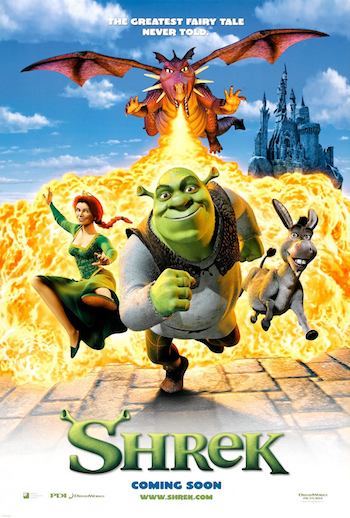
Shrek (2001)

The 100 Films Guide to…

Shrek

The greatest fairy tale never told.

Country: USA
Language: English
Runtime: 90 minutes
BBFC: U
MPAA: PG

Original Release: 16th May 2001 (USA)
UK Release: 29th June 2001
Budget: $60 million
Worldwide Gross: $484.4 million

Stars
Mike Myers (Austin Powers: International Man of Mystery, The Cat in the Hat)
Eddie Murphy (Coming to America, Dreamgirls)
Cameron Diaz (There’s Something About Mary, Gangs of New York)
John Lithgow (Cliffhanger, Rise of the Planet of the Apes)

Directors
Andrew Adamson (The Chronicles of Narnia: The Lion, the Witch and the Wardrobe , Cirque du Soleil: Worlds Away)
Vicky Jenson (Shark Tale, Post Grad)

Screenwriters
Ted Elliott (Aladdin, Pirates of the Caribbean: The Curse of the Black Pearl)
Terry Rossio (The Mask of Zorro, Pirates of the Caribbean: Dead Man’s Chest)
Joe Stillman (Beavis and Butt-Head Do America, Gulliver’s Travels)
Roger S.H. Schulman (Balto, Mulan II)

Based on
Shrek!, a picture book by William Steig.


The Story
When his swamp is overrun with fairytale creatures, ogre Shrek sets off to confront the man responsible, Lord Farquaad. To get his land back, Shrek must rescue the Princess Fiona from her dragon-guarded castle, so that Farquaad can marry her. But all is not as it appears…

Our Hero
Shrek is a grumpy Scottish-accented ogre who just wants to be left alone in his swamp, but events conspire to get in his way. Of course, as things transpire, he really has a heart of gold.

Our Villain
Men of his stature are in short supply, though there are those who think little of him — it’s Lord Farquaad, who wants Fiona to be his bride primarily so he can become king.

Best Supporting Character
Shrek’s new best friend (whether he likes it or not), wise-cracking ass Donkey, gets many of the best lines.

Memorable Quote
Gingerbread Man: “Do you know… the Muffin Man?”
Lord Farquaad: “The Muffin Man?”
Gingerbread Man: “The Muffin Man.”
Lord Farquaad: “Yes, I know the Muffin Man. Who lives on Drury Lane?”
Gingerbread Man: “Well, she’s married to the Muffin Man…”
Lord Farquaad: “The Muffin Man?”
Gingerbread Man: “The Muffin Man!
Lord Farquaad: “She’s married to the Muffin Man…”

Memorable Scene
As Shrek, Fiona, and Donkey travel back to Lord Farquaad, they’re jumped upon by Robin Hood (who, for no apparent reason, has a French accent) and his Merry Men, attempting to rescue Fiona by, in part, singing a merry song. But she doesn’t want rescuing and so goes all Matrix on their merry arses.

Memorable Music
As part of its generally irreverent take on myths and fairytales, Shrek is laden with contemporary popular music. It was all very modern at the time, but, 17 years on, it’s obviously dated itself, sounding distinctly early-millennium-y now.

Technical Wizardry
The overall animation quality may be looking a bit dated now, but Shrek hails from the era when every major new computer-animated movie was breaking ground in the field, in one way or another. In Shrek‘s case, it was the ability to realistically animate hair and grass.

Next time…
To date there have been three sequel movies, a spin-off movie (which then has its own world of attendant spin-offs, including a six-season TV series), a 4D theme park attraction (which was included in 3D on some DVD releases of the film), plus numerous TV specials and the like, as well as a stage musical version. There are constant rumours of the franchise getting a big-screen continuation, too.

Awards
1 Oscar (Animated Feature)
1 Oscar nomination (Adapted Screenplay)
1 BAFTA (Adapted Screenplay)
5 BAFTA nominations (Film, Supporting Actor (Eddie Murphy), Music, Sound, Special Visual Effects)
1 BAFTA Children’s Award (Film)
1 Saturn Award (DVD Special Edition)
4 Saturn Award nominations (Fantasy Film, Supporting Actor (Eddie Murphy), Writing, Music)
8 Annie Awards (Animated Theatrical Feature, Individual Achievement for Directing in an Animated Feature, Individual Achievement for Writing in an Animated Feature, Voice Acting by a Male Performer in an Animated Feature (Eddie Murphy), Individual Achievement for Effects Animation, Individual Achievement for Music Score an Animated Feature, Individual Achievement for Production Design in an Animated Feature, Individual Achievement for Storyboarding in an Animated Feature)
4 Annie Award nominations (Individual Achievement for Character Animation (x3), Individual Achievement for Production Design in an Animated Feature)
Nominated for the Hugo for Best Dramatic Presentation
Nominated for the Palme d’Or (seriously)

Verdict

DreamWorks’ irreverent riff on fairytale animations was a breath of fresh air back in 2001, allowing them to net the first Best Animated Feature Oscar ahead of Disney or Pixar. A decade and a half of imitators have taken the shine off that somewhat, as have advances in technology (old CGI ages worse than old cel animation), but it remains an amusing and quotable film, with a surprisingly strong moral message at its heart.

The Boss Baby (2017)

2018 #12
Tom McGrath | 97 mins | download (HD+3D) | 2.39:1 | USA / English | U / PG

The Boss Baby

The Boss Baby was one of the top 20 highest grossing films of 2017, which earnt it a place on my ’50 Unseen’ list, thereby ensuring it would remain in my consciousness for as long as I referred to said list (i.e. for the rest of time). Then it went and got nominated for an Oscar too, displacing the likes of The LEGO Batman Movie and Ghibli heir Mary and the Witch’s Flower in the process. With those factors combined, I felt I had to witness it for myself. I chose to do so in 3D, to hopefully ameliorate at least some of the anticipated discomfort of watching the film itself. I needn’t have worried: despite what many people will tell you, I thought The Boss Baby was actually pretty good. Well, most of it.

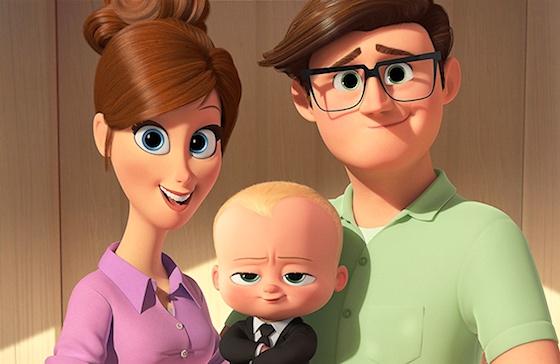
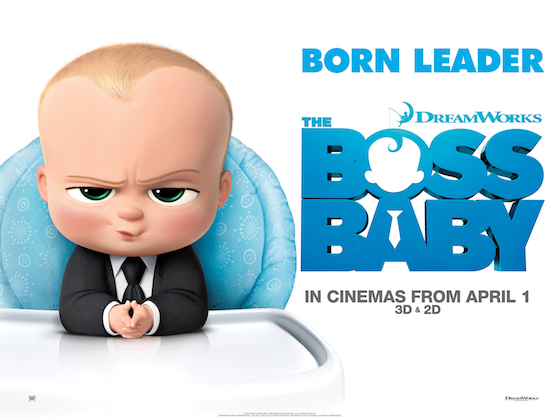
It’s the story of Tim (voiced by Miles Bakshi and in narration by Tobey Maguire), a seven-year-old only child with a hyperactive imagination and two doting parents. But then a new baby arrives… As Tim’s parents’ affection shifts to their attention-demanding bundle of joy, he’s the only one who can see the truth: that the baby wears a suit, carries a briefcase, and is clearly a businessmanbaby on some kind of undercover mission. Obviously no one will listen to Tim, so he sets about exposing the truth.

Sibling rivalry

For all its daft humour, the reason The Boss Baby is so successful (for an adult viewer) is that it’s actually a really neat way of tackling the whole “sibling displaced by new baby” thing, from the kid’s point of view. That’s the thematic and subtextual meat that makes it more than just “wouldn’t it be funny if a baby was a businessman!” As part of this, it has a nice line in juxtaposing how an imaginative seven-year-old sees the world versus how it really is — showing us both Tim’s fantasies and the actual events they’ve launched off from. It allows the film to have exciting and kooky stuff (like talking business-babies and elaborate action scenes) while also remaining grounded. Watching in 3D heightens this further, incidentally: as with most computer-animated films, the 3D effect is generally pretty nice, but it really comes alive during the fantasy and action sequences.

If that all sounds oddly serious, it isn’t. Arguably best known nowadays for his Trump impersonations, Alec Baldwin is an obvious choice to voice an infantile businessman. This one’s actually competent, though, so Baldwin plays it straight and thus is dryly witty. There are also plenty of amusing visual gags, one-liners, and so on to fulfil the expected comedy remit. Okay, some don’t land or are a bit juvenile, but it is a kids’ movie after all.

Parents are so gullible

Unfortunately, what works in the early sections begins to go awry later on. By the third act it’s lost the connection to plausible reality that made Tim’s imagined versions such fun — it’s impossible to translate the OTT action we’re witnessing into what might be really happening. I know it sounds daft to talk about plausibility in a film about a baby who’s a businessman, but it’s the relationship between Tim’s fantasies (i.e. the business-baby stuff) and real-life (i.e. really he’s just a new baby) that makes the earlier parts work.

Arguably worst of all is the epilogue, which takes a very serious emotional issue (the loss of a baby) and tosses it aside to expedite the resolution the filmmakers want to reach. Maybe it’s a bit much to expect a kids’ movie to attempt to tackle the realities of losing a child, especially when it only introduces that element in its closing minutes, but then surely the solution is to not even go there; to find a better way to wrap up the story?

It’s this increasing lack of attentiveness that ultimately led me to give the film a 3 instead of a 4. If it had kept up the early quality through to the end, I likely would have looked more generously on it. Nonetheless, thanks to the bits that worked really well, I generally found the film to be a pleasant surprise.

3 out of 5

Spin-off TV series The Boss Baby: Back in Business is available on Netflix from today.

Annihilation (2018)

2018 #45
Alex Garland | 115 mins | streaming (UHD) | 2.39:1 | UK & USA / English | 15 / R

Annihilation

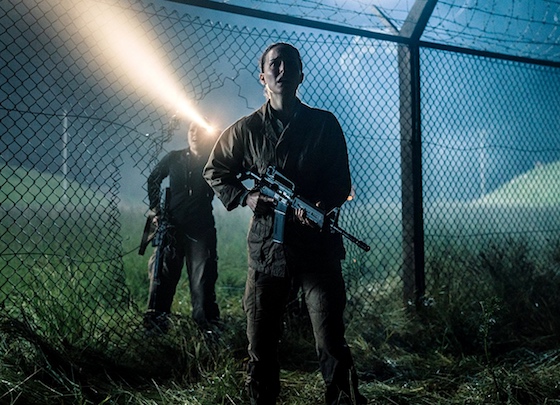
Many column inches (and even more tweets) have been penned about Paramount’s decision to relegate director Alex Garland’s second third film straight to Netflix outside the US, Canada, and China, so I presume the pros and cons of that move have been thoroughly discussed elsewhere. Personally, I’m on the fence: it’s disappointing not to see intelligent sci-fi being given a shot at the box office, but I’m one of those people who’s 50/50 on whether I go to see it or just wait for disc/streaming/etc. (I’ve not even seen The Shape of Water, for example, although that’s partly due to a dearth of convenient screenings during its brief theatrical appearance. Conversely, I did go to Arrival.) Anyway, it is what it is at this point, so let’s move on to the film itself.

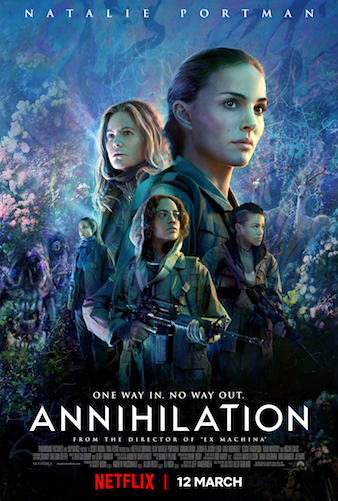
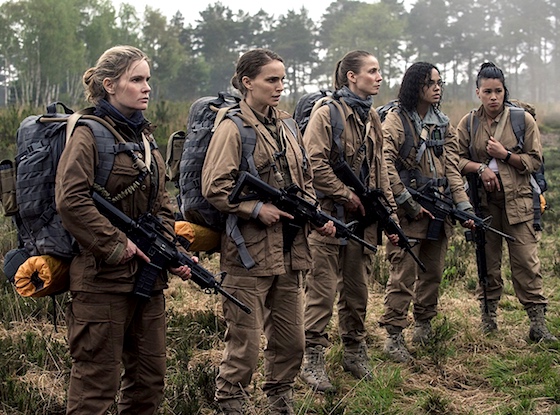
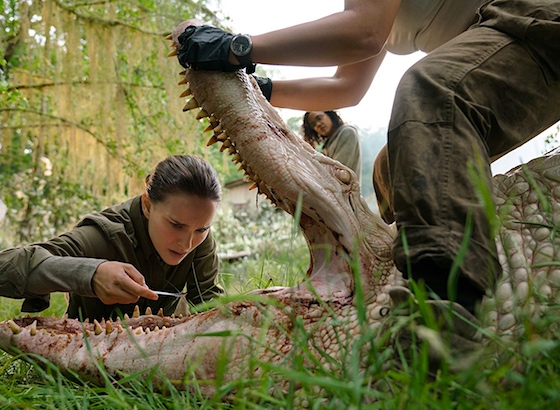
Loosely based on the acclaimed novel by Jeff VanderMeer (reportedly Garland read the book once then wrote the screenplay from memory), it follows biologist, academic, and former member of the Army, Lena (Natalie Portman), whose soldier husband Kane (Oscar Isaac) went missing a year ago during a secretive mission. After he suddenly reappears, apparently with no memory of his time away but with some severe medical problems, the couple are scooped up by a military organisation investigating Area X, a top-secret quarantined zone affected by an unexplained phenomenon known as the Shimmer. Various teams have been sent inside the Shimmer, but Kane is the only person to ever return. As his health deteriorates, Lena, desperate for answers, joins the latest squad to venture inside. That’s where stuff gets crazy…

Squad goals

The first thing Annihilation made me think of was Denis Villeneuve’s Arrival. The connection was initially triggered by the score: the ambient soundtrack by Geoff Barrow and Ben Salisbury reminded me so much of Arrival’s that I had to check this wasn’t a last work by Jóhann Jóhannsson. Once I spotted that, the other similarities in the story leapt out: they’re both thoughtful sci-fi parables about a female university lecturer being co-opted into a military operation to investigate a strange extraterrestrial presence on Earth, while also remembering her family life in flashbacks.

Despite Paramount’s insistence that the film was too intelligent for non-US audiences (you can take a moment to laugh at that notion if you like), Annihilation is perhaps more accessible than Arrival, at least initially. Whereas Villeneuve’s film played like a character drama, Garland’s has a strong adventure-movie vein, also laced with elements of the horror genre. It’s still not a mile-a-minute thrill-ride, but, if you wanted, you could engage with it on the level of a quest through an alien event, encountering strange phenomena and creatures, with events of life-threatening jeopardy. However, for all the original sci-fi ideas, it does also touch on weightier, more human psychological issues — as the Empire review summarised it, “depression, grief and the human propensity for self-destruction.”

All the better to eat you with

Naturally this material is carried by the cast. Portman makes for an interesting lead. Clearly damaged by grief, she’s quite a cold figure, which may distance her from some viewers in the way it does from some of her team mates. But there’s more to it than that, and Portman delivers subtle nuances that hint at more beneath the surface. The rest of her all-female squad — played by Jennifer Jason Leigh, Tessa Thompson, Tuva Novotny, and Gina Rodriguez — all have distinct personalities, all get brief subplots and moments, and they’re mostly managed with an equal level of understatement. Perhaps the best is Thompson, whose calm, gently heartfelt performance is quietly superb, and even more striking as it marks a huge contrast to her star-making turn in Thor: Ragnarok just a few months ago. As a pair of films to be a calling-card for her skills, one could barely ask for more.

A lot of disappointment about the lack of a theatrical release stems to not being able to see these visuals on a cinema screen; not being able to experience the audio with a cinema sound system. Well, that partly depends on your own setup at home, of course. Setting that aside, though, while there are certainly some very striking visuals, it wasn’t as consistently stunning as some reviews made it sound. I’m not saying it wouldn’t benefit from the big screen, especially if you’re particularly fond of that experience, but I didn’t feel I was missing much scale by watching at home. I felt similarly about the sound design, though I do say that as someone with a 7.1 system. For spectacle, the intricate and colourful end credits are the most striking bit — I’m certain they benefitted from my viewing the film in 4K HDR.

Scared of the dark?

However you get to see it, writer-director Alex Garland has crafted another sci-fi mystery/thriller that engages on multiple levels. For me it was somewhat damaged by the hype, perhaps a result of US reviewers frantically urging people to get out and see it to prove that Paramount’s lack of faith was a mistake. While I didn’t instantly love it in the same way as, say, Arrival, or Garland’s debut, Ex Machina, it’s undoubtedly a fascinating, thought-provoking slice of science-fiction — and a much-needed critical success for the “Netflix Original” brand after a couple of recent duds. I’d also say it places Garland ahead of genre contemporaries like Neill Blomkamp and Duncan Jones as a filmmaker to keep an eye on. Okay, he’s not quite Denis Villeneuve, but he’s a lot closer than the others.

4 out of 5

Annihilation is available on Netflix in most of the world now.

The Jungle Book (2016)

2018 #40
Jon Favreau | 106 mins | Blu-ray (3D) | 1.78:1 | USA & UK / English | PG / PG

The Jungle Book

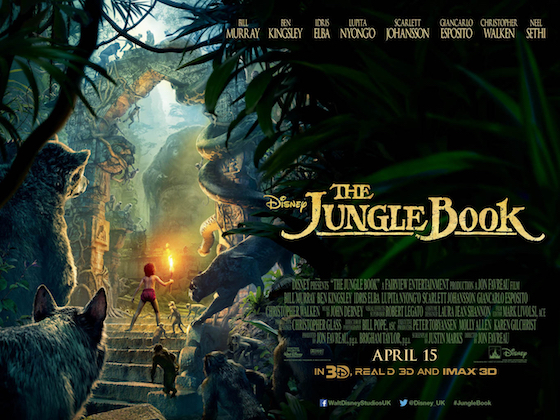
One of the successes that has convinced Disney to remake basically their entire animated back catalogue in live-action, Jon Favreau’s take on Disney’s adaptation of Rudyard Kipling’s stories barely counts as “live-action” really: the vast majority of it is animated — often the only real bits are Mowgli and some (but by no means all) of the props and scenery he interacts with — but it’s done to be photo-real and so we pretend that’s live-action.

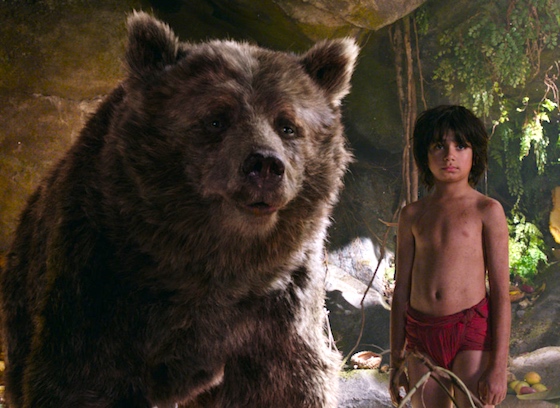
Whatever you want to call it, the visuals are stunning. It’s incredible stuff by the animators, though also by Favreau and DP Bill Pope to make all that hard work look great as a film too — they put special effort into making sure the CGI was properly lit, etc. And I reckon it’s even better in 3D. Presented in a screen-filling 1.78:1 ratio, unconstrained by the black bars of your nowadays-standard 2.35:1, it honestly feels like a window into another world. You sometimes see reviews of good 3D that say “you feel like you could reach out and touch it”, which I’ve always taken as A Thing People Say rather than an actual inclination, but at one point I did feel like I wanted to reach out and stroke Baloo’s fur, he looked so soft. The end credit sequence (a kind of pop-up book routine) looks particularly great in 3D, which helps to sell the miniaturised dimensions.

Bear necessities

Anyway, the film itself. Disney’s Jungle Book is such a well-known childhood classic that I don’t imagine you need me to recap its plot, though this version doesn’t ape it one-for-one. When Favreau was first brought on board the story treatment Disney had in development was much closer to Kipling’s work, including none of the changes Disney made when they adapted it before (i.e. adding songs and the character of King Louie), as well as being more violent, aimed at a PG-13 rating. So it was Favreau who decided it should be closer to the Disney classic, aiming to find the sweet spot between the two styles. I think he’s nailed that, mixing in enough that’s familiar from the animation with a bit more seriousness derived from Kipling.

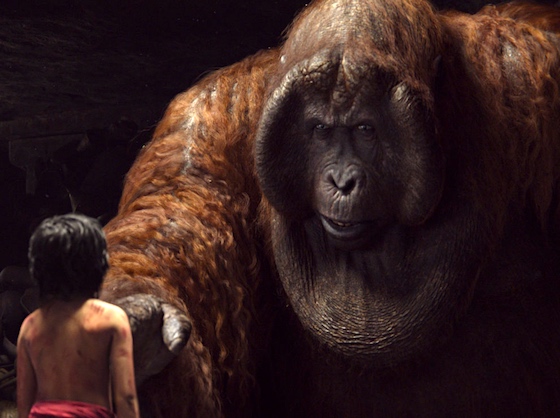
That said, I wasn’t wholly convinced by the use of the songs. The rendition of Bare Necessities is disappointingly truncated, though at least fits in context. Conversely, King Louie’s song, I Wan’na Be Like You, is so out of place that I found the sequence kind of uncomfortable. Weirdly, its reprise at the start of the end credits is great. There it’s followed by Trust In Me, which isn’t included in the film proper but might actually have worked there.

I wanna be like you-oo-oo

Still, the film as a whole functions well; surprisingly well, one might even say. You may remember the Rotten Tomatoes score for it went crazy when it came out, hiding the high 90s — it ended up at 95%. And it’s the perfect example of why Rotten Tomatoes doesn’t score a film’s quality, but does score the chance that you’ll enjoy a film. I’m not sure many people would think this is a “9.5 out of 10” kind of film, but one there’s a 95% chance you’ll think is good? Yeah.

4 out of 5

The Jungle Book is available on Netflix UK from today.

Murder on the Orient Express (2017)

2017 #164
Kenneth Branagh | 114 mins | cinema | 2.39:1 | USA, UK, Malta, France, Canada & New Zealand / English, French & German | 12A / PG-13

Murder on the Orient Express

Did we need another version of Murder on the Orient Express? That seems to be the question that preoccupies many a review of the film, primarily with reference to the Oscar-winning 1974 version directed by Sidney Lumet and starring Albert Finney as Agatha Christie’s Belgian detective, Hercule Poirot, alongside an all-star supporting cast. That’s not the only other adaptation of arguably detective fiction’s most famous novel, though there were fewer than I thought: a modernised TV movie starring Alfred Molina was made in 2001, and it was of course filmed as part of the David Suchet Poirot TV series in 2010, but that’s your lot (in English — the Germans and Japanese have both done it on TV). So, on the one hand, maybe we should be all set for screen versions; on the other, it’s not like it’s the only remake.

So, if you’ve not seen a version before, you’re spoilt for choice. If you want to know which I think you should pick… Well, I’ve not seen it, but I imagine we can discount that 2001 TV movie. Suchet is still the definitive screen interpretation of Poirot, but that particular episode is not the series’ finest hour, as I recall. And while I enjoyed the ’74 version a good deal, I wasn’t bowled over by it. Which brings us to this new one.

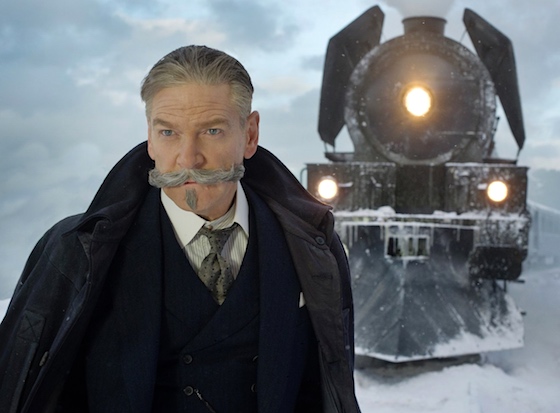
The star of the film: Branagh's moustache

Personally, I thought it was very good indeed. It’s a film of its genre and heritage — by which I mean it functions the way Christie-style murder mysteries always do, and it’s staged and shot mostly with a classical dignity — so if you have a dislike for that then this isn’t revisionist in a way that will win you over. But within those ‘constraints’ it’s very well done. The photography, in particular, is magnificent. Shot on 65mm, but without showing off about it in the way some other directors have recently, it has a richness, a grandeur, and an elegance that is most befitting.

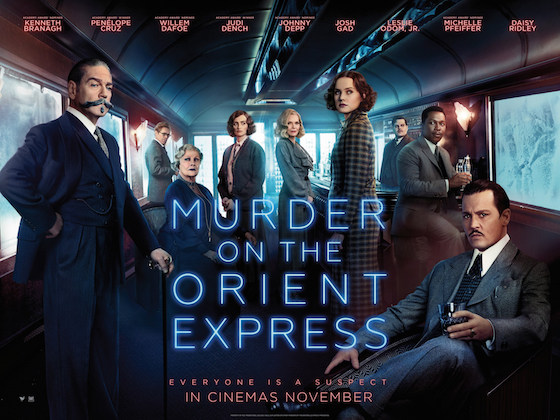
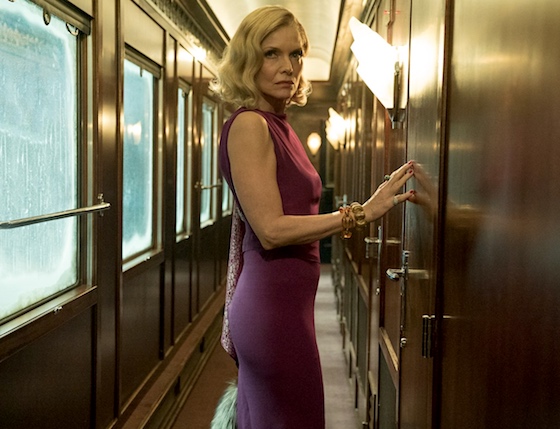
Having mentioned the all-star cast of the previous film, it must be said that this version doesn’t skimp in that department either. The key roles are filled with a veritable who’s-who of acting talent, including big names (Johnny Depp, Michelle Pfeiffer, Penélope Cruz), quality thesps (Olivia Colman, Willem Dafoe), people who’ve worked with Branagh before (many of the small roles), people who tick multiple of those boxes (Dame Judi Dench, Sir Derek Jacobi), and freshly-minted stars too (Star Wars‘ Daisy Ridley, Sing Street‘s Lucy Boynton; depending on your point of view, Beauty and the Beast‘s Josh Gad and Hamilton‘s Leslie Odom Jr as well). The size of the cast and style of the story means that even the most-featured only get a couple of scenes of their own (plus scattered lines in ensemble moments), but the talent involved imbues the roles with inherent character.

A dangerous liaison?

And then there’s Branagh himself as Monsieur Poirot. Most discussion of his performance has focused on the moustache, understandably. It’s certainly a magnificent feat. But Branagh is a very fine actor, of course, and he manages to make Poirot his own — an impressive job when there’s the spectre of David Suchet’s definitive performance looming. I wouldn’t say he’s surpassed Suchet in any way, but his take on the character is different enough to dodge too many direct comparisons, while not being so different that it no longer feels like Poirot, at least to me.

Frankly, I feel like an important element to enjoying the film is to approach it with an openness to it being its own thing — a courtesy I don’t believe it was afforded by some critics and viewers. Many reviews I’ve read had a tendency to compare it to the 1974 film, either in a specific “what I thought of each” sense or a broad “your opinions of that film may colour your view of this one”. I guess that’s a useful metric to some people, but it’s better to judge the film on its own merits, I feel. That said, I’ve also seen some call it too slow, others call it too fast; some say it’s too dull, others say it’s too full of action… No wonder it ended up with middling average scores: never mind not being able to please everyone, it seems like you can’t please anyone. Personally, I thought it largely hit the mark in all those respects.

Classical elegance

And it seems like the wider audience agreed: it ended up grossing $350 million worldwide, which places it in the top 30 releases of 2017. For a film of this type in the current box office climate, that’s an excellent achievement. For comparison, it’s just below the likes of Fifty Shades 2, Cars 3, and The Mummy Mk.III, and it also out-grossed films such as The LEGO Batman Movie, Blade Runner 2049, Split, Baby Driver, and even Get Out. I guess it appealed to a different audience than the one that routinely discusses movies online. It also means we’re getting a sequel, with Death on the Nile set for a 2019 release. Do we need another version of that too? Well, why not?

4 out of 5

Murder on the Orient Express was released on DVD, Blu-ray, and all the rest, in the UK this week.

T2 Trainspotting (2017)

2017 #124
Danny Boyle | 117 mins | streaming (HD) | 1.85:1 | UK / English & Bulgarian | 18 / R

T2 Trainspotting

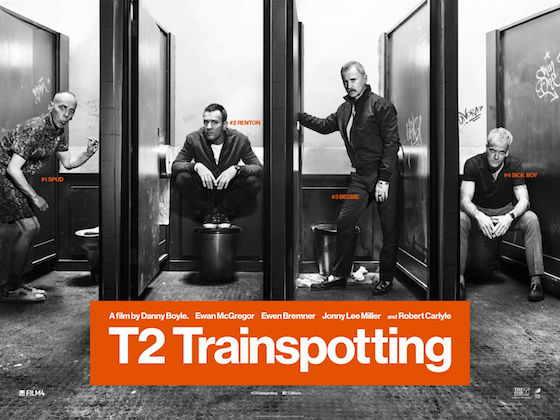
At one point during T2, a younger character accuses some of the returning characters of living in the past; that it’s all they talk about. It’s true of the characters, and it’s kinda true of the film itself too: this belated sequel to the era-defining original feels try-hard, like it wants to recapture the verve and inventiveness of its predecessor, but everyone’s now too grown up to do it properly.

Set 20 years on, it reunites the first film’s main characters… and, really, that’s the plot. Obviously other things happen, and the details are important, but that seems to be why the film exists: to get the gang back together for another couple of hours. Is that reason enough to make a movie? I guess everyone will have their own answer to that question. For me, it wasn’t reason enough to justify T2.

(Trivia aside that, frankly, I find more interesting then the film itself: reportedly director Danny Boyle wanted to call it simply T2, if James Cameron would let him — they thought they needed that permission because of Terminator 2 being commonly marketed as T2. But then it turned out that Terminator 2 was never officially called T2, so they were free to do as they pleased. But then internet searches for “T2” were found to still mainly turn up the Terminator sequel (unsurprisingly, let’s be honest), so they settled on T2 Trainspotting so people would know what it was. You have to wonder why at that point they didn’t just call it Trainspotting 2…)

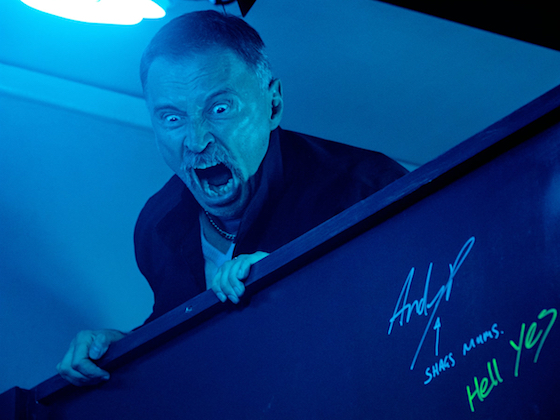
Looking as bored as I felt

Anyway, back to this T2. The meandering plot, such as it is, lacks the grit and realism of the first movie. For example, that ended with a simple betrayal — a guy stealing money while his mates were sleeping — while this ends with a knock-down drag-out fight in a construction site like something out of a low-budget thriller. Visually, too, it’s so clean and pristine. There are some properly beautiful shots, especially of the scenery outside Edinburgh, but I’m not sure that’s in-keeping with the Trainspotting aesthetic. Boyle does at points try to reheat the visual tricks of the first movie, but I didn’t feel it worked. The original’s many stylistic flourishes are now much imitated, but they were fresh back in the day and somehow that freshness still comes across when watched now. By trying to ape ape them, T2 just joins the long line of copycats.

Another key element of Trainspotting was the soundtrack. I don’t know what they were thinking with the music here — it isn’t even close to being as memorable or iconic as the original. Maybe that was the point, to not try the same trick again; but there are still plenty of jukeboxed tracks that attempt to draw attention to themselves, but… don’t.

I felt like this, too

Trainspotting had energy, dynamism, exuberance; it pulsed with life and youth. Its sequel is more sedate, more… middle-aged. Well, so are the characters, so that could work; but they don’t behave like they’re middle-aged — they’re too busy trying to recapture their youth, reliving past glories and past conflicts. The film is doing the same. You could perhaps argue that it’s form mirroring content, but the form lacks the wink at the audience to say “this is deliberate.” Like the characters, it seems unaware of the sad state it’s in. Ultimately, it feels like a slightly unfocused, thematically inconclusive, largely unnecessary postscript.

3 out of 5

Warcraft: The Beginning (2016)

aka Warcraft

2017 #38
Duncan Jones | 118 mins | streaming (HD) | 2.35:1 | USA, China, Canada & Japan / English | 12 / PG-13

Warcraft: The Beginning

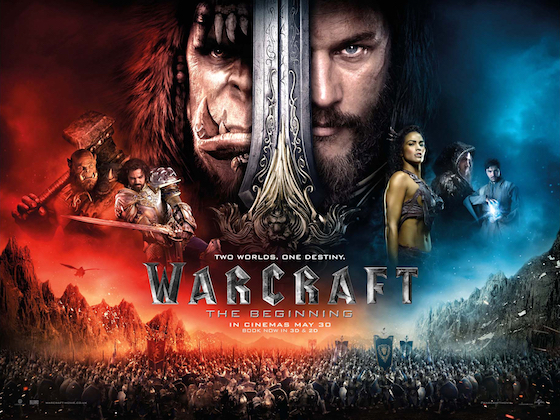
Produced by Legendary — one of the companies behind the Dark Knight trilogy, Jurassic World, Godzilla, and many other massive hits — the only thing that’s “legendary” about the Warcraft movie is how terrible it is.

Based on the long-running video game franchise, Warcraft (optimistically retitled Warcraft: The Beginning in many territories) is, based on what I’ve read, less an adaptation of the game (which has many different incarnations anyhow) and more an expansion of its universe. Rather than take the game itself and try to mush it into the shape of a movie, as most video game adaptations are forced to do, Warcraft depicts some of the game-world’s backstory, taking care to keep events canonical. I’m sure this is brilliant for fans and players, but I wonder if it’s part of why the film feels muddled and tacky to those of us who are uninitiated. Of course, at its best such efforts can make newcomers want to learn more; but at its worst it leaves you feeling confused and shut out. Warcraft is definitely a case of the latter.

It plays like a $160 million fan film. It doesn’t bother with world-building, just throwing the viewer in at the deep end. That can work, but it needs to be carefully managed. Warcraft just ploughs ahead, going deeper and deeper. It’s been made for people who know this world, its places, its people, its concepts, its rules. The film is a prequel to something that doesn’t exist — or, rather, something that doesn’t exist as a movie. And yet, for all co-writer/director Duncan Jones’ efforts to remain faithful, apparently it’s not faithful enough for some of the hardcore. It seems the movie has wound up in a place where it’s not stuck to the backstory enough to please initiated fans, but not opened itself up enough to be accessible to newcomers either.

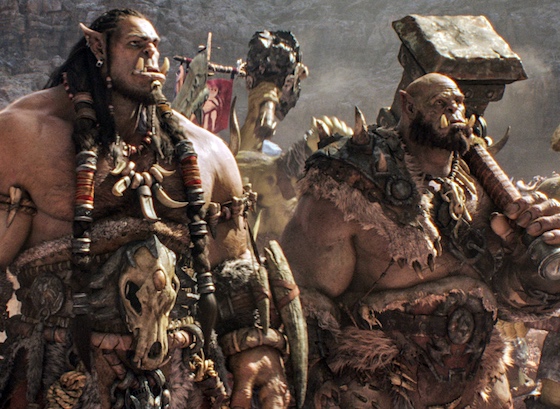
This could get orcward

Unfortunately, the problems don’t stop there. Characters’ personalities change from one scene to the next, with no sense of development or connection. Many of the performances are stilted or clumsy, with a good deal of the actors feeling miscast. Scenes exist in isolation, with little sense they should follow what was before or precede what comes after. It feels like it was heavily messed around in post — not just stuff chopped out (reportedly Jones’ director’s cut was 40 minutes longer), but things moved around within the story — but then something will happen that suggests those scenes were always meant to be where they are. Whatever the cause, it makes it even harder to follow a story that already feels like it’s shutting out newcomers.

The biggest shame is that you can see glimmers of potential — mainly in the world itself, which is clearly quite thoroughly realised (presumably thanks to having been developed over many, many years of the games’ existence). But then, the story that takes place within that world isn’t an especially original or interesting one. Or, rather, I don’t think it is. I mean, it’s hard to tell what precisely is going on half the time.

A lot of the technical merits are strong, too. Almost every shot is loaded with CGI, but the vast majority of it looks pretty incredible. It’s no wonder some bits come up short, however, because the sheer volume of different locations, creatures, and spell effects is mind-boggling. Obviously some parts are going to suffer when you bite off more than you can chew. If there’s a problem here it might be that the design work is quite “high fantasy” — it’s all exaggerated and almost cartoony, as opposed to the more realistic take of something like Peter Jackson’s Lord of the Rings. That’s not to everyone’s taste; indeed, it might be part of why such fantasy tales used to be (and, often, still are) such a niche market.

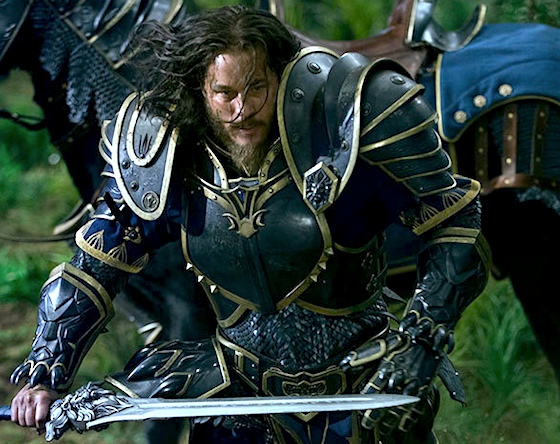
Totally realistic costumes

Talking of the market, reports say Warcraft needed to gross $450m just to break even. In the US, it took $47.4m. No, I didn’t put the decimal in the wrong place. And that’s not opening weekend, that’s in total. It was a big hit in China, but that wasn’t enough: worldwide it managed just shy of $434m (which, fact fans, makes it one of only two American movies to gross over $400m without making $100m in the US (the other was Terminator Genisys)). Jones had plans for sequels (he’s shared them on Twitter, which naturally got turned into news articles, if you’re interested), but, yeah, they’re not happening. Thank goodness the Chinese didn’t give it another few million, because this project already feels like a waste of five years of the director’s promising career. You could see Jones as currently being on a similar path to that previously trodden by the likes of M. Night Shyamalan and Neill Blomkamp: a hugely successful debut followed by increasingly poor, eventually terrible films. Hopefully his next movie, Mute (available exclusively on Netflix from today), will rectify that.

2 out of 5

Warcraft: The Beginning featured on my list of The Five Worst Films I Saw For the First Time in 2017, which can be read in full here.

The Duellists (1977)

2018 #26
Ridley Scott | 96 mins | DVD | 1.78:1 | UK / English | PG / PG

The Duellists

It’s 40 years this month since Ridley Scott’s debut feature appeared in British cinemas, which perhaps makes now the most appropriate time to have awarded him the BAFTA Fellowship (as he was this past weekend, of course).

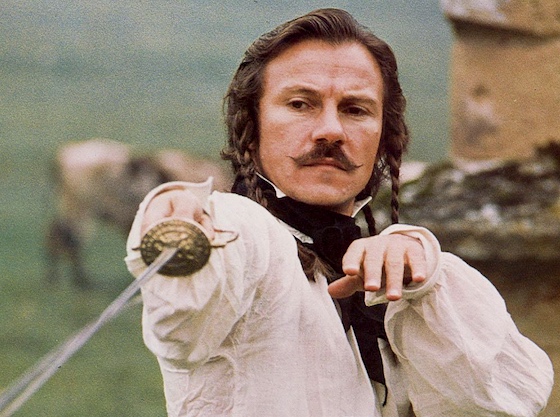
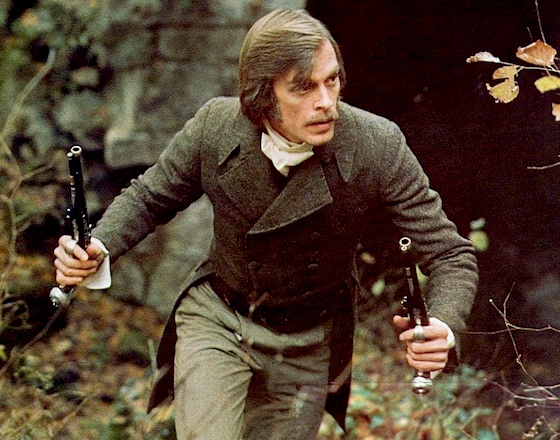
Adapted from a short story by Joseph Conrad, which was itself inspired by a true story, The Duellists stars Keith Carradine and Harvey Keitel as a pair of soldiers in Napoleon’s army who, for reasons only properly known to one of them, end up fighting a series of duels — or, really, one duel constantly reignited — over the better part of two decades. They become renowned for it (Conrad discovered the story through a newspaper article noting the death (by natural causes) of one of the real-life pair), to the chagrin of Carradine’s reluctant duellist. He dreads every potential encounter, aware of the fight’s futility and danger, but honour keeps drawing him back.

Ultimately, honour and the futility of fighting are what The Duellists is most about, if it’s about anything — if you like, you can enjoy it as merely a series of well-staged combats between two men, each stubborn in their own different way. They also each have slightly different ideas of honour, it would seem, but they’re compatible enough that it keeps drawing them back to the fight. “Acting with honour is all well and good,” the film seems to be saying, “but look where it gets them.” It doesn’t completely ruin their lives, but it does take a serious toll. A bit of common sense goes a long way, and acting with so-called honour, which might seem to be the moral course, doesn’t actually involve a great deal of common sense.

The bad duellist

Scott also intended the pointless, never-ending fight to represent a microcosm of war. Speaking to Empire magazine, Scott described Conrad’s story as “a very nice pocket edition of the Napoleonic Wars” because it “somehow encapsulated the craziness of an argument and how at the end of a 20-year period one of them forgot the reason why they were fighting. Isn’t that familiar?” Fighting for fighting’s sake; not wanting to be the one to back down… it seems it’s human nature, just as much in a conflict between two men as in between two nations. A bit of common sense would go a long way…

The other aspect of the film most worthy of comment is its photography. Reportedly Scott set out to imitate Stanley Kubrick’s Barry Lyndon, released just a couple of years earlier. It’s an appropriate inspiration: both tales are set in the same era, and Lyndon looks incredible. Scott undoubtedly succeeds in his goals — both that of copying Kubirck’s visuals and that of such copying being a good idea: much of The Duellists looks gorgeous, particularly wide scenery shots. Although the cinematography is credited to Frank Tidy, Scott says he operated the camera himself for the entire shoot, so who’s to know where exactly the credit for that achievement lies.

The good duellist

Resemblances to Barry Lyndon extend beyond just the visuals, mind. As noted, it’s set in the same era, so various visual trappings are similar, from costumes to some of the locations — if not direct copies, they certainly evoke Kubrick’s film more than once. There’s also the story itself: a tale focused on just one or two characters but spanning decades, and during a particularly tumultuous and eventful period in history. As Tim Pelan puts it (in this piece at Cinephelia & Beyond), “while Barry Lyndon advances with the forward momentum of one of Napoleon’s columns in its telling of a fool’s misfortune and slow glide towards the destruction of all he worked for and holds dear, The Duellists dashes pell-mell between the very different clashes of the antagonists.” Scott’s film feels like it thinks it is, or wants to be, an epic, just like Lyndon, even though it only lasts a little over 90 minutes.

Comparisons to such a lofty cinematic success would damn a lesser film, but The Duellists is a very fine work in its own right. Despite the similarities I’ve highlighted, it’s really a very different film: Barry Lyndon has a kind of leisurely elegance, whereas The Duellists is more economical and straightforward. It’s certainly not Scott’s greatest film (his next two immediately put paid to that), but it’s perhaps his most under-appreciated one.

4 out of 5

The Pirates! In an Adventure with Scientists! (2012)

aka The Pirates! Band of Misfits

2018 #8
Peter Lord | 88 mins | Blu-ray | 2.35:1 | UK & USA / English | U / PG

The Pirates! In an Adventure with Scientists!

After a foray into CGI with the decent-but-not-exceptional Flushed Away and Arthur Christmas, Aardman took this adaptation of Gideon Defoe’s comedic novels as a chance to return to what they know best: stop-motion animation.

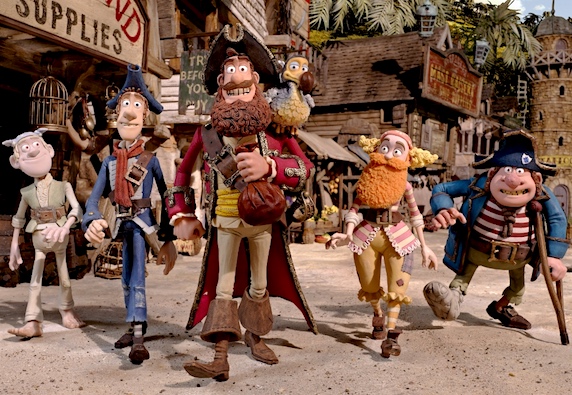
It stars a ragtag band of misfits— ugh, don’t get me started on the title change… but if you did, I might say something like the opening few paragraphs of this review. Anyway, as I was saying, it stars a ragtag crew of pirates, who are led (appropriately enough) by the Pirate Captain (Hugh Grant). His greatest desire is to win the Pirate of the Year Award, an honour he’s never achieved because, frankly, he’s a bit of a rubbish pirate. When he bumps into Charles Darwin (David Tennant) he stumbles upon a possible route to victory, but first he’ll have to contend with pirate-hating monarch Queen Victoria (Imelda Staunton).

Naturally it’s a tale not so much of derring-do as of humorous shenanigans, though in truth it’s not the studio’s most hysterical offering, ticking along with a level of gentle amusement rather than outright hilarity. That said, some parts do spark considerable mirth, like a trained monkey who ‘speaks’ through word cards, and there are background gags aplenty for the keen-eyed viewer. Plus it’s all carried off with the ineffable charm of Aardman’s hand-crafted puppetry, and that goes a long way (at least for this reviewer).

Band of misfits

I’ve always thought the Pirates of the Caribbean movies (especially the first one) more-or-less nailed the tone I would’ve wanted from an adaptation of the beloved Monkey Island games, but I read a commenter somewhere say The Pirates is probably the closest we’ll ever get to a Monkey Island film and, thinking about it, he’s probably right. The Monkey Island games are mostly cartoonish comedies, with a fair dose of irreverence and anachronism, and The Pirates offers up a similar brand of humour. (Maybe this is a niche comparison to make, given the height of Monkey Island’s popularity was over 25 years ago now, but, hey, these things are always ripe for rediscovery).

Despite being the fourth highest-grossing stop-motion film ever made, distributor Sony judged The Pirates to be a flop and the sequel Aardman were planning got canned. That’s a pity, because you feel this motley crew could’ve led us on another amusing adventure or two yet.

4 out of 5

Aardman’s new film, Early Man, is in UK cinemas now.

Another Blindspot Review Roundup

Following on from the roundup of four of my Blindspot and “What Do You Mean You Haven’t Seen…?” reviews the other day, here’s another quartet.

In today’s roundup:

  • Gran Torino (2008)
  • Planet of the Apes (1968)
  • Nashville (1975)
  • A Matter of Life and Death (1946)


    Gran Torino
    (2008)

    2017 #78
    Clint Eastwood | 116 mins | download (HD) | 2.40:1 | USA & Germany / English & Hmong | 15 / R

    Gran Torino

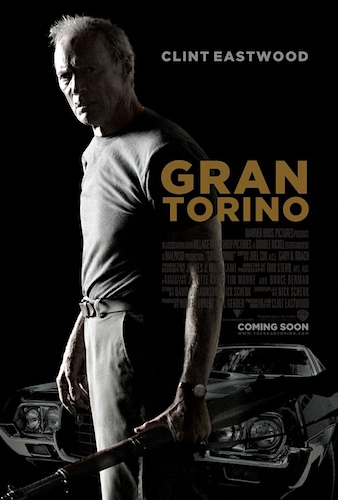
    Clint Eastwood’s modern Western (thematically speaking), about a grumpy old loner who overcomes his inherent racism to bond with the immigrants who now dominate his neighbourhood and eventually come to their defence, is a well-liked film, generally regarded as a late career highlight for the director-star. I imagine it would play very nicely as a companion piece and/or counterpoint to his earlier Oscar-winner, Unforgiven — both are stories about old men in one final fight, essentially. Here, that comes with a subtext about the price that’s paid for standing up for yourself. It may be the right thing to do, and maybe it ends up with the right result, but the good guys really suffer to get to that point.

    While that aspect of the film is ultimately powerful, I was less won over by the actual filmmaking. It feels like it’s been jiggered around in the edit, with some odd bits where it just jumps into a new scene. Even before that, Nick Schenk’s screenplay occasionally features very heavy-handed dialogue, of the “explain what the character is feeling right now” variety. It’s especially bad when Eastwood just talks to himself in order to vocalise these points for the sake of the audience.

    Still, if you’re immune to such niggles then it remains a potent — and timely — tale of doing what’s right for the defenceless. Such themes never die, I suppose.

    4 out of 5

    Planet of the Apes
    (1968)

    2017 #96
    Franklin J. Schaffner | 112 mins | Blu-ray | 2.35:1 | USA / English | PG / G

    Planet of the Apes

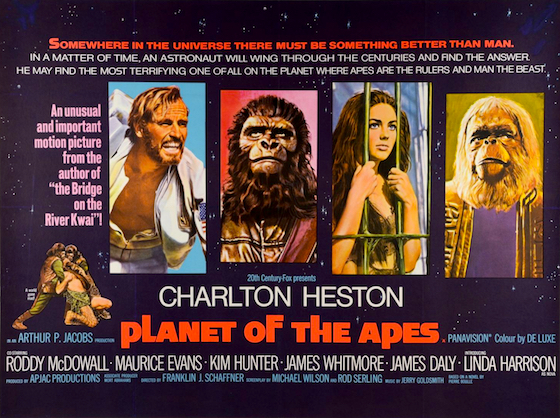
    The original instalment in the long-running franchise (it’s up to nine films across three go-rounds now, plus a couple of TV series) sees astronaut Charlton Heston land on a mysterious planet where apes have evolved to have human-like intelligence, while men are mute wild creatures dominated by their simian betters. And eventually there’s a twist that everyone knows, which is a shame because I bet it was pretty darn surprising before that.

    Coming to Planet of the Apes for the first time almost 50 years after its release, there’s an unavoidable quaintness to some of it, mainly the monkey makeup. It was for a long time iconic, but it’s been abandoned in favour of hyper-realistic CGI in the new movies and therefore shows its age. That said, while the apes may not be as plausible as those produced by modern technology, the performances underlying them are still strong. It contributes to what is really a parable about dominance and oppression; colonialism inverted onto a white man, that kind of thing. All wrapped up in a sci-fi adventure narrative, of course.

    Honestly, it’s not just the effects that have improved — as a piece of speculative fiction, I think it’s now been outclassed by the recent trilogy. It’s still a cracking adventure, but a bit “of its time”.

    4 out of 5

    Nashville
    (1975)

    2017 #111
    Robert Altman | 160 mins | Blu-ray | 2.35:1 | USA / English | 15 / R

    Nashville

    Robert Altman’s low-key epic about 24 characters and how their stories interact, overlap, and collide across five days in the city of Nashville, Tennessee.

    The sheer scope of that makes it a tricky film to interpret. There’s a lot going on, much of it in snatched conversations and moments that leave it up to the audience to piece together what matters and why. Collision must be a theme: within the first hour there are three car crashes or near misses, and the climax is certainly a collision in its own way. I’ll be honest, this isn’t a fully-developed thought, so I’m not sure what the point of it might be. It’s a small element of the film, really — something like all the music being performed is much more obvious and therefore maybe more relevant.

    I guess I’m searching for meaning because the film in general is just casually observational of a bunch of characters meandering through a few days. Maybe there doesn’t need to be meaning — maybe that is the meaning. It’s certainly one way to interpret the finale. So, I kind of liked it — or, rather, admired it, perhaps — even if I didn’t necessarily ‘get it’.

    4 out of 5

    A Matter of Life and Death
    (1946)

    2017 #74
    Michael Powell & Emeric Pressburger | 100 mins | DVD | 4:3 | UK / English | U / PG

    A Matter of Life and Death

    I finally get round to watching this on a ropey old DVD, and then they announce a new 4K restoration (which was released in UK cinemas earlier this month). Hopefully a Blu-ray will follow. It will be very welcome, because I imagine this film will look magnificent in properly restored HD.

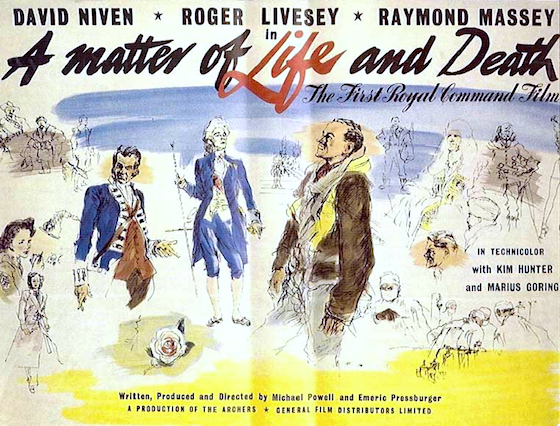
    It begins with an incredible opening scene, in which an entire relationship is founded and ended over the radio in about five minutes. From there it’s the story of a World War Two pilot (David Niven) who avoids death by a fluke, then properly falls in love with the voice from the other end of that radio call (Kim Hunter) before the afterlife comes a-callin’ to take him where he was meant to be. Or maybe that’s all just a vision induced by the injury he sustained. Either way, he must argue his case to remain on Earth.

    It’s a grandly romantic film — it is all about the triumph of love over everything else, after all — but with a particular fantastical bent that I think remains unique. It has the wit to present a mildly irreverent stance on the afterlife, not taking the whole “life and death” thing too seriously. While the final result of the airman’s trial is never in doubt, the delight is in the journey there.

    5 out of 5

    Planet of the Apes, Nashville, and A Matter of Life and Death were viewed as part of my Blindspot 2017 project, which you can read more about here.

    Gran Torino was viewed as part of my What Do You Mean You Haven’t Seen…? 2017 project, which you can read more about here.