
Francis Lawrence | 123 mins | Blu-ray | 2.40:1 | USA / English | 12 / PG-13
 If you’re not au fait with the first two Hunger Games movies, there’s nothing for you here. Why would you want to join a story halfway through anyway?
Even for those of us who are, Mockingjay Part 1 — the first half of a two-part finale that, for my money, plays more like its own standalone movie than most first halves of two-part finales manage (I’m thinking of Deathly Hallows 1 or The Matrix Reloaded here) — throws us in at the deep end, starting a little while after the end of the last film and challenging us to keep up. It’s a little frustrating at times — if you’ve not watched the previous movies into the ground, there are points where you wonder if you’ve forgotten something or just not been told it yet — but ultimately helps make for an engrossing, mature movie.
Naturally I mean “mature” in the sense of “grown up”, not in the oft-misused sense of “for adults only, wink wink”. This is a thoughtful film, one which has more time for examining issues of politicking than for bang-bang-a-boom fight scenes. Indeed, if you’ve come looking for an action movie — as, it seems, most critics did — then you’ll definitely be disappointed. If, however, you’re looking for a film to continue the series’ rich vein of sci-fi political allegory, well, you’re in luck. This edition: propaganda.
In the previous films, heroine Katniss (Jennifer Lawrence) inadvertently inspired a rebellion against the ruling Capitol, which has been bubbling away without her knowledge. Now, having been targeted by evil President Snow (Donald Sutherland), she’s been transported to the underground locales of District 13, where they want to put her in films to continue spreading dissension among the other districts. At the same time, the Capitol are putting Katniss’ captured lover Peeta (Josh Hutcherson) on the air, arguing for peace and maintaining the status quo. It’s a war of hearts and minds, essentially,  as both sides attempt to rally ordinary people to their cause through the power of the media. It’s a tale that’s as timely as ever, surely.
One of my favourite elements here is the distrust that both sides engender. The rebels Katniss has found herself with are certainly the good guys, battling to overthrow an abusively oppressive regime, but they aren’t whiter-than-white — they won’t always do everything our hero would like; she’s not always sure she can trust them. There’s no doubt about which side is the right one to be on, but it’s at least a little more complex than the norm.
Katniss herself remains a refreshingly un-self-assured heroine. She doesn’t always know or do what’s right, she isn’t always sure of her purpose or her goals, or even her own feelings. That’s so much more human than so many movie heroes, no doubt in part thanks to having an Oscar-able actress to carry the role. True, we’ve seen these facets before from her in both of the previous films, but hurrah to author Suzanne Collins and to the filmmakers for not taking the simple route of having her transform into something she didn’t start as. There’s still a whole outstanding film to bring about such a change, of course, so we’ll just have to wait and see how they follow this through to the end.
The fact there will be another film is an undoubted point of contention. The Hunger Games is the latest to follow in Harry Potter’s footsteps and split the final book of a series in two when filmed. Indeed, since Twilight latched onto that bandwagon it’s become de rigueur, with the final-book-split usually announced as soon as the first film in a wannabe-series is a box office hit — see the Divergent series, for example (or The Maze Runner for one that supposedly won’t succumb to this). Despite the complaints from many other critics and viewers, 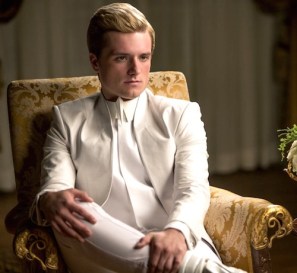 I must say that (as someone who hasn’t read the book) it didn’t feel overly like the first half of something longer to me. Of course there’s a cliffhanger and stuff, but there was at the end of the last film as well. This is no worse than that. If anything, I felt Mockingjay Part 1 built to its ending more successfully — I was quite surprised when Catching Fire stopped, whereas here the ending felt like a natural stopping point. In fact, given the point some of the storylines reach, it’s difficult to imagine them feeling anything other than rushed if they’d been executed in half the time. Maybe the film is a little drawn out in places and some storylines could’ve been condensed (how many propaganda films do we need to see Katniss make, really?), but that’s a niggle about perhaps wanting a minor trim, not a complaint decrying the need for full-blown editorial intervention.
Whether or not this Part 1 stands alone will be cemented by the next film, I feel. If the focus on using Katniss as no more than a propaganda figurehead isn’t continued in Part 2 then, well, that’s the part of the story that this film is about. It doesn’t feel like it needs to be continued next time — that particular propaganda angle has been fully explored — and so I think this instalment will feel much more like a fully-fledged film in its own right if they just move on. I hope the final film give us new themes, new subplots, new arcs to follow; I hope it feels like Part 4 of 4, in the way this currently feels like Part 3 of 4, and doesn’t play as Part 3B of 3 and retroactively transform this into Part 3A.
If you like a lot of Hunger Games action from your Hunger Games movie, Mockingjay Part 1 will certainly be a disappointment. On the other hand, if you more enjoy the political satire side of the series, 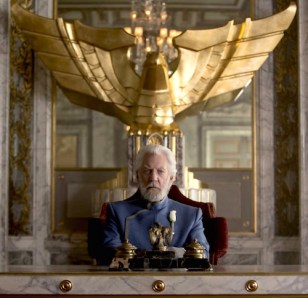 it may be your favourite instalment so far (and you wouldn’t be alone in that view). For me, Catching Fire is the best of the three because it crystallises both of those constituent elements; and if the first film was purely the action side (with a bit of the politics), then here we find its mirror image: purely politics (with a bit of action). Either way, perhaps the ultimate fate of all these films rests on how well the next, final part can bring all their action, themes, and plots to fruition.

The Hunger Games: Mockingjay – Part 1 is available on Netflix UK from today.
 Ten years after the events of
  Let’s start with some other reviewers’ problems. An oft-cited one is the initial moral repugnance of the characters, but is it a valid criticism to say a movie about a bunch of macho dicks presents its characters as macho dicks? Because let’s not be kidding ourselves, the American military is not full of Guardian-reading lefties; it’s full of vulgar, unreconstructed young Blokes… like these fellas. Now, I’m sure I’m generalising — I’m sure they can’t all be like this — but I can believe plenty of them are. No doubt elements of their behaviour are more “macho fantasy” than reality (a hookers and coke party the night before shipping out?), but the fundamentals of their attitude are plausible.
 And just as it looks like we’re about to get a truthful, if obvious, moment where the characters admit that, no, this war is utterly pointless and has absolutely nothing to do with America or keeping Americans safe, the first guy answers, “yes, I do.” Really? Really?! At that moment it just feels queasily like right-wing propaganda, especially as the two characters in question have been positioned as our de facto heroes.
 Later, in the war zone, there are more horrific situations and imagery that will certainly test your perspective. For example, the guys come across a school bus that was caught in an attack on some monsters. The bus is full of dead children, but our guys need to search it for water nonetheless. Is this unflinching in its realism of the brutality of war, or a step too far and just sick? Perhaps the sci-fi context again undermines the movie, because you can’t apply the “this is really happening” argument when there are giant monsters involved. But if the giant monsters are a MacGuffin to reflect real, current conflicts, then does this become something that is happening? Perhaps it’s a circular argument.
 Dark Continent is the debut feature of director (and, here, co-writer) Tom Green, who previously helmed half-a-dozen episodes of E4’s excellent “superheroes with ASBOs” drama
  I do think Dark Continent is better than most reviews give it credit for, but it’s not exactly a movie of the greatest or most original insight, and — their added visual interest aside — it didn’t need to be a Monsters movie. Indeed, if it had just been a straight Middle East war movie, perhaps some critics would’ve been kinder, because at least they would’ve known what they were getting. If you liked the first film then there’s absolutely no guarantee you’ll enjoy this — it’s not the same kind of film at all — but the worst sequel of the decade? Not even close.
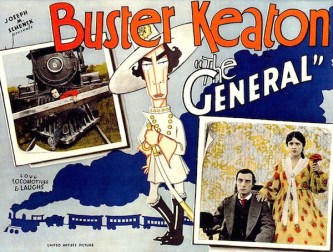 Poorly reviewed and a box office flop on its release, Buster Keaton’s The General has undergone a stark re-evaluation since: the United States National Film Registry deemed it so “culturally, historically, or aesthetically significant” that it was added to the registry in its first year, alongside the likes of
 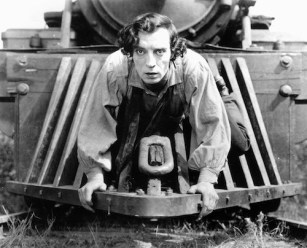 It was reportedly a very expensive film, and it looks it: there are tonnes of extras, not to mention elaborate choreography… of trains! Who knew old steam trains were so agile? There’s impressive physicality on display from Keaton, but the well-timed movements of those big old locomotives are quite extraordinary, especially for the era (I mean, for the past couple of decades you’ve been able to do pretty much anything thanks to a spot of computer-controlled what-have-you. Not much of that going on in the 1920s.)
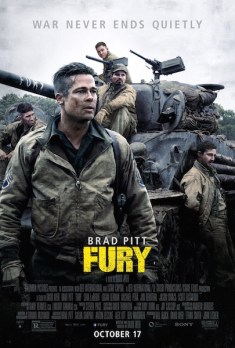 I don’t believe there are very many movies about tanks — there’s
 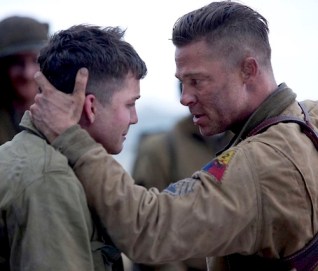 Most of the characters exist in a moral grey area, something which some reviewers seem to struggle with. From the off, our ostensible heroes are not shown in a particularly pleasant light, committing or encouraging acts we would view as unconscionable. As the film goes on, it seems like we’re being invited to bond with them, to respect or admire them. I’m not sure that’s a wholly accurate reading of it, though. I think we’re being shown different sides to them — much as Norman is, in fact. At first you see the depths they have reached; then, as you get to know them, you see a little more of their true (or at least their pre-corrupted-by-war) characters. Does this redeem them or excuse their actions? Well, that’s your decision. I don’t think the film is predicated on you coming round to their way of thinking. Without meaning to spoil anything, it’s not as if the meta/karmic world of plot construction lets them off scot-free by the end. Of course, whether we need our focus characters to be clean-cut heroes or whether complex morally-grey/black characters are preferable is another debate.
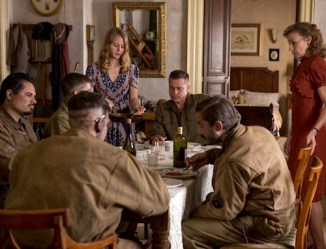 This is a scene most reviews seem to single out, I’ve since realised, but that’s for good reason: even watching it cold, the powerful writing, direction and performances mark it out as a sequence that transcends the movie it’s in. Again, it’s the unpredictability of what these men might do; the grey area of the guys we’re meant to think are the heroes not always being heroic.
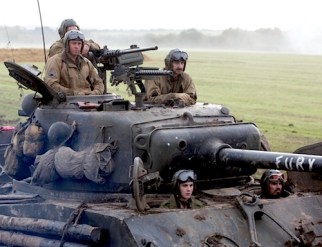 I think Fury is a rather rewarding movie for those that can, though. The fact it provokes debate is no bad thing — I think it’s a misinterpretation to read the film, as some online commenters clearly have, as “these guys do horrible things, but they’re the main characters and the not-Nazis, so I must be meant to like them, so the film is bad”. Well, I suppose it’s not news that some people struggle with cognitive dissonance. On the flipside, I don’t think you’re meant to outright hate them — there’s an element of “the Allies did bad things too, y’know” about the film, but that’s not its sole aim. I think it’s more complicated than that, and, naturally, all the better for it. Even on a more surface level, though, there’s adrenaline-pumping excitement to be had from the well-realised action scenes. It’s a combination that worked very well indeed for me, and if my score errs on the side of generosity then, well, consider it redressing the balance.
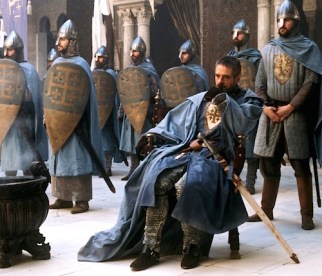
 Ridley Scott’s Crusades epic is probably best known as one of the foremost examples of the power of director’s cuts: after Scott was forced to make massive edits by a studio wanting a shorter runtime, the film’s summer theatrical release was so critically panned that an extended Director’s Cut appeared in LA cinemas before the end of the year, reaching the wider world with its DVD release the following May. The extended version adds 45 minutes to the film (and a further 4½ in music in the Roadshow Version), enough to completely rehabilitate its critical standing.
 A strong cast bolsters the human drama that sometimes gets lost in such grand stories. Bloom is a perfectly adequate if unexceptional lead, but around him we have the likes of Michael Sheen, David Thewlis, Alexander Siddig, Brendan Gleeson, and Edward Norton (well done if you can spot him…) There are even more names if you look to supporting roles. Most notable, however, are the co-leads: both Liam Neeson, as the knight who recruits Balian, and Jeremy Irons, as the wise advisor when he gets to Jerusalem, bring class to proceedings, while Eva Green provides mystery and heart as the love interest. Of everyone, she’s best served by the Director’s Cut, gaining a whole, vital subplot about her child that was entirely excised theatrically. It’s the kind of thing you can’t imagine not being there, and Scott agreed: it seems the chance to restore it was one of his main motivators for putting together a release of the longer version.
 (I’d wager
 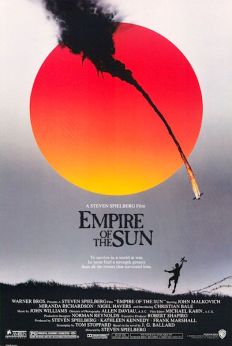 Steven Spielberg’s adaptation of J.G. Ballard’s semi-autobiographical novel stars a 13-year-old Christian Bale as Jim, the son of British ex-pats in China when the Japanese invade during World War II. Separated from his family as they try to flee, Jim encounters born survivor Basie (John Malkovich) and, when they wind up in an internment camp for the rest of the war, a cross-section of the rest of the left-behind. To Jim, a somewhat naïve but capable, confident and determined endurer, the whole thing is a big adventure; we can see the truth, though: that it’s a grim slog of life and death, and most succumb to the latter. The reality of the situation gets to Jim in the end, too… but maybe I’m getting ahead of myself.
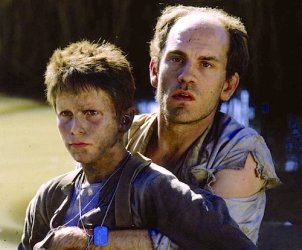 As it stands, the film is a fascinating insight into a less-often-covered aspect of the war. Even in small roles, the quality cast keep it watchable and relatable. Bale’s performance comes in just the right side of annoying — quite an achievement for a character who seems inherently brattish and prone to irritate.
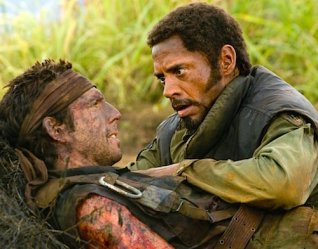
 A bunch of obstreperous actors are too much to handle for the director of a Vietnam war movie, so he dumps them in the jungle to shoot it with hidden cameras. Things go awry; hilarity ensues.
 The film may run a little long in the middle, though I don’t think that’s the fault of this extended cut. It adds just over 17 minutes across many little changes and extensions
 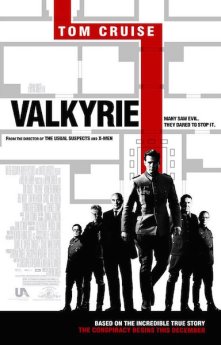 After abandoning the X-Men franchise for a
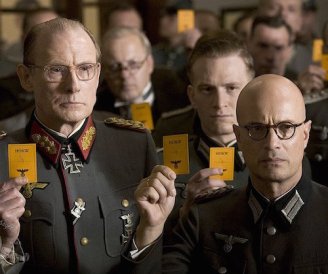
 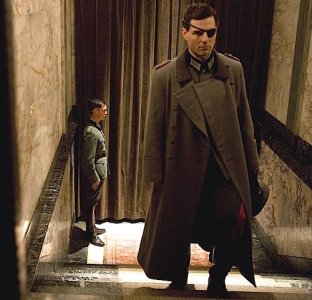 One of the stated aims of the conspiracy is to show the rest of the world that not everyone in Germany believed in what Hitler and his inner circle were doing. It may have taken us a long time to realise that, for fairly understandable reasons, but quality films like this help get the message out. Singer has crafted a proper thriller here, replete with scenes of edge-of-your-seat tension. Many a filmmaker can’t manage that with a fictional storyline, never mind one where we know exactly how it turns out.
 but nor is he in simplistic action hero mode.
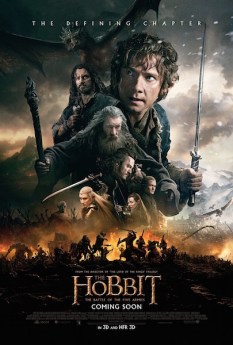 Peter Jackson’s epic Tolkien adaptation blunders its way to a conclusion with an instalment some have declared the trilogy’s best, presumably because they really enjoy watching someone else play video games. That’s what about half of this sextet-completing movie feels like, as it concludes the three-part Hobbit narrative with a CGI-riddled rendering of the titular battle. It’s the shortest film in Jackson’s Middle-earth magnum opus, though it comes to something when a film the best part of two-and-a-half hours long is described as “short”.
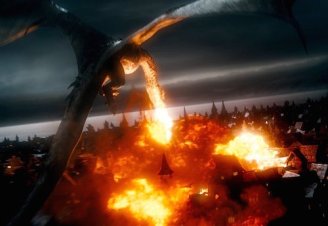 or he could have ended the second film with Smaug defeated and added more material to this third film to reach his desired running time. Or not even bothered adding stuff: if you lost the Smaug opener, The Battle of the Five Armies would still be over two hours long, which anywhere but Middle-earth is considered a decent length for a movie.
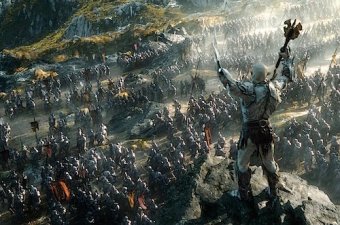 On the ground, the meat of the conflict only occurs when individual heroes are parcelled off into one-on-one duels. None of these particularly stand out, however, other than Legolas athletically jumping around a collapsing bridge that’s all so much CGI. This is where my earlier video game comparison really comes into play.
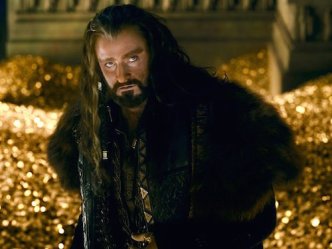 all of whom I’d thought would have more to do in the second and third parts of the trilogy. Turner, in particular, should have expected a bigger boost from Jackson’s decision to enrol him in an interracial romantic triangle, but it feels like they pulled back from that story thread a little after it proved unpopular in the previous film. It’s still obviously there, I just expected more of it.
 I was something of a defender of Jackson’s version of The Hobbit at first. I enjoyed An Unexpected Journey and stand by
 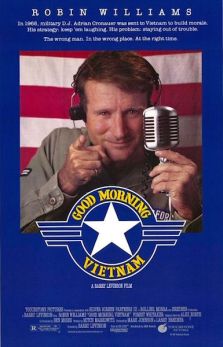 Inspired by the true story of a US Army DJ in Vietnam during the war, the resulting film is a showcase for star Robin Williams — reportedly, his antics aren’t even close to what really happened.
 100Films.co.uk