Searching (2018)

2019 #51
Aneesh Chaganty | 102 mins | digital (HD) | 16:9 | USA & Russia / English |
12 / PG-13

Searching

When his 16-year-old daughter Margot goes missing, David Kim (John Cho) does the most logical thing in this day and age: he turns to her computer and social media to try to work out where she’s gone. What Searching does to really sell this concept is place us inside the tech: everything we see takes place on the screen of computers, be it searching the internet, chasing leads via video chat, or compiling evidence in spreadsheets.

It’s a conceit that is clearly innovative, but also feels like it has the potential to grow old fast. After all, it’s inherently limiting, and if the filmmakers tried to coast on the novelty factor, you’d probably grow bored within the first half-hour. Fortunately, Searching has more to offer. Indeed, long before you’ve had a chance to become fed up with the unique storytelling method, you’re absorbed in the narrative.

It works on two fronts. There’s a degree of commentary on modern society and parent/child relationships, as David begins to discover all the things Margot has been hiding from him, realising he didn’t know his daughter as well as he thought he did. In some respects this is nothing new — we’ve had decades of films and TV dramas where parents discover their perfect little darling isn’t who they thought — but here it’s cannily updated for the social media era.

Searching the web

Secondly, it’s an engrossing mystery. Director Aneesh Chaganty uses the visual concept perfectly to help craft a storyline with compelling characters that keeps us thoroughly engaged. Pleasingly, the film never breaks its own rules, instead finding new ways to use the limitations to tell the story. The only possible misstep comes in the final act, when some developments begin to succumb to Movie Logic and get a bit grandiose for the previously-grounded film. But the array of twists here actually had me on the edge of my seat, and, really, what more do you want from a thriller than that?

Searching is the kind of film you come to thanks to its USP, your interest piqued by seeing how they can tell a story under such limitations; but what makes you stay, and want to come back, is how well it tells that story. It’s not unconventional for the sake of it, but a new and very timely way of viewing a narrative.

5 out of 5

Searching is available on Netflix in the UK from today.

It placed 6th on my list of The 15 Best Films I Saw For the First Time in 2019.

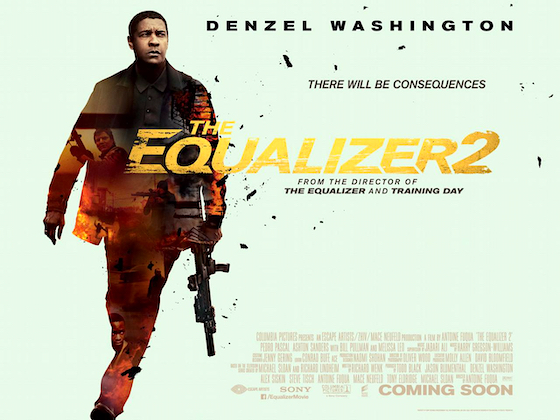
The Equalizer 2 (2018)

2020 #25
Antoine Fuqua | 116 mins | digital (HD) | 2.39:1 | USA / English, Turkish & French | 15 / R

The Equalizer 2

Now we’re equalised, bitch.

Sadly, that is not a line Denzel actually says in this movie. The film would be about 50% better if he did. Instead, what we get is an action-thriller where both the action and thrills are, literally, few and far between.

For those who skipped the first film, Denzel is playing Robert McCall, a former Marine and intelligence agent who retired to a life of inconspicuous normality, but has been tempted back into righting some of the wrongs of the world — or “equalizing” them, I guess. This time, an array of subplots eventually gives way to a story in which McCall sets out to avenge the murder of a friend.

I mention the subplots there because they’re the film’s biggest problem. As a result of them, it’s… so… slow… To start with, the subplots are a couple of small ‘cases’ introduced in the first half-hour, presumably to try to liven the film up because the main storyline is crawling along. Neither works. I’m not here for a pleasant drama about a Lyft driver who does kindly things for others — I want to see Denzel Washington kicking the asses of nasty buggers. The first film was noteworthy for investing more time in its supporting characters than is typical for the action-thriller genre, but this one takes that notion to extremes.

Even when the main plot does get moving, it takes over an hour to get to a ‘twist’ that’s obvious just from reading the cast list. At least it doesn’t try to save it for the end, I guess. That reveal leads to a wannabe-Taken-phone-speech declaration from Denzel, which should’ve come a lot earlier. It’s not as memorable as the Taken one (though the final line lands), but at least it’s a moment of drama and the film perks up after it — but by then we’re well over an hour in to a less-than-two-hours movie.

A rare moment of almost-action

From there it’s a short hop, skip and jump to a climax set amidst a horrendous storm in an abandoned seaside town. It’s a nice concept and it’s solidly executed, but it’s an at-most 20-minute sequence and it’s not exceptional, just a lot more engaging than the film’s other 100 minutes, so it doesn’t really justify sitting through the rest of the movie. However, I did not realise that flour could be explosive, but turns out it can, so in that sense at least this was educational for me.

(FYI, the film was cut in the UK to get a 15 certificate, removing some of the more extreme gore (insides hanging out, a spine being severed, etc). The 4K Blu-ray release is uncut and rated 18 (presumably so they could just port the disc rather than having to faff with edits/a new transfer). On Netflix it has an 18 icon, so I guess it’s also the uncut version, should that concern you either way.)

The Equalizer 2 isn’t a terrible film, but it is quite a boring one. Not just slow paced — genuinely boring. A raft of subplots don’t really go anywhere or serve any purpose, the main story is incredibly thin, and the limited action sequences do little to balance the books.

2 out of 5

The Equalizer 2 is available on Netflix in the UK from today.

The 100-Week Roundup VII

If I were being slavishly accurate about weeks, there should be seven films in this roundup. But that seemed a bit much, so — as the next one of these wasn’t due until the end of the month — I’ve split it in two.

In this roundup, the final films I watched in July 2018.…

  • The Garden of Words (2013)
  • The Secret in Their Eyes (2009)
  • Paul (2011)
  • The Way of the Gun (2000)


    The Garden of Words
    (2013)

    aka Koto no ha no niwa

    2018 #170
    Makoto Shinkai | 46 mins | streaming (HD) | 16:9 | Japan / Japanese | 12

    The Garden of Words

    If the only anime director’s name you know is Hayao Miyazaki, you could do worse than familiarise yourself with Makoto Shinkai, director of recent popular hits Your Name and Weathering with You. He’d already been gaining attention with the films he made before those, which include short feature The Garden of Words.

    It revolves around two individuals: a 15-year-old schoolboy who aspires to be a shoemaker, and a 27-year-old woman. They meet one day in a park during a rainstorm and develop a connection. According to Shinkai, the film is a love story between two people “who feel lonely or incomplete in their social relations, but who don’t feel that they need to fix this loneliness.” That’s an interesting perspective, because while there’s undoubtedly a significant element of loneliness in the film, it’s accompanied by an element of depression; that these two characters seem unfilled. Without wanting to spoil anything, it seems to be the connection between the two that ‘saves’ them and elevates their lives — i.e. they did need to fix their loneliness. Perhaps it’s a disconnect between intention and execution that led me note that “where it ends up going isn’t as good as where it begins”. Nonetheless, the characters are engaging, and their emotional turmoil and connection are affecting. It also leaves room for personal interpretation with an open ending — it does reach a conclusion of sorts, but there’s clearly space the viewer to imagine what comes next.

    The animation is simply stunning — both beautiful in itself, and in its technical accomplishment. For that reason, if given the choice, it might be tempting to opt for an English dub, but I’d advise to stick with the original Japanese. I’ve written before about how I’m regularly conflicted when watching anime about whether to go for the original Japanese or an English dub, and I do often I go for the latter — I must admit I’m swayed by the recognisable voice casts on Ghibli films, for example; and, generally speaking, it allows you to appreciate the visuals more when you’re not having to read a lot of subtitles. Nonetheless, this time I chose the Japanese audio, and I’m glad I did: it’s subtle and calm, like the film itself, and the quietness and gentle pace mean there’s not an overabundance of distracting reading (unlike in Your Name, for example). I popped on a bit of the American dub afterwards and it felt all wrong by comparison — somehow brash and decidedly inauthentic. On the bright side, either track sounds luscious in 5.1, with the rain falling all around you, which serves to really immerse the viewer in the situation alongside the characters.

    4 out of 5

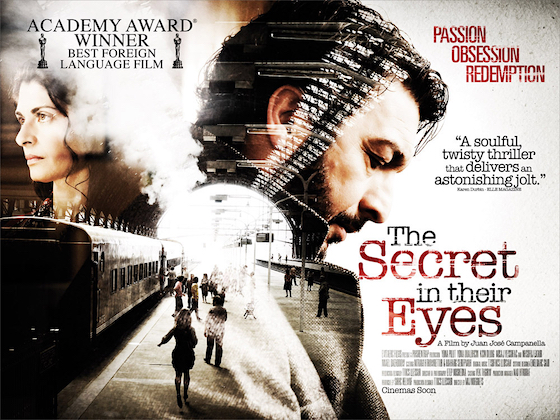
    The Secret in Their Eyes
    (2009)

    aka El secreto de sus ojos

    2018 #171
    Juan José Campanella | 129 mins | download (HD) | 2.35:1 | Argentina & Spain / Spanish | 18 / R

    The Secret in Their Eyes

    A surprise winner of the Best Foreign Language Oscar in 2010 (it beat A Prophet and Michael Haneke’s The White Ribbon), Argentina’s The Secret in Their Eyes is a murder mystery, two very different love stories, and a musing on the nature of justice, especially within a corrupt system.

    Primarily, it’s a procedural thriller about a decades-old unsolved case that one of the original investigators is revisiting in the hopes of finding closure. As that, I thought the film was probably a bit too long — despite some solid thematic weight, the unnecessarily slow pace at times make it feel a smidge self-important for what is fundamentally a crime thriller. That said, those other facets that have been added to supplement the storyline — the romance side; the passage of time (how do people deal with such life-changing events over the ensuing decades?) — do bring something to the film, elevating it beyond standard police procedural fare.

    Even as ‘just’ that, it pulls off some spectacular feats: the famous single-take at the football match really is an all-timer, and the final twist is unexpected and a perfect capper. I was this close to giving it full marks, and maybe when I revisit it someday I will.

    4 out of 5

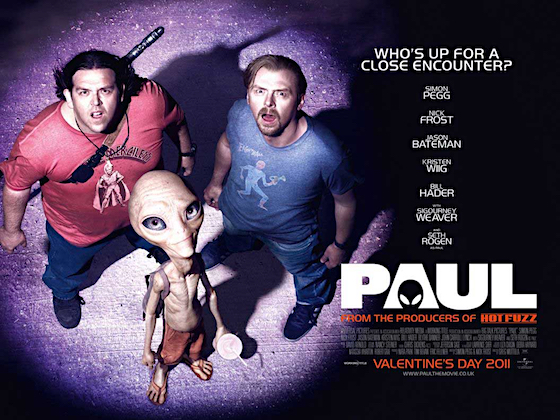
    Paul
    Extended Edition
    (2011)

    2018 #172
    Greg Mottle | 109 mins | Blu-ray | 2.35:1 | UK & USA / English & Klingon | 15

    Paul

    On a post-ComicCon road trip around the US’s UFO heartland, a pair of British geeks (Simon Pegg and Nick Frost) bump into an actual alien, the eponymous Paul (Seth Rogen), who’s on the run from a government facility. Cue a kind of “E.T. for grownups” as the trio — and a widening assortment of supporting characters — endeavour to evade the authorities and get Paul home.

    Mistaken by some for the third part of the Three Flavours Cornetto trilogy (thanks to it starring Pegg and Frost, but it’s missing the vital ingredient of director Edgar Wright, who was committed to Scott Pilgrim), Paul lacks the sharpness of that trilogy at its best. However, it’s full of likeability — in the characters, and of course the humour — to the point where it actually manages to get a bit emotional at the end. It’s also chock full of references and quotes for fellow geeks to spot, some of which are incredibly well-timed to have fantastic impact.

    As for the extended cut, there’s a comparison here. As usual, the theatrical cut was R-rated in the US but the extended one is unrated there, but (also as usually) I don’t think there’s anything that wouldn’t pass at R. The running time difference is about five-and-a-half minutes, but there are 41 differences crammed into that time. It seems like some fairly memorable jokes were cut and others added back — nothing earth shattering, but enough to call the extended cut the preferable one.

    4 out of 5

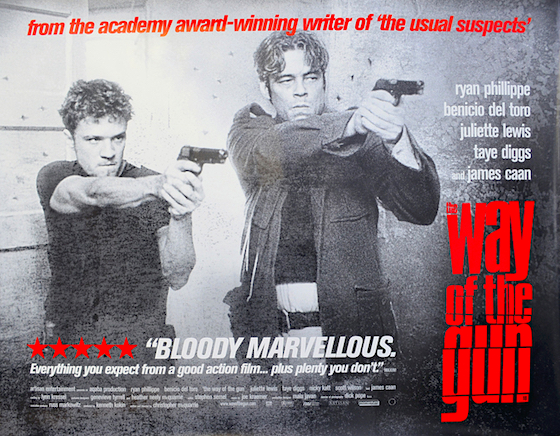
    The Way of the Gun
    (2000)

    2018 #173
    Christopher McQuarrie | 120 mins | Blu-ray | 16:9 | USA / English | 18 / R

    The Way of the Gun

    The debut directorial feature from screenwriter Christopher McQuarrie (who made his name penning the likes of The Usual Suspects and more recently has found success as the regular writer-director of the Mission: Impossible movies), is one of those ’90s crime comedy-dramas — you know, the kind of thing we describe as “Tarantino-esque”, for good reason. It has its fans, but McQuarrie tends to refer to it disparagingly on social media, no doubt in part because it landed him in “director jail” for over a decade. Personally, I agree with McQuarrie (I usually do): it’s not a failure, but it’s not much of a success either.

    My main problem with it is that it’s over-long and over-complicated. Both of those are thanks to too many characters with too many motivations. It’s possible to get your head round it all in the end, but there’s a stretch in the middle where it feels like work. But rather than slow things down and spell it out, it might be better if it moved through them all quicker — at least then it would be pacy. It’s also rather dully shot by Dick Pope, who was later Oscar-nominated for the likes of The Illusionist and Mr. Turner, but has plied most of his trade in the grounded world of Mike Leigh movies, which perhaps explains that. There are still two or three good shots, plus a neat oner that indicates the direction McQ’s style would head.

    There are flashes of McQuarrie’s brilliance elsewhere too, including some nice bits of dialogue and a couple of good sequences. The action scenes, in particular, demonstrate he had a strong skill there from the start. They feel very grounded and real — just the way the characters move; that they’re constantly reloading; how it ends when everyone’s out of bullets. McQuarrie’s brother, a Navy SEAL, was the technical advisor for these scenes, which explains their accuracy. The final shoot-out, with all of that going on, is the best bit of the movie. Well, at least it ends on a high.

    3 out of 5

  • The 100-Week Roundup VI

    Here’s another quartet of reviews from my July 2018 viewing, with an all-star cast both behind the camera (Stanley Kubrick, Ridley Scott) and in front of it (Keanu Reeves, Leonardo DiCaprio, Russell Crowe, etc).

    In this week’s roundup…

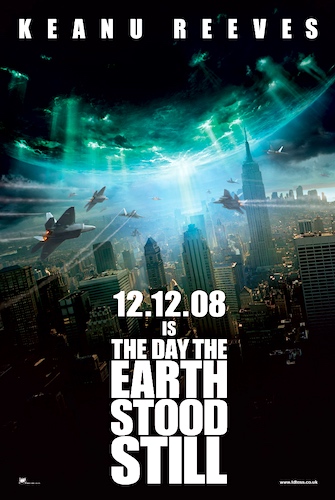
  • The Day the Earth Stood Still (2008)
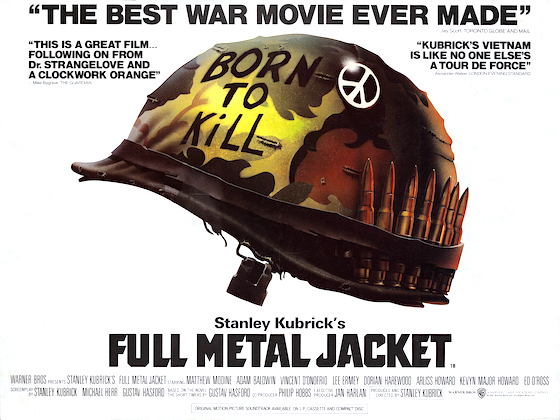
  • Full Metal Jacket (1987)
  • Wind River (2017)
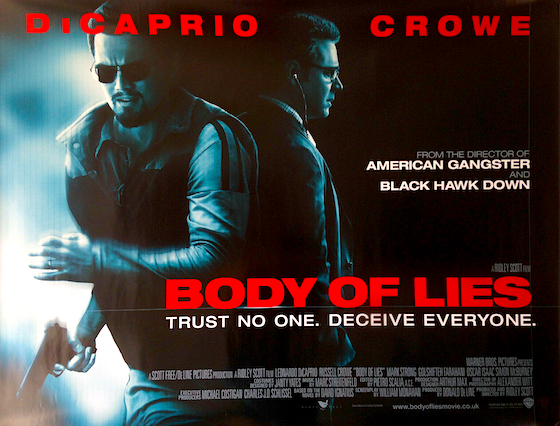
  • Body of Lies (2008)


    The Day the Earth Stood Still
    (2008)

    2018 #163
    Scott Derrickson | 104 mins | Blu-ray | 2.35:1 | USA & Canada / English & Mandarin | 12 / PG-13

    The Day the Earth Stood Still

    Blockbuster remake of the 1951 sci-fi classic, starring Keanu Reeves as an alien who has come to “save the Earth”.

    The original might be best remembered for its message about mankind. The do-over doesn’t so much attempt serious “humanity are the problem” moralising as just nod in that general direction. Instead, it conforms to the Hollywood-remake stereotype of simplification, using the plot as an excuse for a CGI destructathon. Even as that it’s a bit of a damp squib, with no genuinely impressive sequences; some of the CGI is pretty crap, even, like the first appearance of the giant robot GORT.

    I know we all love him now because he seems like a genuinely wonderful guy in real life and the John Wick movies are cool, but, still, the role of an emotionally cold alien pretending to be human but struggling to understand what truly makes us ‘us’ is a perfect fit for Keanu Reeves and his usual acting style. Jaden Smith is equally perfect casting as an irritating brat of a kid. Jennifer Connelly struggles gamely to be the heart of the film, and there are small or cameo roles for the likes of Kathy Bates, Jon Hamm, and John Cleese, none of whom can really elevate the basic material they’re given.

    All in all, it’s inoffensively bland, with some light sci-fi ideas, a bit of loose moralising, and a bunch of pixels whooshing about. Perhaps with a better creative team — or without the demands of a studio blockbuster budget — it could’ve been more; something genuinely thought-provoking about the value (or otherwise) of humanity. But it isn’t.

    3 out of 5

    Full Metal Jacket
    (1987)

    2018 #165
    Stanley Kubrick | 117 mins | Blu-ray | 16:9 | UK & USA / English | 15 / R

    Full Metal Jacket

    Kubrick’s anti-war war movie, about the dehumanisation of abusive army training, the virtue and success of kindness, and how combat can erode and destroy the soul. It’s “a Vietnam movie”, but Kubrick wasn’t interested in Nam per se, rather “the phenomenon of war” and what happens to young men when you turn them into killing machines.

    It’s a film of two halves: first, the training; then, the war. The first half is the better known one, and some people will tell you it goes downhill when they leave training. That first part is indeed horrid but effective and meaningful, but I thought the second half lived up to its impact too.

    A film about war’s effect on people requires strong performances, and fortunately it has those. Most famous is R. Lee Ermey’s nasty drill instructor — an unquestionably accurate portrayal of the real thing, because Ermey used to be one. He was originally hired as a consultant, but decided he wanted the role and convinced Kubrick to cast him, then rewrote his dialogue — the obscenity-strewn insults are all Ermey’s own. But for my money the best performance in the movie comes from Vincent D’Onofrio. Apparently he got the part just because he was a friend of Matthew Modine — it was his first film role — but he’s fantastic. And nowadays best known as a gun-happy right-wing nut-job on Twitter, Adam Baldwin is very convincing as, er, a gun-happy right-wing nut-job.

    Naturally, Kubrick’s work is as on-point as ever. A climactic action scene pits the entire troop against just one sniper, which is both thrilling and horrifyingly brutal. The film’s final death is excruciatingly drawn out, to really convey its emotional toll. Douglas Milsome’s photography frequently looks stunning as well. The fire-lit final act is as visually gorgeous as it is suspenseful and gruelling.

    To paraphrase a commentator in the Between Good and Evil documentary, Kubrick “takes the sympathetic characters and breaks them down so that, by the end, there’s no one left to root for, and the sympathy you feel is not for the character, but for what they’d lost.” And another notes how much you can see Iraq in the film, as if Kubrick was predicting the future of urban warfare too. Or, another way of looking at it: how little changes; how few lessons we learn.

    5 out of 5

    Full Metal Jacket was viewed as part of What Do You Mean You Haven’t Seen…? 2018.

    It placed 8th on my list of The Best Films I Saw in 2018.

    Wind River
    (2017)

    2018 #166
    Taylor Sheridan | 107 mins | streaming (HD) | 2.35:1 | USA, UK & Canada / English | 15 / R

    Wind River

    A veteran hunter helps an FBI agent investigate the murder of a young woman on a Wyoming Native American reservation.IMDb

    What follows is a neo-Western crime thriller, written and directed by Taylor Sheridan. As a genre piece, it’s most noteworthy for how well it handles the reveal of whodunnit. Just as you think the film’s getting to the point where they find who did it, but it’s only a suspicion and they’re going to have to go off and prove it, the film takes a hard left in a different direction that’s perfectly handled. To quote from a comment on iCheckMovies, the way it goes about this “seemed truly unique to this genre. The closest comparison I can think of is from Se7en, when [Se7en spoilers!] Kevin Spacey just turns up and hands himself in, completely out of the blue. It unexpectedly shattered the cat and mouse formula that people expected it to follow.” By dispensing with narrative oneupmanship (i.e. trying really, really hard to pull a twist out of thin air, as most mystery/thrillers do), it lets “the story unfold into more of a tragedy than the standard mystery or thriller you might expect it to be.”

    Talking of other reviews, some people are heavily critical of the film having a white male lead when it’s supposed to be about the plight of Native Americans, and especially Native American women. Well, yes, to an extent that’s true, but this is where fantasy rubs up against reality: do you really think a movie with a Native American lead would find it easy to get funding, distribution, and gain attention? Sometimes these things are a necessary ‘evil’ if your goal is to reach a wider audience and thereby spread the message. Besides, the film makes a point of treating the white characters as outsiders, in various ways. It’s not pretending this is how it should be, nor that they’re welcomed like, “hooray, the white people are here to save us!” If anything it’s used to emphasise the point: the Native American cops can’t solve the case themselves because they’re underfunded and understaffed; they have no choice but to rely on white people being prepared to help. That’s an indictment in itself.

    Altogether, this is a powerful movie — arguably Taylor Sheridan’s best, most mature screenplay (which is saying something for the man who wrote Sicario and Hell or High Water), and features a superb performance from Jeremy Renner, reminding you why he was Oscar-nominated for The Hurt Locker before his attempts to be a blockbuster action star.

    4 out of 5

    Body of Lies
    (2008)

    2018 #168
    Ridley Scott | 128 mins | download (HD) | 2.40:1 | USA & UK / English & Arabic | 15 / R

    Body of Lies

    A CIA agent on the ground in Jordan hunts down a powerful terrorist leader while being caught between the unclear intentions of his American supervisors and Jordan Intelligence.IMDb

    That’s the simple version, anyhow, because I thought the film itself got a bit long-winded and complicated; but if you enjoy spy movies, it’s smattered with some good bits of tradecraft stuff. That said, I’m not sure I buy Leonardo DiCaprio as the CIA’s man in the Middle East — he stands out like a sore thumb there; not good for a spy.

    Meanwhile, Russell Crowe commands complex world-changing missions over the phone while taking his kids to school or watching a football match — a nice touch, I thought, contrasting mundanity with these high-stakes actions. (Quite why he “had” to gain 50lbs for the role is beyond me, though. Sounds like he just fancied being lazy about his diet and exercise regime.) Still, the standout from the cast is the ever-excellent Mark Strong as the head of Jordanian intelligence, a man who is urbane and always immaculately dressed, but does not suffer those who disrespect him, exhibiting a kind of calm fury-cum-disappointment when they offend him.

    For all the confusion I felt about the plot, what I presume is the intended theme (that America can’t win because it refuses to respect or understand the culture of both its enemies and allies in the Middle East; and that the supposed good guys aren’t any better than the bad guys) comes across quite effectively. It’s also about the ineffectiveness of advanced technology. The CIA, so focused on their shiny new bells and whistles, lose out in the end to old fashioned personal interaction and patient preparation.

    Body of Lies seems somewhat torn between making these points and being an entertaining action-thriller. Ultimately it straddles the two stools, not quite satisfying as either — it has its moments, for sure, but it’s less than the sum of its parts. Maybe Ridley should’ve left the spy thrillers to his brother…

    3 out of 5

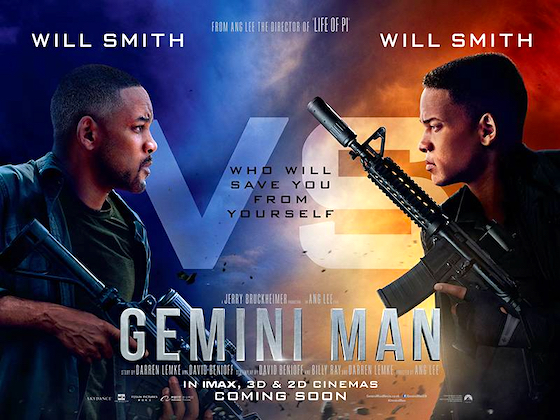
  • Gemini Man (2019)

    2020 #141
    Ang Lee | 117 mins | Blu-ray (UHD) | 1.85:1 | USA & China / English | 12 / PG-13

    Gemini Man

    Gemini Man is a film that, at every point I can remember it being talked about, was discussed more for its various technical feats than anything else. Partly that’s because there are a couple of angles. Firstly, the most obvious: it stars Will Smith as an ageing assassin who must fight… a 25-years-younger Will Smith, achieved with motion capture and CGI. Secondly, director Ang Lee shot it in 3D 4K HFR — that’s High Frame Rate, if you don’t know, with the picture running at 120 frames per second rather than the 24fps we’ve been used to for the past 90-odd years (excepting The Hobbit trilogy, though only if you saw one of the relatively-limited HFR theatrical screenings). Maybe it shouldn’t be a surprise, then, that Gemini Man often feels more like a tech demo with a plot grafted onto it than it does a fully functioning movie in its own right.

    Consequently, I’m going to spend more of this review writing about the film’s presentation than its content. To some degree, that speaks for itself as criticism. But if you are interested in the film and don’t give a toss about how exactly you’re seeing it (or don’t have a choice), feel free to whizz down to the last two paragraphs (just after the picture of Young Will Smith) where I finally offer some thoughts on the film itself.

    Back to the tech, then. There’s currently only one way to see Gemini Man in its intended format: at the cinema. I say “currently” — obviously such opportunities expired when its theatrical run ended, and I don’t imagine it’s likely to get a re-release. Every other option is a compromise. Want to see it in 3D? Not only will you need the appropriate home cinema setup, but you’ll have to import the disc from Germany, the only country where it was granted a 3D Blu-ray release. Want to see it in HFR? That’s easier, because the 4K disc is widely available, though obviously you still need the appropriate kit. (I presume the digital 4K versions are HFR too, but I don’t actually know that.) Mind you, even that’s something of a compromise, because tech limitations mean the home release is 60fps rather than the full 120 (to be fair, so were most HFR cinema screenings).

    Action Man

    I watched it in 4K 60fps, and, oh, it’s weird. So so weird. Distracts-you-for-the-entire-film weird. Virtually-the-only-thing-I’m-going-to-talk-about-in-this-review weird. The disc even begins with a notice/warning that it’s at 60fps rather than 24fps, so presumably they know how weird it feels. The most obvious effect of more frames per second is that motion is smoother, with reduced motion blur, but that applies on a micro level to lend an unnatural clarity to everything. The effect on motion is often called “the soap opera effect”, because such cheap drama has traditionally been shot at TV’s higher default frame rate. Of course, so is much other television, or even behind-the-scenes footage on films; so while it’s not a wholly inaccurate nickname, the effect reminded me more of TV documentaries. The film begins with a train journey in a lusciously green-looking Belgium, before travelling around the globe to other sunny locations with glamorous establishing shots. It looks less like a Hollywood action movie, more like Will Smith is the new host of Cruising with Jane McDonald.

    When it’s not playing travelogue, it looks like a tech demo. I don’t think that’s just the added smoothness, but everything about how it’s shot: it’s very bright and saturated, the kind of look you get in marketing promos, not feature films. Even paused it looks a little odd. Partly that’s the boost given to the colour palette by HDR, but at this point I’ve watched plenty of other films with HDR to be familiar with its effects, and I think this was beyond normal. The other thing the visual quality reminded me of was low-budget films by very new/amateur filmmakers, and that’s definitely to do with Ang Lee’s shot choices — lots of stuff at eye level, gentle pans and tilts, in locations so dull they might have been found around someone’s hometown. It doesn’t help any that all the fonts they’ve used for captions look like the editing software’s bland default. And further, it’s also the effect of shooting on high-resolution digital video — it’s ultra-clear, with none of the grain of real film, but, again, that’s a look more familiar from low-budget productions. Would HFR work better if it was shot on real film? You’d get back some of that tactile grit, rather than telltale digital smoothness.

    Biker Man

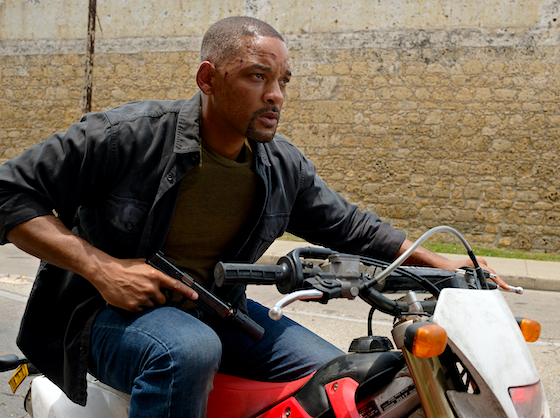
    What about when the film gets to its big action sequences — the kind of thing that obviously a no-budget newbie couldn’t afford. Would the change of milieu fix the mental associations? Yes and no, in that it just adds other ones: the first big sequence, the bike chase you probably saw in trailers or clips, looks like a computer game. Again, it’s a mix of elements: the digital sheen, the smooth frame rate, the shot choices (lots of POV or close following, like a game’s third-person camera), and an unnatural-seeming speed — it looks like some of the CGI has been animated too fast, though that could be HFR’s fluidity making normal motion look odd because we’re not used to it.

    The advantage of wondering all this while watching the film at home was that, afterwards, I could pop in the regular Blu-ray and compare a few scenes in 24fps 1080p SDR. Immediately, it looks a lot more like a regular movie. Is that indeed the loss of HFR’s smoothness, or is it the drop in resolution, or the loss of HDR enhancement? Without being able to view different permutations it’s hard to say which one causes the jarring effect, or if it‘s the incremental change made by each that adds up to a radically different picture when combined. That said, obviously I’ve watched 4K HDR films before, and it’s never struck me as odd-looking as much as this film (I’ve seen some strange applications of HDR, but that tends to be in individual shots/scenes, not an entire movie). The bike chase also looks more normal on the whole, though some of the bits I alluded to before still looked dodgy, so I can only conclude it’s a mix of the animation (because I’m sure it’s not a real stunt) and the HFR.

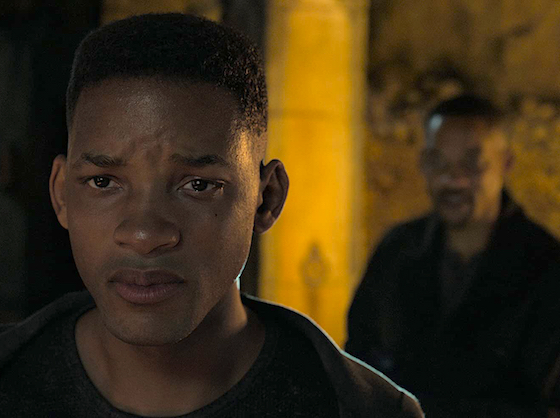
    If all that wasn’t distracting enough, there’s the fact that one of the film’s main stars is a de-aged Will Smith. We’ve seen plenty of de-ageing in films now, whether it be Marvel’s flashbacks or Scorsese’s varied eras in The Irishman. This feels more extensive, though — they’ve not just airbrushed Smith’s age-related blemishes, but recreated his youthful visage with full motion-captured CGI. The end result is both incredibly realistic animation and also not quite there. Maybe that’s just because I know it’s not real — I wonder if someone unfamiliar with the film’s setup wouldn’t register it. It looks more convincing than I remember Peter Cushing being in Rogue One, and I remember stories of kids who didn’t realise he was CGI. I guess the best praise is that, as the film went on, I realised I’d just accepted Young Will as his own character, not a second Old Will in disguise. There are scenes where he’s called on to do Proper Acting and it works. Unfortunately, it’s almost ruined by one scene at the end where the effect suddenly looks like a ten-year-old computer game. Was this a last-minute re-edit, I wonder, leaving them without enough time to do the CGI properly? It’s a shame to have dropped the ball at the last hurdle.

    Young Man

    And if you can get past all the technical distractions (which I guess most people will, as “the tech” is not why most people watch films, and on any format less than 4K the visual oddness evaporates anyway), what about the film itself? Well, it’s a passable action-thriller with a sci-fi tweak. For the level of the latter, think something like Face/Off rather than, say, Blade Runner. I’ve seen quite a few people compare it to a ’90s action movie and that’s pretty fair — subtract the fancy cameras and CGI and that’s what’s left. It’s not necessarily a bad thing, unless you’re so young that ’90s action movies are Old and consequently Bad. There are a couple of very impressive and exciting action sequences — the bike chase, primarily (which I bet looks fab in 3D). That said, the Blu-ray’s visual effects featurette reveals they faked a bunch of stunts that Tom Cruise and Chris McQuarrie would’ve done for real as a third-tier action sequence, which takes the shine off a little. (On the other hand, it also reveals that there’s some fucking incredible CGI in this movie — stuff you’d never imagine was an effect but is, including a full-on close-up of Old Will.)

    So, the reason the tech presentation remains the film’s strongest talking point is that the film underneath is decent but nothing particularly special. That said, I do think it’s been given a hard rap by critics and viewers alike — whether or not you’re interested in the experimental visuals, it’s a fine sci-fi-tinged action blockbuster, with all the attendant qualities and demerits that implies.

    3 out of 5

    Gemini Man is available on Sky Cinema and Now TV from today.

    The 100-Week Roundup V

    Like last time, these five films are connected not only by when I watched them (July 2018), but also by a shared star rating.

    Incidentally, it’s about to be a busy time for these 100-week roundups — there should be one every week for the next few weeks to keep up with my backlog. (As time goes on, such frequency may become commonplace.)

    In this week’s roundup…

  • Muppet Treasure Island (1996)
  • Blade of the Immortal (2017)
  • Cash on Demand (1961)
  • Free Enterprise (1998)
  • Iron Monkey (1993)


    Muppet Treasure Island
    (1996)

    2018 #147
    Brian Henson | 96 mins | TV | 1.85:1 | USA / English | U / G

    Muppet Treasure Island

    Following the success of The Muppet Christmas Carol, the little felt fellas turned their attention to another classic of Victorian English literature, Robert Louis Stevenson’s piratical adventure Treasure Island. For my money, the result is even better — it’s so good that it made me want to finally read the novel, or at least watch a ‘proper’ adaptation. (Two years later, I’ve done neither. Typical.)

    Why Muppet Treasure Island doesn’t attract the same level of love that’s reserved for their Christmas Carol is beyond me, because it’s really a lot of fun. I’m predisposed to enjoy piratical movies, for whatever reason, so perhaps it appeals to me more than average; but even allowing for such bias, I think this is one of the more enjoyable Muppet movies — if I were to rank them, it would be a toss up between this and the 2011 reboot for first place.

    The best bit is definitely the songs, which are properly good. It helps when you’ve got the likes of Tim Curry to sing them, of course. They’re not all the kind of outright comedy numbers you’d expect, either: the opener, Shiver Me Timbers, is quite dark, in fact. They’re supported by a score by Hans Zimmer, which with hindsight sounds like a dry run for Pirates of the Caribbean. There are seven songs in all, and only one that I didn’t really like, which I’d regard as a good hit rate for a musical.

    To top it off, the film ends with a Muppet sword fight. Really, what more could you want?

    4 out of 5

    Muppet Treasure Island placed 17th on my list of The Best Films I Saw in 2018.

    Blade of the Immortal
    (2017)

    aka Mugen no jûnin

    2018 #148
    Takashi Miike | 142 mins | Blu-ray | 2.35:1 | Japan, UK & South Korea / Japanese | 18 / R

    Blade of the Immortal

    Billed as the 100th film directed by Takashi Miike (which it isn’t, but hey), Blade of the Immortal is actually the first one I’ve seen by the (in)famous director. Based on a manga series, it’s about a samurai who’s rendered immortal to serve penance for his crimes, and the young woman who engages him as a bodyguard to avenge her murdered family.

    It’s a bit episodic at first, as our (anti)hero battles through the villains’ top swordsmen one by one, but that means there’s a regular feed of action sequences between the two bookends that are highlighted in the promotion: how he fights 100 men at the beginning, and 300 men for the climax. That last half-hour is an epic flurry of violence, by the end of which rivers of blood flow — literally.

    Aside from the combat, dramatically and thematically a lot of it is about the difference between good and bad, hero and villain; how, really, there’s not so much difference after all — sometimes it’s just a matter of perspective. It could’ve gone for a more streamlined, straightforward revenge narrative, but it throws many characters into the mix with attendant thematic points, which do lend more texture. Or, if you don’t fancy thinking about that stuff, there’s just a lot of really good fight scenes.

    4 out of 5

    Cash on Demand
    (1961)

    2018 #154
    Quentin Lawrence | 77 mins | TV | 4:3 | UK / English | PG

    Cash on Demand

    This Brit-noir came to my attention thanks to the ghost of 82’s review after Indicator included it in one of their Hammer sets (though I caught it on TV). It’s basically a real-time single location thriller (so right up my street) starring Peter Cushing as a bank manager faced with a clever robber — far from a showy heist, this is a calm, almost sedentary robbery… which ultimately gives way to a furious bevy of twists and counter-twists in the film’s closing minutes.

    It’s led by an excellent performance from Cushing, who convinces entirely as an uptight jobsworth brought low by the stress he must endure, which reveals his true character. The film’s focus is on the ringer he goes through thanks to the heist, rather than on clever details of the heist itself — certain plot points are never explained, but it doesn’t matter because this isn’t about the robbery, it’s about how the robbery affects Cushing. To that end, he’s also nicely contrasted with André Morell as the affable thief, particularly as the pair spend much of the film in extended two-handers. Quentin Lawrence’s direction is unflashy but effective, allowing their performances to shine. It’s almost televisual, though with more setups than anything studio-bound of that era would’ve allowed. No surprise, then, that he only directed a handful of films, mostly plying his trade in ’60s and ’70s TV series.

    I do wonder if we could have spent more time with the rest of the bank’s staff, who remain unaware a robbery is taking place. As it stands, they’re all established at the beginning, but then mostly pushed aside until near the end, when they conduct their own investigation for all of two scenes. What if that was expanded into a proper B-plot through the movie? I think it could make the film even better by adding the potential for even more tension. Perhaps it could withstand an expanded remake…

    4 out of 5

    Free Enterprise
    (1998)

    2018 #158
    Robert Meyer Burnett | 109 mins | streaming | 4:3 | USA / English | 15 / R

    Free Enterprise

    Relationship/sex comedy meets geek reference-athon in this ’90s indie that plays like Swingers meets Clerks (he says never having seen Clerks, so that’s just an assumption of what it’s like).

    It slots into what seems like a very ’90s subgenre: the “young film-loving people trying to break into Hollywood” thing. I’m sure there are lots of societal and industrial reasons why there were so many movies in that vein produced in the ’90s. It also comes with the era’s schtick of dialogue loaded to the nines with pop culture references. It’s perhaps an overfamiliar style now, but here it’s at least quite witty and well performed.

    Indeed, this is so a ’90s indie all-round — you know, like the early Tarantinos, and everyone who copied his dialogue’s voice, that kind of thing. If that’s not your bag, you’ll hate Free Enterprise. But if you enjoy that style of film, and if you love geek culture too, well, this was made for you. Literally, I should think. It certainly felt made for me, and I’m not even a Trekkie. To laypeople, it might just look like “Swingers with geek references”, or conversely (to use that old stereotype of geeks), “my life but with sex”.

    So, to give it a 4-star rating feels like a very personal reaction — I think you’ve got to hit the right confluence of interests to get the maximum enjoyment out of this movie. But if you do, it’s really rather good.

    4 out of 5

    Iron Monkey
    (1993)

    aka Siu nin Wong Fei Hung chi: Tit ma lau

    2018 #160
    Yuen Woo-ping | 90 mins | Blu-ray | 1.85:1 | Hong Kong / Cantonese | 12 / PG-13

    Iron Monkey

    Back around the time I was first getting interested in Asian action cinema — when the Hong Kong Legends DVD label was doing sterling work bringing so many titles to the UK market in extras-packed editions — Iron Monkey was fêted as an absolute modern classic. I think it was one of the first to get a two-disc special edition from HKL too, as if to emphasise its importance. But I never got round to watching it, and so now it perhaps came overburdened with expectation. I found it to be a mix of impressively choreographed action, goofy humour, and a rather slight plot.

    The fights are definitely the star; without those, it’s no great shakes. But then, what do you come to this kind of movie for? It’s definitely one I need to revisit and reassess. (And as it’s been two years now, maybe it’s about time I did…)

    4 out of 5

  • The 100-Week Roundup III

    In this selection of films I watched back at the end of May / start of June 2018…

  • The Wild Bunch (1969)
  • The Wild Bunch: An Album in Montage (1996)
  • The Warriors (1979)
  • Power Rangers (2017)
  • Three Billboards Outside Ebbing, Missouri (2017)


    The Wild Bunch
    (1969)

    2018 #115
    Sam Peckinpah | 139 mins | streaming (HD) | 2.40:1 | USA / English | 18 / R

    The Wild Bunch

    After a gang of ageing crooks’ “one last job” goes sideways, they agree to rob a munitions train for a Mexican general, even as they’re hunted by a militia reluctantly headed by their leader’s former partner.

    The Wild Bunch is, of course, a Western, but it’s set in 1913 — not a time we particularly associate with “the Old West”. Well, change doesn’t happen overnight. And it certainly takes that “end of an era” thing to heart as a tale of old men, whose way of life is fading away. It’s also a ‘late Western’ in terms of when it was produced: this isn’t an old-fashioned “white hats vs black hats” kinda adventure, but one full of ultra-violence with a downbeat ending. The opening sequence gets pretty bloody, and then the climax is an absolute orgy of violence. It’s still almost shocking today, so you can see how it was controversial back in 1969.

    It’s not just the presence of violence and blood that’s remarkable, though, but how it’s presented, both in terms of filmmaking and morals. To the former, the speed of the cutting was groundbreaking at the time: reportedly it contains more cuts than any other Technicolor film, with 3,643 cuts in the original print. If that’s true, it gives it an average shot length of about 2.4 seconds. For comparison, the average in the ’60s was around 6 or 7 seconds, while even Moulin Rouge, a movie made decades later that was still notorious for its fast cutting, has an average shot length of 2.01 seconds. It’s not just speed that makes the editing so noteworthy, but its effectiveness, making juxtapositions and using shots to both tell the story and create the impression of being in the thick of it.

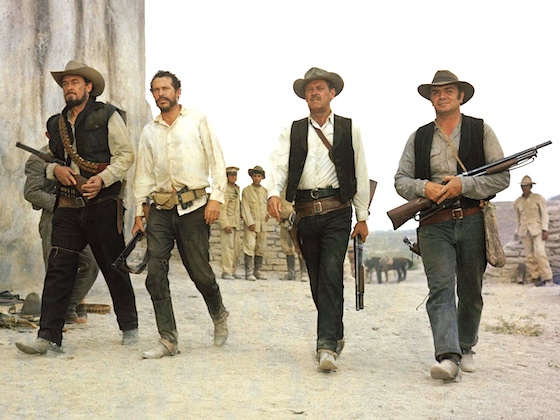
    Bad boys

    As for the morals, the film was all about showing these violent men as unheroic and unglamorous, setting out to “demystify the Western and the genre’s heroic and cavalier characters” (to quote IMDb). That piece goes on to say that screenwriters Sam Peckinpah and Walon Green “felt that this project required a realistic look at the characters of the Old West, whose actions on screen had rarely matched the violent and dastardly reality of the men on which they were based… Both Green and Peckinpah felt it was important to not only show that the film’s protagonists were violent men, but that they achieved their violence in unheroic and horrific ways, such as using people as human shields and killing unarmed bystanders during robberies.”

    Of course, antiheroes are ten-a-penny nowadays, so the idea that “men who commit violence are bad” doesn’t play as revolutionary anymore. Indeed, The Wild Bunch can be enjoyed as an action movie — there’s the opening and closing set pieces I’ve already mentioned, plus an excellent train robbery and ensuing chase in the middle too, and a couple of other bits. That said, the film has more on its mind than just adrenaline-generating thrills, and so (based on comments I’ve read elsewhere online) if you are watching just for action it can feel like a bit of a slog. While I wouldn’t be that critical, I did find it a bit slow at times. The original distributors must’ve felt the same, as the film was cut by ten minutes for its US release. (The version widely available today is the original 145-minute director’s cut. I watched a PAL copy, hence the 4% shorter running time.)

    4 out of 5

    The Wild Bunch was viewed as part of my Blindspot 2018 project.

    The Wild Bunch:
    An Album in Montage

    (1996)

    2018 #115a
    Paul Seydor | 33 mins | DVD | 4:3 | USA / English | 15

    Behind the scenes of The Wild Bunch

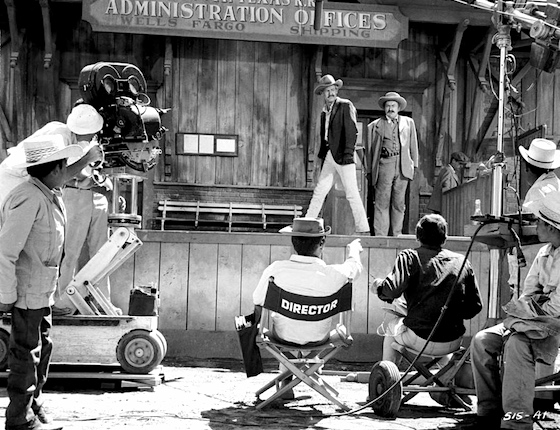
    This film came to exist because someone found 72 minutes of silent black-and-white behind-the-scenes footage shot during the filming of The Wild Bunch. No one knows why it was filmed — this was a long time before the era of EPKs and DVD special features. And, indeed, if it had been discovered just a couple of years later then a DVD special feature is exactly what it would’ve become; but, being just ahead of that, it ended up as a short film — an Oscar-nominated one at that, going up for the Best Documentary Short prize in 1997. Naturally, it has since found its rightful home as a special feature on DVD and Blu-ray releases of its subject matter.

    The silent film footage is accompanied by voice over of first-hand accounts from the people involved, either taken from recorded interviews (people like screenwriter Walon Green and actors Edmond O’Brien and Ernest Borgnine represent themselves) or actors reading out comments (Ed Harris is the voice of Sam Peckinpah, for example). From this we get not only making-of trivia and tales, but also discussion of the filmmakers’ intent and the film’s meaning. More material along the lines of the latter would’ve interested me.

    As it is, An Album in Montage feels very much at home in its current situation as a DVD extra. Fans of the film will certainly get something out of it, but I don’t think it’s insightful enough to stand independently. It’s by no means a bad little featurette, but it’s not worth seeking out outside of the context of the film itself.

    3 out of 5

    The Warriors
    (1979)

    2018 #123
    Walter Hill | 89 mins | streaming (HD) | 16:9 | USA / English | 18 / R

    The Warriors

    In the near future, a charismatic leader summons the street gangs of New York City in a bid to take it over. When he is killed, The Warriors are falsely blamed and now must fight their way home while every other gang is hunting them down.IMDb

    And that’s all you need to know, because The Warriors’ plot is really simple and straightforward, but that’s part of why it works. It doesn’t need dressing up; it’s got an almost an elegant directness, and it thrives off that. The action sequences feel unchoreographed, with a bruising realism in spite of their sometimes elaborate setups (duelling baseball bats!), and yet they carry an energy and impact that is wholly in keeping with something carefully designed and constructed. The characters are simply drawn, revealed through their actions rather than telegraphed Character Moments or heartfelt speeches. Similarly, the kind-of-romance between the Warriors’ leader and the girl they run into on the streets is so well handled — okay, there are some scenes where they almost talk about it directly, but mostly it’s just moments or lines that indicate a world of feeling. The way this character stuff is sketched in — subtly, sometimes in the background — is quite masterful, actually.

    Such skill extends throughout the film’s technical side. For all the film’s ’70s grit, there’s some beautiful stuff in the editing and shot choices, especially at the end on the beach. It’s not just beauty in an attractive sense, but meaningful, effective imagery, in a way that impresses without being slick or pretty. The music choices are bang-on too. The film intercuts to a radio station that functions like some kind of Greek chorus, linking the action and helping to create a heightened atmosphere — one that’s there in the whole film, incidentally, with its colourful gangs and detached police presence — without ever shattering the down-to-earth, gritty, almost-real feel the whole thing has.

    Gang wars

    I loved The Warriors, and I think that last point is a big part of why: it sits at an almost inexplicable point where it feels incredibly grounded, gritty and realistic, but at the same time a heightened fantasy kind of world. Here I’m trying to describe why I adored the film bu breaking it down into these constituent parts, but there’s something more to it than that — a kind of magic where it just… works.

    All of that said, it seems I was lucky to catch the original version (via Now TV / Sky Cinema), rather than the so-called Director’s Cut that seems to be the only version available on Blu-ray. Looking at the changes, they don’t seem particularly in keeping with the tone of the movie, smacking of decades-later revisionism. Apparently there’s also a TV version that includes 12 minutes of additional scenes, none of which are included on the film’s disc releases. I wish Paramount would license this out to someone like Arrow to do it properly…

    5 out of 5

    The Warriors placed 11th on my list of The 26 Best Films I Saw For the First Time in 2018.

    Power Rangers
    (2017)

    2018 #126
    Dean Israelite | 124 mins | streaming (HD) | 2.35:1 | USA, Hong Kong, Japan, Mexico, Canada & New Zealand / English & Mandarin | 12 / PG-13

    Power Rangers

    High school outcasts stumble upon an old alien ship, where they acquire superpowers and are dubbed the Power Rangers. Learning that an old enemy of the previous generation has returned to exact vengeance, the group must harness their powers and use them to work together and save the world.IMDb

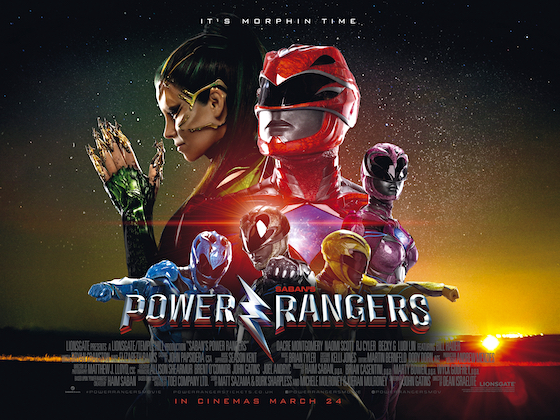
    Far from the cheesy TV series of old, this Power Rangers reboot clearly wants to be a somewhat gritty, largely realistic, socially conscious take on the concept. But it’s like it was written by people behind the original, because it’s still full of clunky dialogue, earnest characters (with a thin veneer of outsider ‘cool’), and nods to serious issues without having the time or interest to actually engage with them. Like, one of the kids is the sole carer for his sick mother, or another is on the autistic spectrum, but, beyond spending a line or two to tell us these things, those issues have no bearing on the plot or the characterisation. Plus, it can’t overcome some of the fundamental cheesiness of the original. And when it tries to give in to it, like by playing the Power Rangers theme the first time the giant “dinocars” run into action, it’s too late for such shenanigans and the tones clash horrendously. It wants to escape the tackiness of the original series, but simple can’t.

    And somehow it gets worse as it goes on. The early character stuff is derivative but alright. Then you begin to realise how shallow it is. You’re waiting for the super-suits to show up and the action to start. Then you have to wait some more while it works through plot beats so stale it can’t even be bothered to play them out fully. Then, when the suits finally arrive and the action starts, turns out it’s the worst part of the movie. Almost entirely CGI, under-choreographed, a mess of nothingness with little correlation from shot to shot, no sense of rhythm or construction. When their dinocars all merge into one giant dinocar, the villain screams “how?!”, and you will feel the same.

    Bryan Cranston (yes, Bryan Cranston is in this) tries to inject some character into his role, but it’s too underwritten and his screen time too slight to let him do much with his supposed arc. Elizabeth Banks, meanwhile, is barely in it and has no arc whatsoever, but she chews scenery like a pro. She seems to be aware it’s all stupid and over the top and plays it appropriately.

    2 out of 5

    Three Billboards Outside Ebbing, Missouri
    (2017)

    2018 #127
    Martin McDonagh | 115 mins | Blu-ray | 2.39:1 | UK & USA / English | 15 / R

    Three Billboards Outside Ebbing, Missouri

    a darkly comic drama from Academy Award nominee Martin McDonagh. After months have passed without a culprit in her daughter’s murder case, Mildred Hayes (Frances McDormand) makes a bold move, painting three signs leading into her town with a controversial message directed at William Willoughby (Woody Harrelson), the town’s revered chief of police. When his second-in-command, Officer Dixon (Sam Rockwell), an immature mother’s boy with a penchant for violence, gets involved, the battle between Mildred and Ebbing’s law enforcement is only exacerbated.IMDb

    As well as being as deathly serious and sometimes horrifying as the subject matter deserves, Three Billboards is also as funny as you’d expect from the writer-director of In Bruges. Not to the extent — the subject matter is far too serious for it to be an outright comedy like that — but in subplots and interludes it’s hilarious.

    It’s got a helluva cast, and all of the performances are excellent. Frances McDormand is so fucking good that she even manages to make talking to a badly CGI’d deer incredibly emotional. Apparently some people had a massive problem with the film’s treatment of Sam Rockwell’s character, I think because he was a bad guy who got redeemed. But, really, imagine thinking people who once did bad things can never turn themselves around and be better people. What a pessimistic way to view the world. And yet I guess that’s what today’s “cancel culture” is all about.

    Two outta three ain't bad

    It’s nicely shot by DP Ben Davis (except for that deer), while Carter Burwell’s Western-esque score has some really cool bits. It really emphasises the film’s formal overtures at being a revenge Western, even if the way it goes down in the end doesn’t necessarily support such a reading.

    There was a huge backlash to the film at some point; bring it up online and you’re likely to come across people who assume everyone hates it… but it’s got 90% on Rotten Tomatoes and is still ranked the 150th best film of all time on IMDb, so I think we know where the majority stand. I’m happy to stand with them.

    5 out of 5

    Three Billboards Outside Ebbing, Missouri placed 14th on my list of The 26 Best Films I Saw For the First Time in 2018.

  • Extraction (2020)

    2020 #88
    Sam Hargrave | 116 mins | streaming (UHD) | 2.35:1 | USA / English, Hindi & Bengali | 18 / R

    Extraction

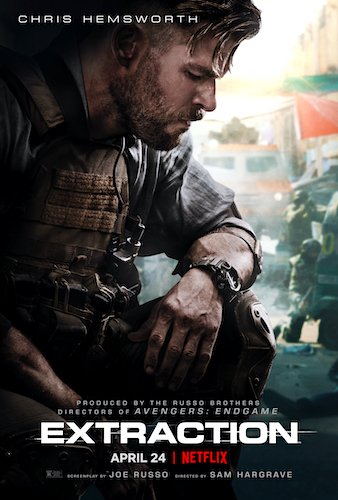
    Chris “Thor” Hemsworth stars in this action-thriller masterminded by the Russo brothers (directors of Avengers: Infinity War and Endgame) and directed by Sam Hargrave, who has dozens of stunt coordinating credits to his name, including three Hunger Games, Atomic Blonde, and work on six Marvel Studios movies. But don’t take all those MCU connections to heart — this is not a Marvel-style PG-13 action-comedy. Oh no.
    We first meet mercenary Tyler Rake (Hemsworth) engaged in a gunfight on a bridge. He’s covered in wounds, spitting up blood, looks like he’s about to die. Cut to two days earlier! No, really, it’s one of those openings. They just won’t bloody die. Never mind “skip titles” or “watch credits”, Netflix needs to add a “skip pointless in media res prologue” button. It would improve almost any film/TV episode where it was featured.

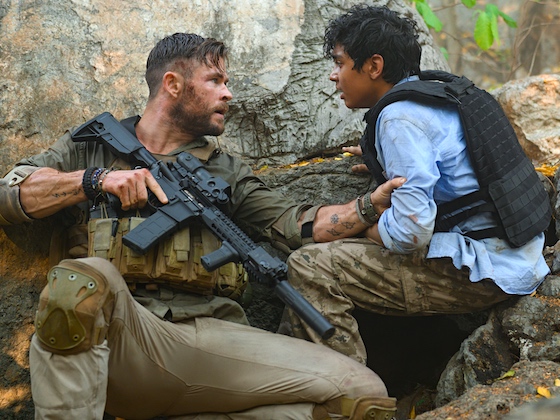
    Anyway, two days earlier we’re introduced to Ovi (Rudhraksh Jaiswal). Just an ordinary, well-to-do schoolboy in India… except his dad’s an imprisoned drug kingpin, and when Ovi slips out to a club one evening he’s kidnapped by goons from the competition, run by the thoroughly ruthless Amir Asif (Priyanshu Painyuli). With daddy behind bars, it falls to Saju (Randeep Hooda) to get the kid back, for which he hires some organisation, I guess — the film is incredibly light on specifics here. Basically, it involves Nik (Golshifteh Farahani) sending in Mr Rake and a support team to extract the kid. Naturally the mission goes sideways, leaving it up to Rake alone to get Ovi and himself out of a city crawling with henchman and corrupt cops who are all out to get them.

    School's out

    Of course, Rake has issues in his backstory, and rescuing the kid becomes more than just a job, etc, etc. The “Man on Fire Lite” plot is as predictable as this sentence ending with a simile. When David Harbour turns up halfway through as an old mate of Rake’s who lives in the city and agrees to help him out, I’ll be surprised if you can’t guess what inevitably happens a couple of scenes later. Though it is amusingly bold of the film to try to make us believe David “dad bod” Harbour could hold his own in a fight against Chris “literally a Norse God” Hemsworth.

    That minor brawl aside, the action sequences are great, more than making up for the lightweight plot mechanics. Letting stunt coordinators move into full-on directing has been the saviour of the action movie genre in recent years, working wonders for the John Wick series in particular, but also several other movies that have followed suit. Hargrave is the latest to suggest he might have a bright career ahead of him on the basis of his ability to stage electrifyingly choreographed combat scenes. The action is fast and hard-hitting; not unnecessarily horror-movie gory like it was in fellow Netflix actioner 6 Underground, but certainly not PG-13 material either. Clearly Netflix don’t force the makers of their expensive movies to hit that PG-13, presumably tied to not having to worry about box office takings. One advantage of going direct to streaming.

    The highlight of the film is undoubtedly an already-much-discussed 11½-minute single-take action sequence. We’ve seen plenty of these trick shots in the past few years (Atomic Blonde and, obviously, 1917 particularly come to mind), but Extraction offers another belter. It starts as a full-blown car chase, which transitions into a game of cat-and-mouse around a warren-like apartment block, then tumbles into a mano-a-mano knife duel on a busy street, before ending in a second car chase. Obviously there are myriad hidden cuts in there, but that’s almost beside the point: it’s not physically doing it in one long shot that’s impressive, it’s the design and choreography and planning and execution to make it feel like one. It pays off handsomely.

    Street fighter

    You wonder if Netflix might look to turn Extraction into a franchise — in many non-English-speaking countries it’s been titled Tyler Rake, which might suggest that’s what they’re thinking. But then, they could’ve retitled it that in English if they wanted, so maybe not. It’s not the most sophisticated thriller ever made, and it doesn’t reach the giddy heights of John Wick in the action department, but it’s nonetheless entertaining at what it sets out to achieve. If they do decide to make more, I’ll definitely be there.

    4 out of 5

    Extraction is available on Netflix now.

    The 100-Week Roundup II

    I had a nice little introduction written for this post when T2 3D was going to be part of it, but then that got too long and I posted it separately. So, anyway, here are three other films I watched almost two years ago but haven’t reviewed yet…

    Laura
    (1944)

    2018 #93
    Otto Preminger | 85 mins | download (HD) | 4:3 | USA / English | U

    Laura

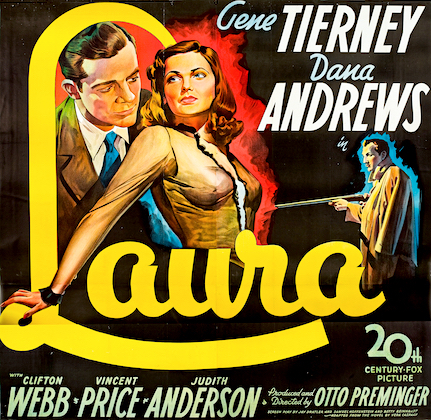
    This classic film noir stars Dana Andrews as a New York detective investigating the murder of an advertising exec and society girl played by Gene Tierney, the eponymous Laura. And there’s a good twist halfway through that completely turns the film on its head, so I’ll keep this vague. (We can debate the merits or otherwise of openly discussing plot points from 75-year-old films another time. Heck, go on Twitter — I’m sure someone’ll be ranting about it from one side or the other right now.)

    As a murder investigation, Laura is a decent little mystery — there aren’t a huge number of suspects, but enough to keep you guessing; though I did eventually wonder if it actually hangs together 100% as a case. But that doesn’t matter when everything else about the film plays out so well. For starters, it’s noticeably well directed by Otto Preminger, with some nice shot construction and editing. Then the screenplay (based on a novel by Vera Caspary, and penned by three credited writers and one uncredited, as per the interweb) boasts lots of great dialogue. It’s rarely show-off-ily snappy, but it is effective and sometimes witty. That’s only appropriate considering one of the characters (Clifton Webb’s Waldo Lydecker) has a rep as a wordsmith — that wouldn’t fly if he didn’t have plenty of bons mots to offer.

    The rest of the cast are similarly noteworthy. Tierney is very plausible as the kind of gal everyone would fall in love with, and Andrews is equally so as the solid copper. A key supporting role is filled by a young-ish Vincent Price. (Can we call 33 “young”? As someone who was born in 1986, I’m going to go with “yes”.) It’s an accident of history how effective his casting is — not that his performance is bad in and of itself, but his later reputation brings certain expectations about how things might pan out. Is that warranted? Well, you’ll have to watch it to see…

    5 out of 5

    Jigsaw
    (2017)

    2018 #104
    The Spierig Brothers | 92 mins | streaming (HD) | 2.35:1 | USA & Canada / English | 18 / R

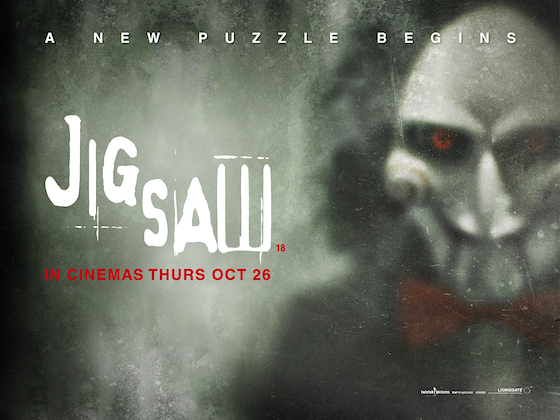
    Jigsaw

    After seven films between 2004 and 2010, the Saw series seemed well and truly done. But nothing once-popular can stay dead for long in Hollywood, and so 2017 saw this revival (and this year will see another, pandemic permitting). It seemed to go down quite poorly, and I’m curious as to why. It’s a Saw film through and through — if you don’t like the series, there’s no reason you should like this — so, I mean, why would you want or expect a Saw film to not be a Saw film? Maybe it’s just people who don’t actually liking Saw films all that much but chose to watch an eighth one anyway? Well, it’s up to them how they choose to spend their time…

    Anyhow, as a Saw film, I thought it was one of the better ones. Not the very best (that’s still the first), but definitely top end. I liked the final reveal, which is a big part of these films’ appeal — what twist they’re going to pull in the final moments. Sure, I’d guessed part of it well in advance, but it still had some neat aspects. (I do wonder how many people were fooled into thinking Jigsaw was still alive, somehow? He died many, many films ago; he’s not coming back.) In terms of the whole series, it does raise a load of questions — but digging into them is really getting navel-gazing about the series’ continuity. I’m not sure it’s worth worrying about.

    3 out of 5

    Inferno
    (1953)

    2018 #107
    Roy Baker | 84 mins | Blu-ray (3D) | 1.37:1 | USA / English | PG

    Inferno

    3D and film noir aren’t things you readily associate with each other, but there are a couple of them — see here for a few. Some might count Hitchcock’s Dial M for Murder, too. Inferno here is another borderline case. The plot definitely has a whiff of noir — a husband left for dead by his wife and her lover, which cause her moral quandaries but him not so much — but the telling is more of an Adventure movie, some might even say a Western, with the husband struggling through an arid wilderness. Plus it’s all shot in brightly-lit Technicolor.

    Whether you count it as noir or not, it’s most noteworthy for its 3D. It was one of the last films made in the format during the fleeting ’50s experiment, especially as its studio, Fox, were backing CinemaScope as a TV-beater instead (well, I guess they were right). It doesn’t make blatant use of its 3D — there’s no stuff poking at the camera (until the punch-up finale) — but it often brings a nice sense of depth often, including to the wide-open desert vistas. It was well received, too, with the New York Times saying it was where “3-D comes of age”, and others comparing it favourably to other movies of the era, which treated 3D as no more than a gimmick and squandered its potential. All of that said, a climactic fight does indulge in all the in-your-face aspects we associate with classic 3D movies — but it was a late addition forced on the film by studio head Darryl F. Zanuck, who wanted to see more overt 3D action. In summary up, director Roy Ward Baker commented, “the critics gave it unanimous applause, largely because it has a good story to which the process contributed greatly, as opposed to the usual stereo films which were simply exploitation stunts. However, we did include a few of the cliches, at the behest of DFZ. I guess he was right at that.”

    It is a pretty good tale. Baker wanted to make a film in which “the leading character spends long periods alone on the screen, where the interest would be in what he does, rather than what he says.” Nonetheless, we’re given a voiceover narration from the hero, which gets a bit twee, albeit with an enjoyable dry wit now and then, and an interesting pragmatism about his situation. There’s some neat editing to juxtapose his situation with that of his condemners, too: when he’s starving it cuts to wifey enjoying a lavish meal; as he digs in the desperate hope of water it cuts to her lover casually fixing himself a drink. Said wifey is played by Rhonda Fleming, who apparently was known as “the Queen of Technicolor” because of her complexion and vibrant red hair. Everyone in the film is in love with her — even the cops who’ve just met her comment on it — and, yeah, I buy that. There’s an amusing bit where her lover is desperate to throw caution to the wind and visit her room that night simply because it’s “been four days”, wink wink nudge nudge. Men, eh?

    4 out of 5

    Sean Connery as James Bond, Part 2

    If everything had gone according to plan, this weekend Americans would’ve been flocking to cinemas to see Daniel Craig’s final performance as Bond, James Bond, secret agent 007, in No Time to Die (us Brits would’ve all been to see it last weekend, of course). As that’s not to be, here’s something both entirely similar and entirely different: my reviews of Sean Connery’s final performance in the role — both of them.

    This concludes my coverage of Connery’s time as Bond, the previous instalment of which I posted in, er, 2013. (And you thought No Time to Die had a long delay.) That covered his first stint as James Bond — the five films he starred in from 1962 to 1967. Now, here are his two remaining performances:

    Neither of these films is Connery’s finest hour as Bond — they’re his worst hours, in fact — but, I must say, they were both better than I had remembered.

    Click through to learn more about…

    That may be it for Connery, but — as always — James Bond will return… in Daniel Craig’s case, in November (fingers crossed!)