Nimród Antal | 107 mins | Blu-ray | 2.35:1 | USA / English | 15 / R
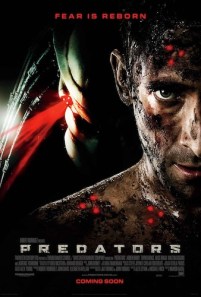 It’s two-and-a-half years since this was released? Never! If it didn’t say so on multiple websites, I’d never believe it. Where does the time go?!
But anyway…
Predators is writer-director-producer-editor-composer-etc Robert Rodriguez’s attempt to relaunch the Predator franchise, after the mediocre Predator 2 killed it in 1990 and the utterly appalling Aliens vs Predator 2 killed it again in 2007. Based on the fact we’re two years on and there’s been no word of a sequel, I guess he didn’t succeed. Which is a shame, because the original film is fun action/sci-fi entertainment and this is very much in its spirit.
Based on a screenplay Rodriguez wrote in the mid ’90s (deemed too expensive at the time, and since re-written thanks to other films doing some of the stuff in it (chiefly Avatar, apparently)), Predators sees a bunch of unconnected people dropped into a mysterious jungle. All of them have some skill in the field of death-dealing — except, that is, for a doctor — and most are armed to the teeth. Where are they? Why are they there? And what’s that coming after them?
I’ve left my plot description vaguer than most you’ll find, including on the film’s own DVD/BD releases, because the more you know the more the early part of the movie drags. Most blurbs give away the revelations contained within the first act, which makes it an almost gratingly slow start. I reckon it would probably work well in isolation, but I’m not sure how many people are going to see this without having heard more of the premise than I’ve let on. When you know where it’s going, it seems to plod a little; equally, if all you know is that a group of people face a gang of Predators in a jungle then it works fine (it still takes the aliens a while to show up, but then so does the original).
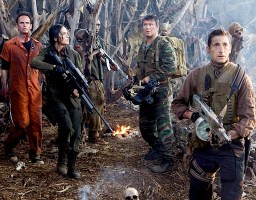 It’s a similar story elsewhere in the film. If you haven’t already accurately guessed what the ‘twist’ is with the doctor just from me even mentioning him, then I’ll be surprised. You may also be aware that Laurence Fishburne is in the film — he’s in the trailer and, naturally, one of the top-billed names. If you weren’t aware, sorry; but if you are (as, indeed, you now are), then his lack of appearance early on will likely clue you in to the circumstance under which he’ll be found. But if you’re not expecting him, that’s all fine and dandy. But now you are. Sorry.
In fairness, the story does manage to pull out a few mysteries. There’s a fair share of action sequences too, naturally, but it’s not an entirely stock plot merely peppered with gunfights. Rodriguez and co have made the effort to push the mythology in new directions; ones which seem to build naturally out of other Predator media, even though those aren’t specifically mentioned. Indeed, although there’s a direct reference to the original film (plus a smattering of callbacks in dialogue), the production team were told to avoid looking at the other films, games and comics for inspiration. You’ve no need to suffer anything else to enjoy this. Indeed, it works even without seeing the original film.
In the special features Rodriguez comments that the film could function even if the Predators didn’t turn up, because you’ve got a gang of characters who might be quite happy to turn on each other if need arose. There’s nothing revelatory amongst the gang of humans, but they’re more characterised than the simple canon fodder of the original film, and the relative dearth of big names will keep you guessing as to the order of their inevitable dispatch.
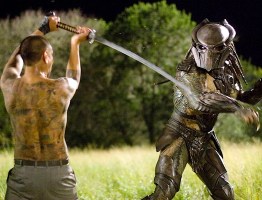 The main draw is still the action, which is suitably exciting on the whole. Best of all is a sword fight between a Yakuza and a Predator. Who’d’ve thought of engaging a Predator in a sword fight, eh? I love a sword fight, and while this is of course an atypical example, it shows the film’s level of creativeness with its inherited elements. It’s also a beautifully shot segment, making it one of the stand-out parts of the film.
Most of the direction is as good, though I have to mention it because of one unfortunate trope it develops: there’s an awful lot of lingering shots of the cast Looking At Something behind the camera, before we get to see it. Once you notice this — and you may well, like me, notice it pretty early on — it quickly becomes unintentionally comical, because it just. Keeps. Happening. And even when you think it’s gone, it makes a last-minute resurgence at an inopportune moment. I’m certain this wasn’t a deliberate comic device — it was probably employed to add tension and mystery and all that — but, for me, it just became a bit of a joke.
Then there’s the awful atmosphere-ruining end credits song. Honest to God, there’s weird artistic flourishes, and there’s immediately trashing the mood you’ve just strived to create. I know why it’s there — it’s another reference to the original — but it’s a glaring clash of styles that shatters the very particular ending the film has. On the commentary, Rodriguez asserts that it “deflates the tension in a great fun way.” Hm. Hmmm. What a misstep.
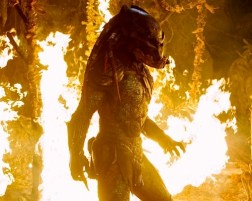 And the ending itself… is it sequel bait? It’s not as bad as Prometheus — an unintentionally resonant parallel given the franchises’ shared history, but not an inappropriate comparison. But where Ridley Scott’s confusing picture leaves glaring unanswered questions that demand a Part 2, Predators’ conclusion is both open-ended but also somehow fitting. Which is lucky, because I don’t think a follow-up is forthcoming.
For all the criticism, or gentle ribbing, I’ve levelled at the film throughout this review, it’s an enjoyable experience. There’s nothing deep or meaningful, and nothing that will enliven or revolutionise the genre, but as a sci-fi/action movie it’s at least as good as its blokey-classic predecessor.

The UK TV premiere of Predators is on Channel 4 tonight at 9pm.
This review is part of the 100 Films Advent Calendar 2012. Read more here.
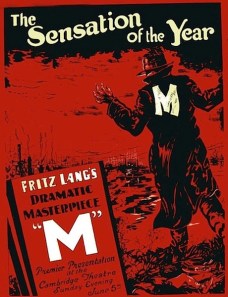 Let’s establish one thing right away: this is unquestionably an inferior version of Fritz Lang’s masterpiece,
  4) It’s mostly dubbed into English. The bits that aren’t have been re-shot. Primarily, there’s a phone call between the police commissioner and the minister, which is really quite poorly performed — watch out for an unintentionally comical bit with the wrong end of a pencil. These two actors are also edited into another scene, a large meeting which their characters attend, and it’s glaringly obvious where Lang’s work begins and ends and the basically-shot bits (flatter angles, simplistic sets) have been dropped in. The director of the English re-shoots isn’t specifically credited, but it certainly wasn’t Lang: Fischer’s examination of M’s export versions informs us that it was the localised version’s “Supervisor”, Charles Barnett.
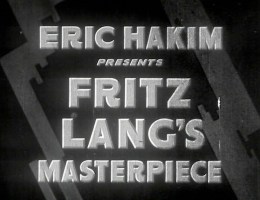 There’s no way anyone would reasonably recommend this variation of M over the original, but it does hold interest as a curio. It may leave one wondering how and why this practice of exporting films — where multiple versions in different languages were shot at the same time, rather than dubbing/subtitling later — died out. Cost, I imagine. Despite producing interesting asides like this, it’s probably a good thing it did.
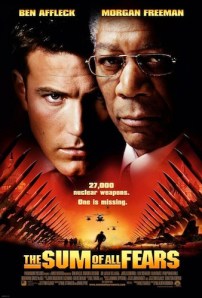 Paramount had a burgeoning franchise on their hands in the early ’90s with adaptations of Tom Clancy’s Jack Ryan novels. He first appears in
 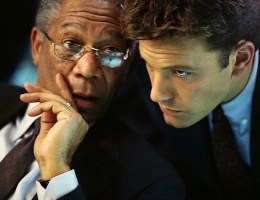 Ben Affleck is Ben Affleck, which means a lot of people won’t like him but he’s OK. Morgan Freeman brings instant gravitas to his role, though it’s not his most likeable or memorable part.
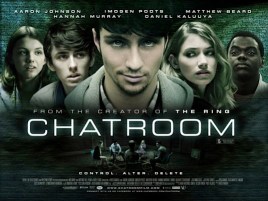 Chatroom is born of — or, at least, partly formed around — trying to find a viable way of depicting the world of online chatrooms on film. Putting on film this world it As It Really Is — people sat at a computer typing at each other — might work well enough for a single scene in
  in this environment is also truthful. There have been many reviews that are completely dismissive of this facet of the film, leaving me to wonder if they were written by people who haven’t used or experienced such things. It’s a shame, then, that the film’s degeneration into a thriller hides the arguably-worthwhile potential to explain to such people what that online world can be like for people/kids using it.
 Despite a strong-ish start, perhaps the whole second half of the film is a wobbly mess; not directionless exactly, because by then it does know broadly where it’s going, but it doesn’t do much to suggest to the viewer that it has a real goal in mind. Character motivations and relationships feel as if they’ve not been fully thought out, or at least not fully brought together on screen. Some threads take inexplicable jumps; others aren’t adequately explained or justified. Occasionally it’s Nakata’s direction that overdoes things, for instance laying the soppy “this bit is emotional” music on thick when Matthew Beard’s performance could easily carry a particular sequence.
 The aforementioned Matthew Beard, perhaps the least recognisable cast member (his
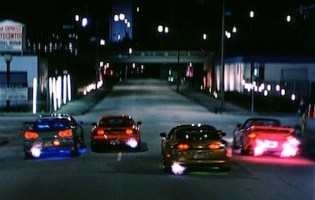
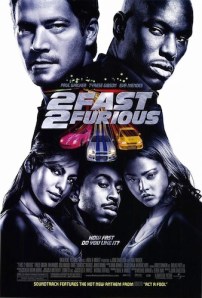 I never thought I’d watch, and certainly not enjoy, the Fast and the Furious series, but a few years ago (after the second film hit cinemas, I think — which would be almost a decade!)
  It’s worth noting it was directed by John Singleton, who started out with the acclaimed social drama
 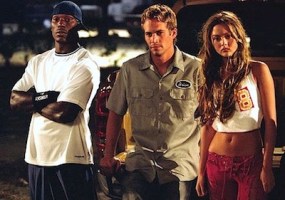 Ultimately, 2 Fast 2 Furious is like cheap fast food: you know it’s made of trash, high in fat and sugar, liable to rot something in your head — and just really bad for you fullstop… yet it’s an enjoyable guilty pleasure once in a while. If you don’t identify with that feeling then you’re a better man than me, and you’ll probably never like this film.
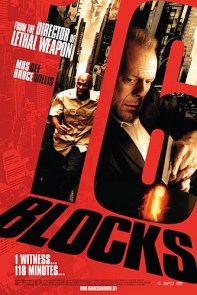 A Bruce Willis action movie? You know what you’re in for here, don’t you? Well, not quite. 16 Blocks casts Willis as less John McClane and more John McCane: old, fat, drunk, limping. He’s a copper still, but the kind of detective whose primary duties are being left to watch over an apartment full of bodies until uniform can show up.
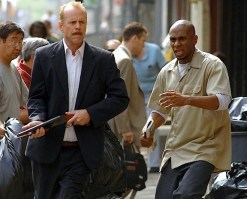 For me, it really lost its way just over an hour in, when our heroes (spoilers!) end up in a hostage situation on a bus. It’s not bad, but it feels like writer Richard Wenk (who’s gone on to co-write heights of culture like
 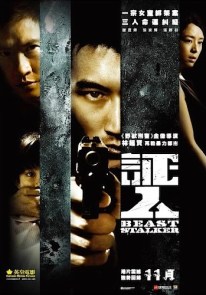 While in pursuit of an accused murderer, a cop (Nicholas Tse) accidentally kills the daughter of said murderer’s prosecutor (Jingchu Zhang). Three months later, just days before his trial, the accused has the prosecutor’s other daughter kidnapped, to persuade her to destroy the evidence proving his guilt. Despite having spent the intervening time in reclusive self doubt, the cop sets out to rescue the kidnapped little girl.
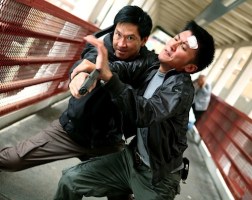 making them a little perfunctory — the real meat actually lies in the plot’s twists and turns. This is more one for fans of thrillers than beat-’em-ups.
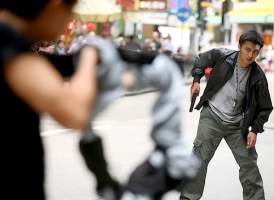 The top performance comes from Nick Cheung as a for-hire kidnapper with the Bondian trait of being blinded in one eye while the other only has black-and-white vision. He gets added complexity thanks to an invalided wife he tenderly cares for — he’s only in this life of crime to pay off his debts and medical bills, y’know. Cheung’s largely silent turn manages a fine balance of menace and sympathy. He won a couple of HK awards for it,
 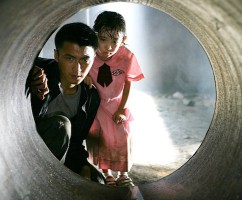 A brief couple of scenes with a bullied colleague play out nicely, though unfortunately they contrast with a painfully written bit in which another colleague tells Tse’s character what people think of him. “They said you were horrible, but I like working for you,” she tells him (I paraphrase), for no discernible reason. It doesn’t even matter that we’re told that, because we’ve already seen it. I just don’t get it.
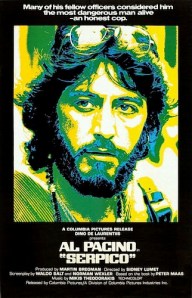 Before
  As the titular copper, it’s a typically strong performance from Al Pacino. Not his best work — I don’t think the part really gives him enough to deliver that — but he’s more often than not the most engaging element of the film. This was his fifth film; considering
 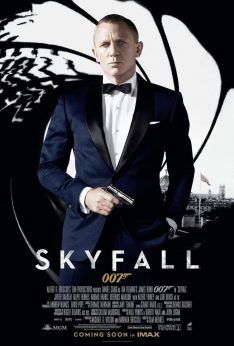 Bond is back, and you’ve surely seen the torrent of 4- and 5-star reviews (and the insignificant handful of dissenting voices). I’m pleased to report that the consensus is correct: Skyfall is Bond at his best.
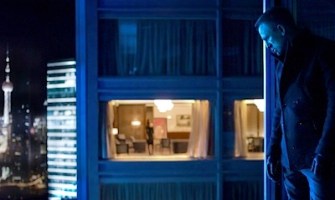 Technically speaking, the film looks gorgeous thanks to Roger Deakins’ cinematography. Best looking Bond ever? There’s little I can think of to dispute that. Obviously it could be said to lack some of that ’60s glamour, but from a purely photographic perspective, it shines. (Incidentally, this shot isn’t actually in the film.) I’m less sold on Thomas Newman’s score. While in no way bad, and with undoubted sparing but precise use of the Bond theme, it didn’t always click for me. The fact I at times felt like I was listening to cues from
 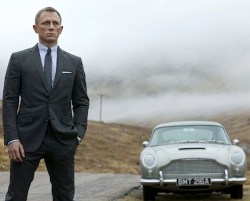 honestly, there perhaps aren’t as many twists as you might expect in that department, but the ways they’ve nodded to the franchise’s history are sublime.
 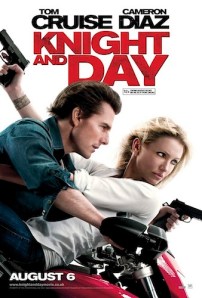 James Mangold is one of those filmmakers with a thoroughly eclectic CV, taking in crime thriller
  Knight and Day is nothing deep or revelatory or groundbreaking, but if you were expecting it to be then more fool you. If you can’t abide Cruise or Diaz (and I know some people really can’t) then it should certainly be avoided, but those caveats aside I thought it was good fun. No classic, and far from destined to be a standout on Mangold’s multi-Oscar-winning filmography, but an appropriately entertaining couple of hours.
 100Films.co.uk