The Raid 2 (2014)

aka The Raid 2: Berandal

2016 #90
Gareth Evans | 150 mins | Blu-ray | 2.40:1 | Indonesia & USA / Indonesian, English & Japanese | 18*

I wasn’t as impressed as some were by The Raid when I finally got round to watching it two years ago — in my review I said its action was merely equal to other Asian fight flicks, asserted that Dredd had done the same story in a more rounded fashion, and compared the whole thing to Mamma Mia. To use a term that came up in my comments recently: where Mamma Mia is a chick flick, The Raid is definitely a dick flick. That’s probably why it’s taken me this long to get round to its sequel, which was at least as well-liked by the viewing public, if not more so (it has a higher rating on IMDb) — but I couldn’t trust that last time, so why this time? However, it turns out The Raid 2 is an entirely different kettle of fish.

That’s certainly true of the plot — this may be the least “just a rehash of the first film” sequel ever made. Starting mere hours after its predecessor finished, the sequel begins with good cop Rama (Iko Uwais) being co-opted into an anti-corruption internal affairs unit. It’s not just about doing the right thing, though: Rama wants a shot at Bejo (Alex Abbad), a rising criminal who murdered Rama’s brother. Rama is promptly asked to leave his wife and young son behind to go undercover in a prison with the aim of getting close to Uco (Arifin Putra), the son of powerful mob boss Bangun (Tio Pakusadewo). Unfortunately, instead of being sentenced to a couple of months as promised, Rama is given years in jail. Nonetheless, he manages to ingratiate himself with his target, and upon his eventual release is immediately granted a position in Bangun’s organisation. And, look, this is meant to be a review, not a plot summary — it all just spirals from there.
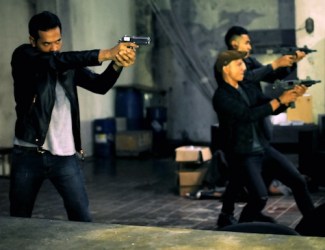
Where the first film was an efficient, simple thriller designed almost solely to link the startling action sequences, here writer-director Gareth Evans has created a sprawling crime epic. Anyone who’s seen the kind of gangster actioners Hong Kong cinema has produced since the ’80s or so will feel in familiar territory. That’s no bad thing, however, just a point of genre comparison. By expanding the world he’s created out in every direction, Evans has created a work that is not only bigger in a literal sense, but also deeper, more complex, and more interesting than the straightforward adrenaline rush of the movie that made his name.

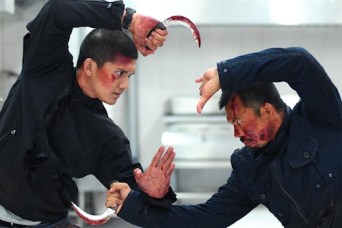
That’s not to say The Raid 2 skimps on the action front, mind. Oh no. Far from it. If anything, the physical displays here are even greater, and certainly more varied. A free-for-all riot in a muddy prison yard brings to mind the church fight from Kingsman in its crazed frenzy; the first film’s Mad Dog, Yayan Ruhian, is back as a new character who gets a remarkable battle around a multi-level nightclub; the instantly iconic and aptly named Hammer Girl (Julie Estelle) gets a showcase on a subway car, and later double teams with her chum Baseball Bat Man (Very Tri Yulisman) to take on Rama; and that’s not even the climax, as our hero goes toe to toe with knife-wielding henchman The Assassin (Cecep Arief Rahman) in a kitchen-set rumble that has to be seen to be believed.

But as incredible as each of those are — and indeed they are — the highest of highlights is surely the car chase. There’s a chance you’ll have heard about this even if you’re not especially interested in the film: a bit of behind-the-scenes detail about how they achieved one particular shot went viral a couple of years ago. If you haven’t seen that, nor the film, then don’t seek it out — it actually kinda spoils it a little bit, knowing how it was done. (Without spoiling it, it was all done practically, whereas a Hollywood blockbuster would undoubtedly have done it with CGI — and spent as much on that one shot as Evans and co have on this entire movie.) The sequence is more than just one technically-impressive shot, however, but an exciting and innovative action scene all round, that definitely pushed the boundaries of the filmmakers’ capabilities (they had to get in a specialist outfit from overseas to help realise their ambitions).

Those are just the highlights — there are numerous smaller but no less accomplished sequences elsewhere, too. To be precise, there are 19 fight scenes, featuring more complex choreography than the first film — and it’s one of the fight choreographers who said that, so it must be true. The two-and-a-half hour running time may mean The Raid 2 isn’t the unrelenting action-fest that the first film was, but those memorable combats are just as much a part of the film’s DNA. I don’t think anyone’s going to feel shortchanged.

From a filmmaking point of view, it’s even more accomplished. Evans demonstrated he knew how to lens action in the first movie, but here the whole movie looks more polished and more expensive (even though it only cost $4.5 million). There’s greater ambition on display in every facet, including both the choreography and the camerawork. Most Hollywood blockbusters seem to push (or exceed) the two-and-a-half hour mark these days, and even when it fills that time, it feels like it’s partly because no one quite knew when to cut back. The Raid 2, however, feels suitably epic — just as you think a film that’s two-and-a-half hours long ought to feel, really.
For me, The Raid 2 outclasses its predecessor in every possible way, from the deeper and more involving story, to the jaw-dropping feats of choreography and performance, to the more assured and polished filmmaking. An instant action classic.

5 out of 5

The Raid 2 will be available on Amazon Prime Instant Video UK from tomorrow.

It placed 2nd on my list of The 20 Best Films I Saw For the First Time in 2016, which can be read in full here.

* The MPAA insisted on 4½ seconds of cuts to get an R rating. The UK version is uncut. ^
The Hateful Eight (2015)

2016 #89
Quentin Tarantino | 168 mins | Blu-ray | 2.76:1 | USA / English & Spanish | 18 / R

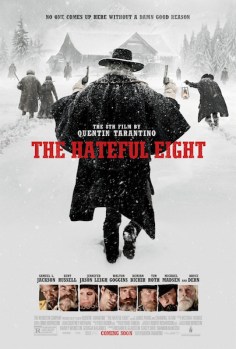
Quentin Tarantino hadn’t made a film in the same genre as his preceding movie for almost 20 years when The Hateful Eight came out — his second go-round with the Western genre, after the Spaghetti-ish thrills of Django Unchained three years earlier. Aside from the setting and its accoutrements, however, The Hateful Eight has more in common with Tarantino’s debut feature, Reservoir Dogs.
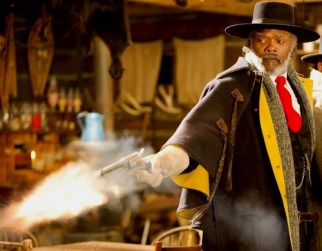
Wyoming, sometime after the Civil War: bounty hunter Major Marquis Warren (Samuel L. Jackson) flags down a stagecoach driven by O.B. (James Parks), looking for transport to Red Rock. Inside is fellow bounty hunter John Ruth (Kurt Russell) with his latest catch, Daisy Domergue (Jennifer Jason Leigh), who’s worth $10,000 — naturally, Ruth is suspicious of Warren’s motives. Later, they pick up Chris Mannix (Walter Goggins), who claims he’s to be sworn in as the new sheriff of Red Rock — also of great suspicion to Ruth. As a blizzard chases them, the quintet seek shelter at Minnie’s Haberdashery, a rest spot Major Warren has clearly visited many times before. However, Minnie isn’t home, and care of her establishment has been left in the hands of Bob (Demián Bichir). Inside, they find fellow travellers Oswaldo Mobray (Tim Roth), Joe Gage (Michael Madsen), and General Sandy Smithers (Bruce Dern). Ruth doesn’t trust a’one of them — and as they settle down to ride out the blizzard, it turns out he’s right about someone…

I’m not the first to observe that The Hateful Eight actually functions like a murder mystery, Agatha Christie style. It might be easy to miss because the film doesn’t begin with a murder or feature a detective, but then neither do all of Christie’s stories. Instead, there’s a long period setting up all the players and suggesting their motivations, and then eventually the proverbial does hit the metaphorical fan, after which deductions must be made. And it’s all in a remote, isolated location which has been cut off by weather, and every character is hiding some nefarious past — so far, so And Then There Were None. All of this comes dressed in QT’s famed dialogue, unfurled at the somewhat languorous pace he’s gradually been cultivating for a few movies now, and topped off with a few doses of the old ultra-violence.

One reason the “whodunnit” label doesn’t really stick is that Tarantino doesn’t sit it out until the end. Without spoilers: there’s certainly mystery about who is and isn’t involved, but you can’t invest in that too much because the answer is a little bit Murder on the Orient Express. Not completely Orient Express (I said no spoilers!), but a bit. One factor he does handle well is that (again like And Then There Were None) you can never be quite sure whose side you should be on; who might turn out to be a villain. Even at the end, when all has been revealed, the heroes are hardly heroic.

More talked about than the film’s content has been the way it was made. Despite the confined setting, Tarantino chose to shoot it on 65mm film, using the Ultra Panavision 70 process (only the 11th film to do so) and lenses that hadn’t seen light in nearly five decades, all of which have produced incredible images. QT’s regular DP since Kill Bill (excepting Death Proof), Robert Richardson, has once again done sterling work, with beautiful shots of scenery near the start and a fantastic definition of space once we’re locked up in Minnie’s.

Ultra Panavision 70 produces an ultra-wide 2.76:1 frame (for those not in the know, your widescreen TV is only 1.78:1), which for such an intimate story has struck people as odd ever since it was announced. In fact, it pays off in (at least) two ways: firstly, all the scene-setting scenery looks magnificent; secondly, for a lot of the film there’s stuff going on in the background or at the edge of frame — it’s not just a series of close-ups or two-shots where the ancillary detail is either non-existent or doesn’t matter, but one where that ‘background’ detail is sometimes very instructive to what is going on. Tarantino also uses the full width a lot of the time, placing two figures at either edge of the image — this really isn’t a film you could crop (thank goodness it doesn’t exist in the pan & scan era!)

Richardson’s work was Oscar nominated but lost to The Revenant (which I’m now a little biased against, after it beat this, Fury Road, and handed Roger Deakins his 13th loss, but I’ll see what I think when it finally hits British home ent formats next month), but the film did triumph for Ennio Morricone’s score — and quite rightly so, too, because it’s incredibly atmospheric and effective. Tarantino has commented that it isn’t really a Western score (which you’d expect from Morricone, what with his famous ones), but more of a horror movie score, and that that’s appropriate for the film. And, y’know, that’s not pretentious director-speak — he’s right. Well, that the movie is a horror movie is debatable, but he is right that Morricone’s work sounds more like a horror score, and that that score is appropriate to this movie. It even recycles some of Morricone’s material from The Thing, as if to bring the point home (and that’s far from the only thing about The Hateful Eight that’s indebted to The Thing, but I’ll leave that for someone else to dig into another time). Even though this is the first time he’s had a full score composed for one of his films, Tarantino still sources a couple of well-selected songs from elsewhere, including a very apt credits track by Roy Orbison.

The Hateful Eight may have a deceptively simple story, with straightforward characters and — once they’re finally all revealed — straightforward motivations; and despite that running time, it’s not as grand or as epic as either Inglourious Basterds or Django Unchained; but I say “deceptively simple” because I feel that it’s the kind of film that might reward repeat viewings, to reveal depths of character as well as hints toward the ultimate reveals. Or maybe I’m being generous — maybe it is just a long-winded, verbose way of telling a slight tale. But if it is, it’s still a mighty entertaining one.

4 out of 5

The Hateful Eight is released on DVD and Blu-ray in the UK today.

The Game (1997)

100 Films’ 100 Favourites #34

Players Wanted

Country: USA
Language: English
Runtime: 128 minutes
BBFC: 15
MPAA: R

Original Release: 12th September 1997 (USA)
UK Release: 10th October 1997
First Seen: TV, c.2000

Stars
Michael Douglas (Wall Street, Basic Instinct)
Sean Penn (Dead Man Walking, Milk)
Deborah Kara Unger (Crash, Stander)

Director
David Fincher (Panic Room, Gone Girl)

Screenwriters
John Brancato (The Net, Terminator 3: Rise of the Machines)
Michael Ferris (Terminator Salvation, Surrogates)

The Story
What do you buy the man who has everything? After high-flying businessman Nicholas Van Orton is enrolled in a mysterious alternate reality game by his estranged brother, it’s no surprise that unusual things start to happen. But as those happenings begin to take on a sinister edge, it may be Nicholas has been targeted by something more serious, and potentially life-threatening.

Our Hero
Nicholas Van Orton is an immensely successful financier, but so low on friends that he even spends his birthday completely alone. He could do with fun in his life, or so believes his brother… or does he?

Our Villains
The game is run by a company called Consumer Recreation Services, or CRS. But they just run games… or do they?

Best Supporting Character
Early on in his experience, Nicholas runs into waitress Christine, who has also been affected by the game… or is she actually a part of it? Just who can he trust?!

Memorable Quote
“You know, I envy you. I wish I could go back and do it for the first time, all over again. Here’s to new experiences.” — Ted

Memorable Scene
On the run and tired, Nicholas hops in a cab. He doesn’t notice the doors lock, until the maniacal cab driver begins to speed down the hill. As Nicholas desperately tries to escape, the driver leaps out — and the cab soars into the river, with Nicholas trapped inside…

Awards
1 Saturn nomination (Action/Adventure/Thriller Film)

What the Critics Said
“Crafted with a commanding, aloof precision by David Fincher in his first outing since hitting the jackpot with Seven, this unusual dive into the ambiguous world of an undefined pastime without apparent rules generates a chilly intellectual intrigue that will arouse buffs, trendies and techies more than it will mainstream [audiences. It] projects the same sense of suffocating enclosure and mounting despair in a style that will inevitably be compared to that of Stanley Kubrick in its steely technical mastery and remote, disenchanted worldview, all in the service of a story that resembles a highbrow puzzle as much as it does an involving narrative.” — Todd McCarthy, Variety

Score: 72%

What the Public Say
“just when we’ve finally come to a part of the story we can accept and trust, it turns out that we’ve once again been led astray. In this cinematic game, Fincher’s directorial ability wins out; his ability to pace his films; to completely draw the audience’s attention in whichever direction he requires, as well as keeping them emotionally attached to the protagonists is a balancing act which Fincher has mastered time and again over his career, and The Game is no exception.” — jyapp8715, Through the 4th Wall

Elsewhere on 100 Films
I reviewed The Game as part of a retrospective on Fincher’s films back in 2011, saying it “is by far at its best on your first viewing, when you don’t know how it will end and it’s stuffed with mysteries and twists. That’s not to say it doesn’t bear repeat viewings — as with most twist-ending-ed films, there’s naturally some interest in seeing it again knowing what’s going on — but a lot of the film’s enjoyment comes from being played with, the back-and-forth of what the truth is.”

Verdict

In fairness, The Game probably comes near the bottom of my top 100, because I remain a little dubious about its re-watch value — not because it’s poorly made (far from it), but because the twists and reveals are such a big part of its appeal, and once you know them, you know them. Also, arguments continue between its fans and its haters about whether the plot makes sense or not, and how much that actually matters — personally, I think it makes enough sense (maybe for some parts you have to switch on your “it’s a movie” filter, however). The reason it makes my list nonetheless is the quality of a first viewing, especially if you do buy into its conceit and just go with it. Few other films have kept me guessing from the start up to the very closing moments, and consequently on the edge of my seat throughout. That experience may be unrepeatable, but as one-time deals go, it was immeasurably memorable and effective.

#35 will be… the hands that built America.

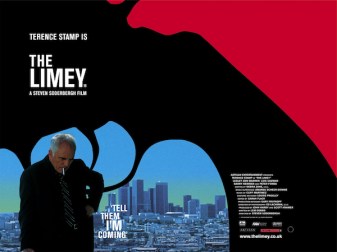
The Limey (1999)

2016 #72
Steven Soderbergh | 89 mins | streaming (HD) | 16:9 | USA / English | 18 / R

There’s an argument to be made that, from a cinematic perspective, mainstream US cinema these days is boring. Look at the kind of films American auteurs were producing in and around the studio system in the ’90s and early ’00s: Pulp Fiction, Fight Club, Memento, Requiem for a Dream; films that experimented with how they told their stories, the shots they used, how they were edited. Does anyone do that now? Or does anyone do it successfully?

Personally, I’ll be adding Steven Soderbergh’s The Limey to that list. At its most basic it’s a straightforward thriller, in which a British crook played by Terence Stamp is released from prison and travels to L.A. to find out the truth behind the death of his daughter (played in flashbacks by Melissa George, which is kinda weird because she has little to do and no dialogue), and probably take revenge on those responsible. By all accounts, the screenplay by Lem Dobbs was indeed that run-of-the-mill. In the hands of Soderbergh, however, it becomes an arthouse-ish experience, mainly thanks to the editing.

It’s the kind of cutting that’s hard to accurately describe on the page without overdoing it. The movie jumps back and forth in time — not from scene to scene, but from shot to shot. For instance, Stamp’s arrival at the home of his daughter’s friend, and the conversation that follows, is jumbled up with shots of him on the plane, driving in the city, the people his daughter was associating with, and even within the conversation itself, sometimes speech continues on the soundtrack while we watch the characters not talking, or doing something else. This isn’t a conceit Soderbergh uses for one scene, or wheels out now and then, but an overall approach. Some sequences are more thick with it than others, but it’s always right around the corner. It creates a unique sensation. Not disconcerting, exactly, but mysterious and querying. It has you constantly question what you’re watching — is it a memory? A plan? A fantasy? A delusion? It draws connections back and forth across the timeline of the story, bringing out thematic angles. At its most key, it helps explain what happens at the end (too bluntly for some reviewers, I should add). This collage-like style — which unlike, say, Memento’s back-to-front narrative has no obvious in-story point — will certainly not be to everyone’s taste, but it presents an interesting challenge to our usual ideas of how a film should be constructed.
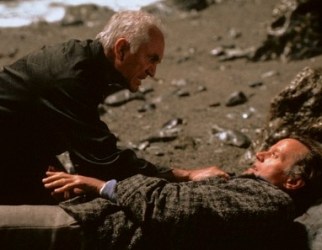
This led to a somewhat infamous commentary track on the film’s DVD release. The A.V. Club even included it in their New Cult Canon series — not The Limey, that is, but The Limey’s commentary track. In it, Soderbergh and Dobbs discuss the filmmaking process, understandably focusing on how screenplays get transformed, and how screenwriters get screwed over. The Limey that ended up on screen is very different to Dobbs’ screenplay, having been aggressively filtered by Soderbergh. This isn’t hard to believe — the film on screen is a very film-y film; how would you go about conveying the crazy editing style on the page, even if you wanted to? By the sounds of things the whole track is basically a friendly argument, and makes me wish someone somewhere would get round to releasing this on Blu-ray so I could hear it (the film looks great in HD, so I don’t much fancy settling for a DVD, thanks).

Despite the visual trickery, The Limey still works pretty well as a straightforward thriller. You have to be prepared to accept the slippery editing, because there’s no avoiding it, but the throughline of Stamp tracking down bad men and how he deals with them is still here. Personally, I’ve never much rated Stamp as an actor, but somehow he fits here. He’s a fish out of water, a man out of place — way out of place — and possibly out of time, too, seeming like a ’60s or ’70s British gangster transported to turn-of-the-millennium L.A. It’s no discredit to the supporting cast that they mainly exist to bob around in his wake.

At a guess, I’d say some would criticise The Limey for being a basic revenge thriller with a veneer of artistry applied in the form of its editing, while others would be turned away from its basic revenge thrills thanks to that editorial veneer. I’m always up for mashing together arthouse and mainstream, though, and here Soderbergh does just that, and in a way I found consistently thought-provoking, too. It’s discoveries like this that are the reward for digging into less-heralded corners of interesting filmmakers’ back catalogues.

5 out of 5

This review is part of 1999 Week.

The Limey placed 7th on my list of The 20 Best Films I Saw For the First Time in 2016, which can be read in full here.

Fight Club (1999)

100 Films’ 100 Favourites #29

Mischief. Mayhem. Soap.

Country: USA & Germany
Language: English
Runtime: 139 minutes
BBFC: 18 (cut, 1999) | 18 (uncut, 2005)
MPAA: R

Original Release: 15th October 1999 (USA)
UK Release: 12th November 1999
First Seen: TV, c.2001

Stars
Edward Norton (American History X, 25th Hour)
Brad Pitt (Interview with the Vampire, World War Z)
Helena Bonham Carter (Room with a View, The King’s Speech)
Meat Loaf (The Rocky Horror Picture Show, Tenacious D in The Pick of Destiny)

Director
David Fincher (Se7en, The Social Network)

Screenwriter
Jim Urls (Sweet Talk, Jumper)

Based on
Fight Club, a novel by Chuck Palahniuk.

The Story
The film’s nameless narrator is growing increasingly disillusioned with his mundane consumerist lifestyle, when he bumps into Tyler Durden. A free-spirited soap salesman, the pair have a fight for the heck of it. Finally experiencing some kind of genuine feeling, they set up an underground club for fighting, but it gradually becomes clear that Tyler may have bigger ideas…

Our Heroes
I am Jack’s nameless narrator. I am also Jack’s friend, Tyler Durden. Yes, just his friend…

Our Villains
The establishment! Capitalism! What’ve you got?

Best Supporting Character
Helena Bonham Carter hasn’t been fucked like that since grade school.

Memorable Quote
“The first rule of Fight Club is: you do not talk about Fight Club. The second rule of Fight Club is: you do not talk about Fight Club! ” — Tyler Durden

Quote Most Likely To Be Used in Everyday Conversation
“You are not special. You are not a beautiful or unique snowflake. You’re the same decaying organic matter as everything else.” — Tyler Durden

Memorable Scene
Called into his manager’s office to discuss his bad behaviour, the Narrator decides the best method of getting his own way is by enacting physical violence… on himself.

Technical Wizardry / Truly Special Effect
For what’s essentially a drama, Fight Club is overloaded with special effects and visual trickery. I don’t know if any are particularly groundbreaking in and of themselves, but several are particularly striking. A personal favourite, thanks to the perfect execution of the idea, is the shot where the Narrator’s condo is transformed into a living IKEA catalogue.

Making of
Marla’s original post-coital line was, “I want to have your abortion.” The studio objected to such an offensive line, so Fincher agreed to change it on the condition that the new line had to be used. The studio agreed, apparently unaware that such an agreement was never going to end well. Fincher wrote the replacement line, “I haven’t been fucked like that since grade school.” The studio asked for the original line back; Fincher refused. (It must say something about American values that abortion is considered more shocking than underage sex.)

Next time…
Nothing from the film, but Chuck Palahniuk has continued his novel in 10-issue comic book series Fight Club 2. A second comic series, Fight Club 3, is planned.

Awards
1 Oscar nomination (Sound Effects Editing)
1 MTV Movie Awards nominations (Best Fight for Edward Norton fighting himself)
1 BRIT Award nomination (Best Soundtrack — it lost to Notting Hill)

What the Critics Said
“Three factors elevate Fincher’s apocalyptic stew to something approaching art. First is Norton’s performance, as sneaky and shocking as that in his film debut Primal Fear. Second is Palahniuk’s story, which dances on a razor’s edge between life and death, expression and repression, ecstasy and agony. Third is Fincher’s dedication to making a film that looks and sound likes no other, one that powerfully illustrates what dementia looks like from inside and out.” — Carrie Rickey, Philadelphia Inquirer

Score: 79%

What the Public Say
“it’s hard to believe Fight Club is now 15 years old. As I was watching the film last night I found it hard to review because it is so ingrained in pop culture now it would be almost sacrilegious to say something bad about it. […] The first time I saw Fight Club I did not see the twist of [REDACTED] coming. I remember being surprised, but also very confused. I didn’t really understand how it worked then. On the second viewing it is easy to see a million clues pointing to this from the very beginning. Director David Fincher is very clever in how he orchestrates the film by giving you all these hints. He’s very good at walking that tight rope of not giving away too much. The twist is definitely one of the highlights of the film and why it is so memorable. It doesn’t feel cheap to me as some of these things normally do.” — Sherise, The Girl that Loved to Review

Elsewhere on 100 Films
I reviewed Fight Club as part of a retrospective on Fincher’s films back in 2011, saying “Fincher’s films often look great, but Fight Club is surely the most visually inventive. A list of exciting spectacles could be endless […] To top it off, the ‘regular’ cinematography is grounded in Fincher’s trademark darkness, as if every shot was conceived as just black and he added only what light was necessary.”

Verdict

A controversial film to this day, Fight Club is a violent, explicit exploration of the turn-of-the-millennium Western male psyche, which hasn’t necessarily lost its relevance in the ensuing decade-and-a-half. Criticised by some for endorsing the anarchic lifestyle it depicts, praised by others for satirising that mode of thinking, and criticised by other others for not satirising it well enough, the film can certainly provoke a spread of views. There’s little doubt that David Fincher’s direction is memorably slick and inspired, however, and it has one of the most talked-about twists in movie history.

#33 will… boldly go where no comedy has gone before.

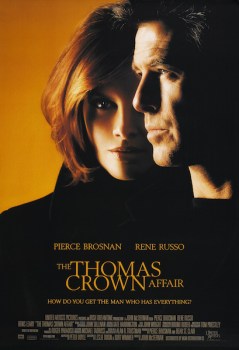
The Thomas Crown Affair (1999)

2016 #73
John McTiernan | 113 mins | streaming (HD) | 2.35:1 | USA / English | 15 / R

Once upon a time, John McTiernan was an action auteur, known for films that sat comfortably on the “mainstream modern classics” scale, like Predator, The Hunt for Red October, and, most of all, Die Hard. Then he made a couple of bombs (Rollerball and Basic), before ending up in a career hell of his own making thanks to some protracted legal battles. This thriller remake, starring Pierce Brosnan at the height of his Bond tenure (it was made between Tomorrow Never Dies and The World is Not Enough), is the once-eminent director’s last well-regarded film.
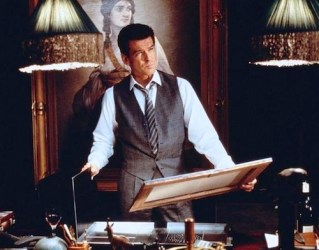
Brosnan plays the titular Thomas Crown, an ultra-wealthy New York entrepreneur whose hobby is stealing art from museums. His latest theft attracts the attention of the insurance company’s investigator, Catherine Banning (Rene Russo), who is clever enough to see past the fancy gadgets and gang of Eastern European crooks placed to take the fall. So begins a game of cat and mouse, as Banning tries to catch the thief, while he tries to woo her, and she tries to resist his charms — while also using her womanly wiles to try to ensnare him.

It’s the latter that practically kicks The Thomas Crown Affair into the realms of the ‘erotic thriller’. Throw in a couple more sex scenes (and a few less high-profile contributors) and you’d have late-night TV filler. There’s virtually no swearing and certainly no violence, but with some gratuitous boobs you’ve got a 15/R-rated flick. The film doesn’t really need such titillation to attract attention, because it’s a strong cat-and-mouse thriller in its own right. On the other hand, it doesn’t shy away from sexuality and the part that could play in such a ‘game’, so in that respect it’s more plausible than a million other neutered movies.

McTiernan’s action background comes to the fore in a pair of extended heist scenes at either end of the movie, which are surely the standout parts. The seductions and plot twists in between these bookends are certainly entertaining and may even keep you guessing, but it’s the heists that pack the most entertainment. They’re the kind of thing we don’t see so much nowadays, at least not in mainstream movies, because any sequence designed to provide excitement is a fight of some kind, and most of those are shot in the shaky-cam style. There’s none of that palaver here, just perfectly choreographed cutting between the various players in each heist, and some well-chosen music — as if being ably to do awesome stuff accompanied by the James Bond Theme wasn’t cool enough, here Brosnan gets to do the same to Nina Simone’s Sinnerman.
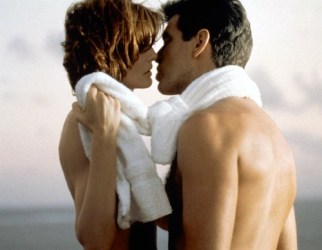
Those scenes are reason enough to watch the film, in my opinion, but that’s not to denigrate what comes in between. Brosnan is mainly just charm personified as Crown, a kind of “Bond gone naughty” playboy (without the, y’know, murdering), while Russo makes Banning’s back-and-forth umming-and-ahing seem largely plausible, whereas in other hands it might’ve just come across as inconsistent character writing. Denis Leary and Frankie Faison bolster the entertainment as the pair of NYPD cops forced to work with Branning, while Faye Dunaway (star of the original film) appears in a handful of tacked-on cameo scenes as Crown’s psychiatrist.

The Thomas Crown Affair may not be the best film on any of its principals’ CVs (well, except perhaps for Russo’s), but it’s a consistently enjoyable light thriller with a couple of particularly memorable sequences and a fun central dynamic. Apparently it’s better than the original, too. There’s long been talk of a sequel, but it seems to have gone the way of McTiernan’s career, which is a shame.

4 out of 5

This review is part of 1999 Week.

From Russia with Love (1963)

100 Films’ 100 Favourites #32

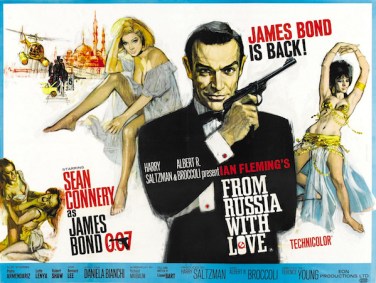
James Bond is back!
His new incredible women!
His new incredible enemies!
His new incredible adventures!

Country: UK
Language: English, Russian, Turkish & Romany
Runtime: 115 minutes
BBFC: A (1963) | PG (1987)
MPAA: GP (1971) | PG (1994)

Original Release: 11th October 1963 (UK)
US Release: 8th April 1964
First Seen: TV, c.1995

Stars
Sean Connery (Darby O’Gill and the Little People, Zardoz)
Daniela Bianchi (Special Mission Lady Chaplin, Operation Kid Brother)
Pedro Armendariz (Fort Apache, 3 Godfathers)
Lotte Lenya (The Threepenny Opera, The Roman Spring of Mrs. Stone)
Robert Shaw (A Man for All Seasons, Jaws)

Director
Terence Young (Dr. No, Wait Until Dark)

Screenwriter
Richard Maibaum (Bigger Than Life, Licence to Kill)

Adapted by
Johanna Harwood (Dr. No, Call Me Bwana)

Based on
From Russia with Love, the fifth James Bond novel by Ian Fleming — one of John F. Kennedy’s favourite novels.

The Story
When Soviet consulate clerk Tatiana Romanova offers to defect, she has one condition: that she is extracted by James Bond. Although M smells a trap, as collateral Tatiana offers a Lektor, a decoding machine MI6 have wanted for years. Bond travels to Istanbul to steal the Lektor, unaware he’s being manipulated by the criminal organisation SPECTRE…

Our Hero
The name’s Bond, James Bond. In only his second big-screen outing, so Connery is still establishing the character here — considering all the ‘fun’ antics that came since, Bond is quite a hard bastard in Dr. No and From Russia with Love (which is only appropriate for a government-sponsored killer, of course).

Our Villains
They may not be as grandiose as the volcano-dwelling types that came later in the series, but From Russia with Love has two of Bond’s most memorable adversaries: the hard former KGB officer Rosa Klebb, with her deadly shoe (well, it sounds silly when you put it like that), and assassin Red Grant, who may not know what wine to have with fish but could certainly gut you like one. A fish, that is. Not wine. You can’t gut wine.

Best Supporting Character
Kerim Bey, British Intelligence’s man in Turkey. An affable, witty soul, he’s also an invaluable ally during Bond’s time in Istanbul.

Memorable Quote
Tatiana: “I think my mouth is too big.”
Bond: “I think it’s a very lovely mouth. It’s just the right size… for me, anyway.”

Memorable Scene
On the Orient Express, SPECTRE assassin Red Grant manages to corner Bond in his compartment. Although he has Bond at gunpoint, Grant is distracted by the offer of gold coins hidden in Bond’s case. Bond tricks Grant into setting off the case’s booby trap, allowing Bond to tackle him. A rough close-quarters fight ensues.

Write the Theme Tune…
Having arranged and performed Monty Norman’s James Bond Theme for Dr. No (for which he didn’t receive a credit), John Barry was the main composer for Bond’s second adventure. However, the producers tapped Lionel Bart — then popular from Oliver! — to write the title song. Barry didn’t like that Bart’s lyrics had nothing to do with the film’s story, a point he set out to rectify when given full control of the soundtrack to Goldfinger.

Sing the Theme Tune…
A good answer if you’re ever faced with a trivia question about James Bond theme singers, Matt Monro was — so Wikipedia tells me — known as “The Man With The Golden Voice” and “became one of the most popular entertainers on the international music scene during the 1960s and 1970s.” With the Bond formula not yet fully established, a snippet of his song is heard on a radio early in the film, but not played in full until the end credits. (The title credits are scored with an instrumental version of the song, plus the James Bond Theme.)

Technical Wizardry
Projecting the title credits on writhing half-naked girls? It’ll never catch on.

Making of
Although Red Grant is presented as a physically-imposing male specimen, including showing off his half-naked physique the first time he appears, in reality actor Robert Shaw had to stand on a box when opposite Sean Connery because he was so much shorter than the Scot. (4 inches shorter, according to CelebHeights.com. Yes, that’s a real website.)

Previously on…
This is the second film about the adventures of James Bond, after the previous year’s Dr. No.

Next time…
The next film, Goldfinger, set the template for much of the rest of the Bond series. To date, that has encompassed a further 22 canonical movies, with the series’ 25th already in development. From Russia with Love was adapted for radio in 2012, the third of (to date) five Bond radio adaptations starring Toby Stephens as 007.

Awards
1 BAFTA nomination (British Cinematography (Colour))

What the Critics Said
“Don’t miss it! This is to say, don’t miss it if you can still get the least bit of fun out of lurid adventure fiction and pseudo-realistic fantasy. For this mad melodramatization of a desperate adventure of Bond with sinister characters in Istanbul and on the Orient Express is fictional exaggeration on a grand scale and in a dashing style, thoroughly illogical and improbable, but with tongue blithely wedged in cheek.” — Bosley Crowther, The New York Times

Score: 96%

What the Public Say
From Russia with Love turned out to be amongst the best of the Bonds. Distinctly low key, and relying on the strength of its cast over the spectacular thrills and gadgetry that would come to define the series, it’s a great couple of hours’ cinema that may delight viewers who come to it expecting the same old nonsense from 007.” — Mike, Films on the Box

Elsewhere on 100 Films
I reviewed From Russia with Love as part of a retrospective on Connery’s Bond back in 2012, when I noted it was “a very faithful rendition of the book. That makes it a Cold War spy thriller, albeit one with fantastical touches […] Mostly, though, it feels remarkably plausible. Sequences like the theft of a decoding machine from the Russian consulate, or the famous confined train carriage fight with Red Grant, have real-world heft rather than typical Bond action sequence fantasticism.”

Verdict

It’s only the second Bond movie, so there’s no template yet, but in retrospect From Russia with Love is an oddity among the Bond flicks of the ’60s and ’70s. Although it has many of the series’ regular trappings — exciting action, exotic locations, beautiful women, grotesque villains, nifty gadgets — it also functions as a straight-up ’60s Cold War spy thriller, with few of the fantastical touches the Bond films would become known for. Such atypicality means anyone looking for a “Bond formula” movie will be disappointed, but otherwise it’s an accomplished thriller, and one of the series’ finest instalments.

The first rule of #29 is… don’t talk about #29.

Veronica Mars (2014)

2014 #22
Rob Thomas | 108 mins | download (HD) | 2.35:1 | USA / English | 12 / PG-13

If you hadn’t heard of Veronica Mars before 13th March 2013, you almost certainly did soon after. That’s the date Rob Thomas, creator of the six-years-dead TV series of the same name, launched a Kickstarter crowdfunding campaign to pay for the long-mooted continuation movie. Aiming for a whopping $2 million, it raised that in just 11 hours, going on to bag $5.7 million by the end of its 30-day campaign. In the process it became the fastest Kickstarter project to reach $1 million (and $2 million), the highest-funded film project ever on the site, with the most number of backers for any campaign, and inspired countless think-pieces on how it was ruining/saving the movie industry, or at least completely changing it forever. In reality, very few (if any) big-name Kickstarter movies have come along since, and those that have haven’t inspired the same fervour as Veronica did three years ago.

The film itself picks up nine years after the end of the TV series. A quick opening montage reminds/informs us that Veronica (Kristen Bell) moonlighted as a private investigator while she was in high school, making plenty of enemies in the process and enduring more than a few tragedies, but she eventually managed to drag herself out of that life and start afresh. Just as she’s about to begin a career as a high-flying lawyer in New York, she sees on the news that her one-time on-off love interest Logan Echolls (Jason Dohring) has been arrested for murder. Then he phones asking for her help. Just when she thought she was out, etc. So Miss Mars heads back to little old Neptune, California, just in time for her ten-year high school reunion and a murder investigation involving all (well, most of) the familiar faces from the TV show.

There’s no denying that this is primarily a film for fans of the TV series — well, they did fund it, after all. The best way to get the most out of the film is to have watched all 64 episodes of the show first; preferably soon before, in fact, so you can remember who all the minor characters are. However, creator-cowriter-director Rob Thomas is no fool: you don’t produce a successful movie that continues a little-watched TV show by making it a requirement that you’ve watched 64 hours of TV first. (I mean, Joss Whedon knew that with Serenity, and there’s only 14 hours of Firefly.) So Veronica Mars: The Movie is accessible to neophyte viewers. You might sense there’s references and whatnot that are passing you by, but everything that’s relevant is explained.

The long gap between series and continuation actually works to the film’s advantage, too, because this plays as the story of someone revisiting an old life, in a place that’s in some ways different and in others exactly, depressingly the same. The hook here is of Veronica as a kind of addict, but instead of being addicted to booze or drugs, it’s private investigating — she may be nine years ‘sober’, but now she’s being tempted to indulge. Again, this makes even more sense if you’ve watched the TV show, where a subplot deals with Veronica’s mother’s alcoholism, but the general conceit works standalone.

Plus, this is a crime drama — there’s a case to be solved, and that’s self-contained within the film. Okay, most of the players are characters from the series, but everything is introduced and explained within the film. Heck, there are even characters Veronica knew in school who weren’t actually in the TV series, which might give you a flavour of how it works both for fans and newcomers. The case itself isn’t a bad mystery, but at the same time it’s a little subservient to the other goings-on. I suppose you could argue this is really a comedy-drama about a woman reconnecting with her past life and past friends, and she just happens to have a murder to investigate at the same time.

For fans (who will have watched this years ago, hence why I’m focusing on the newbie experience), the film is immensely rewarding. Obviously, because it finally gives some closure to the cancelled series’ dangling elements; but also, it feels like Veronica Mars, not like something from older people that’s only claiming to be what it once was. There’s the sparky characters, the funny repartee, the raft of neo-noir allusions. As cheesy as “teenage private eye” sounds, one of the reasons Veronica worked was because it really used those noir elements, just grafted on to the high school experience. The town of Neptune is practically a throwback in this regard, with rich kids and businessmen who can buy their way out of trouble thanks to a thoroughly corrupt police department, while the poor schmucks at the bottom of the pile get by as best they can, which often is not well. It didn’t even cave to the usual youthification of adding happy endings; in fact, more often than not, things didn’t end well. The movie isn’t quite as bleak as the TV series often was — there’s clearly an awareness this might be a one-time deal, so Thomas wants to leave things suitably wrapped up — but not everything comes up roses. (Where’s the sequel at?!) And to pay things off fully, there’s a tonne of fun references, not just to the show but also to real life (not least the Kickstarter campaign).

To bring up Firefly/Serenity again, I think there’s a reasonable parallel between how those relate to each other, and how they can work for newbies, and how Veronica Mars the TV series and Veronica Mars the movie relate. To wit: in an ideal world, you’d watch all of the series and then the film; but TV series can be long commitments, and for a spot of ‘dipping your toe in the water’, you can also start with the movie and go back to the series for the full picture. Sure, some things are going to be spoiled doing it that way round — but hey, not everyone who’s in the series but not the film ends up dead, I promise.

When I first watched the movie, it was at the end of a first-time binge through the TV series, where it sat very happily. To finally write this review, I watched the film again in isolation. I have a memory, so obviously I’m not coming at it from a totally fresh perspective, but it was as entertaining in isolation as it had been as “one more episode”. Fans will get the biggest kick out of seeing old characters resurface, out of learning what’s happened to them in the past decade, out of seeing big-name cameos alongside familiar faces, out of all the callbacks and nods, out of certain things finally being resolved. But that doesn’t mean newcomers can’t get joy from meeting these characters for the first time, from the self-contained mystery and storylines, from the fresh gags — indeed, from all the things that make the TV show entertaining if you started there. And then, if they like it, there’s the joy of there being 64 more instalments to discover.

More than just a nostalgia trip for people who were there first time round, the movie is a strong addition to the Veronica Mars canon — as someone who didn’t discover the series until the Kickstarter campaign, I thought the film was a heck of a lot of fun, and a wonderful capstone to a mostly-great series. That said, there’s plenty of room for further cases… someday… hopefully…
4 out of 5

Veronica Mars is available on Amazon Prime Instant Video in the UK from tomorrow.

Super 8 (2011)

2016 #7
J.J. Abrams | 112 mins | streaming (HD) | 2.35:1 | USA / English | 12 / PG-13

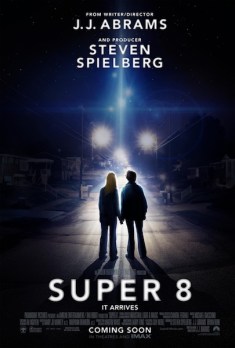
Before he started star warring and between bouts of star trekking, director J.J. Abrams teamed up with producer Steven Spielberg for this homage to the kind of movies Spielberg produced in the ’80s. Those films have endured down the decades; I’m not sure Super 8 endured as far as Abrams’ next lens flare showcase film. Which is a little bit of a shame because, by being Abrams’ most personal film, it may also be his best.
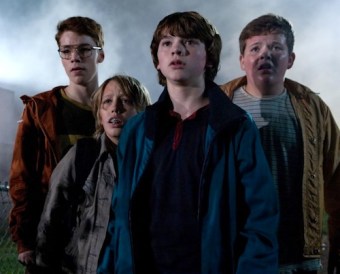
Set in the summer of 1979, the film follows a group of teenage boys making a zombie film, in particular Joe (Joel Courtney), whose mother died a couple of months earlier in an industrial accident. For their film’s love interest, the guys enlist Alice (Elle Fanning) and Joe begins to grow close to her, despite his dad (Kyle Chandler) blaming her dad for the death of Joe’s mother. While shooting a scene late at night, the kids witness a massive train crash, caused by their science teacher. With his dying words he warns them not to tell anyone what they witnessed. As the military descend on the wreckage and odd things begin to happen around the town, it becomes clear the train was transporting something very strange…

How much all this achieves Abrams’ goal of feeling like a genuine Amblin movie, I’m not sure. On the surface, not that much: the visual style is all too modern, not to mention the CGI. But, tonally, there is something there, which has somehow survived being filtered through the filmmaking process and made its way into the finished product — it’s a bit of that spirit of adventure; the kind of storyline and characters; and, actually, the way it holds back a little on the effects work. Several people cite The Goonies when talking about it, which just reminds me that I really ought to get round to seeing that. (The fact it’s absolutely loved by some, while increasingly I hear people bravely sticking their heads over the parapet to say, “it’s not really that good, you know”, intrigues me rather.)

Unfortunately, the longer the film goes on the more it runs away with itself, as characters dash back and forth all over the place, sometimes in credibility-stretching fashion (we never do see how a group of kids manage to escape a heavily-guarded military base and drive back to an evacuated and blockaded town). The adults stumble through the story to little dramatic effect; Joe’s dad even has to be secretly locked up for a good chunk of the film (with no other characters noticing his disappearance) so that his storyline can be paused until he’s wheeled out for his part in the climax. The grown-ups do serve a role — giving us a perspective on events that the kids lack, and being tied to the emotional arcs of the leads — but it wouldn’t have harmed anything to limit them to those functions, rather than trying to half-heartedly give them stories of their own.
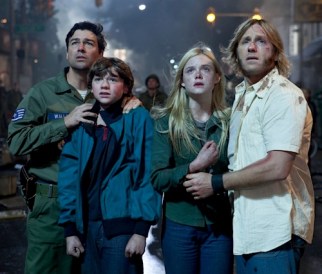
The kids are quite likeable in their way, especially Courtney and Fanning, who have enough chemistry to keep their interactions the most engaging aspect of the film. In fact, if Abrams wasn’t the kind of filmmaker he is, an indie-ish real-world take on Super 8’s dramatic storyline (a bunch of friends making a short film over the summer holidays, also with all the other grounded emotional aspects of the movie) might’ve made for an even more effective, enjoyable film. (Somewhat ironically, it seems this was Abrams’ original intention: according to IMDb, his two ideas for a follow-up to Mission: Impossible III were a coming-of-age story or an alien-on-the-loose adventure. Presumably getting sidetracked into Star Trek gave him the time to decide to combine them.)

In some respects, the kids’ short film (which plays during the end credits) encapsulates the whole movie: a semi-thought-through SF/F plot, a tacked on emotional arc, the apexes of both tied together in the climax, and a couple of sometimes-shoehorned effects set pieces along the way. Yet for all that, it does enough right that I’d quite like to see Abrams attempt more work along these lines.

4 out of 5

J.J. Abrams’ most recent film, a little movie you’ve probably not heard of about something-or-other waking up (I forget the details), is out on DVD & Blu-ray in the UK today.

Face/Off (1997)

100 Films’ 100 Favourites #28

It’s like looking in a mirror — only not

Country: USA
Language: English
Runtime: 139 minutes
BBFC: 18 (cut)
MPAA: R

Original Release: 27th June 1997
UK Release: 7th November 1997
First Seen: TV, 22nd September 2002 (probably)

Stars
John Travolta (Saturday Night Fever, Hairspray)
Nicolas Cage (The Rock, Ghost Rider)
Joan Allen (Nixon, The Bourne Supremacy)
Alessandro Nivola (Mansfield Park, Jurassic Park III)
Gina Gershon (Bound, P.S. I Love You)

Director
John Woo (Hard Boiled, Mission: Impossible II)

Screenwriters
Mike Werb (The Mask, Firehouse Dog)
Michael Colleary (Darkman III: Die Darkman Die, Firehouse Dog)

The Story
FBI agent Sean Archer finally corners his nemesis, Castor Troy, knocking him into a coma in the process. Unfortunately, Troy has planted a bomb that will destroy Los Angeles, and the only other person who knows its location is his brother — and he ain’t talking. So Archer comes up with the perfectly sane and utterly foolproof plan to secretly have a face transplant and assume Troy’s identity. Unfortunately, the real Troy wakes up, takes Archer’s face, and kills everyone who knows the truth. Hilarity ensues! No, wait, it’s not that kind of movie — violent bloody action ensues.

Our Hero
Sean Archer, super cop. Looks like John Travolta, until he looks like Nicolas Cage. Don’t overthink it, it works just fine when you’re watching the film.

Our Villain
Castor Troy, super villain. Looks like Nicolas Cage, until he looks like John Travolta. Don’t overthink it, it works just fine when— wait, I did that bit.

Best Supporting Character
Castor’s brother, Pollux. Yes, that’s his name. Looks like Alessandro Nivola throughout.

Memorable Quote
Castor Troy: “Sean Archer here, who’s calling?”
Sean Archer: “Well if you’re Sean Archer, I guess I’m Castor Troy.”

Memorable Scene
The good guy’s teenage daughter — played by Dominique “Lolita” Swain, as if to ram the point home — is hanging out in her bedroom wearing next to nothing, when in walks the villain, who starts perving over her… oh, and he’s got her dad’s face at the time. This is the kind of scene you can have when your body-swap movie is rated 18, I guess.

Making of
According to IMDb, the studio wanted John Woo to take the slash out of the title, but he kept it so people wouldn’t think it was a hockey movie. I don’t know why you’d think it was a hockey movie without the slash, or why adding a slash magically stops it being a hockey movie, but that’s what it says.

Awards
1 Oscar nomination (Sound Effects Editing)
2 Saturn Awards (Director, Writer)
7 Saturn nominations (Action/Adventure/Thriller Film, Actor (both Nicolas Cage and John Travolta), Supporting Actress (Joan Allen), Younger Actor/Actress (Dominique Swain), Music, Make-Up)
2 MTV Movie Awards (including Action Sequence for the speedboat chase)
4 MTV Movie Award nominations (including Best Villain, shared between Nicolas Cage and John Travolta)
1 Golden Trailer Awards nomination (Best of the Decade)

What the Critics Said
“Travolta and Cage make superb adversaries, flip-flopping roles, first as hero, then as villain. What titilating fun to observe Cage seethe with venom and Travolta meet danger head-on, then see Cage become Travolta, as the latter adopts the unmistakable characteristics of the fiend. […] Face/Off is a masterpiece equal to the action classics Seven Samurai, The Wild Bunch and The Good, the Bad, and the Ugly.” — Roger Hurlburt, Sun Sentinel

Score: 92%

What the Public Say
“Gorgeously shot with lots of Ol’ West style close up on the eyes while silence is only interrupted by the sounds of gun magazines falling to the ground. Woo’s directorial vision and the clever exchange of snark and built up bitterness displayed in the dialogue are just two of the beautiful components displayed in the first 30 minutes of this film that set the tone of the fucking masterpiece that it is.” — Amy Seidman, This Film Is Better Than You, Deal With It

Verdict

After making his name as an “heroic bloodshed” director par excellence with films like A Better Tomorrow, The Killer and Hard Boiled, John Woo headed for Hollywood… and made Van Damme vehicle Hard Target and nuclear-warhead-theft thriller Broken Arrow. But after those he made this, surely one of the best action movies of the ’90s. Its sci-fi high-concept allows Travolta and Cage to have a whale of a time in each other’s bodies, and Woo’s trademark OTT action is as exciting as ever.

Next: #30, ah-ah! Saviour of the universe!