

Country: UK, USA & Germany
Language: English
Runtime: 132 minutes
BBFC: 15
MPAA: R

Original Release: 23rd February 2006 (Finland)
UK Release: 17th March 2006
US Release: 17th March 2006
First Seen: cinema, 2006
Stars
Natalie Portman (Léon, Thor)
Hugo Weaving (The Matrix, Captain America: The First Avenger)
Stephen Rea (The Crying Game, Underworld Awakening)
Stephen Fry (Wilde, The Hobbit: The Desolation of Smaug)
John Hurt (Alien, Hellboy)
Director
James McTeigue (Ninja Assassin, The Raven)
Screenwriters
The Wachowski Brothers (The Matrix, Speed Racer)
Based on
V for Vendetta, a graphic novel by Alan Moore & David Lloyd.
The Story
In the near future, Britain is ruled by a tyrannical fascist government — considering the film was made in 2005, it’s probably set in about 2016 right? Anyway, masked freedom fighter V has his sights set on overthrowing the oppressive regime, partly in revenge for what they did to him…
Our Heroes
In lieu of the more commonplace sobriquet, permit me to suggest the character of this dramatis persona. Voilà! In view, a humble vaudevillian veteran, cast vicariously as both victim and villain by the vicissitudes of Fate. His visage, no mere veneer of vanity, is a vestige of the vox populi, now vacant, vanished. However, this valorous visitation of a by-gone vexation, stands vivified and has vowed to vanquish the venal and virulent vermin vanguarding vice and vouchsafing the violently vicious and voracious violation of volition. The only verdict is vengeance; a vendetta, held as a votive, not in vain, for the value and veracity of such shall one day vindicate the vigilant and the virtuous. Verily, this vichyssoise of verbiage veers most verbose, so let me simply add that you may call him V. Also Evey, a young woman V rescues and subsequently takes under his wing as a kind of protégée.
Our Villains
The fascist regime ruling near-future England, led by Supreme Chancellor Donald Trump Adam Sutler and enforced by numerous toadies.
Best Supporting Character
Gordon Deitrich is a TV host who delivers government-sanctioned comedy to the masses, despite his distaste for the regime. Could something inspire him to stand up for what’s right? But at what cost?
Memorable Quote
“People should not be afraid of their governments. Governments should be afraid of their people.” — V
Memorable Scene
Bit of a spoiler, this, but the film’s most memorable imagery comes at the end: after V successfully blows up the Houses of Parliament, there is a massive crowd of onlookers, all wearing V’s Guy Fawkes mask. Then they take the masks of, revealing hundreds of ordinary people — including deceased characters. It’s allegorical, see.
Technical Wizardry
The fight between V and a group of government agents in Victoria Station was shot at 60fps to play in slow motion, but the effect was emphasised further by having the stuntmen playing the agents actually move in slow motion, while stuntman David Leitch (later co-director of John Wick, fact fans) as V moved in real time, making it seem as if he was moving much faster than them.
Truly Special Effect
The scene where V is ‘born’ from fire isn’t CGI: stuntman Chad Stahelski (later co-director of John Wick, fact fans) actually walked through fire wearing nothing but fire-resistant gel and a g-string. His body temperature had to be lowered before the scene was shot. Fortunately, it was -3°C on the night of the shoot; then, 15 minutes before a take, Stahelski put on ice-cold flame-resistant clothing; when he took that off, he was covered with the fire-resistant gel, which had been on ice all day. Each to their own, eh?
Making of
James Purefoy was originally cast as V, but pulled out four weeks into filming and was replaced by Hugo Weaving. Because V wears his mask at all times, his dialogue is dubbed throughout (they tried attaching mics to the mask, but they didn’t work well), so the footage starring Purefoy was retained and Weaving’s voice was placed over it. Director James McTeigue later commented, “Can I tell the difference? Yeah. Can the audience tell? I doubt it.”
Awards
1 Saturn Award (Actress (Natalie Portman))
3 Saturn nominations (Science Fiction Film, Writing, Costume)
Nominated for the Hugo for Best Dramatic Presentation Long Form
What the Critics Said
“Just when we were ready to give up mainstream movies as braindead, along comes the controversial and gleefully subversive V for Vendetta, a piece of corporate-sponsored art that will have audiences rooting for a bomb-throwing anarchist. […] Much to the film ‘s credit, and to the exasperation of its critics, the audience is left to decide for itself whether V is a terrorist, freedom fighter, vengeance-seeking psychotic, or maybe all three simultaneously – and whether his extreme actions are a justifiable response to government repression. This pretty heady stuff for a big-budget comic-book movie” — Lou Lumenick, New York Post
 Score:
 73%
73%What the Public Say
“Halfway through it occurred to me that ten years had passed since the film’s release. TEN YEARS. And yet the film’s overriding themes: the dangers of fascism, how fear can affect our actions, privacy versus the oft used term ‘national security,’ freedom of speech, intolerance of members of the LGBT community, and the manipulation and dissemination of information, are still very relevant today. Maybe even moreso. What separates good movies from great movies, often comes down to social relevance throughout the decades. Can it stand the test of time? Does it mean something similar in today’s society as it did when the film was first released? This is why films like Metropolis and Citizen Kane and In the Heat of the Night are still studied in film classes. Their themes are universal, something that can apply to most decades. V for Vendetta fits that category to a T.” — Darth Gandalf, Funk’s House of Geekery

Alan Moore and David Lloyd’s dystopic graphic novel was a reflection of the 1980s England in which it was originally published; then the film adaptation became a reflection of the mid-’00s world in which it was produced; and then it began to influence that world, with V’s Guy Fawkes mask becoming widely recognised as a symbol for certain protest groups. Although dressed up as part of an entertaining action movie, the story’s real topic is the rights and wrongs of government, and our attitudes and responsibilities towards it as citizens. That message feels as relevant as ever after the events of this year. Perhaps it always will — like George Orwell’s 1984, an enduring warning against things going too far. Let’s pray it’s heeded.

#97 will be… an animation investigation.



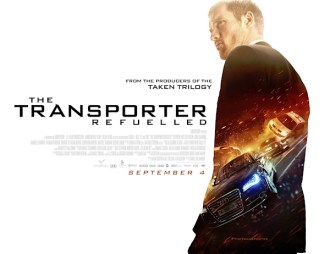 I kind of knew The Transporter Refuelled was going to be bad before I even began, but I watched it anyway because, well, I watched the
 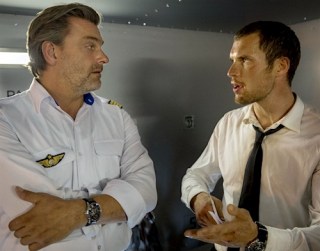 Unfortunately I wasn’t wrong about the acting, which is indeed pretty shit. Ed Skrein was truly dreadful in
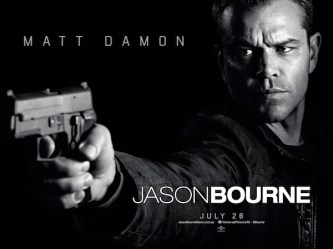 Much like the Bond films to which they’re so often compared, the Bourne movies have their devotees while only fitfully pleasing the critical establishment. This fifth movie — which is notable for marking the return of star Matt Damon and director Paul Greengrass after the semi-reboot of
 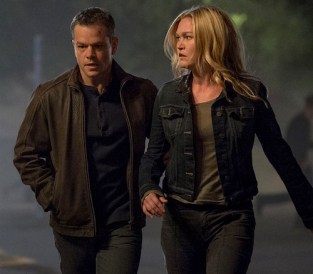 Action sequences ensue, shot with all the ShakyCam you’d expect from Greengrass. By now I imagine you have your own view on whether his style works or not. Personally, I think it’s considerably less bamboozling than when it made its debut in
 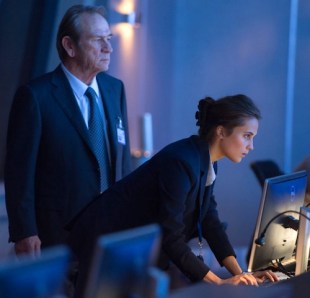 Frankly, Jason Bourne is at pains to mix in hyper-current iconography; the reasoning for Damon and Greengrass’ return now being that the world has changed and how does Bourne fit into that? So as well as social media and Greek riots we’ve got references to and riffs on hacking, Edward Snowden, government surveillance of its own citizens, the prevalence of Facebook/Twitter-esque tech companies, and so on. Sadly, I’m not sure the film’s actually got anything to say about any of these things. Greengrass and his co-writer, editor Christopher Rouse, have appropriated all these zeitgeisty concepts to make the film feel very Now, but that surface sheen is more or less where it ends. I mean, there’s a whole subplot starring Riz Ahmed as the Zuckerberg-like CEO of a social media company that I didn’t even mention in my plot summary because it’s kind of an aside. It’s kind of ironic, really, that it always seemed as if Greengrass’ more natural stomping ground was his documentary-ish real-world-exposé type movies, with his contributions to the Bourne series an unusual sideline; yet when he finally marries the two halves of his filmmaking career, it’s the action rather than current-affairs commentary that takes precedence.
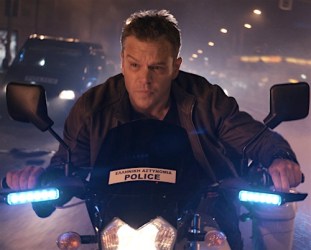 The end result is that Jason Bourne does thrill as an action movie, which seems to have been the primary goal of its makers, at the end of the day. As an action-thriller, however, the rinsed-and-repeated plot is a slightly faded imitation of former successes; a through-the-motions way to provide those impressively staged chases and punch-ups. It’s not the definitive Bourne movie one might’ve expected from the returning star/director combo (why else come back if not to perfect, or at least add to, the formula?), but instead means the film ends on an odd note: even though it wasn’t a wholly satisfying experience, and even though it doesn’t end with questions still blatantly hanging (as every Bourne movie bar Ultimatum has done), I want Damon and Greengrass to come back and do it all again, please. Only do it properly next time, yeah guys?

 Between his popular English-language debut
 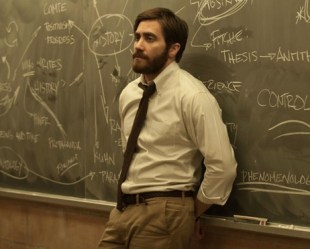 While looking up those various explanations, I read at least one review that asserted it’s a good thing that the film doesn’t provide a clear answer at the end. Well, I think that’s a debatable point. I mean, there is an answer — Villeneuve & co clearly know what they’re doing, to the point where they made the actors sign contracts that forbade them from revealing too much to the press. So why is it “a good thing” that they choose to not explain that answer in the film? This isn’t just a point about Enemy, it’s one we can apply more widely. There’s a certain kind of film critic/fan who seems to look down on any movie that ends with an explanation for all the mysteries you’ve seen, but if you give them a movie where those mysteries do have a definite answer but it’s not actually provided as part of the film, they’re in seventh heaven. (And no one likes a movie where there are mysteries but no one has an answer for them, do they? That’d just be being mysterious for precisely no purpose.) But why is this a good thing? Why is it good for there to be answers but not to give them, and bad for there to be answers and to provide them too? If the answers the filmmakers intended are too simplistic or too pat or too well-worn or too familiar, then they’re poor for that reason, and surely they’re still just as poor if you don’t readily provide them? I rather like films that have mysteries and also give me the answers to those mysteries. Is that laziness on my part? Could be. But I come back to this: if, as a filmmaker (or novelist or whatever) you have an answer for your mystery and you don’t give it in the text itself, what is your reason for not giving it in the text? Because I think perhaps you need one.
 Fortunately, Enemy has much to commend aside from its confounding plot. Gyllenhaal’s dual performance is great, making Adam and Anthony distinct in more ways than just their clothing (which is a help for the viewer, but not for the whole film), and conveying the pair’s mental unease really well. It would seem he errs towards this kind of role, from his name-making turn in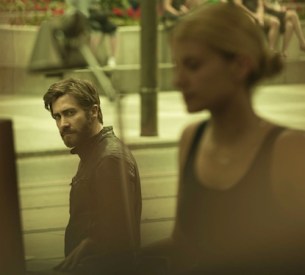
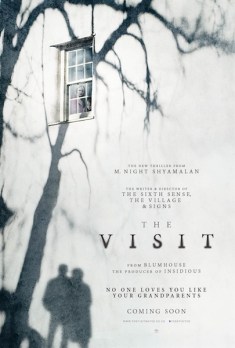 After a sidestep into big-budget director-for-hire movies that brought him even less acclaim than his last couple of self-penned efforts, once-fêted director M. Night Shyamalan goes back to basics with this low-key found-footage horror.
 Of course, there’s a big reveal to explain everything that’s been going. People call it a “twist” because it’s a Shyamalan movie, but it’s more of an explanation. I mean, what was going on had to be explained somehow, and the explanation comes at the point where you’d expect the explanation to be. I’m not saying it’s not a twist, because it does change what you think you’ve been seeing, but it’s also not a be-all-and-end-all kind of failed-rug-pull, which Shyamalan’s worst twist-obsessed efforts have been. This one works. Or, it did for me.
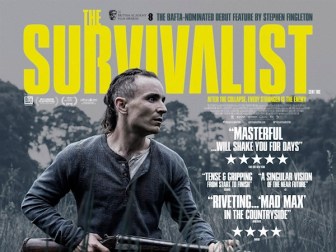 ’70s self-sufficiency sitcom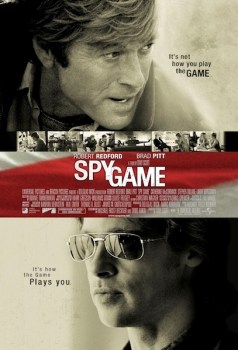

 100Films.co.uk