Twin Peaks: Fire Walk with Me (1992)

2017 #67
David Lynch | 135 mins | Blu-ray | 1.85:1 | USA & France / English | 15 / R

Twin Peaks: Fire Walk with Me

This review contains major spoilers for both Twin Peaks and Fire Walk with Me.

When Twin Peaks was cancelled, co-creator David Lynch quickly realised he wasn’t done telling stories in that world — probably because he’d just ended the TV series on a massive cliffhanger, having only recently refocused his attention on the show after a period of absence. Within a month of the series’ end, he’d secured a deal to produce a big-screen continuation. Along with one of the series’ lead writers, Robert Engels, Lynch cooked up a plan for a trilogy of movies that would explore some of the series’ leftover mythology — primarily, the mysterious and otherworldly Black Lodge. The first of these movies would begin by revisiting the aspect of Twin Peaks that had brought it so much attention in the first place: the murder of Laura Palmer.

Unfortunately, Lynch had misjudged the public’s appetite — or, more likely, didn’t particularly care about that, but nonetheless what people wanted didn’t line up with what Lynch made. The resulting movie, Twin Peaks: Fire Walk with Me, was not a success. For fans of the TV programme, the tone didn’t match, most of the regular cast didn’t appear, and, on the surface at least, it was a story about events they already knew, rather than a resolution to the series’ cliffhanger. For non-fans, it didn’t seem to stand alone in the way a ‘proper’ movie should. Lynch had won the top prize at Cannes just two years earlier, but now the screening of Fire Walk with Me was booed; so was the press conference. Reviewers were similarly unimpressed. The film flopped at the box office. The intended trilogy stalled with its first instalment, and Fire Walk with Me went down as a poorly-regarded failure, unquestionably one of Lynch’s worst films.
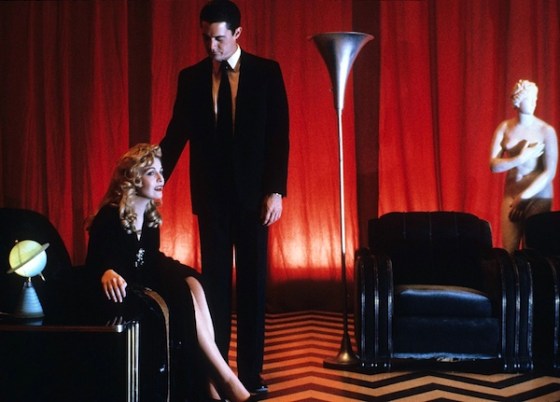
Lady in red (room)

Well, opinions change. Nowadays you’re just as likely to see someone contend that Fire Walk with Me is the pinnacle of Lynch’s career as you are to see someone express the view it’s his nadir; perhaps even more likely. From what I can gather, a quarter-of-a-century’s distance has allowed people to become more understanding about what it was Lynch was actually trying to achieve with the film; that it is, despite what the title might lead you to believe, as much “A David Lynch Film” as it is “A Continuation of The Popular Mainstream TV Series Twin Peaks”.

In both of these respects, there’s an awful lot to unpack. It’s a continuation and expansion of the ongoing Peaks story (and certainly not a conclusion to it), with pieces that lead up to Laura’s murder, pieces that expand on or continue stuff from the series finale, as well as brand new mysteries and puzzles. Simultaneously, it stands on its own two feet as a depiction of — and, in its use of horror, allegory for — the terrors of domestic psychological abuse and incest. And before all that it starts with a half-hour prologue in which a cast of character we mostly don’t know investigate a murder that die-hard fans might just about recall from its fleeting relevance to the series’ earliest episodes. And David Bowie turns up for a bizarre cameo that goes nowhere. In many respects, Fire Walk with Me is not an easy movie.

It is a rewarding one for those prepared to dig into it, however. Again, that applies to both levels the film is functioning on. It may not directly continue after the events of the series, but there are a couple of hints and nods towards the events of the finale and what happens next, as well as a lot of general additions to the mythology. And as a film about abuse, it’s not just a depiction of events, but is attempting to in tap into how that actually feels, psychologically — as Lynch has said, it’s about “the loneliness, shame, guilt, confusion and devastation of the victim of incest.” It must do this successfully because Sheryl Lee has said that, “I have had many people, victims of incest, approach me since the film was released, so glad that it had been made because it helped them to release a lot.” Bravely, it’s also a bit about the abuser, presenting him with, if not sympathy, then some degree of understanding — to quote Lynch again, it deals with “the torment of the father – the war within him.”

Happy families

One thing that straddles both sides of the film, I think, is that it goes a long way to ‘redeeming’ Laura Palmer. In the series she’s the all-American good girl homecoming queen who we quickly learn wasn’t so good under the surface, spending her time partying hard with drugs and promiscuous sex. At one point it seems like she was just a wild child who got in too deep. Now, I forget if the series eventually made clear that she let herself be murdered in order to stop a malicious demon from possessing her, but, even if it did, it’s a few lines of dialogue. Here, we see the real, severe struggles she was battling while trying to maintain some kind of normal life, and how hard she fought against them. She was, actually, just an ordinary girl, forced to face extraordinary circumstances.

Conversely, this is almost exactly why some people disliked the film: because it took how Laura Palmer appeared in the series, as kind of a notion or concept that the town projected their values and issues onto, and made her into a real person, who was consequently as messed up as most teenagers are. Essentially: Laura Palmer was more interesting dead than alive. I have two thoughts on this. One: Laura wasn’t exactly leading a normal life, so there’s definitely something in seeing how she ended up how she did; what her psychological state was like. Two: perhaps it’s entirely the point that the reality and the legend (particularly the legend built around someone tragically cut down too young) are not the same thing; that the reality is not as great as the notion. That sounds like a particularly Lynchian theme to me.

All of this added depth to Laura is driven by a remarkable performance from Sheryl Lee. Originally cast to play a corpse and a photograph, Lynch liked her so much they created a role for her in the series (as Laura’s lookalike cousin Maddie), and she gets an even meatier role here. Even though viewers of the series already know the answers that Laura only discovers during the film, Lee’s performance is so powerful, particularly when enacting fear or terror (no one instils fear in the viewer quite so well as Sheryl Lee looking terrified by something off camera that we never see), that we are horrified along with her. There’s also a power in seeing something play out that we’ve previously only been told about — the reality of it happening is more horrendous than the facts we’ve heard.
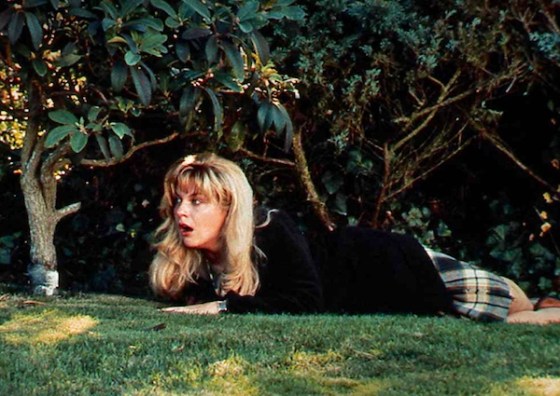
LAWNa Palmer (get it?)

This is partly why Fire Walk with Me has a distinctly different tone to the series (which, as noted, probably didn’t help win people over). It’s still full of quirky surrealism, of course, because it’s a David Lynch film; but the lighter, funnier, chirpier elements have all been excised. This is a dark, dark movie. One suggestion I’ve read from a fan is that the TV series was from Agent Cooper’s point of view, hence it emphasised the small-town charm and optimistic worldview, while the film is from Laura’s perspective, so it’s altogether grimmer and more fatalistic. This may not have been deliberate on the part of Lynch and co, but it certainly makes some kind of sense.

Which road the imminent Twin Peaks revival will walk, obviously no one outside of the production yet knows. But the other week it was widely reported that Lynch had said Fire Walk with Me would be essential to understanding the new series. I think some people were surprised by this — the vestiges of the film’s original negative reception, perhaps — but, having just watched the film, it feels like a bit of a “well, duh” statement. Fire Walk with Me is often summarised as being just “the last seven days of Laura Palmer”, which makes it sound like it’s wholly related to a mystery that was wrapped up in the original series. It’s more than that, making huge contributions to the series’ ongoing mythos, as well as a couple of hints about events in and after the original finale — unless those were going to be completely ignored by the new series (which doesn’t sound like Lynch to me, not to mention that it would surely irritate fans), then of course Fire Walk with Me is important!

One thing that’s probably never getting explained is that Bowie cameo. His character was one of the things inserted by Lynch and Engels to build on in the proposed sequels — yes, rather like all those films that adapt the first novel of a series and fill it with foreshadowing, assuming they’ll get to make the rest, but never do. Reportedly Bowie was lined up to appear in the revival, but died before he could film any scenes. Whether that particular mystery will be explained some other way, or be left forever as a dangling thread in Twin Peaks’ complex web, obviously remains to be seen. So too the disappearance of Agent Chester Desmond, as actor Chris Isaak isn’t part of the extensive cast list they’ve announced. But then, maybe they’re keeping some secrets there too…
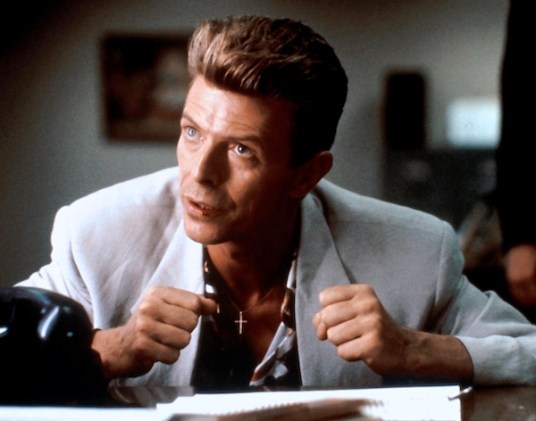
He's here to blow our minds

There’s so much more that could be said about Fire Walk with Me. About ‘fake Donna’, for instance — actress Moira Kelly standing in as Laura’s best friend, Donna Hayward, because original actress Lara Flynn Boyle was unavailable — and how there’s a camp of people who think she might actually be better than the original (me included). About the significance of time (there’s a definite clock motif; several clear references in dialogue; it’s technically a prequel but with sequel pieces; there’s definitely a few bits of time travel going on; and so on). About the Lil scene, which may or may not be a dig at over-analytical fans; indeed, that whole prologue is like some kind of inversion of Twin Peaks. About the Pink Room sequence and its seedy artistry. About the interpretation that Bob is a shared fiction, concocted by both Leland and Laura to help that pair of troubled souls deal with the horrors they’re living through (you may think Leland deserves no sympathy, but the series made it fairly clear that he had been a victim of abuse himself…)

Fire Walk with Me is so many different things all at once that it’s almost a mess of a film. But Lynch knows what he’s doing, if not entirely then at least to a significant degree. Plus it only becomes more interesting and complex as you continue to think and read about it after viewing. Perhaps, after the new series, it will slot into place even better, and its significance in the overall scheme of Twin Peaks will become even clearer. Maybe its critical rehabilitation has a few steps left to take yet…

4 out of 5

Tomorrow: the missing pieces.

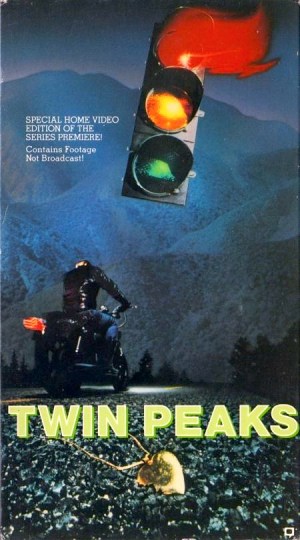
Twin Peaks (1990)

aka Twin Peaks: Pilot (International Version)

2017 #70
David Lynch | 113 mins | Blu-ray | 4:3 | USA / English | 15

Twin Peaks: Pilot (International Version)

While they were seeking funding for their feature-length TV pilot, creators David Lynch and Mark Frost agreed to demands that they film an alternative ending that wrapped up the episode’s primary mystery. The thinking was that, if the pilot didn’t get picked up to series, it could be released in Europe as a complete movie (why it couldn’t also be released in the US as a movie I don’t know), thereby recouping some of the cash spent on it. Apparently Lynch and Frost forgot they’d signed up for this until towards the end of the shoot, when they were reminded of their contactual obligation and so dashed something off.

But the series did get picked up, and that half-arsed ending should’ve been consigned to the dustbin of history. Instead, Twin Peaks became a massive worldwide phenomenon, and whoever owned the rights to release the movie version exercised said right, naturally including the tacked-on conclusion. Although the rights situation was settled long ago, the ‘extended’ version is still routinely included alongside the proper one on disc releases. I thought it was about time I checked it out — and judged it as a standalone movie, of course.

Welcome to Twin Peaks

Obviously, for most of its running time the so-called “international version” is identical to the broadcast version of the episode. I would contend that is one of the greatest episodes of television ever made. Everything about it is sublime. For starters, it establishes Twin Peaks’ world quite methodically. We’re gradually introduced to the police station, the mill, the Great Northern hotel, the Double R diner, the school, character’s homes — not just literally the locations, but the people who inhabit them, including their relationships to one another, both public and secret. There’s a ton of information to absorb here, but it’s all laid out so neatly that it doesn’t feel like a chore. There’s also a lot of potential plot lines started or hinted at, which makes a good deal of sense for kicking off a series but (as we’ll see in a bit) is not such a good idea for a two-hour movie…

The episode is also incredibly strong in a filmmaking sense. Thematically, there’s the typical Lynchian obsession with the darkness hiding behind seemingly normal, perfect American lives. It’s not just the weird murder, either: pretty much everyone is sleeping with someone they shouldn’t be, or having some other domestic issue. That’s also very soapy, but that’s deliberate. It’s neither parody nor homage per se, but it’s definitely influenced by how soaps perceive and portray the world. Interestingly, at this point Twin Peaks could be considered just a crime drama with a few quirky characters — all the supernatural weirdness the show’s so known for begins in the next episode (and doesn’t fully kick into gear until the second season).

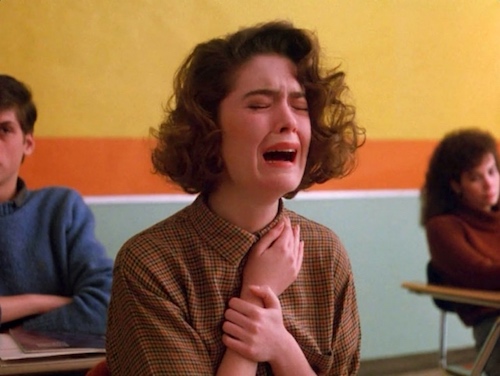
Visually, Lynch’s shot composition is fantastic, with a strikingly great use of the frame and blocking — very precise, very neat, ordered, but not in a self-conscious, Wes Anderson kind of way. It seems mindful of being shown on the relatively small television screens of the era, but also maintains a quality that carries over to this day. Beyond the purely visual, the content it creates is remarkable too. The sequence in the high school, where the news about Laura gradually comes out before it’s officially announced, is incredible — the way people slowly begin to suspect, the way characters react, the way Lynch is unhurried in letting this unfold. Having watched the episode a couple of times this year now, I think this part is one of my favourite scenes in the whole of cinema. The way it builds to that somehow-perfect shot of Donna sat at her school desk crying is majestic.

It's not just because everyone hates Lara Flynn Boyle

However, when judged as a standalone movie, Twin Peaks is a disaster.

After an hour-and-a-half of sheer quality, we reach the 19-minute tacked-on ending. This climax is rushed, simplistic, and refuses to touch on the vast majority of the episode’s subplots. I mean, of course it doesn’t — it was a rush job at the end of production to fill a contractual requirement. It wraps up the Laura Palmer case as quickly and perfunctorily as it can, then Lynch basically says a humungous “eff you” to the notion of having to do a movie version by bunging in a nonsensical dream sequence.

For those who are curious but not minded to sit through the whole thing, I’ll outline what actually happens. The deviation comes in the final scene of the episode as broadcast: instead of having a vision, Sarah Palmer has a flashback to when she was hunting for Laura that morning, realising she saw the killer hiding in Laura’s bedroom. (This, at least, is an effectively creepy notion. Was he actually visible in the quick panning shot of the room we saw earlier on? I daren’t go back to check. Seriously.) Sarah has Leland call Lucy, who’s hanging out at home with Andy (their amusing home life, otherwise unseen in the series, is probably the only reason to watch this). Lucy phones Sheriff Truman so he and Hawk can go to the Palmers and get a police sketch of the killer. Meanwhile, Agent Cooper is awoken by a mysterious phone call (there are lots of phone calls in this) from a man who knows unreleased details about the Teresa Banks murder. The man insists they meet at the hospital, so Coop calls Lucy and tells her to tell the sheriff to meet him there with the sketch.

At home with Punky

At the hospital, they discover the mysterious caller is the one-armed man, Mike, who identifies the sketch as Bob. He also babbles some other stuff which I’m not sure has much meaning in this version, but was recycled for one of his later appearances in the series proper. Mike reveals that Bob is currently down in the hospital basement. Harry and Coop pop down there, confront Bob, have a little natter with the creepy killer (whose creepiness is considerably diluted by his chattiness, if only for the duration of this scene). Then Mike barges in and shoots Bob dead. Coop delivers a kind of one-liner, before a title card informs us it’s “twenty-five years later”. Then the famous Red Room scene plays out, just like it does in Episode 2 — and if you thought it made almost no sense in the context of the series, it makes even less here. Where is Coop now? Who’s the little guy? Why does he talk funny? Why does his cousin look like Laura Palmer? What’s she on about? What does she whisper to Cooper? Why are we being shown any of this?! It came to Lynch in a vision, and he liked it so much he repurposed it for the series, where it eventually came to have meaning (some meaning, anyway)… but here it’s utterly aimless.

Let's rock!

This international version of Twin Peaks was never really meant to be seen, and it’s obvious Lynch and Frost felt that way when concocting its final act. That ending is rushed in what it does bother to conclude — and, compared to all the plots we’ve just spent nearly two hours watching, what it concludes is not very much. The killer isn’t even one of the people we were considering as suspects. Thank goodness this isn’t all Twin Peaks ever was.

The pilot as broadcast is a five-star masterpiece; not just the start of something truly special, but something remarkable in and of itself. The extended standalone version is so ruined by its final 19 minutes that I can only rate it:

3 out of 5

Tomorrow: fire, walk with me.

Hell or High Water (2016)

2017 #19
David Mackenzie | 102 mins | streaming (HD) | 2.35:1 | USA / English | 15 / R

Hell or High Water

Oscar statue2017 Academy Awards
4 nominations — 0 wins

Nominated: Best Picture, Best Supporting Actor, Best Original Screenplay, Best Editing.


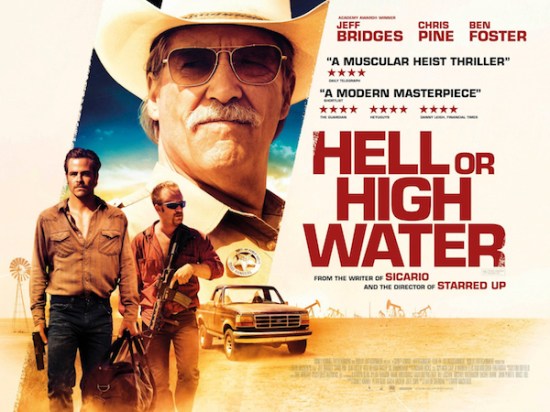
The line between right and wrong, legal and illegal, is blurred once again by the writer of Sicario in this tale of two brothers (Chris Pine and Ben Foster) committing a series of bank robberies for reasons beyond greed, and the two Texas Rangers (Jeff Bridges and Gil Birmingham) hunting them down.

I don’t think it would be unkind to describe Hell or High Water as a genre picture: it’s a crime thriller about bank robbers and the police out to catch them, with its setting and tone also bringing something of the Western — or, rather, neo-Western. (It bugs me a little when people refer to films not set in the Old West as “Westerns”, because that seems an inherent part of the genre to me. Naturally, the term “neo-Western” has already been coined, and I feel it’s one we should start using more widely.) There is something more to it than that though, which might explain its slightly incongruous presence among 2017’s Best Picture nominees. In part it’s a social drama, the characters’ motivations based in very topical concerns, including their plan that represents a form of revenge against the banks who have it coming.

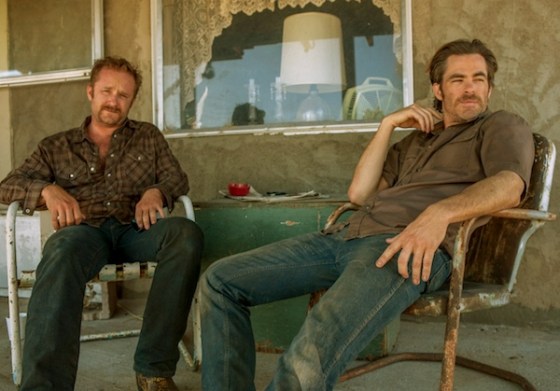
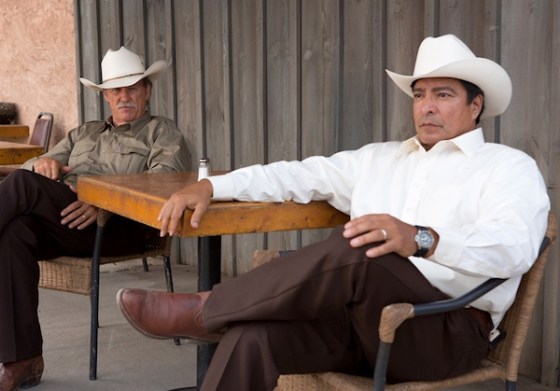
Pair of crooks

In another part it’s a character drama. Indeed, the acting is the best part. Jeff Bridges subsumes himself in the character, an old lawman on the verge of retirement, but still sharp and capable, who won’t know what to do with himself once he’s put out to pasture — this is his last great hurrah. He got all the plaudits because he’s Jeff Bridges, but it doesn’t feel massively outside his wheelhouse. Conversely, Chris Pine is practically a revelation. Best known for leading blockbusters, here he convinces as a father who’s finally trying to do the right thing for the future of his kids, whether that thing is legal or not. When these two finally come face to face, it’s nail-biting. That’s to do no disservice to Ben Foster, as Pine’s wildcard brother, who perhaps has less honourable intentions; or Gil Birmingham as a fellow Ranger, who Bridges spends most of the film mercilessly teasing, though it turns out conceals an underlying affection for his friend.

Credit is also definitely due to director David Mackenzie, who certainly has an eye for a shot and a way with constructing an action sequence, for which credit must also be due to editor Jake Roberts. Similarly to cinematographer Giles Nuttgens, who evokes a dusty West Texas with its own kind of sandblasted desolate beauty.

Pair of cops

Hell or High Water is a very good film, a neo-Western crime thriller genre movie that is exceptionally well directed, shot, and performed. Yet somehow it feels out of place among the Best Picture nominees — like, it’s not that good. Of course, Oscar has a long history of nominating films that aren’t good enough, and Hell or High Water is better than most of them. So while I don’t feel I can stretch to giving it five stars, I certainly recommend it highly.

4 out of 5

Hell or High Water is available on Amazon Prime Video UK from today.

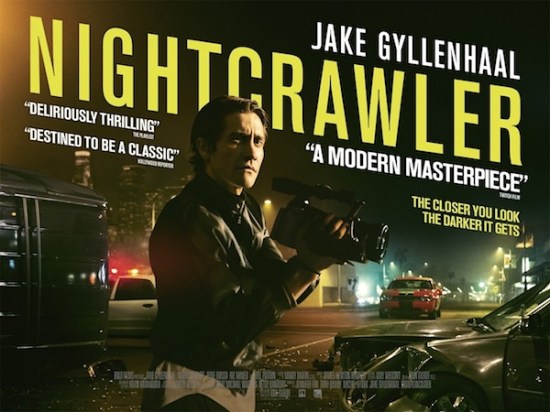
Nightcrawler (2014)

2017 #63
Dan Gilroy | 118 mins | Blu-ray | 2.40:1 | USA / English | 15 / R

Nightcrawler

Dan Gilroy’s neo-noir thriller is part “state of the nation” observational drama and part character study.

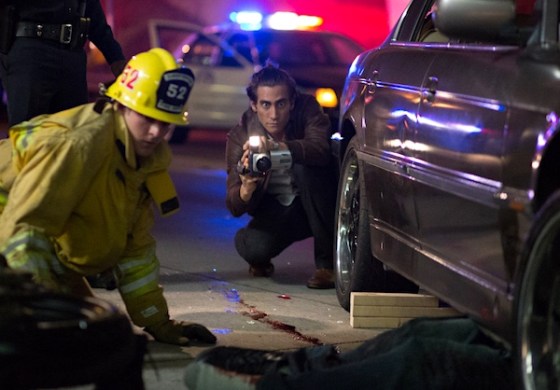
The character in question is Louis Bloom (Jake Gyllenhaal), a young man who, like so many in modern America, struggles to find paid employment. Indeed, as the film opens he’s resorted to stealing fences to hawk to scrap metal dealers — and, when cornered by a security guard, also resorts to violence. That’s the kind of man Bloom is, which will become important as the film goes on. On his way home he comes across the aftermath of a near-fatal car accident, and witnesses the freelance news cameramen rushing to the scene. For some reason this job strikes Bloom as glamorous, so he buys a camera and a police scanner and throws himself into it. His boundary-pushing enthusiasm soon puts him on the way to success, racing around nighttime L.A. chasing bloody imagery. It’s a cutthroat industry, but Bloom is prepared to go pretty far for exclusive footage…

Any well-informed viewer isn’t likely to glean much from Nightcrawler about the state of modern America. That Bloom is desperate for employment is more of an inciting incident than a dissected issue, though it does also partially fuel a subplot when he employs an assistant. That US TV news is all about shock value — “if it bleeds it leads” — is a truism that’s decades old, too. If the film contributes anything to that discussion it’s to wonder if things have reached a nadir. Writer-director Gilroy says he was trying to tell an objective and realistic story, but it’s coming from a very cynical, almost satirical place about TV news. Or maybe local US news really is that extreme, I don’t know. Either way, this observational stuff isn’t bad, but nor is it revelatory.

If it bleeds it leads

Where the film really flies is in its characters. There are impressive supporting performances, from Riz Ahmed as the uncertain and kinda gullible young guy Bloom employs as his assistant, and Rene Russo as the outwardly confident but actually kinda desperate TV news producer Bloom sell his work to; plus an almost cameo-level appearance by Bill Paxton as a rival nightcrawler who rubs Louis up the wrong way.

But the film belongs to Gyllenhaal. Wild-eyed, eager to please, but not quite right in how he interacts with other human beings, and with a real thirst for the gory profession he lands upon, Bloom has a sense of morality that is quite removed from the norm. From the start we’re in no doubt that this is a guy prepared to take relatively extreme measures to secure what he wants, but how far will he go? As he begins to establish himself as a respectable businessman — or, at least, someone who wants to be thought of as respectable — how much has his attitude changed, if at all? Gyllenhaal immerses himself in the role, skilfully negotiating Bloom’s swings from smarmy charm to emotionless non-engagement with the horrors he films. He’s physically transformed too: he lost weight, didn’t eat, and stayed up nights in preparation for the role. On the Blu-ray, Ahmed comments that the literal hunger Gyllenhaal was enduring contributed to his performance as a guy who is so hungry (for success) he’ll do anything necessary to achieve it.

(Talking of the Blu-ray, its only special feature (aside from an audio commentary) is a five-minute featurette that briefly features the two real-life nightcrawlers who consulted on the film. They share a couple of quick anecdotes about what the real job is like, which is quite fascinating — it’s a shame there’s not a fuller feature about those guys and their work. I don’t know if it would sustain a whole feature documentary — maybe it would — but a decent-length DVD extra would’ve been nice.)

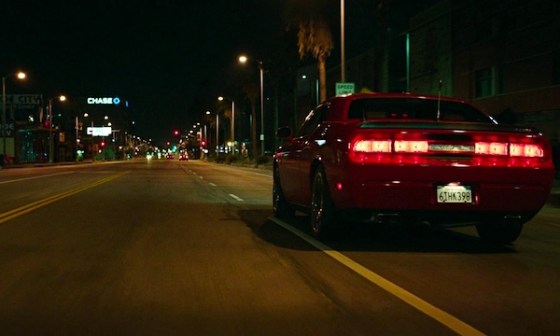
Nighttime L.A. car chase

Outside of its characters, Nightcrawler impresses with technical merits. The lensing of nighttime L.A. by DP Robert Elswit is highly evocative, a netherworld where flashing red-and-blue lights illuminate scenes of carnage. The film’s pace is apparently unhurried but constantly engrossing. You’re not exactly sucked into this world alongside Bloom (Gilroy’s right that presenting him as unnecessarily aggressive upfront serves to stall sympathy from the viewer), but you become an interested observer, unable to look away — like a rubbernecker at an accident, appropriately enough. Several scenes, especially in the film’s second half, generate a level of nail-biting tension, while a climactic car chase is an action scene for the ages. Gilroy’s brother Tony, a producer on the film, was one of the architects of the Bourne franchise, and you wonder if he brought some expertise to the realisation of that sequence. This isn’t a film for adrenaline junkies on the whole, but that scene is a kick.

Driven by a sharp character examination from writer-director Dan Gilroy, brought to life in a compelling, committed performance from Gyllenhaal, Nightcrawler is an appropriately cynical exploration of modern morality as embodied by one outsider, moulded in the shape of a fantastic noir thriller.

5 out of 5

The UK TV premiere of Nightcrawler is on BBC Two tonight at 9pm, after which it will be available on iPlayer.

Nightcrawler was viewed as part of my What Do You Mean You Haven’t Seen…? 2017 project, which you can read more about here.

It placed 8th on my list of The 17 Best Films I Saw For the First Time in 2017, which can be read in full here.

Green Room (2015)

2017 #1
Jeremy Saulnier | 95 mins | streaming (HD) | 2.35:1 | English / English | 18 / R

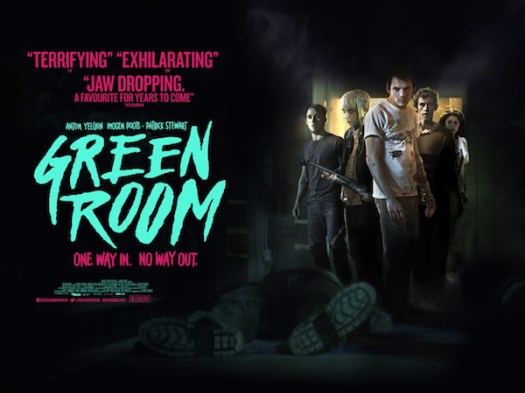
Green Room

In my review of 2016, I asserted that Denis Villeneuve was “one of the most exciting directors working right now.” Here we have, if not the other end of the spectrum, then certainly a different angle on it: Jeremy Saulnier, perhaps the most overrated director working right now.

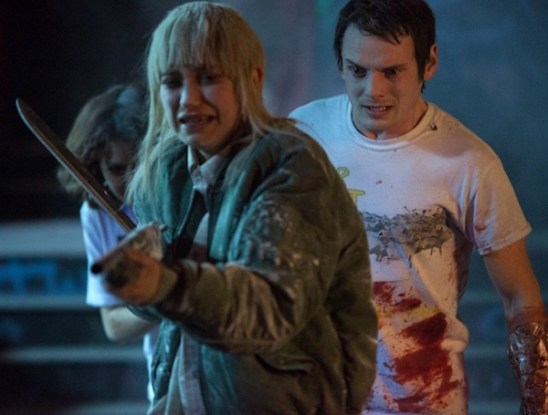
This, his third film, follows a struggling rock band who, in desperation for any work, take a gig at a remote club frequented and owned by extremist fascists. When the band see something they shouldn’t, the club’s violent owner and his gang try to kill them.

The main point everyone seems to make about Green Room is how unbearably tense it is. Well, I can imagine it might’ve been pretty tense if I hadn’t spent the whole time struggling to work out what was going on from all the mumbled dialogue. It’s not helped by much of the early chatter being music scene gobbledegook. Is this what watching sci-fi feels like to normal people? On one hand it doesn’t matter — the film is about the tension of the situation, not the vibrant wordplay. On the other, I was so distracted trying to decipher what was happening from the semi-unintelligible speech that I never really felt that fêted suspense.

Neither rock nor roll

The one time I did feel any real tension was right near the end. The form of the movie dictates that most of the cast are gonna get it, so it’s only in the closing stages that the final survivors (who are, naturally enough, the top-billed cast) may either win or finally be killed. The film has its indie-ness in its favour here, because you think that maybe the heroes will lose. Perhaps such a line of thought is me being too logical, not entering into the spirit of the fiction, but clearly the movie didn’t grip me enough before that point to feel anything sooner.

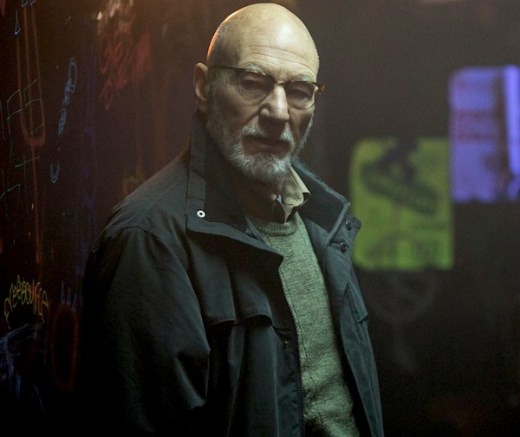
On the bright side, Patrick Stewart oozes class as the calmly in control villain, but I can see why he seemed to get pissed off at all the reviews/interviews going “OMG, this is such a departure for you!” Yeah, if your experience of his abilities extends no further than Star Trek: The Next Generation and the X-Men movies then this turn must be a revelation, but the guy’s got a long and exalted career playing all sorts of roles, on stage and screen. I’m not saying he’s bad here — he’s Patrick frickin’ Stewart, of course it’s a good performance — but I think some of the unreserved praise he’s received comes from a place of surprise at this role being a ‘departure’ for him.

These are the voyages of the starship Fascism

Labelling Saulnier the most overrated director currently working may be a bit harsh. It’s not that he’s a bad filmmaker, or even that he makes bad movies per se, but neither Blue Ruin nor Green Room have done very much for me, despite the adulation they’ve received elsewhere. Maybe if he continues this titular trend and next makes, I dunno, Red Mansion, which sounds like it might be a Gothic chiller, maybe then I’ll like him.

That said, I think Green Room is definitely more effective at its goals than Blue Ruin was. Even if I still think Saulnier is overrated, this is a step in the right direction.

3 out of 5

Review Round-up

Over the last ten-and-a-bit years I’ve prided myself on reviewing every new film I see. Well, at the start it was less pride and more just how I did things (and most of those early ‘reviews’ were only a couple of sentences long), but as I’ve maintained it for so long I’ve come to pride myself on it. However, of late my backlog has reached ridiculous proportions, and is only expanding.

But I’m not giving up just yet, dear reader — hence this round-up. There are some films I just don’t have a great deal to say about, where all I’ve really got are a few notes rather than a fully worked-up review. So as in days of old (i.e. 2007), I’ll quickly dash off my brief thoughts and a score. Hopefully this will become an irregular series that churns through some of my backlog.

In today’s round-up:

  • The Spy Who Came in from the Cold (1965)
  • Under the Shadow (2016)
  • Teenage Mutant Ninja Turtles: Out of the Shadows (2016)
  • Dazed and Confused (1993)


    The Spy Who Came in from the Cold
    (1965)

    2016 #167
    Martin Ritt | 112 mins | streaming (HD) | 16:9 | UK / English | PG

    The Spy Who Came in from the Cold

    John le Carré’s famed story of crosses, double crosses, triple crosses… probably quadruple crosses… heck, maybe even quintuple crosses — why not?

    The storytelling is very slow and measured, which I would guess is not to all tastes — obviously not for those who only like their spies with the action and flair of Bond, but even by Le Carré standards it’s somewhat slight. That’s not to say it’s not captivating, but it lacks the sheer volume of plot that can, say, fuel a seven-episode adaptation of Tinker Tailor Soldier Spy. Quite how the forthcoming miniseries from the makers of The Night Manager intends to be more than a TV movie… well, we’ll see.

    There’s also some gorgeous black and white photography, with the opening sequence at Check Point Charlie looking particularly glorious.

    5 out of 5

    Under the Shadow
    (2016)

    2017 #12
    Babak Anvari | 84 mins | streaming (HD) | 2.35:1 | UK / Persian | 15 / PG-13

    Under the Shadow

    Be afraid if your doll is took — it could be the Iranian Babadook.

    Honestly, for all the creepy quality on display in this UK-funded Iran-set psychological horror, I don’t think labelling it as something of a mirror to The Babadook is unfair. It’s about a lone mother (Narges Rashidi) struggling with an awkward child (Avin Manshadi) while a malevolent supernatural entity that may be real or may just be in her head attempts to invade their home. Where the Australian horror movie invented the mythology for its creature afresh, Under the Shadow draws from Persian folklore — so, same difference to us Western viewers. The devil is in the details, then, which are fine enough to keep the film ticking over and regularly scaring you, be it with jumps or general unease.

    The Babadook may have done it better, and certainly did it first, but Under the Shadow remains an effective chiller.

    4 out of 5

    Teenage Mutant Ninja Turtles:
    Out of the Shadows

    (2016)

    2017 #29
    Dave Green | 108 mins | streaming (HD) | 2.35:1 | USA, Hong Kong, China & Canada / English | 12 / PG-13

    Teenage Mutant Ninja Turtles: Out of the Shadows

    This first (and last? We’ll see) sequel to 2014’s Teenage Mutant Michael Bay Turtles ends with a cover of the theme from the original animated series, just in case you weren’t clear by then that it’s aspiring to be a live-action version of that particular cartoon.

    For one thing, there are appearances by a lot of popular characters who are primarily associated with that iteration of the franchise. For another, parts of the film have a very “rules of Saturday morning cartoons” feel — people thrown from a plane are immediately shown to be opening parachutes; all of the villains survive to fight another day; that kind of thing. They’ve clearly made an effort to make it lighter and funnier than its big-screen predecessor. The downside: they’ve gone a bit too far. The tone of the screenplay is “kids’ movie”, which isn’t a problem in itself, but Out of the Shadows retains the dark and realistic visual aesthetic of the first movie, plus enough violence and swears to get the PG-13 all blockbusters require, which means the overall effect is a little muddled.

    While it’s not a wholly consistent film, it does work to entertain, with funny-ish lines and kinetic CGI-fuelled action scenes. I must confess to ultimately enjoying it a fair bit… but bear in mind I was a big fan of the cartoon when I was five or six, so it did gently tickle my nostalgia soft spot.

    3 out of 5

    Dazed and Confused
    (1993)

    2017 #53
    Richard Linklater | 102 mins | streaming (HD) | 16:9 | USA / English | 15 / R

    Dazed and Confused

    Writer-director Richard Linklater has said that with Dazed and Confused he wanted to make an anti John Hughes movie; one that showed teenage life was mundane and uneventful. So here’s a movie about what it’s like to hang out, driving around aimlessly doing nothing. Turns out it’s pretty mundane and uneventful. And most of the characters behave like dicks half the time, which isn’t exactly conducive to a good time.

    Despite that, some people love this movie; it’s often cited as being nostalgic. Well, I can’t say it worked that way for me. Indeed, I’m kinda glad I didn’t know those people in school…

    3 out of 5

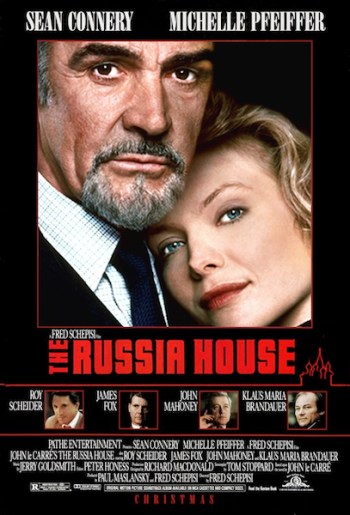
  • The Russia House (1990)

    2016 #158
    Fred Schepisi | 123 mins | streaming (HD) | 2.35:1 | USA / English & Russian | 15 / R

    The Russia House

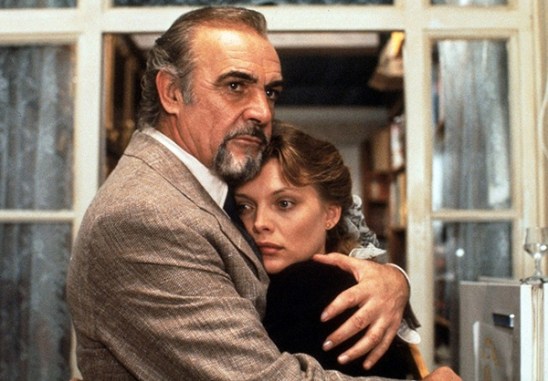
    Sean Connery and Michelle Pfeiffer are on fine form in this romantic spy thriller adapted from a John le Carré novel.

    Although it takes a little time to warm up, it soon reveals a typically intricate Le Carré narrative, with everyone playing everyone else as the intelligence agencies try to use Connery’s publisher to extract a Russian defector, with Pfeiffer as the go-between he begins to fall for. It all comes to a head with one of those delightful sequences where you’re not sure who’s conning who and how, and an ending that is, shall we say, pleasingly atypical for Le Carré.

    The central performances are superb — I’m not sure Connery, playing against type as a washed-up ageing no-name, has ever been better. There’s a top-notch supporting cast too, including Roy Scheider as a CIA agent, James Fox as Connery’s MI6 handler, plus Michael Kitchen, Klaus Maria Brandauer, David Threlfall, and even Ken Russell. It looks fantastic as well, at least to me, in an unshowy, not over-processed, grainy, very film-y way. Thanks to digital photography, they literally don’t make them like this anymore; heck, thanks to digital grading they haven’t made them like this for about 20 years.

    Is that a manuscript in your pocket or are you pleased to see me?

    The Russia House is a much overlooked film, even within the small (but, recently, exponentially expanding) canon of Le Carré screen adaptations. However, with its engaging, uncommonly humane espionage story, driven by strong performances, I think it merits a degree of rediscovery.

    5 out of 5

    The Russia House placed 16th on my list of The 20 Best Films I Saw For the First Time in 2016, which can be read in full here.

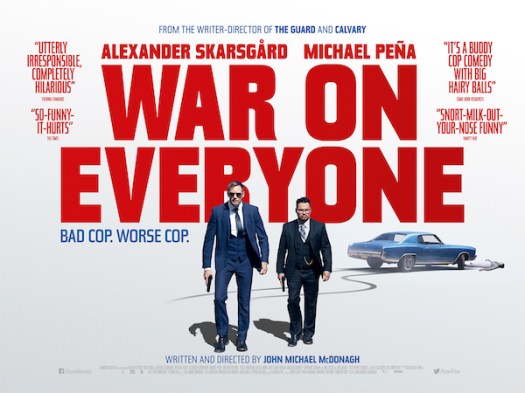
    War on Everyone (2016)

    2017 #52
    John Michael McDonagh | 98 mins | streaming (HD) | 2.35:1 | UK / English | 15 / R

    War on Everyone

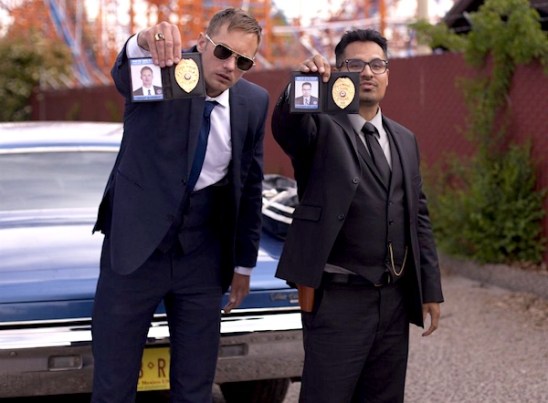
    The third feature from John Michael “older brother of the guy who made In Bruges” McDonagh, War on Everyone is a comedy crime thriller about two dodgy New Mexico cops (Michael Peña and Alexander Skarsgård) who are tricked while trying to prevent a heist and so set about tracking down the stolen money — to pocket for themselves.

    I’ve read that War on Everyone is massively offensive. Well, I mean, if you want to be precious about it, I guess some of it is. Maybe reading that left me expecting something incredibly outrageous, but sadly the film doesn’t hit those highs. I say “highs” — offensiveness for the sake of it is pointless, but some of the best material in the previous movies of the McDonagh brothers has come from a willingness to say and do un-PC things. War on Everyone doesn’t feel neutered in that regard, but nor is anything it does so striking.

    Worse, it has a rambling narrative, wandering pace, and inconsistent tone. It’s not funny enough, frankly, but nor is the crime plot interesting enough to sustain the humour drought. Peña’s comedic gifts carry some of the flat material, though barely, while Skarsgård seems a little lost in an underwritten role. He and Tessa Thompson attempt to salvage something from a romantic subplot that springs from almost nowhere and then occupies a bunch of screen time to no one’s benefit. Caleb Landry Jones fares best as a foppish strip club owner, one of the henchman to Theo James’ big bad, whose entire character is basically, “he’s English — they make good villains, right?”

    Not-so-nice guys

    There are broad similarities to another irreverent comedy thriller from 2006 about a pair of not-so-nice fellas investigating a somewhat-complicated crime plot, but War on Everyone just serves to demonstrate how hard it is to do what Shane Black makes look effortless in The Nice Guys. I thought War on Everyone trailed well and looked like it would hit that same level, or at least something close to it, but sadly the final result feels fumbled.

    2 out of 5

    John Michael McDonagh’s debut feature, The Guard, is on Channel 4 tonight at 12:05am. I’ve got the Blu-ray knocking around somewhere; really ought to get round to watching it…

    Don’t Breathe (2016)

    2017 #21
    Fede Alvarez | 88 mins | streaming (HD) | 2.35:1 | USA / English | 15 / R

    Don't Breathe

    One of the most talked-about thriller-cum-horror movies of last year, Don’t Breathe (which is available on Sky Cinema as of last Friday) concerns a gang of young house burglars — Rocky (Jane Levy), who’s doing it to help get her little sister away from their good-for-nothing parents; her boyfriend Money (Daniel Zovatto), who’s a bit of a dick; and Alex (Dylan Minnette), who’s secretly in love with Rocky, and whose dad runs a security company from which they ‘borrow’ the necessary information to access homes without setting off the alarms. After a big final score, they set their sights on the remote home of a chap (Stephen Lang) whose daughter was killed in a car accident, from which he netted a hefty settlement. Plus he’s blind, so it’ll be easy money. Right? As is no doubt obvious, the blind bloke turns out to have a few secrets up his sleeve… and down his basement…

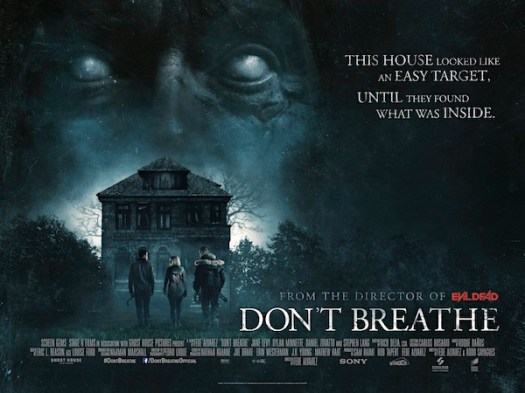
    Despite how it was advertised (doesn’t that poster scream “horror movie”?), really speaking Don’t Breathe is a thriller — it’s about a trio of crooks trying to rob a home and its owner fighting back. Though I suppose it depends what you use to define “a horror movie”, really. I tend to think of them as featuring an enemy who is either supernatural or possibly supernatural, but I suppose the only real prerequisite is that they be scary. Don’t Breathe doesn’t have a supernatural villain (though the blind man’s abilities do stretch credibility), but it’s so gosh-darn suspenseful that the viewing experience is similarly tense to a horror movie, even if outright scares are few. And one memorable scene in particular is certainly classifiable as horrific, most especially for female viewers. So, as a sub-90-minute exercise in mood and thrills it’s a very effective viewing experience; but it’s best not to stop to think about the practicalities if it were real because a lot of the film doesn’t withstand scrutiny. I won’t rehash all of the plot’s logic gaps (there are plenty of articles online that already do that, if you’re interested), but I think it’s best enjoyed as a go-along-with-it experience.

    Bad guys gone good?

    One point of contention for many seems to be the likeability or otherwise of the characters. The ostensible heroes are a gang of crooks who we first meet robbing the home of an undeserving victim, and being needlessly destructive about it too. You might think this sets the blind man up as some kind of avenging hero, but it becomes clear pretty quickly that he’s an even bigger bad guy… so are we meant to side with the crooks after all? For me, this raises a question I’ve come up against before: does a movie actually need to have any likeable characters? Some people need that, for sure, but I don’t think a film does per se. I’m not sure Don’t Breathe has really thought through its position on this issue, which makes reading online commentary about this point a funny thing. For instance, I saw someone argue that the writers make no effort to make us like the burglars — so, what’s the whole thing with Rocky trying to get her sister out of their shitty life for, then? And then another person stated that they actually found themselves liking two of the “bad guys” — so, if the burglars are the bad guys that makes the blind guy the hero? I don’t want to spoil anything, but if you’ve seen the movie you’ll know why holding that opinion is either, a) ridiculous, or b) deeply troubling…

    As I said, it’s best not to think about it too much. I think Don’t Breathe is perhaps the movie equivalent of a theme park attraction: designed to thrill you and scare you during its brief duration, not withstand plot and character scrutiny when dissected afterwards. That’s why my rating errs on the lower side, though if you want nothing more than a gripping hour-and-a-half it maybe merits another star.

    3 out of 5

    Ghost in the Shell (2017)

    2017 #48
    Rupert Sanders | 107 mins | cinema | 1.85:1 | USA & China / English & Japanese | 12A / PG-13

    Ghost in the Shell

    A few decades in the future technology has continued to proliferate to the point where the majority of humans are cybernetically augmented in some way, whether it be eyes that have additional functionality, like zooming or x-ray, or fingers that split into dozens of segments to type faster, or a stomach that can process alcohol quicker… However, Major Mira Killian (Scarlett Johansson) is the first of her kind: a human mind in a fully cybernetic body. Along with her team at anti-terror unit Section 9, they find themselves on the trail of a cyberterrorist who is murdering high-ranking employees of Hanka Robotics — the company that built the Major. As they dig further, they begin to uncover a startling conspiracy. Well, of course they do.

    Although officially (as per the credits) adapted from Masamune Shirow’s original manga, this iteration of Ghost in the Shell creates a new narrative, but builds it out of liberally repurposed imagery, sequences, character traits, and more from the popular 1995 anime adaptation and its sequel, and apparently from the Stand Alone Complex TV series too (I’ve never got round to watching that so can’t vouch for its use here). Though to say “new narrative” is something of a kindness because, intricacies aside, the story isn’t new at all. A familiar narrative is not necessarily a barrier to enjoyment — to invoke it for the second time in as many GitS reviews, Doctor Strange had a rote “Marvel superhero begins” storyline but made up for it with flashy visuals and a good amount of wit, resulting in a movie that I enjoyed very much. Ghost in the Shell also has flashy visuals, as you’ll have no doubt noticed from the trailers, but instead of wit it has all sorts of existential philosophy to ponder upon.

    Shoot first, ask questions never

    Unfortunately, it doesn’t bother to. It certainly raises some of those issues, but I think it may do so by accident: director Rupert Sanders and co have clearly decided to focus on the action-thriller aspects of previous Ghost in the Shell material in their reworking, but have unavoidably swept up some of the philosophising in the process; but because they have little to no interest in actually exploring those questions (Sanders has literally said as much in interviews), they all lead to nowt. Some of the quandaries Ghost in the Shell’s world poses have been well-considered elsewhere — Blade Runner is probably the most obvious example — but, I think, not all of them. For instance, there’s rich potential in the stuff about having your brain put in a brand-new body, especially given some of the twists and revelations about that which come later on, but it doesn’t feel like the film has much to say about it. It’s a thriller movie that uses those elements to generate plot twists, rather than a film that’s interested in examining what they might mean to a human being who experiences them.

    This tin-eared understanding of the source material stretches in every direction. Take the role of the bin man, for instance, and how it’s been repurposed here. How that character’s been tricked, and Section 9’s uncovering of it, is quite an affecting sequence in the original film, as well as contributing a lot to the film’s cogitation on how much our memories make us who we are. In this remake, the fundamental facts of the man’s case are still the same, but there’s very little feeling or emotion there. It’s just a plot point; a stepping stone on the way to the next bit of the narrative. I guess to most people watching Hollywood blockbusters plot is paramount, but there’s no reason it couldn’t have both driven the story onwards and contributed something meaningful.

    Geisha gone gaga

    Despite the focus on plot, and the relatively brisk running time of an hour and 45 minutes, Ghost in the Shell manages to drag on occasion. Perhaps the filmmakers felt they had licence to do so thanks to some of the slower sequences in the original film, but at least those were busy with philosophising, while here they’re just… I’m not sure, really. It was probably a form of exposition — slow, unfocused exposition — but dressed up to look like it might be something more. Conversely, at other times the relatively brief running time is to the film’s detriment, with characters and plot elements going underdeveloped. For example, we never really feel the brewing conflict between Hanka Robotics, the government-funded tech company that built the Major, and Section 9, a government anti-terror task force. We see some of the arguments between the heads of each organisation, but the fact they both answer to the government is only alluded to rather than enacted — the Prime Minister and what s/he might do is invoked on more than one occasion, but no one governmental personage ever appears to actually weigh in on matters. Considering the importance of all that to events in the third act, I thought it could’ve done with a few more building blocks.

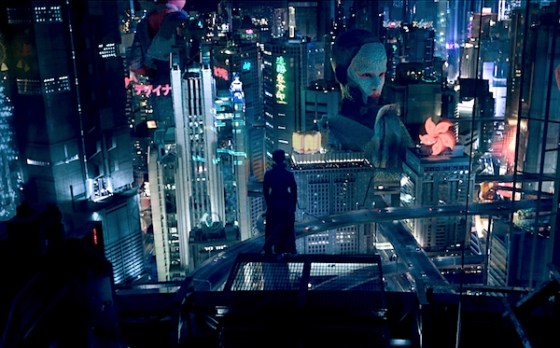
    If we set aside the wasted potential to engage with the thought-provoking topics its world raises, and the few storytelling fumbles like the one just discussed, Ghost in the Shell is a solid straightforward sci-fi action-thriller, with a decent if familiar revenge-ish story eventually emerging and some competently realised action scenes — though the very best of the latter are all homages to the original movie, which probably did them better. The design work is often exemplary, with some striking cityscapes and technology (the robotic geishas that have been quite prominent in the marketing, for instance), and Sanders and DP Jess Hall usually lens it all to good effect. That said, this is a future world that doesn’t really feel lived in — it looks like it’s just sprung out of the mind of a designer, or a comic book artist. Some might think that’s the fault of the source material being a comic book, but I don’t think it’s true of the earlier film, at least. The rubbish collectors are again a good example: in the original movie you really feel like they’re on their usual rounds, until Section 9 track them down and it explodes into an action sequence. In this version, they merely exist because a bin lorry is the kind of thing that would make a handy battering ram (and also as another nod to the anime, of course).

    Unspecified future cityscape

    Funnily, for all the film’s faults in not talking about anything, there’s a lot to talk about with the film itself. I haven’t even touched on the whole whitewashing controversy, though to be honest it never bothered me that much anyway — I mean, it’s a US-led English-language remake, of course they’re more interested in a big-name American star than racial fidelity. Not that it’s cut and dried anyway: you might assume she’s Japanese, but the ’95 movie was supposed to be set in a future Hong Kong (for its part, the live-action movie never names the city or country it’s set in). Also, without meaning to spoil anything, the film itself touches on the issue. I thought how it did that was solid, though (as with everything else) under-explored, but others consider it an empty gesture to try to excuse the whitewashing.

    I find it a little tricky to sum up my reactions to this new Ghost in the Shell, because they were kind of… nothing. I walked out of it feeling reasonably entertained by the action scenes and thriller storyline, though I would argue both could’ve been even stronger; and while I may lament its lack of engagement with the issues its world inherently raises, it does so little to tackle them that I almost just shrug it off — yeah, it probably should do that, but it doesn’t do it badly, or half-heartedly, it just doesn’t. Exactly what you want or expect from Ghost in the Shell may well dictate one’s reaction to it as much as the content of the film in and of itself, which I think is perfectly adequate for what it is. It could have been so much more, though.

    3 out of 5

    Ghost in the Shell is in cinemas pretty much everywhere now.