Game Night (2018)

2018 #111
John Francis Daley & Jonathan Goldstein | 100 mins | download (HD) | 2.39:1 | USA / English | 15 / R
Game Night

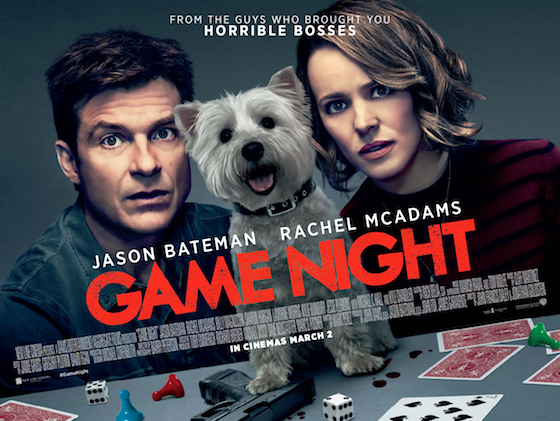
Despite what the poster suggests, the cute dog is not in fact one of the three leads.

1 out of 5

Okay, okay — let’s put the Westie-based bait-and-switch advertising aside and give the film a fair hearing, because it’s actually surprisingly brilliant.

The other poster stars, Jason Bateman and Rachel McAdams, play hyper-competitive couple Max and Annie, who love nothing more than the weekly game night they host with their best friends, from which they exclude their odd next-door neighbour, Westie-loving cop Gary (Jesse Plemons). One week, Max’s super-successful older brother Brooks (Kyle Chandler) unexpectedly shows up and gatecrashes game night, then offers to host an even better one. For that he arranges a real-life mystery game, where he gets kidnapped and the others have to track him down… except then he gets kidnapped for real, and they only have the rest of the night to rescue him.

If you’ve ever wondered “what if someone reimagined David Fincher’s The Game as a comedy?”, Game Night is probably the answer. Personally, I’ve never wondered that, but I’m up for it. That said, I was all prepared to let it wait until it popped up on Netflix or something, until the film’s home release in the US a couple of months back prompted a wave of praise from critics I follow on Twitter. Now I’m adding my small voice to those urging you to check this movie out.
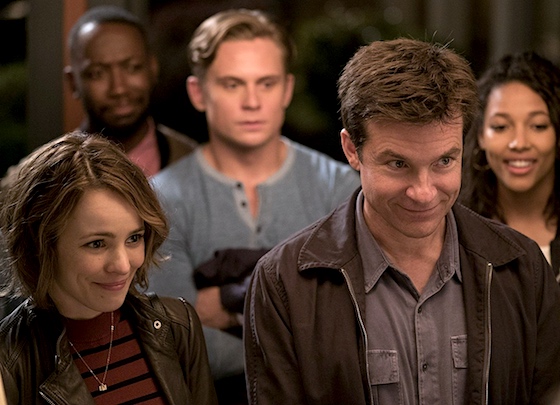
Wanna play a game?

It’s the kind of film where I don’t want to say much more than I already have, because obviously the joy lies in the jokes (and jokes are a lot less funny if you spoil them) and the plot developments. At the risk of just reeling off a list of superlatives, I’ll say that what unfolds is fast, inventive, clever (after you’ve seen the film, check out this spoilersome bit of trivia. I mean, that’s superb!), and, above all, hilariously funny. There are more laughs in its opening montage than many modern comedies manage in a whole film. Jesse Plemons transcends the “budget Matt Damon” jibes (but, c’mon, he really looks like an own-brand Matt Damon) to all but steal the film with his hysterical straight-faced supporting role. I only say “all but” because everyone else is firing on all cylinders too: it’s a cast full of likeable, well-performed characters, not least Max and Annie. McAdams, in particular, gets to give a line delivery that’s an all-timer. If there’s a criticism in this regard it’s that, with so many characters competing for screen time, I’m not sure how well their individual arcs really work, but that’s a minor distraction.

One other thing I will criticise — which is nothing to do with the quality of the film itself, but bugged me enough that here’s a whole paragraph about it — is the scarcity of extras on the Blu-ray, which total just ten minutes. Seriously? Put some effort in! All the praise from American Twitter led me to acquire the film via Alternative Means, but, being the good honest film consumer I am, I was going to rent it when it came out here as retrospective payment. But then I loved it so much I thought I’d just go ahead and buy the disc. But a full-price new release of a film I’ve already seen with a grand total of ten minutes of special features? You’re having a laugh. Were there no deleted scenes? Could they not stump up for a commentary? Surely they filmed longer interviews than that just for the EPK? But no, all we get is a 6½-minute gag reel and a 3½-minute “featurette” (I’m being kind — at that length it can’t be much more than a trailer). I’m going to buy it eventually, in a sale, because I enjoyed the film enough to add it to my collection, but you cost yourself a day-one purchase there, Warners. I don’t know how much the general film-viewing populace still care about special features, but us aficionados do, and I know I’m not alone in feeling this way about this particular title. Anyway, rant over.

Who's stealing the film now, eh?

For pure enjoyment, I came very close to giving Game Night the full five stars — when it works, it absolutely sings — but there are just a few bits, here and there, that fell a little short. Nonetheless, it’s certainly the kind of film I loved in spite of its flaws. If only the adorable dog had been in it more, maybe this’d be a five anyway…

4 out of 5

Game Night is available to own digitally in the UK from today, and on that disappointing DVD & Blu-ray from next week.

It placed 15th on my list of The 26 Best Films I Saw For the First Time in 2018.

Yojimbo (1961)

aka Yôjinbô

2017 #126
Akira Kurosawa | 111 mins | DVD | 2.35:1 | Japan / Japanese | PG

Yojimbo

Best known to many viewers as the film Sergio Leone ripped off to make A Fistful of Dollars, Akira Kurosawa’s Yojimbo is itself already a Western in all but setting: it stars Toshiro Mifune as Sanjuro, a ronin who wanders into a village where two gangs are at loggerheads, a conflict from which the regular folk cower in fear. Where Kurosawa deviates from the Western, at least as they had been made to that point, is that Sanjuro isn’t a clean-cut hero who’ll side with the good guys and get this mess sorted — he’s a mercenary, primarily out for his own interests; and besides, there are no good guys to join: both gangs are equally bad.

In his essay that accompanies Criterion’s release of the film, Alexander Sesonske argues that Kurosawa is actually combining “two typically American genres”. So we have “a classic Western setting, with dust and leaves blowing across the wide, empty street that runs the length of a village, a lone stranger passes as frightened faces peer from behind shutters”, mixed with the morals (or lack thereof) of a gangster movie, with everyone a crook hoping to merely outgun the others. That all comes wrapped in the milieu of a samurai movie, meaning instead of pistol duels or scattershot machine-gun fire we get flashing blades. Indeed, Yojimbo was the first film to have a sound effect for a sword slashing human flesh — they had to experiment to get it right, because it had never been done. Considering the film also features severed limbs and squirting blood, the BBFC’s PG seems awfully lenient…

Observing the conflict

Given all that, it seems like this is an almost mercilessly nihilistic film. It’s set in a town that’s been fucked up by the never-ending gang warfare, and over the course of the story nearly everyone dies, many of them in brutally violent fashion. Even the hero seems remorseless, killing freely and plotting to get the two gangs to massacre each other because he sees a way to profit. Sesonske asserts that “Yojimbo lacks the intellectual challenge of Rashomon, the moral resonance of Ikiru, or the sweep and grandeur of Seven Samurai”, which may all be true to an extent, but we shouldn’t disregard what the film does offer: a bleak worldview that chimes with the careless brutality of the world as we know it.

Even in such hopelessness there is beauty, and here, at least, that comes from Kazuo Miyagawa’s gorgeous black-and-white cinematography. With many incredibly blocked and framed shots, it’s no wonder Kurosawa has been so copied — his visuals are always amazing. His exacting desires may’ve created various production issues (the specially-built set, made with extreme period accuracy, was unprecedentedly expensive; to create the windswept effect they used all of the studio’s wind machines, which was so powerful actors couldn’t open their eyes and camera cranes couldn’t complete moves; and he used all of the studio’s big lights for night scenes, but the way they pulsated meant lens filters had to be used to compensate), but it doesn’t half look good in the end.

5 out of 5

Yojimbo was viewed as part of my Blindspot 2017 project, which you can read more about here.

Review Roundup

Hello, dear readers! I’ve been away for most of the past week, hence the shortage of posts, but I’m back now, so here’s a random ragtag roundup of reviews to kick things off again.

In today’s roundup:

  • That’s Entertainment! (1974)
  • ’71 (2014)
  • Guardians (2017)


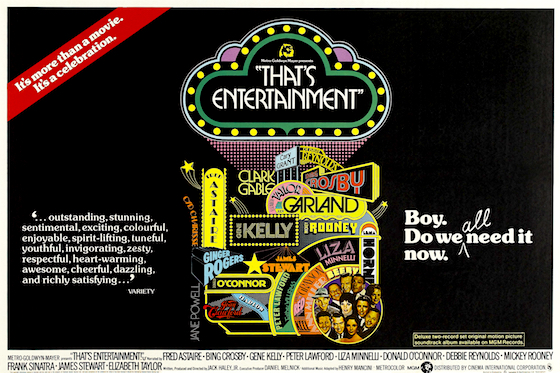
    That’s Entertainment!
    (1974)

    2017 #80
    Jack Haley Jr. | 124 mins | TV | 1.33:1 + 1.78:1 + 2.35:1 + 2.55:1 | USA / English | U / G

    That's Entertainment!

    Greatest hits compilations always seem to be a popular product in the music biz, and that’s essentially what this is, but for movies. An array of famous faces appear on screen to help provide a scattershot history of the MGM musical, but really it’s an excuse to play some fantastic clips from old hits. This may be the kind of programming that TV has taken on and made its own in the decades since, but when the quality of the material is this high, it feels like more than just schedule filler.

    Thanks to many eras being covered it has more aspect ratio changes than a Christopher Nolan movie, though that’s actually quite effective at demarcating the old-school spectacle from the linking chatter. There’s also some “you wouldn’t get that today” commentary, like Frank Sinatra talking about a line of chubby chorus girls (who don’t even look that large!), or various bits and pieces criticising the studio’s history, like how all the films had the same plot.

    It was originally promoted with the tagline “boy, do we need it now”, a reaction to the gritty style of filmmaking that was popular in Hollywood at the time, as well as all the real-life problems of the era (it was released the same year as Nixon resigned because of Watergate). MGM needed it too: the studio was in decline, releasing just five films in 1974. The whole thing carries a somewhat bittersweet air, as ageing stars reflect on past glories from the decrepit environs of MGM’s rundown backlot.

    Nonetheless, it creates a marvellous tribute to a golden era. And I guess it must’ve done alright, because it spawned two sequels, a spin-off, and MGM are still going (more or less) today.

    4 out of 5

    ’71
    (2014)

    2017 #95
    Yann Demange | 99 mins | streaming (HD) | 2.35:1 | UK / English | 15 / R

    ’71

    Set in Belfast in (you guessed it) 1971, ’71 is a thriller that sees an Army recruit become separated from his unit during a riot at the height of the Troubles, leaving him trying to survive the night “behind enemy lines”.

    The film’s best stuff is early on: a brewing riot as police perform a door-to-door search; a tense foot chase through the backstreets; a single-take bombing and its aftermath. The immediacy of all this is well-conveyed, suitably tense and exciting, but also plausible. Then the film decides it needs some sort of plot to bring itself to a close, and so it kicks off some IRA infighting and British Army skullduggery. The added complications don’t exactly bring it off the rails — it’s still a fine and tense thriller — but it lacks that extra oomph that the hair-raising sequences of the first half deliver.

    Still, it’s a promising big screen debut for director Yann Demange, who was reportedly among the frontrunners to helm Bond 25 before that got diverted into Danny Boyle and John Hodge’s idea. His second feature, another period movie, this time a crime drama, White Boy Rick, is out later this year.

    4 out of 5

    Guardians
    (2017)

    aka Zashchitniki

    2017 #122
    Sarik Andreasyan | 89 mins | streaming (HD) | 2.35:1 | Russia / Russian | 12

    Guardians

    You may remember this film from when its trailer went viral a couple of years ago: it’s the “Russian answer to The Avengers” that featured a machine-gun-wielding bear. Naturally, that kind of attention assured it got an international release eventually (I paid to rent it, then it later popped up on Prime Video. You never know how these things are going to go, do you?)

    It’s about a bunch of old Soviet superheroes being reactivated to stop a villain. If that sounds vague, well, I can’t remember the details. Frankly, they don’t matter — Guardians is the kind of film a 6-year-old would write after a diet of Saturday morning cartoons, with the same attention to character development and plot structure you’d expect from such an endeavour. The story is semi-nonsensical: the villain’s plan is never clear (beyond “rule the world”); it flits about between subplots; characters appear and disappear from locations… There’s a litany of “things that don’t quite make sense” — too many to remember without making obsessive notes while rewatching, which I have no intention of doing.

    But if you can ignore all that — or, even better, laugh at it — then it’s fairly watchable, in a brain-off entirely-undemanding so-bad-it’s-good kind of way. There’s some decent CGI (given its budget), some half-decent action, and it’s mercifully brief at under 90 minutes.

    2 out of 5

  • Gangster Review Roundup

    In today’s roundup:

  • City of God (2002)
  • RocknRolla (2008)
  • Scarface (1983)


    City of God
    (2002)

    aka Cidade de Deus

    2017 #100
    Fernando Meirelles | 129 mins | DVD + download* | 1.85:1 | Brazil & France / Portuguese | 18 / R

    City of God

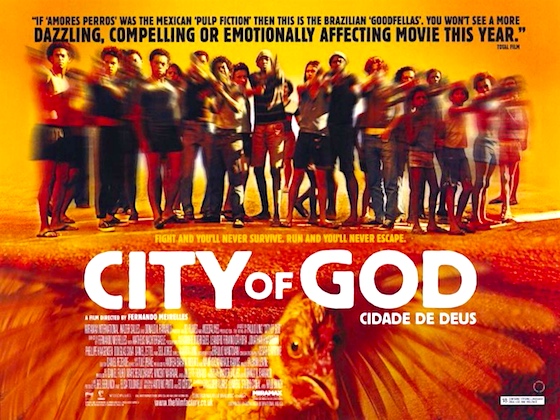
    What better insight into my film watching habits than this, a movie I’d been meaning to get round to for the best part of 14 years (ever since it topped Empire’s list of the best films of 2003, around the same time as I was getting into film ‘seriously’, i.e. as more than just “movies I like to watch”). Plus, it was one of my Blindspot picks back in 2015 (but didn’t get watched, obv), and it was the highest ranked film on the IMDb Top 250 that I’d not seen — all good reasons why I made it 2017’s #100.

    Adapted from a novel that was based on real events, it tells the story of how organised crime grew in Rio de Janeiro’s Cidade de Deus favela — the “City of God” of the title — from the late ’60s to the early ’80s. The main thing that struck me watching it now is how much it reminded me of the TV series Romanzo Criminale — both are basically about young people taking over and running all the crime in a city. The fact that they’re also both inspired by true stories (the series depicts a criminal gang in Rome through the ’70s and ’80s) is intriguing for different reasons. They also share certain stylistic similarities, I think, in particular the almost documentary-like visuals. The series came later, of course, so if one did inspire the other then this isn’t the copycat.

    At the risk of turning this into a review of something else, I must say that, while Romanzo Criminale is a favourite of mine (I included it in my 2017 list of Favourite TV Series of the Last 10 Years), City of God was a work I admired more than loved. Nonetheless, for anyone who likes crime epics, this is a must-see (but, uh, so is Romanzo Criminale).

    5 out of 5

    * Possibly because it’s just been sat on a shelf for over a decade (possibly just through sheer bad luck), my DVD was corrupted about halfway through and I had to, uh, source another copy. ^

    RocknRolla
    (2008)

    2017 #146
    Guy Ritchie | 110 mins | streaming (HD) | 16:9 | UK, USA & France / English & Russian | 15 / R

    RocknRolla

    In my review of Snatch I commented that its contemporary reviews were along the lines of “oh, Lock Stock again”, and yet now it’s pretty well regarded. My memories of RocknRolla’s contemporary reviews are “oh, another Guy Ritchie London gangster film — isn’t it time he did something new?” And yet, it now seems to be pretty well regarded. Not as much as Lock Stock and Snatch, but better than you’d think “Guy Ritchie does the same schtick for a fourth time” would merit.

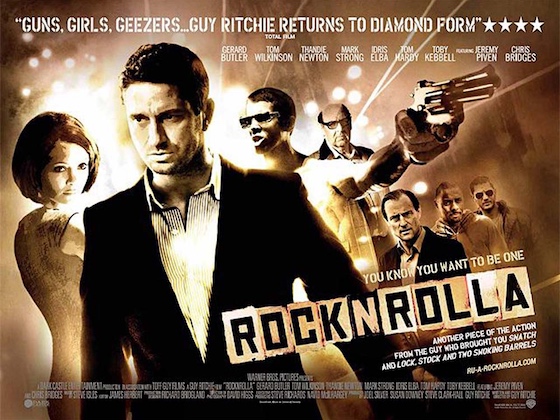
    Well, it is a case of Ritchie doing his usual schtick (thank God he did eventually move on, at least applying the same broad MO to some new genres), but a cast that includes the likes of Idris Elba, Tom Hardy, Mark Strong, Tom Wilkinson, and Thandie Newton can’t help but elevate the material. Gerard Butler is ostensibly the lead, front-and-centre on the poster, but the movie follows the standard Ritchie template: an ensemble cast in a variety of story threads that bump into each other and overlap in different ways at different times. Even if the specifics aren’t the same as his other films, and the cinematography is more slick and big-budget than the grimy ’90s indie visuals of his debut and sophomore flick, the general style feels very familiar.

    Ultimately, I enjoyed it more than Snatch, but maybe I was just in the right mood — I mean, like I said, they’re all fundamentally the same kind of thing.

    4 out of 5

    Scarface
    (1983)

    2018 #14
    Brian De Palma | 170 mins | Blu-ray | 2.35:1 | USA / English & Spanish | 18 / R

    Scarface

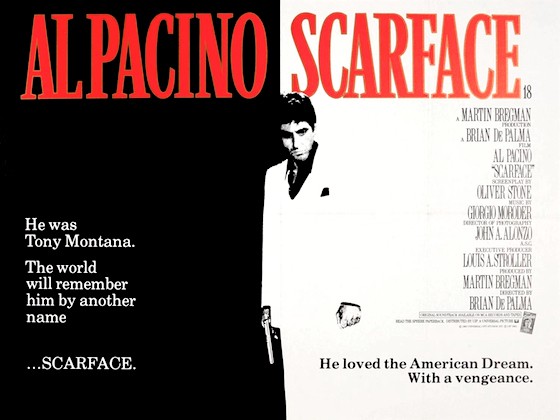
    Brian De Palma’s in-name-only remake of 1932 gangster classic Scarface follows Al Pacino’s Cuban immigrant Tony Montana as he rises up the ranks of organised crime in ’80s Miami. As it turns out, it’s not easy being at the top.

    A near-three-hour epic (what is it with gangster movies being three hours long?), interest is sustained through Pacino’s wild-eyed performance, De Palma’s slick direction, and a story that at least has enough incident to merit that length. Also, early-career Michelle Pfeiffer, who gives a good performance as Montana’s increasingly miserable gal but, frankly, could just stand there and still keep half the population interested.

    Apparently a favourite movie among rappers, I guess some people get the wrong message from Scarface. I suppose the stylishness with which it’s produced has the side effect of idolising the lifestyle Montana and co lead, but the way it gradually crumbles and destroys everything should be a pretty clear indicator of how such things actually go. Still, it all makes for a heady mix.

    5 out of 5

    Scarface was viewed as part of What Do You Mean You Haven’t Seen…? 2018.

  • The Conversation (1974)

    2017 #10
    Francis Ford Coppola | 114 mins | Blu-ray | 1.85:1 | USA / English | 12 / PG

    The Conversation

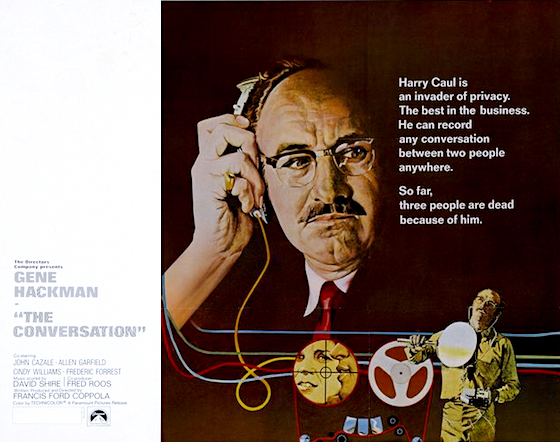
    In the mind of writer-director Francis Ford Coppola, the concept for The Conversation started out as a puzzle, a story that used repetition to make the audience reconsider what they thought they knew — “not like Rashomon where you present it in different ways each time,” Coppola told Brian De Palma (in this interview, which is a must-read for anyone interested in the genesis and making of The Conversation). “Let them be the exact lines but have new meanings in context. In other words, as the film goes along, the audience goes with it because you are constantly giving them the same lines they’ve already heard, yet as they learn a little bit more about the situation they will interpret things differently.” That element is unquestionably still in the film — it propels its plot and generates its twist — but Coppola was a very character-driven filmmaker, and so he couldn’t help but flesh out the man who was listening to those lines over and over again.

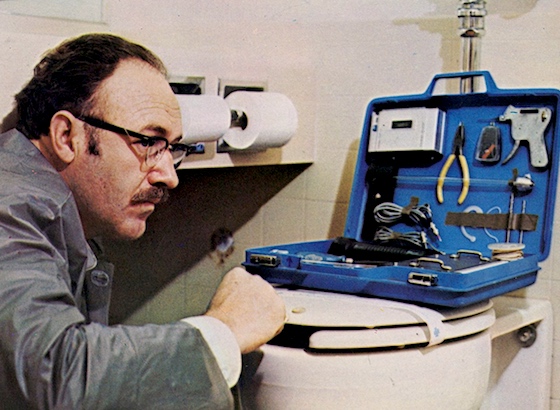
    That man is Harry Caul (Gene Hackman), a professional eavesdropper — people pay him to record what other people are saying in private. When Coppola conceived the film, this was just an interesting world to play around in. By the time it was produced and released, Watergate had recently happened and the film could not have been more timely. Nonetheless, the end result is not merely an espionage mystery, but also a character study about what kind of man would perform this work. So we do see how Harry goes about his job, but these scenes are almost as much about telling us who this man is (methodical, thorough, clever, inventive) as they are about furthering the plot (which, naturally, they’re central to).

    Here he just looks like a toilet repair man...

    It’s also about how the job affects him. One part of that is paranoia — an obvious reaction when you think about it. Harry has multiple locks on his apartment door, and one major early sequence is based around him trying to establish how a kindly neighbour had got in to leave him a gift — a seemingly innocuous thing, but the potential it holds has him terrified. Come the end of the film, such behaviour takes on a maddening new dimension. But perhaps an even bigger problem is conscience. Harry lies to himself about the nature of his work, because once upon a time a trio of deaths resulted from it. He says they weren’t his fault because he was just doing his job, but he still clearly carries the guilt of it, and that is what ultimately leads him into a new predicament. Not that that ends well either. Yes, it all comes to a very ’70s conclusion: bleak.

    Coppola’s original vision for the film, as a puzzle for the viewer to be solved, survives into the final cut, though anyone watching it just to solve the riddle may find it slow going at times. That’s because Coppola’s other filmmaking instinct, to explore character, has naturally taken hold, and so the movie is as much about the bugger as the bugging. And so it’s very much two things hand in hand: the mystery of what’s going on in the recording, and a study of the psychology of a man who does this for a living. It’s all the richer for being both.

    5 out of 5

    The Conversation was viewed as part of my Blindspot 2017 project, which you can read more about here.

    Vehicular Review Roundup

    Get in Vehicle 19 to go for a Drive with The Driver in today’s roundup, featuring:

  • The Driver (1978)
  • Drive (2011)
  • Vehicle 19 (2013)


    The Driver
    (1978)

    2017 #101
    Walter Hill | 92 mins | Blu-ray | 1.85:1 | USA & UK / English | 15 / PG

    The Driver

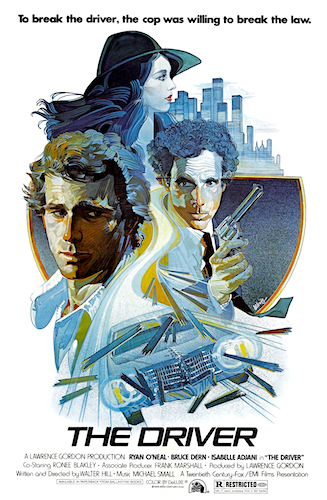
    Walter Hill’s stripped-back neo-noir car chase thriller stars Ryan O’Neal as The Driver, a getaway man for hire and the best at what he does. Out to get him is Bruce Dern as The Detective, who’ll go to any lengths to catch him — including illegal ones. Almost cornered, the Driver enlists the help of The Player (Isabelle Adjani) to thwart the Detective.

    The film’s influence on the likes of Baby Driver and Drive is clear (Nicolas Winding Refn claims not to have seen it before making his film, but it must’ve been seen by someone somewhere down the line, whether that’s original novelist James Sallis or screenwriter Hossein Amini, because the DNA is right there). Both those later efforts burnished and perfected the formula in different ways, but the original has a gritty, low-rent charm of its own. The archetypal characters and straightforward noir plot are delightful almost because of their simplicity, while the few action scenes are handled with the panache, not of a slick blockbuster, but of a filmmaker who knows how to create something effective even within his limitations.

    The Driver maybe doesn’t transcend those to the level of being a classic, but, for fans of the genres it crosses, it’s deservingly a cult favourite.

    4 out of 5

    Drive
    (2011)

    2017 #106
    Nicolas Winding Refn | 101 mins | Blu-ray | 2.35:1 | USA / English | 18 / R

    Drive

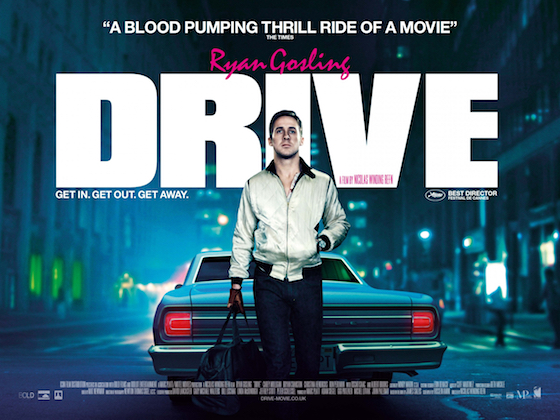
    Iconoclastic Danish director Nicolas Winding Refn had made noteworthy films before Drive, but it felt like this was where he really hit home. It stars Ryan Gosling as a mechanic and part-time movie stunt driver who also moonlights as a getaway man, but when he tries to help out his attractive neighbour (Carey Mulligan) and her husband (Oscar Isaac) he gets embroiled in a crime with deadly consequences.

    It’s a noir storyline with a familiar shape, but as with many of the best examples of that not-quite-a-genre it’s the stylish filmmaking that elevates the material. Refn was influenced by the likes of Jean-Pierre Melville and Sergio Leone to take a very American genre and give it a European influence, and the result is a movie that’s as much about its mood and feel as it is the intricacies of plot or character. Despite the title and theme it’s not even a car chase movie, really, though the handful of well-created driving sequences do pack a greater punch thanks to their scarcity.

    5 out of 5

    Drive was viewed as part of my What Do You Mean You Haven’t Seen…? 2017 project.

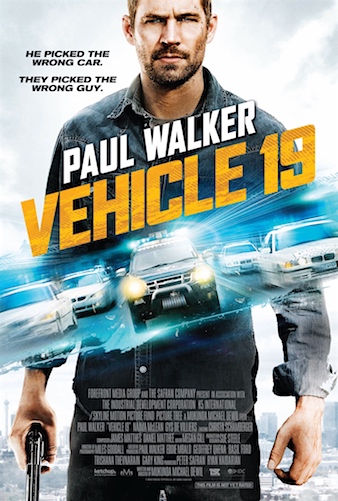
    Vehicle 19
    (2013)

    2017 #151
    Mukunda Michael Dewil | 82 mins | TV | 2.35:1 | USA / English | 12 / R

    Vehicle 19

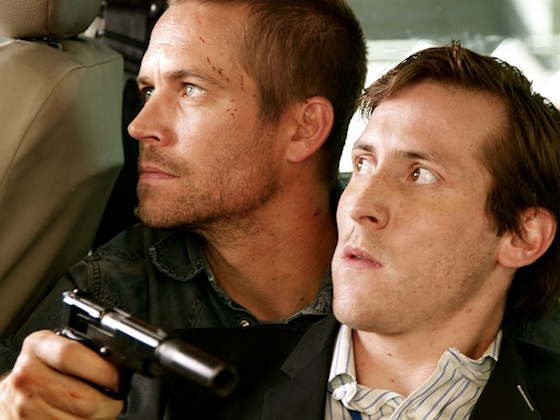
    One of the last films Paul Walker completed before his untimely death, Vehicle 19 sees the Fast & Furious star doing what he will always be remembered for: driving a car, sometimes fast. Here he’s Michael Woods, a recent parolee who arrives in Johannesburg intending to reunite with his partner. Unfortunately he picks up the wrong rental car and finds himself the subject of a manhunt, because in the car is evidence relating to a political conspiracy. Unfortunately for the bad guys who want said evidence, Michael is, like, an honourable chap — and also a criminal, so he totally knows how to drive a car like he’s escaping a crime. The main conceit is: the whole film’s shot from within the car.

    Yep, that’s why I watched it. I wish I hadn’t. Vehicle 19 is a deeply stupid movie. Like, Michael’s phone is all-important — it’s the only way he can contact other people; later, it contains vital evidence — but when he notices the battery is low he does nothing about it, despite having a charger in his bag, until the battery literally runs out mid-call. And that’s just one of innumerable nonsensical contrivances throughout the film.

    It lacks pace, and therefore lacks tension. Michael just pootles around the city from the very start. Apparently everywhere is reachable within 20 minutes, or Michael — who’s never been to this city before — thinks it is. Whenever he asks for directions, everywhere he’s going is either just a block away or down the road, third right. At one point the police say they just received a call to 911. From what I can tell, the emergency number in South Africa is not 911. And I could probably go on — the film is absolutely littered with things that just don’t quite hang together.

    Fast and/or furious

    It can’t satisfy as a dumb action flick either. I presume it was a low-budget production with ambitions beyond its scale in the chase scenes. Understandably, the trailer foregrounds these to help sell the movie. Unfortunately for the film, it’s a bit of a bait-and-switch: the clips in the trailer are near-as-dammit the entirety of the film’s action. These sequences are few, far between, short, and, even then, poorly staged. The problem isn’t that they’re all limited to only being seen from within the car (the opening sequence of The Driver does exactly that to marvellous effect, for example), it’s that they lack both adrenaline and plausibility. For example, at one point Michael manages to make the chasing car flip over, but I watched that bit three times to try to decipher it and I still have absolutely no idea how he’s supposed to have done it. Oh, and then the car explodes. And Michael and his passenger seem to react like “oh, that’s that then” and just drive on.

    They’ve got the right idea, though: if you’re thinking of watching Vehicle 19, no, just drive on. Or just put Drive on — it’s a totally different movie, but at least it’s a good one.

    1 out of 5

    Vehicle 19 featured on my list of The Five Worst Films I Saw For the First Time in 2017, which can be read in full here.

  • Review Roundup

    This may look like a pretty random selection for a review roundup… and it is. But they do have two things in common: I watched them all in 2017, and I gave them all 3 stars.

    Yeah, not much, is it?

    Anyway, in today’s roundup:

  • The Girl on the Train (2016)
  • Lions for Lambs (2007)
  • Tea for Two (1950)


    The Girl on the Train
    (2016)

    2017 #113
    Tate Taylor | 112 mins | streaming (HD) | 1.85:1 | USA / English | 15 / R

    The Girl on the Train

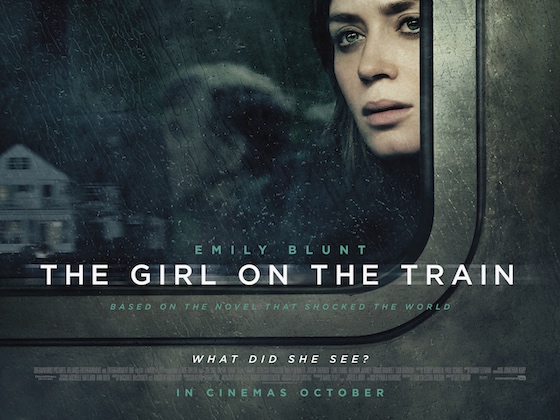
    Based on a bestselling novel, The Girl on the Train stars Emily Blunt as Rachel, an alcoholic divorcee whose commuter train passes her old home every day. She tortures herself by observing her ex (Justin Theroux), his new wife (Rebecca Ferguson) and their child, as well as her former neighbours Scott (Luke Evans) and Megan (Haley Bennett), who she imagines living a perfect life. But after Rachel sees something that shatters the image she’s created, she wakes up from a black out, with mysterious injuries, and to the news that Megan has gone missing…

    The whole story unfurls with a good deal of histrionics and a questionable level of psychological realism, but as a straightforward potboiler it has some degree of entertainment value. In fact, if it had been made with a little more panache then it may even have been seen as a throwback to the kind of melodramas they produced in the ’40s and ’50s. Because it doesn’t seem to have that level of self-awareness, I guess it’s just the modern-day equivalent.

    3 out of 5

    Lions for Lambs
    (2007)

    2017 #121
    Robert Redford | 92 mins | streaming (HD) | 2.35:1 | USA / English | 15 / R

    Lions for Lambs

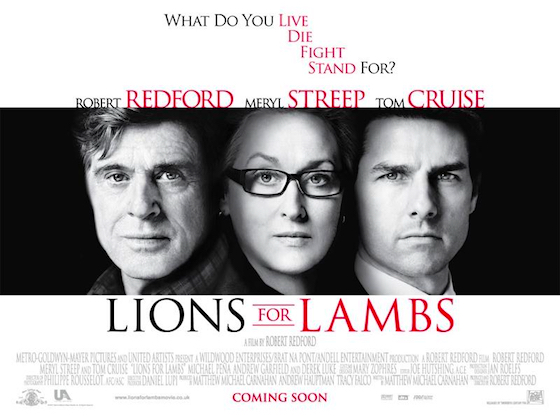
    The US intervention in the Middle East is obviously one of the most significant geopolitical events of our age, but how many films have really got to grips with it? Some, like The Hurt Locker, have given a sense of its impact to those on the ground. Lions for Lambs tried to take a more intellectual standpoint, with three interconnected storylines: a young and ambitious US senator (Tom Cruise) details a new military strategy to an experienced and sceptical journalist (Meryl Streep); a college professor (Robert Redford) tries to engage a talented but apathetic student (Andrew Garfield); and two soldiers become stranded in Afghanistan (Michael Peña and Derek Luke), providing a link between the other two stories.

    Screenwriter Matthew Michael Carnahan originally conceived the work as a play, before realising the Afghanistan section needed the scale of a movie. Nonetheless, his original conception shows through: the film is very talky and stagey, and the other two storylines could certainly be performed on stage with no changes necessary. You can also tell it’s driven by disillusionment in the US’s actions, and it has everyone in its critical sights: the government, the media, the education system… It feels more like a polemic than a movie, lecturing the viewer; although, like everyone else, it doesn’t seem to offer any firm answers.

    Streep and Cruise both give excellent performances. I suppose being a smarmy senator isn’t much of a stretch for the latter, but Streep’s turn as an insecure journalist is the highlight of the film. You need acting of that calibre to keep you invested in a movie like this, and it almost works, but ultimately the film has too little to say.

    3 out of 5

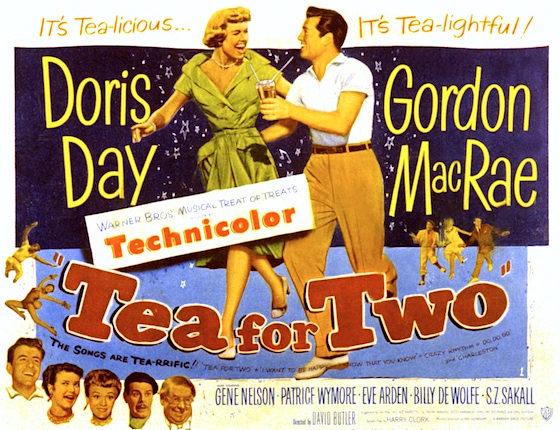
    Tea for Two
    (1950)

    2017 #162
    David Butler | 94 mins | DVD | 4:3 | USA / English | U

    Tea for Two

    Musical comedy starring Doris Day (radiant as ever) and Gordon MacRae (given little to do as her love interest).

    The songs are largely forgettable, with a couple of sweet exceptions, but at least there are other things to recommend it, like some impressive dancing from Gene Nelson, particularly during a routine on a flight of stairs. There’s a solid helping of amusing one-liners too, most of them claimed by Eve Arden as Day’s wry assistant Pauline, the rest by S.Z. Sakall as her embattled uncle. Said uncle is, by turns, a bumbling old codger and an underhanded schemer who uses tricks to try to ruin his niece’s happiness just so he can win a bet. Best not to dwell on that too much…

    The same goes for the rushed ending, in which our heroine is in financial ruin, so her assistant basically whores herself out to a rich lawyer so they can still put on the show. Hurrah! And talking of things not to dwell on, there’s also the title, which has absolutely nothing to do with the story (other than it being probably the best song). Conversely, the name of the play it’s based on — No, No, Nanette — is bang on. Ah well.

    Nonetheless, Tea for Two is all-round likeable entertainment; the kind of movie you put on for a pleasantly gentle Sunday afternoon.

    3 out of 5

  • Atomic Blonde (2017)

    2017 #166
    David Leitch | 115 mins | Blu-ray | 2.40:1 | USA, Germany & Sweden / English, German, Russian & Swedish | 15 / R

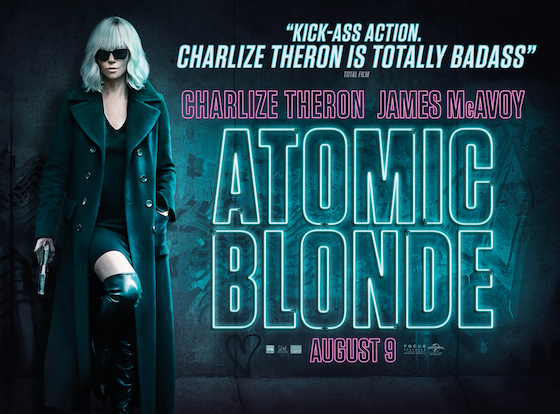
    Atomic Blonde

    The uncredited co-director of John Wick takes sole charge for this action thriller set at the tail-end of the Cold War, which sees Charlize Theron’s British spy dispatched to Berlin to find “The List”, a document naming all the active intelligence agents in the city, which has fallen into the hands of the KGB.

    It’s based on The Coldest City, a graphic novel that came out during my relatively brief flirtation with being a proper comic book reader a few years ago. Back then it caught my eye (though I never got round to buying it) because I got the impression it was a Le Carré-style thriller, so I was very surprised to eventually learn it was the basis for this film, the trailers for which promised a hyper-stylised actioner from the director of combat-focused John Wick. Watching the film, however, it’s easier to see how I might not’ve been wrong about the novel after all — take out the elaborate fight scenes and shoot it more like Tinker Tailor Solider Spy than The Guest, and this could indeed be a Le Carré-esque Cold War thriller.

    Lots of style, little substance

    Or maybe that should be “Le Carré wannabe”. The filmmakers were probably right to shift the focus in that way, because the plotting here isn’t up to that standard, particularly in a bevy of last-minute twists that bog down the final ten minutes, especially with their burst of misplaced patriotism (though I won’t say for which country lest it spoil something). Le Carré’s plots feel almost like the definition of substance being more important style (I’ve never actually read one of his books so certainly don’t mean that to be an insult), whereas Atomic Blonde is good ol’ style over substance. The best stuff here lies not in the intricacies of its spy-vs-spy storyline, but in the starkly coloured visuals, the cool ‘80s soundtrack, and (as you’d expect from the stuntman-turned-director behind 50% of John Wick) the expertly realised fight scenes.

    Chief among these is an incredible single-take action sequence that goes from a sniper-beset protest march, into a building, up in the elevator, back down the stairwell — all in a series of bruising hand-to-hand fights — and then, for good measure, continues back outside and into a car chase shootout. Obviously the single take aspect must be as faked as Birdman (according to IMDb, it actually includes almost 40 different shots, many stitched together with the aid of CGI — I’d wager mostly during the car chase, which feels less smooth than the rest), but it’s still impressively crafted. The choreography of it all — both the fight moves and the camerawork — really is something else.

    Fight!

    Despite the flashiness of that one long section, what’s really effective about all the fight scenes is the level of groundedness. I’m sure they’re not what a real fight is like — they’re still choreographed brawls between trained combatants — but Theron doesn’t take down an army singlehanded, she fights a couple of guys, it’s hard work, and she ends up battered, bruised, and exhausted.

    Sadly, between the confused plot and the irritating ending, Atomic Blonde ultimately rubbed me up the wrong way. Still, it’s worth watching for the style and the impressive action scenes. If only they’d managed to combine those with a better story, then this would’ve been something really special.

    3 out of 5

    Atomic Blonde is available on Sky Cinema from today.
    David Leitch’s new film,
    Deadpool 2, is in cinemas everywhere now.

    Anon (2018)

    2018 #95
    Andrew Niccol | 100 mins | download (HD) | 2.39:1 + 1.78:1 | Germany / English | 15

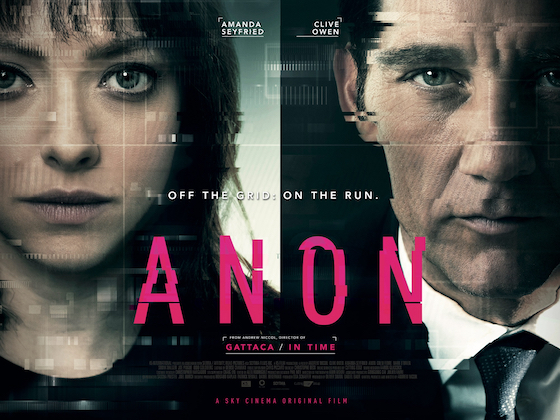
    Anon

    Sky Cinema’s latest acquisition in their attempt to establish a “Netflix original”-style brand is, ironically, also a Netflix ‘original’… just not in the UK (in the US, it was released on Netflix last week). It’s also probably their most promising grab yet… although when its forerunners are Monster Family and The Hurricane Heist, that’s not saying much. But this is a new sci-fi/thriller from the writer-director of Gattaca, so that’s gotta be worth a look… even if he has spent most of the intervening two decades making some, shall we say, less-well-regarded movies.

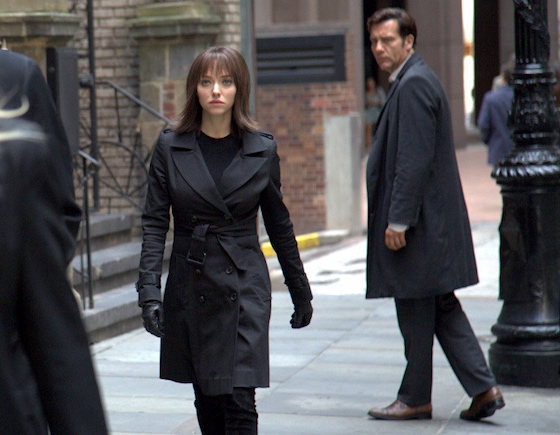
    It’s set in a near future where everyone has ocular implants that feed a constant stream of data, like non-stop augmented reality, identifying people and places, putting digital adverts on the side of buildings, and so on. These devices are connected up to a central network that allows what everyone sees to be monitored and played back when needed — for example, if a crime is committed. It’s the ultimate eyewitness, literally. When someone’s murdered, the police can just play back the last few moments of the victim’s life to see the killer. But when bodies start turning up whose final moments have been tampered with, detective Sal Frieland (Clive Owen) finds himself on the trail of an off-the-grid hacker (Amanda Seyfried) with the ability to alter records — and when the entire system is based on the notion that what’s recorded is unequivocal truth, her skills are a massive potential threat.

    Mad skillz

    Many a lazy review has described Anon as “like a Black Mirror episode”, which is not wholly inaccurate but is getting to be a stale descriptor — Charlie Brooker didn’t invent high-concept dystopian sci-fi about the dangers of future technology, so why wheel out the comparison every time anyone else dares venture into the same ballpark nowadays? Nonetheless, that is the ballpark Anon is playing in, but mixing speculative sci-fi with an equal dose of hardboiled noir to keep things spicy.

    That’s not my only problem with other reviews, though, many of which have put forth low scores and negative reactions. I saw some of them in advance of my viewing, so while watching I kept thinking, “it must go badly wrong later, because so far it’s great.” Well, that moment never came. I wouldn’t say the film is perfect — some parts, especially later on, are a tad hurried, meaning more clarity of motive would be nice — but, for me, the whole worked. There are some interesting sci-fi ideas (all the stuff about being able to trust what you see, including a standout extended sequence where the hacker messes with Sal’s head), plus it feeds some ever-relevant commentary on privacy and surveillance, with the added texture of a noir-shaped plot and atmosphere for good measure.

    In fairness, there’s clichéd stuff too, though I’m not sure how much it should bother us. For one example, it’s not much of a spoiler to say that Sal has a “dead kid” backstory, something which is a bit overdone at this point, but your mileage will vary on how much that stuff bothers you — while some of us just think it’s a tired trope, for others it seems to completely ruin the film. Conversely, I read someone criticise it for using “noir clichés” and just thought “that’s called genre, kid”. I also saw a review which decided the film was worth 1-out-of-10 just because there was a scene where they were smoking indoors, so there’s no accounting for what different people will consider important in their assessment of artistic quality.

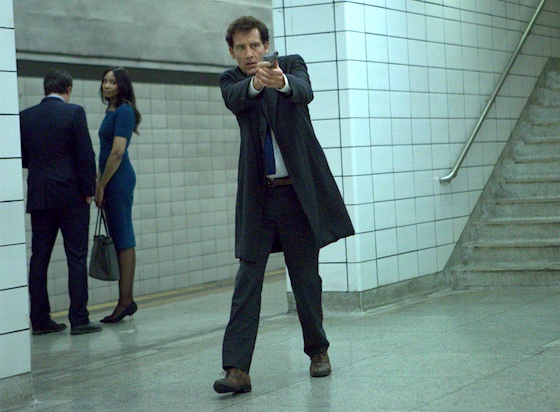
    Gunning for other reviewers

    In my opinion, Niccol and co have offered up a well-realised near-future world — not necessarily fully imagined (it’s never explained how we got to a point where everyone has these implants, seemingly enforced by law, but that doesn’t really matter), but the way the tech is depicted and how it affects everyday life is very believable. We’re thrown into the deep-end of this environment, with just enough exposition to keep up, before the film quickly moves onto the intriguing mystery that challenges the rules of this world — and considering we’ve only just learnt the rules, being able to get straight to how they’re being circumvented is impressively economical storytelling. It’s also a neat setup for having to go back to old-fashioned cloak-and-dagger-type detective work in a modern setting — this future is so high-tech, the only way to stop the criminal from detecting the operation against her is to put Sal undercover using no-tech communication.

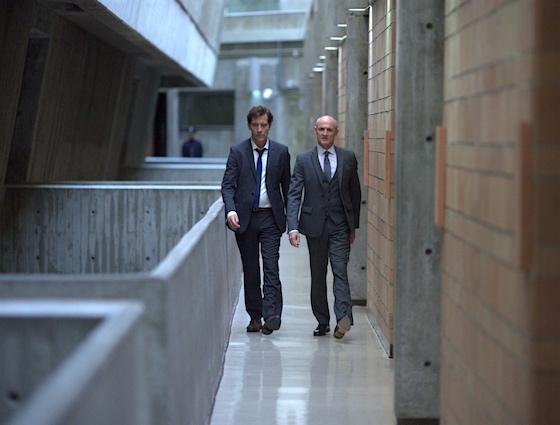
    It’s a really well made film, too. The locations are suitably evocative — the police buildings are defined by huge brutalist concrete slabs — which have been attentively framed and shot, without show-off-y camerawork. Then there’s the on-screen graphics during the point-of-view shots, which are detailed and thorough in their content, design, and execution. Their plausibility lends an automatic verisimilitude to the whole situation. And the POV shots had another nice surprise in store…

    Brutal

    Regular readers may recall that I’m a fan of a good variable aspect ratio, so it was a pleasant surprise to find that Anon features that technique — it’s unusual to see it outside of huge-budget films that have been shot/formatted for IMAX, and even then there’s no guarantee the multi-ratio version will be widely available (cf. Marvel only including them on 3D Blu-rays; Brad Bird not allowing Ghost Protocol to be released with it at all). In Anon, the ‘drama’ scenes are presented in your movie-standard 2.35:1, but it expands to a screen-filling 16:9 every time we see through someone’s eyes. These changes are very effective. The film employs the technique early and then often, so it doesn’t have the “wow” factor that some IMAX films achieve even when viewed at home, but it’s suitably immersive. Indeed, this would probably play really well on a vision-filling IMAX screen. The fact I wouldn’t have a chance to see it even if it did get IMAX showings means I’m not too sad it’s a direct-to-streaming release.

    That said, it’s kind of a shame Sky snapped it up over here. This is anecdotal evidence I know, but I know far more people with Netflix (like, pretty much everyone nowadays) than with Sky Cinema (I’m not sure I know anyone but me, actually, and I only subscribe occasionally), and I’d like to be able to recommend this to people, especially so as to go against the grain of the criticisms that I feel have been unwarrantedly negative. Well, obviously I can still recommend it, but how useful is that if people aren’t going to get the chance to see it on the basis of that recommendation?

    Who's that girl?

    Nonetheless, recommend it I shall. Perhaps Anon can’t equal other works at the top-tier of its genre, but I feel some have been unfair in writing it off. Any familiarities in the shape of its plot are in aid of creating that noir atmosphere, while the sci-fi concepts are reasonably considered and executed. For fans of the genres involved, it’s definitely worth a look.

    4 out of 5

    Anon is available on Sky Cinema from today.

    ManHunt (2017)

    2018 #94
    John Woo | 109 mins | streaming (HD) | 2.35:1 | China & Hong Kong / Japanese, English & Mandarin | 15

    ManHunt

    John Woo’s latest movie is now “A Netflix Film” in the UK, US, and presumably some other territories too. After almost 15 years spent making period dramas, it’s a return to the contemporary action-thriller genre that made his name. Whether it represents a return to his previous quality… well…

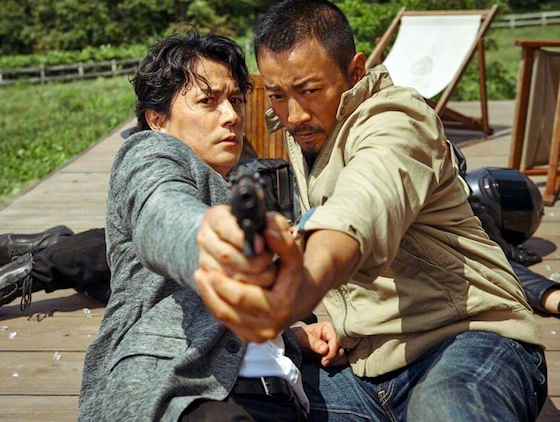
    ManHunt introduces us to Du Qiu (Hanyu Zhang), a Chinese lawyer for a Japanese pharmaceutical firm, credited with saving the company when he won a court case three years ago. Now he’s leaving to head to America, but the company’s president tries to persuade him to stay by sending a sexy lady to wait at his house. Unfortunately for Du, when he wakes up the next morning she’s dead and he’s the prime suspect. Soon he’s on the run to clear his name, with hot-shot cop Yamura (Masaharu Fukuyama) on his tail, though he’s not convinced of his target’s guilt. That’s just the start of it — why would someone want to frame Du for murder? Well, it gets complicated…

    For the first half of its running time, ManHunt is a baffling experience. Not so much because of the plot — though that sets so many wheels in motion that one must pay attention — but because of how it’s put together. One major problems is the way it casually mixes together multiple languages, leading to some flat translations (that’s being kind — maybe the screenplay, which comes courtesy of seven screenwriters, was unexciting to begin with) and clunky line delivery. But hey, this is an action movie, so we can forgive some iffy performances. A greater barrier to enjoyment comes in the form of Taro Iwashiro’s underpowered, plinky-plonky score. That might be fine during chatty scenes, but it continues into the early action sequences, robbing them of pace, dynamism, and excitement. It’s a thoroughly bizarre choice that undermines the film’s raison d’être.

    Not chuffed to be cuffed

    With its unoriginal innocent-man-on-the-run story and disengaging production quirks, it’s tempting to give up on ManHunt before the half-hour mark. However, director John Woo does begin to sneak in some of his trademark flair. One particularly good bit sees Yamura and his new partner visit the crime scene to go over what they think happened. Woo mixes together their reenactment with flashbacks in interesting, increasingly overlapping ways… until the sequence ends with the female officer getting hysterical, the old-fashioned-ness of which undercuts the sequence a little right at the end.

    As the various plot strands kicked off at the start begin to come together, the film becomes increasingly worth watching. If you can make it through the first half, the second begins to revel in its own silliness. It stops mattering that everyone has to deliver dialogue in at least two languages but none of them can actually act in more than one. It stops mattering that the plot barely makes sense — in fact, it actually improves the crazier it gets. A framed man on the run? Yawn. A pharmaceutical company searching for a secret formula to perfect the currently-lethal super-soldier drug it’s testing on homeless people, which is in the possession of the widow of a former employee they killed for alleged corporate espionage, and using drug-enhanced hitwomen to do its dirty work while corrupt addict cops cover up the indiscretions of its president’s son? Awesome. And the action finally kicks into gear too, gradually shifting first into having some good moments, then into whole sequences that are worth your time. Is it all too little too late? Kinda. But at least it rewards those prepared to stick with it.

    Sharing is caring

    In many ways I should give ManHunt just 2 stars, but that would be to ignore the fact that I’m glad I watched it. But if a 3-star rating is any kind of recommendation, here it’s a very cautious one.

    3 out of 5

    ManHunt is available on Netflix now.