I get the impression many people have been using their newfound homebound status to watch lots of TV. I’ve mostly been focusing on films, however, so this month’s TV update doesn’t actually have a whole lot of different things to cover (certainly not when compared to, say, last month). Even though I’m finally posting this about a week later than I originally intended, I still haven’t had much to add to it.
That said, what I have been watching is the kind of stuff I write a lot about — mostly, classic Doctor Who and The Twilight Zone — so much so that I’ve actually decided to split this update into two posts, because it was getting unwieldy. Today: Doctor Who stuff. On Friday: everything else.

Doctor Who Rose
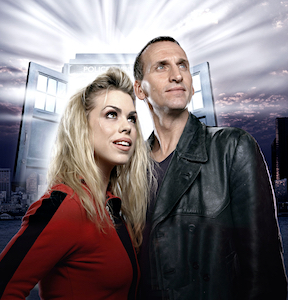 If you’re active (or looking in the right places) on social media, you may have noticed that there have been a bunch of Doctor Who watchalongs happening recently — you know, where people from around the world all watch the same thing at the same time and tweet about it. Organised by Doctor Who Magazine’s Emily Cook to provide something nice for Whovians in these trying times, they’ve been rather a big success — they’re always all over the trending topics on Twitter, and big names from the show have been persuaded to sign up and join in. The most recent one, to mark the 10th anniversary of Matt Smith’s debut episode, saw all three of its stars (Smith, Karen Gillan, and Arthur Darvill), plus writer/showrunner Steven Moffat and director Adam Smith, sharing thoughts and memories during the episode. Plus some of them have been accompanied by new fiction or stuff dug out from the archive.
Personally, the only one I’ve joined in with was the 15th anniversary rewatch of nuWho’s first episode, Rose. I say “joined in” — I watched the episode, then went on Twitter afterwards to catch up. I mean, you can’t watch TV and tweet along, can you? I know people think they can, because they do, but they’re wrong — you can’t. Not properly, anyway. While you’re busy tweeting, you’ll inevitably miss something — lots of somethings, even. And as I hadn’t watched Rose in about 13 or 14 years, trying to read the thoughts of thousands of other people at the same time seemed a daft idea. So I didn’t. But, weirdly, even watching it alone but with the knowledge that other fans around the globe are doing the same thing, there’s an old-fashioned sense of community — a feeling you used to have every week, when watching a TV programme live was The Way We Did TV; a feeling that’s dissipated considerably in the modern streaming era, where even traditional-TV shows are on iPlayer or whatever and many people happily choose to catch up later.
Still, the best bit was the surrounding tie-ins written by Russell T Davies, including a non-canonical prequel about the end of the Time War (I love The Day of the Doctor with all my heart, but good golly can RTD write epic mythic Time War stuff better than anyone) and a gently satirical sequel that revealed Boris Johnson is, in fact, an empty plastic clown. I do so miss the days when RTD was in charge…
Aside from the watchalongs, I’ve personally been digging even further back into Who history…
Doctor Who Animated Missing Episodes
Like silent cinema before it, early television was viewed as disposable, its value lying in the moment of its airing. The only reason to keep a TV programme after broadcast was to sell to other territories, or possibly to archive a handful of episodes as an example of what was produced. In the 1960s and ’70s, the BBC began to junk some of their archive, to reuse resources and make space for newer things. Many programmes fell victim to this destruction, but one of the highest profile has been Doctor Who. That’s what happens when there’s a dedicated fanbase who want to hang on to every second of something.
By the time the junkings stopped, 152 episodes of Doctor Who had been lost. Over the years there have been extensive efforts to recover these missing editions. There have been many successes, but 97 episodes remain missing. (For far more detail on all this, you could do worse than this Wikipedia page.) But thanks to the efforts of a few determined fans who recorded the programme’s audio as it was broadcast, the soundtracks for every single episode survive. Over the years, these have been used to help plug the gaps in various ways — released on cassette and CD; paired with photographs to form slideshow-like visualisations; and, most recently, used as the soundtrack for animated reconstructions. I’ll spare you another potted history of those, but after a faltering start they’re turning into a regular drip feed.
Now, during the most recent series of Doctor Who (reviewed in these three posts) I came to the realisation that I hadn’t watched any of the classic series in a long time — five years, in fact, back to when I paired up one classic serial to every new episode of Peter Capaldi’s first series. What better way to get back on the wagon than with the animated reconstructions, most of which have been released in that five year gap? So I’m beginning with the first of the current wave of animations, and more should follow.
The Power of the Daleks
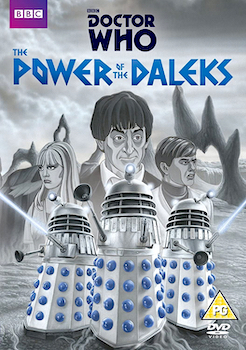 The first of the current wave of animations was The Power of the Daleks — a good place to start anyhow because it’s Patrick Troughton’s debut serial in the lead role. As he was just the second (canonical) Doctor, that makes the serial significant for the ground it was breaking — it’s the first time we’re introduced to a new actor taking over the series, something that’s become a staple of the programme (to the extent that the major plot lines and revelations of the most recent series were about the Doctor’s ability to regenerate). Sensibly, the production team paired their new leading man with the thing that had ensured the series’ popularity: the Daleks. And while the Doctor is dealing with a change of face and attitude, so are his enemies: these Daleks are keen to act as subservient aids to a human colony who have discovered their long-buried space capsule. Surely the evil fiends can’t’ve turned good?! (Spoiler alert: of course they haven’t.)
Away from such juxtaposition of temperament, it’s a good chance for the new Doctor to prove his mettle. It worked, too — obviously so in the case of ensuring the series’ longevity, but also as a story in its own right: in the last Doctor Who Magazine poll, this was voted the 19th greatest Who story ever (which, out of a list of 241 stories at the time, is no small achievement, especially for a missing black & white adventure. Indeed, if you limited the poll to just black & white stories, it came 3rd). It’s easy to overlook now, when we’re so used to regeneration, but Troughton comes in and makes the role his own, plays it his own way, isn’t even vaguely an emulation of Hartnell. It would’ve been the easiest thing in the world to cast someone like Hartnell and have them behave like Hartnell, but changing the character up so much is a braver, more interesting choice — and probably really helped the programme in the long run.
As for the story itself, as well as the mystery and threat of the Daleks it has a nice line in the petty political squabbling and machinations of the human colony’s leadership. Almost as much time is spent worrying about rebels, sabotage, and plots to rule as there is about the Daleks. I feel like that’s the kind of extra angle that often gets overlooked in Who nowadays, what with the need to deliver fast-paced 45-minute blocks of entertainment. (Maybe that’s unfair — almost everything of interest gets overlooked in Who right now, and previous eras of the revived show certainly weren’t averse to a little commentary on the pettiness of humanity.) There are some great performances too, especially Robert James as the scientist Lesterson, who has the most prominent character arc of anyone across the serial. His ultimate fate is particularly well written and acted, his final moments tragic and hilarious and barmy all at once.
As for the animation, it’s understandably a bit basic (these are not big-budget productions) and at times unsure what to do with itself — there’s the occasional bit of ‘dead air’ in the original soundtrack, probably where someone was just walking across a room or giving a reaction shot or something, and the animation isn’t quite up to filling the gap with something of interest. There are definitely times when it feels like you’re missing a little bit of business that was deemed too difficult or vague to animate. It would’ve been nice if they could’ve invented something to happen during those moments, instead of just holding on shots of literally nothing going on. But that’s probably nitpicking. As a visual to accompany the soundtrack, it’s more than adequate. Given the choice between this, a slideshow of rarely-changing photos, and audio-only, I’ll take the animation, thanks.
The Moonbase
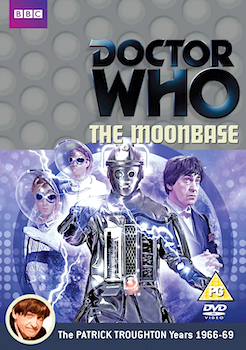 Next up by the series’ original chronology is The Moonbase — in terms of animation, Power was released in 2016 while The Moonbase was done in 2013; and half the serial survives, so it’s only half animated. It’s actually this older effort that looks better, the animation feeling much smoother and more realistic than Power, and making that look even more stilted and Flash-y by comparison. Apparently production on Power was incredibly rushed, and obviously they had to complete six episodes vs just two for The Moonbase, but the visual style is also slightly different; less obviously cartoonish.
As for the story itself, we move from one iconic Who monster to another: the Cybermen. And it’s another landmark in Who history: the first base-under-siege story, a subgenre that would become a staple of the Troughton era and keep popping up in the decades to follow. It’s also only the second Cybermen story, and they show off a sleeker redesign, which sets a precedent — whereas the Daleks have looked fundamentally the same since their first appearance, the Cybermen are redesigned almost every time they appear. Personally, I love the Cybermen, but this is not their finest hour.
The serial’s biggest problem is that it seems slow and uneventful. It begins with the Doctor and friends having a jolly holiday on the Moon, which I actually quite liked — bear in mind this was made in 1967, two years before man actually walked on the Moon, and you can see why the very fact of our heroes being there would be worthy of such emphasis. But it sets the tone for the story to come — Episode 2, for example, mostly revolves around the base’s crew spouting technobabble while they run checks to repair a machine. This came 113th in the aforementioned DWM poll, and with time wasting like that it’s easy to see why. At least the cliffhangers are effective, even if they don’t always make sense — but you can see how that would build the series’ reputation for them. It’s a shame such a defining aspect of the show has mostly been lost in the modern era.
The serials was written by the Cybermen’s co-creator, Kit Pedler, an actual scientist who was brought on to bring “scientific rigour” to the programme. These scripts do feel like they come from someone with a keen interest in science — there’s plenty of jargon thrown around; the Doctor runs medical tests and experiments (rather than just waving his sonic screwdriver around as he would nowadays); Ben and Polly cooking up a plan to defeat the Cybermen with a solvent cocktail, based on Polly’s nail varnish remover…! It’s easy to joke about “defeating Cybermen with nail varnish remover”, but it’s a scientific way of problem solving, which is quite good really for a show that was still very much aimed at children and with some degree of an educational remit. It’s just a shame that the narrative around it is so sluggish. Maybe they were going for “atmospheric”. I don’t think it worked. Shame.
The Macra Terror
 Much more successful in that department is The Macra Terror. No full episodes survive of this serial, so it’s back to 100% animation, and once again we have a change in style. It’s in widescreen, and it’s in colour, and the locations are bigger and more varied than they would’ve been on ‘60s TV, and the audio is so clean and clear it could’ve been recorded yesterday. It makes for a surreal viewing experience at first — are we sure this is a genuine Second Doctor story from over 50 years ago, not some recreation with perfect impressionists? After the previous animations tried to emulate the style of the original episodes, it’s a definite change of pace, but why not? It certainly brings some added dynamism to a few of the scenes — like Power, there are some all-but-silent sections; unlike Power, many of them now have some interesting visuals, which is most welcome. They had to make some trims here and there, I think for budget reasons (stuff that is inessential to the main narrative and would’ve been time consuming to animate), which is a shame (it would’ve been particularly fun to see the whole TARDIS crew dance a jig to escape at the end), but it is what it is.
As for the story itself, it offers an intriguing setup, with a good setting (a colony of happy workers) and mystery (what was seen by the ‘mad’ man they want to hush up?) It unfolds at a much better pace than The Moonbase, with a regularly developing and shifting plot. For example, many penultimate episodes of classic Who serials devolve into running around in place to delay the ending by another week. The Macra Terror is the antithesis of that, introducing brand new locations and plot points to genuinely further the narrative and mystery. There are exciting cliffhangers, too — again, probably much more so in animation than it was in the original live action. The Macra themselves benefit in particular. They’re basically giant crabs, which was a bit overambitious for the series to attempt in the ’60s. The originals have the look of an awkward primary school art project and aren’t actually that big, whereas the animated versions are huge and genuinely threatening. When one attacks Polly in Episode 2 it’s epic and exciting and scary… in animation. This is one of the few parts that survives from the original (thanks to censors in Australia) and… it ain’t that. The Macra is so much smaller and so much less manoeuvrable that you can see Anneke Wills and Michael Craze working overtime to convince you their escape requires any more than just getting up and wandering away. It’s a perfect example of how the artistic licence taken by the animators has paid off in dramatic terms.
I’ve always got the impression that The Macra Terror has a pretty poor rep among Whovians. I hope the animation has caused it to be re-evaluated, because I think it’s really rather good.
The Wheel in Space: Episode 1
Finally for now, an abridged version of The Wheel in Space: Episode 1, which was created for the BFI’s annual Missing Believed Wiped event about missing TV. The Wheel in Space is a six-parter, meaning it runs approximately 150 minutes, but here we get just 11 of them. The animation itself is about the same quality level as the others, and it’s a nice little bonus in its own way, but ultimately it feels rather pointless; like an extended tease for a full-length animation that isn’t coming. The serial may well be animated in full someday (if they’re happy to do The Faceless Ones and Fury from the Deep, which have no obvious hooks to interest casual / on-the-fence viewers, then surely something with the Cybermen is a no brainer), but if they do then what purpose will this have served? I expect they’d want to do these 11 minutes again rather than make the remaining 139 to match. And if they don’t ever do it in full, well, the serial is still left with three-and-a-half episodes visually missing. But, like I say, it’s enjoyable enough for what it is.
In Part 2… new Red Dwarf; Mark Kermode’s Secrets of Cinema; the worst of The Twilight Zone; and quickies on McDonald & Dodds, The Rookie, Star Trek: Picard, and National Theatre’s YouTube stream of One Man, Two Guvnors — which, I’ll tell you now, is great fun, worth your time, and you only have until 4pm tomorrow to start watching. It’s here.


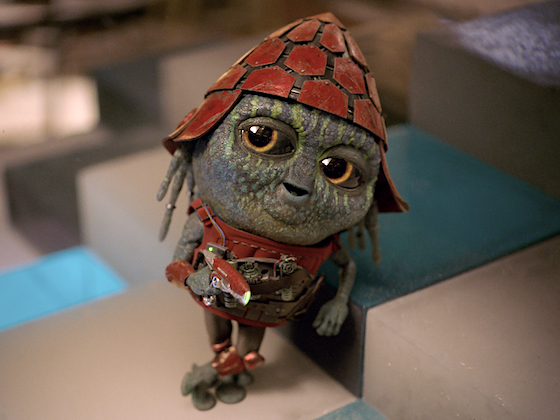









 The 13th iteration of Red Dwarf eschews the normal episodic format for a single 90-minute special, in turn ditching the expected Red Dwarf XIII moniker for a subtitle. Well, the show has form in this: for its 21st anniversary revival we got Red Dwarf: Back to Earth instead of Red Dwarf IX, which wasn’t a whole series but instead a 90-minute single story (in that case split into three half-hours, but still).
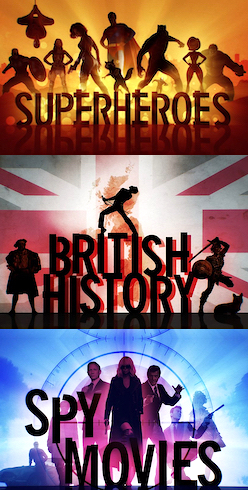 Mark Kermode’s insightful deconstruction of cinematic genres returns for a full second series (following a few occasional specials last year). I say “full” — three episodes. Whereas
 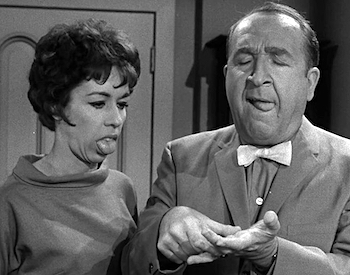 For
For 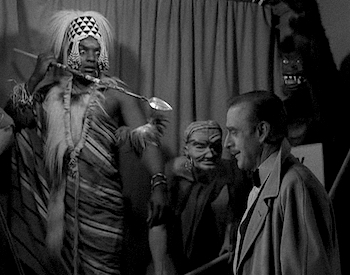 The worst episode according to Buzzfeed is The Jungle, which comes 148th overall. It’s about an American engineer who’s just returned from a trip to Africa where his company is planning to build a hydroelectric dam, and he may’ve been cursed by natives opposed to the project. As you’ve probably guessed, the episode’s biggest problem is some old-fashioned kinda-racist stereotypes about Africa and its people. I mean, the episode doesn’t even bother to say which country he’s been to, it’s just “Africa”. It’s not overtly racist, I don’t think, but it’s certainly tone deaf. There’s a scene where our hero discusses the project with the board of directors that juxtaposes the idea of witchcraft, which they all laugh at, with the irrational superstitions they all practice (not walking under ladders, etc), which is kinda neat, basically saying that “you laugh at their beliefs because you think of them as simple folk, but it’s no worse than our superstitions,” which is truthful and borderline enlightened. But that’s about all the episode has going for it. By the time he’s travelling home through the implausibly empty nighttime streets of New York City and being haunted by jungle sounds, it all seems pretty silly; and then his cab driver just drops dead, and a tramp appears and disappears out of thin air, and you wonder what all that’s got to do with anything. The only moral the episode can offer is “maybe some superstitions are right”, which is poppycock.
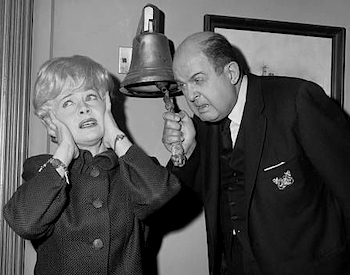 Finally, we end as we began, with an episode voted on by the public: at the bottom of Ranker’s list, and last on average too, is Sounds and Silences. It’s about an excessively-loud, domineering blowhard who gets some measure of comeuppance when he begins to be bothered by everyday sounds like a dripping tap or ticking clock. And then it goes the other way and he can’t hear loud noises at all. It’s poorly written and terribly performed — in the lead role, John McGiver is overacting something rotten. Some criticise the undercurrent of misogyny in the storyline, but I don’t know about that. He blames his mother and his wife for all his problems, but he’s an unlikeable sod so surely any misogyny is his rather than the episode’s — we’re not being asked to agree with him. The character’s ironic fate may be some form of poetic justice, but it’s too long coming to be entertaining, and too obvious to be satisfying. Whether I disliked this or Cavender is Coming more, I’m not sure, but they both merit their places at the bottom.
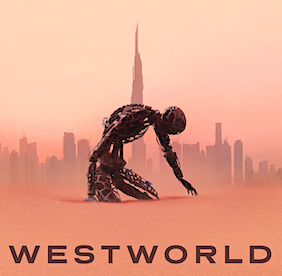 This month, I have mostly been missing Westworld season 3, which is now four or five episodes in. I’ve not seen anyone talking about it on social media, so I’ve no idea if it’s good or bad, but I am inferring that not as many people are talking about it anymore, which is its own kind of criticism. One show I have heard mentioned is Tales from the Loop, Amazon’s new anthology sci-fi series. That’s been picking up good notices, and I thought it looked interesting anyhow, so I must make time for it.






 100Films.co.uk