
Gabriele Salvatores | 89 mins | TV | R
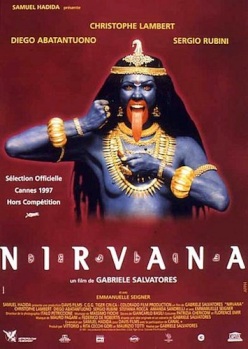 The Radio Times film section may be steadily going down the drain, but when anyone describes something as “one of the best science-fiction films ever made” it’s worth paying attention. “Yet few people outside Italy have seen it,” they add. Indeed, despite screening at Cannes (albeit out of competition), this Italian movie has never been classified by the BBFC, so I presume it’s never been released here (though this was its third showing on the BBC). It’s been released in America though… by Miramax. They did their usual foreign film job, chopping out 17 minutes, changing the music and adding an English dub. This is the version shown by the BBC (at the time of posting, also available on iPlayer) and reviewed here.
Most sci-fi we see is of the American variety — partly due to the fact most of any cinema and the vast majority of imported TV we get is from there, partly due to that being where the money is for special effects and what have you — and that tends to mean tonnes of CGI, a fast pace and action sequences up to the eyeballs. Nirvana is more stereotypically European, however: it’s clearly a Deep and Meaningful film, though unlike many examples of Thoughtful cinema it at least has a slightly thriller-ish plot and a hefty dose of cyberpunk styling for us plebs to pick up on.
Sometime in the future (I read 2005 in one review, but best to ignore that now), Christopher Lambert is a computer game designer working on a new title for Christmas. Somehow a virus invades his system, in the process making his lead character, Solo, fully sentient. Unable to escape the game, Solo wishes to be deleted, but Lambert can’t because the final software is owned by some giant corporation and will be released in just three days… so he has just three days to get into their computer system and delete the file, before Solo is condemned to never-ending life stuck in the game.
 The most obvious point of reference for Nirvana is Blade Runner, which I’d wager was a hefty inspiration. Writer/director Salvatores introduces themes of what it means to be human and a lead character one might like to decide isn’t after all, and sets it in a perma-night, dystopian, multi-cultural future. It doesn’t quite have Ridley Scott’s consistency of vision, though: while he just rendered an Asian-American future L.A., Salvatores takes globalisation to the max, running us through locations named after Marrakech and Bombay City, which may or may not be part of the same sprawling metropolis, and which all exhibit appropriately specific cultural stylings. These aren’t just pretty backgrounds, but in some ways reflect the film’s use of video games — in which you can, of course, constantly re-spawn your character — as a metaphor for reincarnation.
In aid of this, while Lambert is collecting the plot pieces needed to attack that corporation — at the same time as following a subplot about a missing girlfriend — we get to witness Solo’s experiences inside the game, frequently dying and re-living the same story with a group of characters who aren’t aware in the way he is. To be blunt, the in-game stuff is a bit odd. It doesn’t really go anywhere, and builds to a lacklustre climax — indeed, the word climax is a bit strong. But perhaps this is part of the point: as the only character in the game capable of independent thought, Solo is stuck in a loop of story and fellow characters who just re-enact what they were programmed to re-enact. Literally, he can’t go anywhere.
This part of the film calls to mind eXistenZ, David Cronenberg’s film about a virtual reality game that blurs the line between reality and the game. It’s rather a surface similarity though — Lambert barely spends any time in his game,  interacting with Solo merely though a series of screens on his journeys (and, one presumes, a series of microphones too). Cronenberg’s film was made a couple of years after this, so commending it for not doing the same thing would obviously be a bit rich. It is to be commended for not descending into a needlessly twist-strewn third act though, which I had thought was coming — there’s plenty of bits along the way that could be used to build a ‘surprise’ or two. There’s some ambiguity in the ending, but not too blatantly (unlike later versions of Blade Runner, for instance), and Emmanuelle Seigner’s ex-girlfriend character is never quite used in the way I expected.
For all its intellectualising, Nirvana can still be a fun film, and not just because Lambert’s accent is always set to provoke a giggle. That sounds horribly xenophobic written down, but it’s all Highlander’s fault: there’s no reason he shouldn’t sound European here (and he has dubbed himself), but the memory of that accent supposedly being Scottish does linger. (And, just so we’re clear, I love Highlander.) But no, there are proper dashes of humour, scattered here and there to provide some subtle texture. And there are action sequences too, and dated ’90s music (presumably thanks to Miramax), and even some boobies. To be honest, though, if you just want humour, action, dated music and boobies, there are dozens of films that will serve you better. At least they stop it becoming too dry, and give you a chance to let what’s going on sink in, helping prevent total confusion every time the film threatens to become incomprehensible (maybe it’s just me, but it took a little while to work out what Lambert was actually getting up to in the main plot).
I’d quite like to see the original version. Who knows what changes Miramax have wrought with their fiddling (that woman on the poster certainly isn’t in this version, at least),  and I imagine subtitles could be easier to follow than this dubbed version, in which everyone’s covered by either the original actors straining with English (based on the accents) or the typically bad voice actors employed for such dubs. The Italian DVD is reportedly English-friendly and very good quality, so perhaps I’ll get hold of that (expect another review if/when I do… well, eventually).
Apparently Nirvana “has achieved something of a cult status, especially in Europe”, and I think I can see why: there’s a few themes that might be worth a ponder, and enough splashes of style and action to keep one’s attention… most of the time. It might not be as stylistically delineated as either of the films it brought to mind, but then Blade Runner is perhaps the pinnacle of screen SF and eXistenZ… well, now I really want to see that again. I don’t know if this is “one of the best science-fiction films ever made” — especially not in this Americanised version — but it certainly has a few things going for it.

Nirvana is available to UK viewers on the BBC iPlayer until 3AM on Saturday 3rd September (i.e. Friday night).
 The second directorial outing from BAFTA-winning Brit Duncan Jones (after
  because Source Code is hardly groundbreaking. It’s certainly a solid, dual-pronged, science-fiction mystery — dual-pronged because not only is Stevens working to find the bomber, but also fighting amnesia to discover what the source code is and how he wound up there — but not an especially deep or complex work. There’s nothing wrong with something being little more than an exciting, engrossing thriller, it’s just not revelatory.
 The other side of the plot is not only where the heart is, but also where the real twists and mysteries lie — I guessed the bomber the first time I saw the character; even if you don’t, it ultimately matters little. Vital to the finale are the subplots like Stevens’ relationship with his father and his growing affection for the passenger his alter ego was travelling with — but who he can’t save, of course, because the source code isn’t time travel.
 Did he create a new parallel world every time he entered the source code, or only the last time? I’m not sure that’s relevant. This is, though: at the end, he seems to remain in Sean’s body. So if he’s in a parallel world, he’s just stolen another man’s life? And Stevens — at least, the Stevens of that reality — is still lying, mutilated, half dead, in some government research facility? Hardly a cheery resolution.
 Still, problems aside, Source Code remains an exciting, taut, puzzling sci-fi thriller. On a train — there’s a whole long line of movies and connections to be explored there. Many reviews have noted the Hitchcock connection and I’m sure that’s an interesting route to look down, so maybe there is a bit more to Source Code after all… but even if there isn’t, it’s a fun ride.
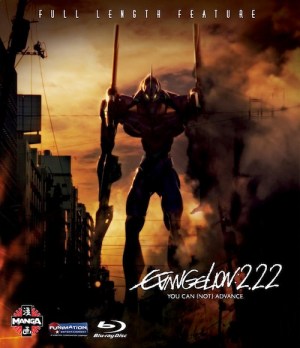 Just over a year since the
  For my money, the first 40 minutes or so of the film are (by and large) the best bits. It opens with a barnstorming action sequence, a great scene for newbies and fans alike as we’re introduced to Eva pilot Mari, who didn’t appear in the TV series. That she then disappears for most of the film, only to make a thoroughly mysterious return later, is one of those explanation-lacking flaws. I’m sure it won’t look so bad once the next two films provide us with answers. Well, I hope not.
 Then the gang take a trip to a scientific installation which is trying to preserve the oceans and their wildlife. It feels like animation shouldn’t be as effective for such a sequence as, say, the footage in a David Attenborough documentary, but nonetheless it feels extraordinary, in its own way. It also marks itself out with the interaction of the characters on a fun day out rather than their usual high-pressure monster-fighting world. And then it’s back to that world for another impressive three-on-one Angel attack.
 But it’s all building somewhere. For one, there’s another of the film’s best sequences — certainly, its most shocking, which readily earns the 15 certificate. I don’t want to spoil it for anyone yet to see the film, because it’s one of the plot points that differs from the TV series, but it involves the death of a main character in a brutal, deranged way. I say “death” — they pop up in the third film trailer that runs after the end credits, so there’s more to this yet…
 And then, after the end credits, there’s a brief scene that throws another spanner in the works! Double-cliffhanger-tastic… one might say…
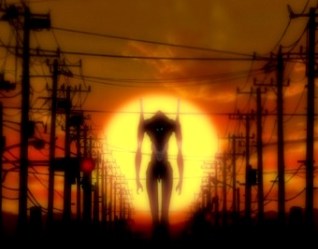 In short, if you’ve always liked Evangelion then you won’t be waiting for me to tell you this is a must-see reimagining; if
 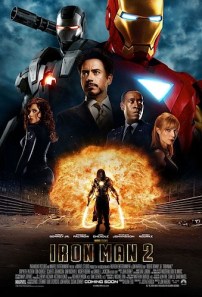 I’ve always contended that the first
  For starters, it relies on the story rather than the action. There are certainly some good sequences of the latter (more about those later), but there’s also a lot of story in between them — it’s not wall-to-wall explosions and punch-ups. Neither was the first, if you remember, and so it fits in that respect. It’s helped along by the ending of the first film, in which Tony Stark revealed he was Iron Man. That’s not something you do in superhero movies, which immediately lends this one a few new plot devices to play around with. Considering the burgeoning critical assessment that all superhero movies ever only tell the same two or three stories (an argument I think has a lot of validity), it’s nice to see anything to challenge the norm.
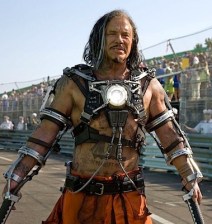 it’s the Penguin and whover-Christopher-Walken’s-character-was rather than Mr Freeze and Poison Ivy, if you will. They play to different sides of the hero: one is fighting Stark, one Iron Man (though there is naturally crossover); though they’re both intelligent, one functions as the brains and the other as the brawn. Mickey Rourke may go slightly underused, but it’s also part of the character, a quiet, thoughtful, intelligent hulk partnered with Sam Rockwell’s jabbering wannabe-Stark.
 watched again later on Blu-ray, I enjoyed it a lot more. With Iron Man 2 I’m obviously distanced from trailers by a good year or so, and though one of their best moments is missing from the final cut, and the suitcase-suit is unavoidably spoilt by being so thoroughly screened during the promotion, watching now doesn’t have all the trailer-generated expectation to live up to. That famous Onion spoof about the first film’s trailer is, perhaps, even more applicable to the sequel.
 Aside from one unnecessary scene featuring Captain America’s shield and Agent Coulson leaving for New Mexico, and the fact that the film assumes everyone will know who Nick Fury is despite him being introduced fleetingly after the credits of the last film, the whole S.H.I.E.L.D./Avengers Initiative thing is worked into the plot well. If we didn’t know it was the beginning of the build-up to The Avengers, I think it would have sat much better with viewers. Even if it does end up blatantly laying the foundation for further stories, that’s hardly uncommon in franchise films of all kinds these days — at least we know this series will definitely pay it off, unlike so many franchise-wannabes that don’t make it past their first film. Plus, the film’s primary plot has its own villains and comes complete with a resolution; Fury, S.H.I.E.L.D. and co are a subplot that feed other subplots.
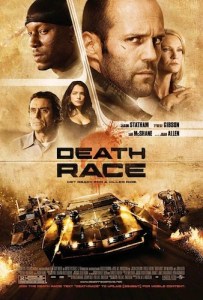 Sometimes, I wonder what I’m playing at. The list of films I haven’t seen but really should is quite extraordinary, from enduring classics like
 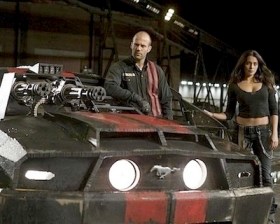 And I expect it says something about that intended audience that the end credits begin with a “do not attempt this at home” notice.
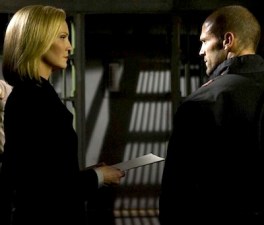 Even if it’s all about the action, it could be worse: I’ve seen plenty of films featuring weaker dialogue, weaker acting and an even less relevant story. Death Race does everything it sets out to do competently, delivering a couple of decent action sequences and even a couple of laughs along the way. Not exceptional enough to be particularly memorable, but it is fun — if you like this kind of thing — while it lasts.
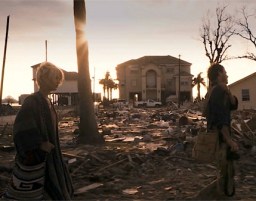
 So begins Monsters. Expecting an epic SF-action movie where soldiers kitted out with futuristic weaponry battle an alien menace? You might be disappointed. Indeed, the relatively low
  Only without being as worthy or on-the-nose as that makes it sound, I promise. As writer-director, Edwards has made a film that’s relatively Arty (for want of a better word), with lingering shots and wordless scenes. It tells the story visually quite often, letting the Infected Zone signposts or candlelit shrines to dead children or stunning scenery do the talking when dialogue isn’t necessary.
 The CGI is virtually faultless, which is doubly impressive as the vast majority of it is on shaky handheld shots, not nice clean plates. And Edwards created it all by himself I believe. Writer, director, cinematographer, single-handed visual effects unit — it’s no wonder much of the focus on Monsters has been on the clearly considerable skill of its creator. Much of the CGI would, I imagine, pass the casual viewer by: everyone knows the aliens are CG, but the film is littered with signposts and other such set and scenery extensions. It’s the kind of thing a bigger budgeted film would simply have created physically, but, working with next-to-no money, Edwards has managed to paint flawless versions of everything from simple road signs up to border checkpoints with his computer (and even bigger things, but they’d be CG’d in a big-budget movie too, so… well, hopefully you see my point). There’s the odd thing that doesn’t sit with complete realism, but even that depends how hard you’re looking. I’d say they’re the exception rather than the rule and very easy to forgive — nothing ruins its own shot, never mind the whole film.
 it’s easy to think what we saw in the night-vision sequence has led to this. But it hasn’t, because the military were Americans and we’re in Mexico. I’d wager this passes some viewers by, and perhaps it’s meant to, but there’s another clue: one of the soldiers whistling the Ride of the Valkyries; and when we get to the end of the film, as a pair of humvees trundle out to retrieve our heroes (by this point stranded in an evacuation zone just inside the US border), we hear the same soldier whistling again. And here’s where the change comes: rather than reaching the bit we’ve already seen and going beyond it, Edwards cuts off before he even reaches it. To put it another way, the chronological end of events is only at the beginning. It’s quite clever, and it also obscures what happens to the characters (how I shan’t say). That’ll irritate some, especially as even when you piece it back together it’s inconclusive. I’ll leave it to others to argue whether that’s the point and whether it matters. The final shot is clever though: instead of closing on the characters’ finally kissing, it ends on them being pulled apart. Technically their separation is only temporary — they’re both going with the military after all — but, as we saw at the beginning, one of them might not survive the journey home; a more permanent pulling apart. Nice metaphorical linking, Edwards.
 Another review I read somewhere commented that it’s a shame
  emerging with their low-budget, story/concept-driven genre films, not to mention Chris Nolan being allowed to do more or less what he likes in the big budget sphere, it’s easy to see why this is a very exciting time to be a lover of proper science-fiction. If they all continue to make films like this, we can look forward to an astounding future.
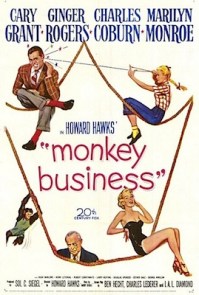 Monkey Business came
  followed by “Cary Grant and Ginger Rogers behave like 6-year-olds”.
 It’s getting on for two years since I last (and first) watched most of the Alien
  (as I haven’t watched that copy, obviously), but on Blu-ray the added footage, 2003-era new effects and 2010 re-recorded audio are indistinguishable from the rest of the film.
 One of the biggest things I remember being told about Alien³, before the Special Edition, was that most of Paul McGann’s performance had been cut; that originally he had a sizeable role that justified his fourth billing, rather than his cameo-sized part in the theatrical cut. It doesn’t feel like there’s an awful lot more of him in this version, though scanning through
  Unsurprisingly, therefore, they’re almost all totally underused. Charles Dance gets the biggest slice of the cake and is as good as ever, but doing little more than show their face we have Pete Postlethwaite, Phil Davis, Peter Guinness, Danny Webb (they don’t all begin with P…) Alien³ is 19 years old now, no one could’ve predicted the future; but viewed with hindsight, the volume of under-utilised talent is almost astounding.
 It’s also, perhaps, interesting to remember this being Fincher’s first film. He might seem like an odd choice, a first-timer paling beside the experienced hands of Scott and Cameron. But that would be to forget that, for both, their Alien films were only their second time helming a feature*; and while Cameron’s previous had been sci-fi (
 The near future: most of mankind now lives through ‘surrogates’ — robots that look like perfect versions of ourselves (generally), which we control from elaborate machines sat around in our homes. The anonymity of the online world brought into the real one, essentially.
 while almost every plot ‘twist’ is startlingly unsurprising (though it does manage one half decent one).
 If you want to muse on what makes us human in a world of near-identical robotic replicas, watch
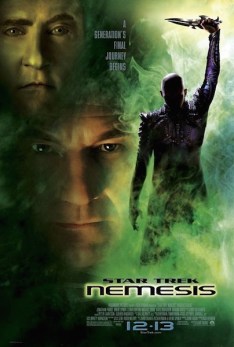 After the widespread disappointment with
  though the knowledge of better things to come means his presence somehow lifts his scenes a notch.
 100Films.co.uk